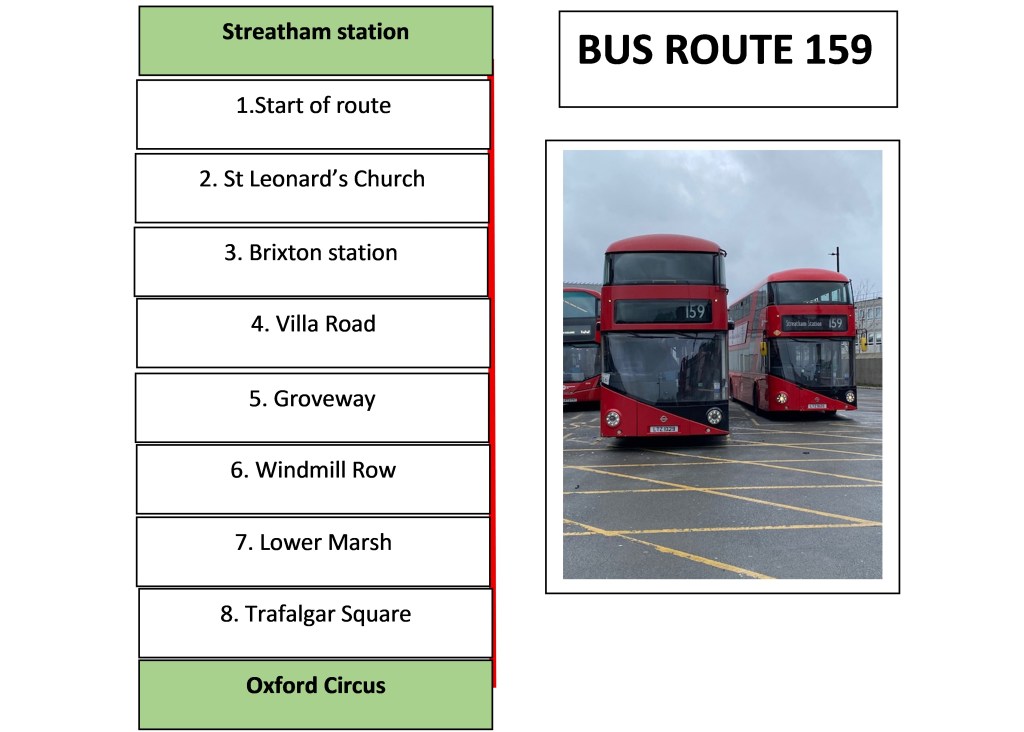
Streatham Station to Oxford Circus
Highlights:
- Photofusion exhibition
- Murals in Slade Gardens
- Scooter Caffe
1. Start of route
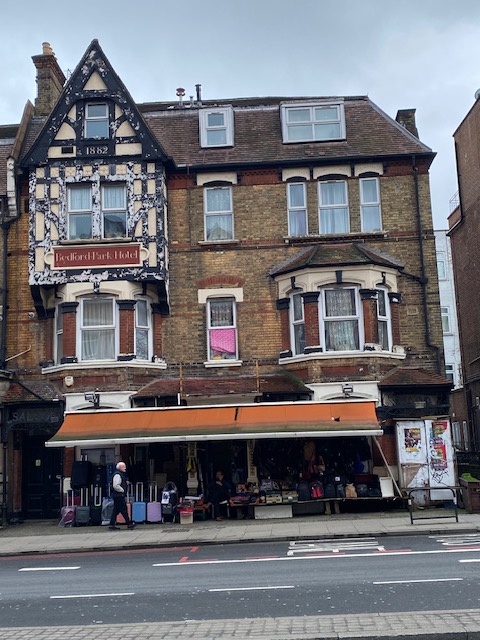
I thought I’d try something different this week and asked AI to help me find places of interest along the 159 bus route. I was told that there is a small separate mortuary within the churchyard at St Leonard’s church so made my way there. Disappointingly, no such building exists so I ventured to the next place I was told to see. This was at the back of Streatham station where allegedly there were some original brickwork and reused railway arches – and I was even told how to find them. Disappointment number 2 – there are no such arches. Having challenged AI for sending me on not one but two wild goose chases, it redeemed itself by suggesting I walk along Streatham High Road and take a look at the variety of shops and architecture. So here are some of the places that I felt were a reflection of the area.
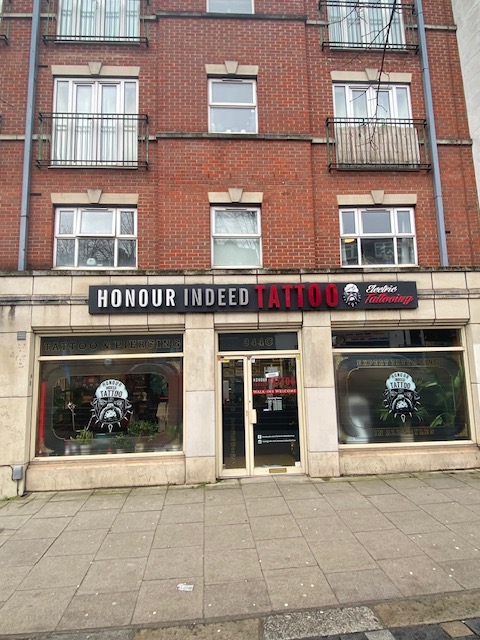
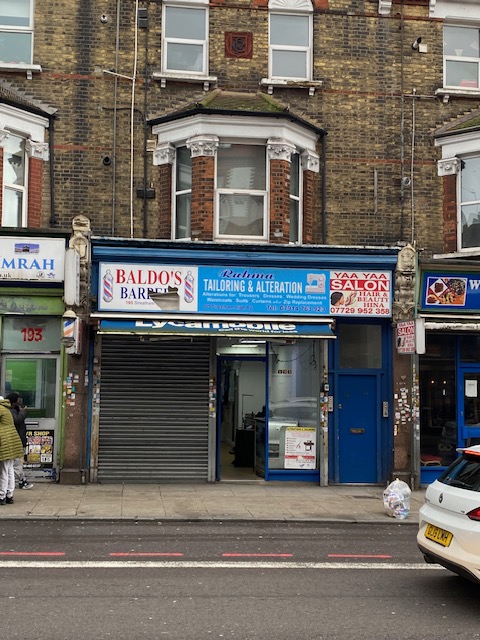
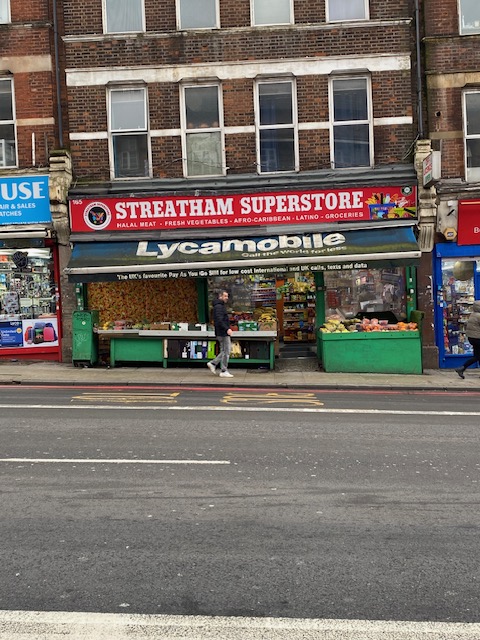
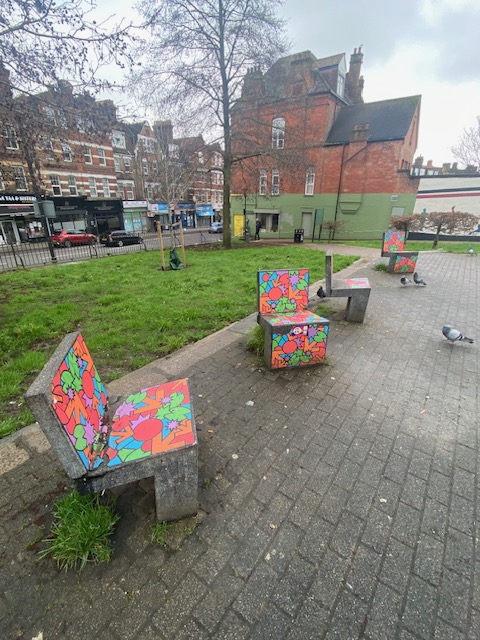
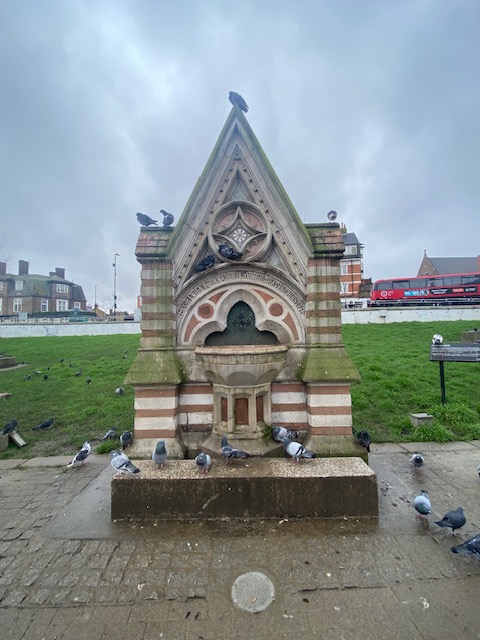
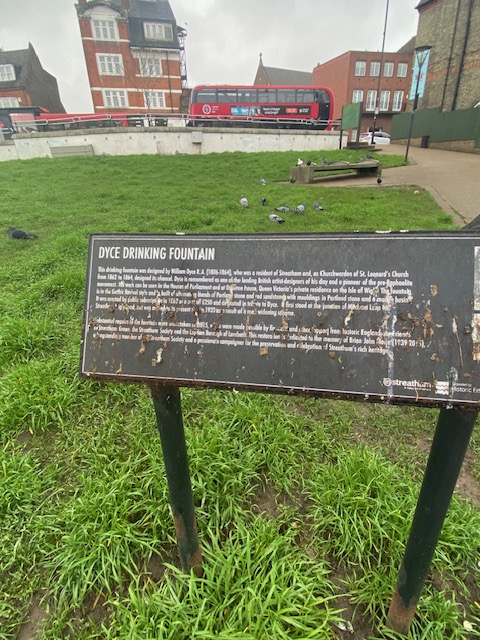
Whilst I was in the area, I also popped along to Streatham Green, a small park which has an interesting Dyce drinking fountain. Constructed in 1862, it’s a Grade-II listed, Gothic-style monument which has an inscription that reads “For I will pour water on him that thirsts”. The seats that have been placed on the green are painted in jolly colours, brightening up what was otherwise a pretty grey day.
2. Brixton Station bus stop
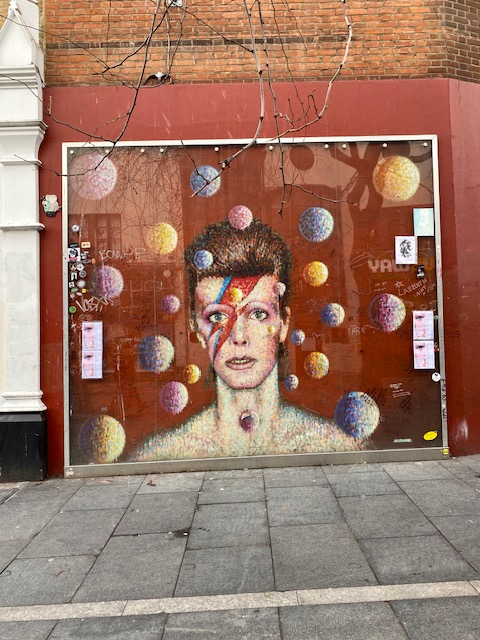
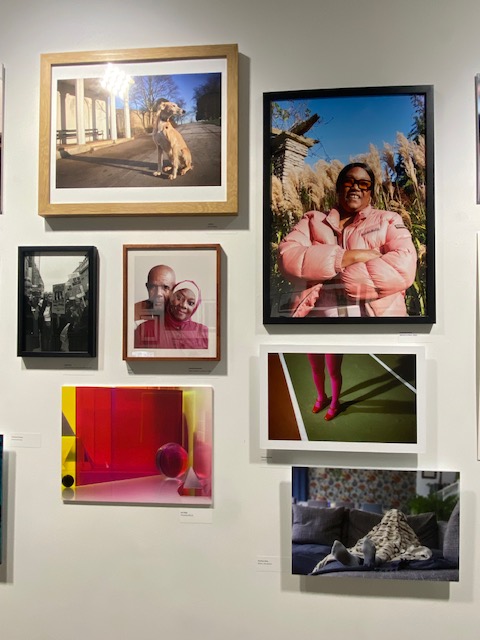
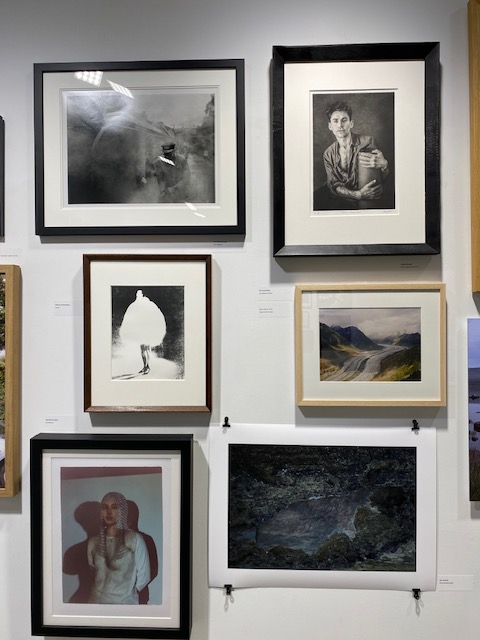
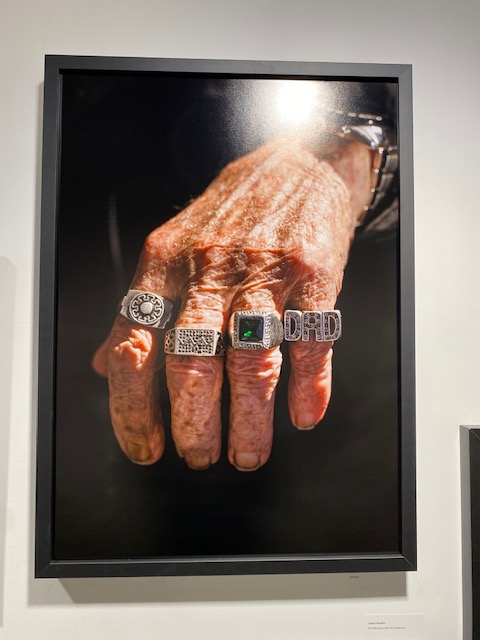
Around the corner from the stop is an iconic image of David Bowie, on the side of a department store, in the street where he had lived as a child. It’s then just a few minutes to Photofusion, a photography resource centre that champions, supports and celebrates photography and photographers. They regularly platform emerging artists from underrepresented backgrounds and much of their work is on display in the galleries within the building. At present is SALON/25 which features the work of over 80 of their members. Over the years, this opportunity to discover and network with emerging photographers has become a cornerstone of their membership programme.
3. Villa Road bus stop
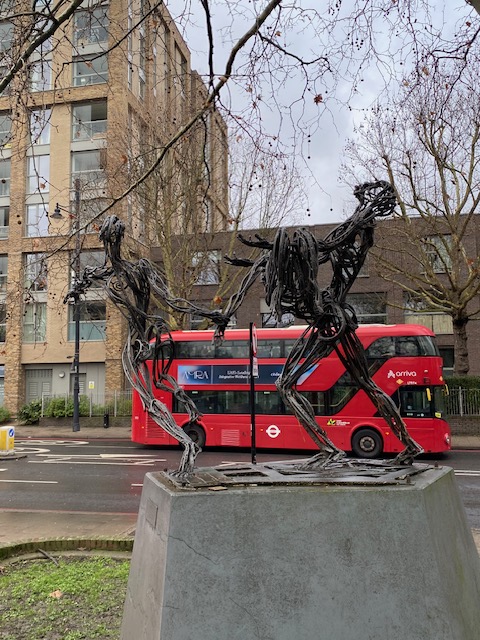
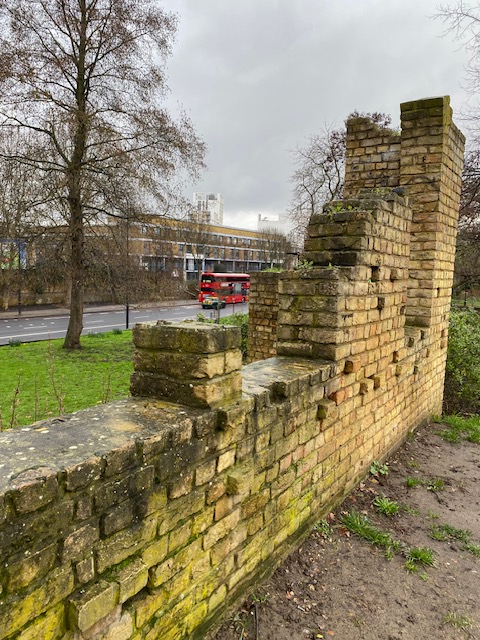
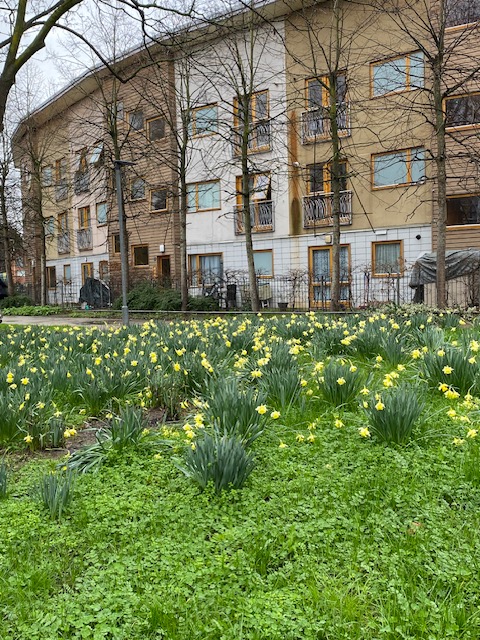
Near this stop is Max Roach Park with its sculpture entitled First Child by artist Raymond Watson. It was created as a memorial to the 116 children who died in the Soweto uprising during the Apartheid era on 16 June 1976. The park itself is named after Max Roach who died in 2007, an internationally famous jazz percussionist and composer, who visited and played locally. Also in the park are remains of a wall that look old but they in fact were designed ruins, a “folly” feature, intended to add architectural interest to the park. The park is divided into 3 distinct areas and walking between them, were a lovely array of daffodils – even with the cold and rain experienced since the beginning of the year, nature is still able to do its magic.
4. Groveway bus stop
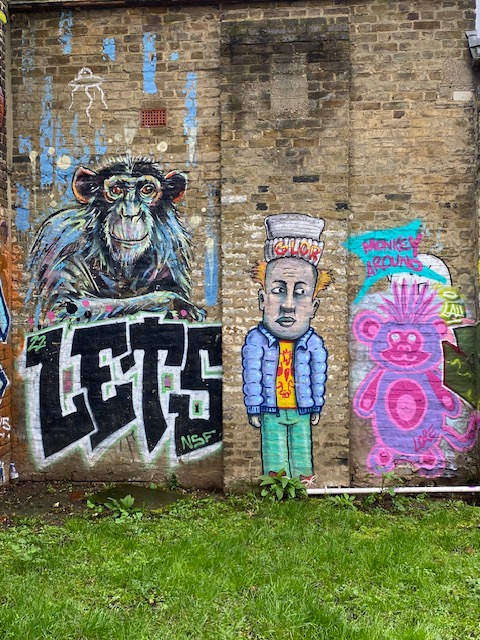
Round the corner from the stop is Ingleston Street that houses both the Crown and Anchor pub and some interesting street art of a surprised looking monkey. The pub historically hosted what is considered one of Britain’s first rock ‘n’ roll clubs, the Oval Rock ‘n’ Roll Club. It’s likely that the pub takes its name from traditional British tavern-naming conventions that paired royal symbols (“Crown”) with maritime or steadfast imagery (“Anchor”).
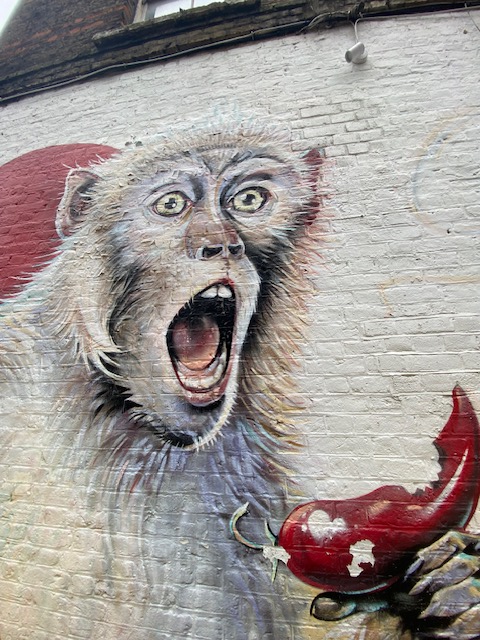
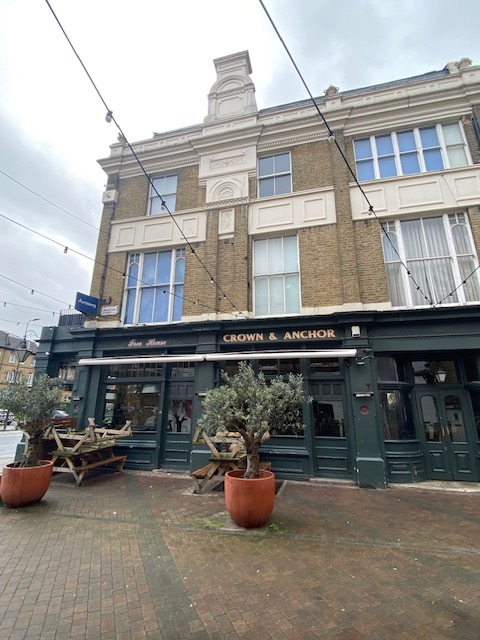
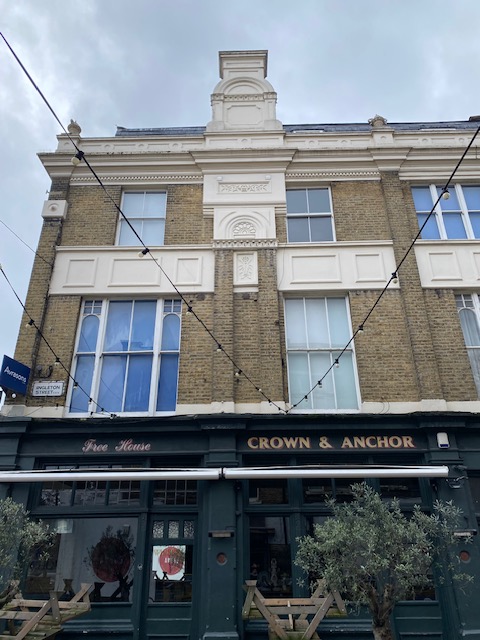
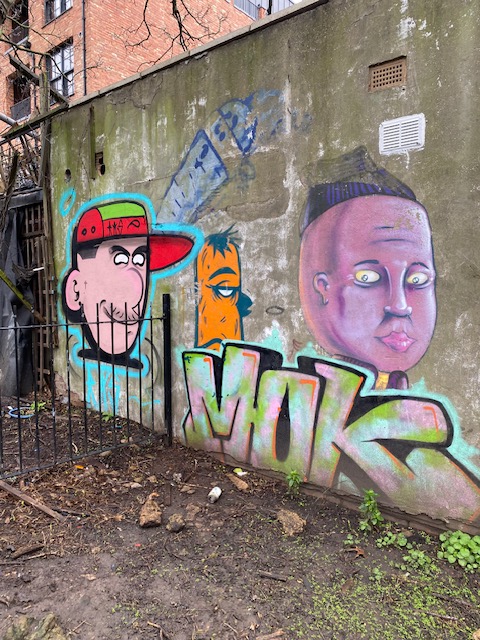
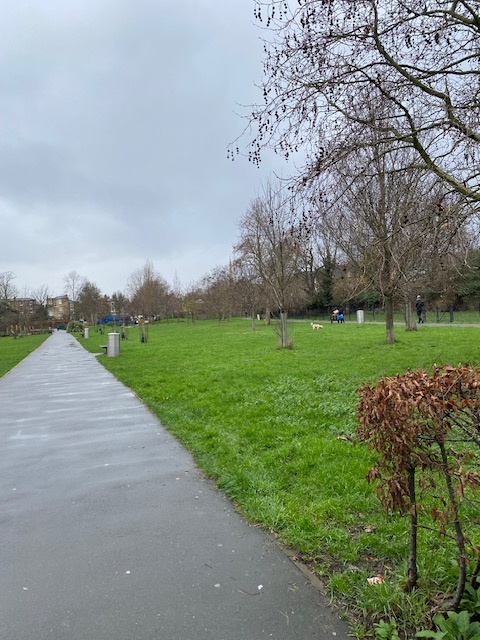
The pub and mural are just in front of the entrance to Slade Gardens, a public park opened in 1958 on land cleared after a V1 flying bomb destroyed 19th-century terraced housing in 1944. It’s named after the land-owning Slade family. Robert Slade was a proctor-at-law and owned much land in the area, including this park.
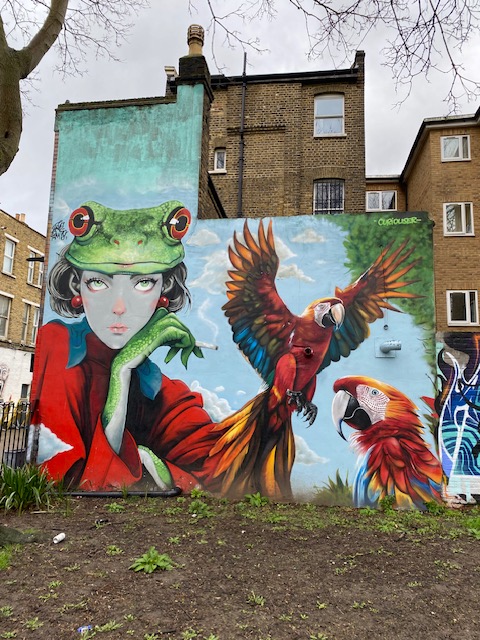
On a few walls in the park are more murals, some by the artist Curiouser, others by Brazilian artist Glor. They are vibrant, large and amusing, covering what would otherwise be dull grey walls. One that strikes you as you walk into the park is of a girl with frog hands and head. On the other side is a chimp, a boy/man and a cartoon. Yet another wall has cheeky faces. The park itself is a pleasant green space, set off the main road to provide a bit of an oasis to residents and visitors to the area.
5. Windmill Row bus stop
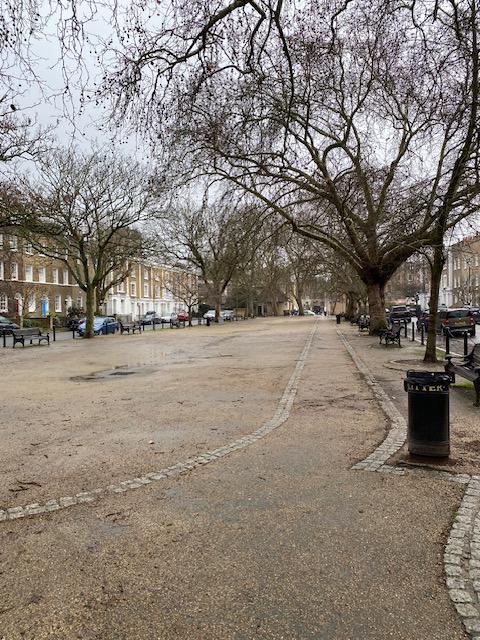
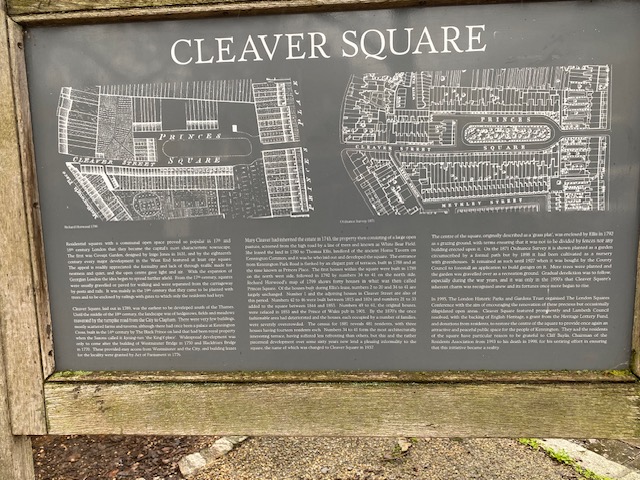
Cleaver Square has an interesting history. It was formerly called Prince’s Square and is an 18th-century garden square dating from 1789. Its claim to fame is being the first garden square in South London. Until the middle of the 18thC, the locality consisted of hedgerows and fields. Mary Cleaver inherited the estate in 1743 and in 1780 she leased it to Thomas Ellis, the landlord of the Horns Tavern on Kennington Common, who laid out and developed the square, building houses around the square, over the years from 1788 up to 1853. By the 1870s the area had reduced in status, and the houses were overcrowded. Originally named Prince’s Square, it was renamed Cleaver Square in 1937.
The centre of the square was enclosed by Ellis in 1792 as a grazing ground. By 1871 it was a garden circumscribed by a formal path, and by 1898 it had been cultivated as a nursery with greenhouses. These days it’s a registered historic square, with many of the houses on the square designated as Grade II listed. It looked rather lack-lustre in the rain but in summer months, it’s much more vibrant, and hosts many events for the local residents of the square.
6. Lower Marsh bus stop
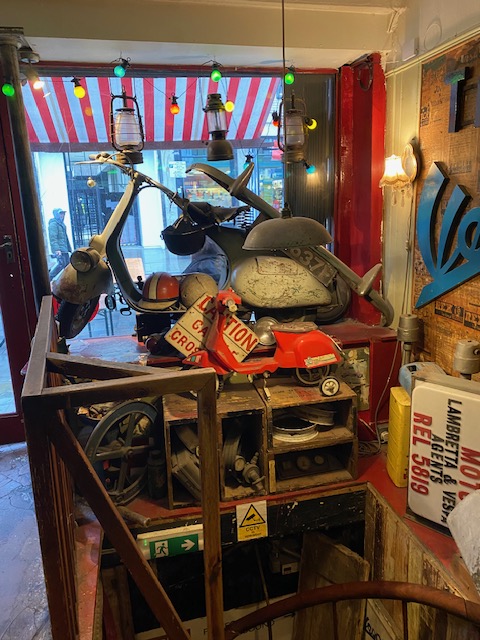
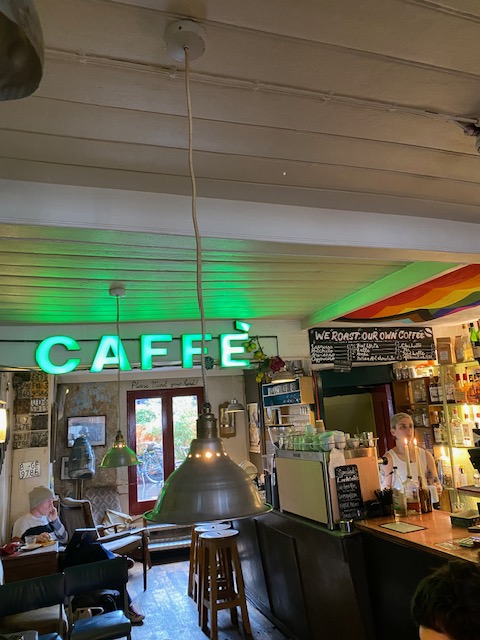
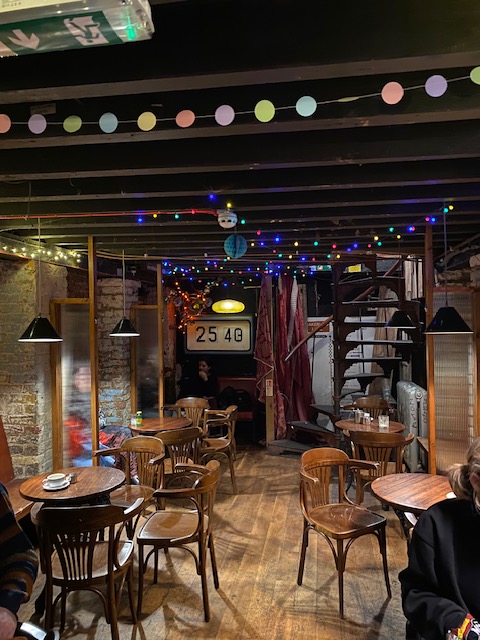
While at Photofusion earlier in the day, I was recommended to visit the Scooter Caffe, for its quirkiness and bohemian vibe. As it happens it afforded a welcome reprieve from the near-eternal rain. It was established c2000 by New Zealand scooter specialist Craig O’Dwyer. Originally a Vespa repair shop and parts store, it evolved into a popular café and bar. The original workshop moved to Bermondsey, leaving the site to be converted into the café. Owner Craig has spent decades travelling back and forth between London and Italy, bringing all kinds of souvenirs, antiques and bric-a-brac back with him. The result is an eclectic lounge filled with retro furniture, old peeling movie posters on the walls, and – the pièce de resistance – a vintage 1957 espresso machine.
7. Trafalgar Square bus stop
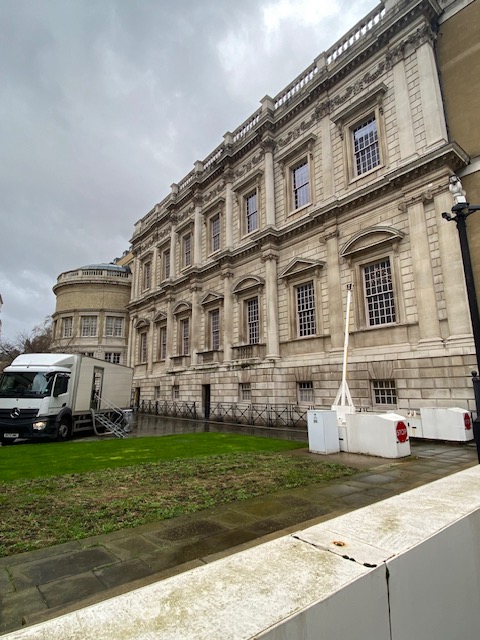
From the stop, walk down Whitehall to get to the Banqueting House and see the splendour of the building. It’s only open to the public on certain days of the year, so it would be worthwhile checking dates for open days. The main attraction is a Rubens ceiling in its original setting in this Inigo Jones stately home. The ceiling was commissioned by Charles I in 1629. It was one of the King’s last sights before his execution on a scaffold outside the Banqueting Hall in 1649.
Rubens painted on canvas and when it came for the 2 canvases to be put on to the ceiling, his assistants saw with horror that they were too large for the space available. Drastic moderations had to be made to make them fit. Sadly it seems that Rubens himself never saw the finished paintings in situ in the Banqueting House. There is much else to see here and more will be written about it after a visit on 21st February when the next Open Day takes place.
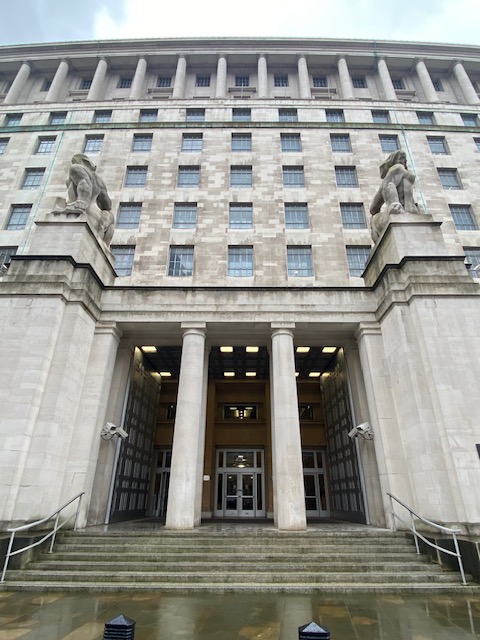
Along the road from Banqueting House is the Ministry of Defence, a grade I listed government building. It’s on the site of the Palace of Whitehall, which was the main residence of the English monarchs in London from 1530 until 1698 when most of its structures were destroyed by a fire. It has been significantly redeveloped over the years and stands magnificently in Horse Guards Avenue. The northern tetrastyle portico entrance, seen in the photo, is flanked by two large statues, Earth and Water, by the sculptor Sir Charles Wheeler.
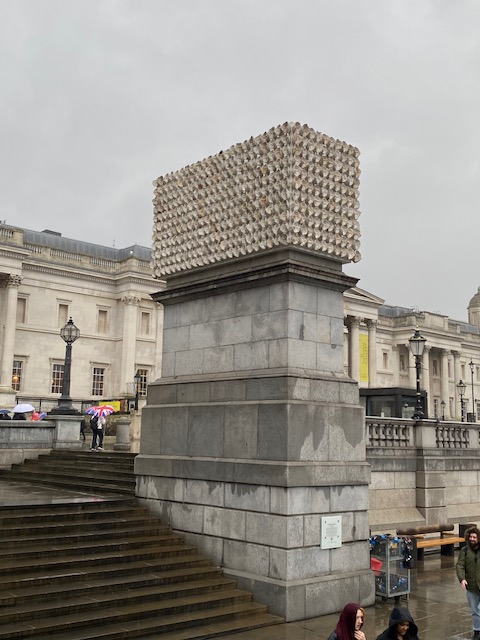
This wasn’t due to be the last stop on the 159 route, but the weather really wasn’t letting up so after a quick peek at the Fourth Plinth, and several minutes sheltering in the entrance to the loos in Trafalgar Square, it was time to call it a day.
The Fourth Plinth has an installation called “Mil Veces un Instante” or “A Thousand Times in an Instant” by Teresa Margoiles, a Mexican artist. It was created in tribute to the life of Karla La Borrada, a 67-year-old transgender singer who was found murdered in Mexico. Margoiles wanted to raise awareness of the violence and abuse faced by many transgender and non-binary people globally.
So ended, albeit early, the route 159 which was quite enjoyable, with plenty of variety. I learned that you can’t always rely on AI to help find places of interest, though it’s worth using as a first step and then getting clarification that places actually exist! It was a salutary lesson and I was really amused to find I was having a rant at it/him/her with the end result that AI redeemed itself by apologising (yes!) and giving me alternatives that I could pursue then and there.
I was also reminded how useful it is to get to chat to people I meet at the various places I visit. I met Isabella at Photofusion who recommended the Scooter Caffe – and this was exactly what I needed due to the very inclement weather.
Interestingly, I find I don’t strike up conversations with fellow bus passengers – I think everyone is living in his/her own little world and doesn’t take notice of anyone else. It’s true for me too – I sit on the top deck and only want to see where the bus is taking me.
Toilets that are open to the public and free of charge:
- Photofusion
- Scooter Caffe
- Trafalgar Square (payment necessary)
 london routemistress