
New Malden to Pollards Hill
Highlights:
- Murals in Raynes Park
- St Mary’s Church
- Merton Abbey Mills
1. Walton Avenue bus stop
Malden was at one time famous for its honey and was allegedly so good that even the King of England used to enjoy its healing properties. So says a charming mural now situated in the heart of New Malden. It isn’t actually a true story but it has resonated with residents who wish to keep up the legend. The real truth is that the locals decided to create a bee hive in the 1860s, as a symbol of the hard-working Board who needed help from the council to improve sanitation in the area. It worked and Richmond purchased 234 acres of Blagdon Farm’s fields for sewage disposal.
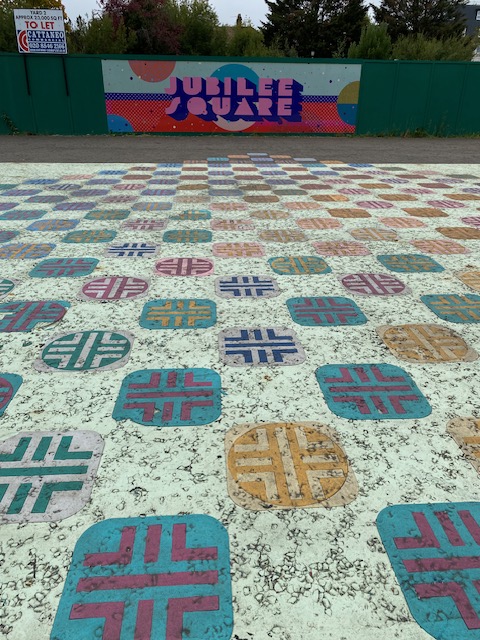
There is rather a lot of street art/murals in the area. Walk round to Jubilee Square and you’ll be confronted with a large painting of a bird by artist 5kyh1gh. On your way, you’ll come across a community garden, where vegetables and herbs are grown for the use of the community. And what was once a car park has been changed into a far more cheerful area, with a pretty centre pattern on the ground and posters and paintings surrounding it.


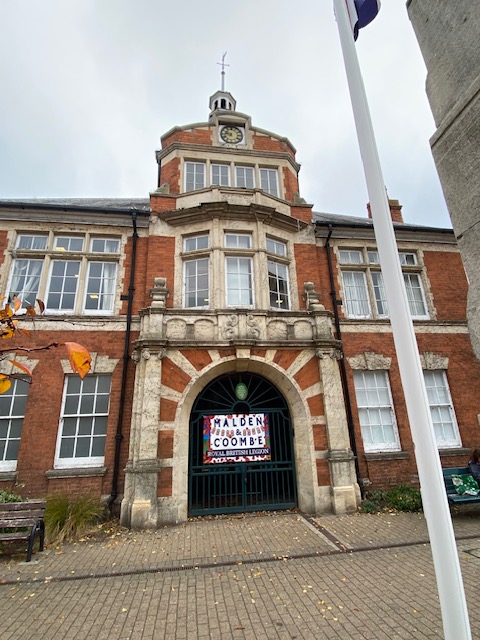
After seeing the square, take a walk round to see the Old Town Hall and war memorial. A plaque on the building says that it was the offices of the Urban District Council of The Maldens & Coombe 1905-36 and of the borough of Malden & Coombe 1936-65. It was designed in the Edwardian Baroque style and was officially opened on 27 April 1905. In April 1988, most of the surrounding area was bought by Waitrose for a new retail development and although the interior of the town hall was dismantled, the façade of the building has been integrated into the new retail development.

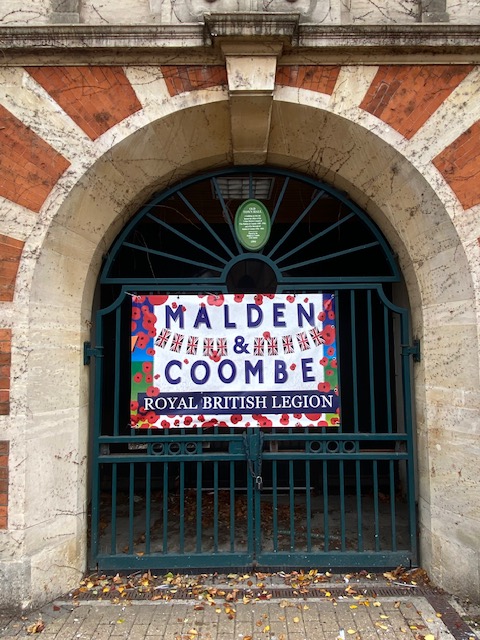
The war memorial is dedicated to those who died in the 1st and 2nd World Wars. It was unveiled in a public ceremony on 8 November 1924 by Private F. Jackson of the Royal Welsh Fusiliers, who was blinded during WW1. It was slightly damaged on 16 October 1940 after a bomb fell within 6 metres of the memorial during the Blitz. It was then rededicated in 1952 to honour New Malden soldiers who died during WWII.
You may know that this part of London – New Malden – is home to the largest Korean community in the UK, including a significant number of North Korean defectors. The community’s growth began in the 1970s when South Korean expatriates moved to the area following in the steps of the South Korean ambassador, who lived in the area. The North Korean defectors started arriving around 2003.
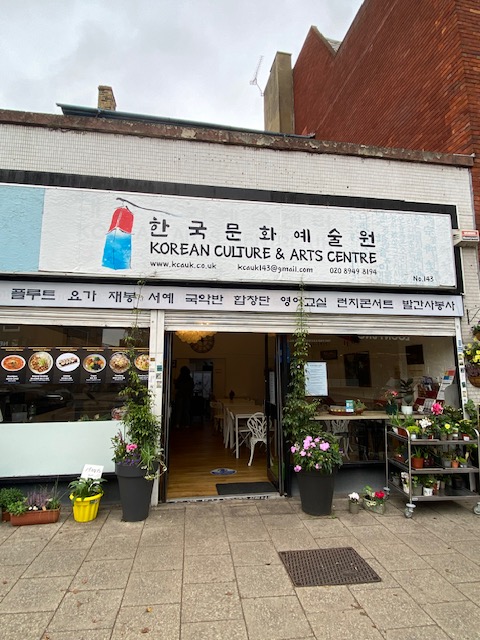
As well as many restaurants and cafes, look out for the Korean Culture and Arts Centre, where activities such as learning Korean arts, calligraphy, costume-making, take place. You can also learn Poetry, Janggu (Korean traditional drum class), Korean traditional dancing and cooking.
On the walls in the café are various Korean artefacts such as the komungo, a 6-stringed zither, a photograph of a Korean orchestra and some Korean writing.


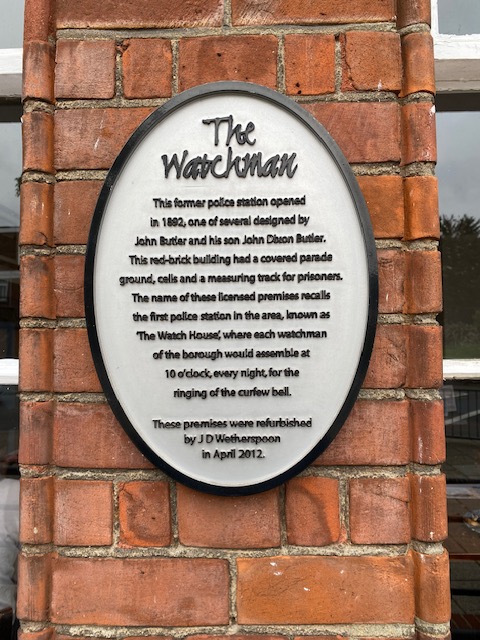
Before getting on the bus, walk down the road to see The Watchman pub. The building was constructed in 1892 as the New Malden police station, which included a covered parade ground and cells as well as a measuring track for prisoners. During World War II, it had an air raid siren on the roof, operated by a member of the Royal Observer Corps. The siren was a warning system for incoming bombers. The name of the pub recalls the first police station in the area, known as “The Watch House” where each watchman of the borough would assemble at 10 o’clock every night for the ringing of the curfew bell. It has been a pub since 2012.
Next to the pub is a very small memorial garden with a plaque dedicated to Constable Frederick Atkins, born in 1858 and who died in the line of duty on 23rd September 1881, aged just 23. While he was on patrol that night, he was shot 3 times by an unknown assailant. He was taken back to Kingston Police station and died from his wounds later that day.


2. Raynes Park station bus stop
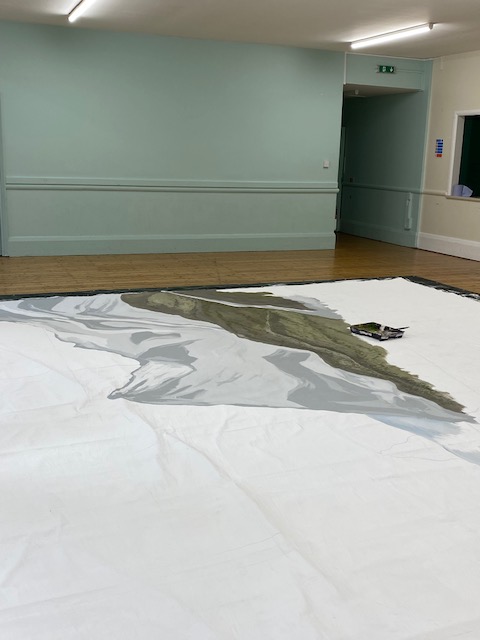
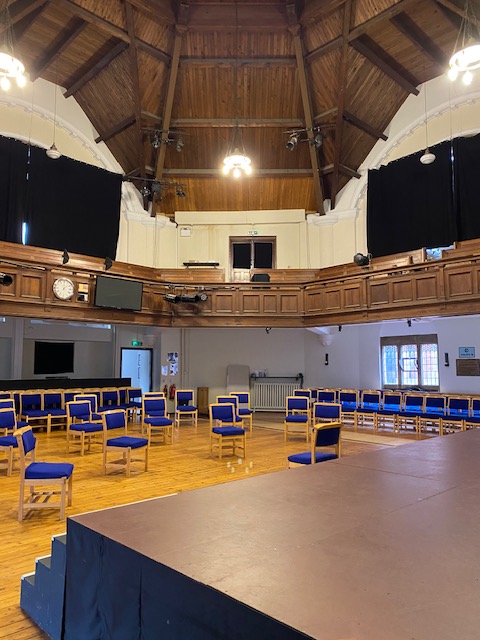
When you get off the bus at this stop, make your way to the Lantern Arts Centre. It’s situated in the Methodist Church in Raynes Park and both are thriving communities and have a special relationship with each other. The arts centre puts on events, hosts activities and looks after the local community. They put on a pantomime every year and this time it’s Rapunzel – the staff prepare all the scenery themselves and were already doing so mid October. There are a number of rooms that are available for hire and where the various activities take place.
On your way back to the bus stop, you’ll come across numerous murals, each one as good or better than the next. In particular, there is one long one under a bridge in Pepys Road but others are nearby and brighten up what would otherwise be a dull and boring wall.


3. Wilton Crescent bus stop
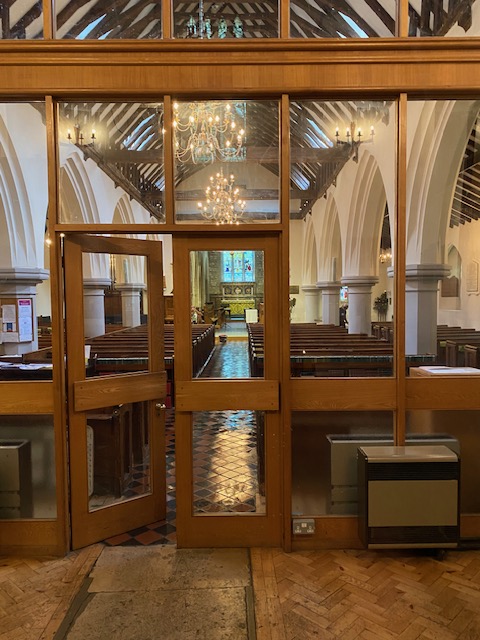
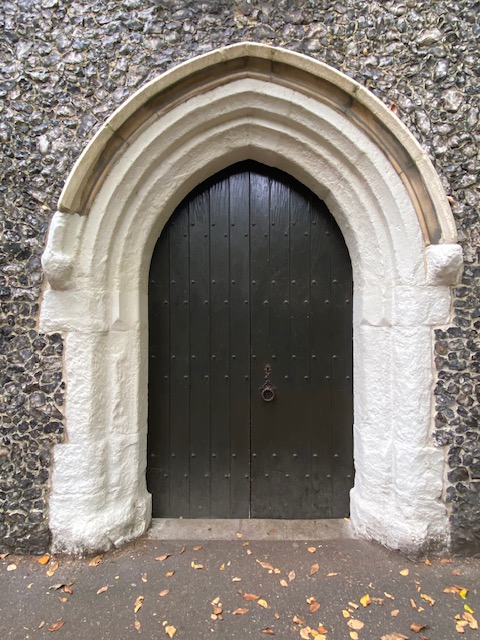
A few minutes walk from the bus stop, is St Mary’s Church. A church has stood on this site since before the Domesday Book. It was founded by the Augustinian Canons who also founded Merton Priory. Parts of the present building date back to 1115. The roof of the nave is nearly 900 years old and that of the chancel dates from 1400. The doors are not always open but you can get a feel of its majesty by walking around outside.
In particular, look at the Norman archway that was built in 1175 as the entrance to the guest house at Merton Priory. It was forgotten for many centuries. After dissolution Gregory Lovell moved into the Priory building and over time it grew into a substantial family home. When the building was being demolished in 1914 the arch was found. It was rescued and moved to its present site in 1935.
You can enter the church (when it’s open) through the 14th century West Door. Look closely and you can see two disintegrated heads on either side of the door. It’s thought they could represent Edward III and Philippa of Hainault, dating the stone work to about 1360.
The North Porch dates from 1390 and the fine oak tracery is original. The small head in the apex at the front may depict Prior Robert de Windsor from 1368-1403.
I would advise that you visit on a day when it’s open because there is much to see inside. There’s Lord Nelson’s Seat – he worshipped regularly at this church towards the end of his life – and beautiful stained-glass as well as memorials and paintings.


Over the road from the church is John Innes Park and Recreation Ground that were originally the grounds of the Manor House, home of John Innes. On his death in 1904 he left the house, grounds and most of his money to found a school of horticulture, if possible, or a museum and other charitable schemes. The park was formally opened to the public in 1909. The layout of 1909 is little altered today. Buildings predating the park layout include a two-storey entrance lodge and an archway, both inside the park.
John Innes was a British property developer and philanthropist who developed Merton Park as a garden suburb. He was the sixth of seven children of West Indies merchant John Innes and his wife Mary Reid, a daughter of brewer Andrew Reid. The family owned sugar plantations in Jamaica and imported rum into England. They supported the anti-slavery campaign in the West Indies and eventually sold all their business interests.


4. Merton Abbey bus stop
This is also the stop on bus route 57 for Merton Abbey Mills. The name derives from Merton Priory, one of the most important monasteries of the middle ages. Henry VI was crowned here and Thomas Becket was educated here. By 1600, textile mills were attracted to the river Wandle, both as a source of power and the special quality of the water, ideally suited to the washing, dyeing and printing of textiles. By 1792, over 1,000 people were employed by the printing industry in the area and it was here that important advances in the technique of printing textiles were developed. Until 1970, it was the silk-printing works of the famous Regent Street store Liberty’s and even now there is a Colour House Theatre in honour of the works that had gone on here. This is the site’s oldest building and is probably the only remaining part of the medieval Merton Priory.
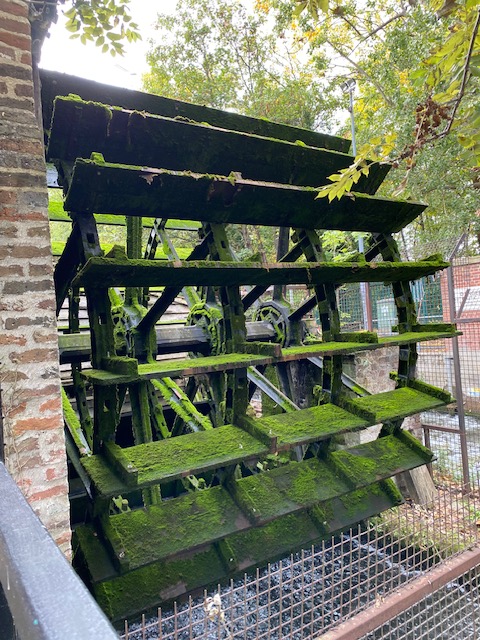
See too the Wheelhouse, the only watermill (out of the original 100 on the river Wandle) still in working order. It dates from 1885 and was used by Liberty’s for rinsing the gum off the printed silk. You can still see the spool it powered, if you go inside. These days the wheel is used to turn a potter’s wheel as well as generating electricity.


5. Clay Avenue bus stop
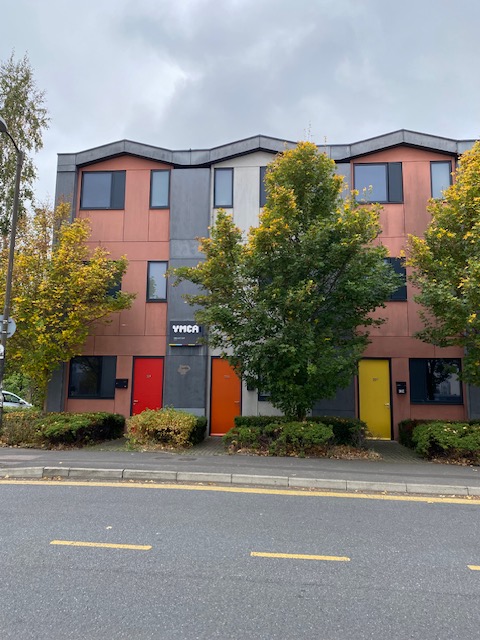
There are some fun and colourful homes at this stop, courtesy of the YMCA. The Y-Cube properties are all part of an affordable housing scheme which provides self-contained flats for 36 people in housing need. Each flat is let on assured short-term tenancies with the length of stay being 3-5 years. The scheme is designed to provide ‘next stage medium stay’ accommodation for single people in housing need. Each house has a unique front door colour and they certainly brighten up the area.
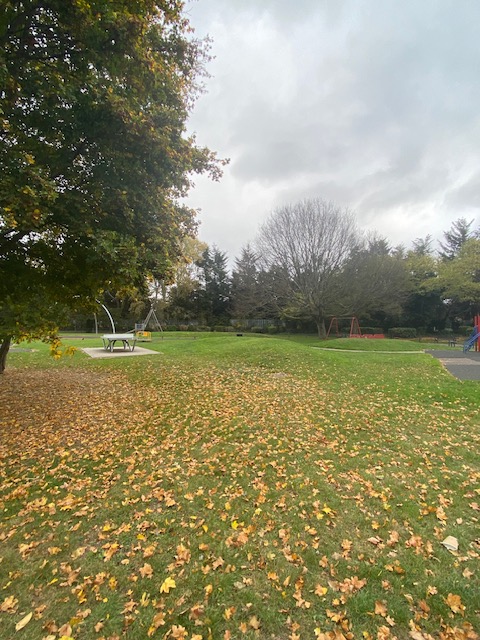
Round the corner is Long Bolstead Recreation Ground, an open space that was developed on the site of a former fireworks factory, which ceased production in 1965. The factory was located on marshy land and the area was later repurposed, with part of the former site being converted into the recreation ground. It’s a small area but it’s pretty and has space for walking and relaxing.

6. Streatham Park Cemetery bus stop
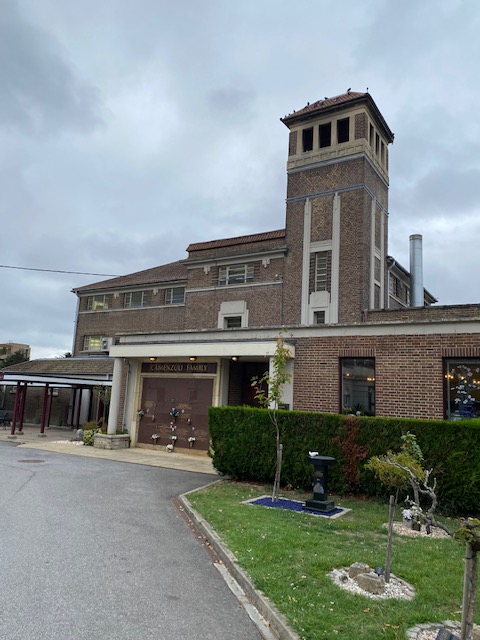
South London Crematorium/Streatham Park cemetery is very close to the bus stop. The cemetery opened in 1909 but was originally planned in 1890 to match the Great Northern Cemetery that opened in 1861 in Southgate. There’s an Anglican Chapel which also serves as the cemetery office. The Crematorium had been planned from 1913 but was not built until 1936, the delay owing to the start of World War. There are various gardens of remembrance on the grounds and it’s one of the better-kept cemeteries in London.
The cemetery has a long connection with the Variety Artistes’ Benevolent Fund, with about 200 variety artistes and music hall performers buried here between 1921 and 1944, including music hall artists Tom Costello and Nellie Nevette and actors Wilfred Brambell and Will Hay.
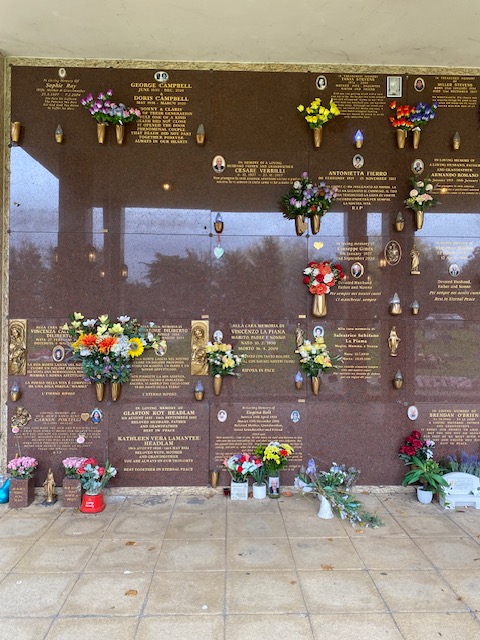
There is a poignant plaque dedicated to those people who have kindly donated their bodies for the advancement of science. As they don’t have a burial or cremation, these are people who are often forgotten so it’s fitting that they have their own remembrance stone.


7. Pollards Hill Library bus stop
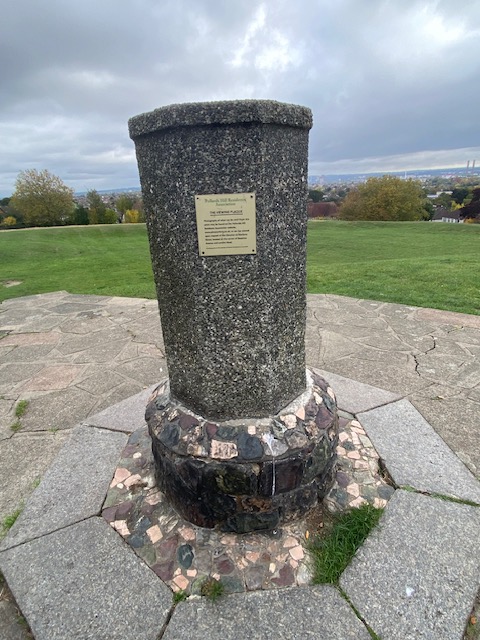
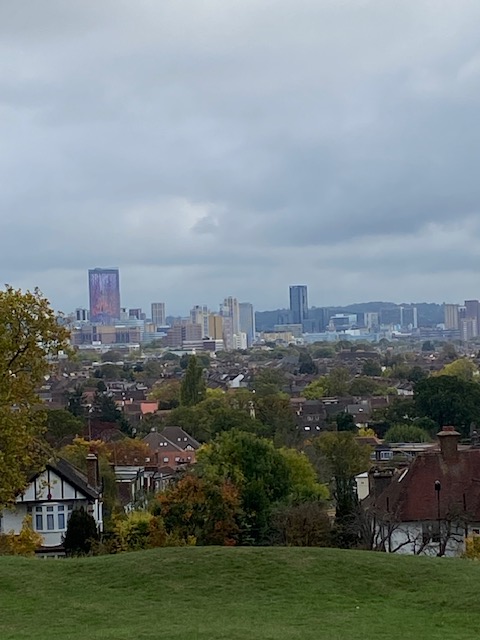
Final stop on this route is to see the Pollards Hill viewpoint. Getting to it isn’t for the faint-hearted as by definition, it’s a bit of a climb up. But once you’re at the top, you will have panoramic views of the city of London and if you’re lucky enough to be there on a clear day, you can see as far as Central Croydon, Windsor Castle, and the Crystal Palace TV masts. It is the highest point in the area, situated in a park with open grassland and a trig point. There’s also a viewing plaque with an aerial description of what can be seen from the spot. It is a good way to end the route, to be able to see far and wide, the length and breadth of London.

This was a good route though not spectacular. There were a reasonable number of places that were enjoyable and educational, not least finding out that New Malden was the focal point for Koreans in London and that it was also once renowned for its honey. The murals under the bridge at Pepys Road were amazing, with one extra long mural of a jungle scene. The route had a mix of interesting things to see, to satisfy all tastes – from street art (the Raynes Park murals), to nature (parks and viewpoints), to old buildings (St Mary’s Church, the Watchman pub) and culture (Lantern Arts Centre).
Toilets that are open to the public and free of charge:
- MacDonald’s New Malden
- Lantern Arts Centre
- Merton Abbey Mills
 london routemistress
6 responses to “Bus route 152”
Hi Helen
Interesting especially for an unreconstructed bus spotter!
Got the site details from Charlie Fenton.
Love it!
Michael Moss
michael@moss.uk.com.
+44 7850 855555
LikeLike
Hi Mike
Lovely to hear from you. I’ve been travelling the buses (starting at #1) since November 2021. I can’t believe I’ve done more than 150! I am having a ball with it – so so much of interest in London and TfL extends way further out than I had ever imagined. And all of it costs me nothing of course.
Hope you and Erica are well and all the family.
Helen
LikeLike
Helen. It sure does. I was bus spotting from about 1960. Spent a lot of time with pals doing garages like Tring and Garston then miles out in the country and where the green Country Buses (all routes beginning with a 3) prevailed. Happy days and I can’t see an old bus without looking it up in my little book – even now! Glad you are doing ok. See you around M x
LikeLike
I can’t believe how litt
LikeLike
Hi Jane – I don’t know what you can’t believe! Can you enlighten me please …
LikeLike
I didn’t know about –
The honey stories about New Malden and the murals The history of the WatchHouse I’ve never been to the Korean arts centre I didn’t know about Frederick Atkins And I’ve never been to St Mary’s Church Or the rich history of John Innes in the area
So you’ve taught me a huge amount about where I live! Thank you!
>
LikeLike