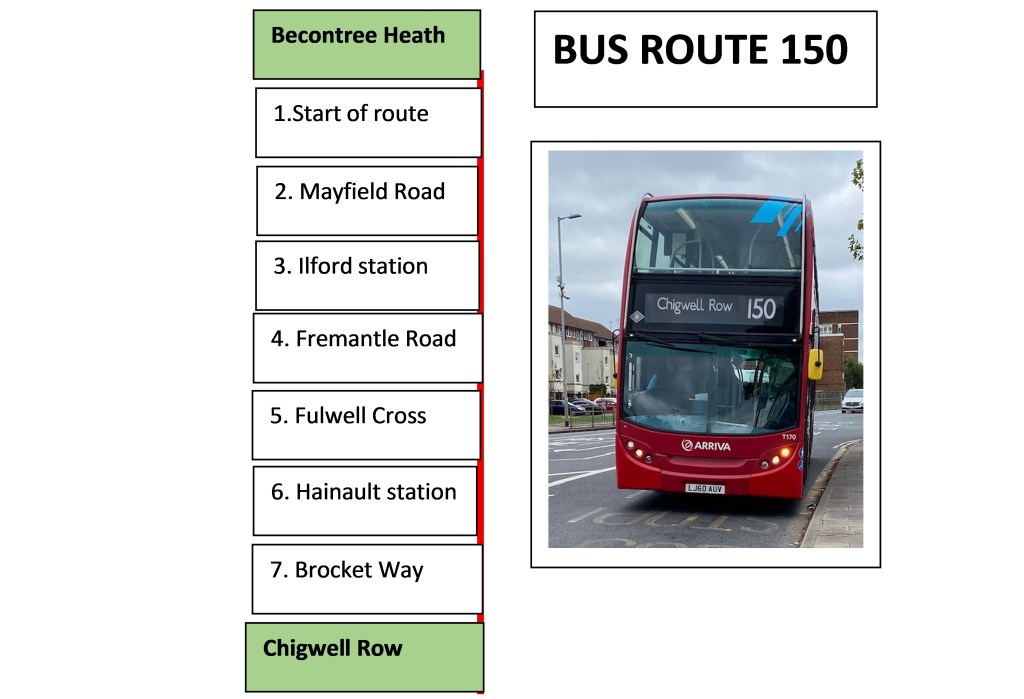
Worcester Park to Shotfield
Highlights:
- Whitehall, Cheam
- Lumley Chapel
- Nonsuch Park
- Sutton mosaics
1. Lumley Road bus stop
The bus stops near Whitehall, a grade II* listed Tudor house, built around 1500 in the heart of Cheam Village. It’s been a local museum since 1978 and offers unique insights into the past. It had been built as a wattle and daub yeoman farmer’s house. At one time, it had been called “The Council House,” since Elizabeth I had used it for holding an impromptu council meeting for signing papers while on a hunting expedition from (then nearby) Nonsuch Palace.
The house is typical of a merchant’s property, rather than that of an aristocrat and its history is rich with past owners and residents. Of the previous owners, perhaps the most noted is the Killick family, starting with Captain James Killick who was captain of the tea clipper Challenger and who went on to establish the transport/logistics company Killick Martin & Co. Unusually for a large timber house at that time, there was no central hearth, so the house must have been heated with a hearth or chimney at one or both ends. Later in the 16th century, a chimney was inserted in the north end.
In one of the rooms downstairs, off the central hall, is an exhibition with information about the local area at the time of the house being built, including a model of Nonsuch Palace – see the next stop for information about this palace.
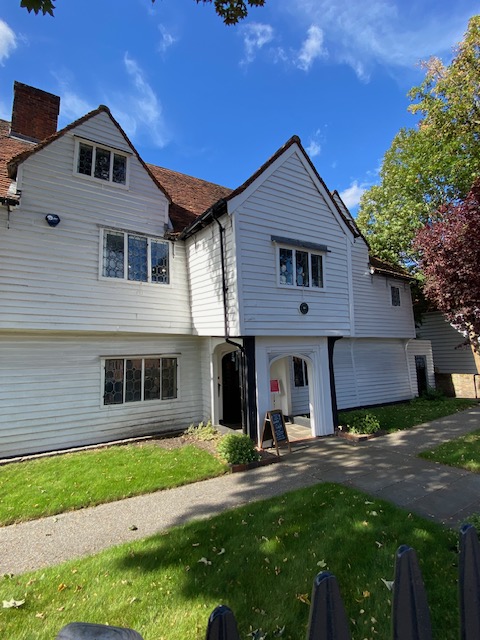


In the 17th century, a three-storey extension with a cellar was added to Whitehall and was probably built at the time when Reverend George Aldrich, who founded the Cheam School, resided here. The strong links between the school and Whitehall continued in the 18th and 19th centuries when school pupils and staff frequently boarded at the house.
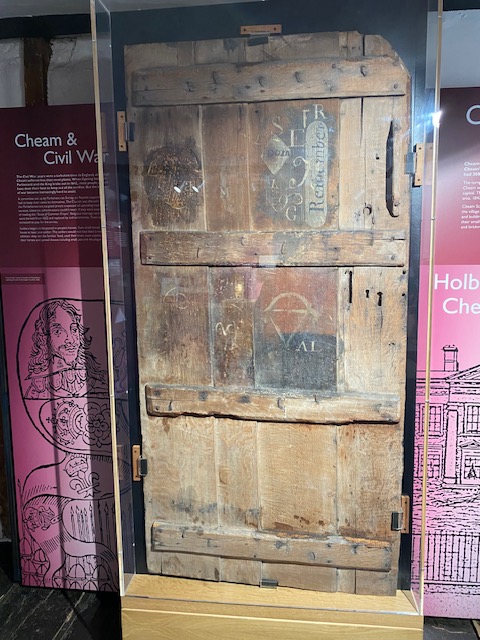
When you go upstairs, you’ll see a “graffiti” door, carved with Catholic and Royalist symbols from around the time of the English Civil War. Scratched into the door is the word “Remember” which is thought to be the last word uttered by Charles I before he was beheaded. This type of graffiti put the residents of Whitehall at risk of being tried for treason. In another room is a Bible Box dated 1702 which would have housed the family bible.
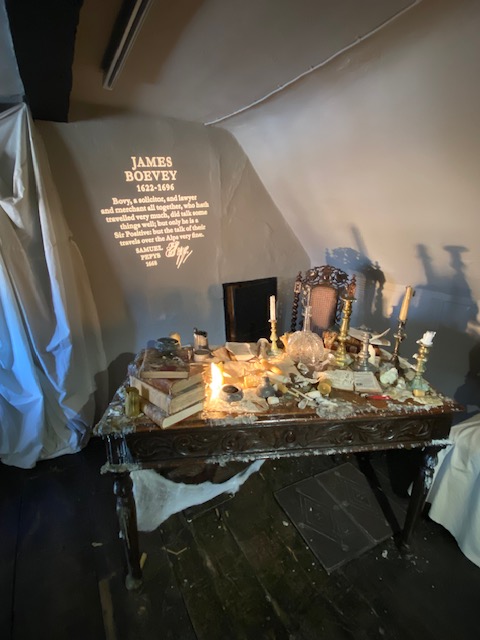
Go up another flight of stairs to the attic which has been furnished as a schoolmaster’s study, recalling the period in the late 19th century when three masters from Cheam School lodged here. There is also a desk covered in wax and books, that had belonged to James Boevey who was a solicitor and merchant. Find too, a wooden box once belonging to Rev George Aldrich – he who started Cheam School.


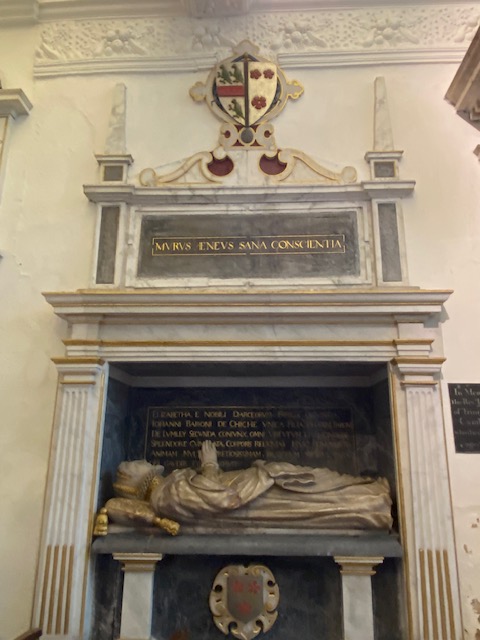
Around the corner from Whitehall is Lumley Chapel, the remaining part of the mediaeval parish church of St Dunstan’s, which is next door. First built before the Norman Conquest of 1066, it contains many monuments to the villagers of Cheam including to John, Lord Lumley. In 1580 John, 1st Baron Lumley inherited the nearby Nonsuch Palace through his marriage to Jane Fitzalan, daughter of Henry FitzAlan, 19th Earl of Arundel. During the 1590s Lumley converted the church into a memorial chapel for himself and his two wives.
One of the windows inside Lumley Chapel dates from the 15th century and has three lights, each stained glass. There is a blocked arcade and window that would have led into the south chapel and dating back to the Saxon or the early Norman era. Despite its small size, the chapel contains many memorials, notably to Lumley, his two wives Jane and Elizabeth. The recumbent effigy of the latter lies on her tomb.
Although little used, it remains consecrated and one or two services are still held there.
If you want to visit the chapel, you can borrow the key from the staff at Whitehall, as long as you pay a deposit which you get back on returning the key. It’s really worth while seeing this chapel.



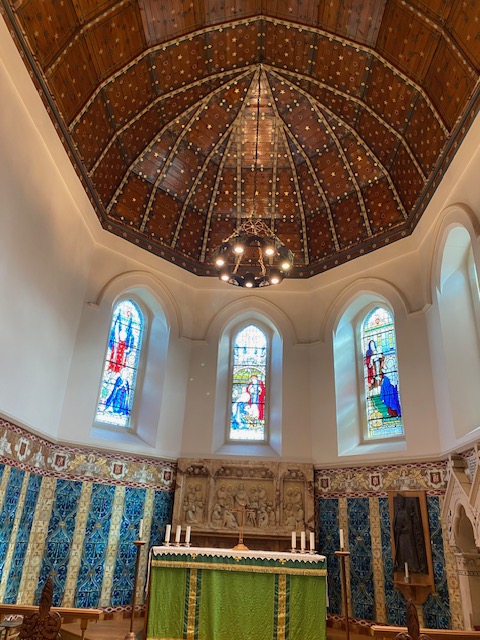
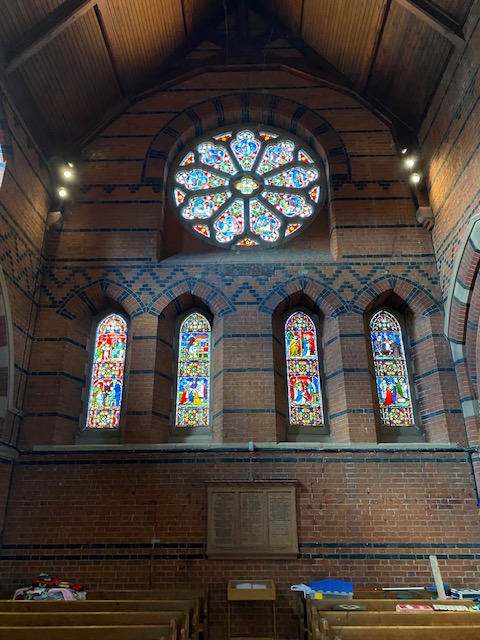
The chapel is next door to St Dunstan’s church. The present church was built in 1864 but the old church dated back to Saxon times, the chancel of which is Lumley Chapel. St Dunstan’s is constructed with Kentish ragstone in Victorian Gothic revival style with polychrome brickwork decoration, giving it a very engaging look, along with its stained glass and Rose windows.

2. Cheam Broadway bus stop
Having explored the delights of the buildings in Cheam, it’s now time to discover some outside spaces. At this stop, you’ll find Cheam Park, or Nonsuch Park. This is the site of the former Nonsuch Palace, almost all of which has been destroyed but nevertheless, there are elements that are worth seeking out.
Begun in 1538 and commissioned by Henry VIII, Nonsuch Palace was a grand, triumphal structure intended to celebrate the Tudor dynasty and Henry VIII’s reign. Elizabeth I spent summers at Nonsuch and used it as a royal hunting lodge. After the English Civil War, the palace was returned to the Crown and perhaps foolishly, it was given by King Charles II to his mistress, Barbara Villiers. Foolishly because she had the palace demolished in 1682 to sell the materials and furnishings to pay off gambling debts, so that there is nothing left standing of the original palace.
The building that has since been erected is Nonsuch Mansion, a grand-looking place built by Sir Jeffry Wyatville between 1802 and 1806. It’s a Tudor Gothic mansion which is a go-to venue for weddings, that was inspired by the original palace. It would be a treat to go inside so you may want to book a visit.
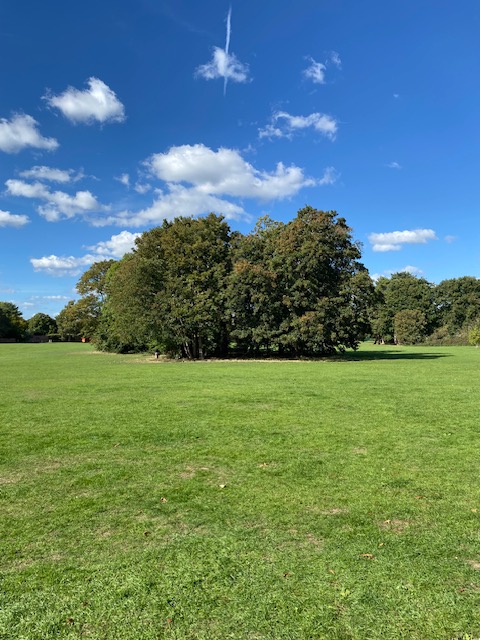

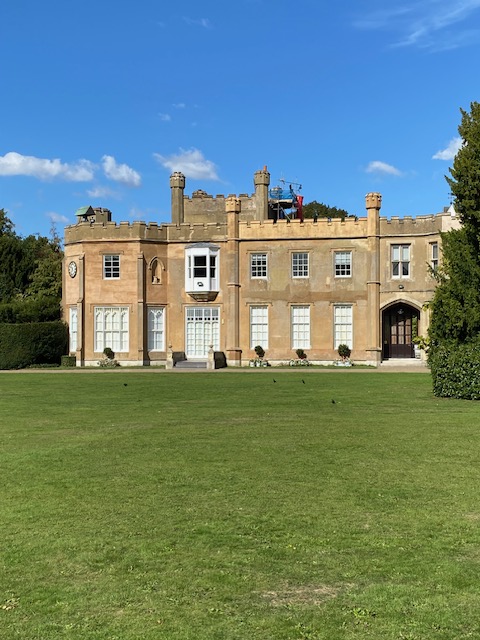
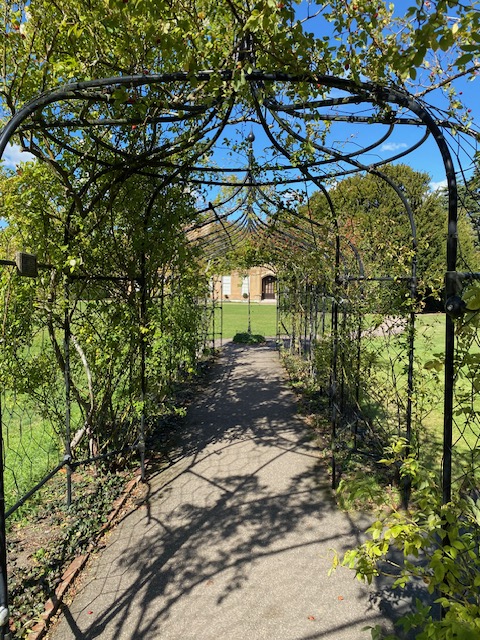
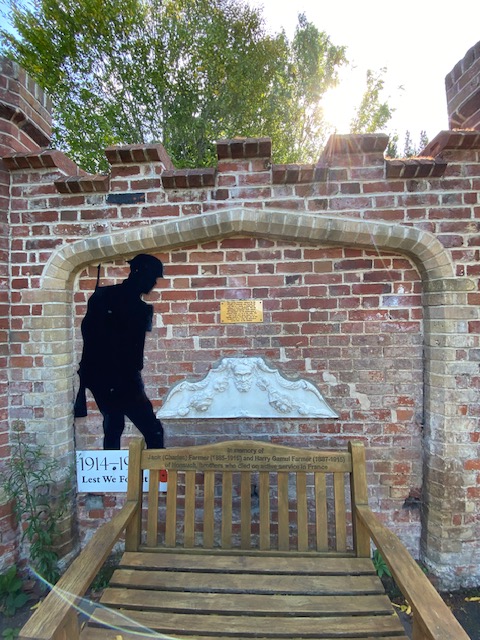
However, the gardens and park are worth visiting too. The grounds are extensive so you can experience a long and peaceful walk. There are formal gardens, beautifully laid out and what would undoubtedly be exquisite at the right time of year, a rose tunnel. If you walk round from the tunnel, you’ll find a bothy wall, all that remains of the single story building. This would have once housed gardeners to the estate. These gardeners would have controlled the atmosphere in the greenhouses nearby.
Samuel Pepys visited the area on numerous occasions, often staying in nearby “Yowell” (Ewell), and described the park as having “A great walk of an elme and a walnutt set one after another in order.”

3. Sutton Police station bus stop
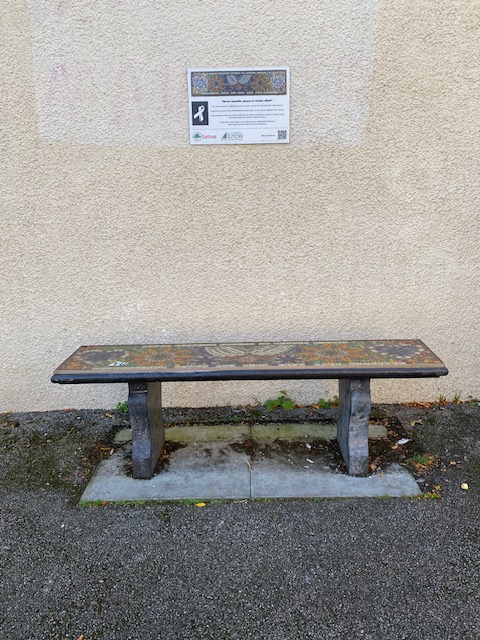
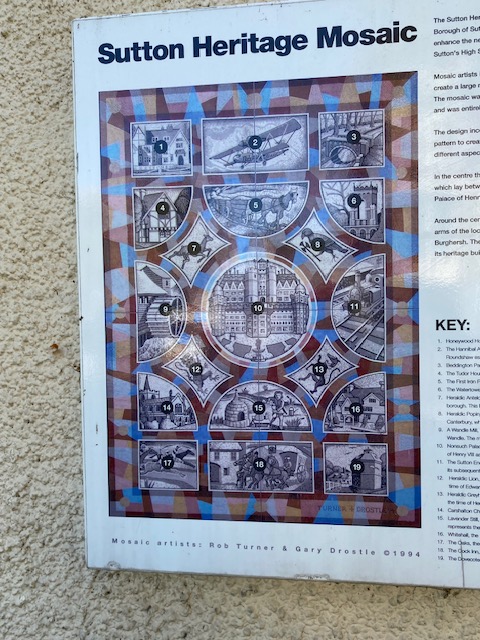
In the centre of Sutton is Trinity Square, where you’ll find a few things of interest. Firstly is a mosaic bench, a memorial to every woman and child who has died from male violence. The White Ribbon bench gets its name from the words of the White Ribbon Promise, taken by men to stand against male violence.
The bench sits underneath a mosaic mural by Gary Drostle and Rob Turner which is the Sutton Heritage mosaic, commissioned in order to enhance the new town square. It depicts some of Sutton’s rich heritage, on 19 panels each telling a different aspect of local history. In the very heart of the mural is Nonsuch Palace and Park which in turn is surrounded by heraldic beasts from the arms of local families, as well as heritage buildings and past industries.
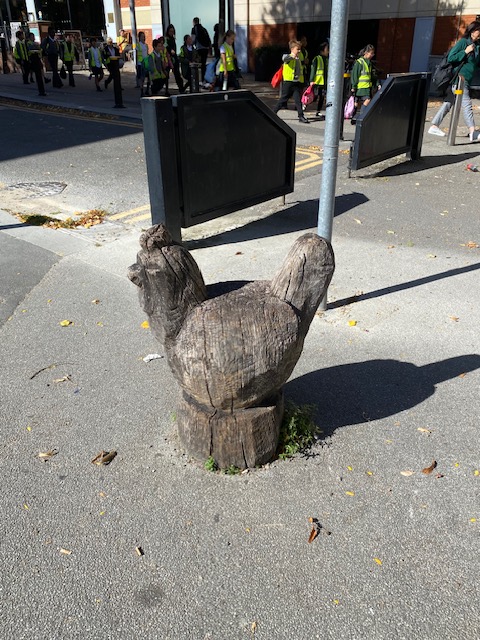
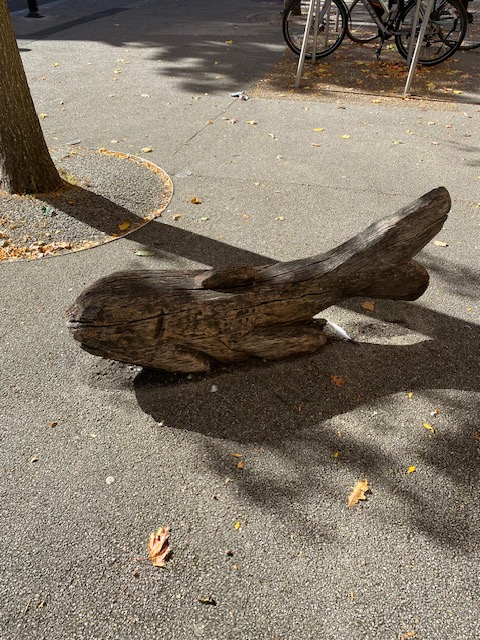
Also in Trinity Square are a series of wooden animal sculptures. These are a collection of carved wooden animals like ducks and a frog arranged around a tree. The wooden seats were carved into the shape of creatures to appeal to younger visitors to the town centre.
Local children gave names to the play benches before they were installed, so animals such as Ninja the duck; Sparkles the swan; Olivia the pony; Terri the snail; Sonic the frog and Charlie the chicken have taken up residence on the High Street.
The final thing to see in Sutton centre is Sutton Armillary, officially the Millennium Dial Armillary, a public art piece presented by the Rotary Clubs of Greater London in December 2000 to thank the community for supporting Rotary charities and to commemorate the new millennium. This astronomical instrument serves as both a piece of art and a landmark, inscribed with the motto “Service Above Self”.


4. Manor Place bus stop
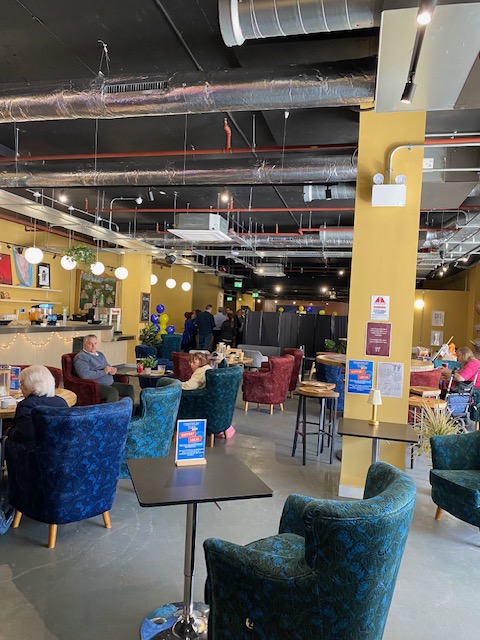
It’s an easy stroll to get from Trinity Square to this stop but you can also hop on and off the bus. Head over to Throwley Yard cinema. It’s an independent cinema and cultural hub, with a strong focus on the local community. They pride themselves on offering “an exciting programme of films and events, and to serve as a platform for local talent and entrepreneurs”. It stands on the former site of a nightclub and opened in June 2024, having stood empty for 13 years.
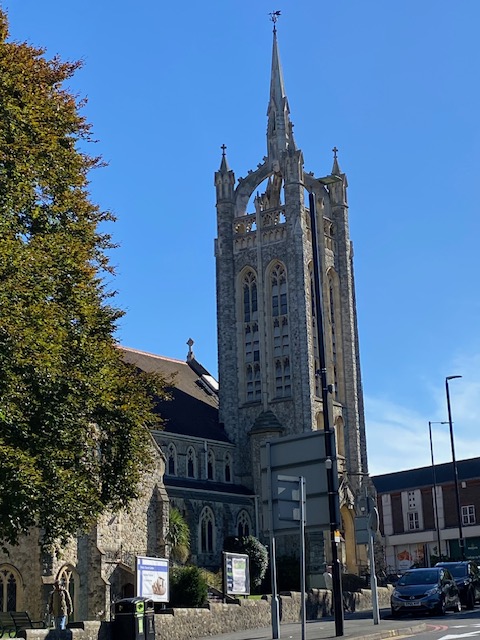
Walk round the corner to see Trinity Church, now Grade II listed, built in 1907 in the Gothic style. The church comprises a complex of buildings and its most striking feature is its very unusual “crown and lantern” spire, a design shared with two other cathedrals – St Giles Cathedral in Edinburgh and Newcastle Cathedral.

5. St Helier Hospital bus stop
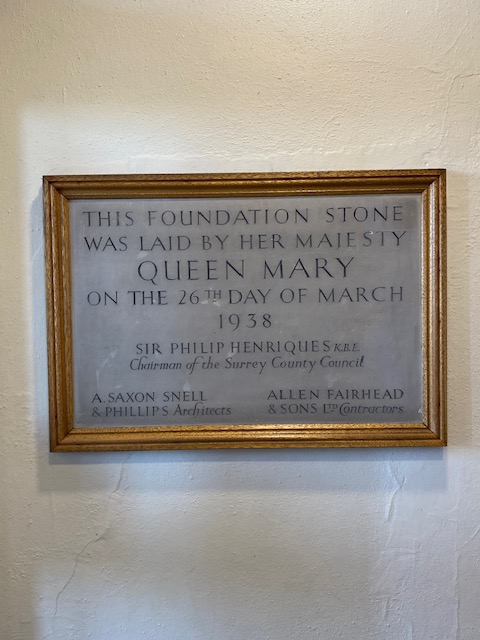
No, this isn’t the St Helier in Jersey! This hospital, which got its name from Baroness Mary St Helier, began with a lease of land in 1934, a foundation stone laid by Queen Mary in 1938, and the admission of its first patients in 1941 during World War II. The hospital was damaged by bombing raids during the war but continued to serve the community and was painted green to reduce its visibility to German bombers. Probably the biggest claim to fame for St Helier is the birth here of Sir John Major in 1943 – there’s a large plaque at the entrance, stating this fact.
Fun facts about the Baroness St Helier: She was an indefatigable London hostess and a friend of many of the celebrities of her day, including the American novelist Edith Wharton. During World War I, Lady St Helier befriended a Canadian ex-cavalry officer named William Avery Bishop and used her connections to speed his acceptance into flight school. Billy Bishop went on to become one of the most successful and revered fighter pilots of all time.


6. Park Road bus stop
Last stop on this route is to go to Beddington Park with its renowned bird-watching site. It was originally a deer park in the 14th century owned by the noble Carew family. In fact there is a manor house still standing in the park today and is currently used as a school. The Great Tudor Hall which is a surviving part of the medieval Manor house, is the only Grade 1 listed building in the Borough of Sutton. The house is too far to get to from this bus stop (especially after a long day of getting on and off the bus!) but it really does look worth a trip.
Set within the park is an historically important site for birdwatchers and a developing nature reserve. It’s possible to view a significant portion of the site, including lakes and wet grassland, from a public footpath along its western side and a shelter has been placed for viewing.
Take a walk round the park and find the Stock Pond. This was originally made for Canon Alexander Bridges, rector of Beddington 1864-1891 and an honorary Canon of Winchester Cathedral. His father died in 1861 and so Alexander inherited a fortune. In 1864 he purchased Beddington Park, making space for the Beddington Cricket club, employed William Morris and Co to make the organ screen at St Mary’s Church and landscaped a new Stock Pond.
More recently, the pond has undergone complete regeneration and there are now freshwater shrimps, newts, frogs, small fish as well as dragonflies and other small insects making their home here.


I loved this route! I was particularly bowled over by Whitehall and its history and the fact they allowed me to take the key to Lumley Chapel, to see the small building which is also steeped in history. It was exciting to walk in the park and garden at Nonsuch and perhaps cover the same ground as Tudor royalty. And then the mosaics in Sutton were a contrast to the historic buildings, but no less interesting and educational. All in all, it was a pleasure to do this route, most of which I hadn’t come across before, and find delightful places to explore.
Toilets that are open to the public and free of charge:
- Whitehall, Cheam
- Throwley Yard Cinema
 london routemistress
