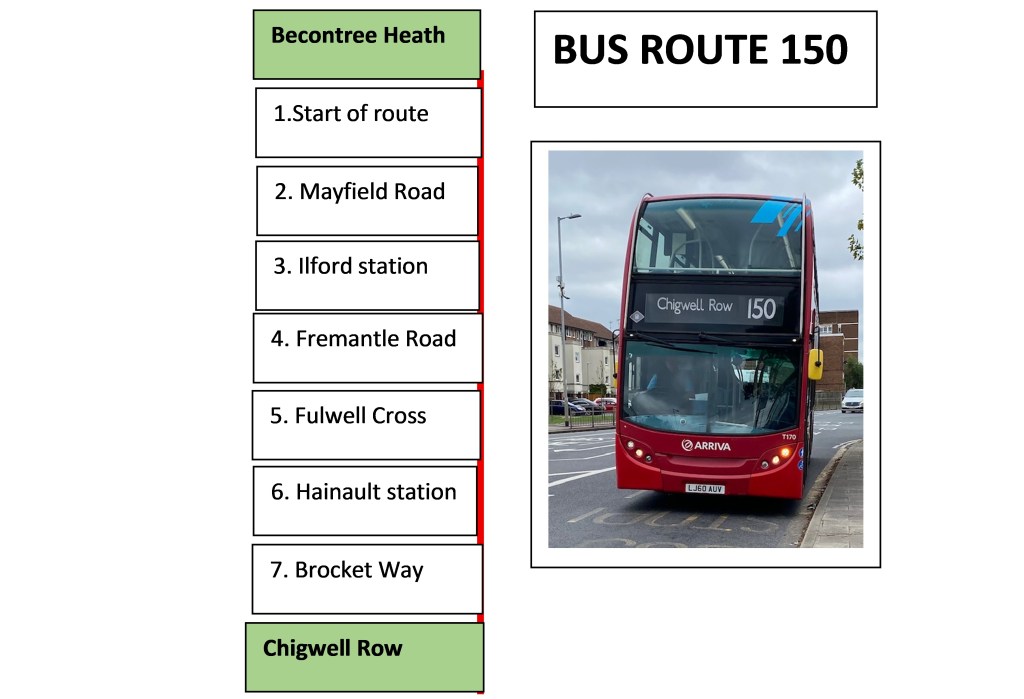
Becontree Heath to Chigwell Row
Highlights:
- Ilford Hospital Chapel
- Cottage Homes near Barnado’s
- Woodhenge in Hainault Forest
1. Start of route
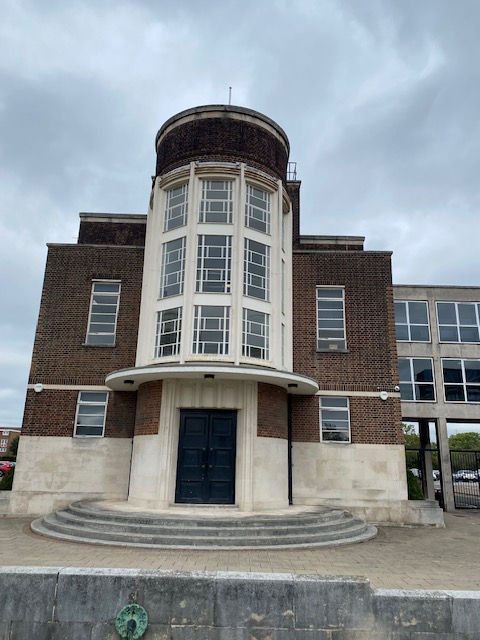
The start of this route is very near the former Dagenham Civic Centre, which is now part of the University of Coventry. The building was designed and built in the 1930s in the Modern style – a style that was prominent in the post art deco era. It was used as council offices until 2016, after which it was leased to CU London. As it’s now used in this educational capacity, it’s not always possible to go inside, which is a great shame as it seems that many original features are still there, such as a Botticino marble stair hall and the ceilings are decorated with art deco paintings.
Outside the main entrance, look up and see the friezes. They depict panels representing the traditional local industries: shipping and agriculture, docks, and the Ford Motor Company plant with its iconic workers. These relief sculptures are carved from stone and have been praised for their quality and detail.


2. Mayfield Road bus stop
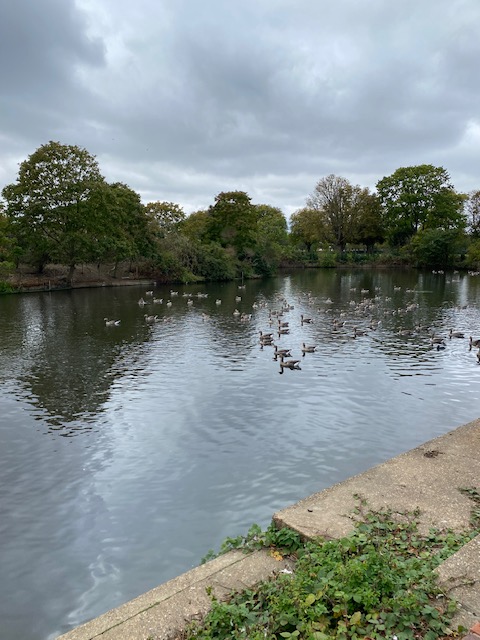
Walk round the corner from the stop and find the entrance gates for Goodmayes Park. The park was opened in 1905 by one of the local MPs. Near the entrance is a man-made lake, split into two sections. The larger, southern part of the lake includes an island where birds can and do breed. There is a profusion of resident flocks of Canada and Greylag geese on the lake – they also roam freely on the green areas. The wildflower meadow is pretty but is probably best seen in spring or summer months. Next to the wildflower meadow is a low building, in a similar state of repair to one at the entrance gates, that could be a keepers hut or a café. These buildings are painted in the same green as the iron gates at the entrance of the park.



3. Ilford Station bus stop
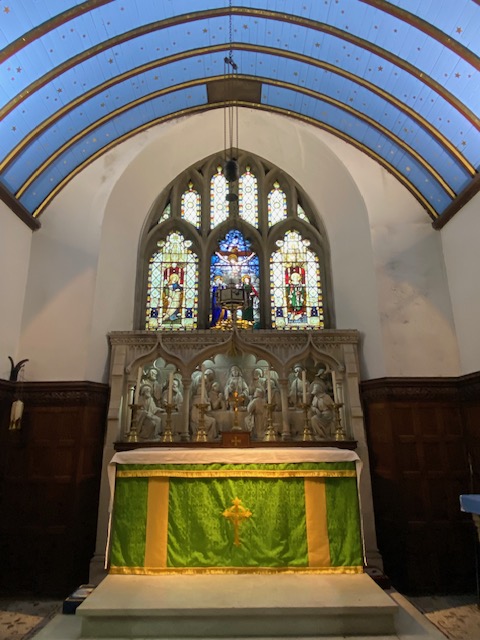
Many other routes stop here as well but as it was Thursday around noon, the Ilford Hospital Chapel was open for once. They have a service at 12:30 so do get there earlier so you can, to appreciate the interior. And you’ll be in for a treat. It is an ancient charitable foundation dating from about 1140, and is the oldest building in the borough with grade II* listing.
The chapel and associated buildings were erected to provide accommodation for 13 old and infirm men, called the brethren by Adelicia, the then Abbess of Barking Abbey. It’s more a hospice than a hospital. During the 13th & 14th centuries, whilst leprosy was prevalent in England, lepers were admitted. The chapel survived Henry VIII’s closure of the monasteries, possibly because it was functioning as a parish church for Ilford and was subsequently leased to a succession of families. During Victorian times, substantial renovations were made, including the addition of the south aisle with windows by Edward Burne-Jones.




4. Fremantle Road bus stop
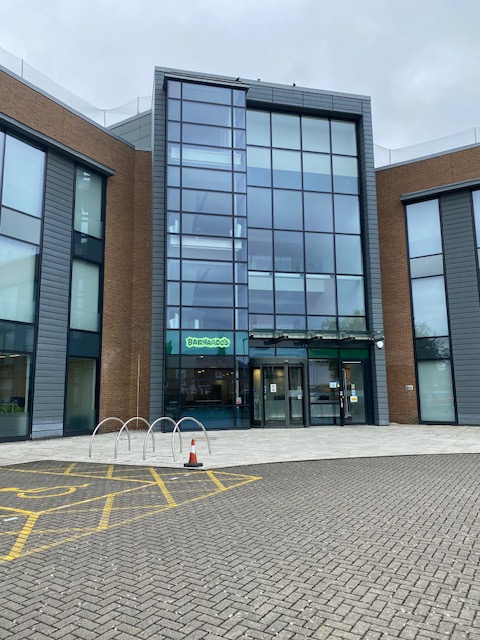
Walk up the road from the stop and you’ll first see the Head Office for Barnado’s. A modern building but it wasn’t always so. Thomas Barnado was born in Dublin and moved to London to train as a doctor. He was affected by the amount of poverty and disease he saw and after a cholera epidemic left very many children orphaned, he felt he needed to help them. In 1867, he set up a ‘ragged school’ where children could get a free basic education. His eyes were opened when he realised that many of the children were living on roof tops and gutters. He gave up his ambition to be a doctor and dedicated his life to helping the poor children.
And so it was that in 1870, he opened his first home for boys where they were able to live and learn carpentry, metalwork, and shoemaking, and get help getting into apprenticeships. At first, there was a limit to the number of boys who could stay there. But when an 11-year-old boy was found dead of malnutrition and exposure two days after being told the home was full, Barnardo vowed never to turn another child away again.
In 1873, Barnardo married Syrie Louise Elmslie and as a wedding present, they were given a lease on a 60-acre site in Barkingside, where they opened a home for girls. Syrie was especially keen to support girls who had been driven to prostitution. The Barnardos were early adopters of the ‘cottage homes’ model, believing that children could be best supported if they were living in small, family-style groups looked after by a house ‘mother’.
There still exists many of these cottage homes near the HO. They were built in 1860 and most are now grade II listed buildings. Also in the area is the Barnado’s Church, known as the Children’s Church. It was built as part of the Girls’ Village Homes in the 1870s, serving as a dedicated space for the children living in the homes. It was specifically designed with child-sized pews and stained glass depicting Bible stories with children. The church isn’t often open so it’s worth checking on their website for days and times.


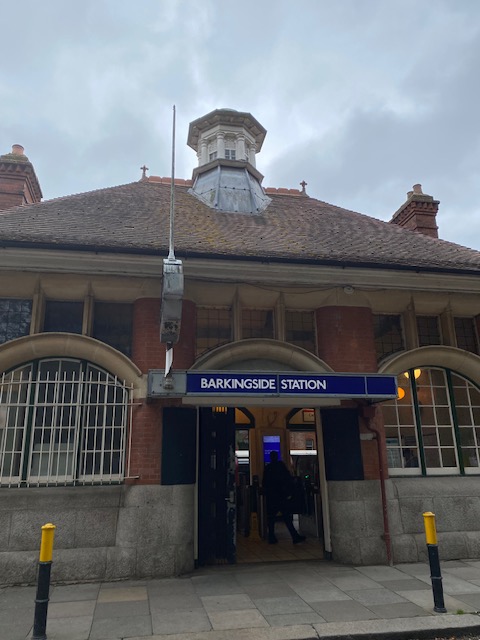
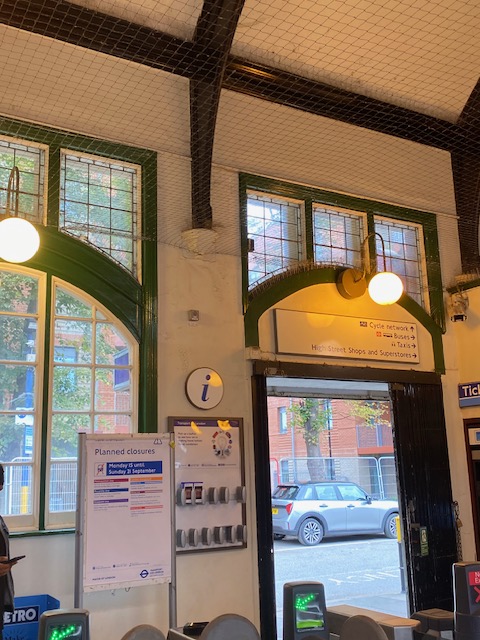
One other place to see round here is Barkingside tube station. It was built in 1903 and has a more ornate feel and look to it than others built at that time. It is thought that this is due to the many Royal visitors who came to admire Dr Barnardo’s Garden Village. The station is a Grade II listed building and the outside is dominated by a substantial brick building, surmounted by a cupola. The interior is notable for the hammerbeam roof to the ticket hall. Both platforms retain the ornate canopies with the “GER” initials still visible in the bracketry.

5. Fullwell Cross bus stop
Opposite the stop is Fullwell Cross library. The grade II building has a distinctive circular shape with a raised dome roof with 16-sided huge clerestory (high level) windows and finished in green copper. Just outside the library is Ken Aston Square, where the local arts community puts on events and programmes. Ken Aston was a local headteacher and a football referee, who is best known for inventing the red and yellow cards that are used in football games today.
Finally, in the middle of the roundabout here, take a look at the Fairlop Oak. The tree was planted in 1951 in remembrance of its historical predecessor, which lived for around 500 years until 1820, in nearby Hainault Forest. It’s one of 41 Great Trees of London, so designated after the great storm of 1987, when many trees were destroyed.


6. Hainault station bus stop
This route seems to be the one for seeing tube stations – this time, have a look around Hainault station which is on the central line. This was also opened in 1903, (along with Barkingside) and was designed to stimulate suburban growth. However, the station was closed on 1 October 1908 due to a lack of custom and did not reopen until 2 March 1930. The island platforms have 1930s style shelters and the original roundels are still on the platforms.


7. Brocket Way bus stop
The final destination on this route is to go to Hainault Forest, where there are some delights in store. As you enter from the bus stop, you’ll notice that there is a clearing and the trees aren’t thick here. Beware of the cow pats as there are a few of them allowed to roam free. Back in the 1100s, when Hainault forest was already in existence, a forest was a term used for an area of land dedicated to royal hunting, and would have included areas of woodland, wetlands, settlements and open grassland areas used for grazing. At that time, only the monarch was allowed to hunt deer and it wasn’t until the creation of the Charter of the Forests in 1225 that everyday people were given more freedom and rights to use and collect resources from the forest for food, fuel and industry. The ancient woodland of Hainault Forest was once part of a much larger forest block stretching as far as Epping and Hatfield.
Once you’re through the clearing, it’s a short walk till you arrive at the woodhenge. This forms the focal point of a Nature Trail through the forest and has twelve sculptures in place, some of which represent the life cycles of the creatures to be found in the forest. The sculptures are created from oaks felled during the re-creation of a wood pasture area. The carvings are a mixture of the elements – Water, Wind, Earth and Fire – and various creatures such as reptiles, birds and dragonflies. In the centre of the woodhenge is a 3-sided bench, also sculpted from wood.


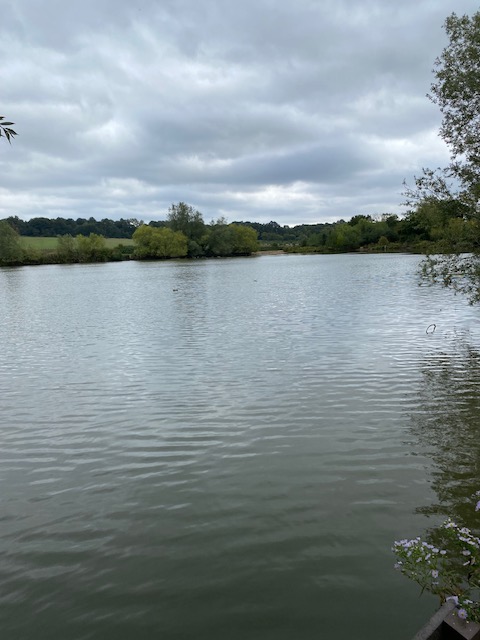
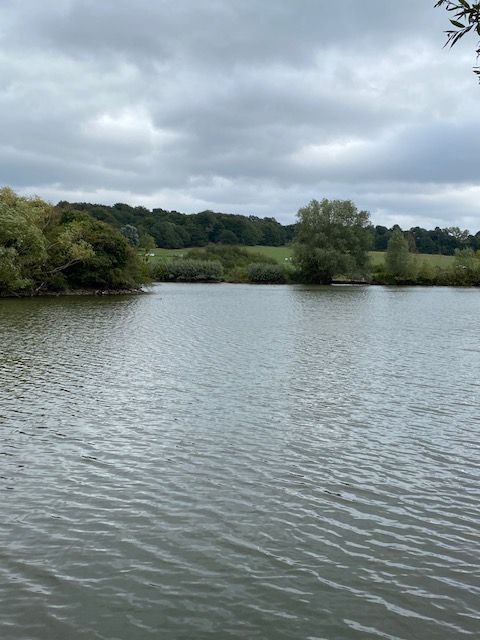
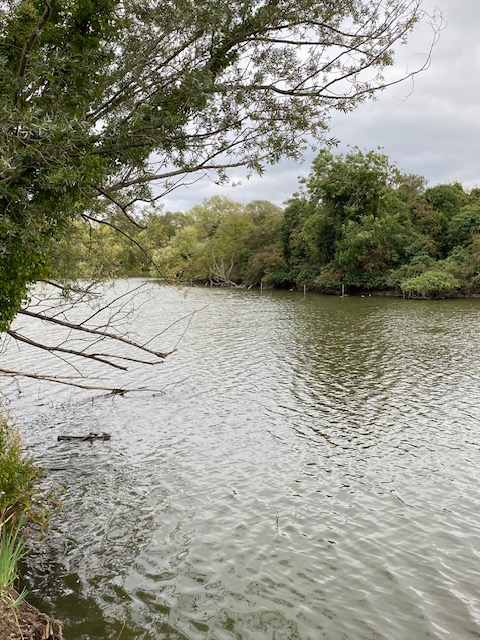
Now leave the woodhenge and walk towards the Hainault Forest Lake. Fishing is permitted here as is boat hire. The lake itself is a man-made one, dug out in the early 1900s. It attracts all kinds of water birds, some of which are here all year round, and others drop by for the winter months. It’s rather a beautiful spot for strolling and communing with nature and you could do worse if you’re looking for tranquillity and peace.
This route is a fair way out of central London but it had plenty to recommend it. It’s worth remembering that Ilford Hospital Chapel is only open on Thursdays from 12:00 and I would definitely make sure you visit it if you get the chance. The area around Barnado’s was good to see and to find out the history of the charity. The various tube stations that are found on this route are worth a look at – in fact there are others that I haven’t highlighted in this blog, that have been seen on other routes. For example Gants Hill which is totally underground. I was also bowled over by the woodhenge – although it’s a relatively new addition to the forest, nevertheless its craftsmanship is worthy of time spent in finding it.
All in all, the 150 was certainly much better than I had previously anticipated so I’ve learned to just enjoy the day, whatever it brings.
Toilets that are open to the public and free of charge:
- McDonalds Ilford
- Fullwell Cross Library
 london routemistress