
Dagenham Asda to Leytonstone station
Highlights:
- Street art in Redbridge tunnel
- SPACE gallery exhibition
- Sir Alfred Hitchcock Hotel
- Hitchcock Mosaics
1. Merrielands Crescent bus stop
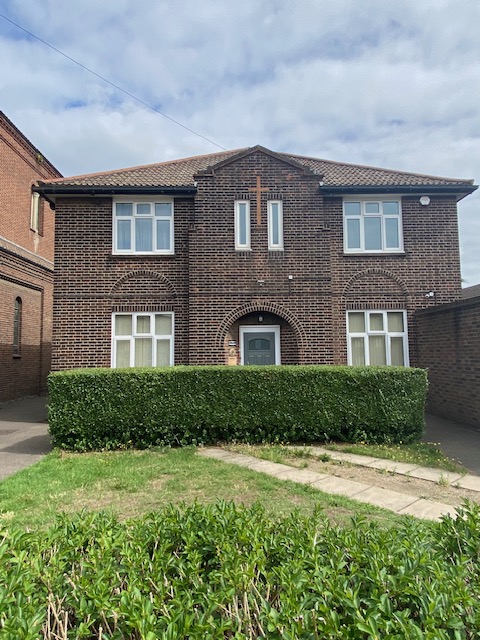
Near the stop is a brace of churches on either side of the road, one a Catholic, the other an Anglican. The Catholic church is St Peter’s with an interesting history. In 1926 a mission was established here and in 1928, it was taken over by La Salette, a missionary congregation originally founded in the French Alps. At the time of the opening in 1937, it seated 700. A presbytery was built at the same time, which sits next door and is home to the priest and his assistant.
Over the road is the parish church of St Martin’s that was opened in a temporary building and dedicated in 1925. The foundation stone for the permanent building was laid in November 1930. The building is of red brick in (for the time) a modern ‘Perpendicular’ style with the design being described as “English Gothic freely treated”.



2. Rusper Road bus stop
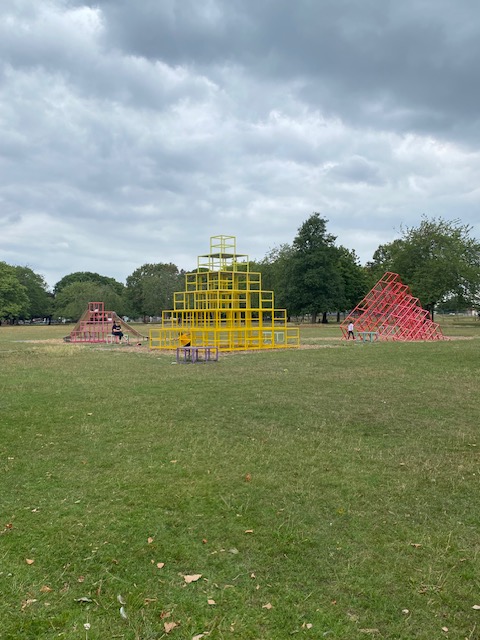
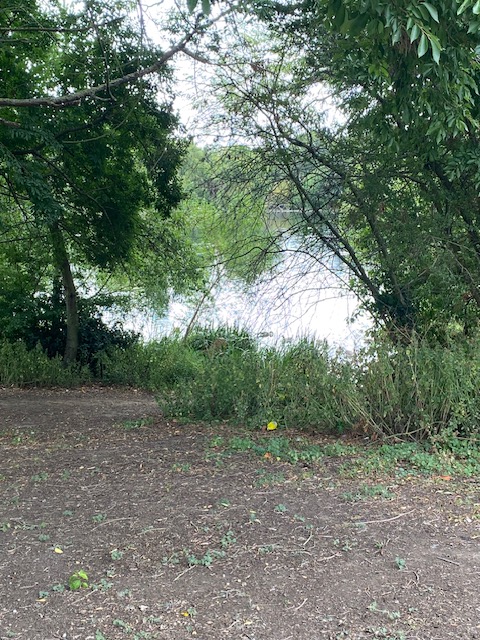
This stop is near Parsloes Park, rather a large open space with plenty of facilities. Head over to the Flamboyance of Flamingos, a play area for kids, so named because flamingos once graced this park and with climbing pieces in the form of these lovely pink birds. See too the Parsloes Memphis, two sculptural pyramids that form unique play structures. The park itself is worth a visit though prepare to be disappointed if you want to walk around the lake – there seems to be no way in, unless you’re a goose or duck! There’s an area known as Parsloes Park Squatts – it’s rough acid grassland with an historic hedge. The park derives its name from the Passelewe family, who owned the land in the thirteenth century and several centuries later (1923) was acquired by the London County Council.


3. Parsloes Avenue bus stop
Round the corner from the stop is Kingsley Hall, a local community centre. It was established by wealthy sisters Doris and Muriel Lester, who were inspired by the death of their brother, Kingsley, and his legacy for social and educational work in the area. They started with a nursery school in 1912 and later, with funds from Kingsley’s legacy, purchased and converted a disused chapel into Kingsley Hall. During the General Strike of 1926, Kingsley Hall became a shelter and soup kitchen for workers. Mahatma Gandhi stayed in Kingsley Hall in 1931 and the building now houses the Gandhi Foundation. The room where he stayed has been preserved and the building was even used in the Richard Attenborough film Ghandi. In 1935, hunger marchers on the Jarrow March stayed at the Hall. In the 1960s, it was used by RD Laing as a base for treating people affected by mental health crisis.
These days it’s used as a church and community centre – there’s a community kitchen, provision for pre-nursery children, community hubs and a shop, all for the use of the local community.
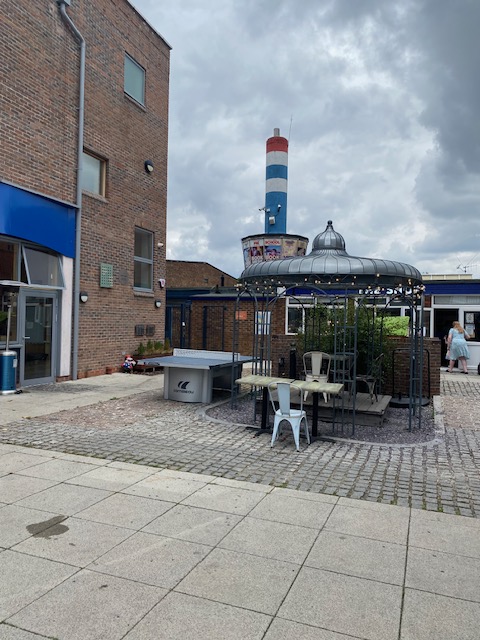

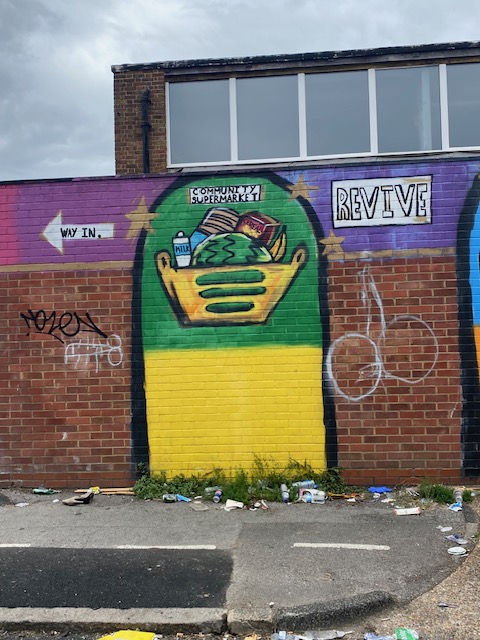
Round the corner from here is a wall of graffiti, seemingly connected to Kingsley Hall but it’s not obvious who the artists are. The artwork depicts Superman, the Eden café, a reference to the church and other colourful painting but nowhere is the creator’s name in sight.


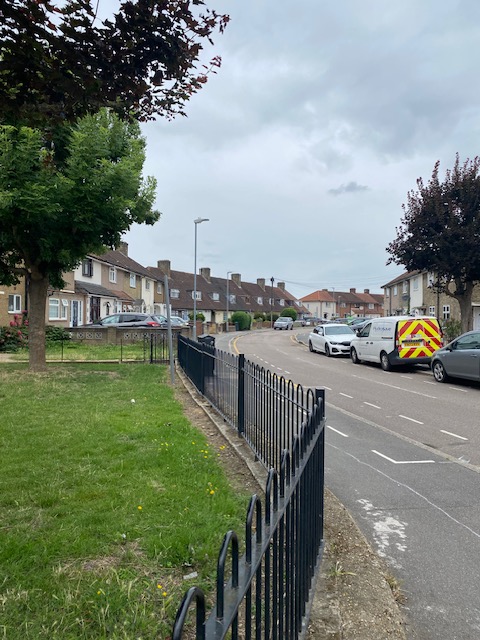
Further up the road is the Becontree Estate, once described as the largest social housing estate in the world. The first homes went up in 1921 and by 1935, the estate was home to around 120,000 people. Each house had a privet hedges planted at the front of the garden, with strict tenancy regulations stating that residents must maintain the gardens to good order. Becontree Estate was part of the “Homes for Heroes” initiative after World War I, aiming to provide better housing for working-class families displaced from central London’s slums.

4. Redbridge Central Library bus stop
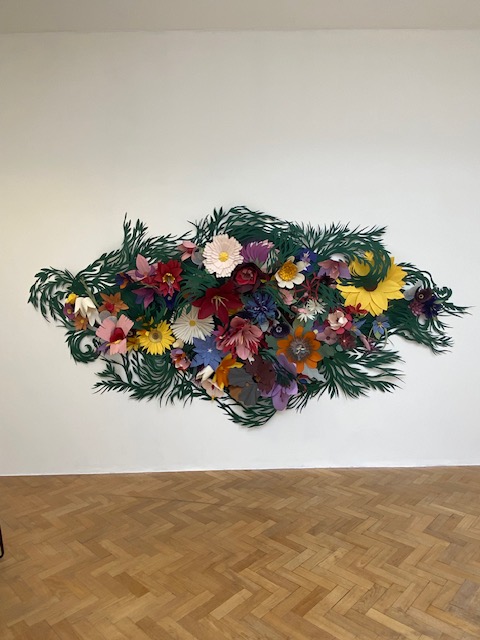
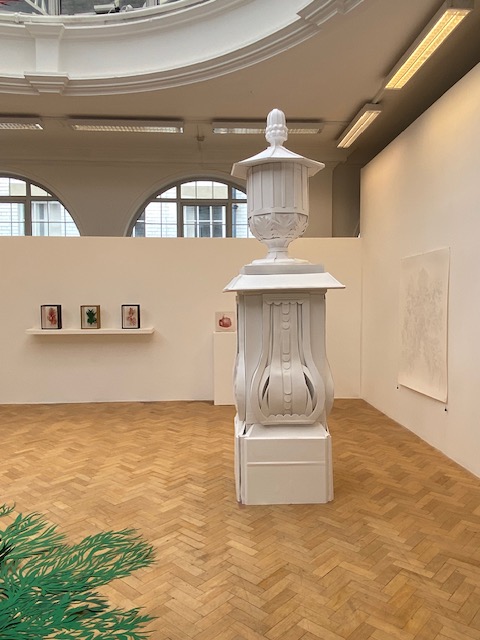
This stop is on several TfL routes but it’s always worth getting out and taking a look to see what’s on both at the SPACE gallery and Redbridge Library Museum, as exhibitions change reasonably frequently. Inside SPACE is a remarkable exhibition by artist Andy Singleton called Natural Connections. Everything on display is created from paper and connects humanity/our bodies with the natural world. Inspired by the local historic buildings and parks, Singleton intertwines geometric and organic forms with the intricate inner workings of our bodies. What he has achieved is definitely worth a visit – the exhibition is on until 1st October.


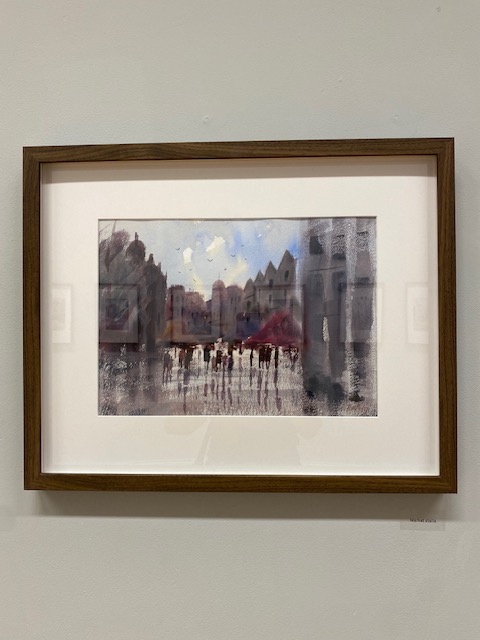
Also on display here is an exhibition of watercolours by Ray McSharry, called Landmarks. He has captured impressions of the borough’s parks and streets, to show off the beauty of local landmarks.


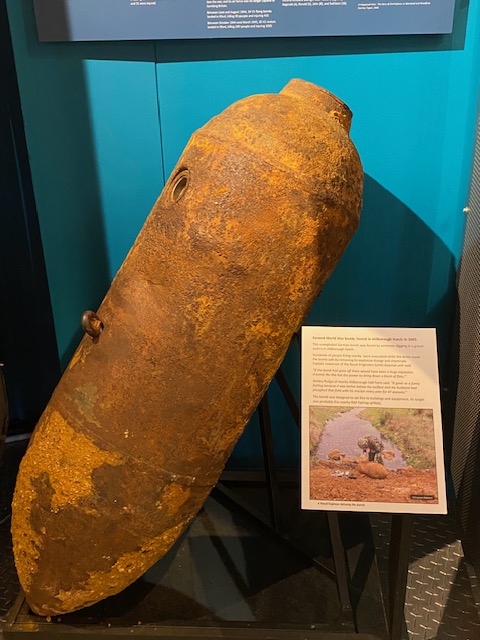
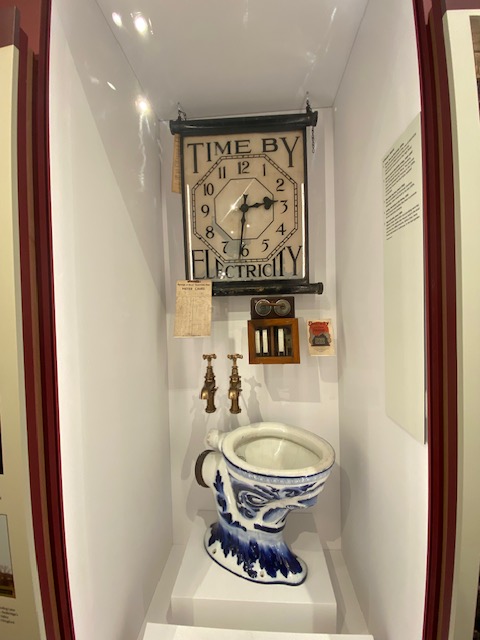
Over the road is Redbridge Library and Museum, again visited on previous routes – see bus 123 for more information. As the museum is pretty expansive, there’s always something new to catch your eye. There’s an unexploded bomb in the WWII section – it was discovered by workmen digging in a nearby gravel quarry. Hundreds of people had to be evacuated while the bomb was made safe. In the “modern world” section, is an array of items that could have been found in homes and streets in the early 20th century. The 1930s clock had been outside Ilford Council Electricity Department’s showroom and the taps and toilets on display was one of the first indoor flush toilets that were introduced to middle class homes. The fuse box had been installed in a local house in Redbridge in late 1920s and the card to record electricity usage is equivalent to our meter readings today.

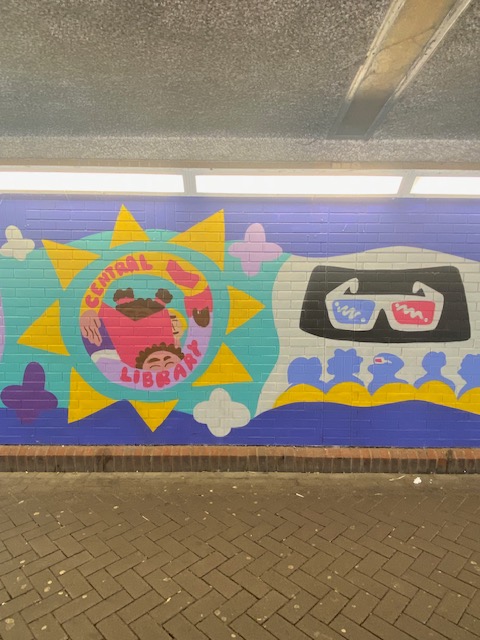
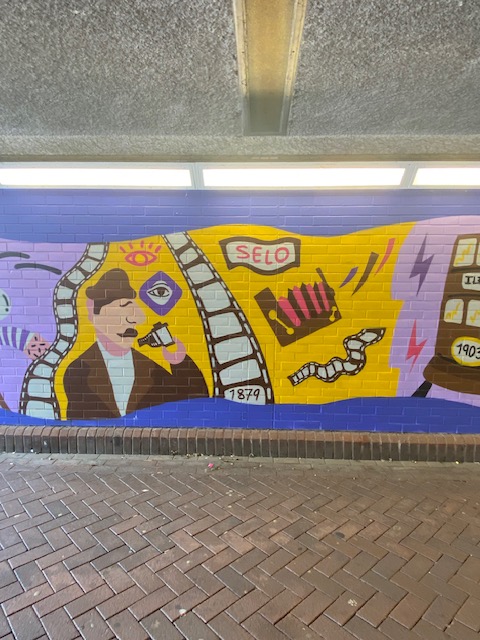
Round the corner from the museum is a tunnel that has recently acquired some interesting street art (November 2024). Colours of Redbridge is a community-led arts and culture program in the borough and the mural was painted by artists from Matchbox CIC with the help of community members. Each panel tells its own story. One side of the tunnel depicts past history of Redbridge, the other is the present and future.
Examples shown here are (1) local green spaces (2) Redbridge Central Library (3) The Future Of Redbridge as imagined by local primary school groups (4) : Ilford Film (Founder Alfred Hugh Harman Depicted) (5) Ilford tramline.



5. Northbrook Road bus stop
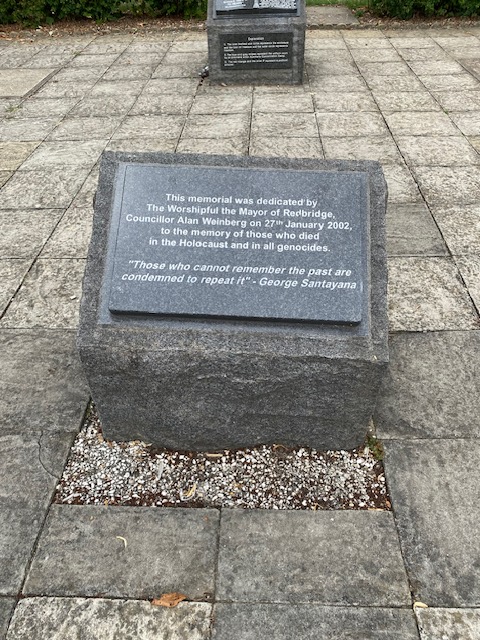
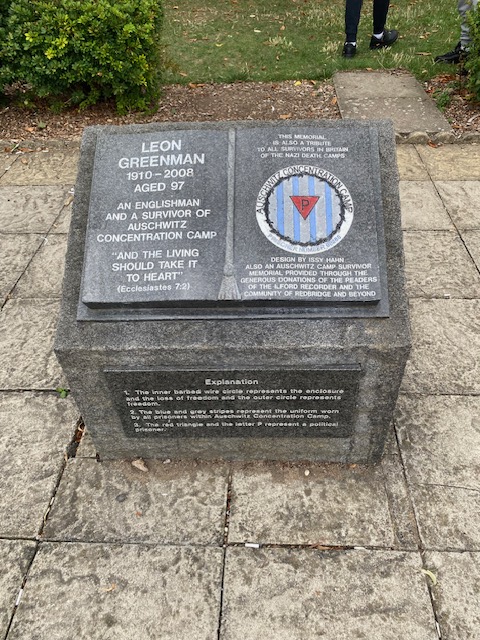
Find your way to Valentine Park which is also on bus route 66. The entrance here is a different one so you’ll find different places to see. First of all, there’s the Holocaust Memorial Garden, dedicated to the victims of the Holocaust and other genocides. This small garden features memorials, plaques, and a peaceful atmosphere for visitors to pay their respects and reflect on the importance of tolerance and understanding.

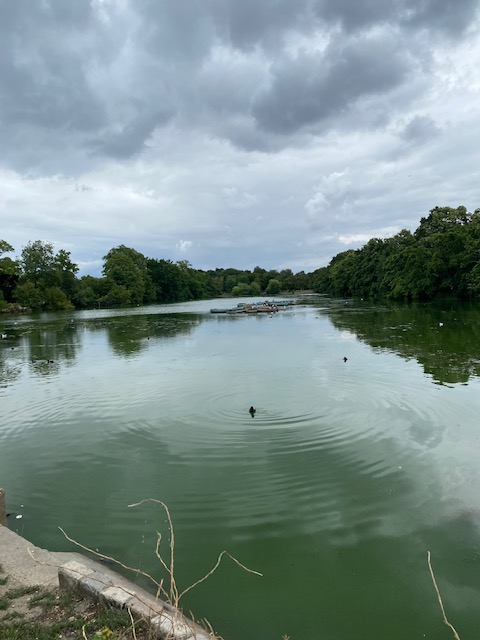
Also set in the park is a boating lake, with boats to hire by the hour. The parkland at one time belonged to the Valentines Mansion. The lake itself was likely part of the 18th-century layout, along with other features like the canal and grottoes, and was later incorporated into the public park created in the late 19th century.
At one side of the lake is the Clock Tower, donated by W.P. Griggs, a prominent figure in the development of the area around the park. It was erected in 1899, the same year the park, then known as Cranbrook Park, opened. Griggs, who developed the Cranbrook Hall area, provided the clock itself which originally came from his stables, as well as the tower. The park’s name was later changed in 1907 to reflect its connection to Valentines Mansion.


6. Green Man roundabout bus stop
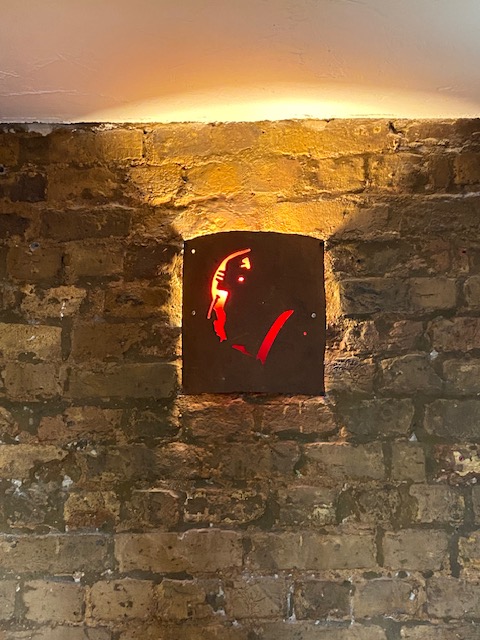
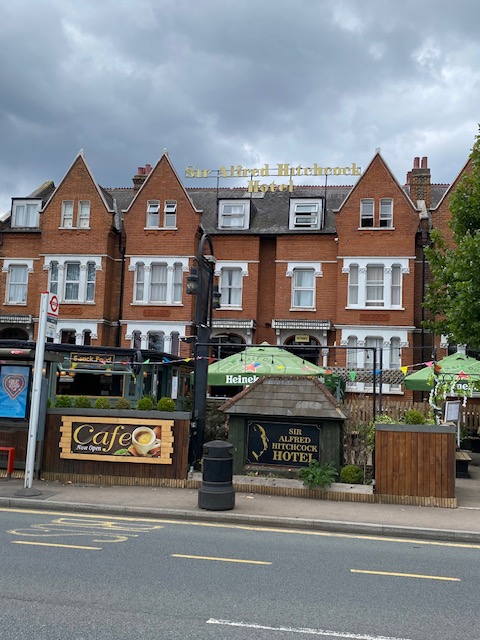
If you don’t mind a bit of a walk, take a visit to the Sir Alfred Hitchcock Hotel. As the name suggests, the hotel is themed with the films that Hitchcock made – but if you want to check out the bedrooms, which apparently have subtle nods to his cinematic legacy – you probably need to check in advance, to make sure they aren’t occupied. Hitchcock himself was a local lad, having been born (1899) and lived in Leytonstone until the family moved to Limehouse when he was six. He is regarded with affection by locals and the hotel is a reflection of this pride in a local lad made good. Inside the bar and reception area of the hotel are light fittings that show the outline of his highly recognisable profile.
In the bar and café areas, you won’t be able to miss the references to the film-maker, with posters advertising Hitchcock Talks and Tours and a wall of posters of his most famous films.
The only thing I’m not of is whether the bedrooms have en-suite showers – or maybe they only provide baths for those who are somewhat queasy!


7. Leytonstone station bus stop
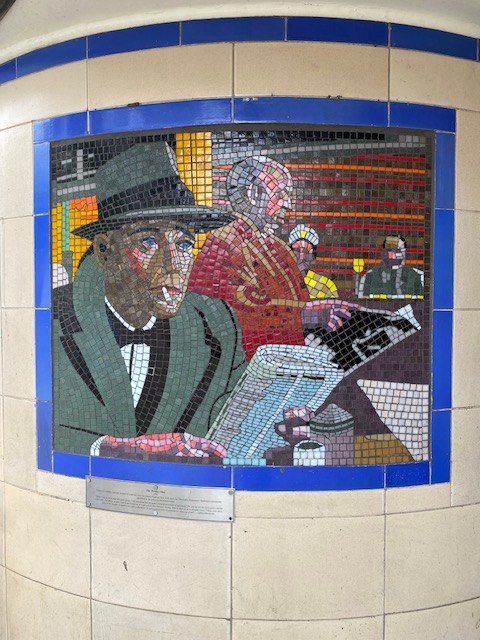
This is the end of the route and has been visited before on route 66. I can’t emphasise enough how much it’s worth a visit to this area, if only to see the Alfred Hitchcock mosaics that line the tunnel leading to the tube. You can see a selection of these if you go to the previous blog and a few more can be seen here. The series of mosaics were created by the Greenwich Mural Workshop, having been commissioned by the London Borough of Waltham Forest to create the mosaics in celebration of the centenary of Hitchcock’s birth in 1999. The mosaics were unveiled in 2001.



Before finishing this route, do take a look at St John’s Church. At one time, (in the 1740s), the parishioners of Leytonstone had to wend their way to St Mary’s Church in Leyton but this was tricky during the winter months. They petitioned and eventually won the right to have built their own church and this is St John’s. The Vicar of Leyton took umbrage and refused to allow services to be held here so it wasn’t until 1754 that approval was given. In the early 1820s, permission was granted to build a larger chapel, as the congregation had outgrown the original one and indeed the existing one was falling down. It’s believed that the church received a hefty donation of £1,000 by an elderly parishioner, the mariner and merchant William Cotton. He is buried in the churchyard along with other members of the Cotton family.


And so another bus route that had a mixture of delights and disappointments. The start of the 145 was rather sparse of interesting places to see but as the bus went along towards the other end, there were more things to pique one’s interest. The mosaics and street art were particularly worth seeing, as was SPACE gallery, as always. Finding the Sir Alfred Hitchcock Hotel was a real delight, even though it wasn’t possible to go inside the bedrooms to check up on Hitchcock references and the “subtle nods” to his films.
Toilets that are open to the public and free of charge:
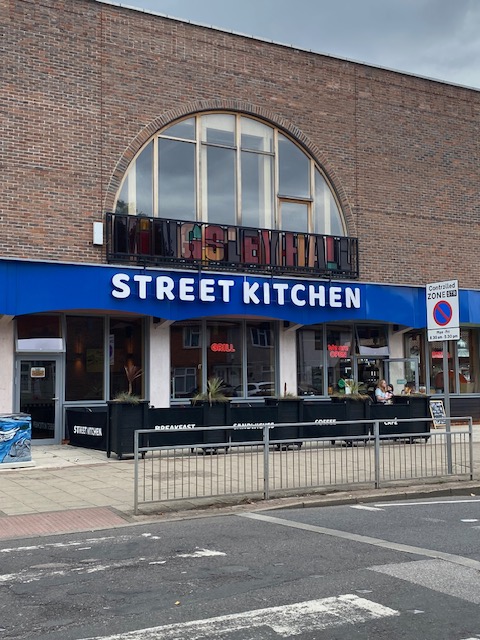
- Kingsley Hall Street Kitchen
- SPACE gallery
- Redbridge Central Library and Museum
- Alfred Hitchcock Hotel
 london routemistress
