
Watford Junction station to Brent Cross shopping centre
Highlights:
- Bushey Rose Garden
- Bushey Museum
1. Start of route
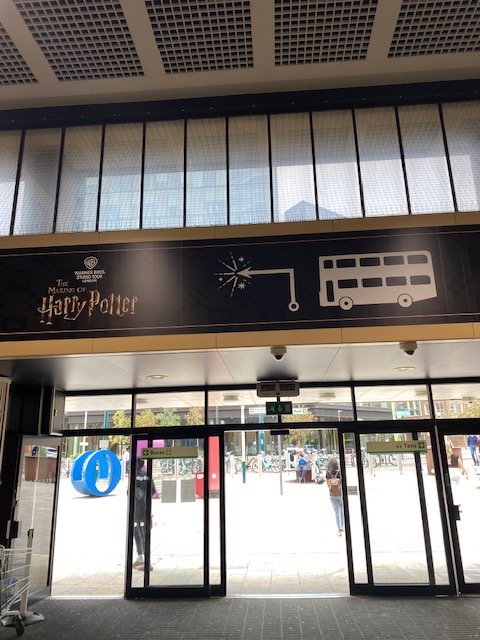
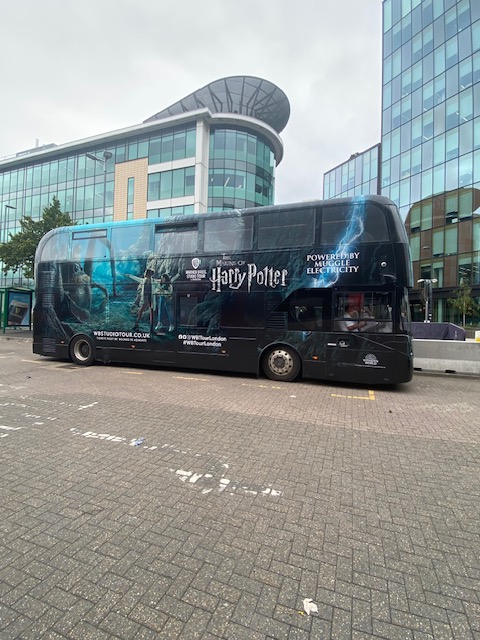
As you arrive at Watford Junction station, you can’t help but see crowds of people of all ages, making their way to the Harry Potter bus. This shuttle bus will take them to the Warner Bros studio tour, to see the delights of the sets and props for the films. There are some large, colourful, freestanding letters spelling “WATFORD” outside the station forecourt. They were installed as part of an improvement project to create a more welcoming and visually appealing entrance to the station and the town.

2. St John’s Road bus stop
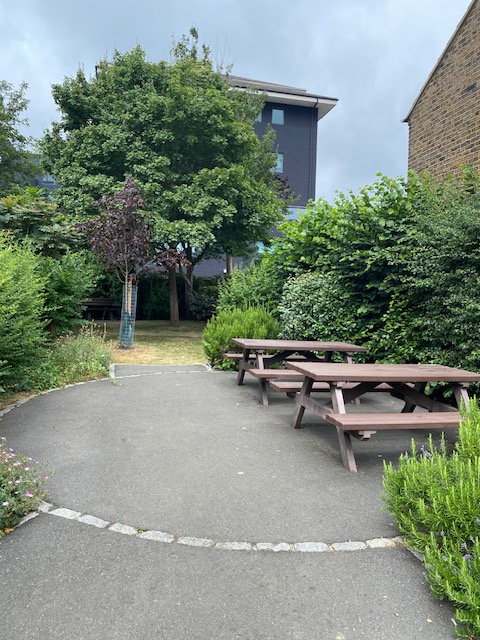
Walk round the corner from the stop and you’ll find the Estcourt Tavern. It first opened as a beerhouse in June 1867 on the Estcourt estate and was originally named the Golden Lion. In 1868, a licencing application was made and the area was described as a ‘very rising neighbourhood’ and that ‘the whole estate would be built over in the course of time’. Nearby is Estcourt Pocket Park, located within a residential area of Watford. Like all pocket parks, it’s a small, green space providing a relaxing and enjoyable environment for local residents and visitors. Despite its size, there’s enough space for kids to run around, sit on one of the benches and feel at peace and enjoy a picnic on one of the provided picnic tables.


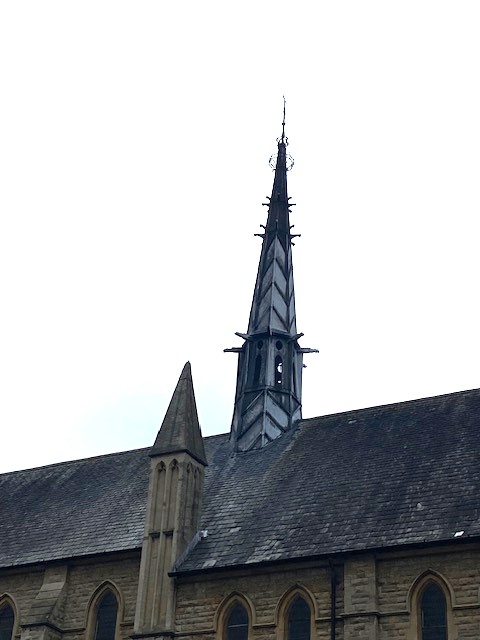
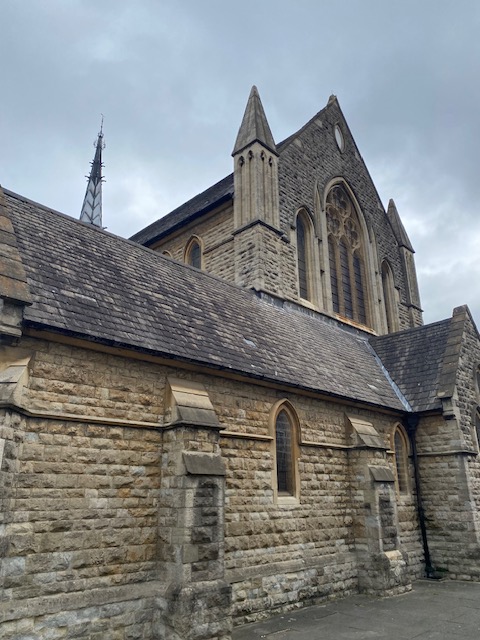
Before going back to the bus, take a look at St John’s Church. At the end of the 19thC, the total population of Watford was less than 8,000. A temporary building was erected at this current site, with seating for 450 and was affectionately known as “The Tin Church”. The roof of the Tin Church was unfortunately not waterproof, and it was quickly apparent inside when it was raining outside! So the need for a new building became apparent and with the generosity of the congregants, this present St John’s Church was established. The design for the church was ambitious, with a lofty nave and chancel inside, and an imposing tower and spire outside which would be visible from throughout Watford.

3. Watford Field Road bus stop
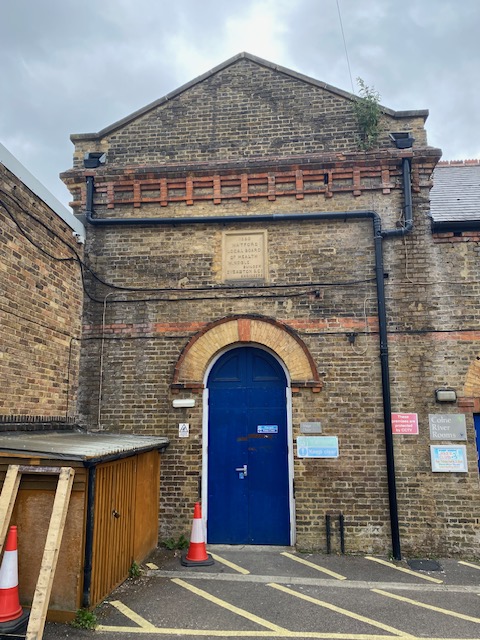
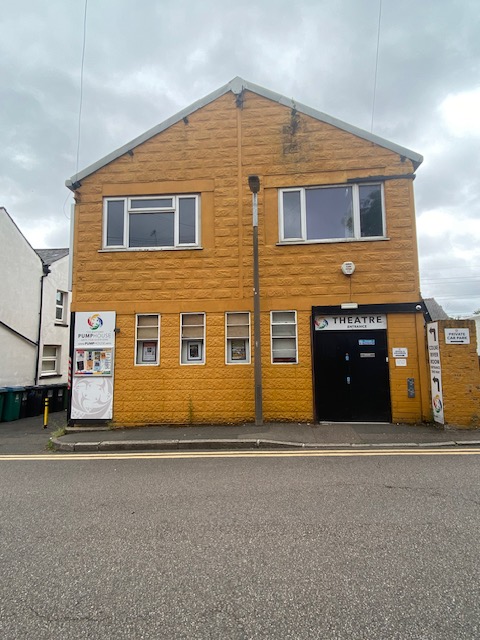
What was once the old pumping station for Watford has been converted into a theatre and arts centre. In 1854, the waterworks were erected at the Watford Fields site. The works comprised two horizontal engines and eight pumps. A deep well was sunk, with the water being distributed by one main and several smaller branch mains, and the surplus was delivered into the nearby reservoir. Pumping power needed to be increased as demand grew and a new reservoir was constructed in New Bushey. Prolonged droughts of 1933/34 reduced the water level to such an extent that in 1935 proposals were made for a new pumping station and the large plant was transferred to the Grove. The Pump House later opened as a community theatre in about 1972 and survives as the Pump House Theatre and Arts Centre today.

4. Grange Academy bus stop
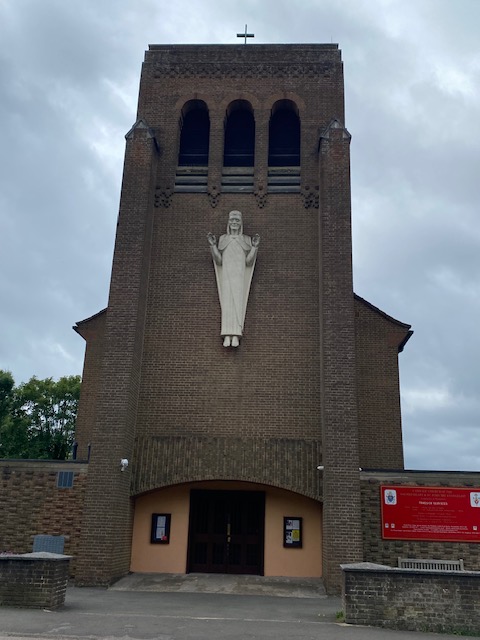
Opposite the bus stop is the Sacred Heart & St John the Evangelist church. Over the entrance is an impressive fifteen-foot suspended figure of Jesus and the tower has large buttresses facing the road with three openings near the top on the same face.
Now walk round to the Grange Academy. It’s an impressive array of buildings on the site of the former Bushey Manor. They were erected in 1928 to house the Royal Masonic School for Boys junior school. The school was designed to house 400 boarders in a line of four buildings connected by a cloister (covered walkway), across the quadrangle from the main building. The other buildings on the quadrangle were the dining hall and the teaching block and library.
The building still bears evidence of its masonic heritage in the architectural detailing. The brick pillars to the main gate are topped with stone globes while there is other celestial detailing on the site; in the main entrance hall a stained glass roof dome is marked with the 12 signs of the zodiac. Other masonic markings can be found on the stone lintels over significant doorways.
One of the main attractions on this site is the Georgian-style Grand Hall. It was built in 1928, along with the other buildings at the school and is now hired out for weddings and other major events. Inside are grand vaulted ceilings and intricate wooden panelling whilst outside is a spacious courtyard and take a peek at the classic clock tower perched on top of the building.


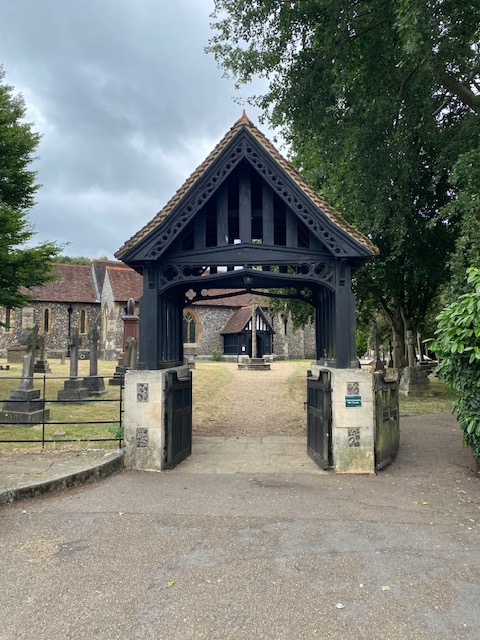
Back to the bus stop but before you get on, go and see St James’s Church, the grounds of which you will enter through a pretty lych gate. The original lych gate was built in 1920 as a memorial to those who died in World War I. However, it was destroyed by a bomb in World War II and subsequently rebuilt. The church itself dates back to the 13th century, with significant restoration work done in 1871 by Sir Gilbert Scott. Much of the interior dates to the time of the restoration work, but some parts, namely paintings and wall plates, are considered to be significantly older.


5. Red Lion public house bus stop
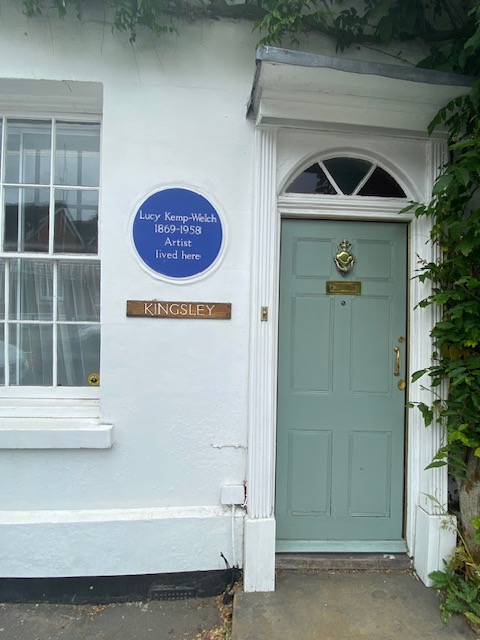
As you get off the bus, you’ll come across a pretty cottage with a blue plaque stating that the artist Lucy Kemp-Welch lived here. Its location is noteworthy, being round the corner from Bushey Museum, where inside you’ll find some of the illustrious, but oft-forgotten, artist’s paintings. She is most renowned for painting the first Black Beauty, for Anna Sewell’s novel of that name.
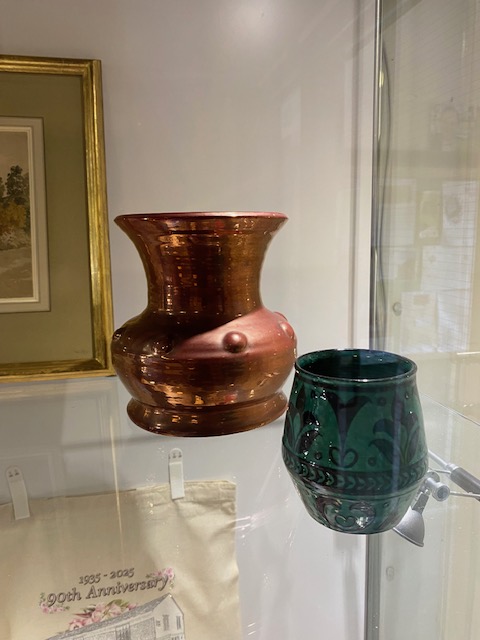
Head over to the museum where you will find a local history collection as well as art galleries on the upper floor. In the display areas you’ll see a life-like replica of a cobra, representing Cobra Boot Polish that used to be made locally. There are some Crotal Bells, the exact purpose of which are unknown but they tended to be found along ancient trackways. In another cabinet are some fine examples of Bushey Heath Pottery. Artist and sculptor Mrs Ida Perrin (1857-1953), with the help of talented potter and painter, Fred Passenger (1858-1938) decided they could make samples after the designs of the potter William De Morgan. A studio was kitted out in Bushey and the pottery was fired in a kiln in an outbuilding. Many of the vases were on loan to the museum and this is why you are able to see for yourself, these lovely pottery pieces.


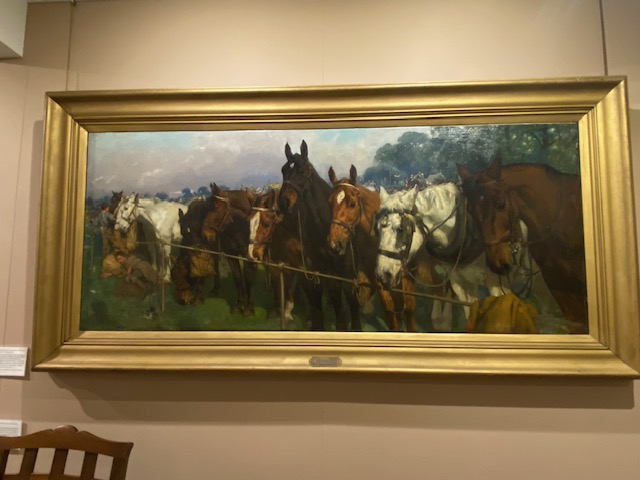
Climb the stairs to find the art galleries. The main exhibition shows the work of Hubert von Herkomer, a German-born British artist, and also a pioneering film-director and composer. Though a very successful portraitist, especially of men, he is mainly remembered for his earlier works that took a realistic approach to the conditions of life of the poor. Step inside the next gallery and there is the artwork of Lucy Kemp-Welch, most notably her horse paintings. In 1892, she was admitted as a student in the Herkomer Art School where she proceeded to become the most distinguished female graduate of the school.



6. Bournehall Road bus stop
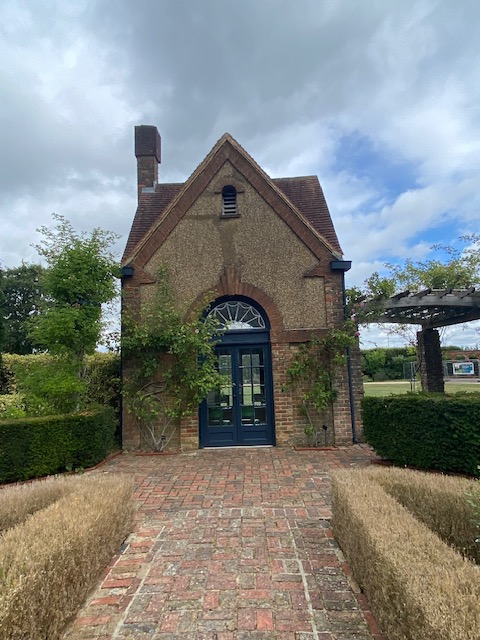
It’s possible to walk from the museum to Bushey Rose Garden or get out at this stop. Along with the museum, this is surely the highlight of the 142 route. It was created in 1913 by the noted garden designer Thomas Hayton Mawson for Hubert von Herkomer. It is thought that Herkomer painted a portrait of Mawson in lieu of a fee. The garden is all that’s left of the house that Herkomer lived in, called Lululaund.
The main focal point in the garden is an ornate and large fountain, which is grade II listed and set in a sunken garden. Also here is a brick-built pergola and a small summer house. The garden is full of flora and obviously roses. It’s a real beauty spot and not to be missed.



7. Little Common bus stop
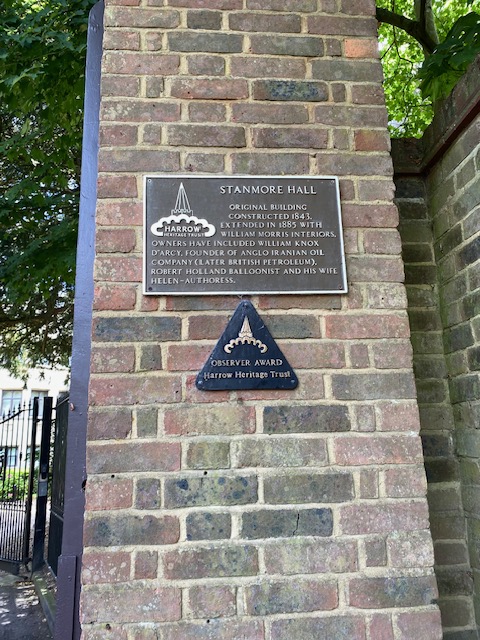
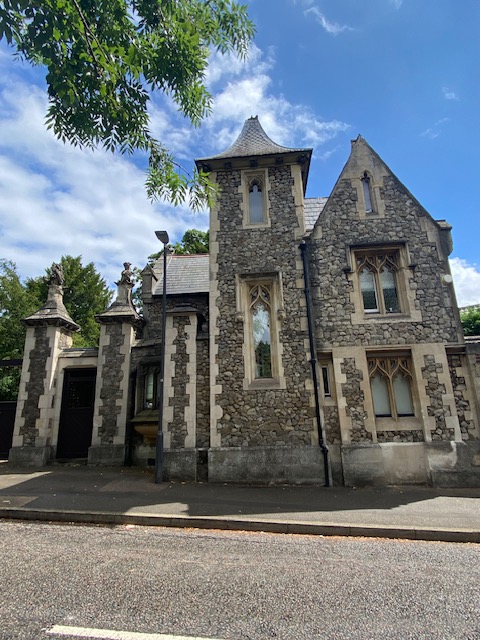
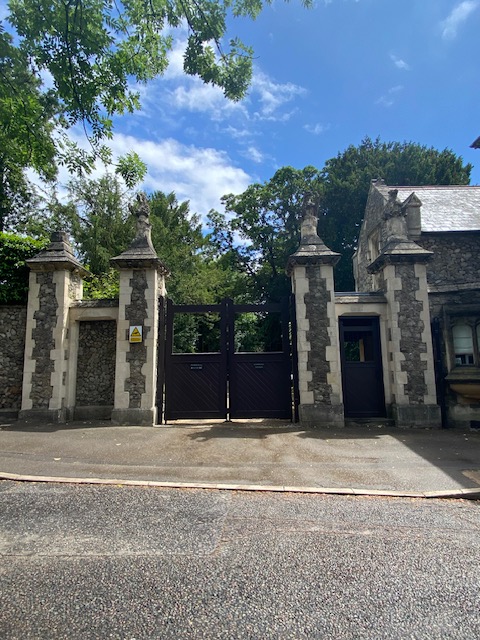
Little Common is in Stanmore and was at one time home to Stanmore Hall, a truly magnificent 19th century building that is now converted into luxury homes, with grade II* listed status. It had been home to a wide selection of interesting people at one time including a record-breaking balloonist Robert Hollond, private residence to a man that could lay claim to all the oil in Persia and founder of British Petroleum William Knox d’Arcy. The hall was restyled and enlarged and the gardens were landscaped in the 1890s. The interior was then decorated by the celebrated William Morris. It was to be styled as a lavish palace and it was the largest commission that Morris had received.
After the death of D’Arcy in 1917, the hall was no longer used as a family home. During WWII, it was commandeered as billeting for those stationed at nearby Bentley Priory. It has since then been used in many films including episodes of The Saint and as home to Frankenstein. By 1998, it was converted into luxury flats.
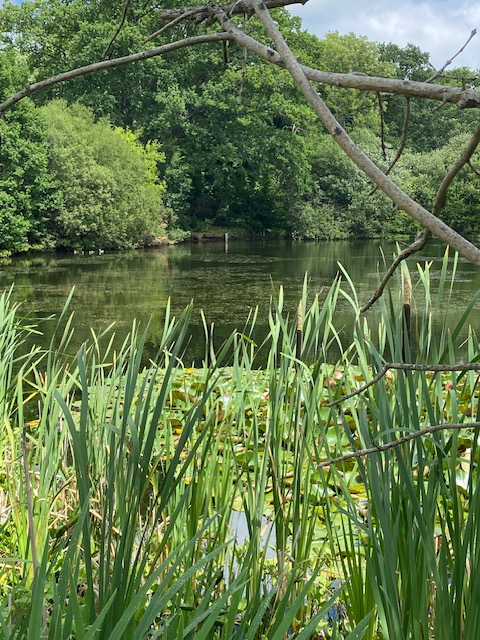
Walk up the road from here and you’ll come to Stanmore Little Common where there are a couple of ponds, almost certainly dating back to Roman times. One of these is called Caesar’s Pond, based on a tradition that there was a Roman garrison quartered near here. Boudicca (Boadicea) almost certainly camped by and drank from these ponds. One more fact here – these stony ponds or “Stane Meres” gave Stanmore its name.


8. Grove Road bus stop
As you turn the corner from the bus stop, you’ll find yourself looking at a gate pillar, once one of a pair. They were entrance gate piers to “Canons” from Old Turnpike Road. The plaque next to the pillar states that it was built in 1712 for James Brydges, first Duke of Chandos. The House (Canons) was demolished in 1740 and existing buildings constructed from salvaged materials. Piers refurbished 1998.
Canons Park Estate was once owned by the Duke of Chandos and the grand mansion was renowned for its architecture, art, and musical patronage, with Handel serving as the resident composer.
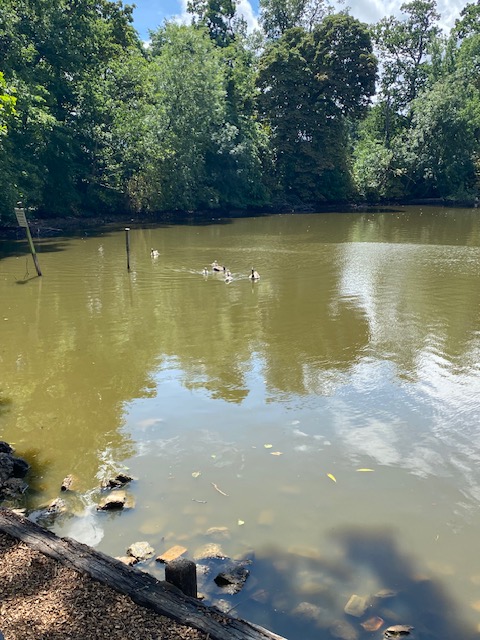
Up the road from here is the Canons Park Estate Basin. Canons Park (or Drive) Estate was created during the late 1920s and early ’30s on land purchased from the sale of the Canons Estate, with around 340 houses and 66 flats. Two of the most picturesque areas of the Estate are the ‘Basin Lake’, and the ‘Seven Acre Lake’ – the later being a private lake only accessible to residents. The Basin was created as an ornamental pond that carriages had to drive around when they entered the ‘Avenue’ (original name of Canons Drive), giving them their first glimpse of the mansion in the distance.


9. Montrose Avenue/Unitas Youth Zone bus stop
The church of St Alphage has served the Burnt Oak since the construction of the Watling Estate in 1927 in which year the building was consecrated. Round the corner is St Alphage Church Hall, a pretty, small building that is host to all level of activity – from weddings to children’s nursery, clubs and community meetings.
10. Staples Corner bus stop
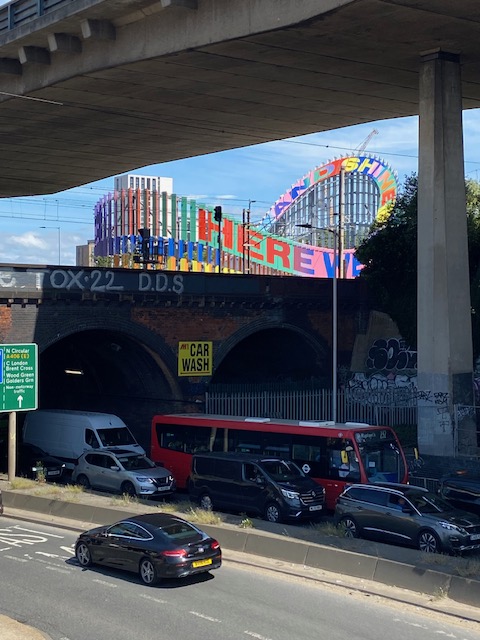
Final place to get off the bus is to get a view of the Primary Substation Wrap at Staples Corner. It’s a colourful ‘wrap’ around the sustainable energy substation at Brent Cross Town and is the largest permanent public artwork in the UK. The artwork, titled “Here we come, here we rise,” acts as a landmark and transforms the substation into a visually appealing structure. The new substation is critical to realising Brent Cross’s ambition to be net zero carbon by 2030, providing clean power for homes, offices, retail and leisure spaces.


I didn’t have a great expectation for this route so once again, I was pleasantly surprised with some of the places I visited. As mentioned above, the highlights were Bushey Museum and the Rose Garden, neither of which should be missed if you embark on the 142. The various ponds and lakes I discovered were also worth seeing, along with some relics of times gone by.
Toilets that are open to the public and free of charge:
- Watford Junction station
- Estcourt Tavern
- Bushey Museum
 london routemistress