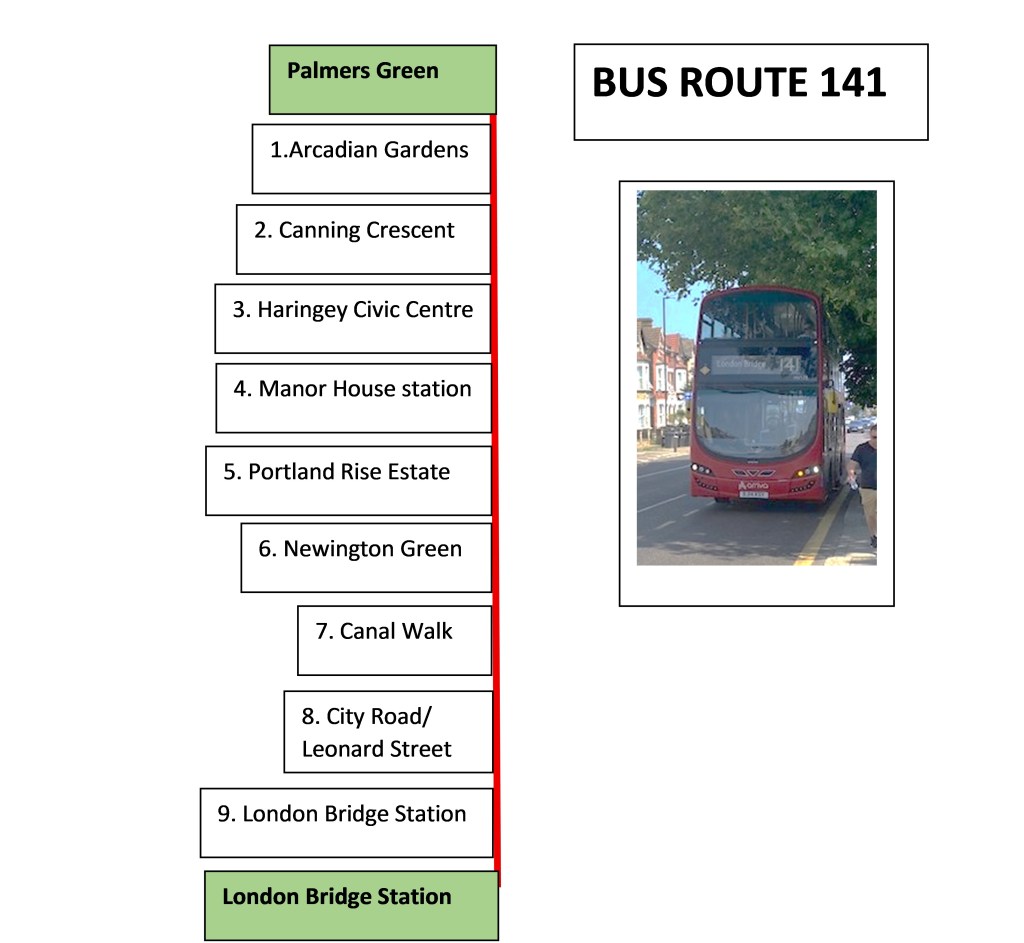
Palmers Green to London Bridge
Highlights:
- Museum of Homelessnes
- Castle Climbing centre
- West Reservoir
1. Arcadian Gardens bus stop
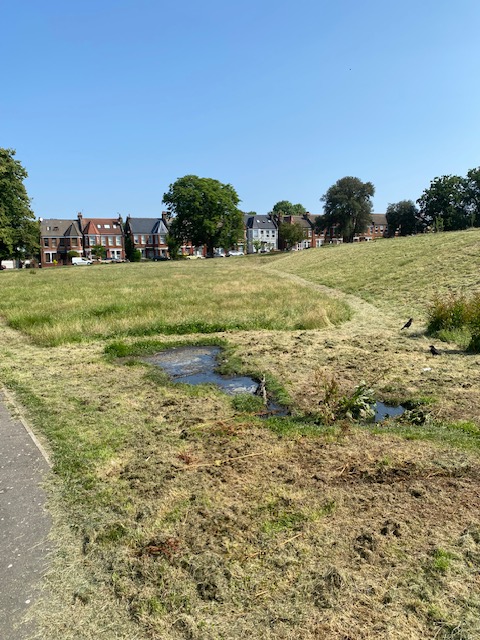
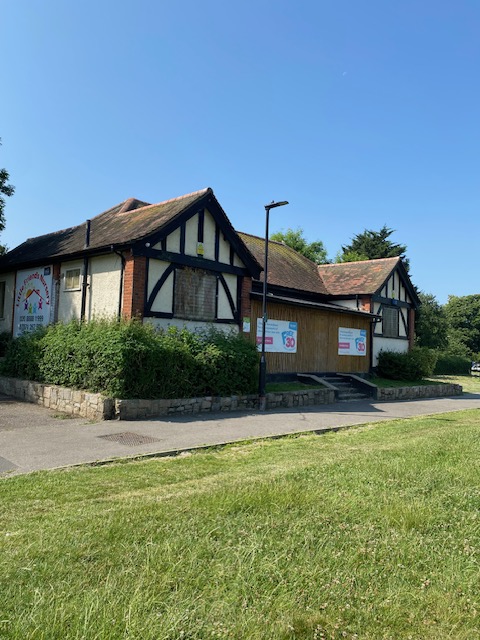
The bus stops near Woodside Park, the site of which was originally part of the much larger Chitts Hill Estate, covering a large part of Wood Green. As well as having a mix of open ground, trees, a play area, a bowling club and a sensory garden, it’s worth taking a walk around and finding the “mushroom house”. This grade II listed building used to be the former gate house to Chitts Hill House and was built in 1822. Chitts Hill House was demolished at the end of the 19th century. It’s not possible to get too close to the mushroom house but you can certainly see how it got its name. Also set within the park is an old pavilion, that was erected by the bowling green before 1935.

2. Canning Crescent bus stop
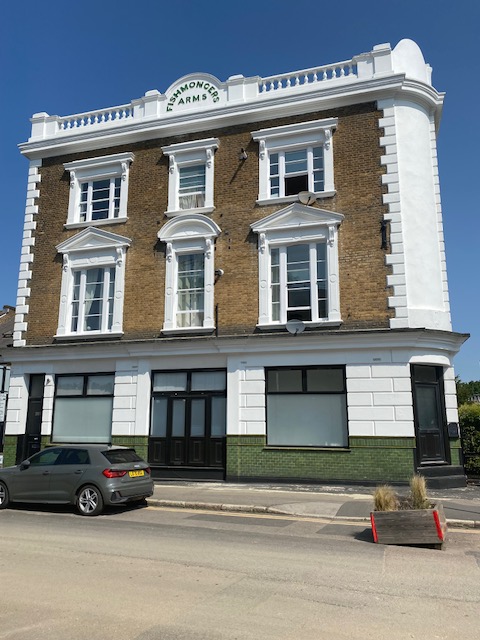
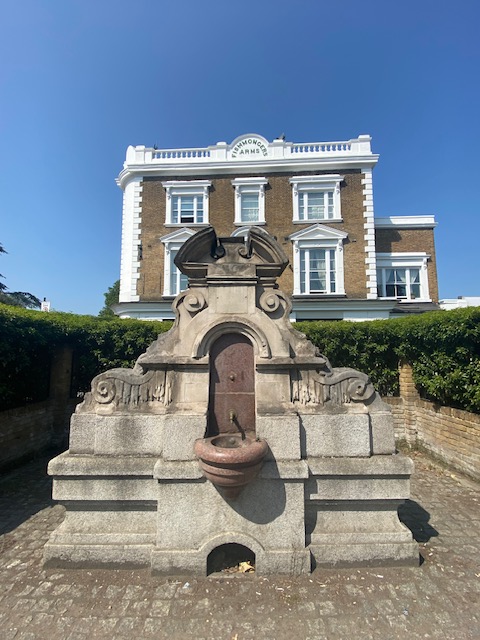
A few minutes’ walk from the stop is Fishmongers Arms, an inn that opened in 1855 and was built on the site of the former Wood Green Farm farmhouse. Its name derived from the adjacent Fishmongers’ and Poulterers’ Almshouses, which were demolished in 1956. During the 1960s the pub was a rock music venue, and hosted early performances by musicians and bands including John Mayall’s Blues Breakers, Fleetwood Mac and Pink Floyd. In the 2000s, the building was inevitably converted into residential flats.
In front of the Fishmongers Arms is a drinking fountain and cattle trough. It was placed here in 1901 and is grade II listed and is particularly notable for its ornate design. It was built by the Metropolitan Drinking Fountain and Cattle Trough Association, an organisation established to provide free drinking water for people and animals.

Opposite the fountain is the Grand Palace. It was originally built in 1870 as The Kings Arms Hotel and Public House with assembly rooms. It was purpose built for weddings and other events so when it converted to the Grand Palace in 2005, it wasn’t too far a leap in the imagination of the architects to make the conversion.
Now go round the corner to Trinity Gardens, a pretty park and open space, ideal for walking and relaxing. Opposite the park is St Mary’s Greek Orthodox Church that was originally built as Trinity Methodist Church in 1871. It became Greek Orthodox in 1970. There was a major fire in 1986 when much of the church was burned. It was rebuilt with the help of the Greek community and fundraising events.
The foundation stone for the original Methodist church was laid by Sir Francis Lyccett, a British businessman and philanthropist and a prominent member of the Methodist Church.


3. Haringey Civic Centre bus stop
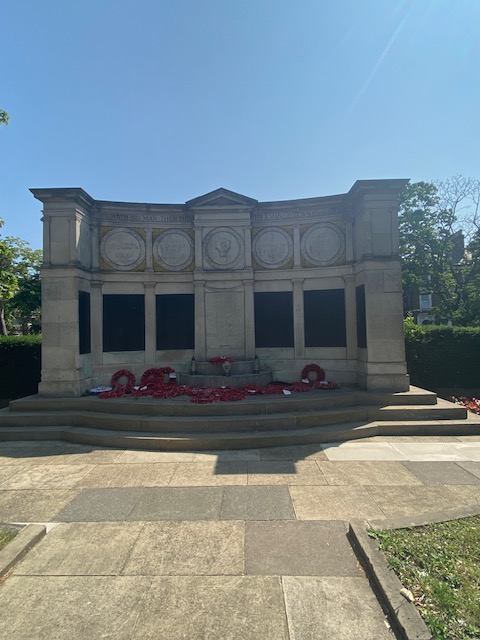
The bus stops a two minute walk away from St Michael’s Church, which sits on the site of the former Jolly Butchers’ Hill (so-named after the Three Jolly Butchers pub, established in the 1780s). The old church of St Michael’s was built in 1844 but it was demolished due to an increased population and cracks in the building. A new nave was built in 1859 followed by a chancel and tower with the spire being added between 1871 and 1877. Almost opposite the church is Wood Green’s War Memorial Wall.
This ornate wall has six bronze plaques bearing inscription and names. Above the plaques are oval stone reliefs each with a gold mosaic surround. It commemorates the men and women of Wood Green who died in WWI and WWII, giving the names of the 982 who perished in the first war. On your way back to the stop, you’ll pass St Michael’s Church Halls, a rather splendid building in red brick. It was erected in 1912 and during the stone-laying ceremony, a copy of the previous week’s “Weekly Herald” was placed as well as a number of George V coins.


4. Portland Rise Estate bus stop
This stop is an unexpected pleasure. After getting off the bus, you’ll turn left and will find a remarkable building that looks like a castle. It is, in fact, the Castle Climbing Centre. There is an interesting history behind the building – In a bid to improve the quality of drinking water in London, the Metropolis Water Act of 1852 prohibited drinking water being taken from the Thames below Teddington Lock and required water companies to filter their water. The New River Company had already built two reservoirs in Stoke Newington in the 1830s and added The Castle pumping station and filter beds adjacent between 1852 and 1856.
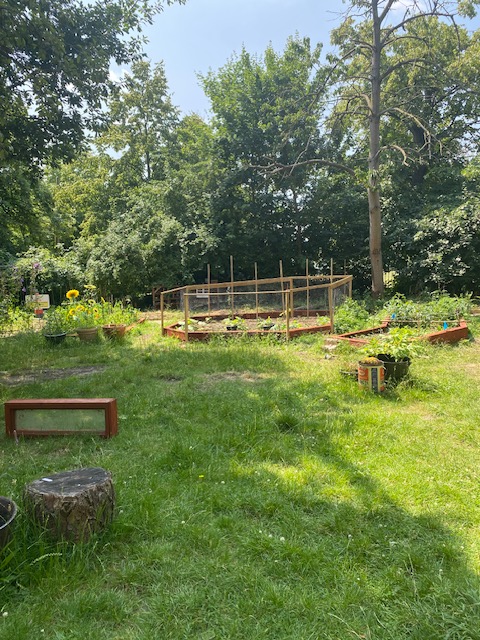
By 1971 the building was largely redundant and permission was sought to tear down the Castle and redevelop the site. With the support of local residents and historical associations, The Castle was given Grade II* listing, though it had no use. Eventually, permission was granted for the redevelopment of the building as a climbing centre in 1994. This opened in 1995 and is now considered one of the leading climbing centres in Europe. It has since undergone extensive landscaping with the development of an organic garden. It truly is impressive both in its architecture, its landscaped gardens and the climbing facilities that cater for all ages and stages.


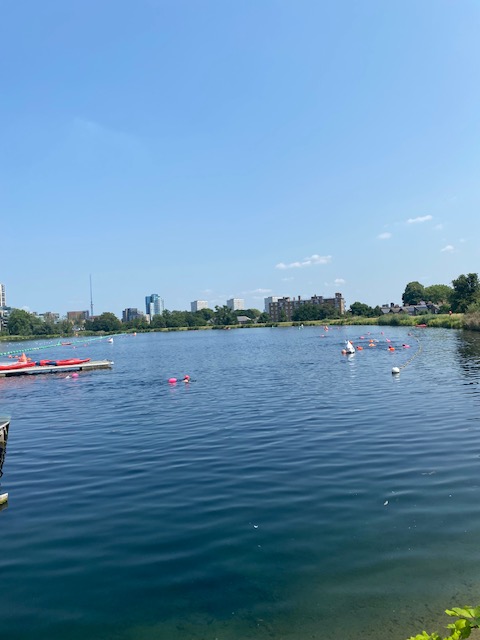
As if this wasn’t enough to see here, take a stroll down the lane and you’ll come across the West Reservoir. This was one of the reservoirs built by the New River Company in 1833 to supplement London’s water supply. By early 20th century, it was used for water purification and storage. Mid 20th C saw the building of a housing estate around the reservoir and by late in the century, it was threatened with closure. However, a local campaign saved the reservoir from closure and these days, it’s a popular spot for sailing, kayaking, open water swimming, and other water activities.


5. Manor House station bus stop
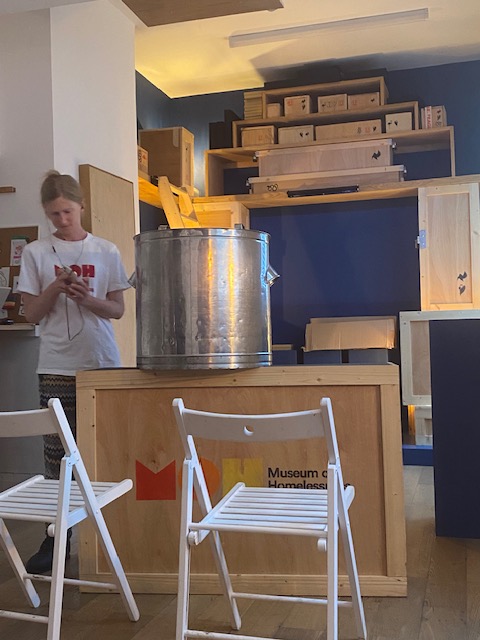
Another bus stop that is not to be missed for what you can find here. Just inside Finsbury Park is the Museum of Homelessness (MoH). This amazing museum was created and is run by people with direct experience of homelessness. It was established 10 years ago by husband and wife team Jess and Matt Turtle. There are four strands to what they do: Educate, Take Action, Fight Injustice and Make History
They work with artists to make unforgettable art, exhibitions and events.
They take direct practical action in support of the community.
They fight injustice with independent research and campaigning.
They build a national collection for homelessness.
It’s free of charge to visit the museum but you need to pre-book. That’s because it’s not a traditional museum where you have artefacts on display and you walk around at your leisure. The difference is that you watch a brief intro video to get you in the mood for what’s next. You then get taken into the display room where one of their storytellers will relate three stories to you, using props.
The three different articles each represent something that a homeless person has donated to MoH, that had significant meaning to them when they were living on the streets.
Each story is in the “voice” of the donor, using their exact words, making it incredibly powerful. The messages you take from this experience will stay with you for a very long time. The staff are really helpful and friendly and they will be delighted to welcome you to MoH. I said I would write up about it here so that they can get exposure to their extremely good cause.


6. Newington Green bus stop
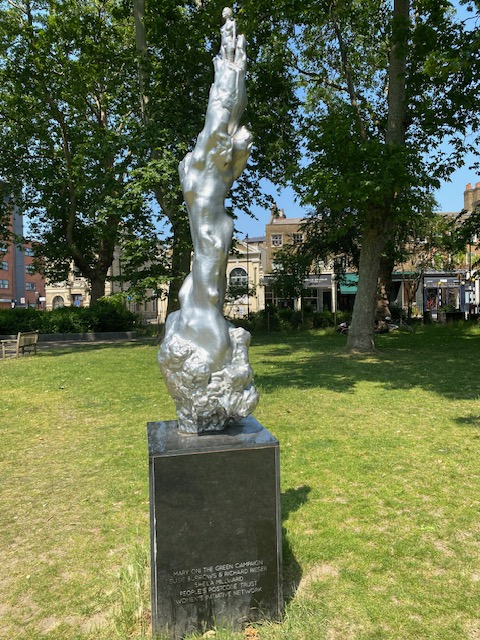
The bus stops at Newington Green itself, where there is a controversial statue of Mary Wollstonecraft. It’s a representation of a naked female figure, emerging out of organic matter, created by sculptor Maggi Hambling. The writer’s famous quotation, “I do not wish women to have power over men but over themselves”, is inscribed on the plinth. The sculpture is opposite the Unitarian Church, where Wollstonecraft attended.
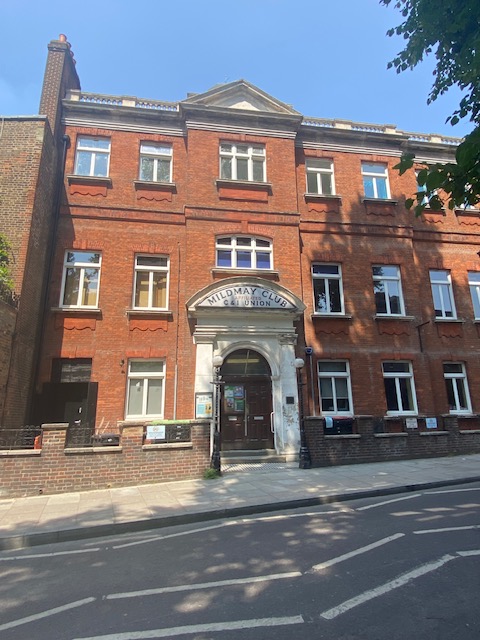
Almost next door to the church is the Mildmay Club which was originally known as the Mildmay Radical Club, having first opened its doors in 1888. It was built as a metropolitan working men’s club and by all accounts was deemed a bad influence, “especially to the young”. In 1930, it dropped Radical from its name and thus showed its political impartiality. It’s a very fine Victorian building and is grade II listed. At its peak the club had over 3,000 members, regular music hall entertainments and a wide range of social activities.

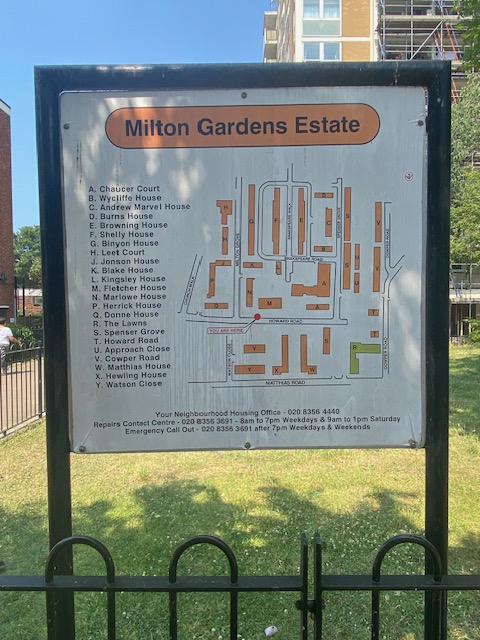
A few minutes’ walk from the Green is an area known locally as Poets’ Corner, not to be confused with that at Westminster Abbey. All the streets in the area are named after famous poets, including Milton, Spenser, Chaucer and Shakespeare. Stoke Newington has a long history of attracting writers and intellectuals, hence the “Poets’ Corner” nickname. Evidently the houses here were at one time pretty Victorian cottages but much of the area now is made up of blocks of flats.


7. Canal Walk bus stop
The bus stops at Rosemary Works and opposite the Rosemary Branch Theatre and pub. Originally a Victorian music hall, it’s thought to have hosted performances by such illustrious entertainers as Marie Lloyd and Charlie Chaplin. In 1986, the upstairs of the building was converted into a theatre, and it has since become a prominent venue in the fringe theatre community. Inside the theatre is a “Royal Box” at the back of the auditorium, something that is quite unique in pub theatres.
The pub is so-called because it was a meeting place for the Levellers, a radical political group in the 17th century, who wore sprigs of rosemary in their hats. The pub’s name is a direct reference to this practice.
Near the Rosemary Branch is the Thomas Briggs & Co building. It was a Georgian factory built in the 1700s. It has had little refurbishment and still has all of its original brick work on the outside.
Throughout the two World Wars, the Thomas Briggs factory was a tent manufacturer for the Army until 1950s, from which time it made heavy canvas goods. It relied heavily on the canal, to import the industrial goods they needed. The factory closed down in the 1960s as it struggled for business, due to the canal not importing goods anymore and other factories and more contemporary buildings, were being constructed around it. In 1997, much of the building was converted into studios, shops and residential homes and still retains its charm to the passers-by.


From here, it’s an easy stroll to the Canal Walk. The canal in question is the Regent’s Canal which played a vital role in London’s industrial past, particularly in the Victorian era. The canal opened in 1820 and was integral to Islington’s local industries for nearly 150 years. Its route was originally designed to accommodate barges moving through an urban landscape, then during Victorian times, it became a major transport route for goods, especially coal, which fuelled London’s fires. Today it’s a popular spot for walking, with the towpath providing access to the waterway and its surrounding areas.


8. Baring Street bus stop
You can either take the bus one stop or walk along the towpath until you get to Sturt’s Lock, a small residential mooring site with a dual lock configuration. The lock is named after Sturt who was a landowner in this area, though nothing more is known of him (or maybe it’s a “her”). There has been a planning application to develop the lock and its surroundings for blocks of flats and offices. So far. it has received opposition from The Friends of Regent’s Canal who have been campaigning to bring back commercial use of the waterways as a way of funding repairs and maintenance.

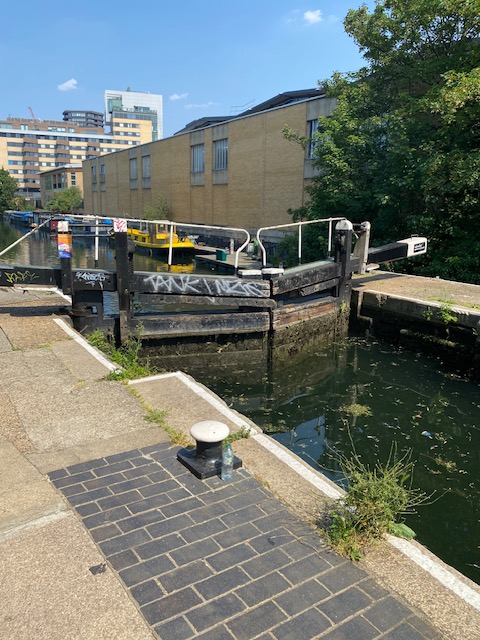
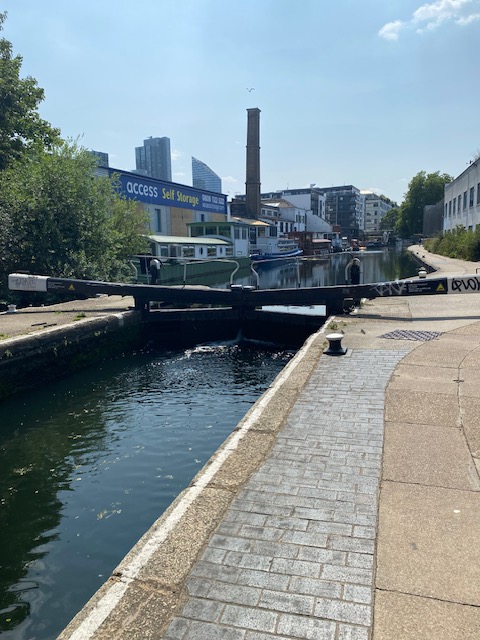
9. City Road/Leonard Street bus stop
This stop takes you to the Wesley Chapel and Museum which is opposite Bunhill Fields burial ground (seen on bus route 21). This is the site of John Wesley’s first purpose-built Chapel in London and next door is the house in which he lived between 1779 and 1791. Born at the start of the 18th century, Wesley was a noted cleric, theologian and evangelist who was a principal leader, if not the principal leader, of the movement that is known as Methodist. The chapel interior is quite beautiful, with plenty of stained glass windows. Wesley himself is buried in the grounds of the chapel.
Within a short walk of the house and chapel is the Honourable Artillery Co Museum, which unfortunately isn’t open to the public. It’s a magnificent building and the museum is associated with the Honourable Artillery Company, the oldest regiment in the British Army, which still maintains an active regiment as a core part of today’s Army. It’s only worth going to see the building for its grandeur and if you happen to be passing nearby.
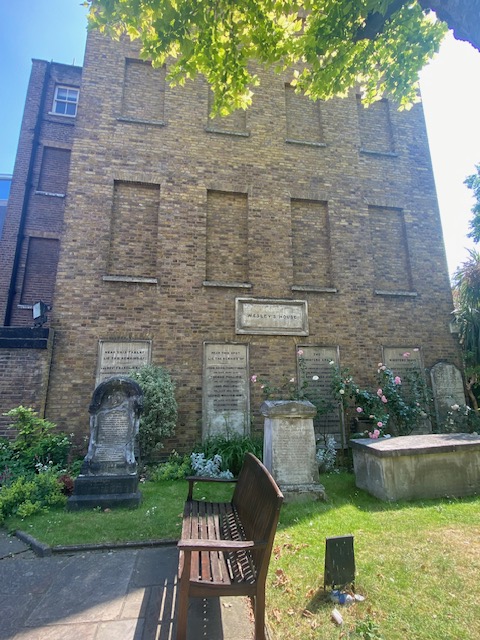


10. London Bridge station bus stop
Final stop is at the end of the route at London bridge station. Walk round the corner and you will see the Southwark Gateway Obelisk, aka the Needle sculpture. This prominent design is a sharp stone obelisk, which as well as being a focal point and meeting place, is also a skateboarder’s delight. Colloquially known as “the Spike”, it reaches over fifty-two feet above ground and tips backwards at a jaunty angle.
There is no plaque telling you what it is and why it’s placed here so various stories have evolved about its provenance. The most popular one being – according to the Londonist – that “the structure is angled to face 19.5 degrees to the northeast; trace the line down from the tip of the spike to its base as though descending a playground slide, continue that line across the Thames, and you will reach the church of St Magnus the Martyr: the location of the northern end of the medieval London Bridge.”


And so ends another really enjoyable bus route. It helped that the weather was amazing – hot and sunny – so that being outside was a joy for once. There were a couple of “wow” places that were unexpectedly interesting and unique. The first was the Museum of Homelessness and the other being the Castle Climbing centre. The bonus visiting the latter was its proximity to the West Reservoir, being such a clement day, it was packed with people taking part in different water sports.
Toilets that are open to the public and free of charge:
- Castle Climbing centre
- Museum of Homelessness
- Rosemary Branch theatre and pub
 london routemistress