
Marble Arch to Streatham Hill
Highlights:
- Staircase at Michael Werner Gallery
- Cadogan Hotel
- Holy Trinity, Sloane Square and Clapham Old Town
- Garrison Chapel
1. Start of route
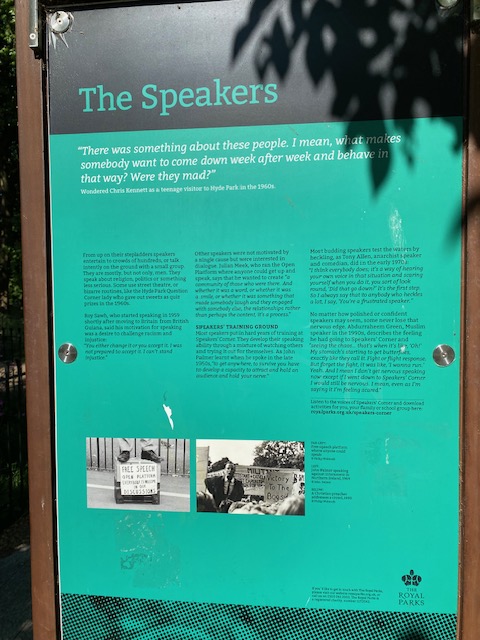
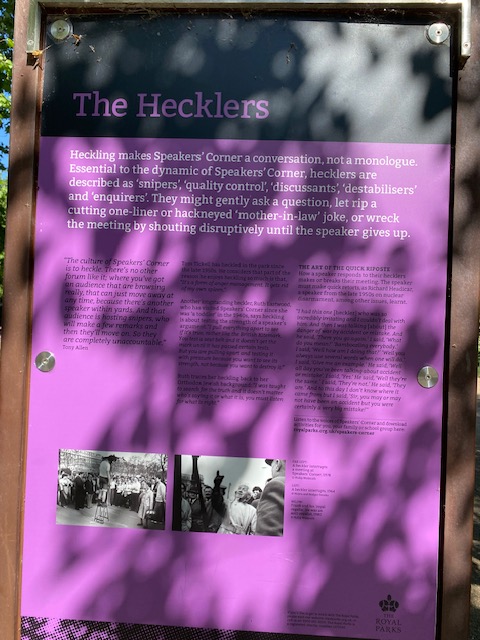
Speakers’ Corner is over the road from the start of the bus route so it’s worth a visit to see it, even if it’s not a Sunday – the only day you get to hear debates and public speaking. Until the late 18th century, people were still being hanged at nearby Tyburn Gallows. From around 1196 until 1783 when the gallows were dismantled, more than 50,000 people had been executed here. All who were condemned to die at Tyburn could make a final speech, often at Speakers’ Corner. Some confessed; others naturally protested their innocence. Londoners could buy a ticket to watch executions from a seat on huge wooden platforms. Eventually, the authorities decided the hangings were too rowdy and transferred them to Newgate Prison. But the tradition for protest and pleasure in Hyde Park continued and still does to this day.
At Speakers’ Corner, there are several boards outlining its history, who have been speakers in the past and who might speak there currently and also who have been the hecklers.


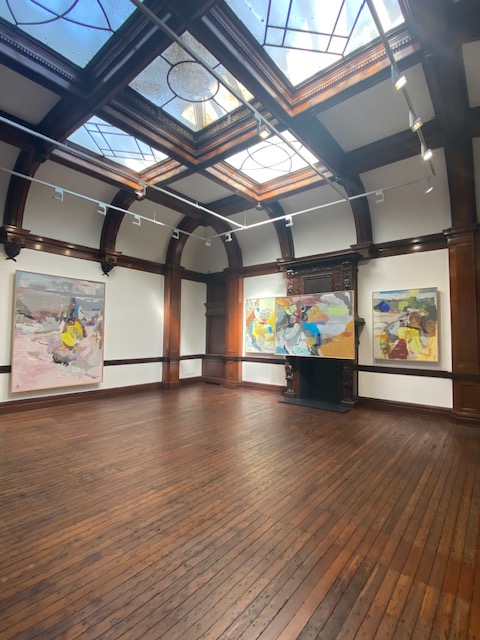
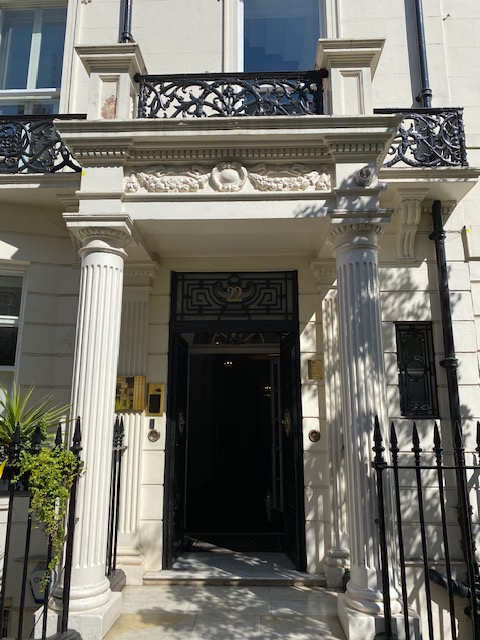
Walk along Park Lane until you get to Upper Brook St and find your way to the Michael Werner Gallery. From 16th May 2025 for 8 weeks, there is an exhibition by artist Maki Na Kamura called Desert Incognito, featuring her abstract art. The building itself at number 22 has some fascinating history. It had been a private residence, rebuilt in 1881, using the carcase of its original structure from 1742. The fittings and decoration that were carried out at that time, were in a Jacobean style, involving oak woodwork. If you go there now, do look not only at the current art exhibition, but have a look at the beautiful staircase and the rooms in which the paintings are on display.

2. Pont Street bus stop
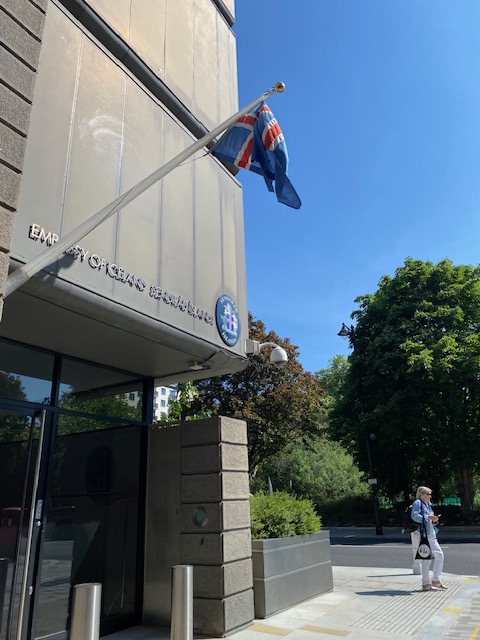
First of all, find the Danish Embassy which is also home to the Icelandic and Faroe Islands embassies as well as being the Danish Ambassador’s Residence. The building itself is an interesting example of Danish modern architecture. The structure of the embassy, and the residential wing behind, consists of stacks of glazed boxes, cantilevered out from concrete walls. Inside the embassy is a collection of contemporary Danish art and design.


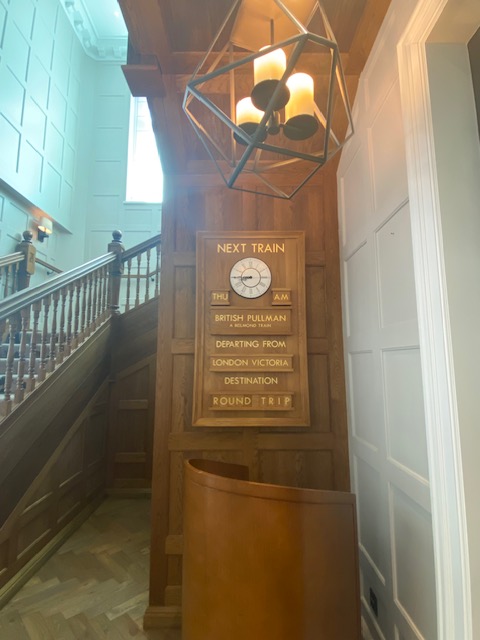
A little further down the road is Cadogan Hotel that is steeped in history. The illustrious socialite Lillie Langtry daringly entertained the Prince of Wales in what is now room 106. Oscar Wilde was also a resident, using the hotel as his pied-à-terre in room 118. The Cadogan was the site of his infamous arrest, immortalised in John Betjeman’s 1937 poem ‘The Arrest of Oscar Wilde at the Cadogan Hotel’: “Mr. Woilde, we ‘ave come for tew take yew / Where felons and criminals dwell: / We must ask yew tew leave with us quoietly / For this is the Cadogan Hotel.” The lift pays homage to the hotel’s literary influences too – it features 600 bronze-cast books. While you’re visiting, it’s worth having some refreshments at the bar or in the LaLee restaurant, both of which are sumptuously designed. It really feels like another world when you saunter throughout its splendid rooms.


3. Sloane Square bus stop
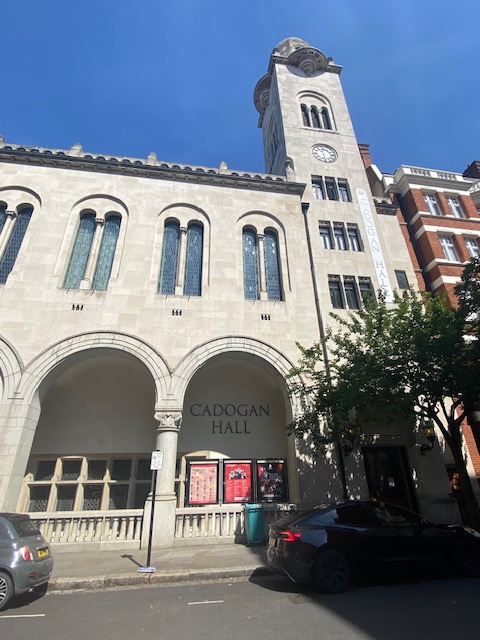
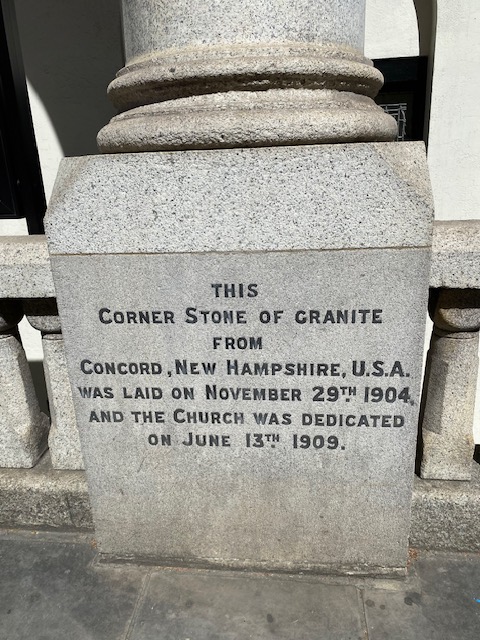
As you walk from the bus stop, you’ll find yourself at Cadogan Hall that started out in 1907 as a new Christian Science Church. As such, the Hall hosted congregations of up to 1400 for many years. Planning permission for renovations was refused in 1996, resulting in a smaller congregation moving to another building elsewhere in London. It was sold to Cadogan Estates and opened its doors as a suitable concert hall in 2004, providing a permanent home for the London Philharmonic Orchestra. It’s only possible to go inside if you’re attending a concert and photos of the inside aren’t permitted which is a great shame as it’s beautifully appointed.

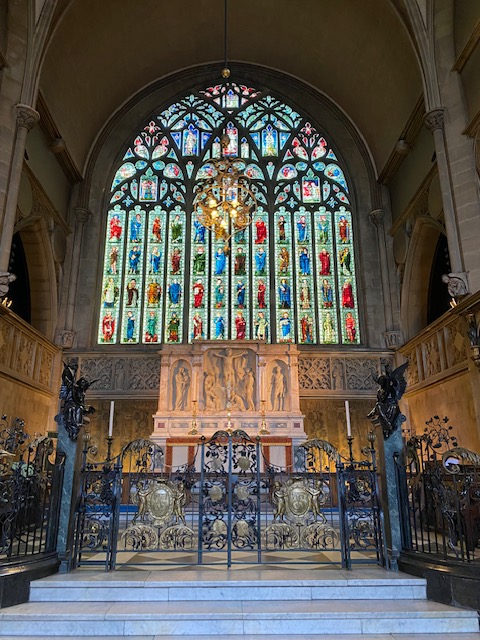
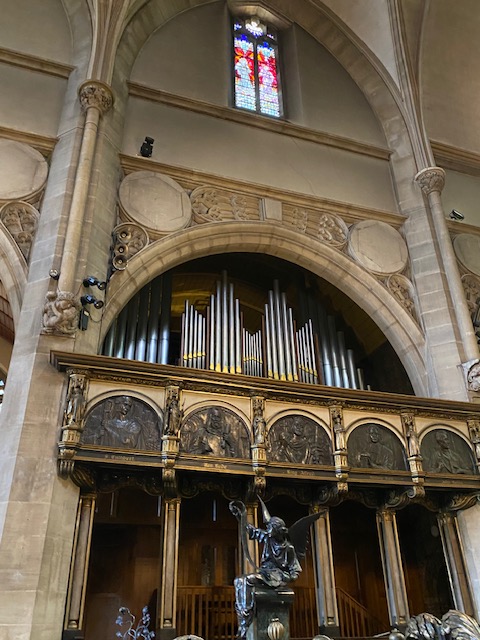
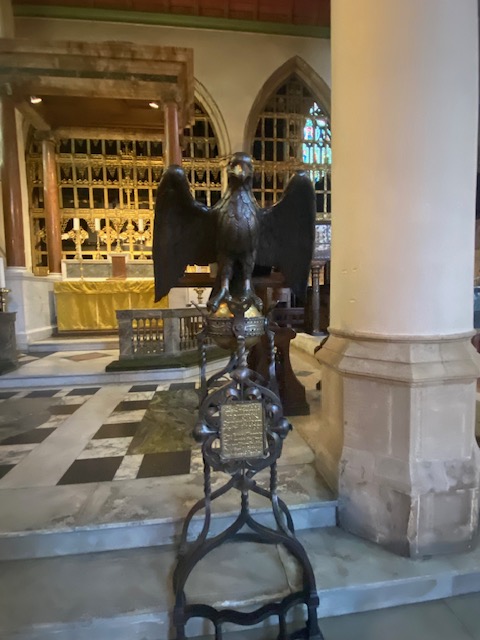
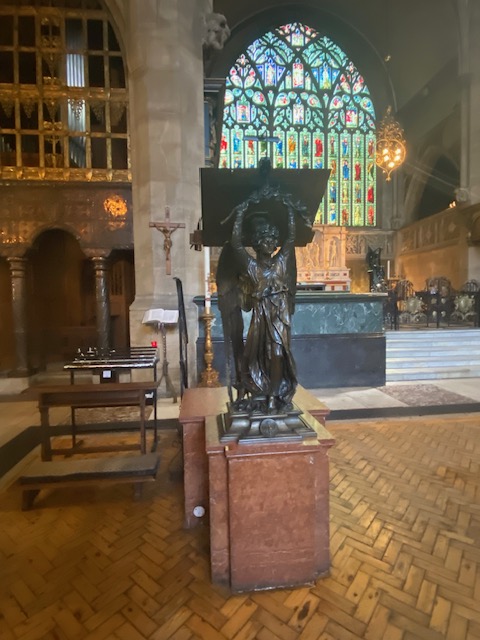
Now go to see the magnificent Holy Trinity Church, called “the Cathedral of the Arts and Crafts”, by the poet John Betjeman since the whole church can be regarded as a work of art. The stained glass windows, in particular the East Window, are truly wonderful. Looking at this East Window, there are 48 figures consisting of Apostles, Patriarchs, Kings, Prophets, and Saints. It’s believed that William Morris designed the foliage and background and the figure of St Bartholomew.
Holy Trinity was designed by John Dando Sedding, a prominent member of the Arts and Crafts movement along with William Morris. The connection with the world of the fine arts is not only represented in the building and its fittings but also in its sponsorship and encouragement of artists and musicians, continued to the present day. During WWII, the church was badly damaged by incendiary bombs but was subsequently restored more or less to its previous appearance. After this, the church authorities tried to close and demolish the building, replacing it with something smaller but this was thwarted by a campaign led by John Betjeman and the Victorian Society.
Apart from the East Window, take time to look at the Lady Chapel. Its altar is raised on a marble floor with marble steps and a marble balustrade. The baldachino above is supported by 4 Ionic columns. Behind this structure is the Strapwork Screen, a beautiful enamel construction which was made by artist Nelson Dawson II and his wife Edith, both of whom were members of the Arts and Crafts movement.



Not far from the church is Pavilion Road, the longest mews in London. Cadogan Estates turned the previously residential street into a destination for independent, artisan traders. It has a definite village feel to it and as at May 2025, is decked with union jack bunting, to commemorate the 80th anniversary of VE day, giving it a festive appearance.
Head now to the Royal Court Theatre, being a replacement of the original New Chelsea Theatre where several of W S Gilbert’s early plays were performed. This current building dates back to 1888 and production of plays were held here until 1932, after which it was used as a cinema from 1935 to 1940, until WW II bomb damage closed it. After the war, the interior was reconstructed as a stage theatre and re-opened in 1952. In 1954, the English Stage Company (ESC) was founded with a mission to present plays by young and experimental dramatists and “the best contemporary plays from abroad”.
Some of the more famous plays have since been performed at the Royal Court, amongst which were John Osborne’s Look Back in Anger and The Entertainer, the latter of which had Laurence Olivier in the starring role. Other notable productions have been by playwrights, among others, Samuel Beckett, Caryl Churchill and Conor MacPherson.
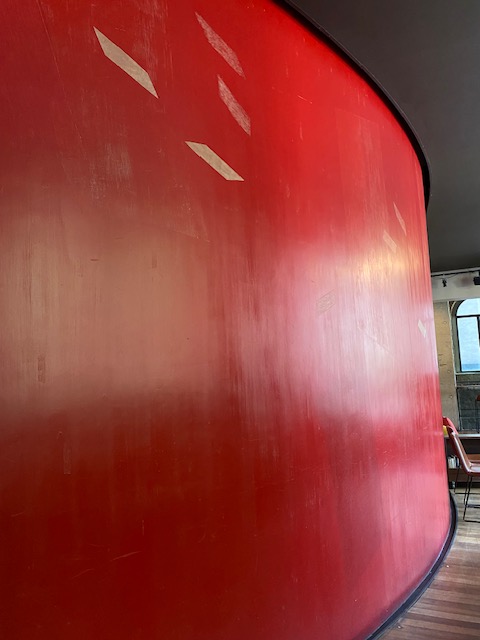
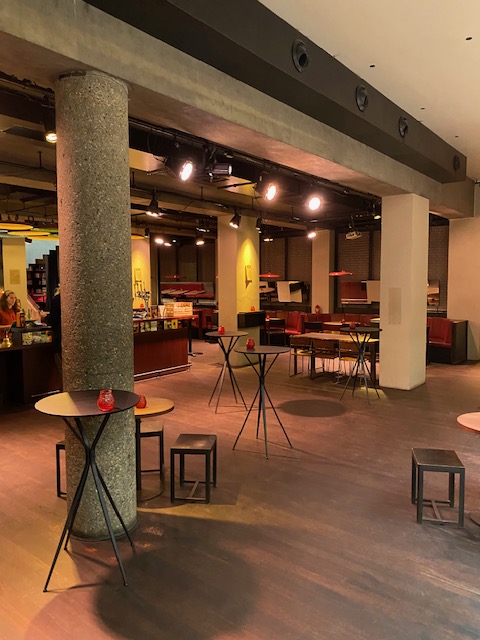
The interior walls of the theatre have been painted in vermillion red with flecks of gold, to simulate the sun pouring into the theatre. It’s very effective. There’s a library of plays and theatre books which is free to the public for browsing and check out the bar and restaurant on the lower ground floor which has a welcoming atmosphere. The Royal Court carries out behind-the-scenes guided tours so you can get to explore the building and the works that have been performed here over the past 70+ years.


4. Ebury Bridge Road bus stop
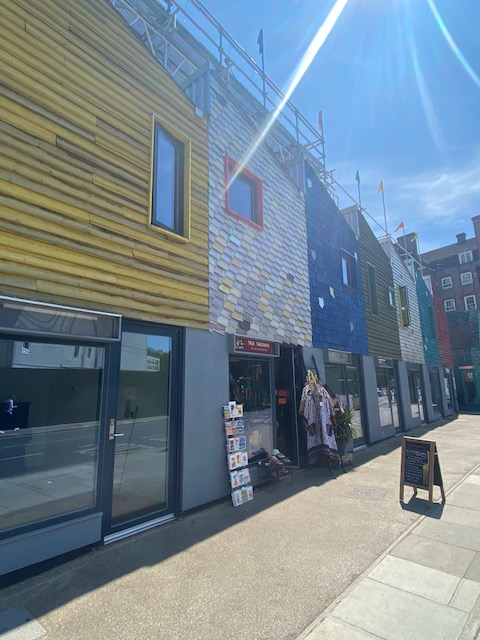
Round the corner from the stop is the house where Jerome K Jerome wrote Three Men in a Boat at 104 Chelsea Bridge Road. There’s a blue English Heritage plaque to commemorate this. Around the corner is an interesting and colourful row of seven buildings known as Ebury Edge. This is a multi-purpose place for local creatives, entrepreneurs and residents, providing a mix of private studios, retail units and affordable workspace, all set around a central community courtyard.


Walk towards Garrison Square and find yourself at Garrison Chapel at Chelsea Barracks. It was the Guards Chapel and is now home to the King’s Foundation, to act as a public exhibition space to showcase the work of the charity, its students and graduates.
The original Chapel provided spiritual and education services for four companies that were housed in the Chelsea Barracks: the Grenadier, Irish, Welsh and Scots Guards. It’s the only remaining building from the original barracks of the 1800s, and is considered to be a good example of a mid-19th Century Romanesque-Byzantine style.
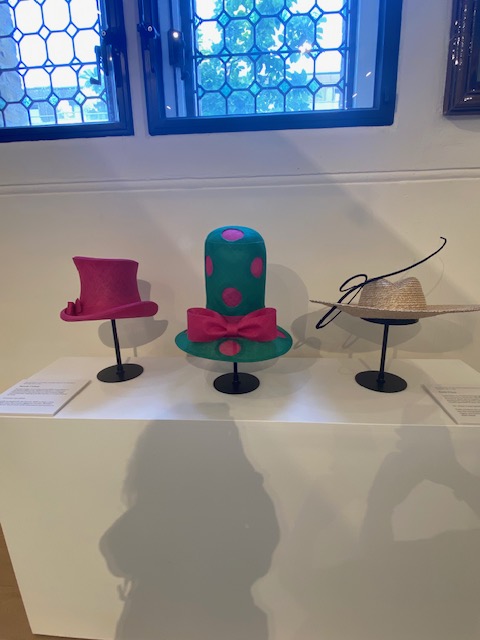
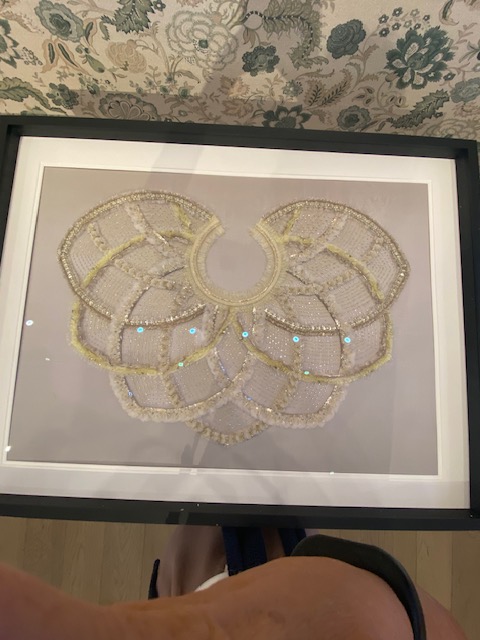
Currently on display inside the chapel are bronze busts of the late Queen Elizabeth II, HRH Prince Philip and HM King Charles III. Also to be seen is an eclectic selection of hats, “Tall Garden Hats” by milliner Barnaby Callaby. He says he was inspired by dramatic shifts in colour, shape and light that dance across Highgrove Gardens. See too “Phyllotaxis”, a collection of material trims by textile artist Beth Somerville. She was similarly inspired by the gardens at Highgrove.
The King’s Foundation, based as it is here at the Chapel, encourages traditional arts and heritage craft skills, in addition to a number of special exhibitions and events. The interior of the building itself is worth a visit and as it’s free entry, it’s not to be missed if you’re around this part of London.


5. Silverthorne Road bus stop
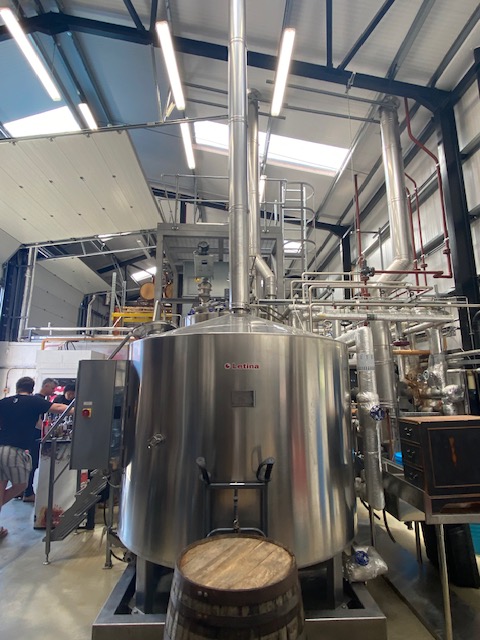
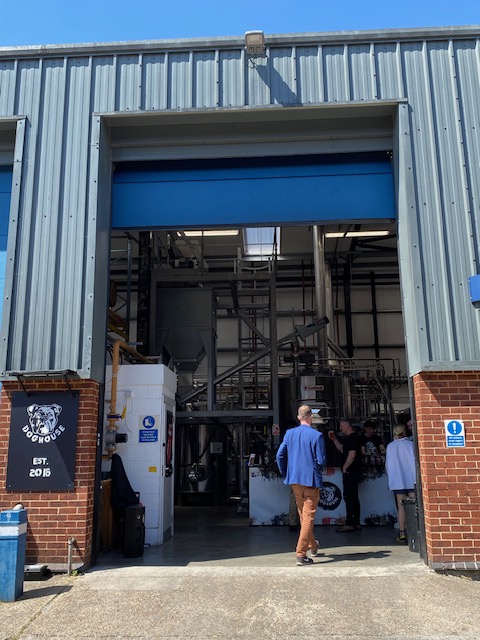
This is a great stop because it takes you to Doghouse Distillery. It prides itself on being London’s only multi-category grain-to-bottle distillery, making their base spirit from scratch. The owners Katherine and Braden called it Doghouse because “Doghouse” reflects an underlying vibe of good times, passion and innovation, with a hint of rebellion. If you enjoy a drink or two then it’s likely you have spent some of your life ‘in the ‘Doghouse’!”.
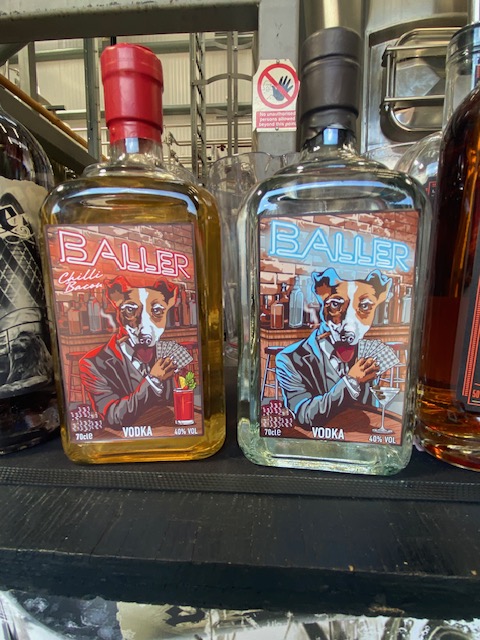
Katherine and Braden’s love of music has led to creating a portfolio of spirits, each inspired by different genres of music. The labels reflect this with the artwork on the bottles being artist-led and looking more like old school vinyl covers than your traditional spirit brand.
The process they use is they buy malted grain and then use mashing, fermenting and distilling processes to convert that into a pure alcohol. The vodka they produce is an English wheat vodka and is the only one made from scratch in London. They have a wonderful selection of spirits including gin and aperitivo, so do go and visit and sample some of them for yourself!
6. Clapham Common Old Town bus stop
Clapham Common Old Town has a distinctive feel and it’s not the same as Clapham itself. Situated at the north side of the common, it has a definite village vibe. The Old Town developed from a rural village into a fashionable location for wealthy merchants and professionals in the 18th and 19th centuries.
One of the main features in this part of London is Holy Trinity Church (not to be confused with the one seen previously near Sloane Square). It is most famously associated with William Wilberforce and the group of friends known as “The Clapham Sect”. They lived around Clapham Common and worshipped in this church as they campaigned for the abolition of the slave trade and the spiritual and moral reformation of the nation. There is a plaque on an outside wall to this effect.
Back in 1753, a committee was formed whose concern it was to have a new church built near Clapham Common. The architect they chose was contracted to design and build at the cost of £5,000, (approx. £1.25m today) a building in grey stock brick with Portland stone trimmings, a slate roof and a belfry topped with a small lead dome and a gilded vane. The clock was supplied by Aynsth Thwaites, the world’s oldest clock manufacturing company, still in existence today. The new church was consecrated on 1 June 1776 by the Bishop of Ely.
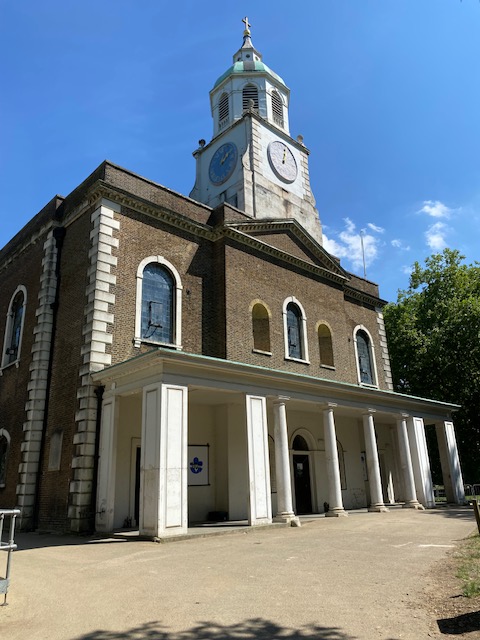


Along the main road, which is called Old Town, there are a couple of interesting buildings. One is Maritime House, which was built in 1939 as the HQ for the National Union of Seamen. The Union vacated the premises in 1990 and it’s now part of a college and also contains residential accommodation. Over the road from here is Sycamore House built in 1787. Various residents occupied the house until 1841 when it was converted into a school. It remained so for the next 50 years when it became a laundry. A local businessman – Dennis Leman – took over the laundry business when he married the daughter of the laundress who had been working assiduously to make it into a thriving business. Known as the Sycamore Laundry, it remained a family business until a merger in 1994 with a larger laundry. The works in Clapham Old Town then closed, though a small shop still remains at No. 8 for taking in laundry which is sent on to the main laundry site.


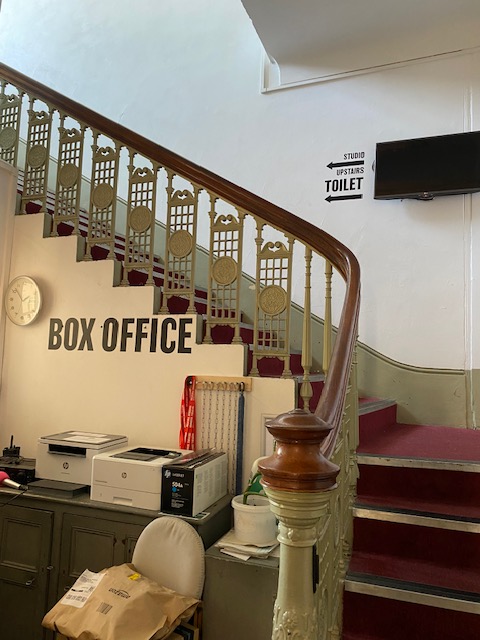
Final place to see is the Omnibus Theatre. It’s a small independent theatre with a big ambitious programme, inspired by the building’s literary heritage. The theatre is housed in a lovely Victorian building that was originally the Clapham Library, built in 1889. It was used as a community space until 2013, when a community-led campaign was launched to save it from potential redevelopment into apartments.



I had come to the conclusion – erroneously as it transpires – that I had seen most of London by now, having travelled on 137 buses (give or take a couple of routes that have been discontinued). How wrong I was. This route filled me with delight, from seeing both magnificent Holy Trinity Churches, to enjoying tea at the Cadogan Hotel (thanks to my friend Jill!) and savouring the delights of the Doghouse Distillery. It has given me renewed impetus to keep going and see what else I can discover in future routes.
Toilets that are open to the public and free of charge:
- Michael Werner Gallery
- Cadogan Hotel
- Royal Court Theatre
- Doghouse Distillery
- Omnibus Theatre
 london routemistress
3 responses to “Bus route 137”
you have done the 137 proud – congratulations
LikeLike
Thanks! it was a fantastic route -it’s a shame you couldn’t do all of it.
LikeLike
yes and Virgin didn’t come until quite late and have not finished the job. I only get WiFi in half my house. Coming again tomorrow.
LikeLike