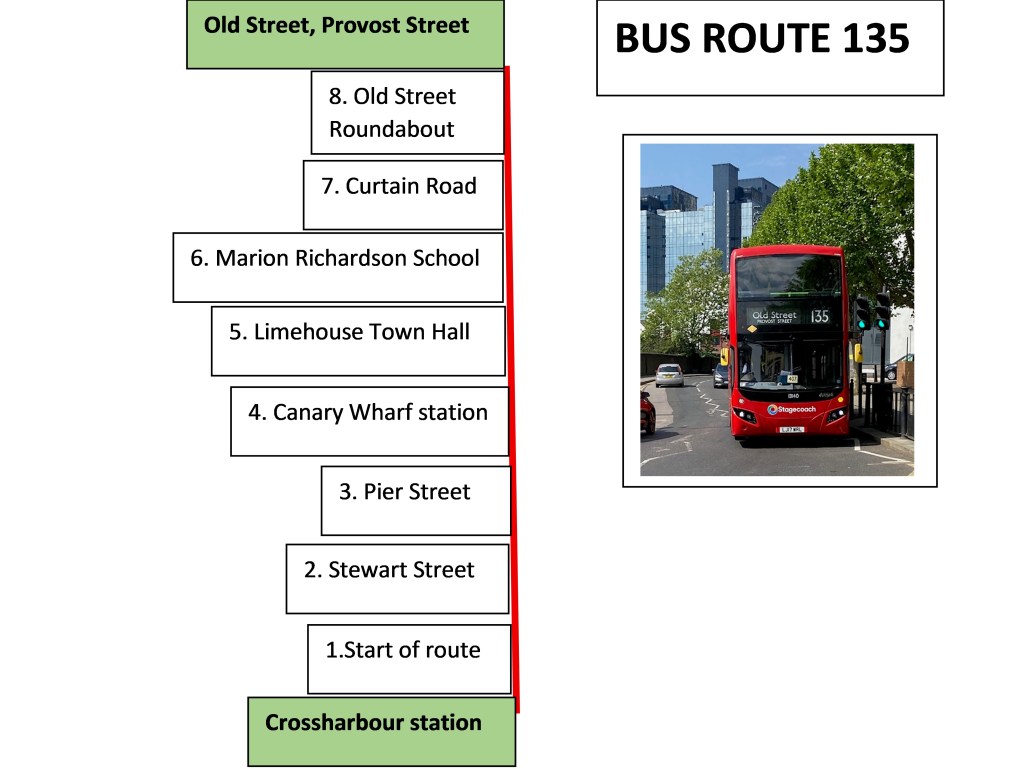
Crossharbour to Old Street
Highlights:
- Mudchute Farm
- Canary Wharf sculptures
- Jealous Gallery
- Albert and Charles Squares
1. Start of route
Before getting on the 135, take a walk around the local area. You can start at Glengall Bridge at Millwall Inner Dock. It’s a Dutch-style double-leaf bascule bridge which opened in 1990, and resembles the Langlois Bridge at Arles. Its main claim to fame is that James Bond’s boat cruises underneath it in the famous water chase scene in the film “The World is not Enough”.
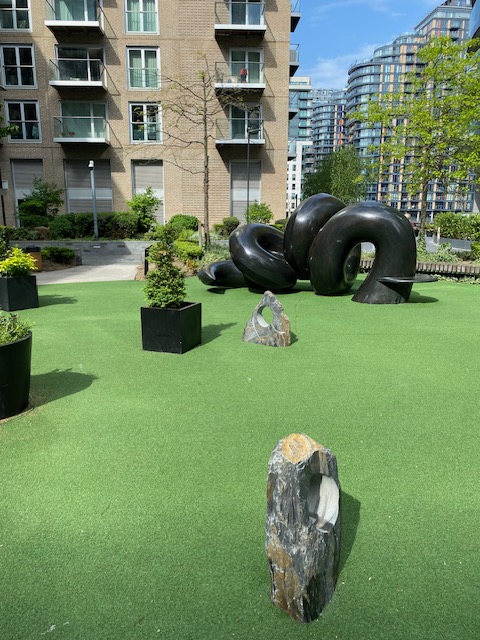
All along this stretch are wharves, quays and docks so just wander along and enjoy the views and the weather, if you’re lucky to pick a sunny day. Of course there are a lot of high rise blocks of flats and offices but they are softened by the amount of green and water. So at Baltimore Wharf there is a play area with some stones and sculptures, juxtaposed with the soft flow of the river close by.


2. Stewart Street or Jack Dash House bus stop
Either of these stops will take you to the next places to see. Jack Dash House is currently covered in scaffolding so it’s difficult to get a good view of it. The building is named after Jack O’Brien Dash (1907 – 1989) who was a British communist and trade union leader, famous for his role in London dock strikes. He was considered the outstanding rank and file leader of his generation, enjoying undoubted success in improving conditions for workers.
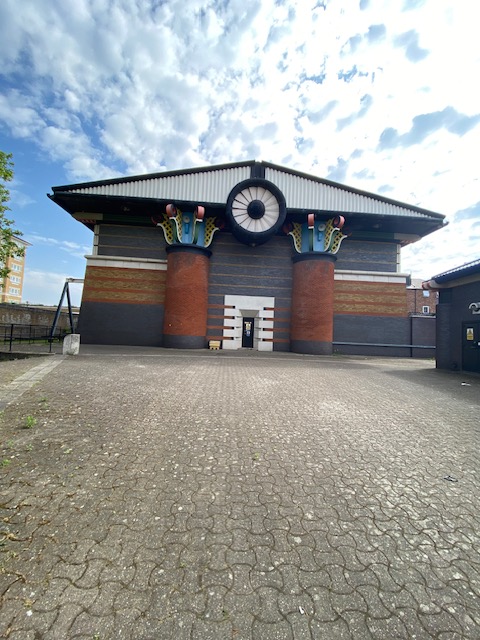
Walk round the corner till you find the Isle of Dogs Pumping station, designed by architect John Outram, in a post-modernism style, popular in the 1980s. Two new water pumping stations were erected at this time, to deal with the rainwater that would run off the newly created streets in the area.
The design was a break from the austerity of the ’60s and ’70s and involves plenty of symbolism, metaphor and good old fun. John Outram described the pumping station as ‘the Temple of Storms’. There are many classical architectural features, such as the pediment and the two huge stylised Corinthian columns at each end. The giant ‘eye’ at the front is both visually captivating and also functions as the extraction fan for the building.
Steps away from the pumping station is the Blue Bridge, opened on 1st June 1969 that crosses the east entrance to West India South Dock. Its design is based on traditional Dutch drawbridges, being a single-leaf bascule bridge (as compared to Glengall Bridge above, which is a double-leaf). Although built for economy and efficiency – it can raise or lower in one minute – it is an attractive bridge that is really popular with the local residents.


3. Pier Street bus stop
This is a great stop, especially if you like animals. Head over to Mudchute Park and Farm and you’ll be pleasantly surprised to see a living farm of a range of animals, some of which you’re allowed to pet and feed. The goats are especially friendly, whilst the llama seemed to prefer basking in the sunshine. There’s an array of different birds, with a new batch of Bearded Belgian bantam chickens, plenty of ducks and geese and a beautifully plumed golden pheasant.
Walk a little further into the farm – which incidentally is free of charge though donations are welcome – and you’ll come across the Tamworth Pig section. The Tamworth is recognised as the purest British breed of pig and is distinctive with long legs, prick ears with a pure red or ginger coat, often spotted.
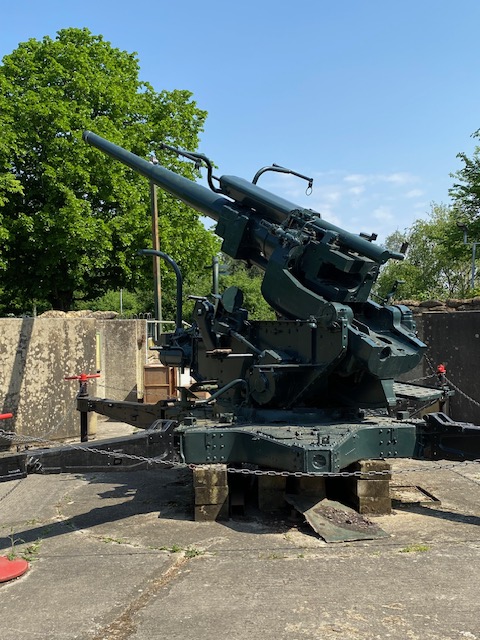
During World War II the Transporter Yard at the farm, served as an RAF embarkation point. Some of the higher land was the site for four Ack Ack anti-aircraft guns. There is a decommissioned anti-aircraft gun still on display, which is somewhat incongruous as most visitors to the farm are schoolchildren and other young folk, wishing to see the animals.


4. Canary Wharf Station bus stop
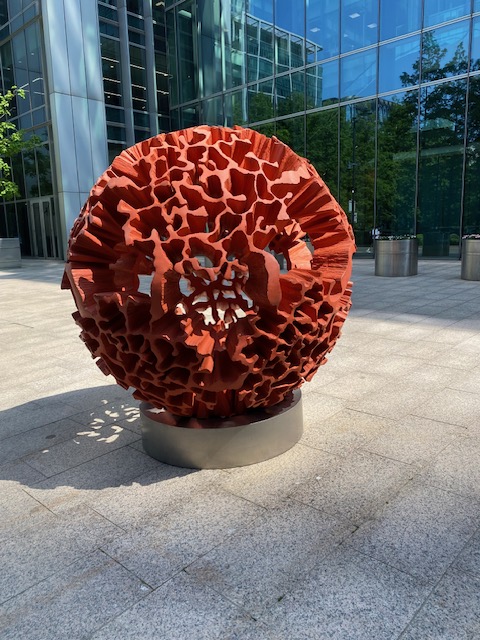
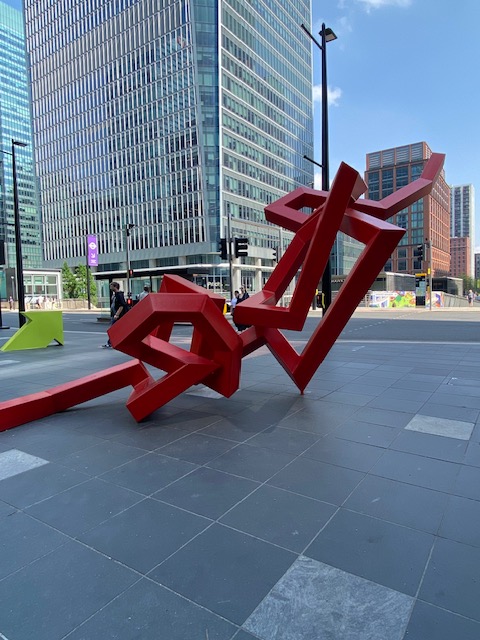
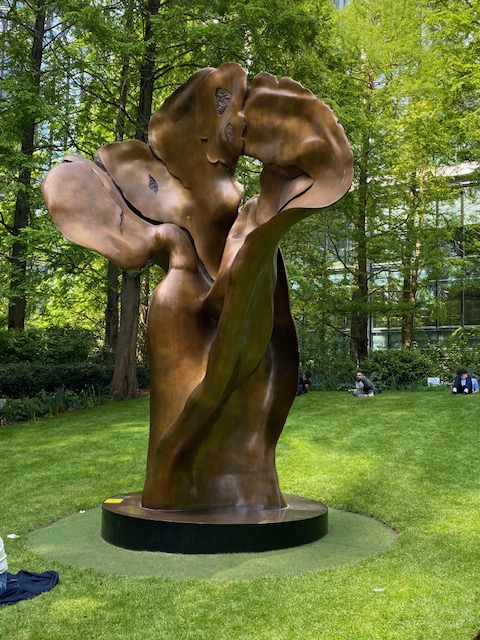
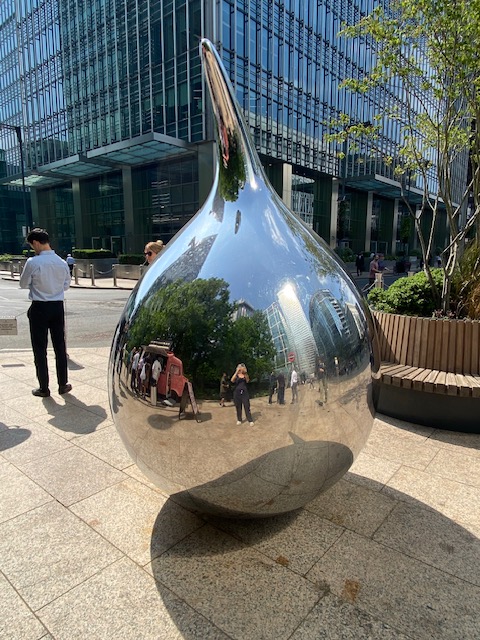
Apart from the very high rise buildings of flats and offices, Canary Wharf has a surprising number of sculptures scattered around. Near or in Jubilee Park are a significant amount, as well as at Cabot Square. There is a Canary Wharf art map so it would be well worth taking a look at it, if you are interested in seeing as many of them as possible. As there are approximately 100 altogether, I picked out a selection of statues and sculptures that were near each other.



Not far from Cabot Square is North Dock Footbridge, connecting the West India Quay and the Docklands area. There has been a bridge on this site since 1803 although it was more of a temporary construction. A more permanent bridge was built in 1827, but was eventually removed for Crossrail construction in 2012. This new, shorter bridge was then built in 2020.
Now head over to Fisherman’s Walk and you’ll see a gigantic plastic yellow duck – the Duck Boey. It’s to alert you to Fairgame, a new fairground for kids large and small. They use modern tech to enhance the fairground games you used to play and love all those years back and the setting is lovely, overlooking South Dock and its many boats.


5. Limehouse Town Hall bus stop
The bus drops you off at Limehouse, outside St Anne’s Church (also seen on bus 15). Over the road is a large building with the words The Mission writ large. It’s a grade II listed building, originally known as the Empire Memorial Sailors’ Hostel. Its foundation stone was laid in March 1923. These days it’s an apartment building that’s built around a central courtyard/garden with a roof terrace from where you can see as far as the City, East London and Canary Wharf. Outside the building is a large anchor, presumably paying homage to the sailors who once inhabited the Mission.
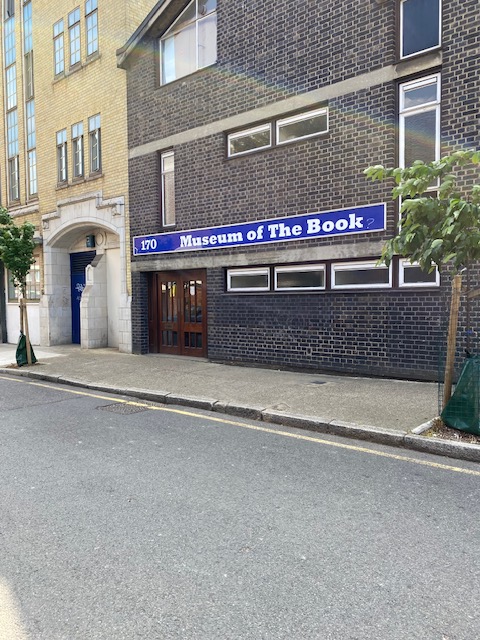
Round the corner from the Mission is the Museum of the Book. Despite its website stating it’s open during the day, on checking it’s actually open only after scheduled services at the church. The Museum is home to a world class collection of original ancient manuscripts and printed Bibles. The manuscripts date from 4000 BC to AD 1600 and are written in more than 20 languages including Hebrew, Greek, Latin and English.


6. Marion Richardson School bus stop
Opposite the bus stop is the Marion Richardson School. It was built in the early 20th century and designed to accommodate a large number of students, reflecting the area’s population growth. Over the years, it has played a vital role in educating children, particularly those from the Jewish community and working-class families. It is named after Marion Richardson who was a prominent art educator and who had some influence in the school.
Round the corner is Albert Gardens, which is both the square and the park set inside it. The early 19th C houses are almost all grade II listed, both for the buildings themselves and the railings. At one of the entrances to the garden is a cast-iron 19th C drinking fountain. At the other end is a statue of a harvester boy holding a sickle and leaning against some corn, dated 1903.


7. Curtain Road bus stop
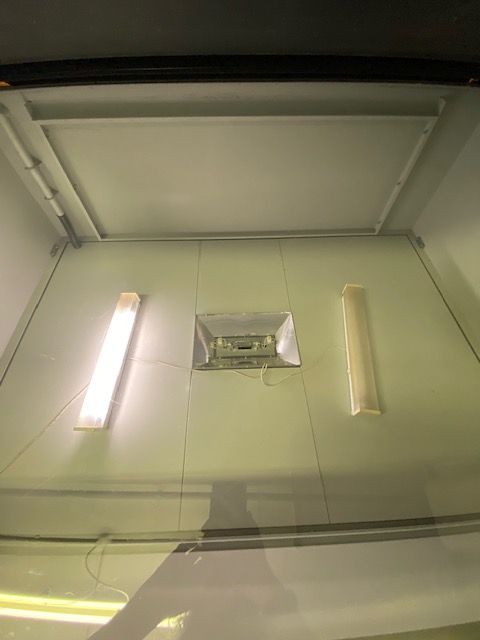
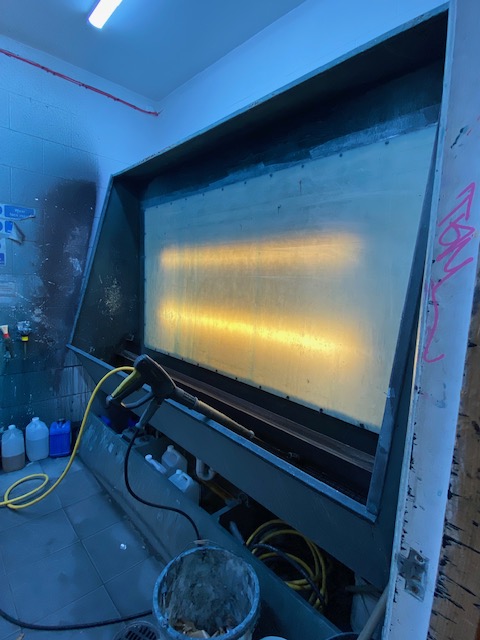
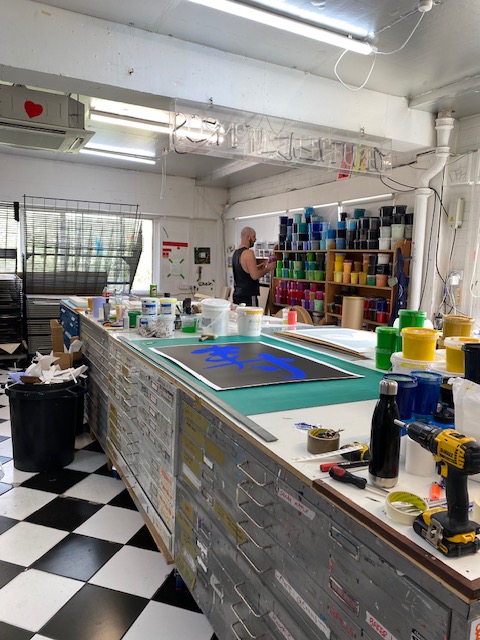
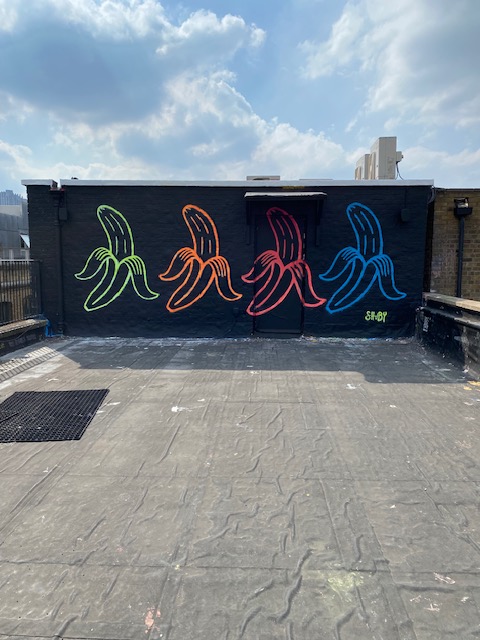
Alight here to see Jealous Gallery and Print Shop. They usually have an exhibition but as luck would have it, they were in the process of setting up a new one on the day of my visit. That said, I was lucky enough to have a guided tour of the premises and it was an eye-opener to see just what goes on and how the printing process works. They regard themselves as an artist-led fine art print publisher and studio as well as having a gallery to display the art works of the chosen artists. I was shown silk screens, the light box and wash-out room as well as all the machinery and paints on all four floors of the building. Also there’s a roof terrace which has amazing views of the locality and a wall that is home to a rotating selection of artists’ murals, the current one being by Shuby.


7. Old Street Roundabout bus stop
Near the stop is a rather lovely gold mural by street artist Rosie Woods. It’s simply entitled Old Street Mural and depicts two heads both draped in a small sheet and with gold bangles and balls. Rosie created this in December 2024 and it certainly stands out as you walk along the road.
There are other murals in the area too, so do look out for them. At the Book Art Bookshop is the face of a moustached man while on the side of the building is art by HNRX, an Austrian street artist. On the corner of Old Street and Great Eastern Street is another mural, of two female heads, beautifully painted, though it’s not obvious who the artist is for this one.
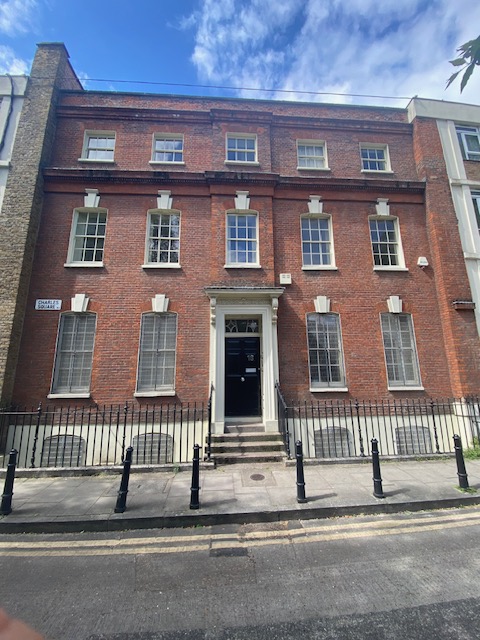
Finally, walk round to Charles Square. This was laid out in the late 17th C and in 1922 it still contained at least some houses from that period. Sadly, only no. 16 remains. It’s now a grade II* listed building. It had been part of the Shoreditch County Court. The Gardens opposite were named after Charles II as he was the reigning monarch at the time of the square being constructed.



I was again pleasantly surprised with this route, with its good variety of places worth seeing. I enjoyed the area around the Isle of Dogs and in particular, the farm and park at Mudchute. It was fun to find the various sculptures in Canary Wharf, most of which are ignored by the workers who rush by to and from their offices. It was also a real treat to be shown around Jealous Studios and find out how the printing is carried out. And finally, seeing the two squares – Albert and Charles – with their fine architecture. It definitely helped that it was a sunny and warm day as a lot of the places of interest on this route were outdoors.
Toilets that are open to the public and free of charge:
- Mudchute Farm
- Jubilee Place, Canary Wharf
- Jealous Gallery
 london routemistress