
Bexleyheath Clock Tower to North Greenwich station
Highlights:
- Hall Place & Gardens including Butterfly Gardens
- Avery Hill
- Tudor Barn
1. Bexleyheath Clock Tower bus stop
Other bus routes have passed by this stop but it’s still worth looking at the clock tower, which was erected to commemorate the coronation of King George V and was formally unveiled on 17 July 1912. At the opening ceremony a “temporary” bust of King George V was unveiled. A bell was installed in 1913 but in August 1914 the Defence of the Realm Act banned the ringing of bells for fear they might be used by German spies to convey secret messages. The bell did not ring again until the year 2000.
During the 1930s the bust of King George disintegrated and then completely fell apart during cleaning after WWII. It was recast and re-installed in its niche by sculptor Ravera and in 1996 he was commissioned to sculpt a bust of William Morris, who lived at the nearby Red House.
Walk round the corner and you’ll come across a lovely sculpture called “Family Outing”. It’s made by Ravera as well and it depicts a mother and father holding hands with a small child swinging between them.


2. Gravel Hill Close bus stop
There’s a lot to take in at this stop although it’s all in the same place. Over the road is Hall Place and Gardens which is home to the London Butterfly Gardens, an owl sanctuary, the Stables Gallery and the Hall and Gardens themselves. There’s an entrance fee to the butterfly gardens and owl sanctuary but even if you don’t want to see them the adjacent shop is worth a visit. All sorts of butterfly-related gifts are on display (and not at outrageous prices).
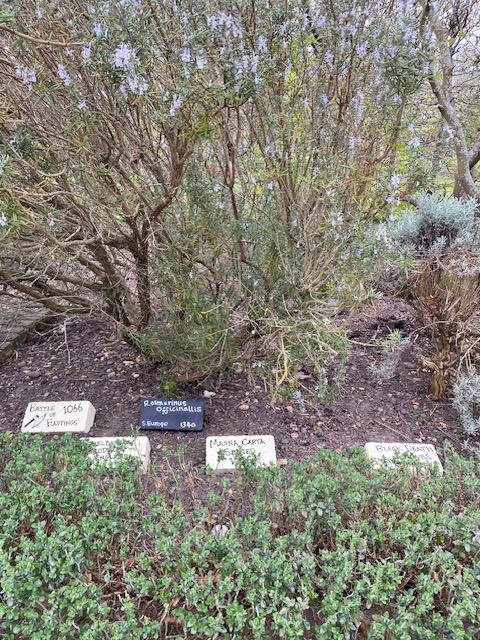
Outside is Hall Place’s Historic Border. This forms a time line of plants from around the world that are now fairly common. Black bricks tells you about each plant while yellow bricks give important historic dates from the Battle of Hastings to the start of WWII in 1939 when Hall Place was used by the US Army as an intelligence base.



Now go to the Stables Gallery which has a good display of art for sale, again at decent prices. It’s not obvious if this building was originally stables for the House. The gallery offers local and other artists an area to exhibit their artworks.


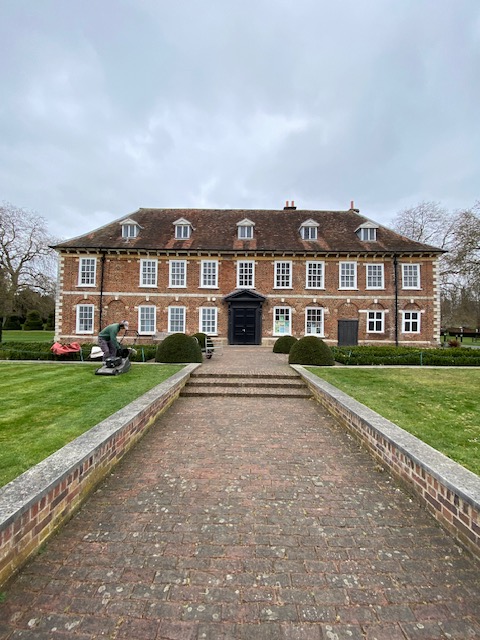
And to Hall Place and Gardens. The website states that it’s one of the South East’s best kept secrets and I would second that. The house is only open on certain days of the year and tours have to be booked in advance. At other times, it’s possible to appreciate its beauty from the outside.
In the 18th century Hall Place came into the ownership of the Dashwood family. Sir Francis Dashwood was Chancellor of the Exchequer from 1762–1763, but he was also a known rake and founder of the secret and immoral Hellfire Club. From 1795 Hall Place was leased as a school for young gentlemen and some time later, Maitland Dashwood, grandson of Sir Francis, made the next set of significant changes to the building. From the 1870s, he added the lodge, linked the house to the water mains and added fine wood panelling and parquet flooring.
During the 20th century, the aristocratic and fashionable sets took on short-term leases. They reflected a new glamorous pre-war elite and included Baron Emile D’Erlanger and his American wife Matilda, a former gaiety girl. The last tenant of Hall Place was Lady Limerick who lived in the house alone from 1917 – 1943. She added a number of mock-Tudor features including beams and fireplaces.


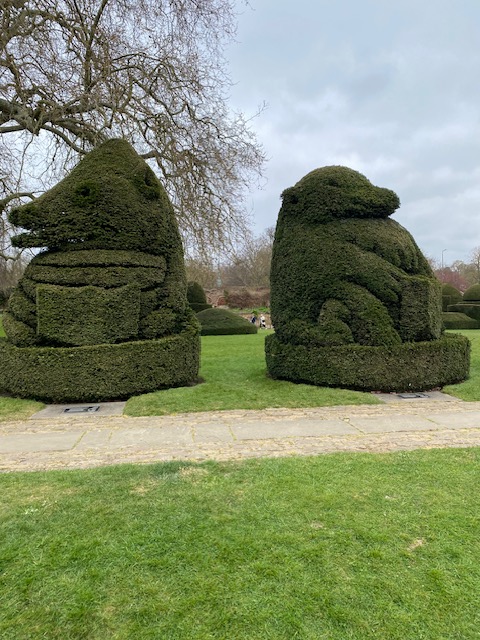
The gardens are something to behold. Obviously they are very well maintained and managed and have won many Green Flag awards. They are set within 65 hectares so you can wander freely for as long as you please. Featuring large among the must-sees are the heraldic animal topiary trees, planted in 1953 in celebration of the coronation of Queen Elizabeth II. There are ten of the Queen’s Beasts in all, including the Lion of England, the Griffin, the Falcon, the Red Dragon and the Unicorn.



3. Bexley station bus stop
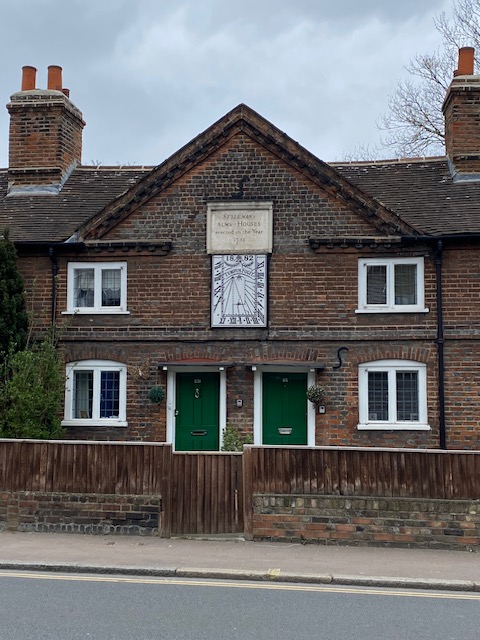
Opposite the bus stop are twelve Styleman’s almshouses, built under the terms of the will of John Styleman, a director of the East India Company, who lived locally. His will requested ‘twelve alms houses for twelve poor families of this parish, to be nominated by the trustees, minister, and churchwardens; and he ordered, that two guineas should be paid to the minister of Bexley yearly, for preaching an annual sermon on Midsummer-day; and three guineas for a dinner yearly on that day’. He died in 1734 and the almshouses were built after his widow’s death.
Near the almshouses is another interesting looking building, Freemantle Hall, part of the Freemantle Trust that was created by William Freemantle. He had arrived in Bexley as a young man and lived here for approx. 70 years, having taken on various public posts in that time. Mr Freemantle bought some cottages in 1877 and when they were demolished he gave the site for the building of a village hall. He laid the foundation in 1894 and the hall was in use before he died in January 1897. Today the hall is hired out for all sorts of events and groups but interestingly, they have a policy to have no weddings at the venue.



Bexley’s main landmark is the Anglican church of St. Mary the Virgin. It has been a continuous place of Christian worship for over 900 years. Its most distinctive exterior feature is its unusual spire which resembles an octagonal cone balancing on top of a truncated pyramid. In the churchyard there many tomb chests and stones dating from C17 onwards. The church was originally built in the Middle Ages, its monastic-style interior survived from the Reformation until Victorian times. The doors aren’t always open to have a good look inside but it’s worth discovering when it’s possible to visit. In 1883 the church underwent a significant make-over to return the church to medieval style. All of the windows were replaced with stained glass and flint cladding was added to the external walls.

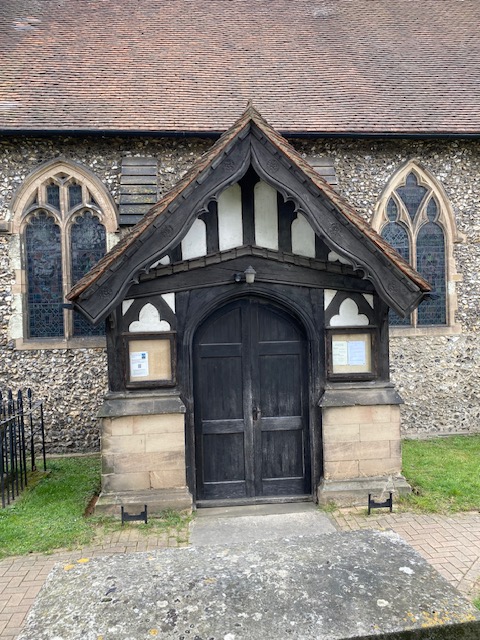

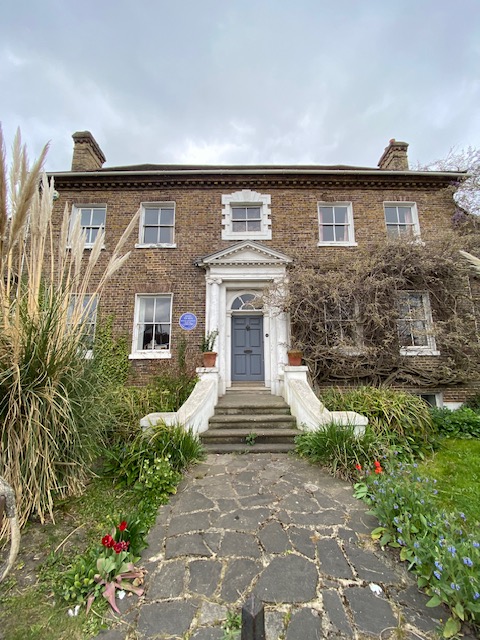
On the way back to the stop, there are a couple of places of interest. There’s the former home of John Thorpe, an antiquarian, whose work includes the discovery of the extensive Lullingstone Roman Villa, after finding an original Roman mosaic pavement.
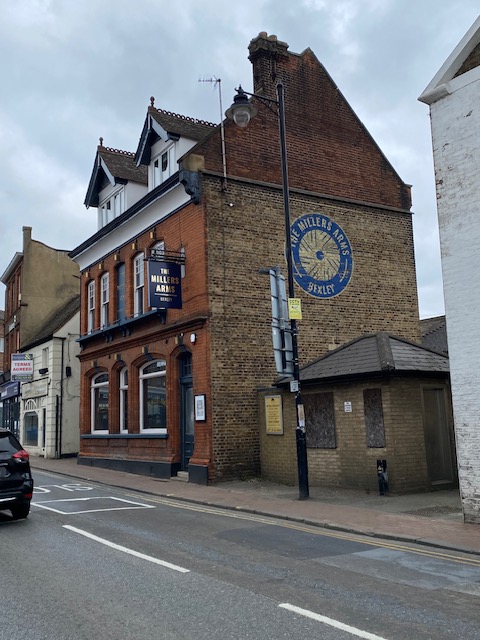
Along the road is The Millers Arms pub, originally known as the Hare and Hounds with its change of name in about 1885. At this time, Beasley Brewers of Plumstead leased the pub from the Tomkins family, who eventually sold it to the brewers in 1894. This current building was built in 1899, though an earlier pub stood on the site from at least 1855.

4. Bexley War Memorial bus stop
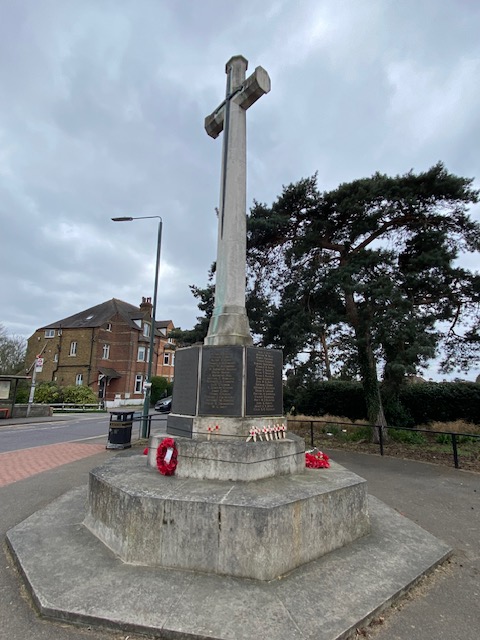
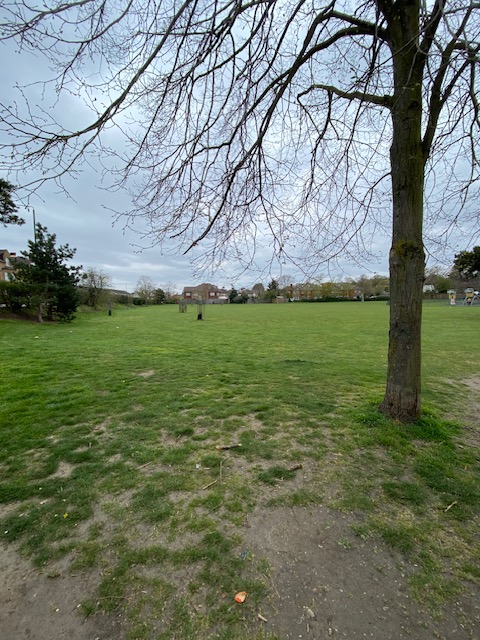
Just at this stop is the war memorial that commemorates the residents of Bexley who were killed or missing in World War I and World War II. There were 65 in WWI and 32 in WWII. The memorial was erected after the First World War. After the Second World War, the names of those who died in that war were also added to the memorial. Behind the memorial is The Golden Acre, a lovely open green space, ideal for walking, kids running and playing. It was historically the site of the borough’s annual fair in the 19th century. It’s also thought it might be the grounds for early cricket matches in the borough.
5. Riefield Road bus stop
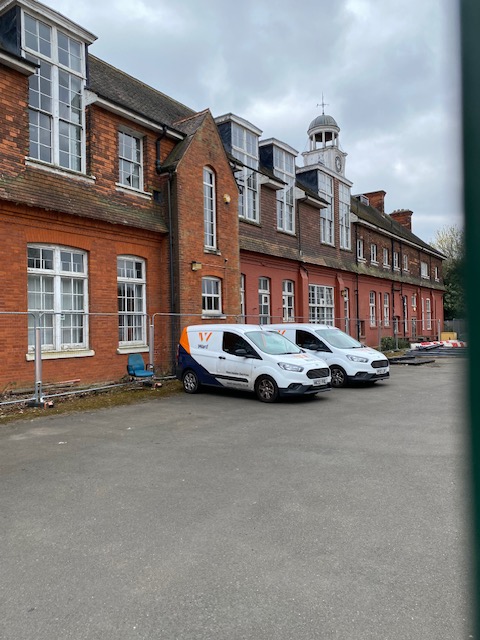
Round the corner from the stop is The Gatehouse to Avery Hill. It’s an historical structure and was once the entrance to the Avery Hill Mansion, which was largely destroyed during World War II. The gatehouse is one of the few remaining buildings from the original mansion. It features ornate wrought iron gates with shields bearing the initials “JTN” for John Thomas North, the mansion’s builder and one-time owner. The crest at the top of the gatehouse has a shield and on top of the crest is a helmet and above this, an animal head facing left, possibly a lion.
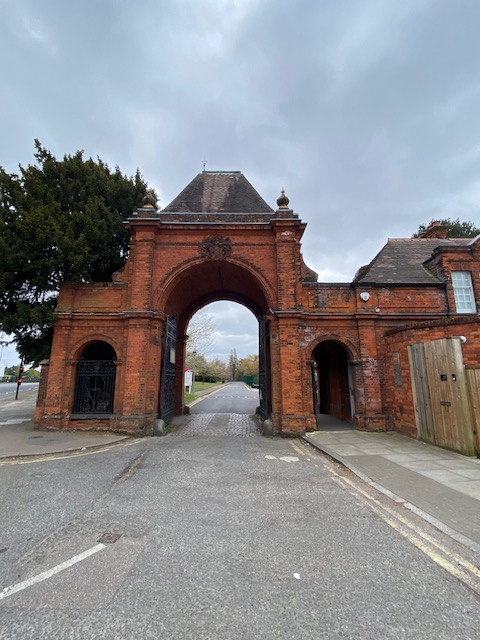
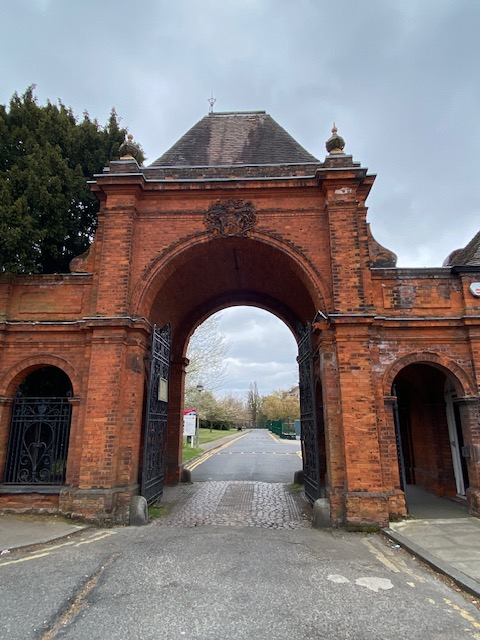
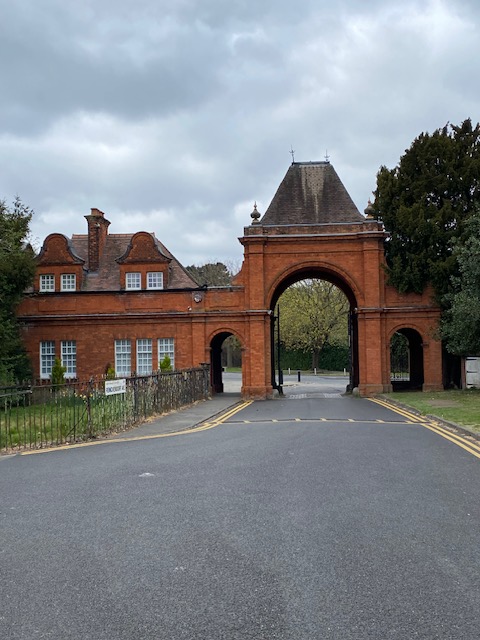
There has been a mansion at Avery Hill for more than two centuries. In 1848, an historian said of the house ‘a pleasant mansion overlooking an extensive district to the south, one mile from Eltham’. Ten years later, an auction notice described it as ‘a villa seated in its own grounds with 2.3 acres of meadow, pleasure gardens and a kitchen garden’ and ‘a very desirable abode for a family seeking retirement or for a merchant’. In 1884, John ‘Colonel’ North had the building demolished to be replaced by the structures which remain to this day. The stable block has been used for education purposes. The buildings now form part of the ‘Avery Hill Campus’ of the University of Greenwich.
Somewhat amusingly, Historic England describe Avery Hill as an example of late Victorian vulgarity in the extravagance of its design and quality of materials used.
John North purchased Avery Hill House from a Mrs Boyd in 1888 and, though it was by no means small, decided to improve it. The new mansion was to demonstrate wealth, power and status: with a baronial hall, ballroom, sculpture gallery, marble staircase, and a gallery to house a considerable collection of paintings. One of the most striking features of the plan was a large domed structure of iron and glass – the Winter Garden – in which North was to house plants from around the world, including Britain’s largest Canary date palm.


6. Well Hall Road/Kidbrooke Lane bus stop
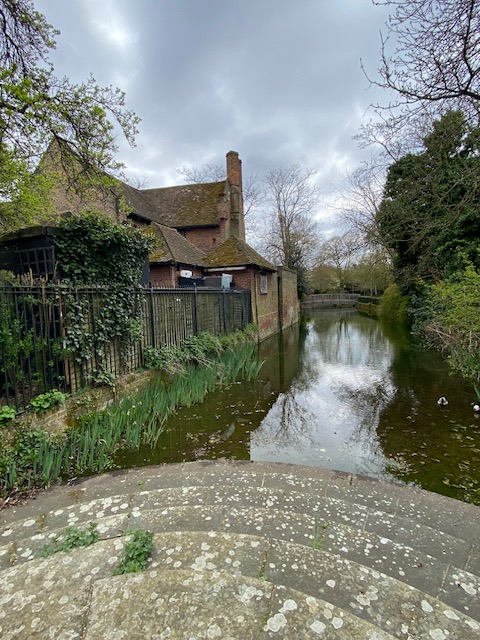
This stop takes you to the Grade II* listed Tudor Barn, the only existing 16th century barn left in London. It sits within thirteen acres of pretty parkland and has its own medieval moat. It is a large brick barn and was built in 1525 by William Roper. He lived next door in a manor house in the centre of a moat for several years. William married Margaret More, the daughter of Thomas More, and one of the most learned women of sixteenth-century England.
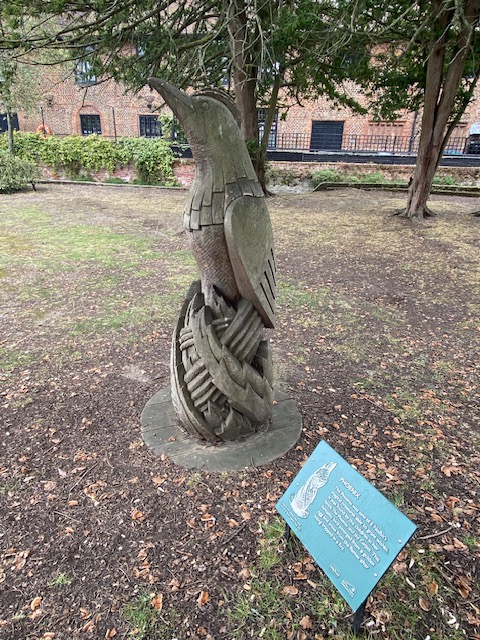
The west end of the Tudor Barn was mostly occupied by servants, and the barn was also used for storage. Edith Nesbit, author of The Railway Children and co-founder of the Fabian Society, lived in a house in the grounds of the Tudor Barn from 1899 to 1921. In the 1930s, the newly renovated barn was turned into the centrepiece of a new park, which is known as Well Hall Pleasaunce. The grounds are beautiful with lots of features including bridges over the moat and two sculptures from E Nesbit’s children’s stories – wood carvings of the phoenix from The Phoenix and the Carpet and Psammead from Five Children and It.
Today the barn is used as a wedding venue as well as being a decent restaurant and pub. There are plenty worse places to hold an event – the building is beautiful as are the grounds.





7. Millennium Village Oval Square bus stop
Final stop on this route is to see Greenwich Peninsula Ecology Park which is also on bus route 129. The bus stops at a different place and it’s worth having a look at the wetland which is just over the road from the stop. If you look carefully, you’ll catch a glimpse of some large fish swimming gracefully in the water below the bridge. There are some colourful apartments overlooking the freshwater habitat that’s home for lots of wildlife. Oval Square is a small green space adjacent to the ecology park where you can sit and while away some very pleasant moments.


After the 131 bus route, I had started to think that there wasn’t much more to explore of London, as there didn’t seem to be much of interest that I hadn’t already seen on previous bus routes. However, I was very pleasantly surprised with the 132 – it was a real gem, with so much to see and explore. If I had been about to become complacent about continuing this adventure, all that has disappeared and I have a renewed appetite to keep going. The many places I discovered on this route were fascinating and so interesting.
Toilets that are open to the public and free of charge:
- Broadway Centre, Bexleyheath
- Hall Place café
- Tudor Barn
 london routemistress