
Lewisham to North Greenwich station
Highlights:
- Migration Museum
- Fan Museum
- St Peter and St Paul Chapel
- Glenister Green mosaics
1. Start of route
Outside Lewisham Shopping Centre is a 40m x 4m mural by artist Gaurab Thakali. It was commissioned by Lewisham to celebrate the borough’s diverse culture and community. Gaurab migrated to the UK at the age of 15, and all his art has been inspired by the transformative years he spent growing up in Nepal.
A short walk from here is Lewisham Clock Tower. It was erected to commemorate the Diamond Jubilee of the reign of Queen Victoria in 1897. It’s an interesting design with its four clock faces and octagonal angles which rise to form corner turrets.


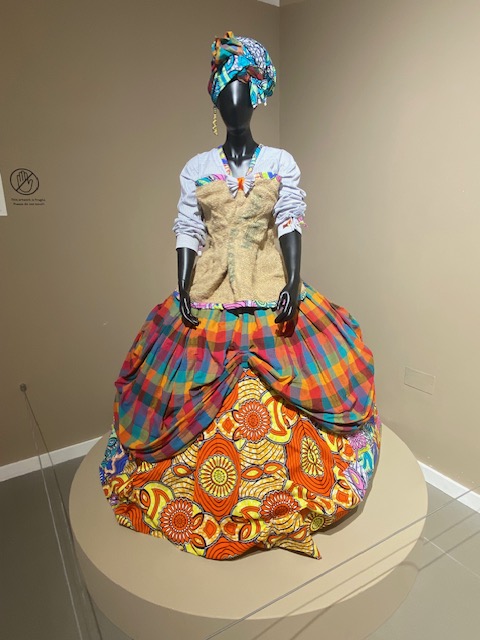
And so to the Migration Museum which until the end of March 2025, is situated inside Lewisham Shopping Centre. It will close as of that date to an, as yet unknown, new location. It’s a fantastic resource and exhibition space and there are very helpful staff to explain the history of migrants to the UK from all over the world. There is so much on display, that it’s worth allowing a decent amount of time to look around. Various interesting display items include a newspaper crinoline skirt – the artist Patricia Uter was inspired by a childhood memory from Jamaica where girls fashioned skirts from scrunched newspapers.
Also on show is a sculpture by Japanese-born Yui Yamamoto entitled Thousand Scrapes Thousand Responses, which uses barbed wire to symbolise confinement, exclusion and segregation. Look out too for Queen Joyce, a colourful dress made by Karen Arthur to express “I’m here, I’m not going anywhere and I’m not going to be silent”.


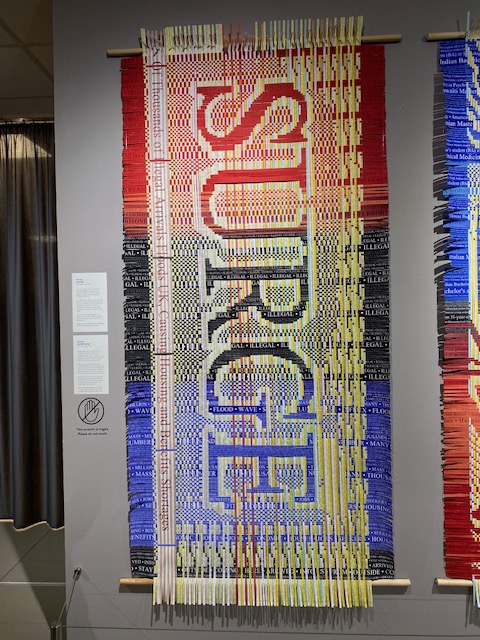
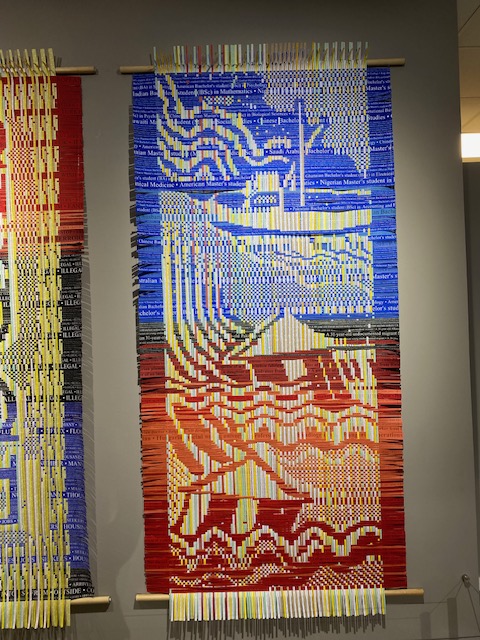
There are other installations at the museum such as “Worlds Apart”, a collection of suitcases piled on top of each other, to show a glimpse into the oft-difficult and challenging experience of moving overseas. There are also two woven paper tapestry exhibits “Surge” and “Overflow”, the former showing how the media’s extensive repetition of selective words contribute to the formation of negative public assumptions (about migrants/immigration). The latter highlights the wide range of identities that make up the fabric of immigrants living in the UK, disproving common public assumptions about immigrants’ identities, occupations and reasons for immigrating to the UK.

2. Ashburnham Grove bus stop
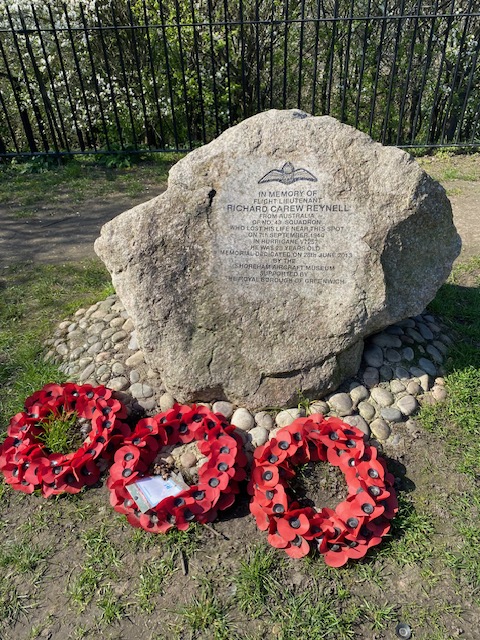
The next place to visit is a bit of a walk and it’s uphill for part of it but it’s definitely worth it. So head towards the Point which is a viewing point at the top of a hill and which has wonderful views of London, taking in the Shard and other major high rise buildings in the City. It helps if it’s a clear day so the view is even better. Also at this spot is a monument to a flight Lieutenant Richard Carew Reynell, an Australian who was shot down near this spot at the age of 28, whilst he was flying a Hurricane.


3. Greenwich High Road/Roam Street bus stop
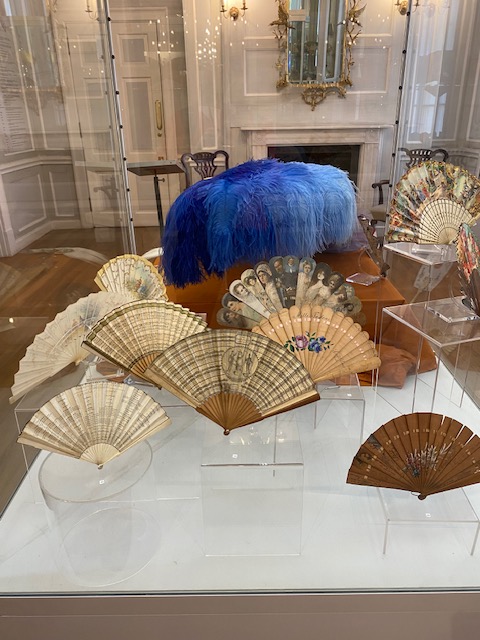
Greenwich has so much to offer and this part of town has plenty. The fan museum is a great find and you could do a lot worse than spending an hour or so taking a look round this splendid place. The fans come in different shapes and sizes, materials, uses and colours. It prides itself in being the only museum in the UK devoted to the history, culture and artistry of fans. Some of the pieces on display date back as far as the 12thC.
In the permanent display cabinets in the downstairs rooms, many of the fans are folding ones, from all over Europe and Japan; there are some beauties made from mother of pearl and tortoiseshell. Upstairs, the current exhibition is In Performance: Fans of Theatre, Music and Dance, until 31st May 2025. The central cabinet is filled with Dance fans, showing those that are used in dance to emphasise and express movement. There are signature fans, usually brisé fans, showing how fashionable ladies would invite well-known musicians and artists to sign a fan. In particular, do find the Souvenir of the Bal Costumé at Buckingham Palace in May 1842, an English ivory brisé fan.



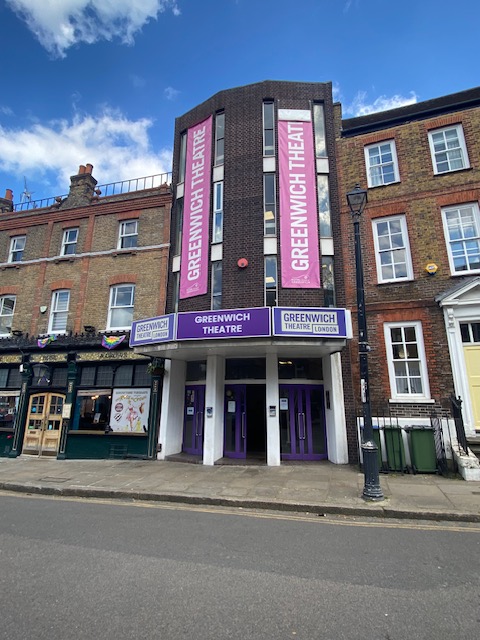
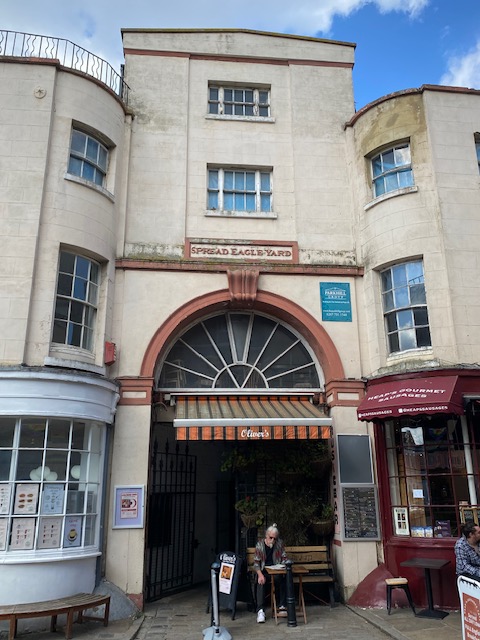
Near the fan museum is King George Street and one of the buildings is interesting – it’s an old school made up of 3 storeys in red brick and yellow stock brick with wrought iron gates and bears a monogram ‘SLB’ and date ‘1898’. Opposite the fan museum is Greenwich Theatre, which has a programme of both established and emerging theatre as well as supporting new artists to take their work world-wide. Finally around this area, is Spread Eagle Yard, a former coaching inn which was rebuilt in 1780 for the accommodation of 60 horses, a malt kiln, and smartened up with a stone archway that led through to the yard.

4. Greenwich Town Centre/Cutty Sark bus stop
It’s difficult to decide what to go and see in this part of the city, because there is just so much that you’re spoiled for choice. I’ve chosen a few places, all of which are free of charge, though there are others that are worthy of the entrance fee such as the Painted Hall and the Old Royal Naval College.
Near the bus stop is the Admiral Hardy pub, so-called after Admiral Sir Thomas Hardy, a prominent British naval officer who served under Admiral Lord Nelson. The pub has roots dating back to at least 1837, and is known for its maritime history, serving as a “comforting escape” and a focal point for local life.
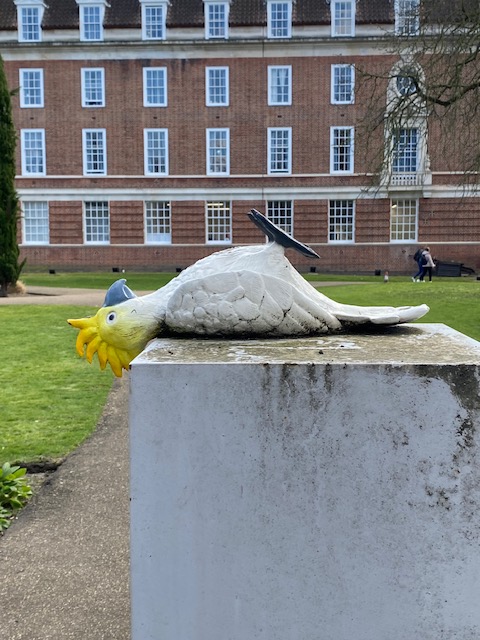
One of the more bizarre things to look at round here is the Monument to a Dead Parrot, which can be found in the grounds of the Devonport House hotel. It is actually a sculpture of a deceased cockatoo flopped on top of its very own plinth. It is the work of artist Jon Reardon, who created it as a feature of interest and is believed to be inspired by the Monty Python “Dead Parrot” sketch -though that was actually a Norwegian blue.
Walking around here, you can’t fail to see the West Gate with its pair of massive Portland stone globes each six feet in diameter and weighing almost seven tons. The globes were installed in the early 1750s to commemorate the Voyage Round the World of Commodore George Anson. This expedition was part of a strategic attack on Spain in order to gain further freedom for the ships of the British Empire to trade in produce and enslaved people.


All the attractions are within easy walking reach so it doesn’t matter in which order you visit them. Take a walk to Queen Mary’s Gate, also known as St Mary’s Gate. The gate dates back to early C19 and has a central wrought iron fence with cresting of leaves and scrolls. It’s named after St. Mary’s Church, a chapel of ease for St. Alfege’s Church which was demolished in 1936.
Next to the gate is a statue of William IV, depicting the king in the uniform of an admiral, and was erected in December 1844, originally in the City of London. William was known as the “Sailor King” for his service in the Royal Navy. In the mid-1930s, the statue was moved to Greenwich Park, near the National Maritime Museum and the Old Royal Naval College, and was seen as a more fitting location, given William IV’s naval background.
Now trace your steps to the Cutty Sark, a tea clipper that was built exclusively for the China tea trade. Tea had been enjoyed in Asia for centuries, but it did not reach Britain until the 1650s. Initially hailed for its medicinal qualities, tea was mainly enjoyed by the wealthy. But thanks, in part, to an extensive smuggling network, its popularity exploded. Tea taxes were slashed to end the smuggling, and by the early 19th century working families were consuming it twice daily. It became popular among Victorians to consume the first tea to be unloaded in London. This spurred the ‘great tea races’ and a spirit of intense competition: get home first and you could command huge prices. That’s why, as a clipper ship, Cutty Sark was designed to be fast.
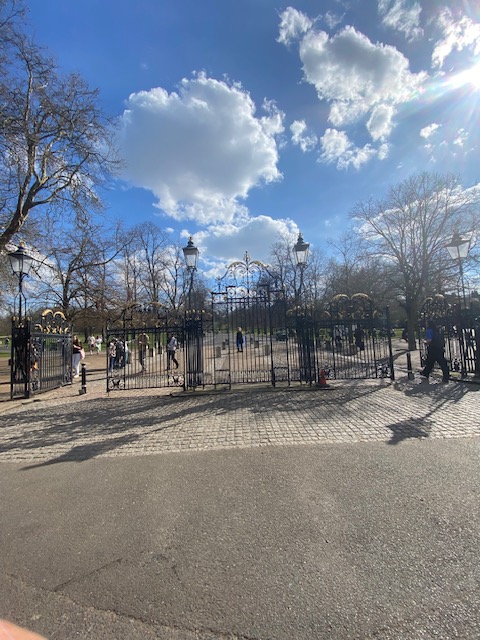


Outside the National Maritime Museum is a Turkish Bronze gun that was presented to the Royal Naval Asylum by HRH Prince Ernest, Duke of Cumberland, on 21 October 1807. The cast-iron display carriage, which houses the gun, was made later by the Royal Carriage Department of the Royal Arsenal, Woolwich. Its decorative plaques commemorate British naval victories. Also in the grounds of the Museum is a statue of Sir Walter Raleigh. It was originally erected in 1959 in Whitehall, close to where he was beheaded and it was moved to Greenwich and unveiled in 2001. It’s amazing to think that someone who had been so well respected and a darling of Queen Elizabeth I could have received such a terrible end. It was in the reign of James I that the execution took place and it was because he had plotted against James being the successor to Queen Bess. Harsh …
Walk along the side of the river Thames to find your way to the Chapel of St Peter and St Paul. On the way there, look inward from the river and you’ll have some marvellous views of Greenwich and its buildings.


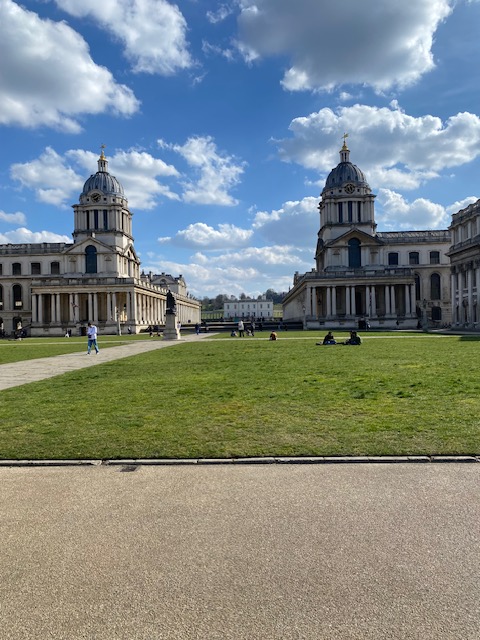
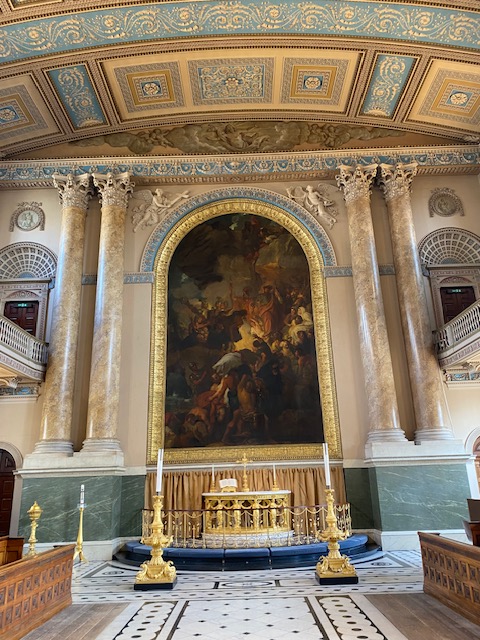
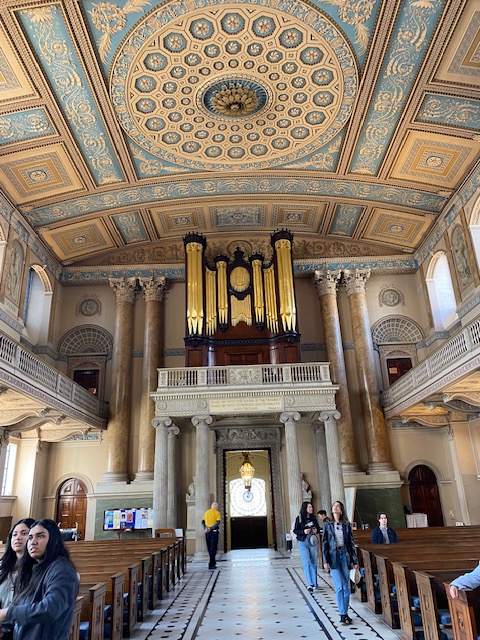
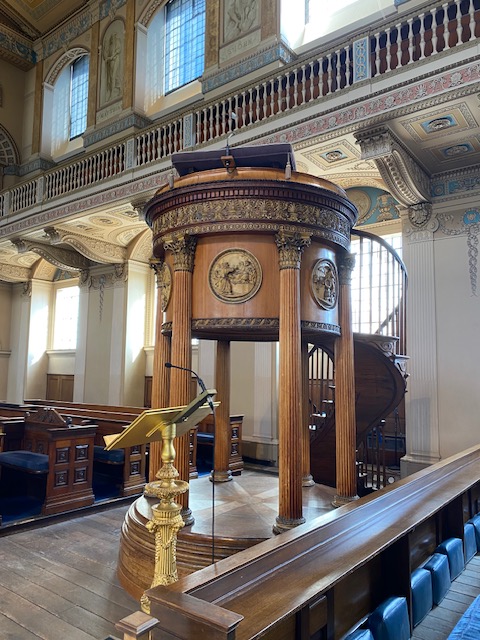
Now enter the Chapel of St Peter and St Paul – it’s free entry and is really beautiful. In Tudor times, the resident monarchs of Greenwich Palace worshipped at the original Chapel Royal. As an avid fan of choral music, the Chapel Royal was regularly frequented by Queen Elizabeth I. The same composers, such as Thomas Tallis and William Byrd, are still sung in the present Chapel today.
The chapel was part of Sir Christopher Wren’s original design for the Royal Hospital for Seamen at Greenwich. After a devastating fire, the Chapel was rebuilt in 1779 by James ‘Athenian’ Stuart. Check out the richly decorated ceiling, naval themes, and exceptional altarpiece which was painted by Benjamin West. The Chapel is now regarded as one of the finest neo-classical interiors in existence – and once you’ve visited it, you will understand why.

5. Vanbrugh Hill bus stop
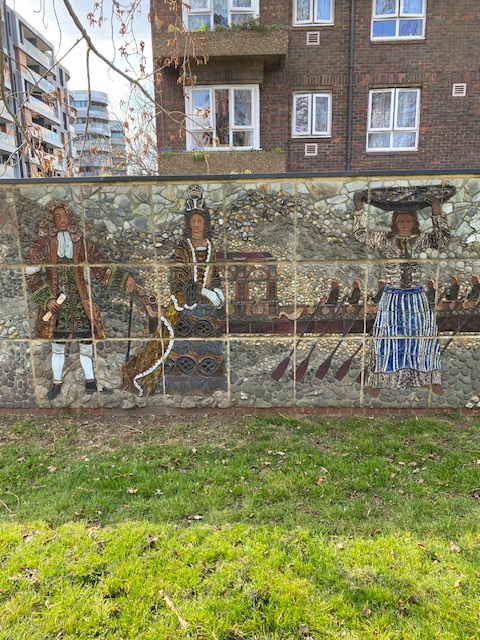
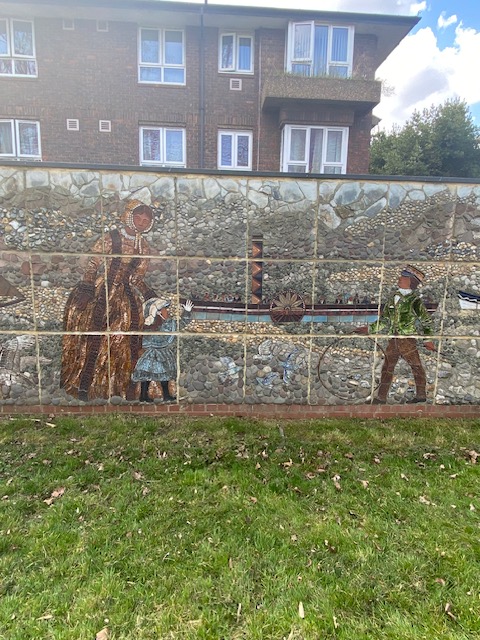
At Glenister Green, moments from the bus stop is a mosaic that was originally commissioned for the Greenwich Hospital. It consists of 60 concrete panels, using glazed and unglazed ceramics and beach pebbles. The theme of the mosaic is “People who have used the river at Greenwich through the ages”. If you look at the mosaic carefully, you can see people from the 18thC with the Royal Barge, from the Age of Sail and Victorian times and finally from the last post-war years of the Docks.


6. Millennium Village/Oval Square bus stop
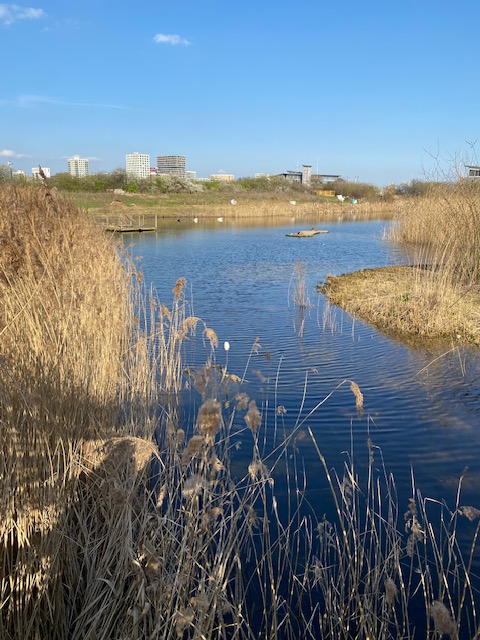
The final stop on this route is to see Greenwich Peninsula Ecology Park. Here you’ll find many freshwater habitats and a wealth of wildlife. It is a lovely natural area for people to discover and enjoy the park. It is made up of an outer and inner boardwalk. The outer boardwalk is a permissive footpath and the inner boardwalk has controlled access through the Gatehouse. Whatever the season there is something for everyone – bird spotting, watching wildlife or just relaxing in peaceful surroundings.
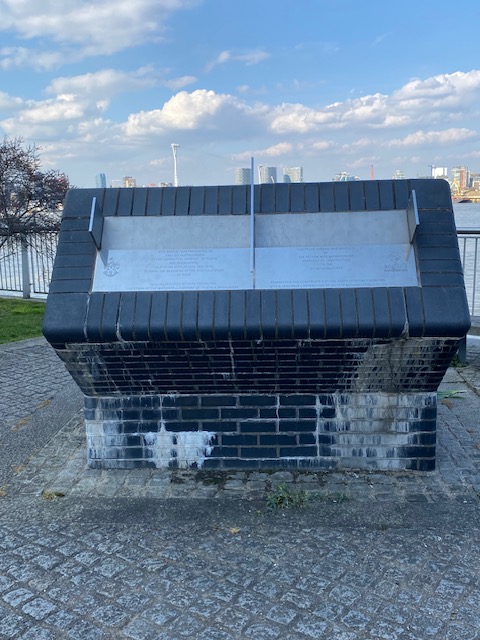
Along the footpath by the Thames is a polar sundial, one of three designed by Piers Nicholson, all of which were built by the Royal Engineers in late 1999 for the Tylers and Bricklayers Company of the City of London. This was presented to mark the beginning of the third millennium in 2000.

This route was really great and one of the best – so much to see, such a lot of variety and it helped that the weather was warm and sunny. It went from the absurd – Monument to a Dead Parrot – to the beautiful – inside St Peter and St Paul Chapel, with many wonderful things in between.
Toilets that are open to the public and free:
- Migration Museum
- Fan Museum
- The Admiral Hardy pub
- Greenwich Peninsula Ecology Park
 london routemistress