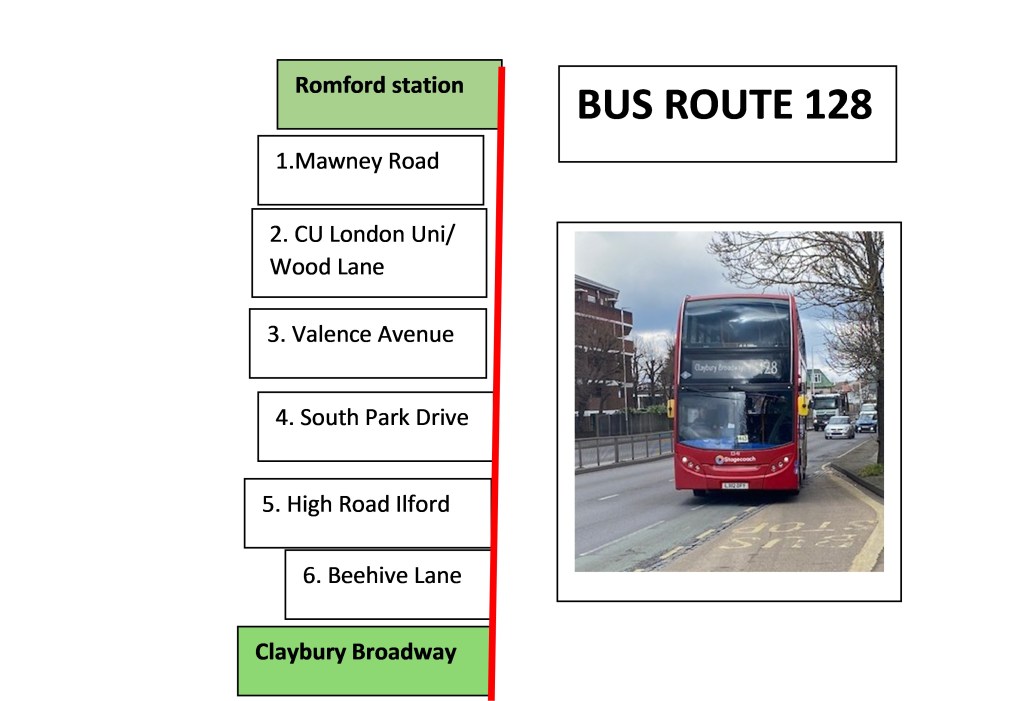
Romford station to Claybury Broadway
Highlights:
- Walk on the Wild Side trail
- The White House, Dagenham
- Grotto and Alcove Seat at Valentines Park
1. Start of route at Romford station bus stop
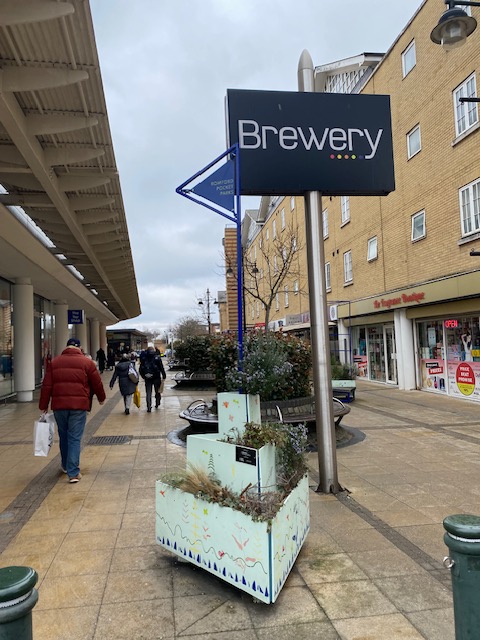
Head towards the Brewery Shopping Centre and you’ll come across a series of animal murals at various places. In conjunction with Things Made Public, the Centre has launched “Take a Walk on the Wild Side”, a reality trail bringing art and nature to life. There are 10 in all, so you need to keep your eyes peeled to find them.

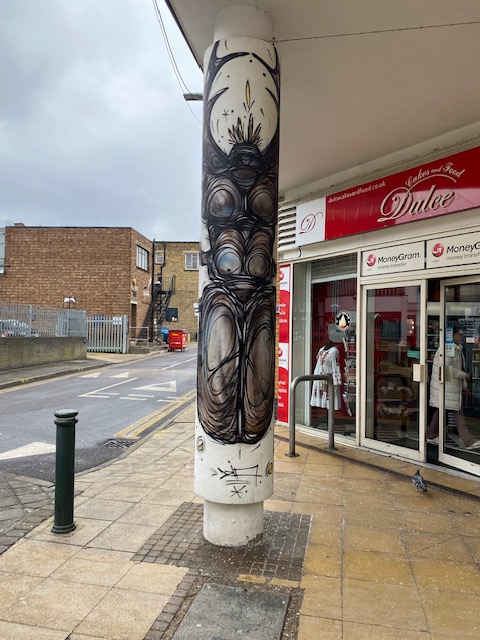
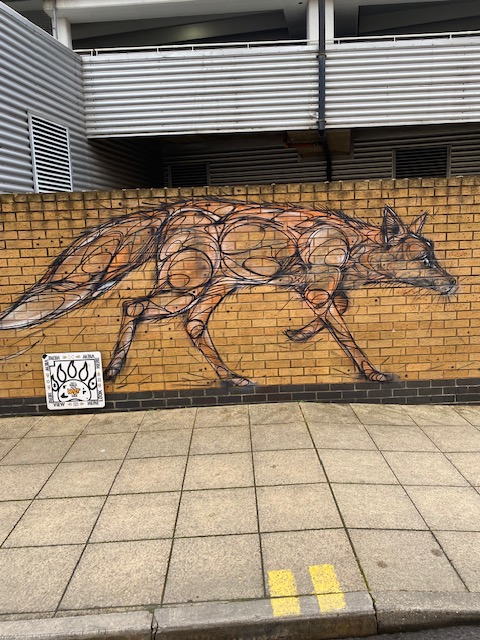
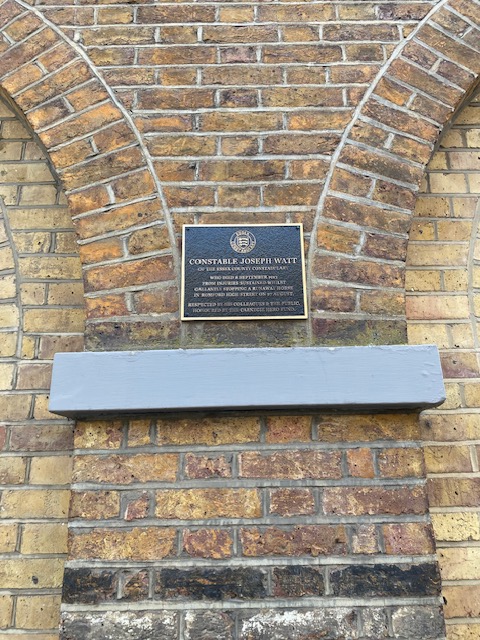
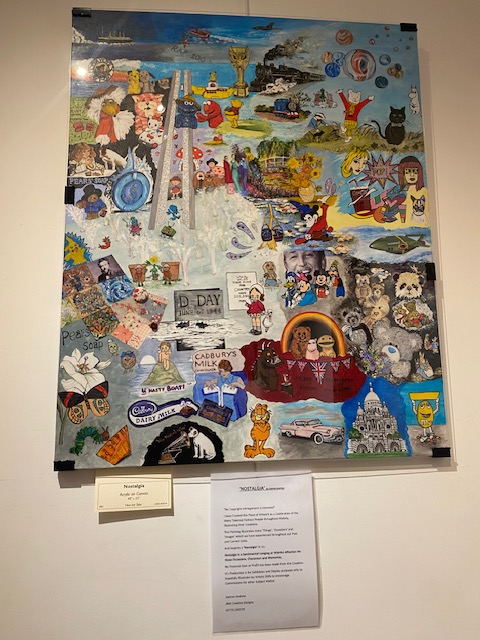
Also around Romford are small plant and flower installations, put together as the Romford Pocket Park. Round the corner from the Centre is Havering Museum, also on bus route 103 – see the blog for information and photos. On the outside wall of the museum is a plaque dedicated to Constable Joseph Watt, who died 8 September 1913 from injuries sustained while stopping a runaway horse. The museum itself is part of the old Romford brewery and there are several references to its origins inside. There are always new exhibitions on show and at present (March 2025) is one in memory of Wendy Pidgeon, a passionate embroiderer who sadly died last year. Also on display is artwork by local artist Joanne Andrew. She paints most subject matter as well as creating collages. There is a magnificent Pearly King costume on show, one that is specifically for a Romford King.



2. CU London University/Wood Lane bus stop
Not far from the bus stop is Wantz Boating Lake which is adjacent to Crowlands Heath Golf Club. Its proximity to the club explains why there are so many abandoned golf balls in the lake – some poor shots, no doubt! Originally formed from gravel extraction ponds, these were expanded into a lake fed by natural springs in 1905 by the local council to provide employment in the region. Rowing boats were introduced first, and in 1953, motor boats and a Mississippi-style paddle steamer called Phoenix II made their debut. The paddle steamer continued to operate on the lake until 1967. As there were no boats on the day of this visit (March 2025), it’s not obvious if there is still activity these days.
On the opposite side of the road is an entrance to Central Park, Dagenham. There is evidence of prehistoric crop marks and Roman archaeology though the park in its present state, dates back to 1932 when it was opened to the public. The entrance gates are the original ones from that time. Inside the park there is plenty of green space and pretty gardens.


3. Valence Avenue bus stop
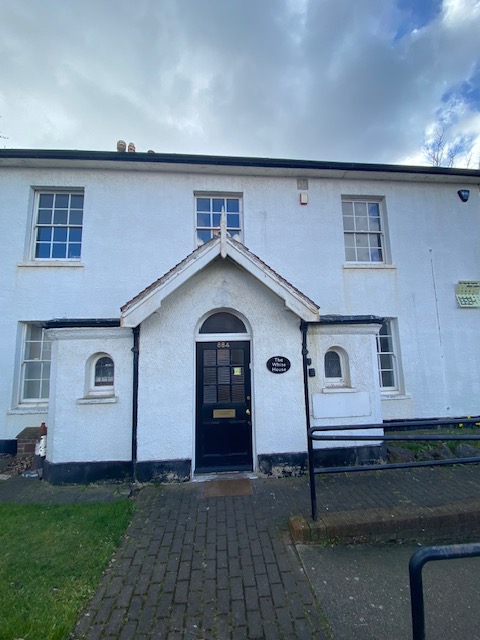
It’s worth a stop off here to see The White House, even if it’s not open (it isn’t on a Thursday). The house was once the childhood home of Sir Hardy Amies, couturier and dressmaker to Queen Elizabeth II. The house was an 18th century farmhouse, and the family lived here while Amies’ father was overseeing the building of the nearby Becontree Estate – then the largest public housing project in the world. More recently, The White House, was set up in 2016 to be a home for art, creativity and community where artists are invited to live and work, exploring new ways to collaborate with the local community, by becoming their neighbours.
In the front of the house is a sculpture Visions of Paradise by Shezad Dawood. The sculpture’s title alludes to a description of the (Becontree) estate during the Ford Factory era as a ‘working-class paradise’. During this period, many residents were employed at the Ford factory in Dagenham, and the estate was brought to life with summer parades and gardening competitions. It typified a quintessential form of British suburban life for the working classes.


4. South Park Drive bus stop
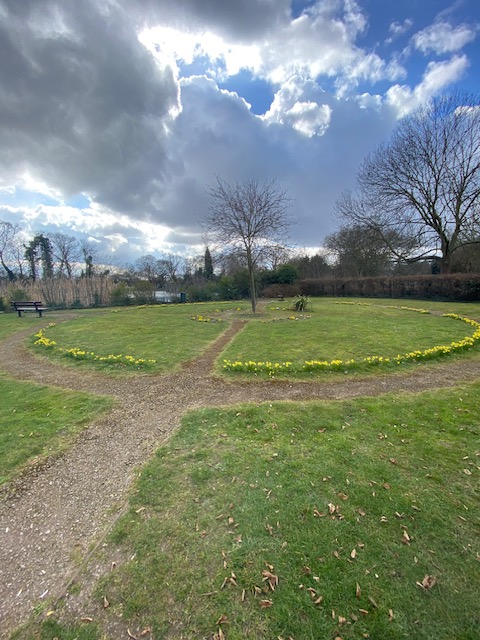
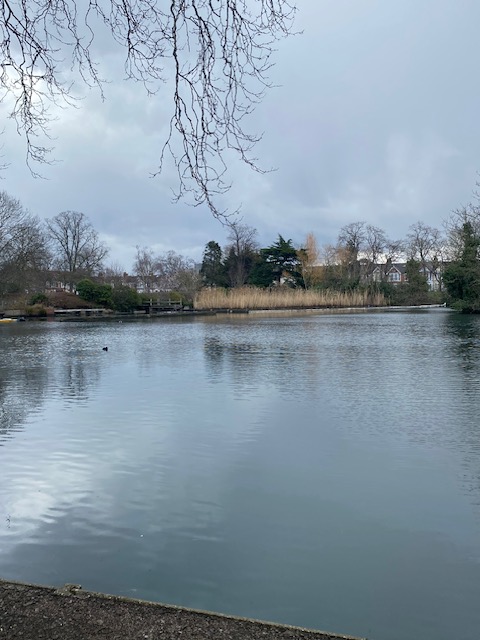
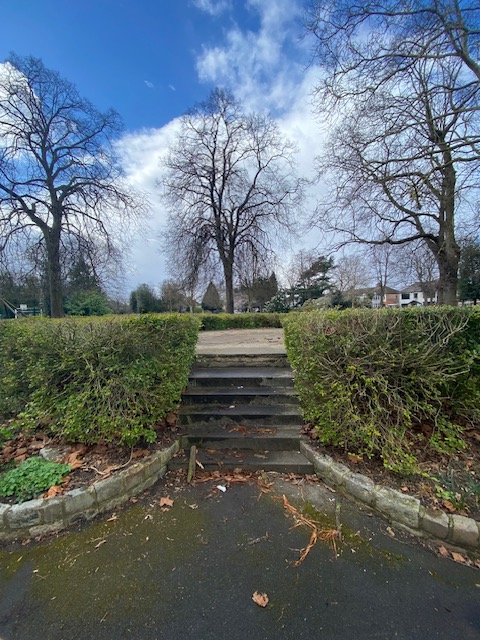
Another park with plenty of green space for walking, playing, exploring is South Park, a Victorian open space with an interesting history. It was formerly open fields and at one time, housed the barracks of one of several Rifle Volunteer militias intended to combat a potential French invasion. The park contains a large lake, which provides a home to many a bird, including many species of duck and goose. There are some beautiful walks and trees and gardens to enjoy. One space looks to have been the site of a bandstand although there is no written proof of this.

5. High Road Ilford bus stop
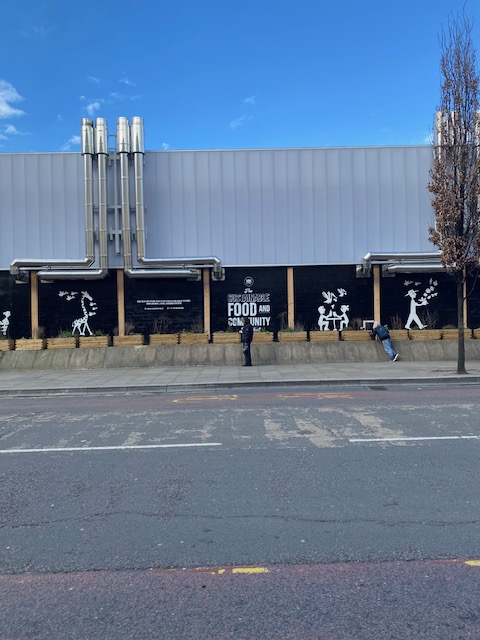
This is at least the third time of being at this bus stop. (See bus route 123 and 86). The bus stops opposite Mercato Metropolitano, a community food market with an Italian feel. It was due to open in 2020, but owing to COVID, the opening was delayed until July 2024. According to MM’s MD, “What we wanted to do was build a community, or a market for the community, to be able to come in and be able to eat and enjoy food but food that is cultivated and grown by artisanal traders.”
Opposite the market is Redbridge Central Library & Museum, where there is a host of fascinating artefacts on show. Chief amongst these are several mammoth teeth, which had been uncovered in the Ilford area. These were teeth from “steppe” mammoths and not the “woolly” variety. Steppe mammoths looked more like very large elephants and bigger than the woolly ones. In fact they were as tall as a double-decker bus – this fact seems rather apt as this is a blog about buses!
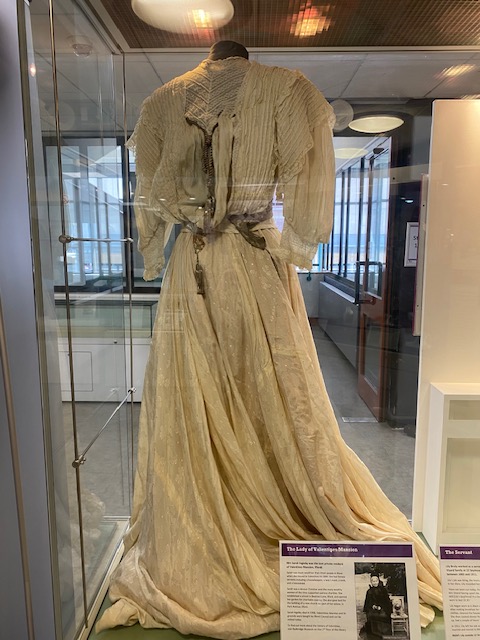
Other showcases had items of clothing from days gone by – one is a dress as worn by Mrs Sarah Ingleby, the last private resident of Valentines Mansion in Ilford. She established a school in Beehive Lane and opened her garden for charitable events. Next to this flowing dress is a replica of a typical dress made from chintz in the 1700s and as worn by the wealthy inhabitants of the local area’s grand houses. Chintz was one of many cotton textiles imported by the East India Company at that time.


6. Beehive Lane bus stop
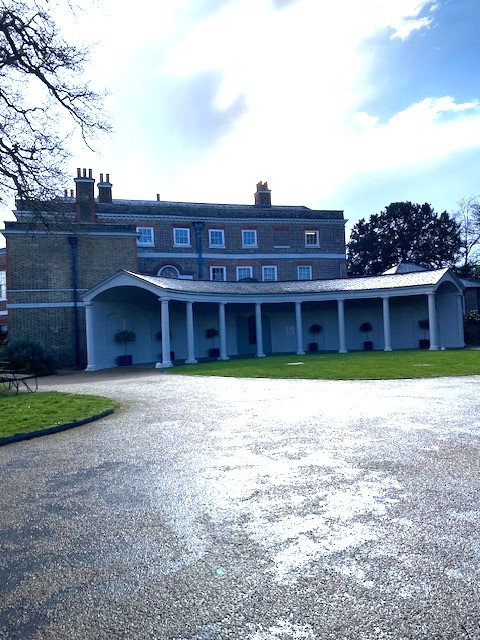
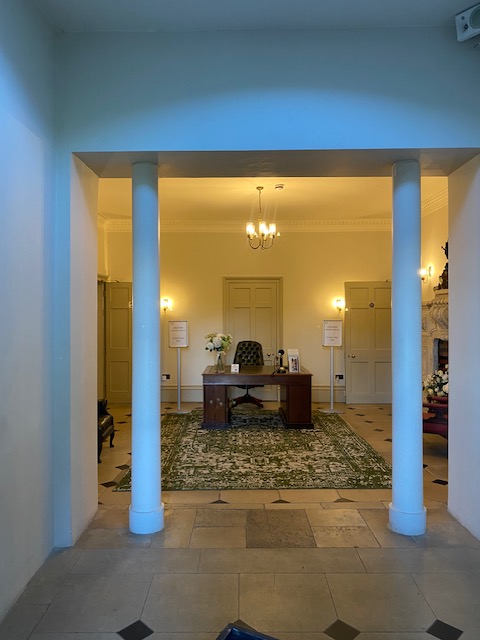
Again, this has also been visited on bus route 66 but Valentines Park is definitely worth a return visit, because there’s just so much to see and to savour. As you walk inside the park, you first see the lovely Valentines Mansion and opposite, the dovecote. The mansion was built in 1696 for Elizabeth Tillotson, the widow of John Tillotson, the Archbishop of Canterbury. The original house was probably smaller than the present one. It was first enlarged in the 1720s by a banker-owner and in the 1760s, it was further extended by a shipping magnate, to the house as it looks today.
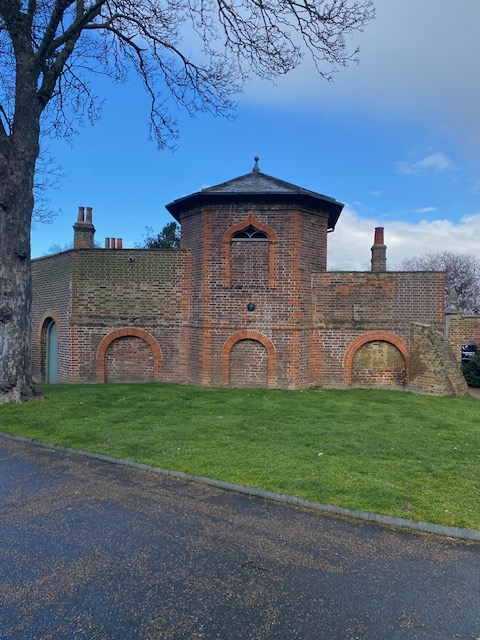
The dovecote was built in the early 18thC and is an octagonal brick building which would have originally housed domesticated doves and pigeons. There would have been rows of nest holes from top to bottom, with each nesting place large enough for at least one parent and two chicks.
The walled garden is from the same date as the dovecote and also is home to a vine that had been planted in 1758. From this vine a cutting was taken in 1769 and is now the famous vine at Hampton Court.
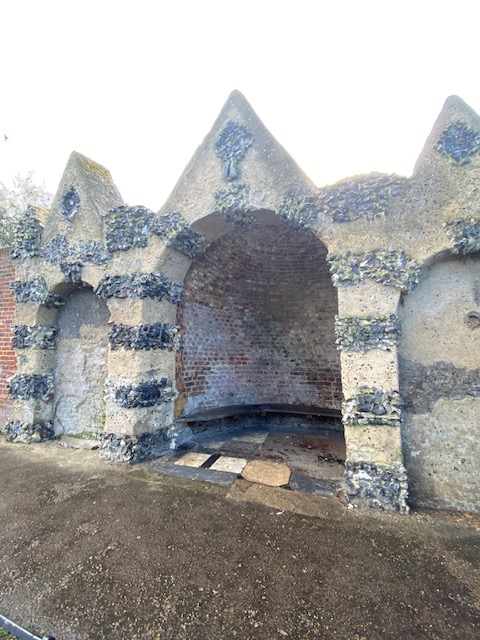
Another feature of the park is the Long Water with its grotto and alcove seat. The Long Water was probably constructed in the early 18thC, along the line of an existing natural brook and is a clay lined canal with brickwork walls. Only the top part of the brickwork wall can be seen and as the grass runs right up to it, it looks as much as possible like a natural feature.
The grotto and alcove seat probably date back to the mid 18thC. They are rococo style rockwork using a combination of flint, limestone, shells, glassy slag and man made elements such as fragments of architectural features. The grottoes are so rare that they are considered of national importance. The alcove seat has a niche which is angled so that the people seated can look across the Long Water and up the diagonal path opposite.


Despite having previously been to quite a few of the places visited on this bus route, I felt they were worth revisiting, not least because at different times of the year, features change. Also at the museums, new exhibitions are on display and even seeing artefacts that had been seen before, it doesn’t lose its historical interest. As always, there was something for everyone – with the Walk on the Wild Side mural trail in Romford, to the lovely house that had been home to Sir Hardy Amies and the parks with their lakes and other memorable features.
Toilets that are free and open to the public:
- Havering Museum
- Redbridge Central Library and Museum
- Gardener’s Cottage Cafe at Valentines Park
 london routemistress