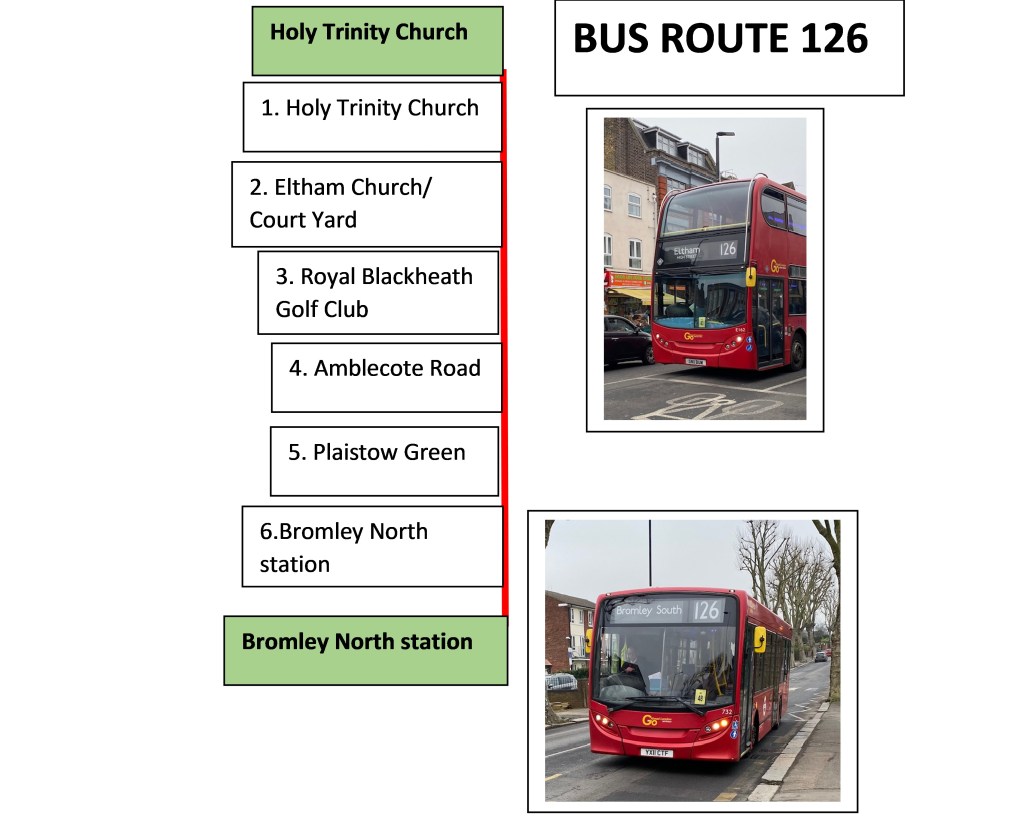
Holy Trinity Church, Eltham to Bromley North station
Highlights:
- Royal Blackheath Golf Club house
- Desmond Tutu Peace Garden
- Plaistow Lodge
- Charles Darwin mural
1. Holy Trinity Church bus stop
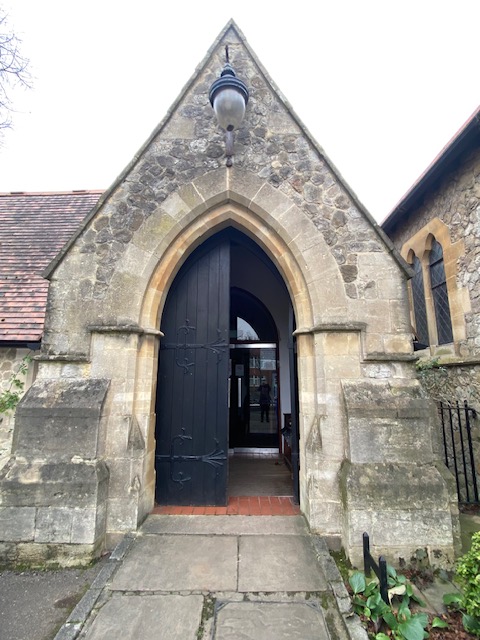
It was only 2 routes ago on the 124 that the bus was in Eltham so different places of interest had to be found. First off is Holy Trinity Church which was designed by G E Street, built in 1868-9 and added to in 1903 by Sir E Blomfield. It has since been refurbished.
If you’re lucky enough to get inside, (I wasn’t), you would see that it consists of a wide nave, north and south aisles, transepts, and a chancel behind an altar dais. There is a chapel dedicated to those who died in the battle of Gallipoli. The west end has in a semi-circular porch which can be seen from outside. The main entrance to the church is through another porch which is also the entrance to the church hall, where many activities take place.

2. Eltham Church/Court Yard bus stop
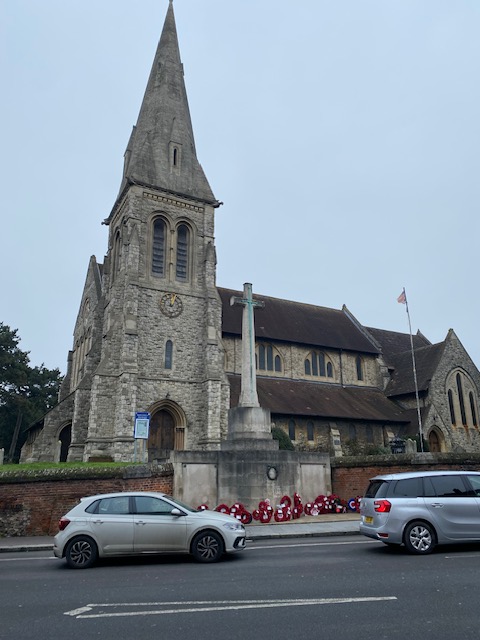
This stop takes you back to Eltham Palace but first of all, take a look at another church, this one is Eltham Parish church of St John, also seen on route 124. Built in a Gothic revival style in the 1860s, the chapel is dedicated to those who lost their lives in the Gallipoli campaign. The carved wooden lych gate at the entrance to the church is a memorial and has the words “Blessed are the dead which die in the Lord” above the gate. In the churchyard is a grave for Yemmerrawanyea, an Aboriginal man who accompanied Governor Arthur Phillip when the latter returned to England in 1792–93. Yemmerrawanyea did not return to Australia; he fell ill, died and was buried in England, at the tender age of 19. There seems to be plenty to see inside the church so it’s worth finding out when it’s open. For example, the pews are older than the church itself (as this building replaces an earlier version) and some of the stained glass windows are original 19th century


And so head back to Eltham Palace where once again you’ll pass The Tilting Yard and Cardinal Wolsey’s home. See blog for route 124 to get a comprehensive description of the Palace.
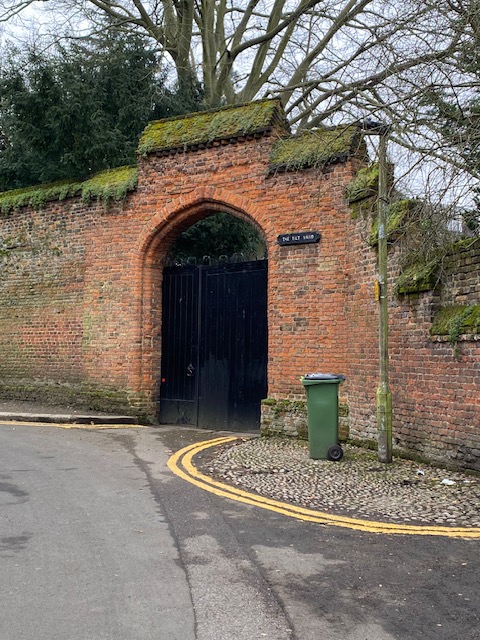
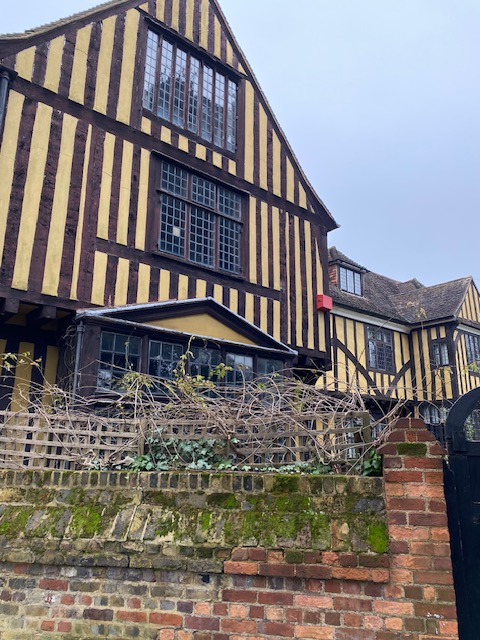

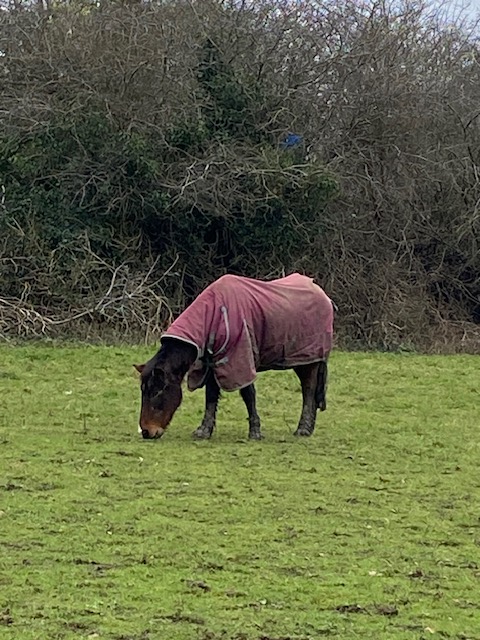
Adjacent to the palace is King John’s Walk. It’s actually a path that had originally linked the Palace with the hunting estates of Middle Park and the Great Park. The path is named after Prince John of Eltham born at the Palace in 1316 to Edward ll and Queen Isabella (as he was the second-born male to his parents, and therefore not expected to become king, it’s not obvious why this walk was thus named). Walk down the path and you’ll see a field of donkeys and a couple of mules, known as the Blackheath donkeys, as they used to provide rides in Blackheath. Back in 2019, one of the donkeys was stabbed and new fencing was put around the perimeter of the field. It’s lovely to see them being free and just chomping on the grass.

3. Royal Blackheath Golf Club bus stop
The Royal Blackheath Golf Club was instituted as early as 1608, in the reign of James I, who had brought the game from Scotland when he acceded to the throne in 1603. They claim to be the oldest golf club in the world. The club house is known as Eltham Lodge and it’s been home to the club since 1923. The lodge was originally given permission to be built for Sir John Shaw by Charles II, for his loyalty to him during the latter’s exile. A lot of the original 1663 features remain, including the beautifully-carved Great Staircase and the ornate plasterwork on the ceilings above it. Shaw also had built a further set of substantial and imposing buildings in the same architectural style as the main Lodge which housed dovecotes, stables and coach-houses with servants’ accommodation in upper rooms. These disappeared as family fortunes fluctuated over the centuries and had disappeared altogether by the time golf arrived at the Lodge.
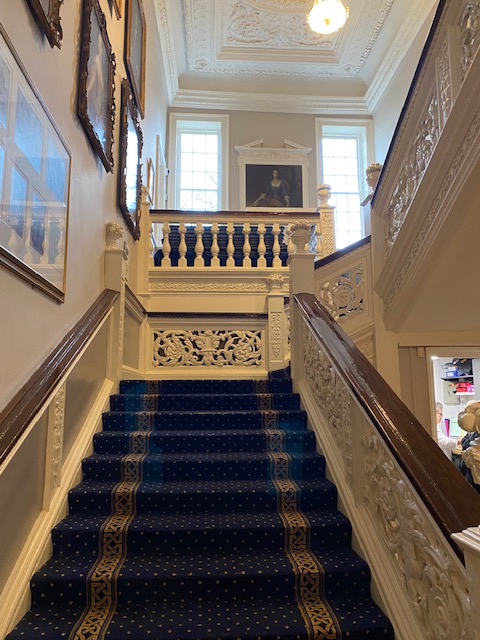
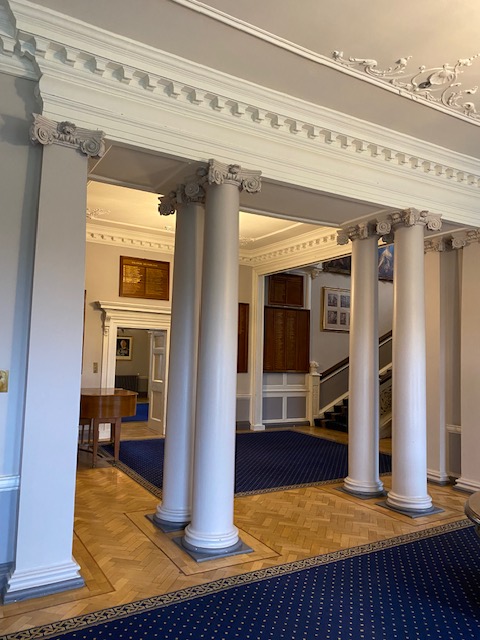

Inside one of the rooms in the golf club are several portraits, most notably Alexander Carlyle and Henry Callander. These two gentlemen are of Scottish birth and were both eminent Scotsmen, the former a church leader and Callander was MP for Argyllshire in the 1850s. I can’t find a connection between either man and Eltham so I have assumed the link (excuse the pun!) is the golf, as this game arrived in England many years after its popularity had started in Scotland.


4. Amblecote Road bus stop
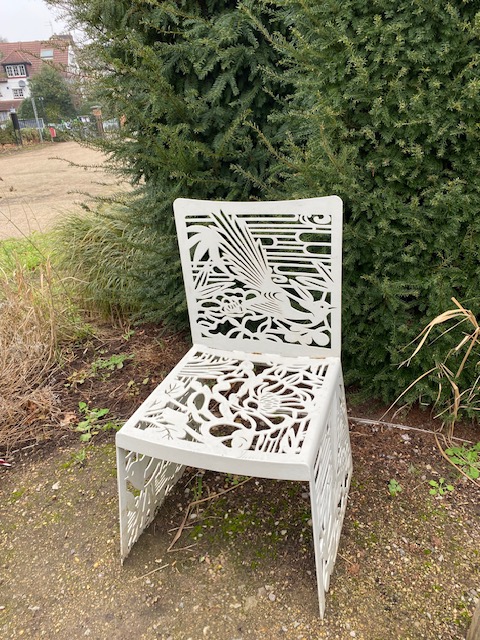
Round the corner from the bus stop is the entrance to Chinbrook Meadows, so called because at one time the park was a grazing meadow before being opened to the people of Lewisham in 1929. One of the main features here is the Desmond Tutu peace garden. Archbishop Tutu was Honorary Curate at St Augustine’s Church and lived in a local street for 3 years in the 1970s. The peace garden was set up by the resident at his former house, in order to celebrate his time within the community and his work toward world peace. The man himself came to open the garden on 14th July 2009. In the centre of the garden is a Peace Pole which has four languages – English, Xhosa (a South African language, spoken by Tutu), Polish and Gaelic. There is a wildflower area, trees and an ornate chair for sitting in peace.
A short walk within the park takes you to a wooden bridge which is over the river Quaggy. In 1935, the Quaggy (known locally as the Chin Brook) was put into straightened concrete channels and hidden behind hedges and a metal fence. But in 2002, with efforts from the Quaggy Waterways Action Group and the local community, the Quaggy was restored to its former glory when around 300 metres of concrete channel was removed from it, thus helping to revitalise plant and animal life.



5. Plaistow Green bus stop
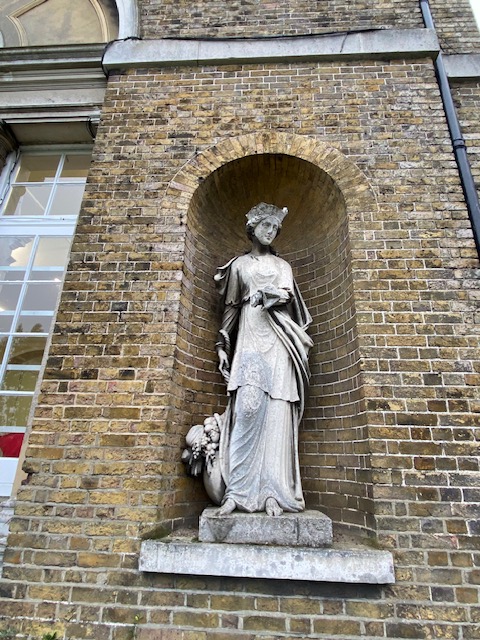
A few minutes’ walk and you’ll find yourself at the former Plaistow Lodge, now a secondary school. The house was designed and built in 1777 for the banker Peter Thellusson. He lived here until 1797 and then another banker, a Mr Walter Boyd was resident from 1792-1815. Around the turn of the century, ownership went to the Quornmere House School for Boys, which “boasted of exceptionally strong staff and individual attention to backward boys.” After WW2 the building became the Quernmore Secondary School, and in 1955 it was granted Grade II* listed status. Since 1986 it has housed the Parish CE Primary School. As well as being a very beautiful building, look closely at the pavilions (annexes), which have 1 large serliana (archway) each flanked by niches with statues and plaques of gryphons above these.


6. Bromley North station bus stop
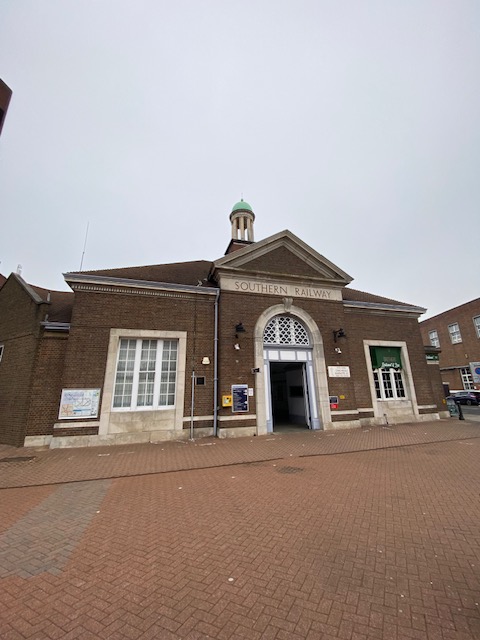
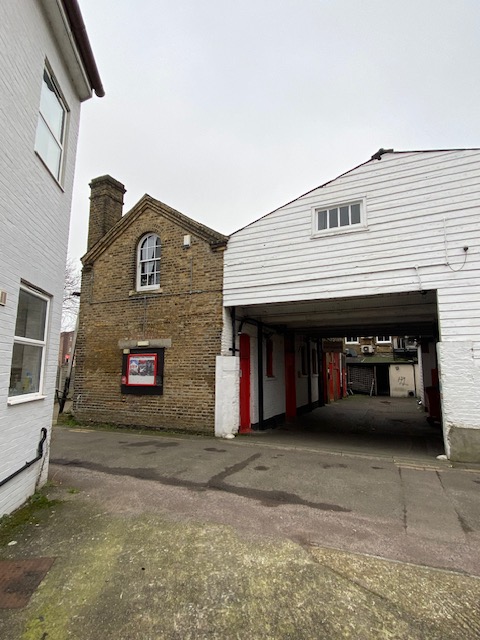
Final stop on this route is at Bromley North. The station was opened in 1878 and has grade II listed status. From here, stroll round to Bromley Little Theatre. This aptly-named theatre seats only 108 and was established in 1938 on its present site which was converted from an old Victorian bakery. They put on a full-length play every month, with an eclectic mix of new and old. The original theatre was started in 1934, moving to these premises a year later, when they were derelict and vacant. Many now-famous actors have performed on the stage here – including Prunella Scales, Eileen Atkins and Jeremy Brett.

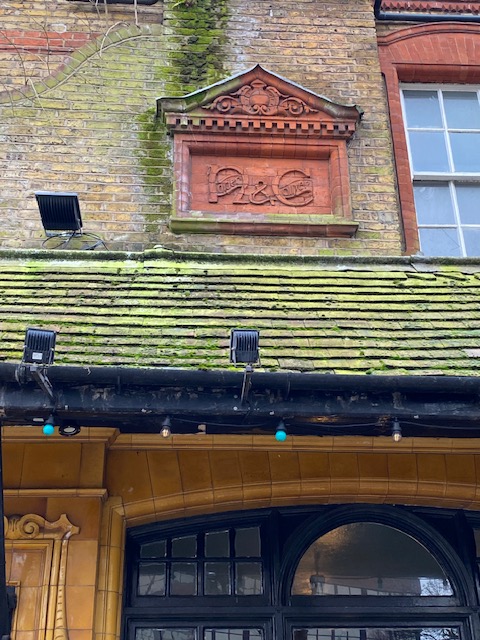
Now find your way to the Railway Tavern, built as a hotel and public house in 1879 by the brewers Nalder and Collyer to coincide with the advent of the railway. On the side wall is a carving of their initials N & C and there are visual references to shells (from the heraldic device of the scallop shell for the Rochester Diocese) and the brewers can be seen in plaster motifs and terracotta panels. Local legend has it that H.G. Wells, Ernest Hemingway and David Bowie all visited this pub though not necessarily at the same time …


The end of the journey takes you round the corner to see the Charles Darwin mural, situated next to the Bromley Town Pump. The mural features famous local men, the author HG Wells who was a child of Bromley, and John Lubbock, scientist and philanthropist and dear friend to Charles Darwin. The latter lived in Downe House, not far from Bromley and it’s said he used to shop in the town. Lubbock was a neighbour and one of his claim to fames was the introduction of bank holidays when he was governor of the Bank of England
A parish pump stood in the market square adjacent to its present position for many years. The pump was fed with water from an underground stream that still surfaces in nearby Church House Gardens. When the old town hall was built in 1863, the original pump was removed. The present Victorian-style pump was put up as a replacement on a new site in the market square sometime in the 1860s.


All in all, this was a good route, even though I had visited the first part of the journey only 2 weeks before on the 124. Most of the buildings were closed to the public (former Plaistow Lodge, the two churches and Little Theatre) but it’s still worth going to visit the outside or organise it for a day when they are open. It was great to be able to go inside the club house for the Royal Blackheath Golf Club and it was an unexpected joy to come across the Desmond Tutu Peace Garden.
Toilets that are free and open to the public:
- Eltham Palace and café
- Royal Blackheath Golf Club
- Chinbrook Meadows (but only if you’re desperate!)
- The Railway Tavern
 london routemistress