
Ilford Hainault Street to Wood Green station
Highlights:
- Redbridge Museum
- Waltham Forest Town Hall
- Bruce Castle
- Blue House Yard
1. Redbridge Central Library bus stop
This is also on route 86, but now (late 2024) the Museum at the Redbridge Central Library is open and there’s plenty to see there. The museum takes you through Ilford and its surrounding area, over the years from as early as the Ice Age to the present day. According to the information given, Ilford was once home to mammoths, elephants, bears and even lions. Hundreds of bones of these animals have been found in the town centre.

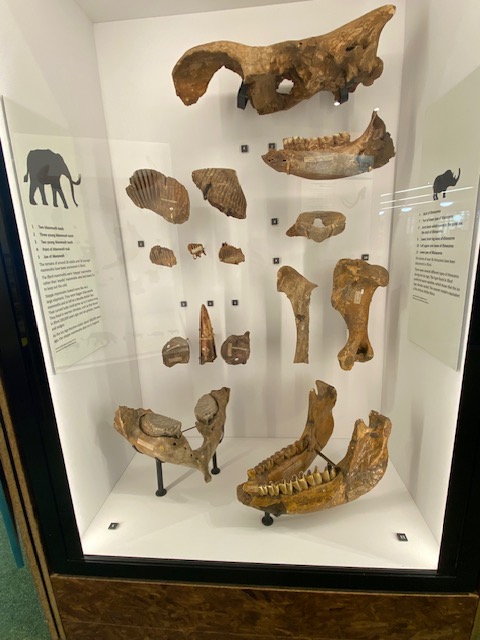
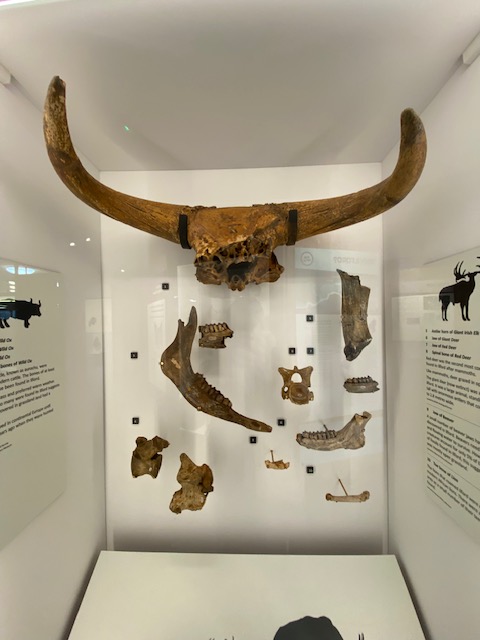
Here too you can find out about Medieval Ilford, including Ilford Hospital and the many manors that were built in this period. There are plenty of artefacts on display as well as examples of how a typical 1900s house would look.


There is a display about Ilford films which was established as Britannia Works in 1879 by Alfred Harman, changing its name to Ilford Limited in 1902 and these days trading as Ilford Photo. Harman set up his business in a basement in a house in Ilford and the photographic company was soon thriving. Larger premises were found, still in Ilford, where they stayed until 1984, when they moved to Cheshire. The Ilford company still goes from strength to strength.
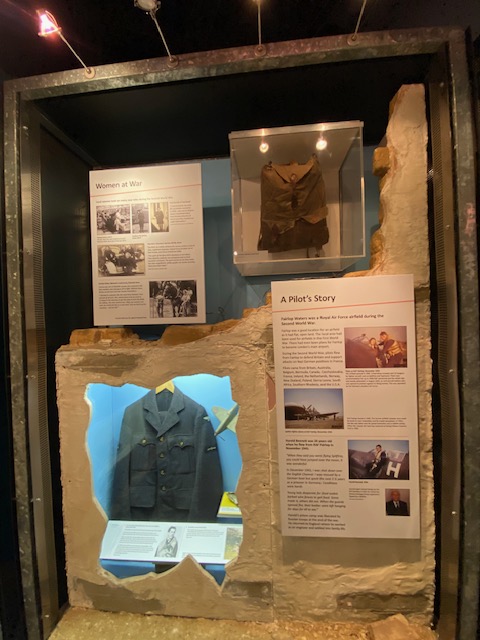
There are many cabinets with information and artefacts from WWII, as well as one dedicated to the Jewish community of Ilford, which still thrives to this day.


Once you’ve explored the delights of the museum, go over the road to visit SPACE, a small arts studio that puts on regular exhibitions. The building used to be the library, and is situated at the back of Redbridge Town hall so it retains some beautiful features of the Grade II listed building. Current exhibition is by Djofray Makumbu, an artist who has been inspired by the discovery of his family’s photo albums. The pictures on display are a series of portraits of family and friends, who had come together in each others’ homes in East London to chat and dance, to eat and debate – and to enjoy life.
On the outside wall of SPACE is a digital piece of art with the boxer Nigel Benn as the centre piece. Benn was born in Ilford and became a local legend when he twice became world boxing middleweight champion. This artwork was created by Mister Geez whose work centres on street and documentary photography.


3. Gants Hill station bus stop
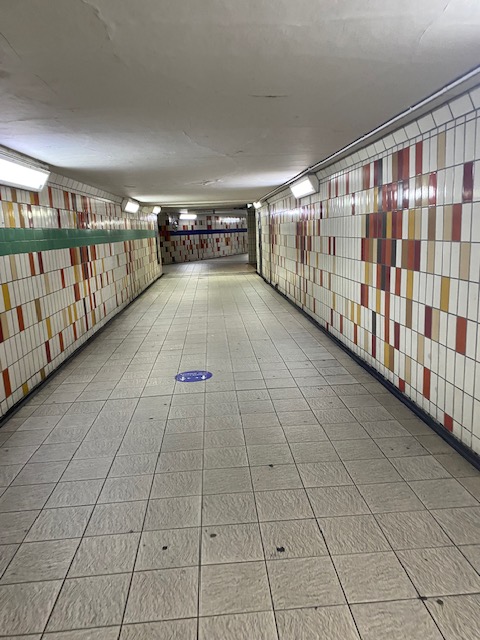
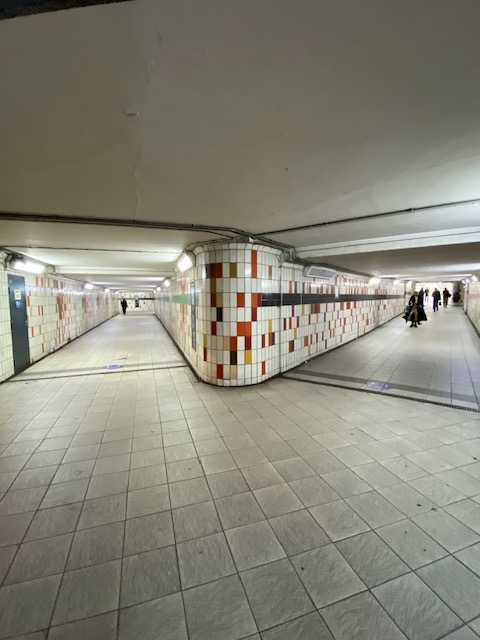
Gants Hill underground station is completely underground, including the ticket hall. There are plenty of pedestrian subways from different entrance points, and all of them are bright and clean and lead to the booking hall. During the war, the station was used as an air raid shelter and the unused tunnels between the station and Redbridge were used as a munitions factory.
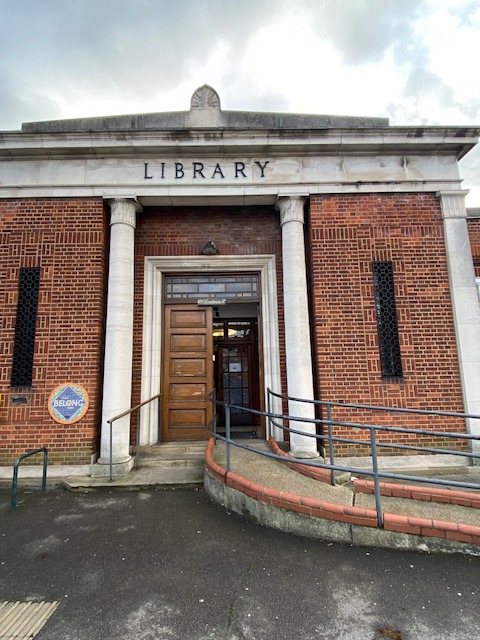
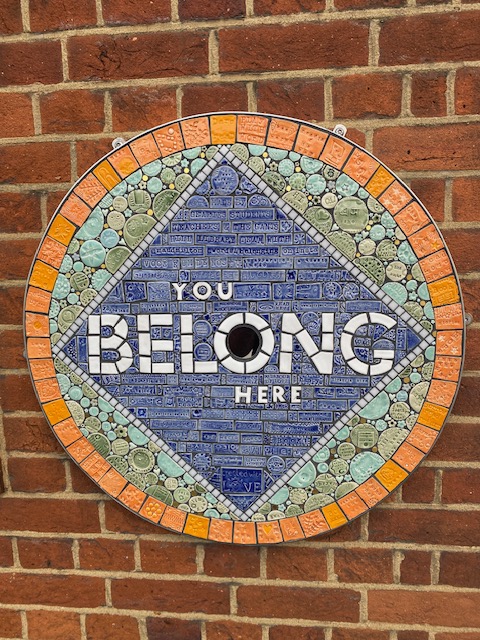
Round the corner is Gants Hill Library, which unusually these days, doesn’t have any type of exhibition or information about local history. However, there are still things to see here, not least the distinctive, period windows. There is also a charming mosaic outside with the words You Belong Here in the centre. The mosaic is part of the 1000 Words for Belonging project, a multilingual arts project that explored the concept of belonging through poetry, playwrighting, and visual art. If you get close, you can see the tiny mosaic tiles that reveal all this and more.
4. Waltham Forest Town Hall bus stop
Opposite the stop is the rather magnificent grade II listed Waltham Forest town hall. Building started in 1938 but halted during the early years of WWII with completion in 1942. It has a symmetrical main frontage with 19 bays facing onto the main road. The central section features a three-bay full-height portico with piers supporting a frieze above containing the words “Walthamstow Town Hall”; above which is a tall copper-clad clock tower at roof level.
The inside is no less grand. Scattered throughout the walls of the main section are references to William Morris, probably the most celebrated former resident of Walthamstow.


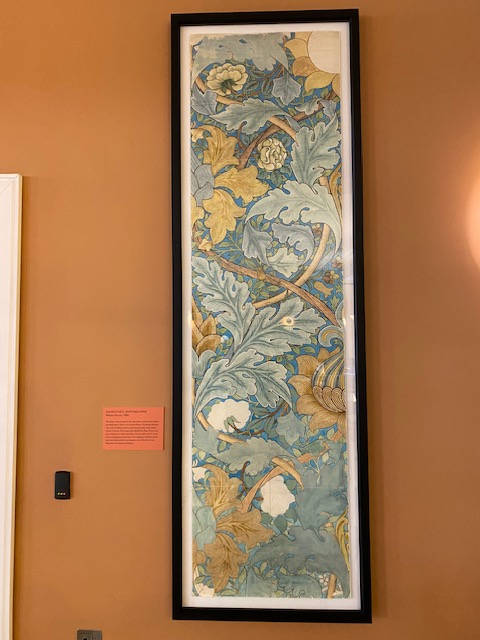
The vestibule of the town hall has plenty of seating for people to meet and work and there are a few interesting artefacts placed in display cabinets, such as a Freedom of the Borough casket, typically given to honour individuals who have given exceptional dedication to Waltham Forest. It’s also worth checking out the staircase and some of the upstairs corridors, with their art deco design.


5. Blackhorse Road station bus stop
At the station is a fibreglass sculpture of a black horse on a mosaic background, which has been there since 1969, just one year after the station opened on the Victoria Line. Also at the station are mosaic roundels of Blackhorse Road. They were put together by artist Maud Milton, using hundreds of tiles, some of which had been created by local residents. If you get up close to the roundels, you can see the amazing detail in each and see the collection of designs, messages and themes that the community has put together.


Opposite the station is an unmissable pink heart on the corner of Forest Road, with the words writ large “Welcome to the home of people who make and create”. This has some reference that the LB of Waltham Forest has as a former resident William Morris but it also reflects the area’s strong industrial and creative heritage.
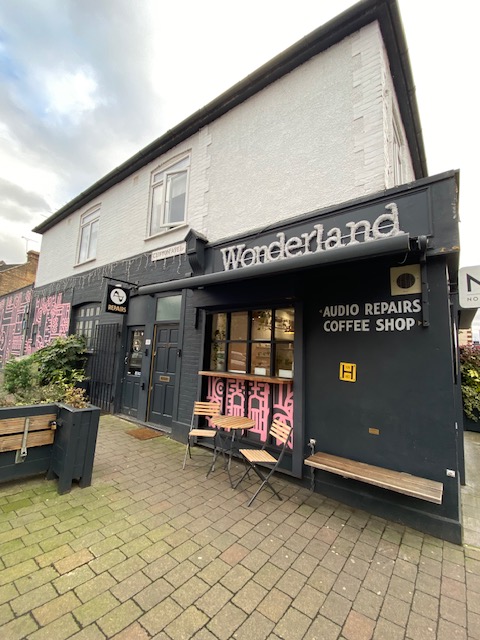
Along the road is the Armstrong Audio Coffee and Repair shop, which started out in the 1930s as Armstrong Wireless and Television, making – as you’d expect from its name – wirelesses and TV sets. With the advent of overseas goods penetrating and dominating the market, Armstrong changed tack and decided to specialise in repairing audio equipment which is still in existence and is thriving to this day. The repair shop (similar to the TV programme of that name) sits at the back of the space while there is a coffee shop at the front – that sells delicious pastries too. It had seemed an unlikely pairing (repair shop and coffee shop) but in fact, the two complement each other well.



6. Mill Mead Road bus stop
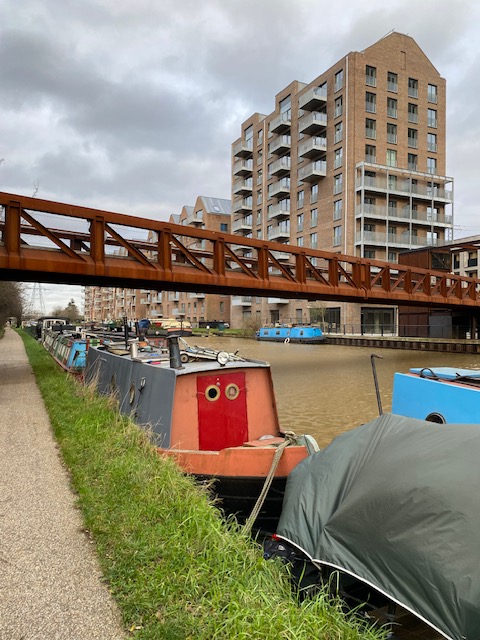
Head towards Tottenham Lock where you’ll find some fine barges and an impressive bridge going over the canalised river Lee. As mentioned in bus route 121, Parliament passed a Navigation Act in 1767 that resulted in the canalisation of the river Lea. Locks were built to allow barges to move up and downstream between the different levels of the water channel. Tottenham Lock was constructed next to the Ferry Lane bridge.


7. Bruce Castle Park and Museum bus stop
Bruce Castle is a sixteenth century grade I listed manor house (so not a castle at all) which is closed until the end of January 2025 but is pretty admirable even from the outside. It gets its name from the House of Bruce who formerly owned the land on which it is built and it is one of the oldest surviving English brick houses. It is generally believed the house’s first owner was Sir William Compton, Groom of the Stool to Henry VIII. The earliest known reference to the building dates from 1516, when Henry VIII met his sister Margaret, Queen of Scots, at “Maister Compton’s House beside Tottenham”. Since its construction, the manor house has had continuous occupation with each colourful aristocratic owner making their own significant architectural legacy. The ‘mysterious’ castellated Tudor Tower set in front of the manor house, was possibly built as early as 1514. It’s made of local red brick, is 6.4 m tall, with walls almost one metre thick. Recent excavations revealed that it continues for some distance below the current ground level. It was described in 1829 as being over a deep well, and being used as a dairy.
The most famous resident of Bruce Castle was Sir Rowland Hill, creator of the Penny Post, which transformed the world’s postal system. The Hill family ran the radical Bruce Castle School from 1827 and as a school the house was saved from Victorian redevelopment.
Today Bruce Castle is a museum (temporarily closed in 2024), housing a permanent exhibition on the past, present and future of Haringey and temporary displays on the history of the area. Other exhibits include an exhibition on Rowland Hill and postal history and a significant collection of early photography.
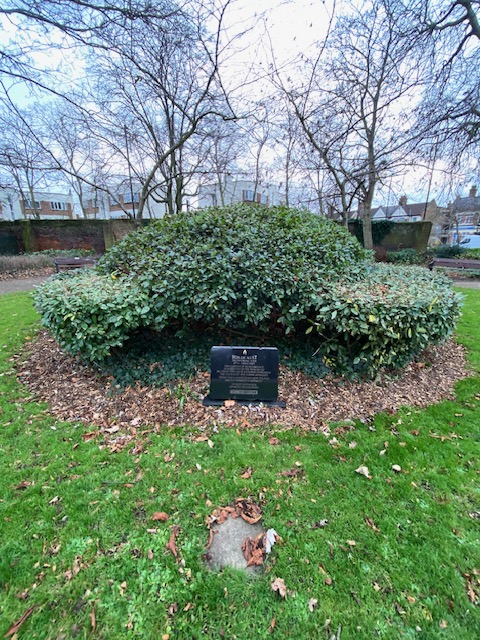
In the grounds of the castle is a garden of remembrance with a central area dedicated to Holocaust Memorial Day. The grounds provided a sports arena and nature resource for outdoor learning for Bruce Castle schoolboys from 1827 and it became the first public park in Tottenham in 1892.

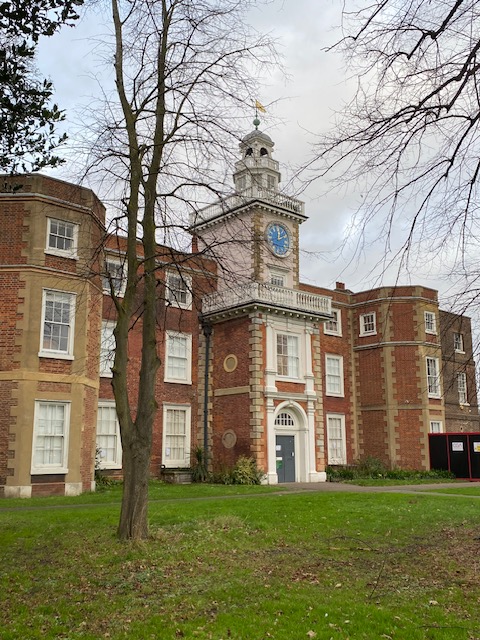



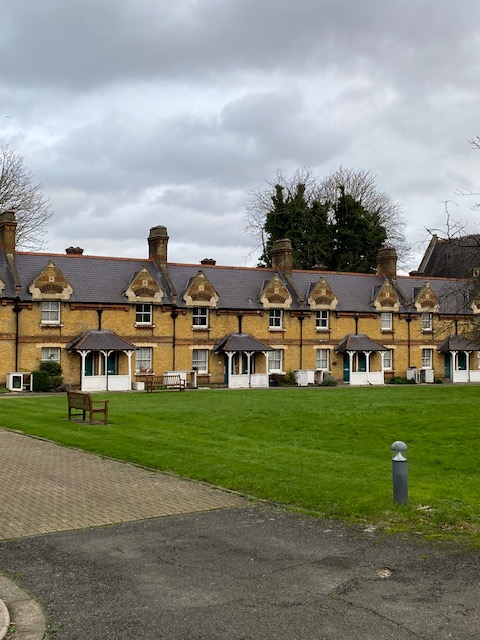
Just along from the castle (that isn’t a castle) are some almshouses that had been built in 1869 “for the poor, elderly people of Tottenham and Bow”. The almshouses with its chapel are Grade 2 listed. The estate consists of a variety of studios and flats, all of which are self-contained and with communal gardens. Residents have use of a community hall for social activities, a chapel (seen here in the picture) and a laundry.


8. Wood Green station bus stop
This is the end of the route but there is a delight to be seen before heading home. This is Blue House Yard, which started out life as an empty and underused car park site, very near Wood Green underground station. An organisation called High Street Works, in partnership with the London Borough of Haringey, transformed the site to make it a hub for local creatives, entrepreneurs and residents. Now there are private spaces to rent, including retail work sheds and studios, as well as public spaces for meeting friends and mixing with the other tenants. Each unit has been painted in a different colour, and each is rented by independent and artisan businesses and individuals.
Before it became this creative hub, the Yard’s namesake blue house was formerly a mental health facility and a church.


Another great bus route, exploring a part of London little-known to me before hand. There are some fantastic buildings such as Waltham Forest town hall and Bruce Castle, plenty of culture by way of Redbridge Museum and art at SPACE, interspersed with mosaics and canals and not forgetting the repair shop and café. It’s certainly one of those routes that has something for everyone and even on an inclement day, there’s plenty to see and do.
Toilets that are free and open to the public:
- Redbridge Library and Museum
- Gants Hill Library
- Waltham Forest Town Hall
 london routemistress