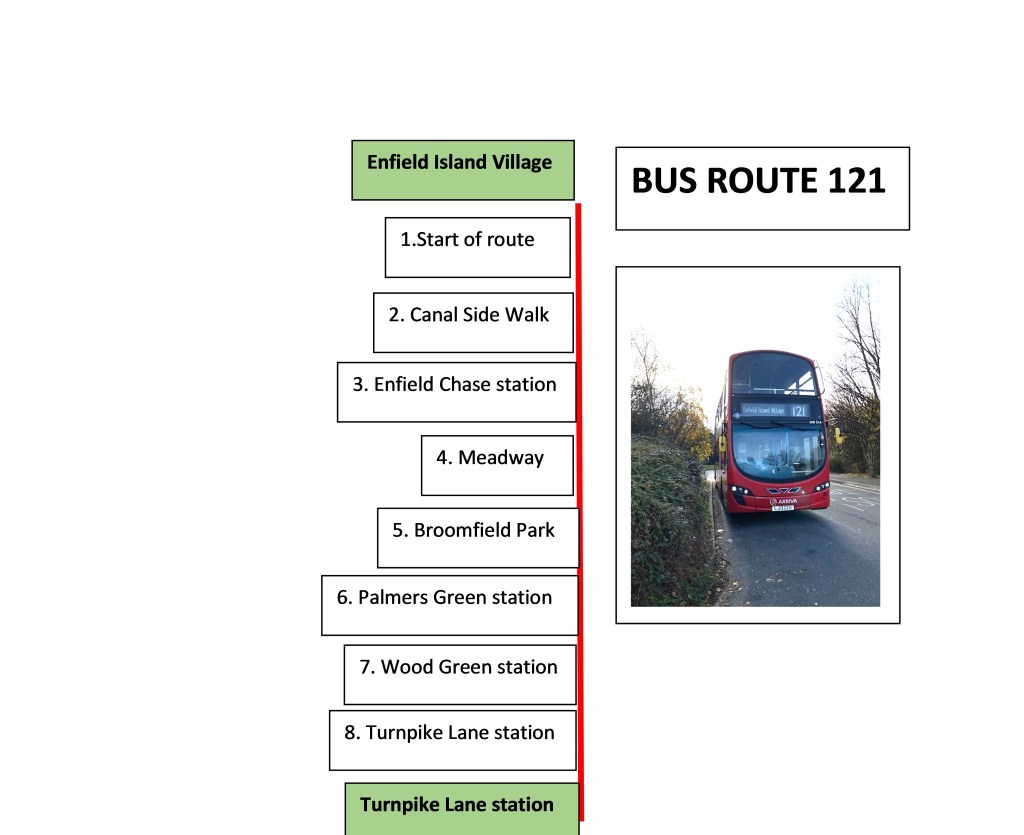
Enfield Island Village to Turnpike Lane station
Highlights:
- Broomfield Park conservatory
- Banksy mural at Turnpike Lane
- Gentlemans Row, Enfield
1. Start of route at Enfield Island Village
The bus starts at Enfield Island Village, which is a modern property development built on land that had previously been occupied by the Royal Small Arms Factory. Some original buildings have been retained and the design incorporates a network of waterways, creating a habitat for waterfowl. There was some initial controversy about the housing being built as a survey carried out showed that the land had been contaminated with chemicals and metals such as lead, cadmium, arsenic and copper. Since then, the land has been ‘remediated’ by capping it with a layer of clay to prevent contaminants finding their way to the surface.
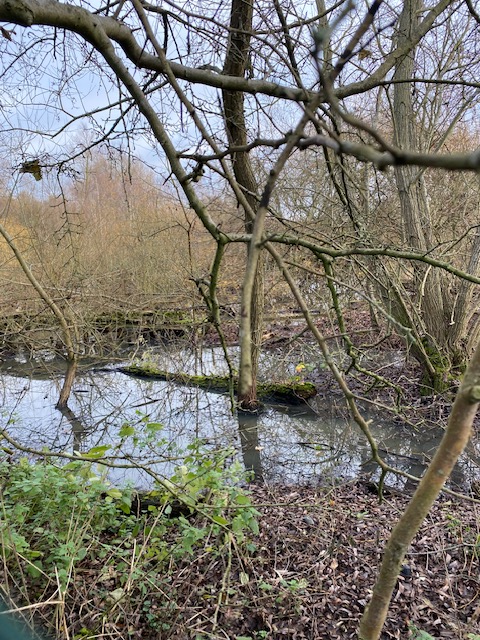
As its name suggests, the village is surrounded by water – the river Lea is close by and there are some very pleasant walks along the side of the river. If you amble over Cattlegate Access Bridge, you come to Knights Pits which is marshland inside Sewardstone Marsh. The area consists of two pits formed as a result of gravel extraction, a large wooded area and some grassland and scrub. It’s a breeding ground for several species of birds although in early December (the date of this visit), not so many stop by.
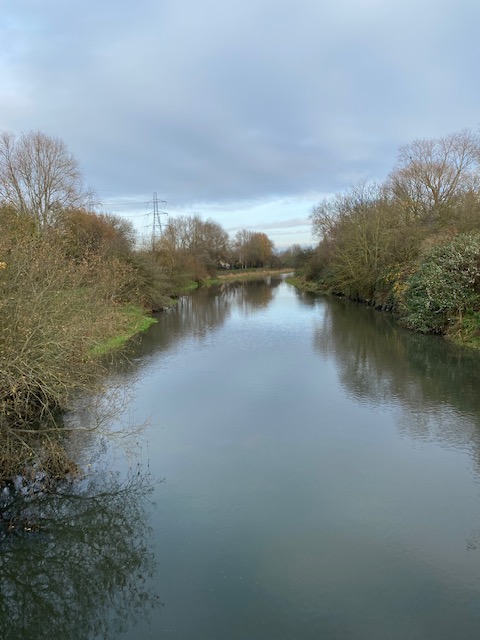

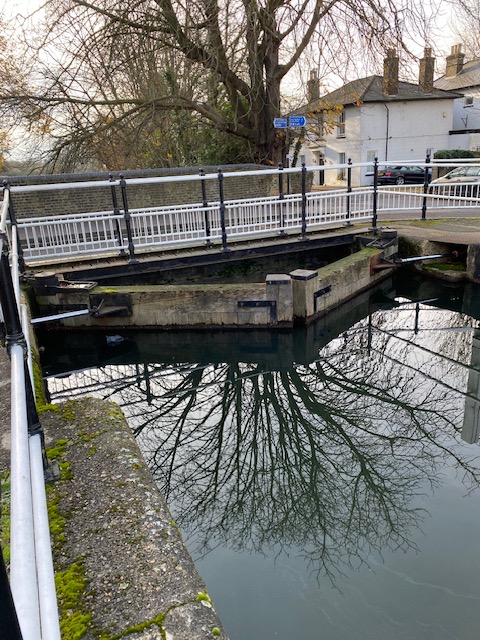
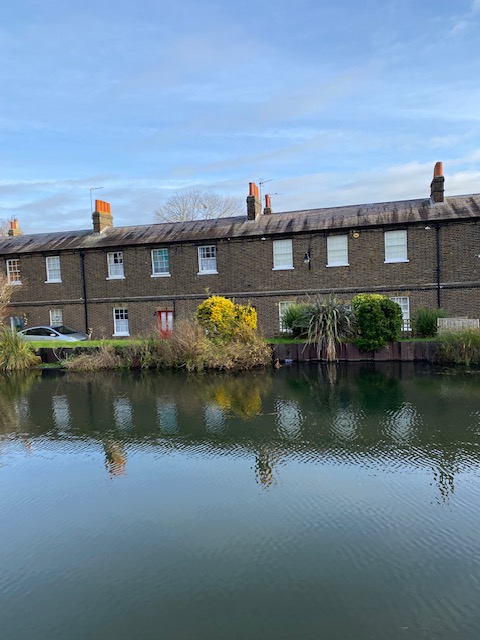
Nearby is the River Lea Navigation, a canalised river, incorporating the river Lea (or Lee, as it’s sometimes referred to). Two River Navigation Acts were passed by government, authorising local landowners to act as commissioners, who could make improvements to the river including scouring or dredging, and could recoup the cost of the work by levying tolls. One of the locks along this part of the canal is Enfield Lock. A lock has been in existence in this area since 1725, though the current structure was built in 1922. All along the tow path are pretty cottages and of course, the odd barge or two is in the water.

2. Canal Side Walk bus stop
It’s possible to walk from Enfield Lock to the next place to see or you can hop on the bus and alight at this stop. Further up from Enfield Lock is the Greyhound pub. It’s right next to Enfield’s old armaments factory and it was taken over during WW1 by the Liquor Control Board, one assumes because they believed that ale and gunpowder are not an ideal cocktail! There has been a pub here since at least 1851.
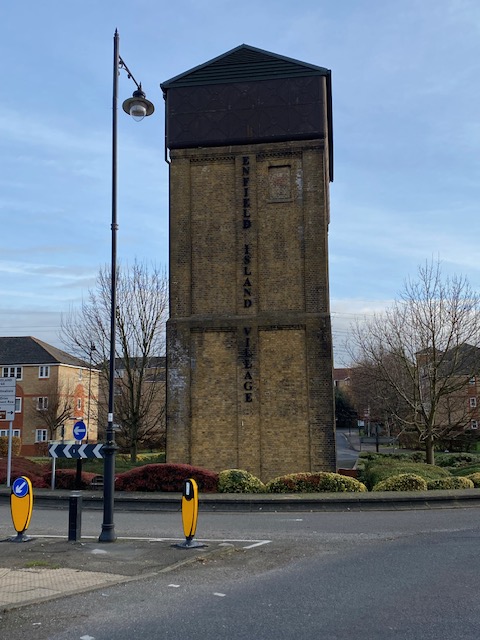
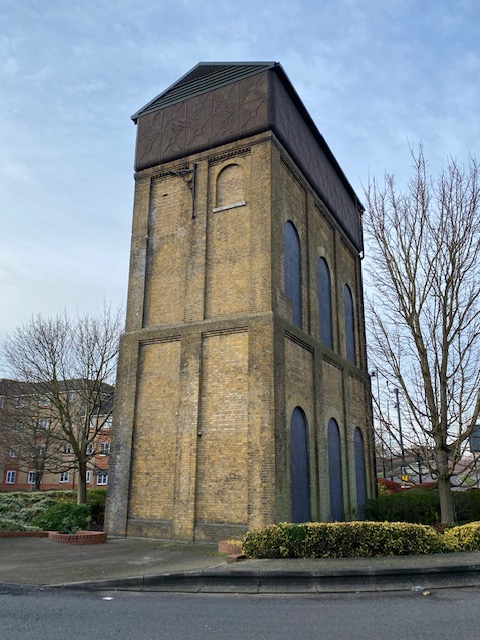
Walk round to the Water Tower which is in the middle of a traffic island and is boarded up now. It was part of the Royal Small Arms Factory which thus had the advantage of water-power to drive the machinery and the proximity of the River Lea Navigation for the transportation by barge of raw materials and finished weapons to the River Thames, 15 miles away, to be loaded onto sailing ships.

3. Enfield Chase station bus stop
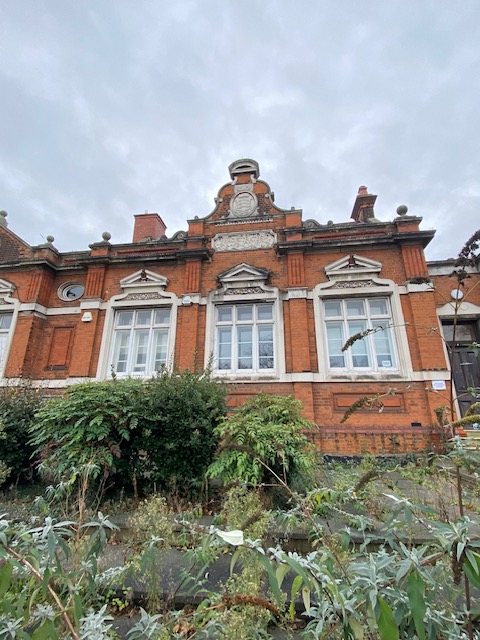
As you get off the bus, you’ll see a lovely old building that looks as if it’s been left to deteriorate. It’s a shame as it was evidently rather grand in its heyday. It’s the Former Magistrates Court, originally built and used as a courthouse until the 1960s, but was subsequently used as offices. Cross over the road and you’ll find yourself in Chase Green Gardens and almost immediately you’ll see the Millennium Fountain sculpture. The sundial commemorates the project to restore the nearby New River Loop and its position is on the River Walk. It was made by artist Wendy Taylor and unveiled in 2000.
In this part of London, you’re never very far away from water and so you come to another stretch of the New River, which actually is neither new nor a river! This artificial waterway was finished in 1613 during the reign of James I and predates historic London sites such as St Paul’s Cathedral.


Above New River is a beautiful, listed cast iron 19th C bridge called The Jephcott Bridge, after Chris Jephcott. He was a member of the family that were great contributors to life in Enfield, being medical doctors as well as prominent members of the community.
Now walk on and find that interestingly-named Gentlemans Row (note the spelling, no apostrophe on any of the signs). The row has very many splendid houses, from centuries past. One such is Fortescue Lodge, a 17th C timber framed stableman’s cottage, with an early Georgian façade covered in white stucco. Also here is an 18th C house that was bought in 1888 by the Enfield Board of Health. It was later a public library and is now the Registry Office. One other house worth mentioning is recently restored Archway House dating from 1750 and which was a beer house before World War I. The mainly 19th century house on the left was at one time the stables for the Archway tavern and later a general shop until the late 1960s.


Near Gentlemans Row is Enfield Library, outside of which is the Library Green Fountain. It must only work at certain times because at the time of this visit, there was no water to be seen. On the way back to the bus stop, you’ll go past Pearsons, a department store, with an art deco façade. Stanley and Arthur Pearson purchased a small drapery business on Church Street in Enfield in 1903. The store began as a family partnership with a staff of seven. The business grew and the building was extended to cater for this. During WWII, Pearsons suffered bomb damage but renovations took place and it’s remarkable that it’s still in existence to this day, when very many local department stores have suffered their demise.
Near the Palace Shopping Centre is a colourful pedestrian crossing. As part of a summer Arts festival, the Alevi Federation of Britain was asked by Enfield Council to design a pedestrian crossing to reflect the Alevi culture and belief. The Alevis believe that life consists of four main elements, with each element being symbolised by a colour. The earth is green, water blue, fire orange, and air purple. The birds symbolise peace and freedom.


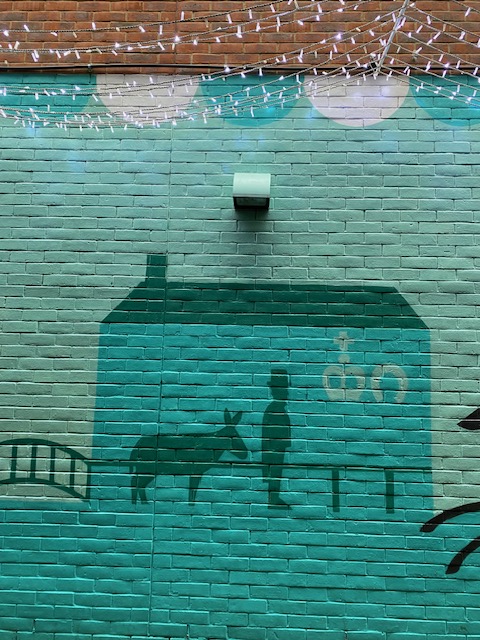
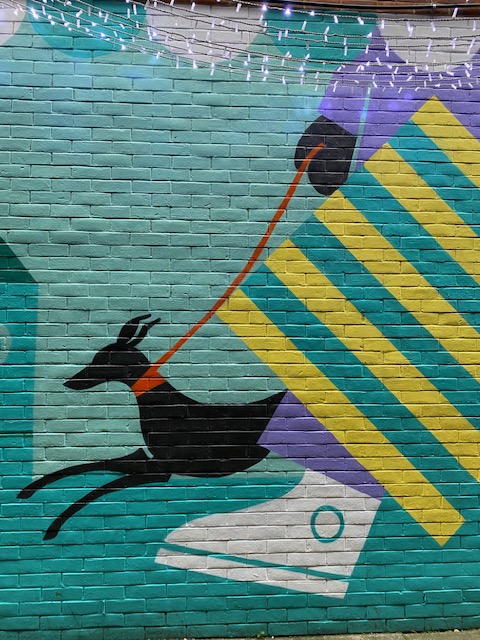
In the alley near the shopping centre, there is a wall covered in art to cheer you on your way. The Enfield murals were the design of students at a local art college. The concept was about celebrating Enfield Town; its history, its people and its heritage. One of the main explorations is Enfield’s history as a market town going back 700 years. It was inspired by the market stalls. The mural features, in the foreground, “a parade of bold silhouettes of people carrying shopping bags”, while in the background there are “illustrations portraying historical buildings, stories and events from the area, celebrate all things Enfield.


4. Meadway or Ye Olde Cherry Tree bus stop
Ye Olde Cherry Tree pub is at Southgate Green and has been in existence for 400 years. There was a Cherry Tree Inn recorded when the land was given to the poor of Barnet by Valentine Pool in 1624. Captain Wade, a retired sea captain who was landlord in 1888, was responsible for planting a cherry tree on the ‘island’ in front of the building.
Opposite the inn is a famous local landmark – the Southgate Stocks which were a coronation gift to the Green in 1953. They replace an earlier set that went missing during World War II. In days gone by, stocks were used as a punishment from the Middle Ages up to the 18thC. A wide range of people were punished with the use of stocks including traveling musicians, fortune tellers, drunkards, gamblers, Sabbath breakers, vagrants, wife beaters, unruly servants and petty thieves. Some of the more regular occupants of stocks were shopkeepers and market stallholders who cheated their customers.
Adjacent to the stocks is one of the Metropolitan drinking fountains and cattle troughs. These troughs date back to the 19th century and were placed strategically to supply free and clean drinking water. These drinking fountains very quickly gained popularity and soon there were as many as 7000 people a day making use of them.


5. Broomfield Park bus stop
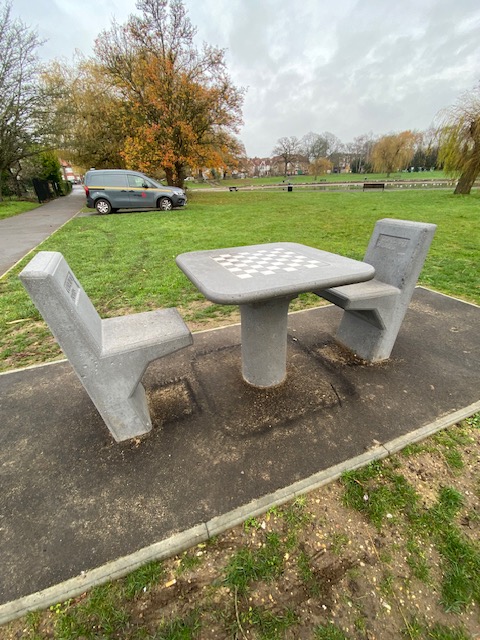
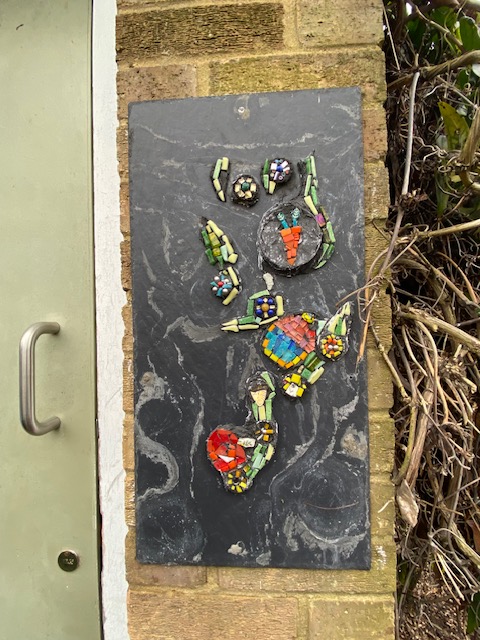
Broomfield Park has some really lovely features and places to see. Near the entrance is a concrete table and chairs set, with the table having a chess or draughts board built in. A few metres away is the Palmers Greenery café, which on this particular day, was (wo)manned by two friendly ladies. On the walls surrounding the café are various murals of Canada Geese as well as a small mosaic mural that had been commissioned by the Palmers Green Action Team.

Venture further into the park until you find yourself outside the Broomfield Park conservatory. This really is a tropical oasis in the middle of the park. The plants are divided into two areas. The central bed that you immediately see on entering, contains plants from deserts and other dry areas of the world. Here you’ll find banana plants, yucca and a bird of paradise. The perimeter of the conservatory consists of special collections such as cacti, orchids and carnivorous plants as well as individual interesting and eye catching plants such as bougainvillea. The conservatory is manned by volunteers, on this day these were Basil and Candy who spent time explaining its background and history. It’s a bit of a Kew Gardens on a miniature scale.
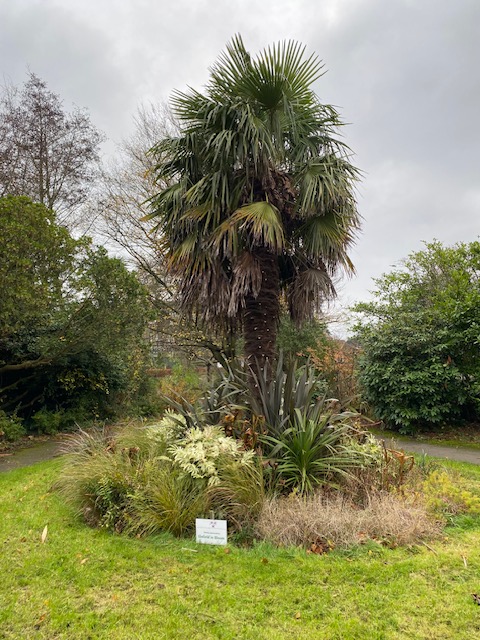
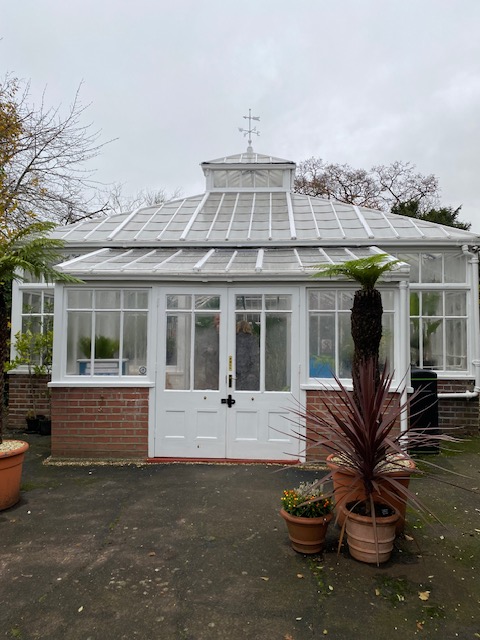

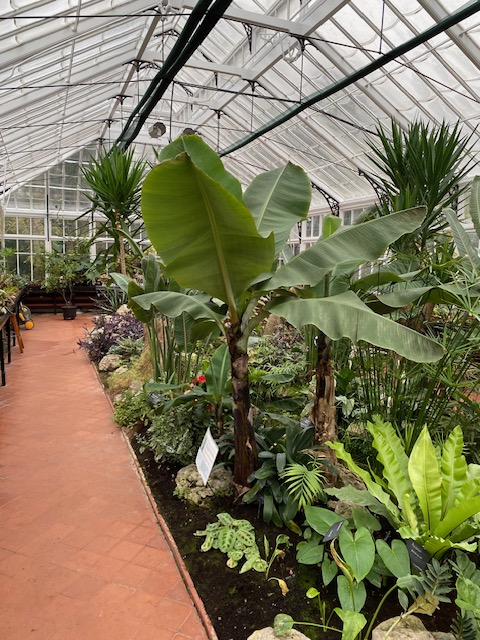
As well as the café and conservatory, it’s worth exploring further into the park. There are numerous lakes, all teeming with wild life where breeding birds such as Canada geese, mallard, tufted duck, coot and moorhen, not forgetting the many swans, flock. There is a bandstand too which was built in 1927, and in the past was used by local brass bands.
The park was originally the garden of Broomfield House, which was built in the 16th century. In 1902 the local council purchased the house and grounds, and they were opened to the public in 1903. Unfortunately, the house was gutted by fires in the 1980s and 1990s and has remained in a derelict state since then. Owners of the house over the years include Lord Mayor of London in 1594-95, Sir John Spencer. Currently there are discussions as to whether it’s possible to restore the Grade II* listed building but nothing has yet been decided.


6. Palmers Green station bus stop
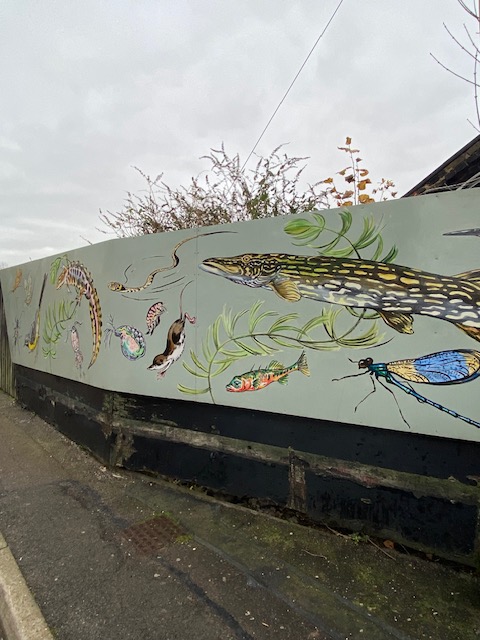
Outside the underground station is a mural “New River Life”, depicting a variety of freshwater species. It was created by street artist ATM who had been inspired by the nearby New River in order to draw attention to the vast array of life which make up a healthy freshwater habitat.
The mural is a representation of the interconnectness of the natural world. Included are all sorts of water creatures Look closely and you can see the orange-striped stonefly; caddis fly; mayfly; grey wagtail; smooth newt; cyclops copepod; grass snake; daphnia water flea with eggs; gammarus freshwater shrimp; water shrew; pike; three-spined stickleback; banded demoiselle damselfly and a kingfisher.

7. Wood Green station bus stop
Near this stop is George Meehan House which is now Haringey Register Office. The house was once known as Earlham Grove House, later Woodside House and in fact the gardens around the house are still called Woodside Park. The building, designed in the Italianate style, was built in 1865 as a private residence for Thomas William Smith Oakes, an East India Company merchant. In 1893, the house was acquired by the local board of health for use as a public library and in 1913, it was Wood Green town hall. The house was extensively refurbished in 2017-18 and was renamed George Meehan House, in memory of Councillor George Meehan, a former leader of Haringey Council.


8. Turnpike Lane station bus stop
Final stop on this route is at Turnpike Lane station where there are numerous murals and street art. One such is Envision Peace, installed by US artist Shepard Fairey over an old Victorian billboard in 2012. Fairey was commissioned by Haringey Council and charity Sustrans, to help improve the streetscape. His solution was to craft a giant eye inside an old Victorian niche on a shop wall, with a stunning effect. Below this is a caricature of a horse by the renowned Spanish artist Francisco de Pájaro, also known as Art is Trash. On the wall next to the horse is another piece of art but there’s no signature to determine who was the artist.
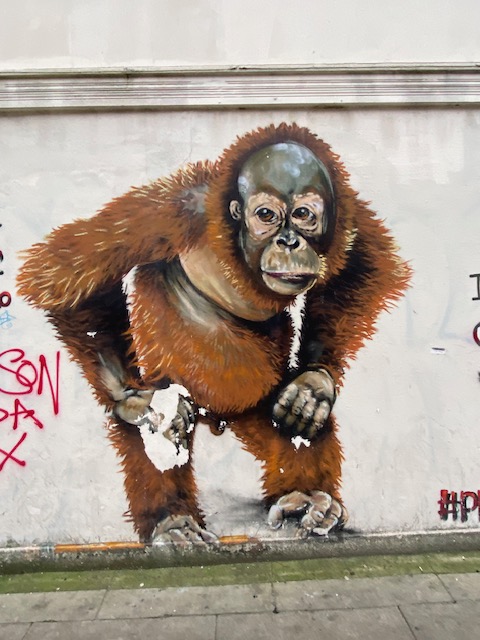
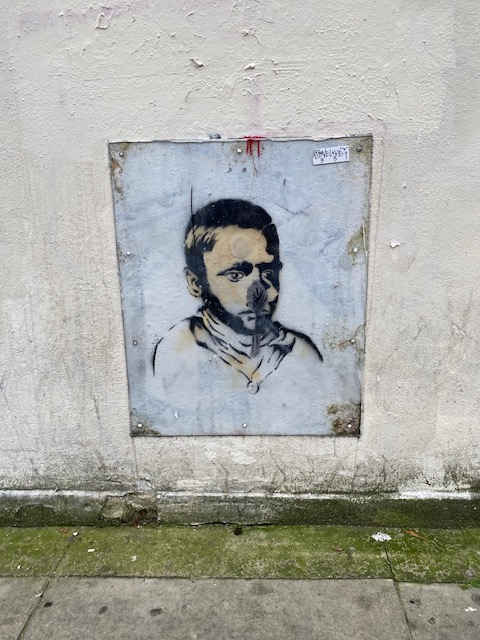
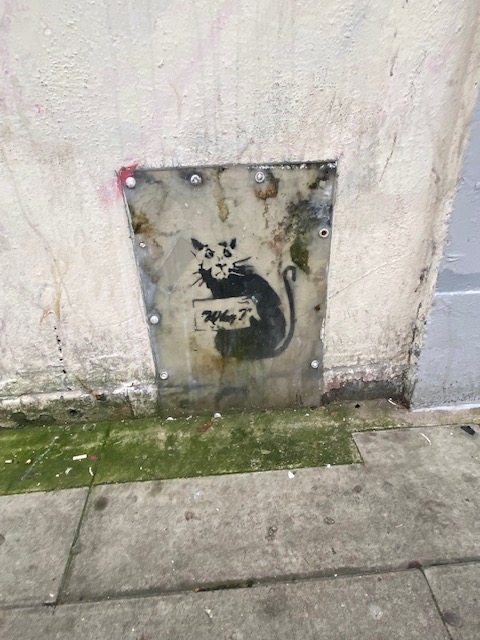
The last murals I found were on the corner of a Poundland shop. Starting with a large gorilla on the left hand side, there is a stencil of a young boy with a spoon over his nose, then an old-fashioned sewing machine on top of a plinth and finally there’s a stencilled graffiti of a rat holding a sign saying “why?” It’s thought that the rat is one by Banksy as it’s in his style, though it’s not definite.
This wall once had a (definite) real Banksy which depicted a young boy crouched over a sewing machine making Jubilee street party bunting in a sweatshop. It was decided by the council to remove the mural and to sell it – almost definitely for a small fortune – in a US auction . Locals were outraged and the mural was withdrawn from the sale. So one assumes that whoever created these latest murals were influenced by the original, taking the boy and a sewing machine as central to the art work. And perhaps the gorilla is a reference to Banksy being regarded as a “guerrilla” artist.

Although this route wasn’t a “wow” one, nevertheless it was thoroughly enjoyable and very varied. Lots of water featured at the start in Enfield and in Palmers Green and plenty of street art and murals at various places along the route, cumulating in Turnpike Lane with a possible Banksy mural. Broomfield Park was a surprise hit with its lovely conservatory, lakes and community café and Gentlemans Row was just fantastic.
Toilets that are free and open to the public
- Enfield Library
- Broomfield Park
 london routemistress
