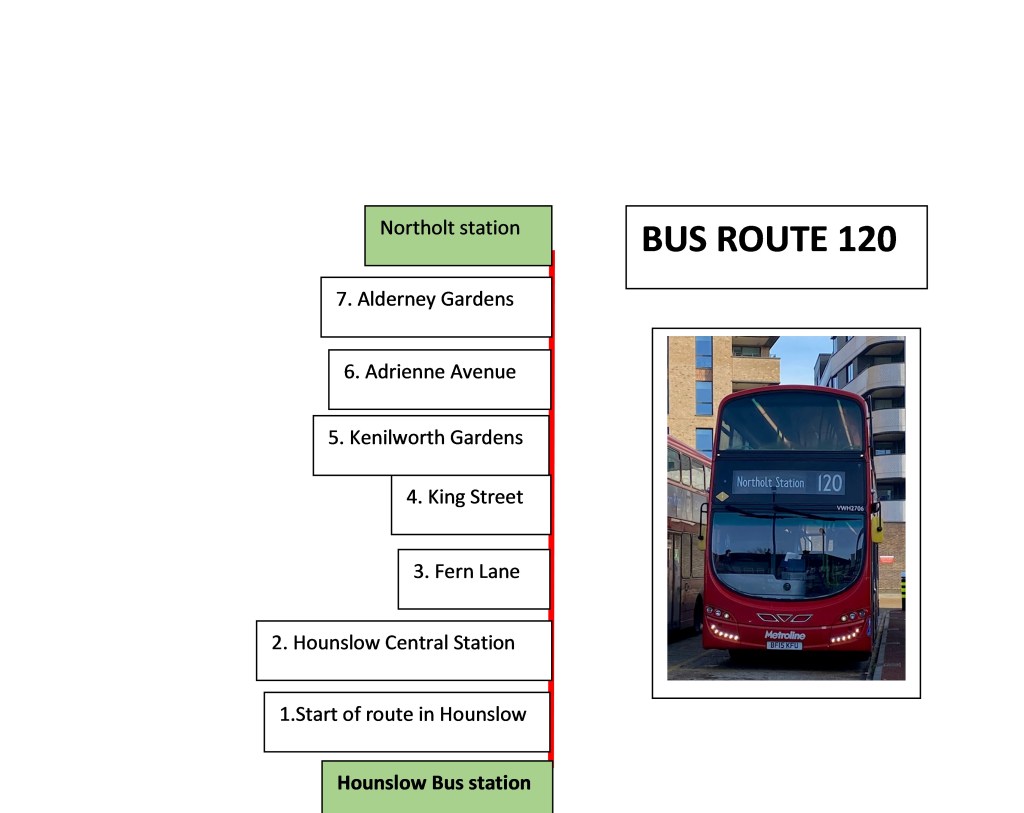
Hounslow bus station to Northolt station
Highlights:
- Sarsen stone in Lampton Park
- Martinware exhibition in Southall Library
- Northolt Village Green and its surroundings
1. Hounslow bus station bus stop
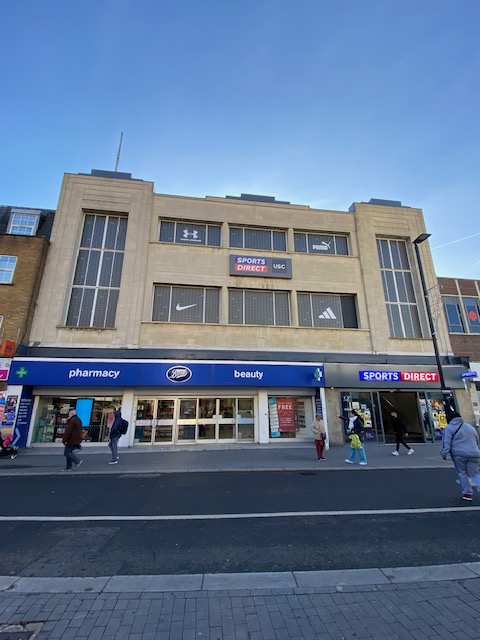
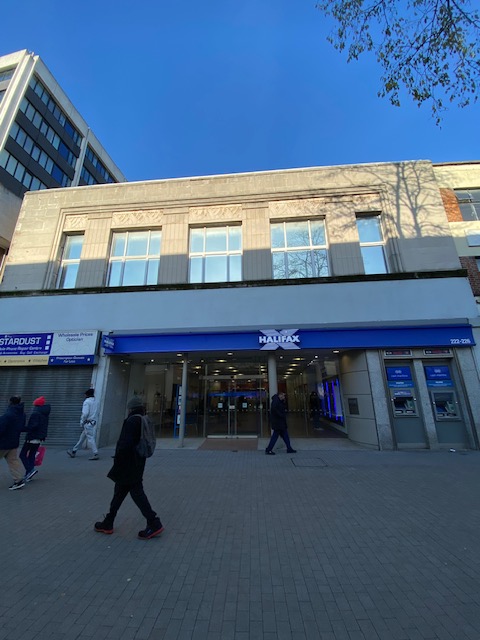
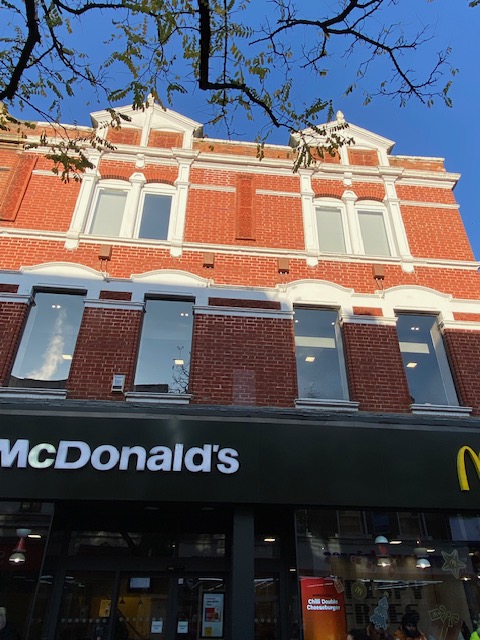
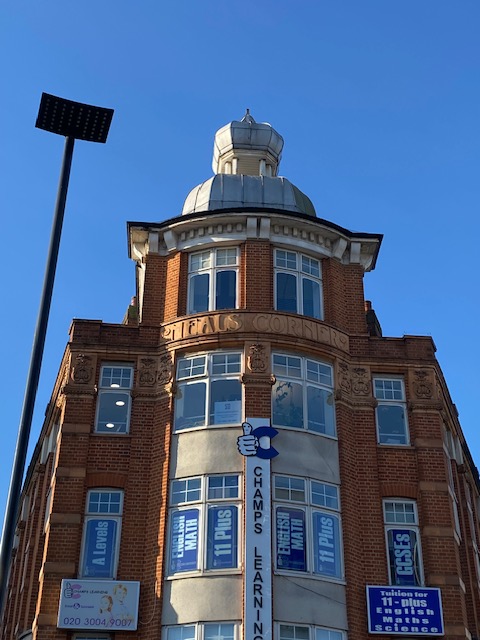
This is also on bus route 117. Find your way to Hounslow High Street and you’ll need to look upwards for what’s in store. The High Street seems like most others – plenty of shops, building societies and eateries. But on both sides of the street are some gems of architecture. There are terracotta balustrades and gothic windows, Edwardian pediments (McDonalds at 200-202), motifs on windows (Argos at 137-143), late Victorian floral details (Taco Bell at 217) and art deco fronts (Halifax at 222-228 and Boots at 193-199). So a gentle stroll along the street is no longer boring. At the end of the High Street is Bell Corner with its rather grand Neal’s Mansions, a 4 storey imposing Victorian building. It is defined by its cloche cupola and fine Art Nouveau terracotta lettering.
2. Hounslow Central station bus stop
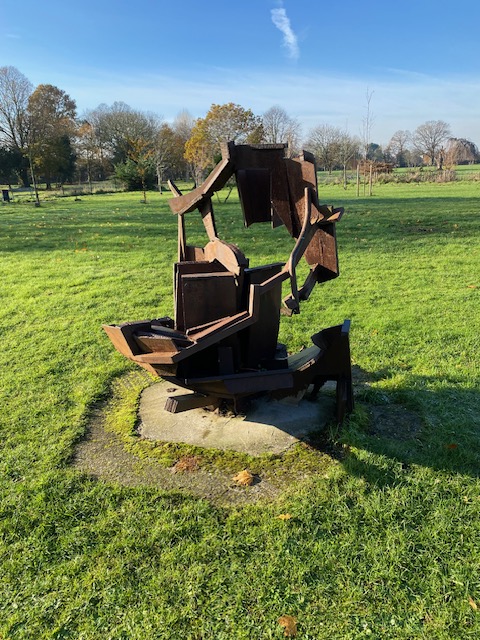
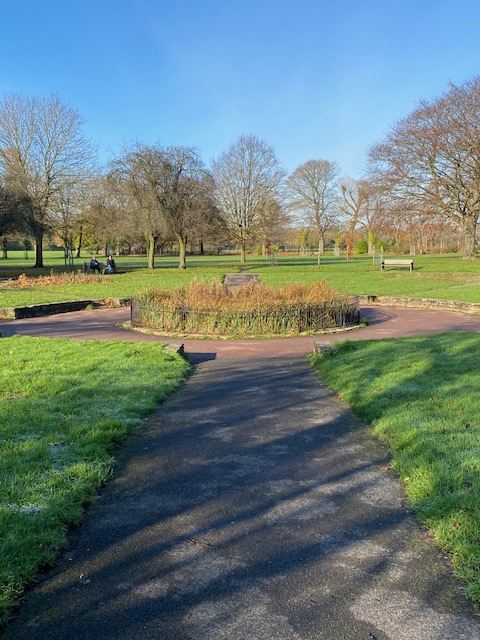
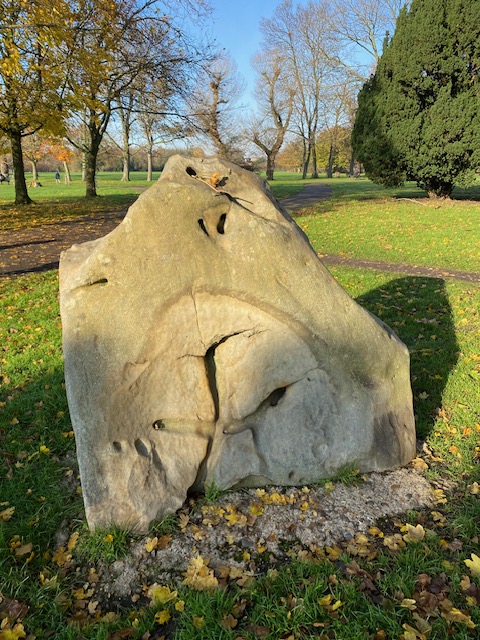
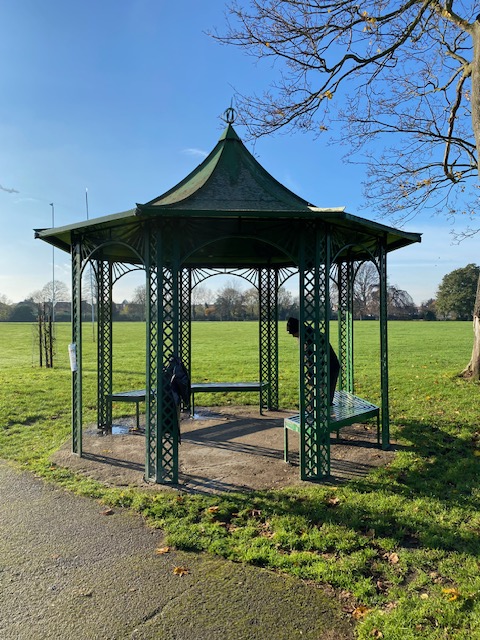
This is the stop for Lampton Park, where there are a few things to see. As you enter the park, your eye will be drawn to an interesting sculpture made from steel, near a pergola. It’s not obvious what it is but it’s certainly got aesthetic interest. Walk round the park and find the Sarsen Stone, which had been unearthed from a pit at the Hounslow Sand and Gravel Co. works at Heston in 1926, and which was set up in the park in 1951. It’s not evident how old the stone is but it’s worth noting that Stonehenge is also made up of Sarsen Stones. In the middle of the park is a small pond and around one of the paths is a small summer house. It would undoubtedly be a great place to visit in the summer, with its rose garden and trees in full bloom but it was pretty good even at the end of November.
3. Fern Lane bus stop
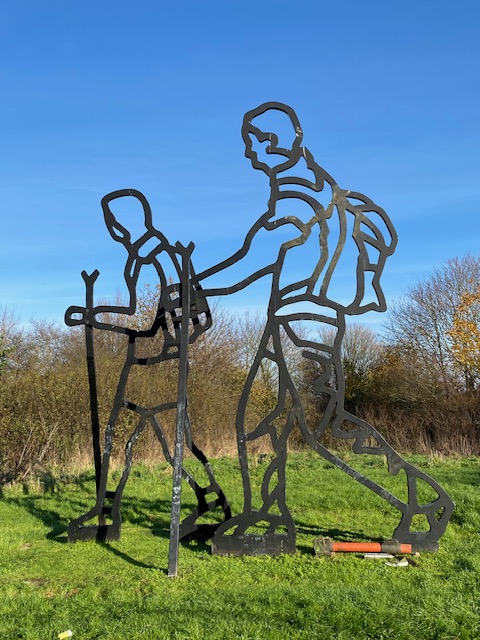
Head towards Ferraro Close, a residential street not far from the stop. At the end of the close is a field that belongs to the Heston Farm Estate, where you will find a very large sculpture called The Ramblers. It was created by Ray Smith, a sculptor, illustrator and writer, who was quite prolific until his death in 2018. This sculpture is of two ramblers, walking purposefully with back packs and walking sticks. The way the sculpture has been positioned, these two people are heading out of the countryside and seemingly walking back into suburbia.
4. King Street bus stop
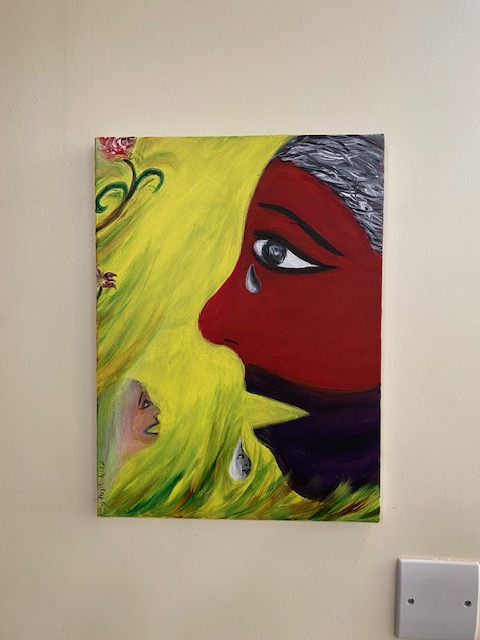
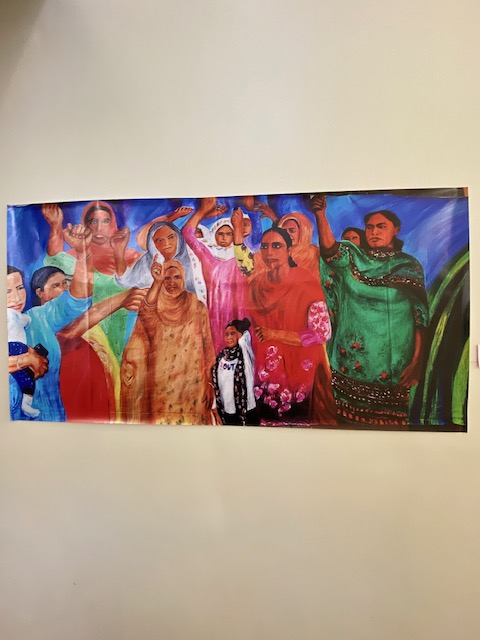
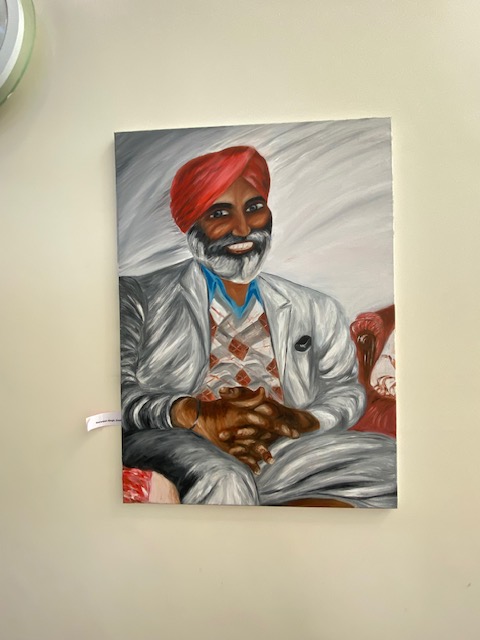
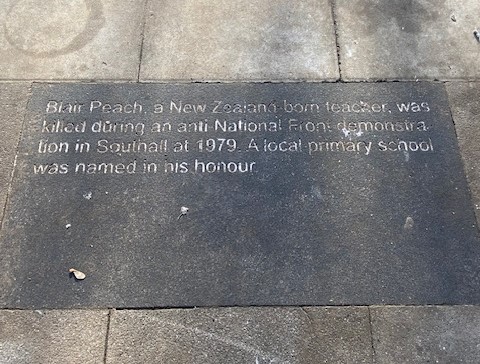
Not far from the stop is Southall Library, where there is a temporary exhibition of paintings by Sarbjit Johal. She grew up in Southall and recalls being taken by bus to school in Northolt under the racist “bussing” scheme imposed on Asian children in Southall and elsewhere. She recalls the death of Blair Peach in 1979 and how her mum had been badly treated at work at a local factory. She has included some of these topics, as well as a lovely portrait of her father, in this poignant display.

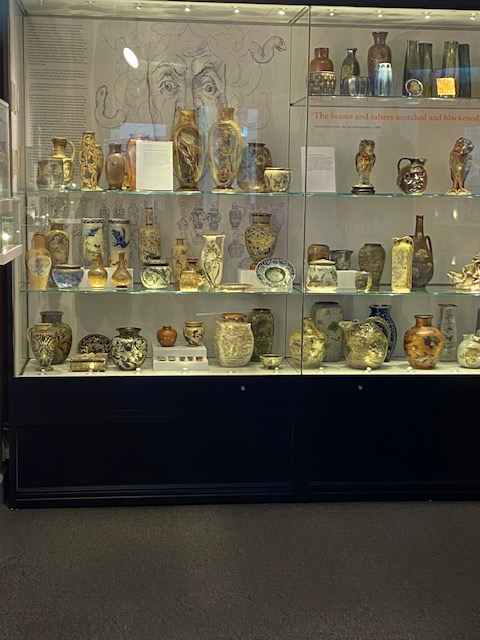
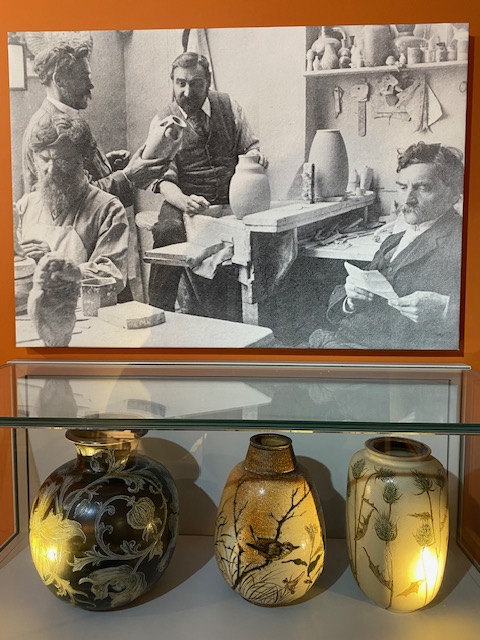
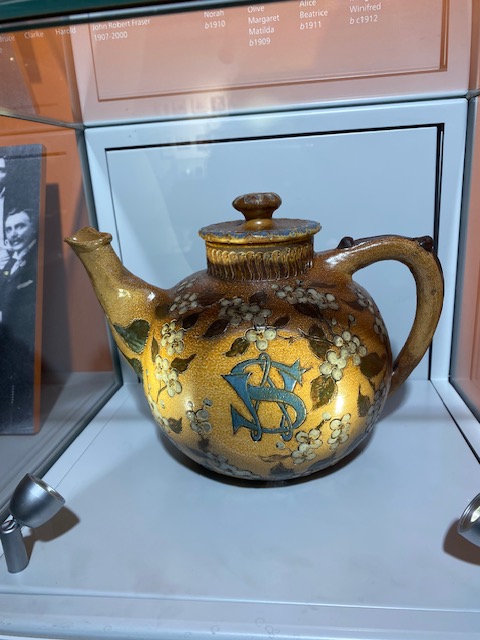
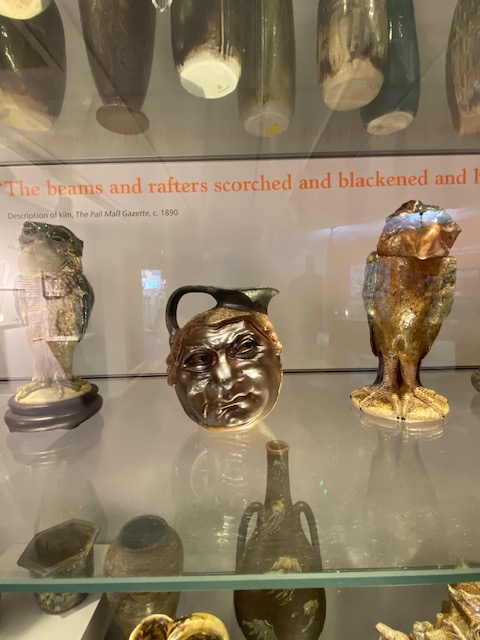
There is also a permanent exhibition at the library. It’s a magnificent display of Martinware pottery. The Martin brothers came from Southall and gifted these pieces for the benefit of visitors to Southall. The brothers were among the first studio potters in the country and are famous for pioneering the use of salt-glazed stoneware. Their work explored the grotesque, pushed boundaries and tested the limits of clay.
Their designs used simple forms and the patterns were inspired by nature, particularly the flora and fauna of the British countryside. They put their success down to it being a family business, with four brothers working well together and with occasional help from one of their sisters and the odd employee. The business had its ups and downs with the 1890s being especially hard and by 1914, the pottery closed down. Among the best known pieces they made were the “Wally Birds”, a series of anthropomorphic bird sculptures, each one with their own unique and often knowing expression. It’s thought that they were modelled, among others, on real-life politicians such as William Gladstone and Benjamin Disraeli.
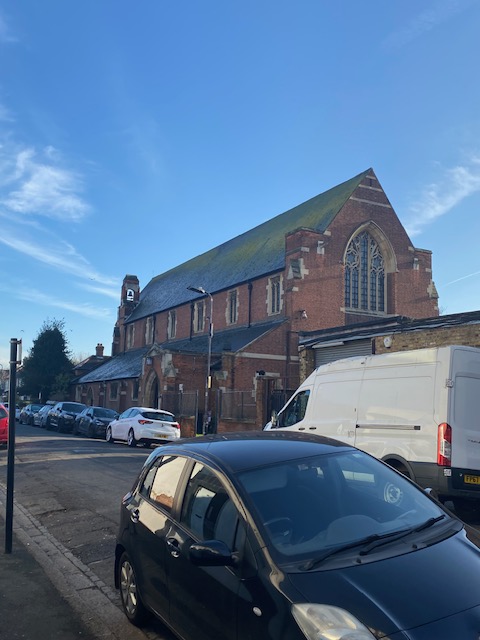
Before hopping back on to the bus, take a quick look at St John’s Church, Southall. It was built as a district church in 1839, with funds from the benefactor Mr. Henry Dodds who had a great deal of business interest in the village. As well as the church, he paid for St John’s School and the Vicarage to be built.
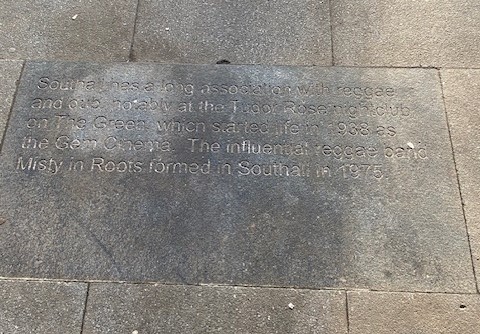
At the bus stop is an open paved space and this has various paving stones giving information about local people and events. There’s one about Southall Black Sisters and one about reggae. Another tells the tale of Blair Peach and yet another mentions that Cleo Lane – jazz singer extraordinaire – spent her childhood in Southall.
5. Kenilworth Gardens bus stop and
6. Adrienne Avenue bus stop
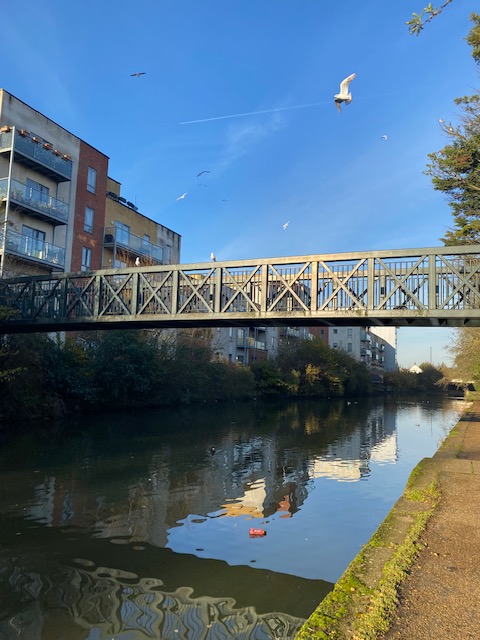
Walk a few minutes towards the Tame Valley Canal and you’ll find the Brickfields footbridge. It was opened in 1844 and is made from cast iron with abutments of brick with some sandstone dressings. It has been given grade II listed status.
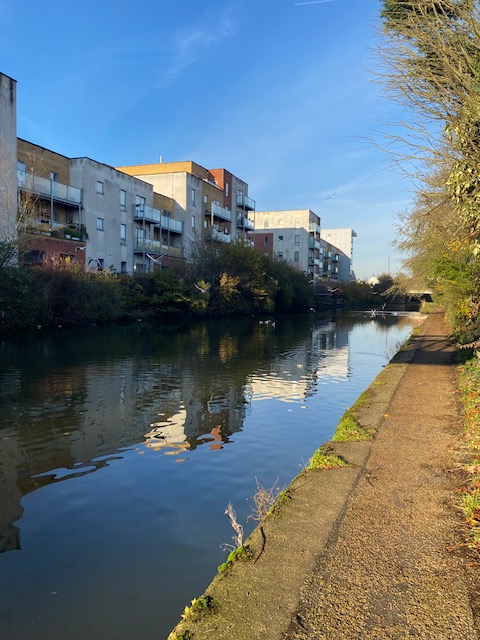
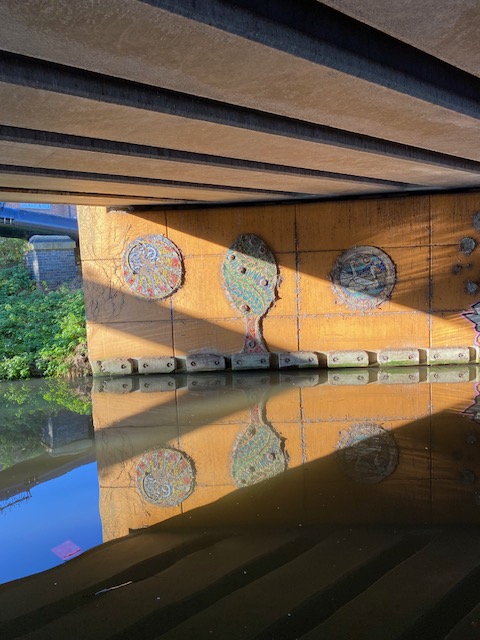
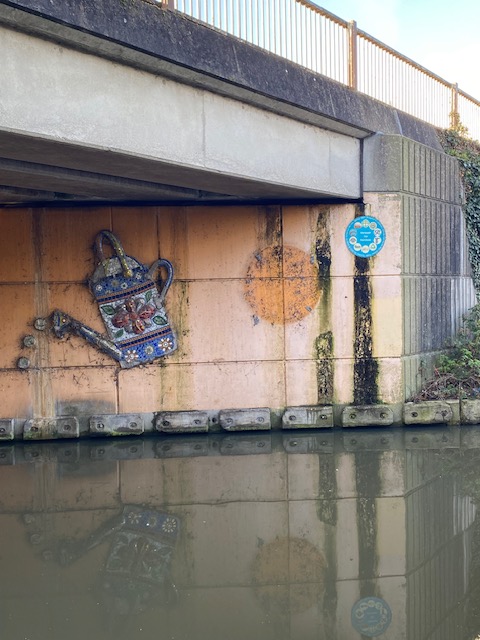
It’s possible to walk from this footbridge to one further down the canal, in Kensington Road, or you can get back on the bus to the next stop. There you’ll find a series of mosaics under the bridge, from “Through the Porthole” project. Included here are a pair of swans and a watering can. The mosaics have definitely seen better days which is a great shame, as they brighten up what could be a fairly mundane canal-side walk.
7. Alderney Gardens bus stop
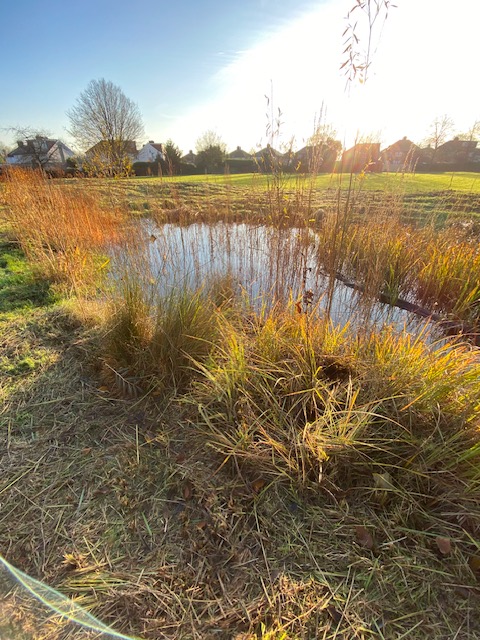
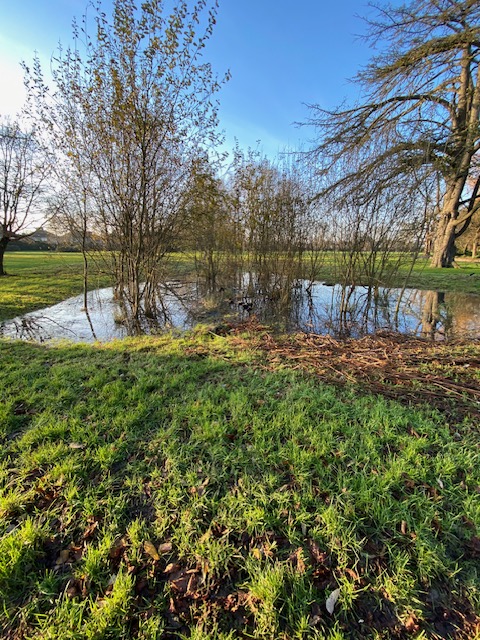
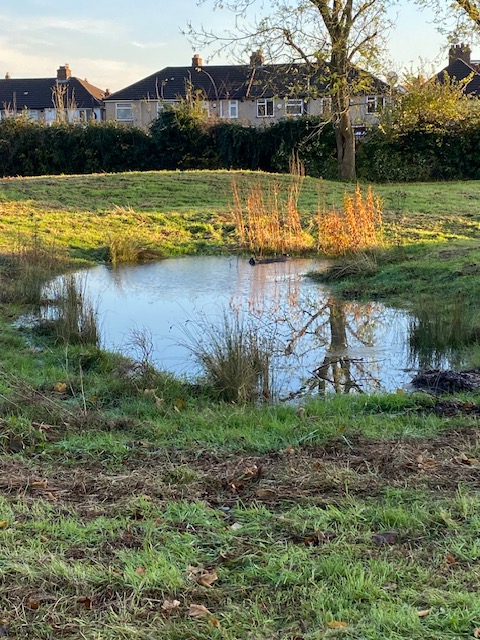
Final stop on this route takes you first to Islip Manor Park with its seasonal ponds, that provide vital homes for wildlife as well as helping to reduce footpath flooding. Winter is a good time to go due to the rain which fills up the ponds, though these days, there’s no knowing when the rain will fall. The ponds provide water for animals and insects and a safe bathing place for birds. The reeds and rushes that surround the ponds provide ideal homes for small mammals while the seeds and leaves of meadow plants are also a good food source.
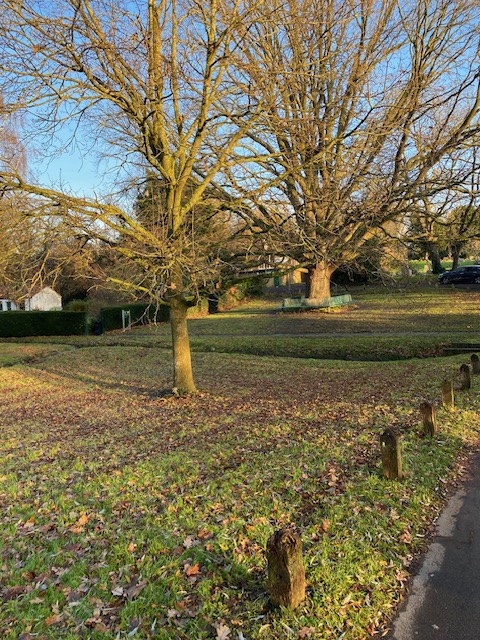
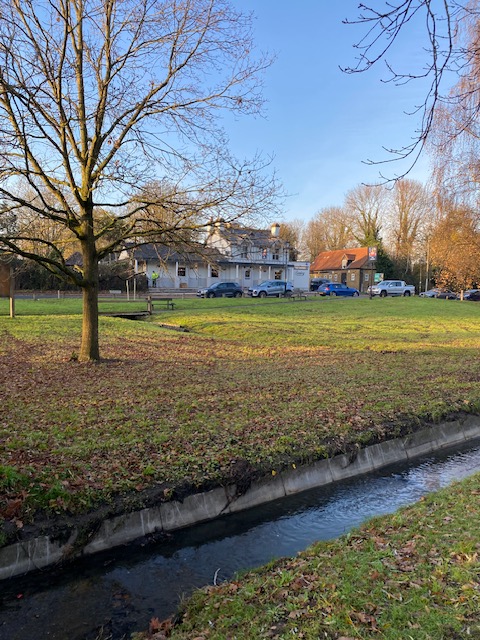
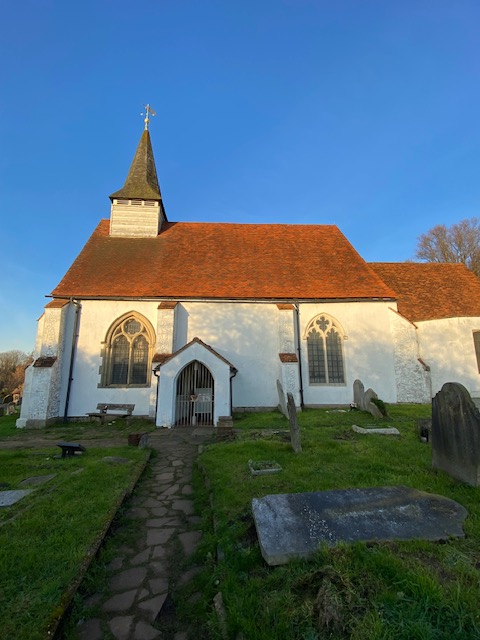
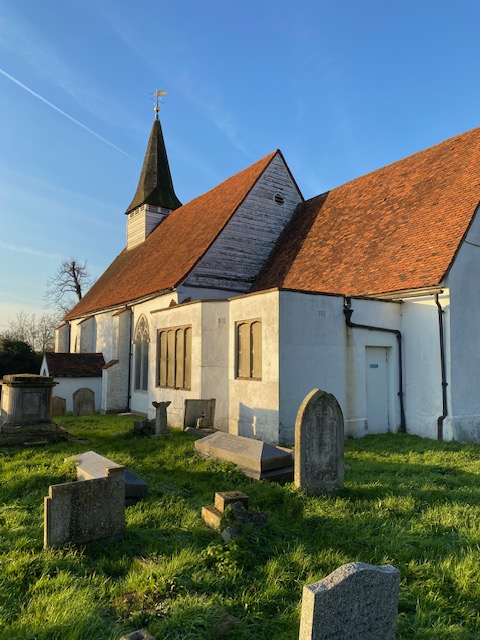
Finally find your way to Northolt Village Green where you’ll also find St Mary’s Church, one of London’s smallest churches. It was built around 1290 and was expanded over the centuries, with the chancel being added in 1521, the spired bell tower in the 16th century, and a gallery at the west end of the church in 1703. The whole area around the church is very pretty and dates back several centuries, possibly even before 1066. In the middle of the 1200s, the lords of the manor decided to build a new manor house surrounded by a moat and move all the villagers down to new houses. The medieval green still survives, along with a moat or small stream.
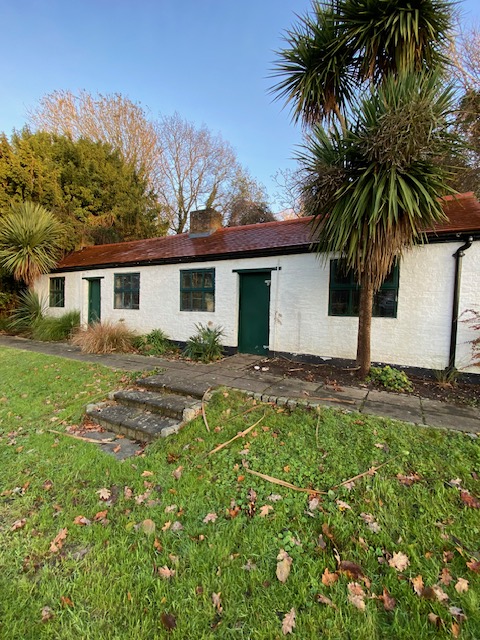
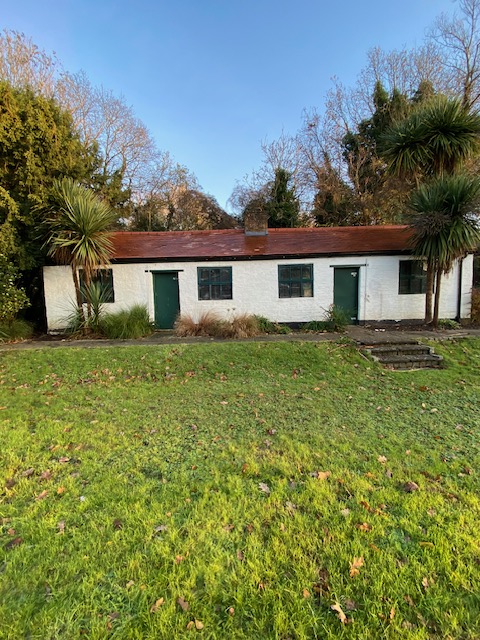
Just at the Green are Willow Cottages. These were living quarters for agricultural labourers in earlier times. There were originally three separate homes, but one was demolished in 1945. Even though they are really small, at one time there was a family of twelve living in one of them, but they have not been used for housing since the 1930s. They have now been restored and sit in the Rest Garden.
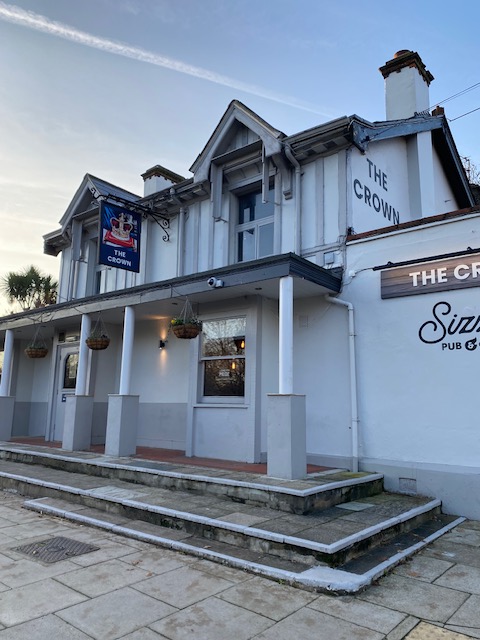
Opposite is the Crown Inn, a mixture of late nineteenth century and Edwardian styles with a veranda running the length of its frontage. An inn has stood in this location since the early 18th century and the original building has been added to and modified in the Victorian and Edwardian periods. It has been a popular refreshment point for walkers and cyclists over the years.
And so ends another surprisingly interesting bus route. Most of it had been pre-researched but it was a total delight to find the Martinware exhibition at Southall Library, and Northolt Village Green with its moat and cottages. I keep coming back to acknowledging that London has just so much to offer, no matter which end or side you explore, and whatever preconceived ideas you may have of certain areas.
Toilets that are free and open to the public:
- Hounslow East station
- McDonalds in Hounslow High Street
- Southall Library
- The Crown Inn
 london routemistress
2 responses to “Bus route 120”
Another fascinating read, Hel!’ Thank you x
LikeLiked by 1 person
Thanks Mandie. I actually enjoyed it, despite the route (Hounslow to Northolt 😳) xx
LikeLike