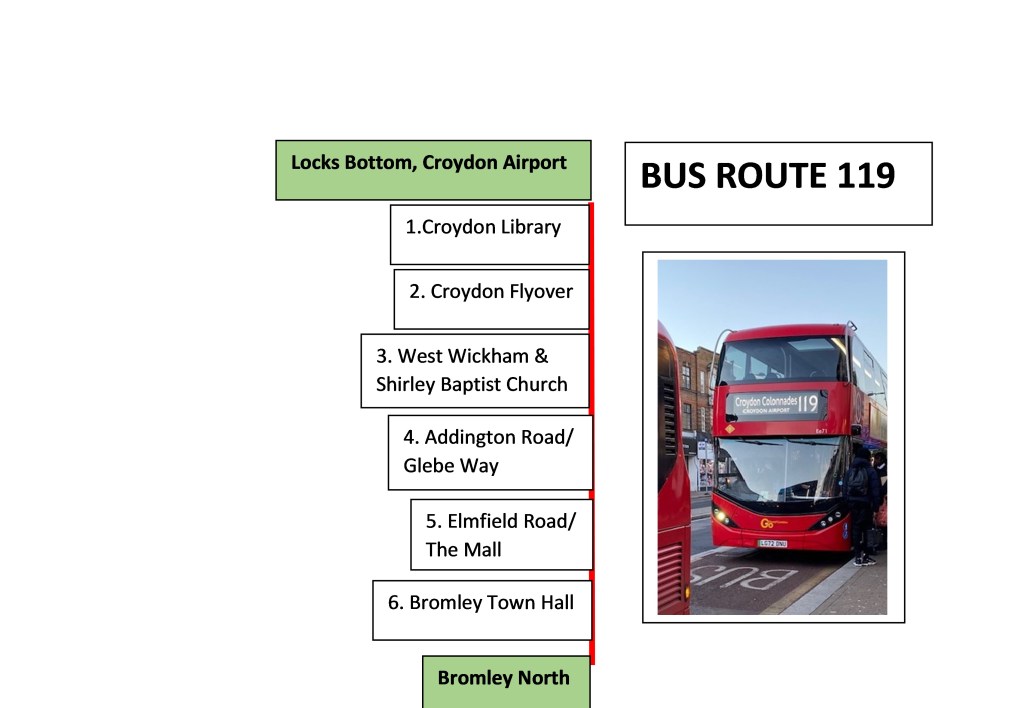
Croydon airport to Bromley North
Highlights:
- Bethlem Museum of the Mind
- The Old Town Hall, Bromley
- Street art in Croydon
1. Croydon Library
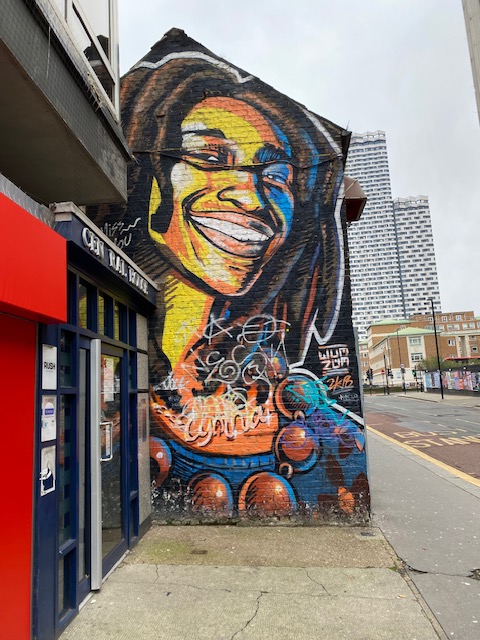
There is a considerable amount to see in Croydon near the centre. First of all, the street art is scattered throughout, some of it changes from time to time, others have been there for a while. There’s a large mural by Dan Kitchener entitled Electric City and another by AlecLDN “Growth” made from hundreds of ang pao (red and gold envelopes), pasted on the wall with spray paint. See also one by Duncan Cumming that says Doudou Style + Kaldea graffiti. Final one seen is of Bob Marley by artist Wum Zum.
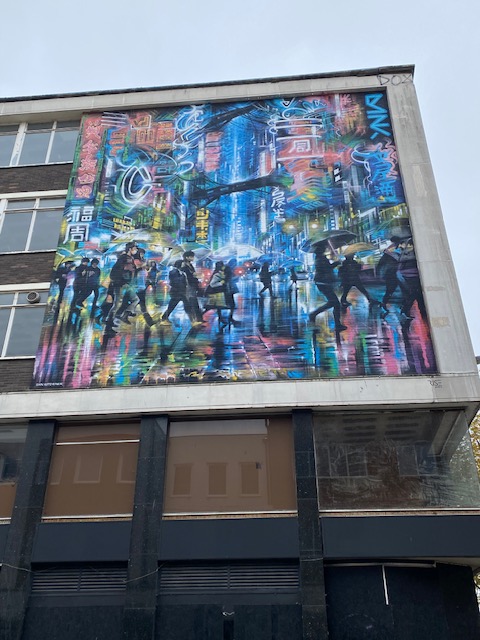
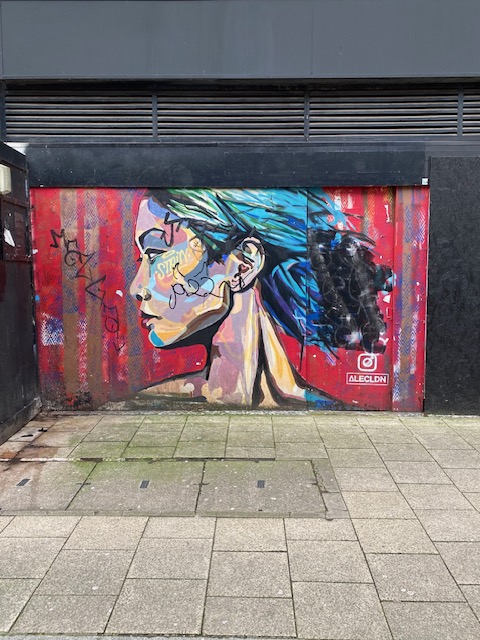
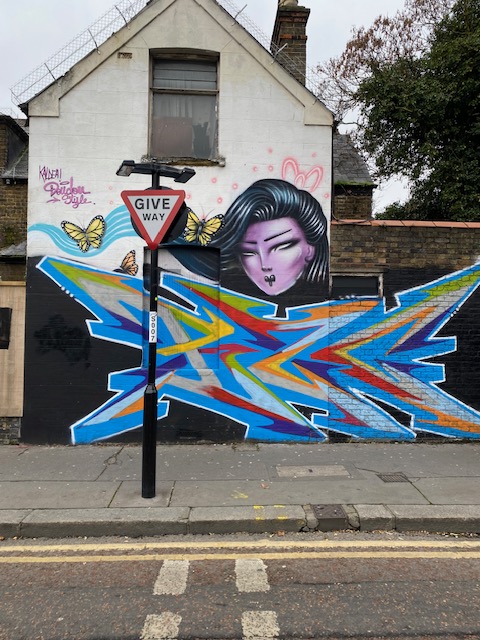
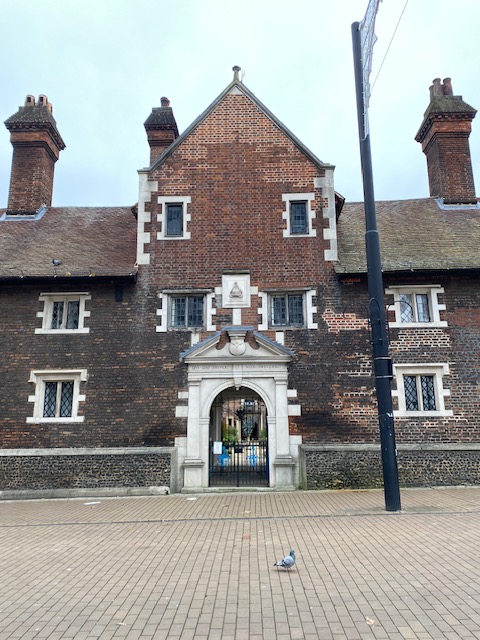
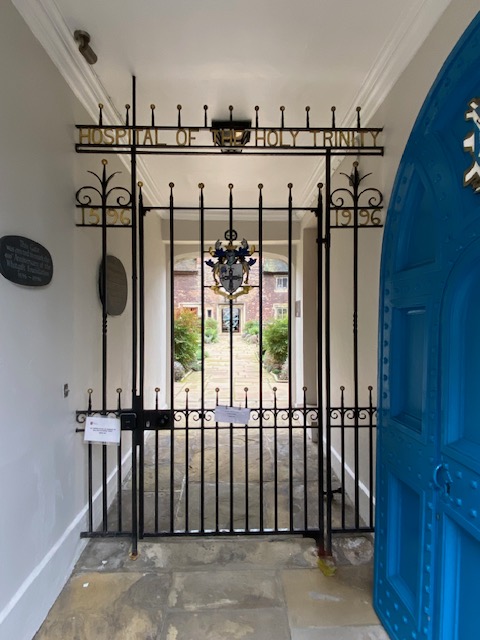
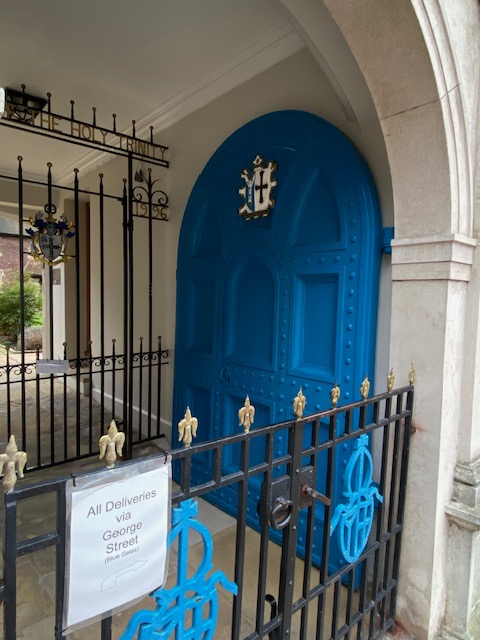
All the street art above can be found around St George’s Walk and so it’s only a short walk to the Whitgift Almshouses, on the site of the Hospital of the Holy Trinity which was founded by Archbishop Whitgift in 1596. The hospital was in fact an “abiding place for finding, sustenation and relief of certain maymed (sic), poor, needie or impotent people, to have continuence for ever”. There’s an entrance gate that was erected in 1996 to mark the 400th anniversary of the Foundation.
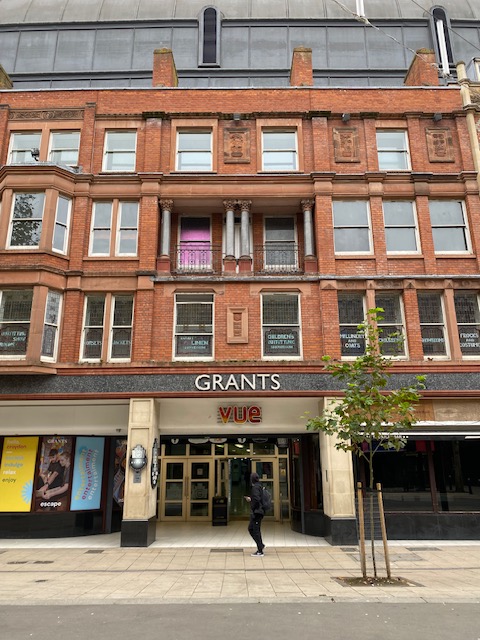
Another few minutes’ walk will find you at Grant’s Entertainment Centre, once a department store owned by the Grant brothers. Built in 1894, Grants is a Grade II listed building and was considered the Harrods of its time. It sold up-market merchandise and the wealthy from Paris would think nothing of flying over (to nearby Croydon airport) to purchase one suit. Business boomed until after WWII, at which time people felt the prices were too high and competition started to move into the area. It closed its doors in 1985 and stayed that way until 2000 when it became an entertainment centre.
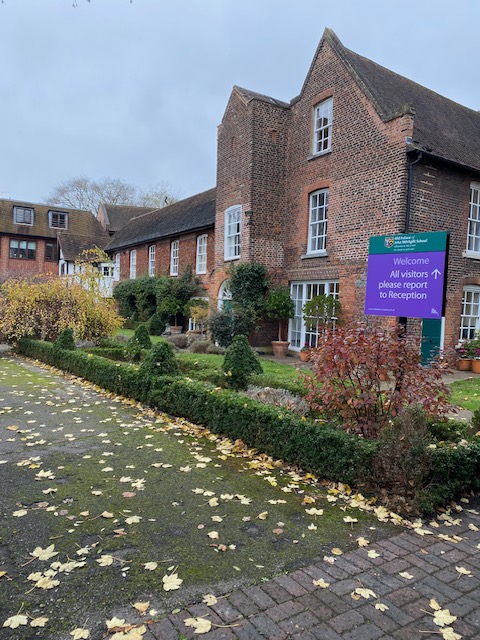
Final place to visit around this part of town is St John Whitgift School which started out life as an Old Palace. It was for centuries the summer palace of the Archbishops of Canterbury. It began life as a manor house as early as the 12th century, but most of it was built during the 15th century. The Guardroom dates from the time of Archbishop Thomas Arundel (1396-1414), and is one of the earliest uses of brick in Britain.
A few decades later Archbishop John Stafford added one of the finest medieval great halls still in existence in England. It was here that Henry VI and VII and Queens Mary and Elizabeth dined. Elizabeth made numerous visits, most notably for seven days in July 1573. By this time the palace was able to accommodate all her courtiers and followers. Her bed, always travelling with her, was set down in what is now known as Queen Elizabeth’s room. As the building is now a school, it’s not possible to have a tour inside but it’s possible to see its former glory just by taking a look from the street.

2. Croydon Flyover bus stop
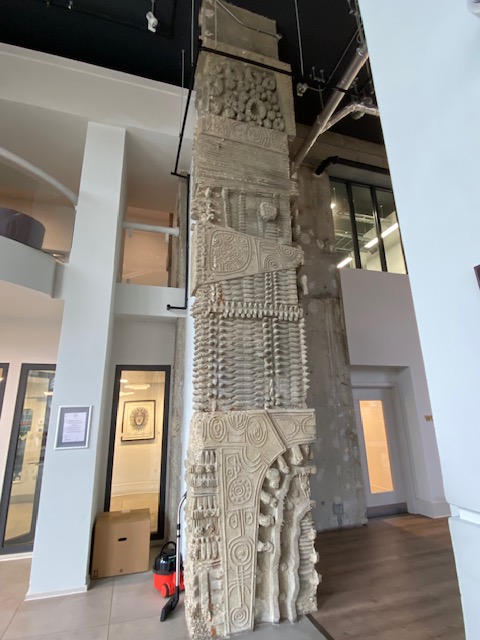
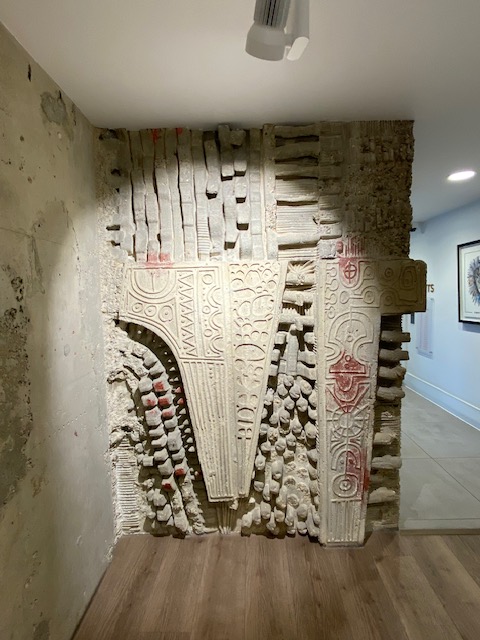
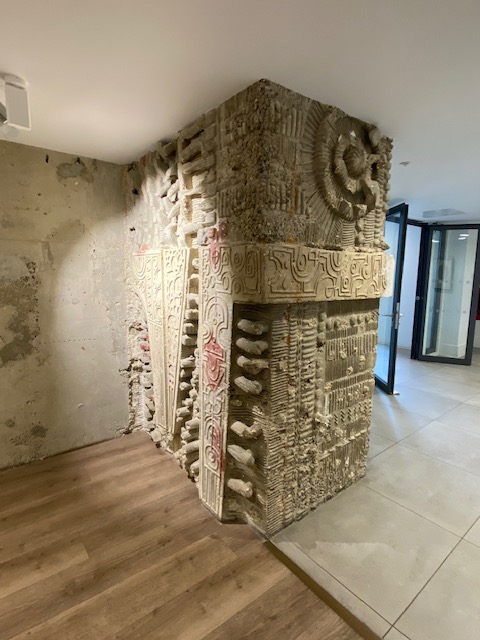
Head over to Leon House, a former modernist-designed office block, where some original artwork had been hidden for over a decade. William Mitchell was a renowned post-war sculptor and artist and he had been commissioned by the architects of the building in the 1960s. The artwork was rediscovered when work began on refurbishing Leon House, now an apartment block. The concrete sculpture takes its form on the building’s principal structural column and now takes pride of place in the reception lobby.
Some few minutes from here is a steel sculpture of three well-known former residents of Croydon. The three are Dame Peggy Ashcroft, Samuel Coleridge Taylor and Ronnie Corbett. Dame Peggy was born in Croydon in 1907 and from an early age was determined to become an actress. She spent 6 decades in her profession and the statue is a tribute to her. Samuel Coleridge Taylor was a poet and composer with West Indian origins. He was born in 1875 in central London but he moved to Croydon with his mother and father. He was named after the writer Samuel Taylor Coleridge. Ronnie Corbett, born in 1930, was a Scottish actor and comedian and came to live in London to start his professional career. In his later years he lived in Croydon and passed the final years of his life in a Croydon care home.
These three figures were chosen by local Croydon residents in a public vote and they are set in front of a bench which celebrates the construction of a new cycle path.
Round the corner is St John’s Memorial Garden and here you’ll find a Tudor Arch. It was the gateway to Croydon Parish Church, and it was built to replace old headstones, tombs, and gravestones that were removed when the garden was created.
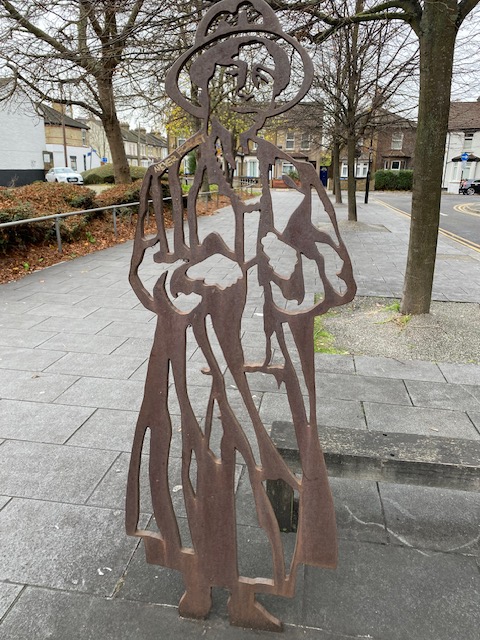
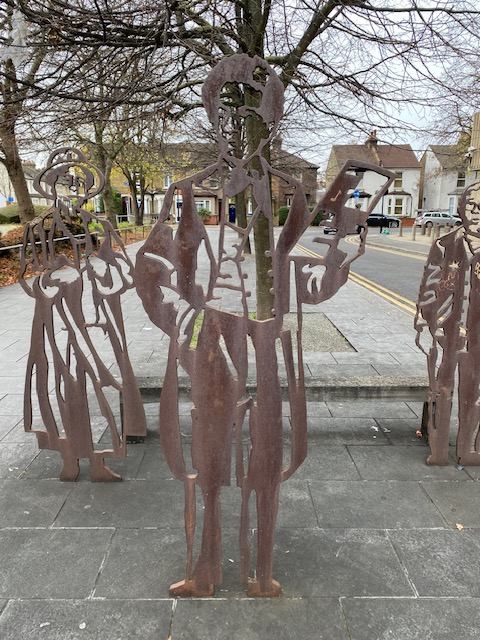
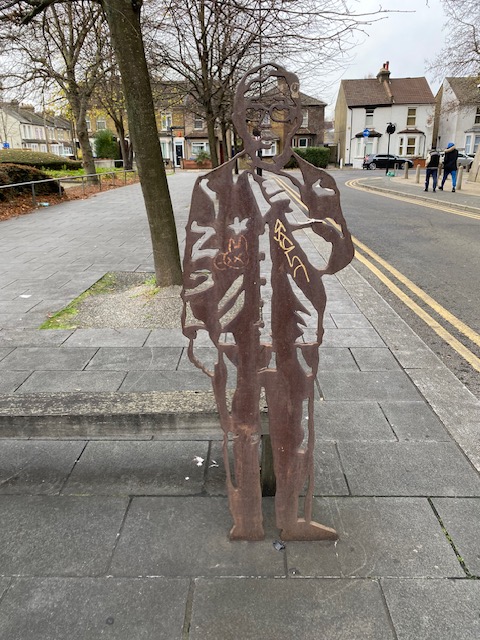
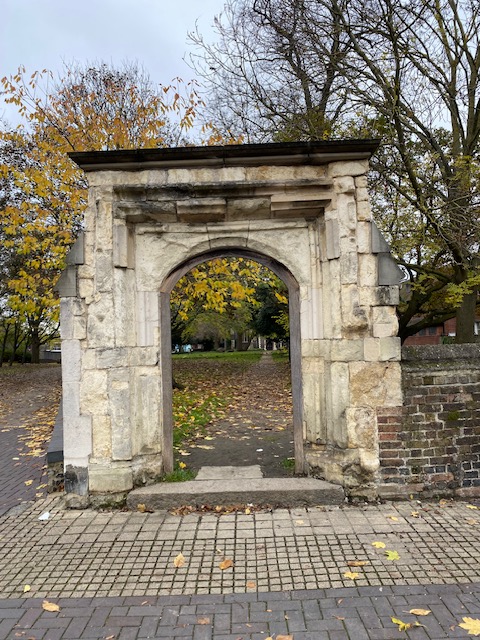
Steel statues of Peggy Ashcroft, Samuel Coleridge Taylor and Ronnie Corbett and the Tudor Arch in St John’s Memorial Garden
3. West Wickham & Shirley Baptist Church bus stop
It’s a bit of a walk to the next place to see but it’s most definitely worth it. The Bethlem Museum of the Mind focuses on the history of Bethlem Royal Hospital. It’s housed in an Art Deco building shared with the Bethlem Gallery, which hosts exhibitions of contemporary artists who are current or former patients.
As soon as you walk through the front door, you come face to face with two male statues, Raving and Melancholy Madness, being original figures from the 1676 Gates of Bethlem Hospital. This was the first thing that arriving inmates would have been greeted with and they give you a foretaste of what’s to come in the museum. There’s much to see here, most of which is heart-breaking. There’s a mahogany and brass collection box with a brutally frank inscription: “Pray remember the poor lunatics.” Also on display are straight-jackets and shackles, pharmacy jars and padded cell walls. Most of the walls have works of art by several renowned artists who spent years in Bethlem, including Richard Dadd who was locked up after he murdered his father.
Also inside the museum is a large Board Room, with its portrait of Henry VIII. The monarch had given all five of the royal hospitals to the Corporation of the City of London, one of which was Bethlem. Over the table is a grand chandelier which had been donated to one of the other royal hospitals around 1757.
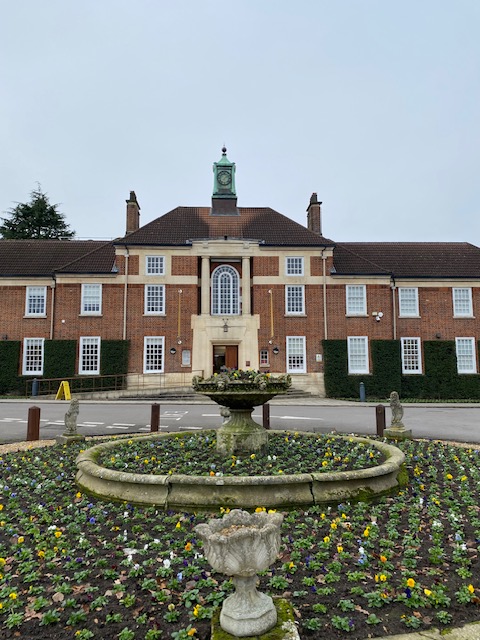
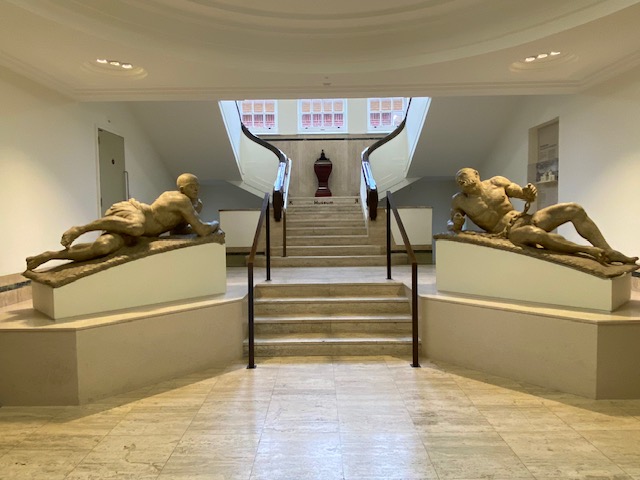
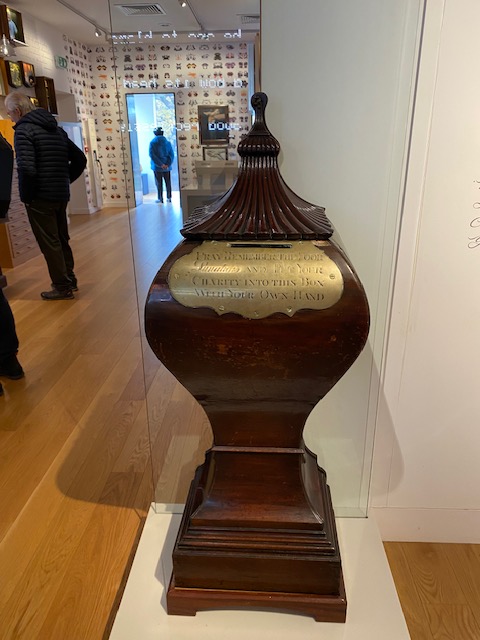
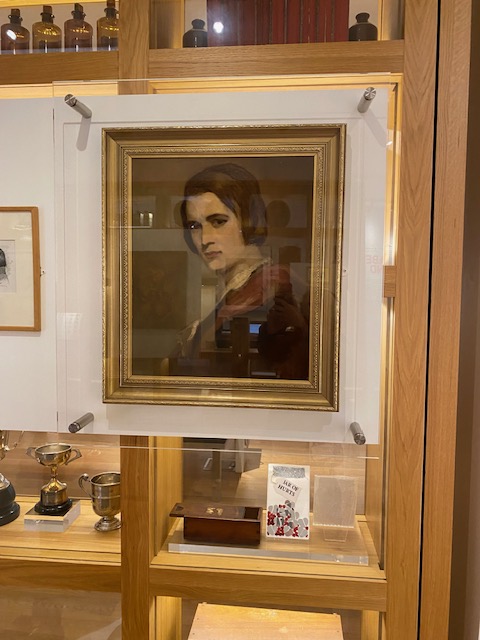
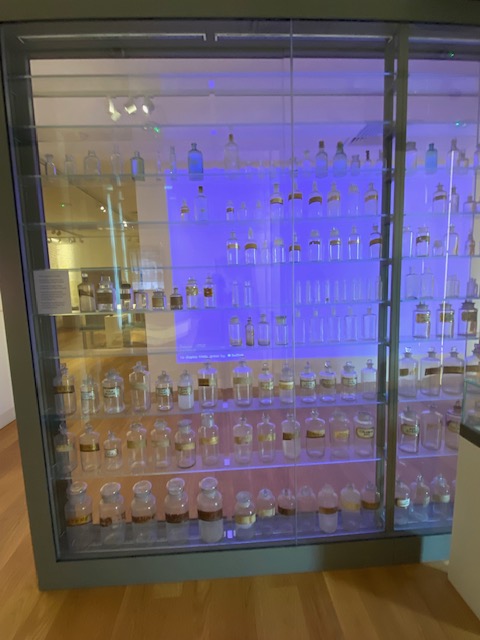
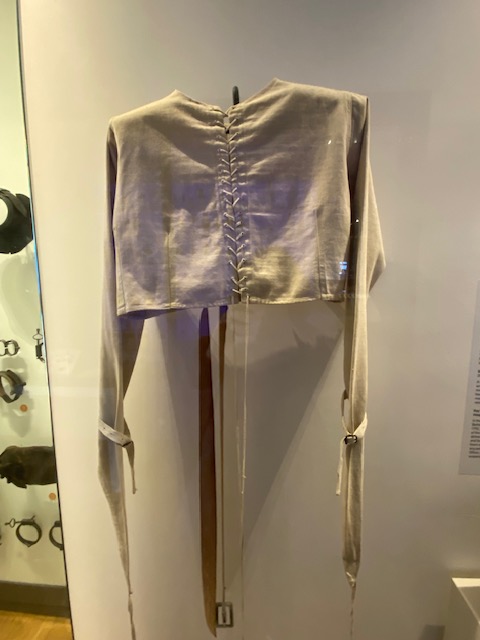
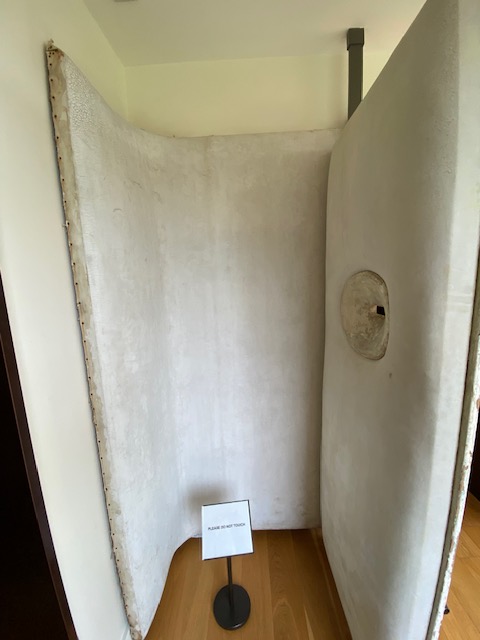
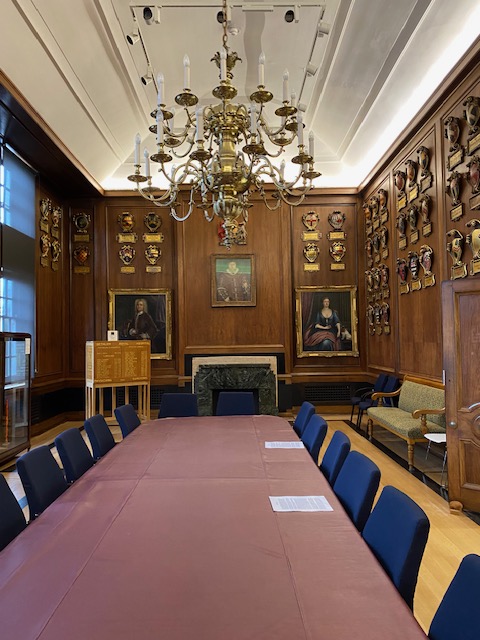
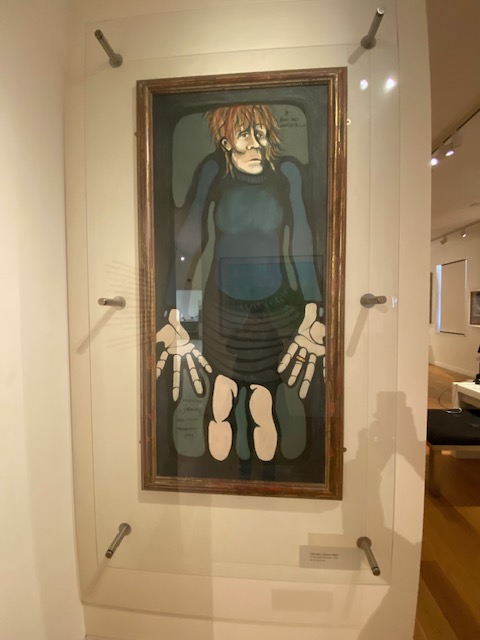
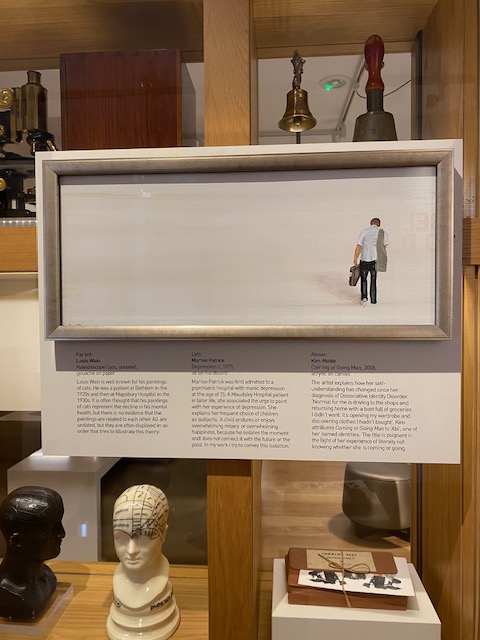
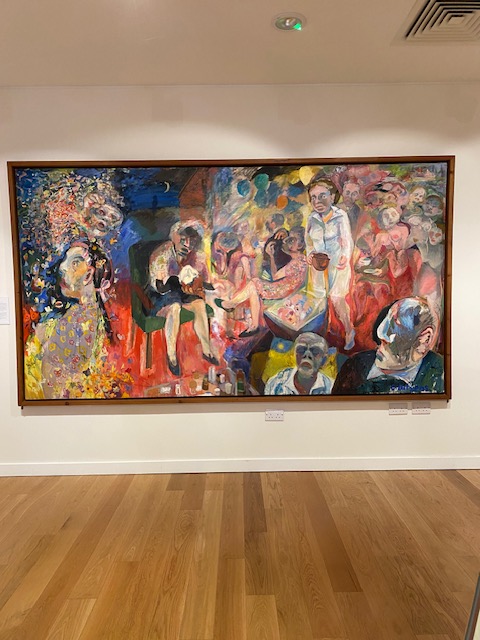
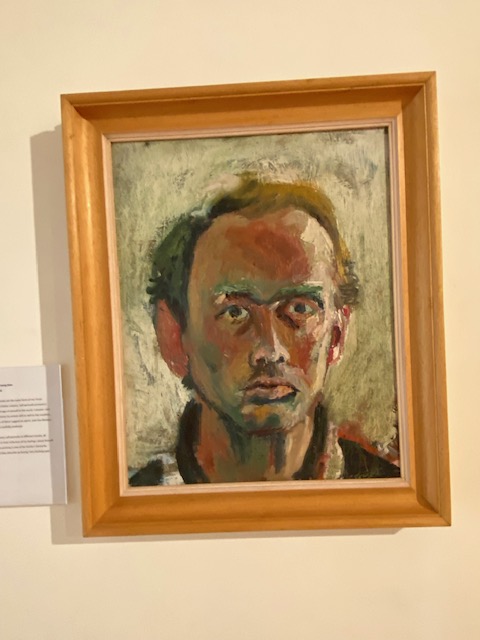
It is very possible to spend a long time looking around the museum so I suggest you allow plenty of time, if and when you decide to visit.
4. Addington Road/Glebe Way bus stop
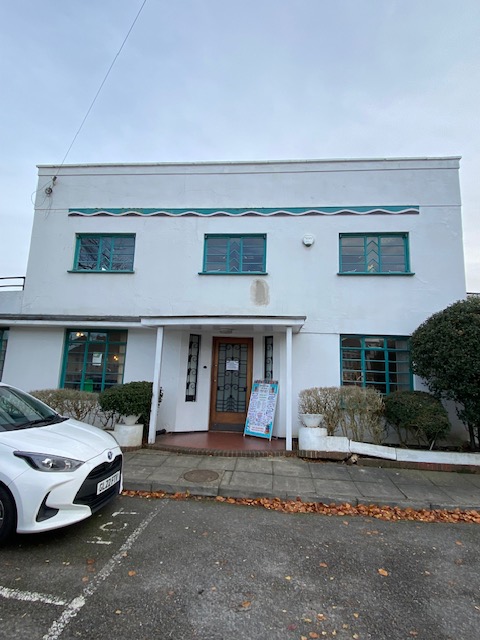
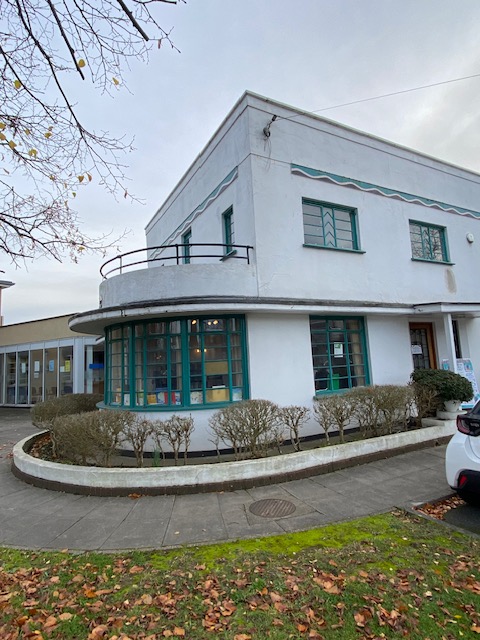
Opposite the bus stop is a lovely small art deco building which on closer inspection is the temporary home to West Wickham Library. It was built in 1934, probably as a residential home but it has more recently been taken over by the local council while the library is being refurbished.
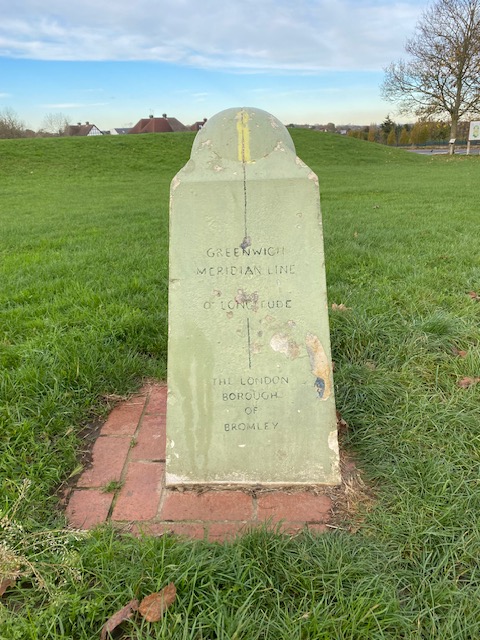
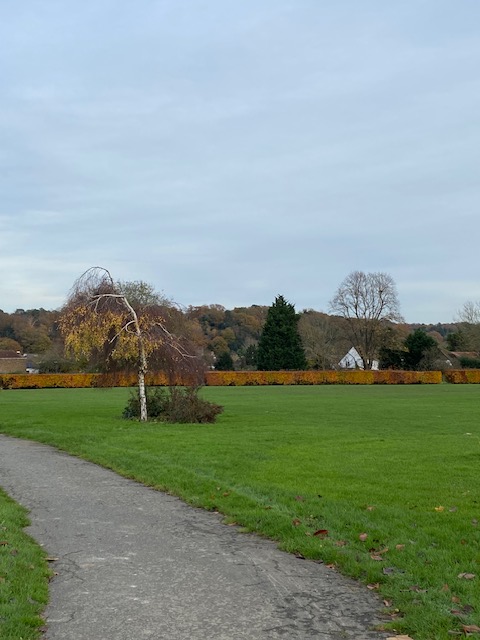
From here, make your way to Coney Hall Park, whose claim to fame is that the Prime Meridian runs through its centre. Written on one side of the stone is Prime Meridian of the World and on another side is Greenwich Meridian Line of Longitude, London Borough of Bromley. The park itself is spacious and well stocked with lovely trees and a café in the middle.
5. Elmfield Road/The Mall bus stop
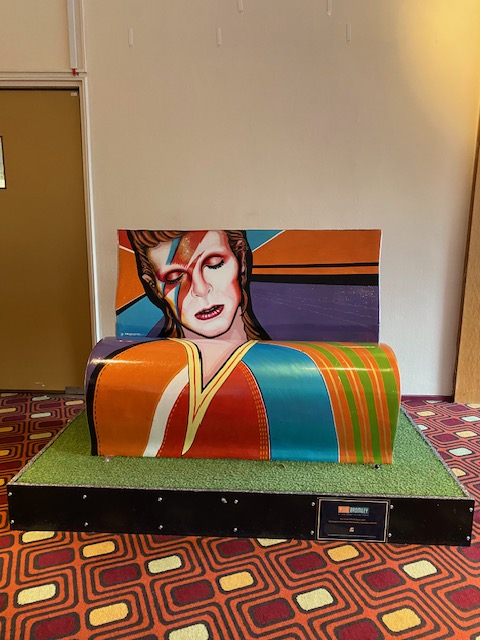
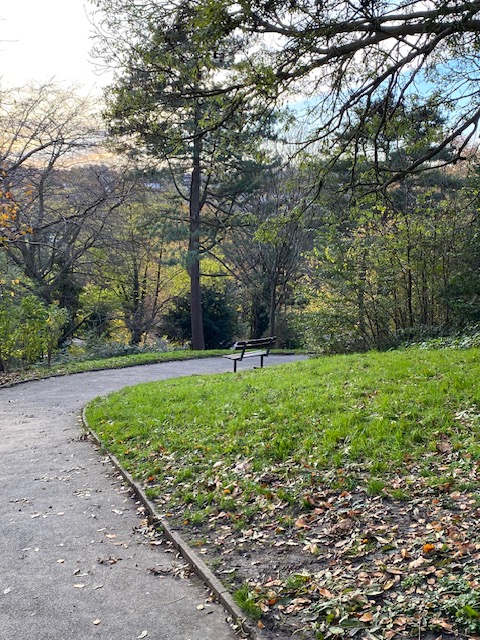
This takes you to the heart of Bromley (seen before on bus 61) with its Churchill Theatre and central library. The buildings are set in Bromley Library Gardens, admittedly better seen in spring or summer, not in the winter months when flora is at its minimum. The theatre was built on the side of a hill, disguising the number and size of the lower levels and giving the impression of being smaller by setting the auditorium below ground level which is entered by descending staircases from the foyer. Inside the theatre is a glorious bench of David Bowie, with reference to his album Aladdin Sane. He lived in Bromley as a child and in fact played many concerts in the town, hence this homage to a great artist.
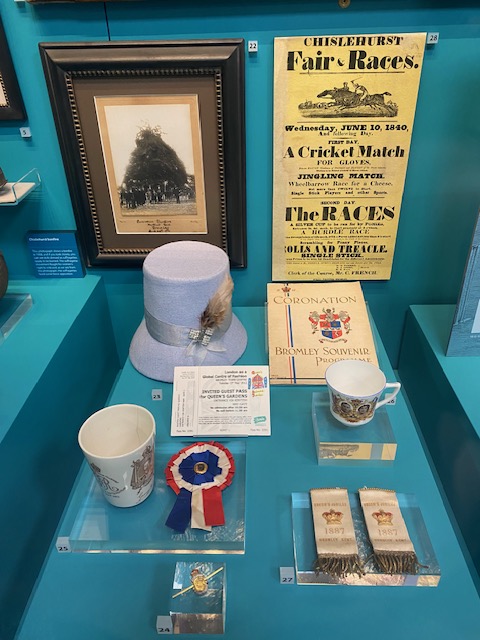
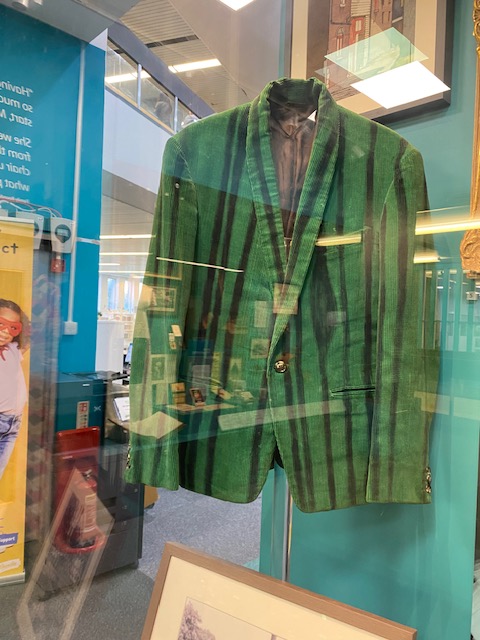
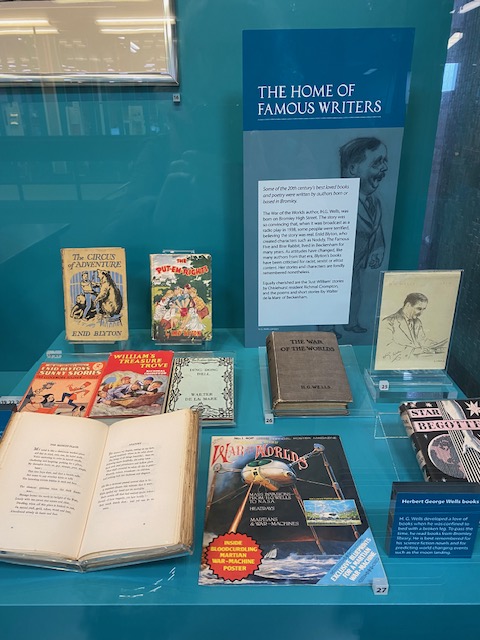
Inside the library, there is a permanent exhibition of all things connected with Bromley, including souvenirs of royal events. Some of the more well-known 20th century writers were born or based in Bromley and there is a section dedicated to them – such as H G Wells, who was born in the High Street, Enid Blyton, Richmal Crompton (Just William) and Walter de la Mare, all had connections with the locality.
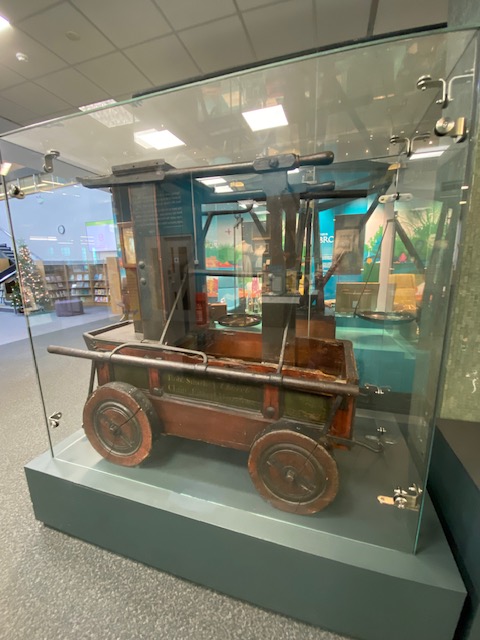
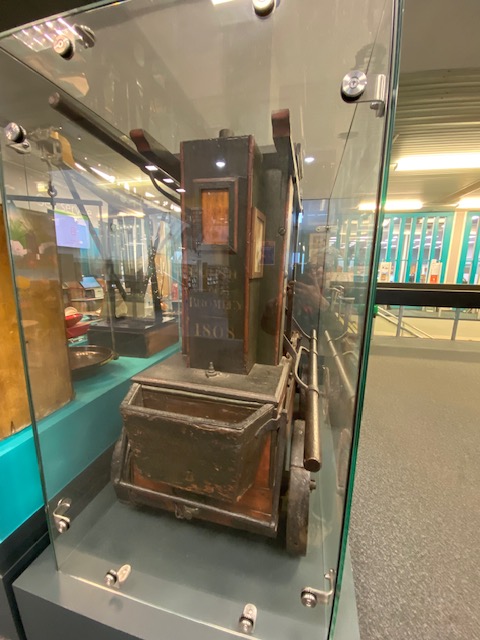
One very interesting artefact is “The Squirt”, a pumping engine that was built in the late 1700s and is one of only two fire engines to be based in Bromley at that time. As background, in 1708, Queen Anne passed a law that required every parish to have a fire engine to be used if a fire broke out.
6. Bromley Town Hall bus stop
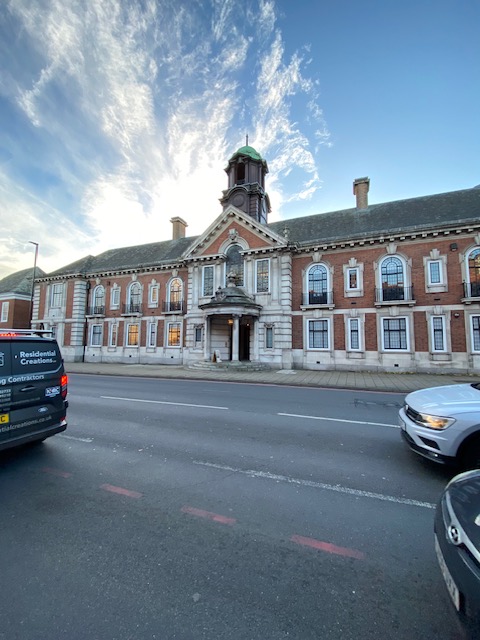
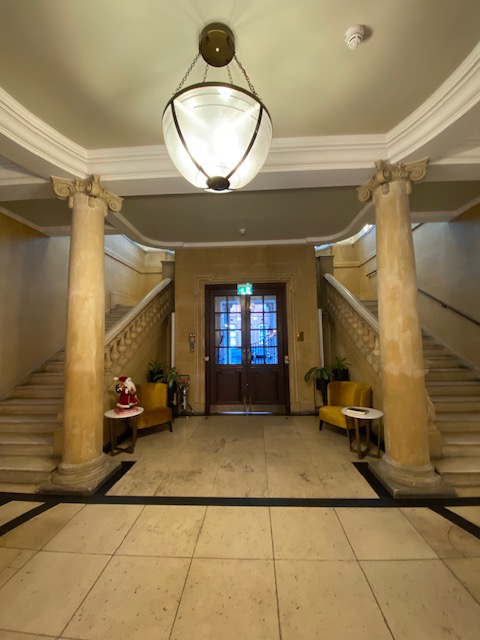
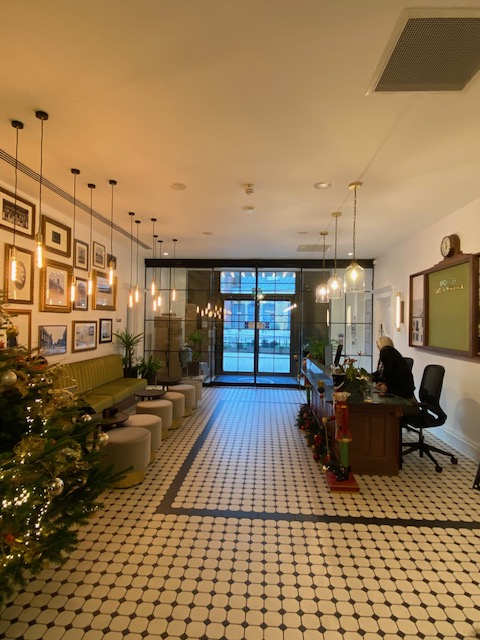
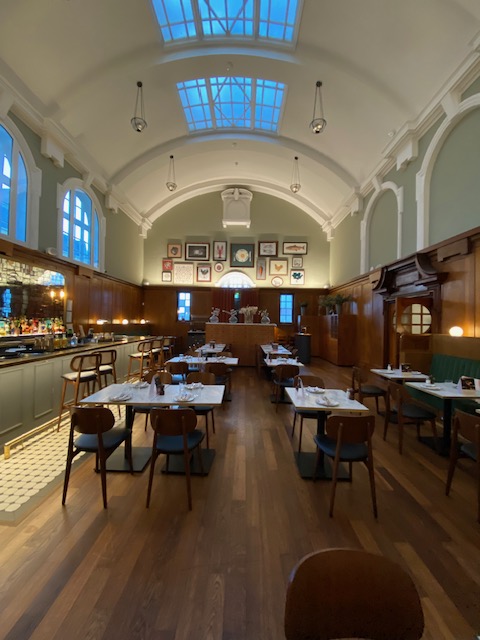
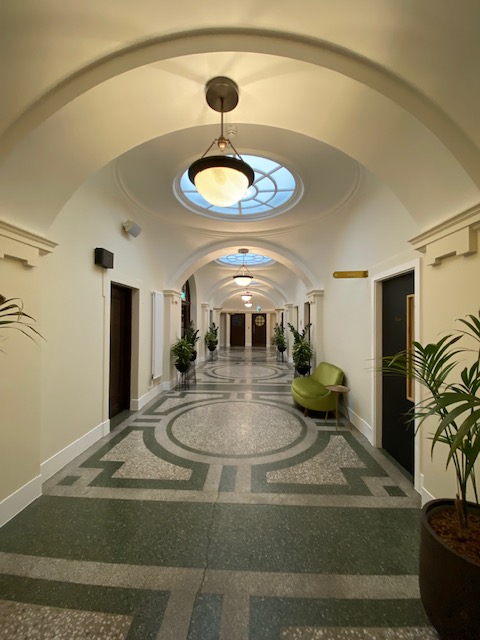
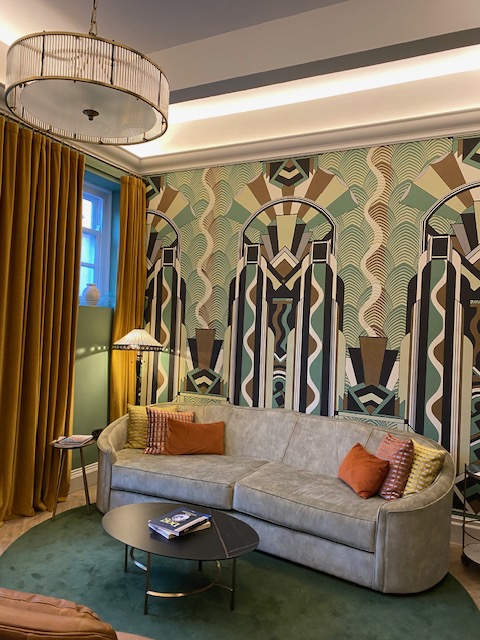
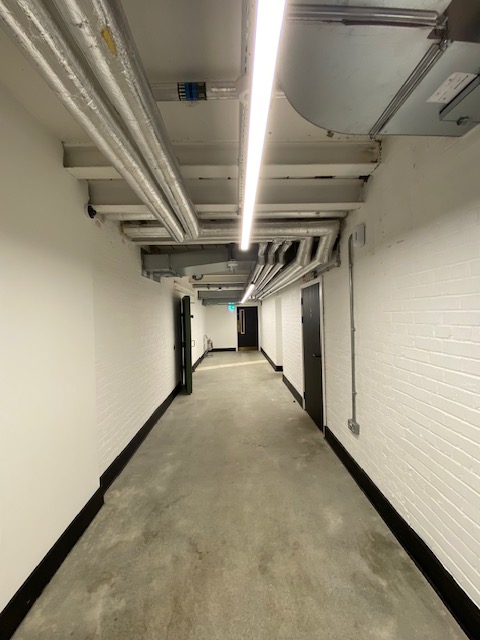
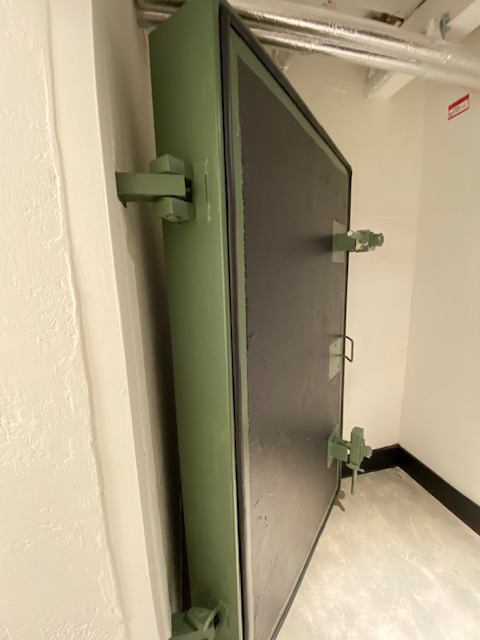
And so to the final stop on this route, a visit to the old Town Hall. It was built partly in 1906 and with additions in 1939. It was built in the Baroque style and the design involved a symmetrical main frontage with 15 bays onto the street. The extension that was built later in the neo-Georgian style had a design that involved a frontage of 17 bays, looking on to an adjacent street. The building was the municipal HQ of the LB of Bromley and it was here that David Bowie married Angie in 1970. In the 1980s, a nuclear fall-out shelter was built underneath the newer building. As the council offices moved out in 1982, the building was vacant and added to the Heritage at Risk register. Since then, it has had a complete overhaul and now houses serviced offices in the older building, a large restaurant (with the original wood panelling walls) and a boutique hotel in the art deco style, in the later building.
I was lucky enough to have a guided tour by Alisdair, the manager, who was able to show me around both buildings, including the nuclear shelter and the original holding cells (while people waited for their hearing in the court above).
And so ends another really fascinating bus route. I am still amazed that there is such a lot to discover, even in places that I’ve visited previously. The Bethlem Museum of the Mind and The Old Town Hall were definitely wow places on this route, but just discovering the prime meridian was exciting.
Toilets that are open to the public and free:
- Leon House
- Bethlem Museum of the Mind
- Churchill Theatre
- Bromley Central Library
- The Old Town Hall
 london routemistress