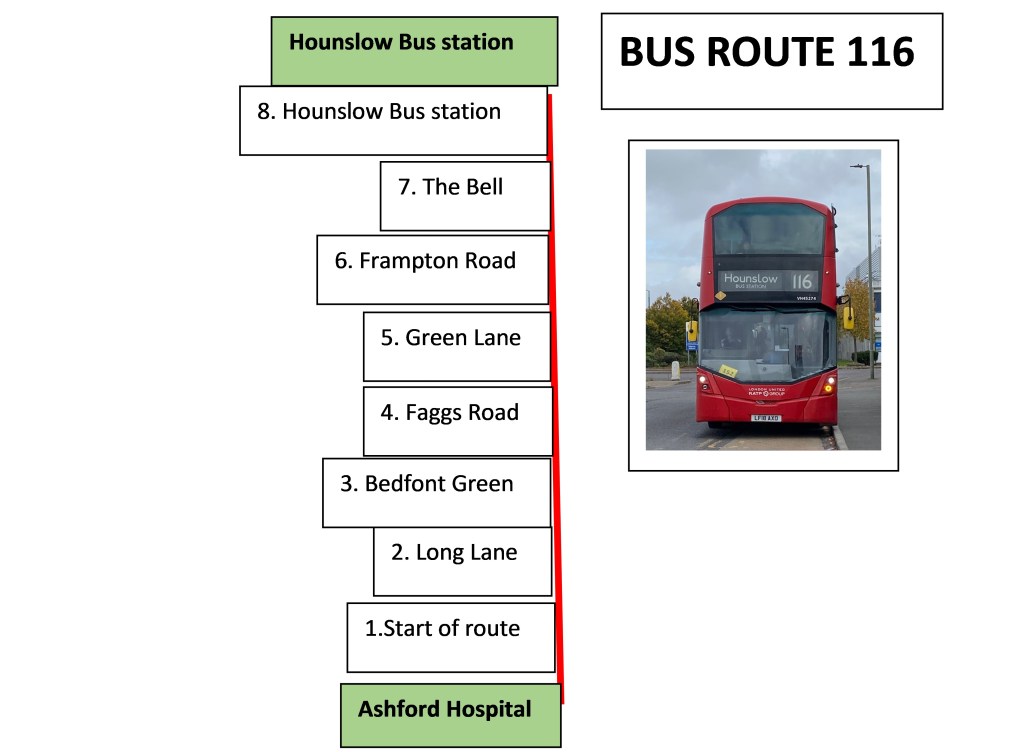
Ashford Hospital to Hounslow Bus station
Highlights:
- Topiary at St Mary’s Church
- Minimax art deco gateway
- Falconry at Hobbledown Heath
1. start of route
One way to get to the start of the bus route is to take the train to Ashford station and walk to the bus stop. On the way, you’ll pass St James Senior Boys School, which is located in a Victorian/Gothic building on 32 acres of grounds, including a chapel built in 1856 and a picturesque lake. The building is grade II listed and underwent external restoration in 2019. The place is so pretty that it’s used for making films and is a wedding venue.
Over the road from the school is a small, open green space and the sign on the green says it’s the Scott Freeman Garden. It was originally part of Ashford Manor and in 1880, the manor was divided up with the majority of it being sold to a firm of solicitors. One of the partners was Harry Scott Freeman who as well as mainly working for local government in different roles, he was also a keen sportsman. He captained the Gold Medal-winning England Olympic Hockey team as well as being a member of the England Ice Hockey team. In 1890, he acquired the title “Lord of the Manor of Ashford” and bequeathed this land to be used as a park – and to prevent future development on the land.


2. Long Lane bus stop
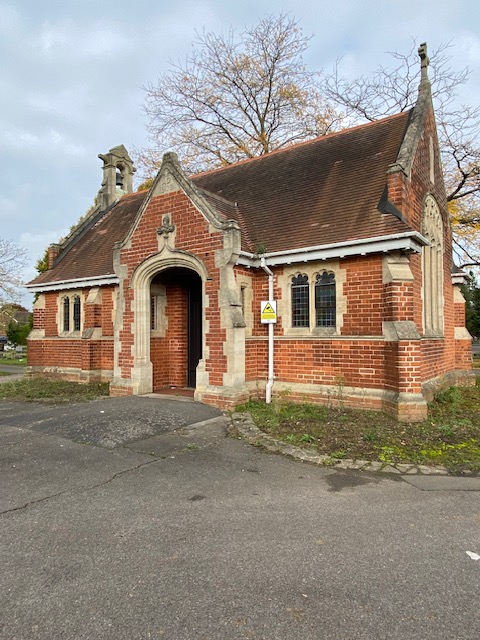
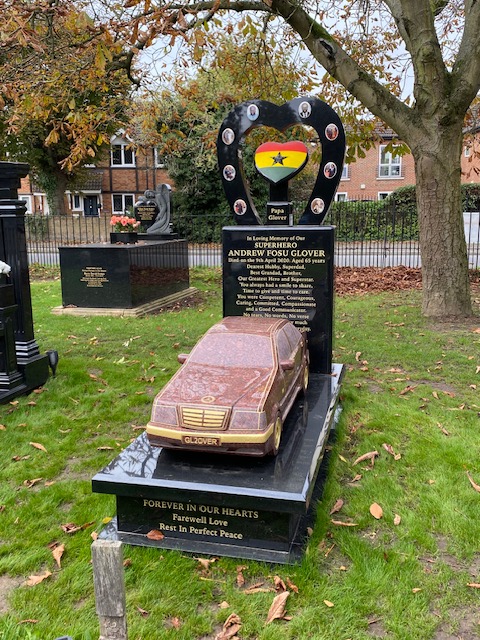
Round the corner from the stop is Ashford Burial Ground, where there is a pretty, small chapel that was built in 1909 and can seat up to 40 people. There are some interesting graves, many of which have photographs of the deceased on the stone. Some stand out from the more mundane graves, such as the one pictured here. Andrew Fosu Glover was evidently very well known locally and his memorial was not untypical of many others at this cemetery.

3. Bedfont Green bus stop
As luck would have it, the bus stops right outside St Mary’s Church and the first thing you see is the magnificent topiary made from yew trees, topped with two peacocks. The left hand side one bears the date 1704, and the other used to have the initials JH, JG and RT – the vicar of that time [John Goodwin] & churchwardens [John Hatchet & Robert Tillyer]. The topiary was revived in 1865, and most recently in 1990, which date is now on the second tree, replacing the initials.
Each tree was cut in the shape of a peacock at the top, in the ‘unnatural art of topiary’. The 19th century English poet Thomas Hood in the poem The Two Peacocks of Bedfont wrote about these trees, likening them to two unmarried and haughty sisters.
“Each Sabbath morning, at the hour of prayer, Behold two maidens, up the quiet green, Shining, far distant, in the summer air, That flaunts their dewy robes and breathes between Their downy plumes”.
In fact, the peacocks are there as a result of the legend of the two proud sisters who spurned the advances of a wealthy suitor, who in turn had the trees trimmed to resemble them.
The church itself dates back to Norman times and indeed retains some of its original features, though these are predominantly inside – and it wasn’t open on the day of my visit. The outside of the church, with its short wooden spire and projecting clock is a pleasure to look at. The yew trees and peacocks obscure the view from the entrance, so the best view of the church is from the side, showing the nave with its Gothic door and rose window above, and the short, stubby buttressed tower to advantage, as well as the spire.


4. Faggs Road bus stop
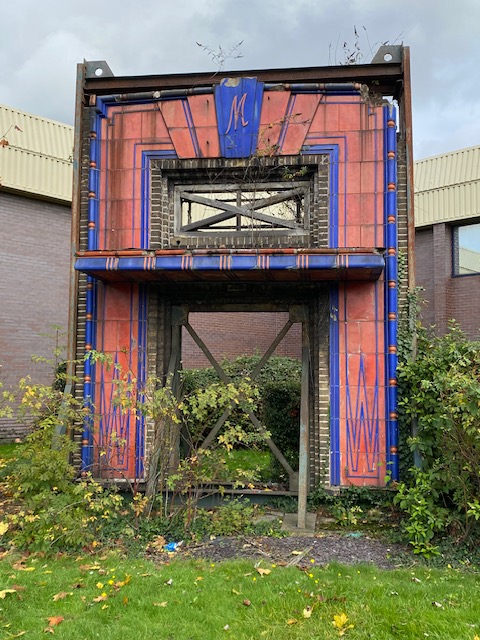
It’s fairly built up around here but it’s worth going to have a look at the preserved Art Deco gateway from the Minimax factory. It is all that remains of the fire extinguisher manufacturer’s Feltham factory. Minimax Limited was established in 1903 with only one salesman. By 1907 they were suppliers to King Edward VII for protection of his motor car, and were exporting to a wide range of countries throughout the world. In England, the extinguishers were supplied to Westminster Abbey, Windsor Castle, Winchester Cathedral, and Oxford and Cambridge universities.
The company built a new factory at Minimax Corner in 1911 and were soon producing 1,000 extinguishers a month and during WWI, they were making 200 a day. Minimax was purchased by The Pyrene Company Limited in 1955, which itself was taken over by Chubb Security in 1967. The factory closed its doors and was demolished in the 1980s, with the site refurbished. This art deco gateway was thankfully salvaged and stands as a piece of public art. It could definitely do with being lovingly looked after.
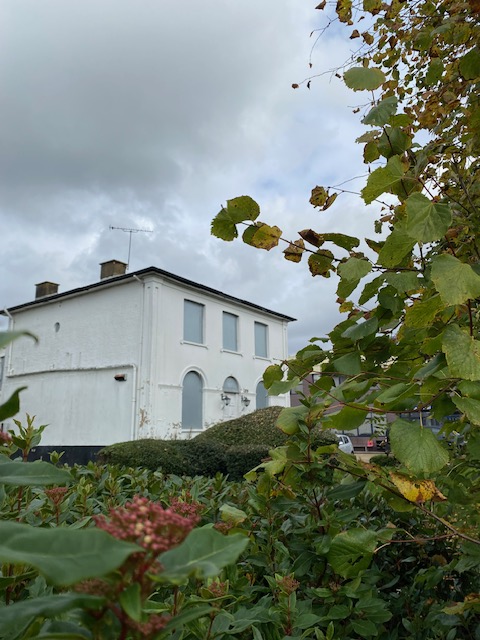
I also saw this very lovely house semi-hidden behind fencing that looks boarded up with no sign as to what it was or what it’s going to be. It’s surrounded by an industrial site and will probably be heading for demolition.
5. Green Lane bus stop
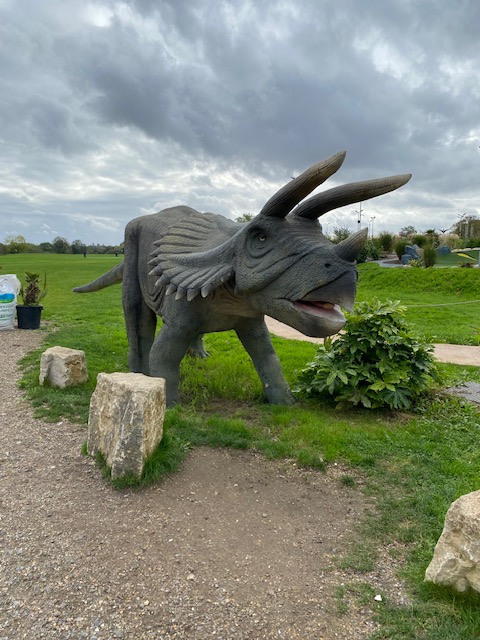
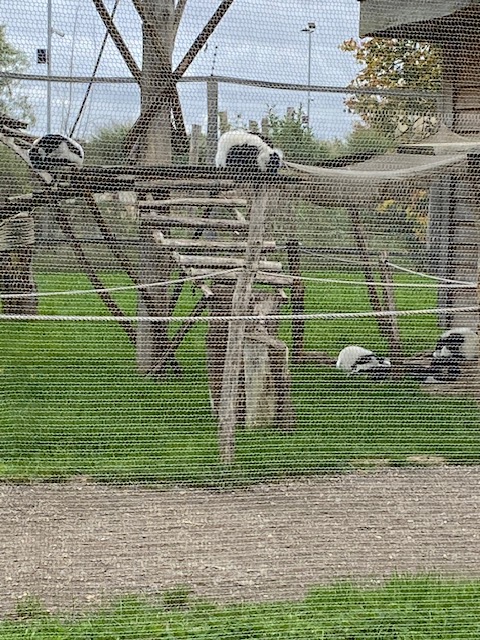
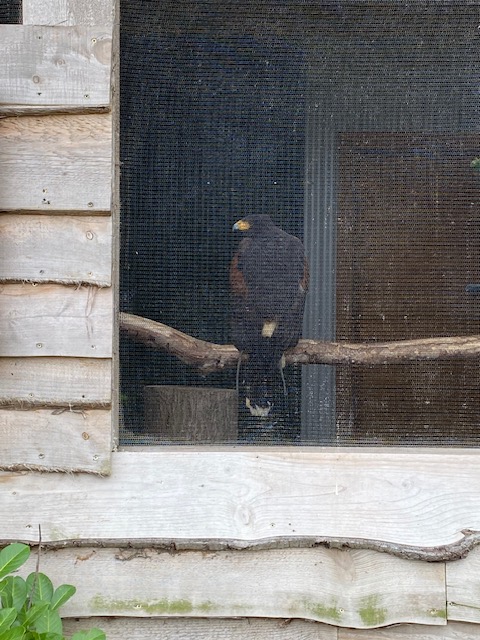
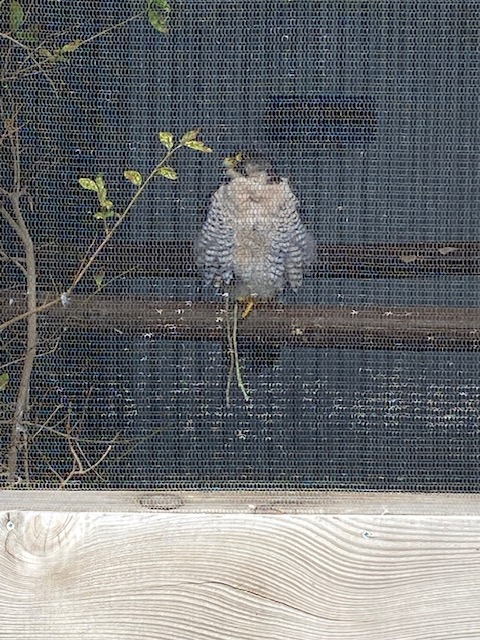
A few minutes walk from the bus stop is Hobbledown Heath, a theme park aimed at kids but it’s actually quite interesting even if you’re a grown up! A lot of the attractions are outdoors but there is an indoor “playbarn” with a café on the ground floor. Outside there is a mini zoo with animals such as lemur in profusion and goats, as well as a falconry area where there is a daily show at 11 am. Sadly I was there too late for this. I also found a life-like replica of Triceratops, along with its presumed sounds.
6. Frampton Road bus stop
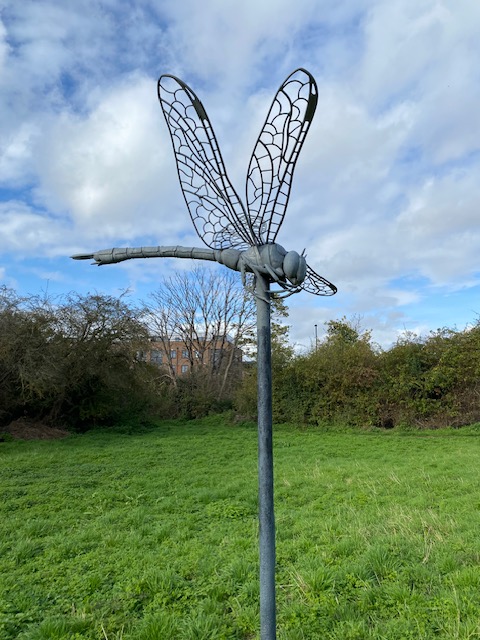
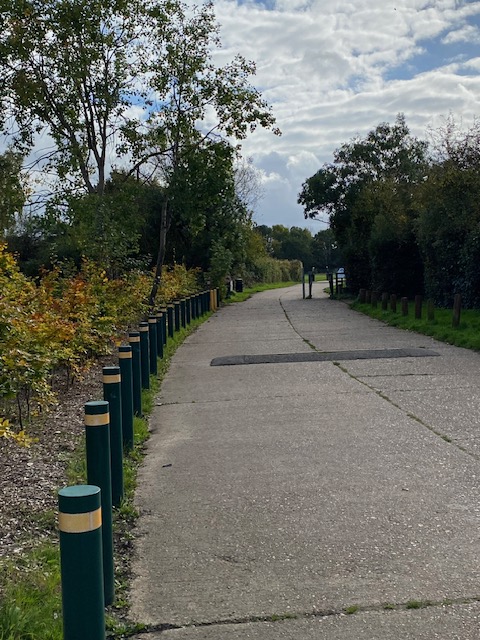
This stop is very near Hounslow Heath and not far from the entrance is a sculpture of a dragonfly. The Heath is a designated local nature reserve and is made up of lowland heath, woodland, scrub, and wildflower meadows, providing a wild, rugged country and seemingly a fitting location for this elegant sculpture by father and son sculptors Gary and Thomas Thrussell.

7. The Bell bus stop
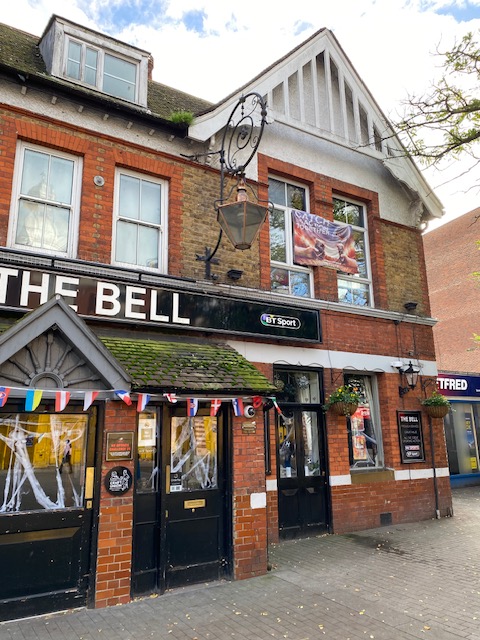
The pub after which the bus stop was named, is the oldest inn in Hounslow. The local legend is that the highwayman Dick Turpin, who used to operate on Hounslow Heath, used The Bell as his local hostelry, after a hard days work robbing his victims on The Heath. The original site of the pub was next to the tollgate near the heath, and it was moved to its present location in Victorian times.
Near the pub is a sign with historical information about Hounslow, saying that it had been a very busy place during the Coaching Age but with the advent of the railway, as early as the 1880s, it saw a decline in horse traffic. Being Londonroutemistress, I couldn’t pass by the opportunity to take a photo of the local bus garage, where once the terminal station of Hounslow on the (then) Metropolitan and District line had stood.
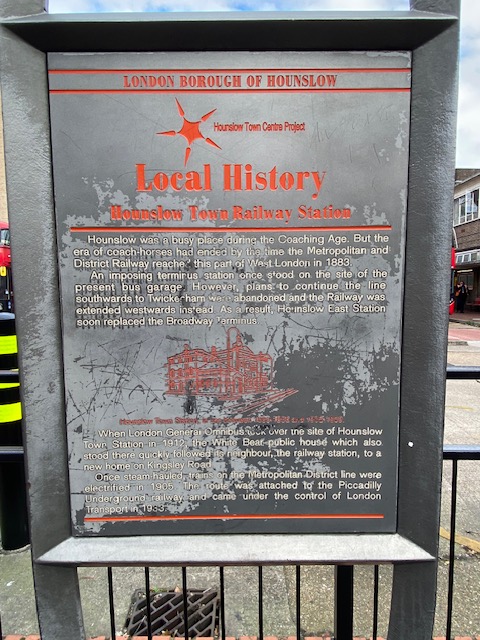

8. Hounslow Bus station bus stop
Final stop on this route is near the end of the line and as you walk towards some significant murals, you pass the art school where the artists of these murals are based. Called Creative Art Campus, there is a lovely mural of Vincent Van Gogh on the outside of the building. Continue walking towards the bridge at Hounslow East station, and you’ll find yourself gazing up at a huge King Charles III. Although the artist is not specifically a royalist, the intention was to draw people to the area and felt this was one way of doing so. Round the corner from the King, is another mural, of Queen Elizabeth II, painted by the same artists and was placed here not long before she died in 2022. The royal murals have had mixed reviews from local residents but without doubt, it’s brought attention to this part of Hounslow, with an upsurge in footfall.


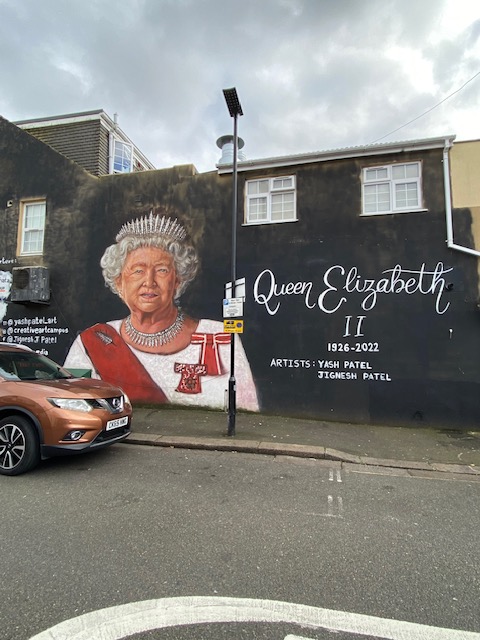
Just by the mural of Queen Elizabeth II is Hounslow East station. The original station – called Hounslow Town – was opened in 1883 but with its complicated route structure, it closed in 1886, reopening in 1909 as Hounslow East. The trains were electrified, replacing the old steam trains. The station had a makeover in 2003, which included a new platform building and a striking green roof.


This is another route that’s in the outer reaches of London so that the places of interest tend to be more rural/outdoors, so it’s best to go on a non-rainy day. I found that the attractions were few and far between, with a tendency to find only one thing to see at a bus stop, whereas on many other routes, there’s often a few places within walking distance of each other. However, that’s not to dismiss the 116, since there were some things to delight.
Toilets that are free and available to the public:
- Hounslow station
- The Kitchen café at Bedfont at bus stop Clockhouse Road
- Hobbledown Heath
 london routemistress