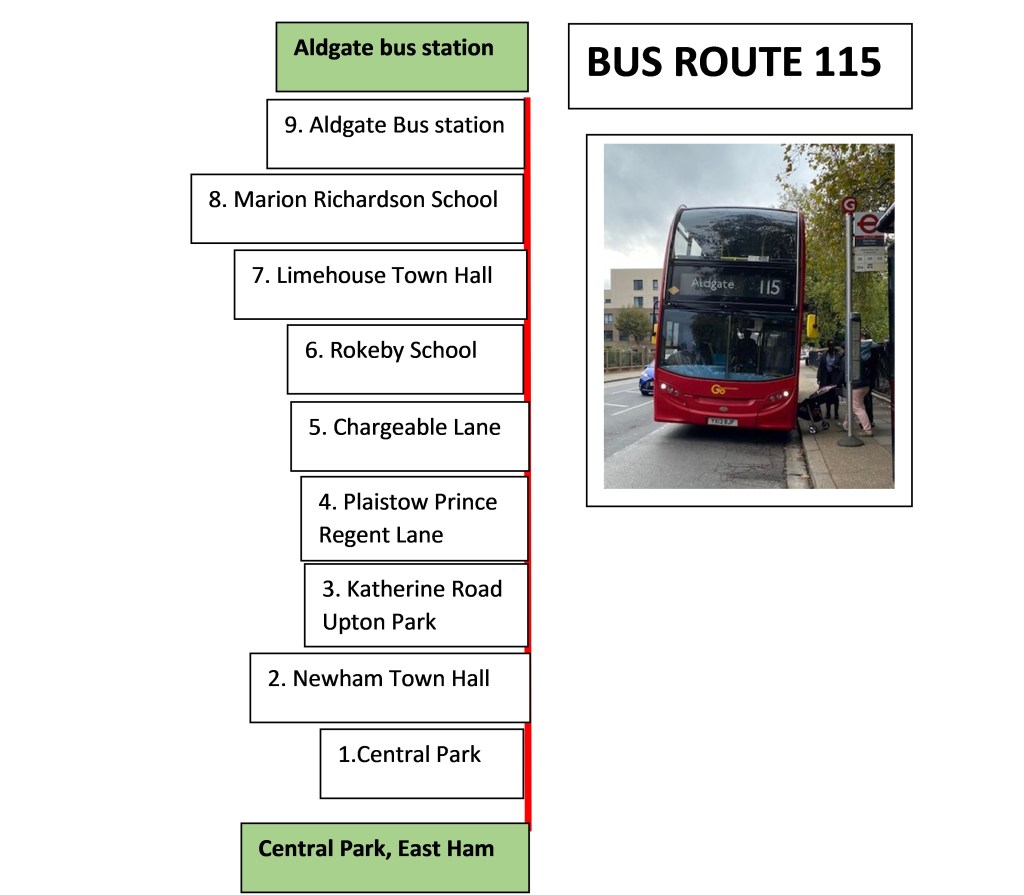
Central Park, East Ham to Aldgate
Highlights:
- “Holly” Mural
- Gandhi Chaplin Peace Garden
- Limehouse Library Hotel
1. Start of route
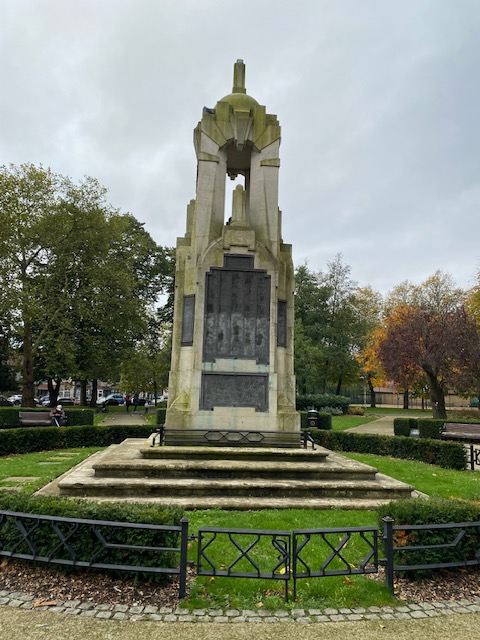
Central Park in East Ham is also on bus route 58. It’s worth a visit to the war memorial that takes centre stage as you walk into the park. The elaborate stone cenotaph commemorates the men of East Ham who fell during the First World War. It’s grade II listed for its historic importance.
2. Newham Town Hall bus stop
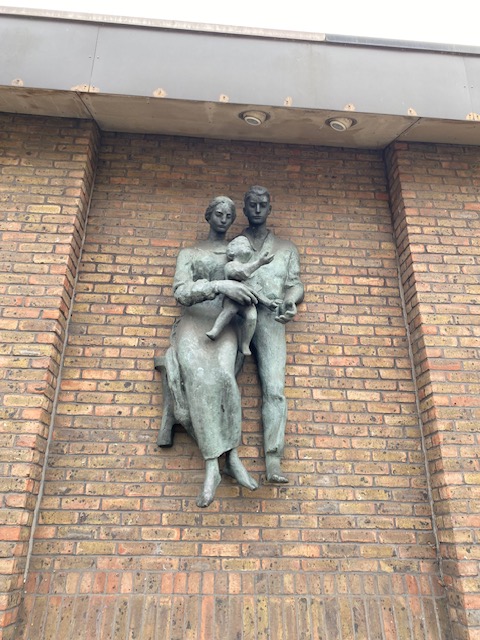
Walk round to St Bartholomew’s Church and you’ll see a lovely statue mounted on the exterior wall. The Family statue is by sculptor John Bridgeman a family group, made up of mother, father and child.
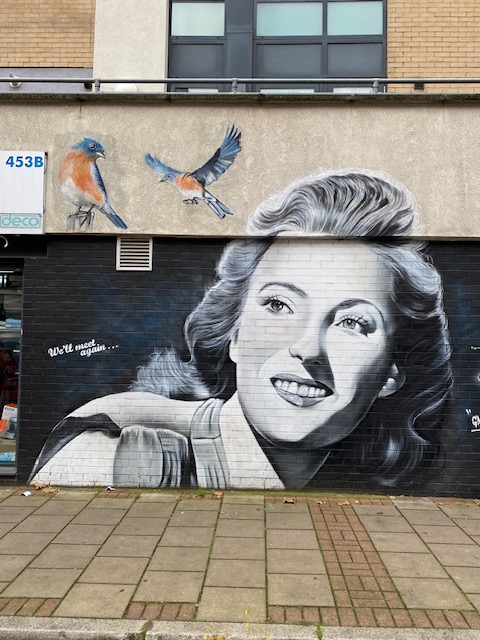
Another few minutes’ walk away is a large mural of the Forces Sweetheart, Dame Vera Lynn. The mural is in Latimer Avenue, the street where she was born. She died at the age of 103 and this mural was painted in her honour and unveiled by her daughter.
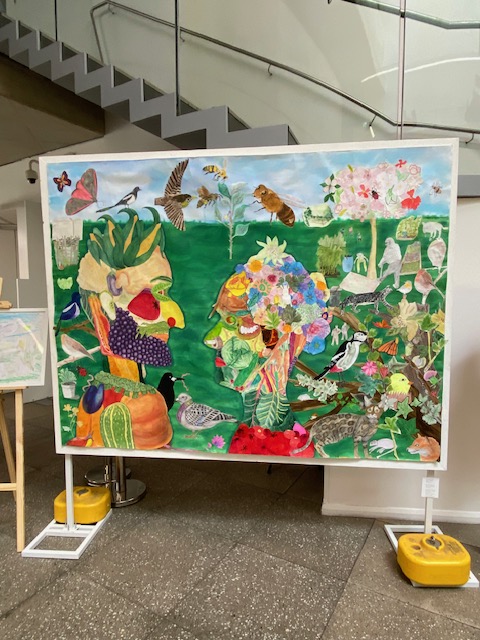
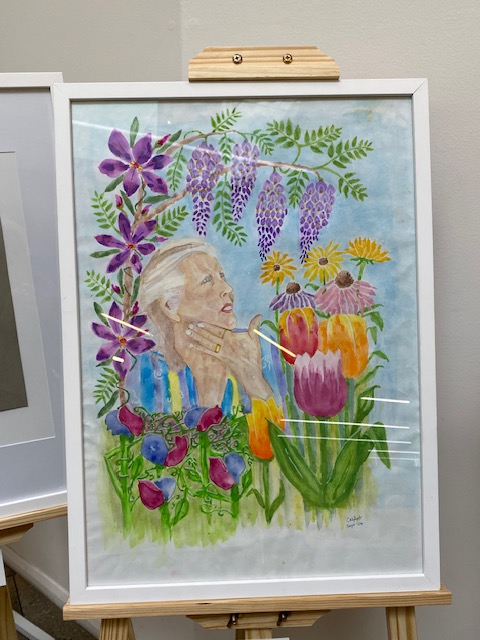
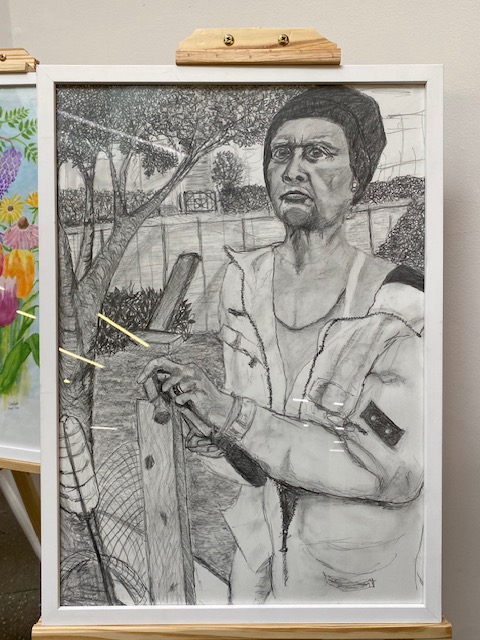
Near the bus stop is Newham Library where there is a small but significant exhibition entitled Up the Allotments! It showcases green heritage-inspired artwork by sixty local people who had attended workshops. One group created a large-scale collaborative collage “The King and Queen of the Allotments”, incorporating individual drawings and paintings inspired by life on the allotments.
3. Katherine Road Upton Park bus stop
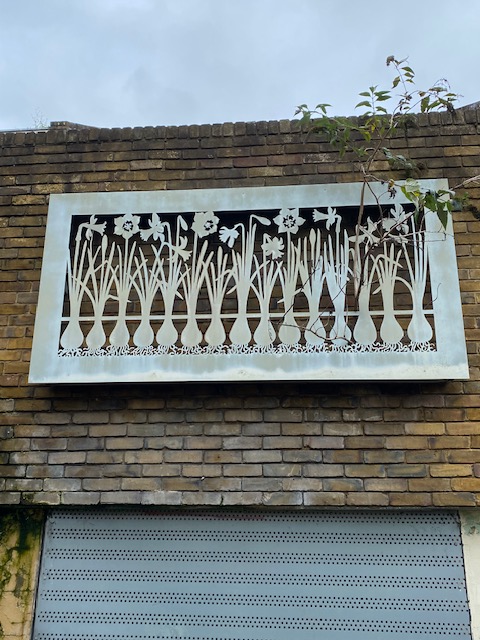
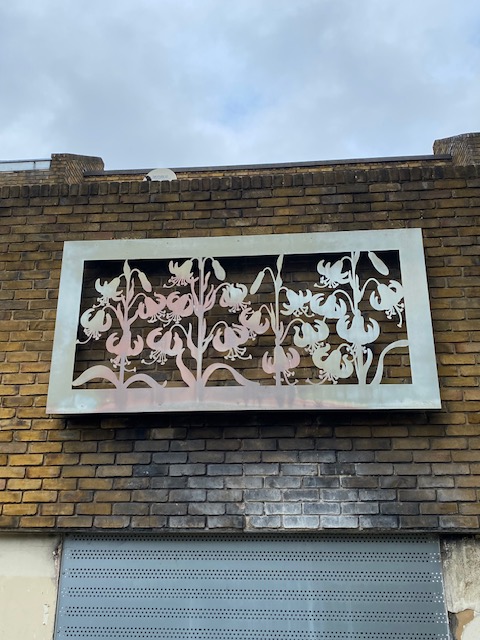
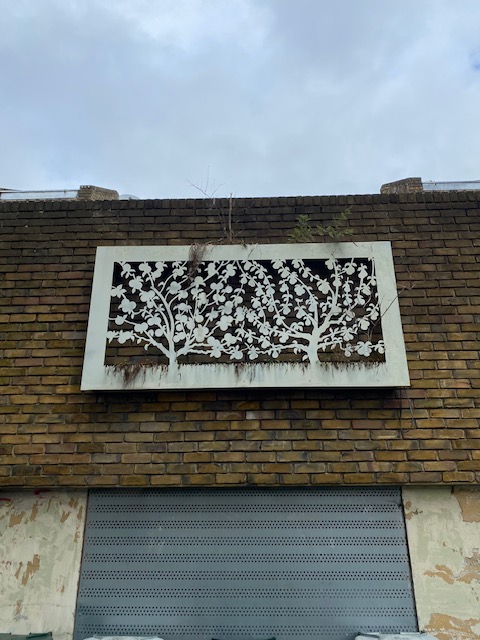
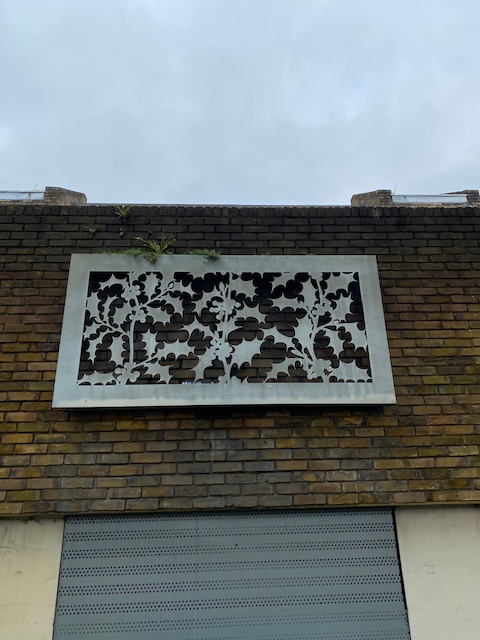
On a fairly unprepossessing building in Standon Walk is a series of murals entitled Holly. It’s one of seven on the theme of nature and it’s accompanied by the words of a poem on the same theme by Kathleen Raine. The panels are in order of the seasons, starting with spring daffodils on the left and ending with holly on the right. According to a local resident, the murals used to be lit up at night, creating a magical effect, but this has long gone, so it’s best to see them in daylight.
4. Plaistow Prince Regent Lane bus stop
Set within a doctor’s surgery is something known as “The Hidden House”, the remains of a Tudor building that is now all but hidden from view. It’s possible to go round the back of the surgery and see what could be the building, which is apparently a two storey wooden Tudor building with an overhanging second floor. It’s thought that it was probably part of Essex House which was said to have belonged to the Duke of Somerset who was appointed Protector of the young King Edward VI.
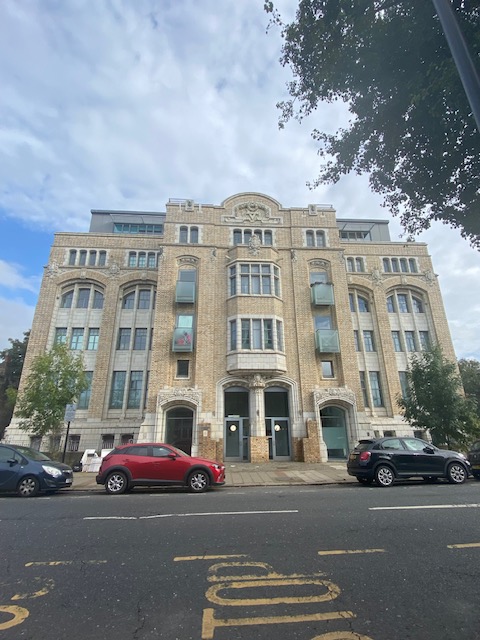
Round the corner is a rather magnificent building, with the words YMCA Red Triangle Plaistow Club writ large on the top. The Red Triangle Club was designed by architect T Brammall Daniels and was erected in 1921 as a memorial to those who lost their lives in the First World War. The opening of the building was in June 1921 and was attended by, amongst others: King George V and Queen Mary. It has had various uses over the years and inevitably, it was converted into residential apartments and is now called Pegasus House.
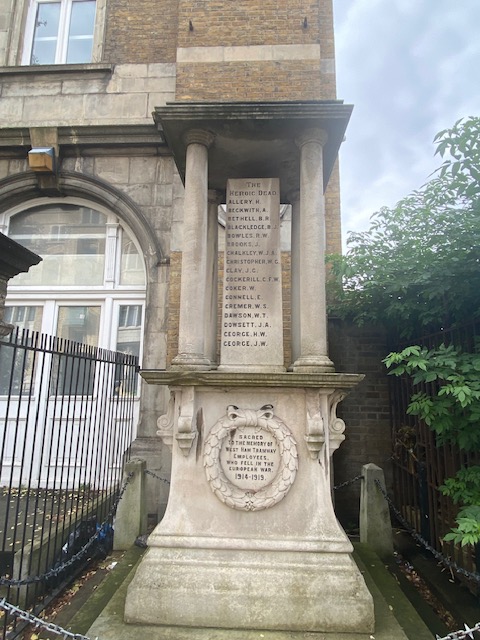
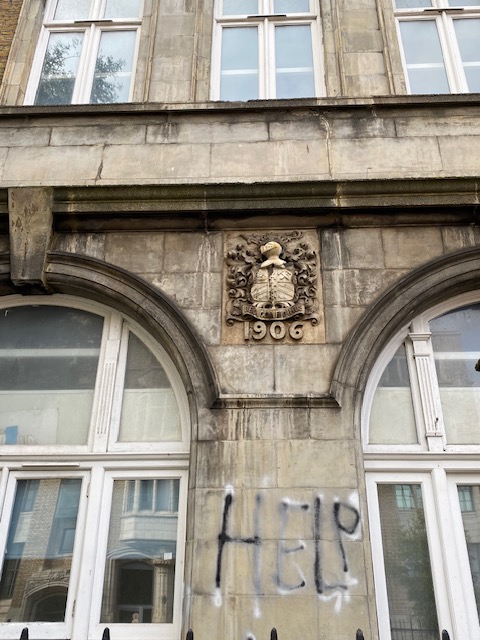
Near here is a building that was originally built in 1906 as the HQ of the tramway operation in West Ham. It’s now derelict, sadly. Sitting in front of the building is a war memorial stating “Sacred to the memory of West Ham Tramway Employees who fell in the European war 1914-1919”.
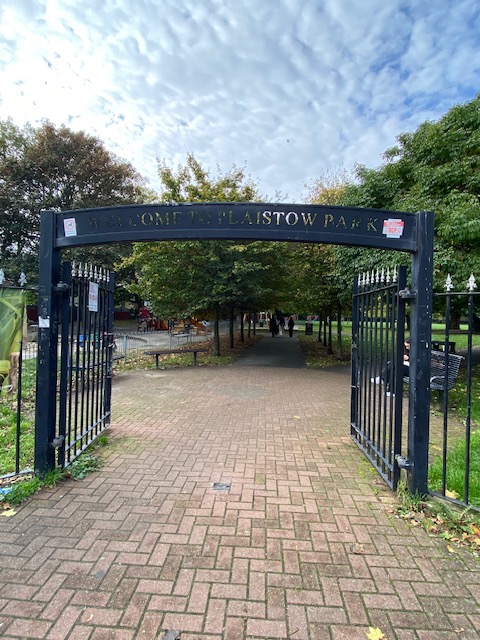
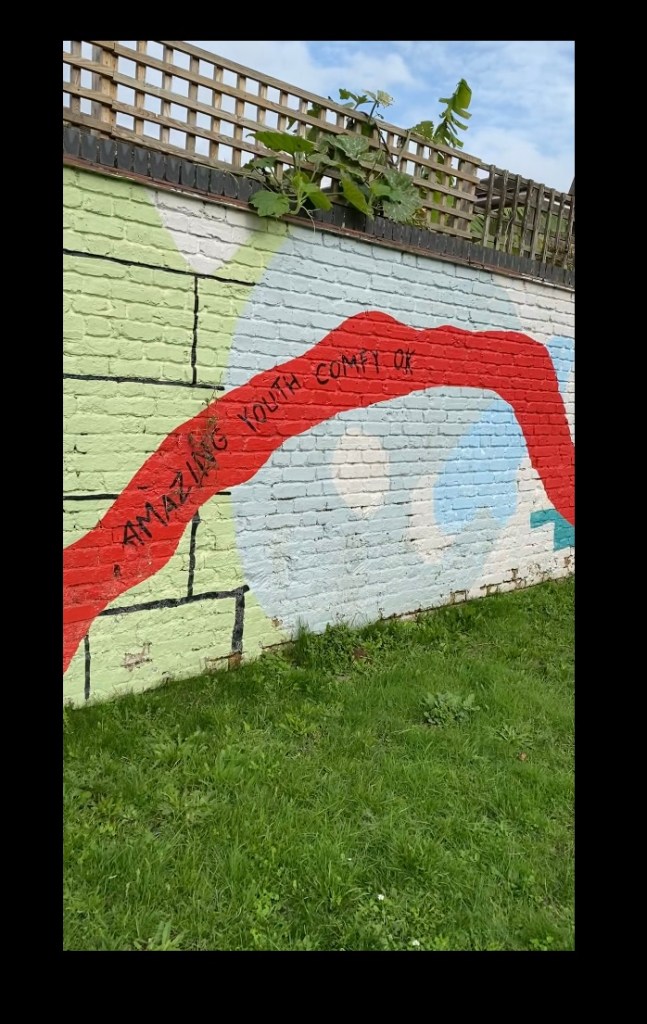
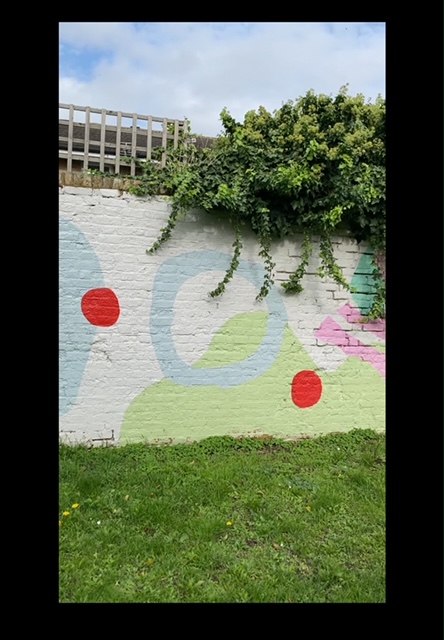
On your way back to the bus stop, pop in to Plaistow Park where there is a delightful mural called Shape Newham – Place of Play. It was developed with a local school and Race Equality charity. They explored Plaistow’s identity and what it means to live there by producing a set of motifs which reflect the area. The name Place of Play is derived from the Old English meaning of Plaistow = a playing place, known for its theatre and recreation.
5. Chargeable Lane bus stop
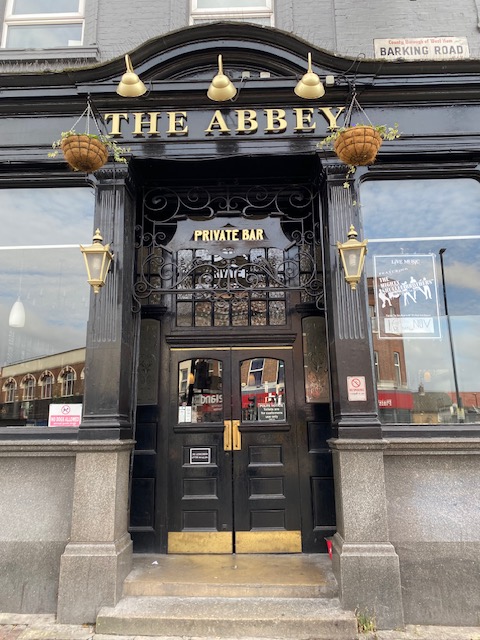
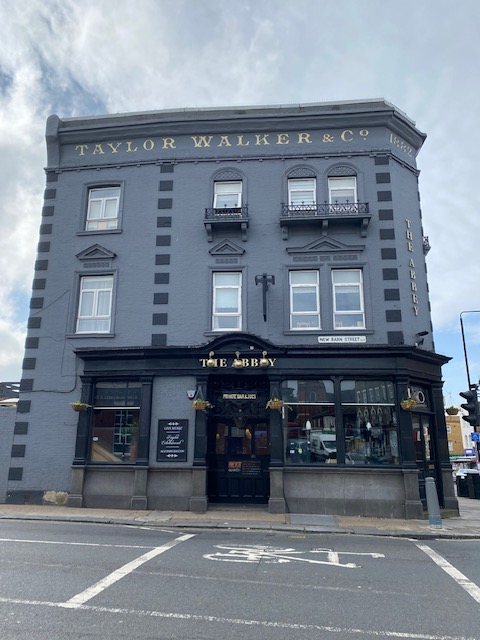
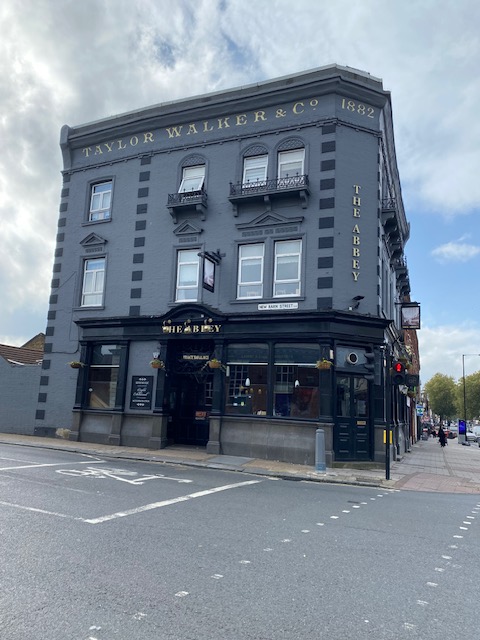
Near the bus stop is an interesting pub, the Abbey Arms. This pub was originally built in 1742 and named at that time the ‘Crown’. It was re-built in its present form in 1882 and renamed The Abbey. It was originally a coaching inn, as were so many in those days. There’s a wrought iron sign over one of the entrances which says Private Bar and Jugs. Some customers brought their own jugs to be filled and taken away. This was a common practice for women who did not want to drink in the bar to take away a jug of beer and drink it at home, particularly as it was cheaper when sold by the jug.
6. Rokeby School bus stop
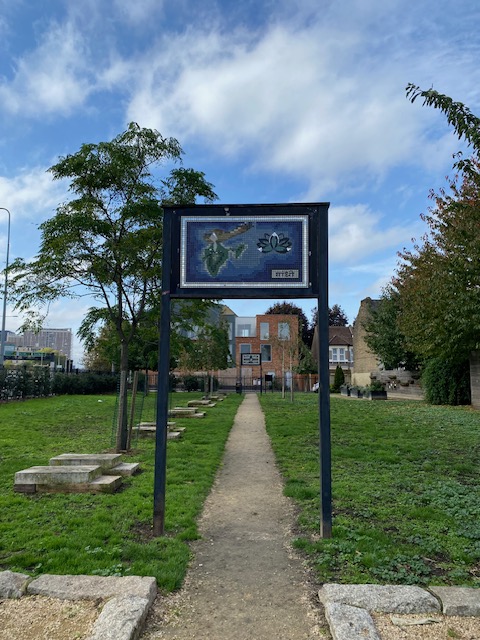
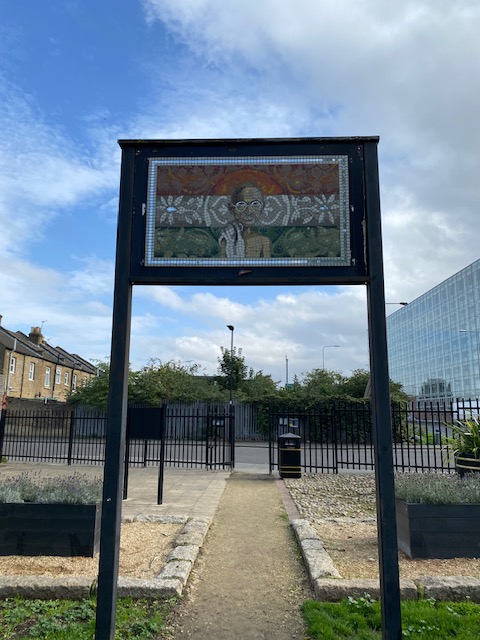
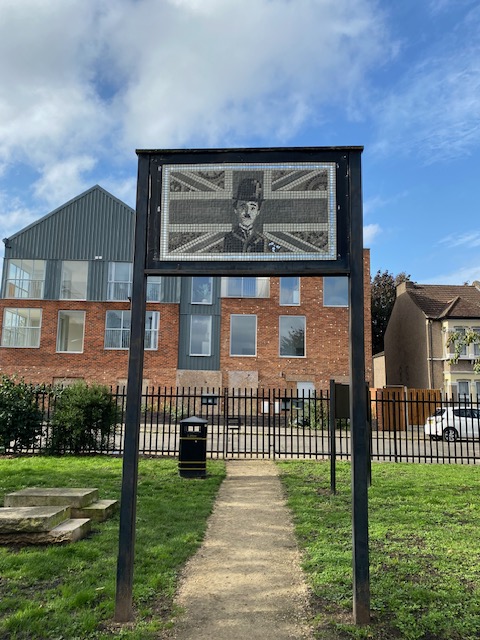
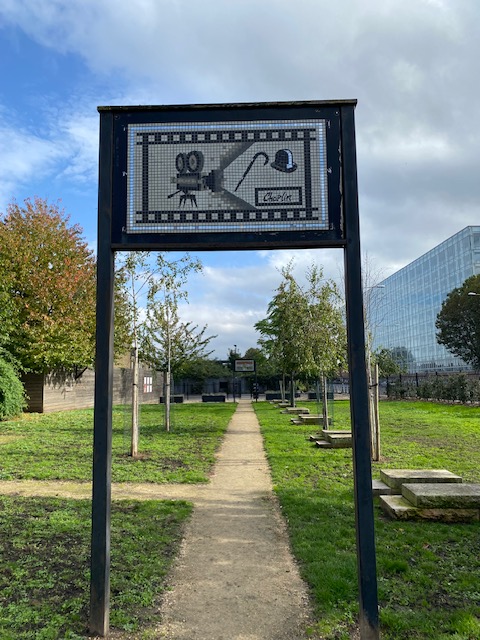
A few minutes’ walk from the stop is the small but lovely Gandhi Chaplin Memorial Garden. Despite coming from completely different worlds, Mahatma Gandhi and Charlie Chaplin were brought together in a meeting by a shared understanding of the struggles of the poor and the working classes. The historic meeting took place in the 1930s in a house belonging to a friend of Gandhi, on the site very near this garden.
At either end of the park is a double-sided mosaic – one features a portrait of Chaplin of his famous movie character The Tramp against a background of a monochrome British flag. On the other side of the panel is a movie camera projecting his famous hat and cane within a frame of 35mm film reel.
At the other end of the garden is a two-sided panel for Gandhi with one side showing his hand seen sprinkling salt over a map of India. He had led a 24-day walk to the sea to break a UK law on producing salt. The act sparked a wave of civil disobedience resulting in 60,000 arrests and began an international movement of non-violent action. The portrait of Gandhi is set against an Indian flag embellished with a Hindu mandala design. He was in London in 1931 at the second “round table” conference on Indian independence.
7. Upper North Street bus stop
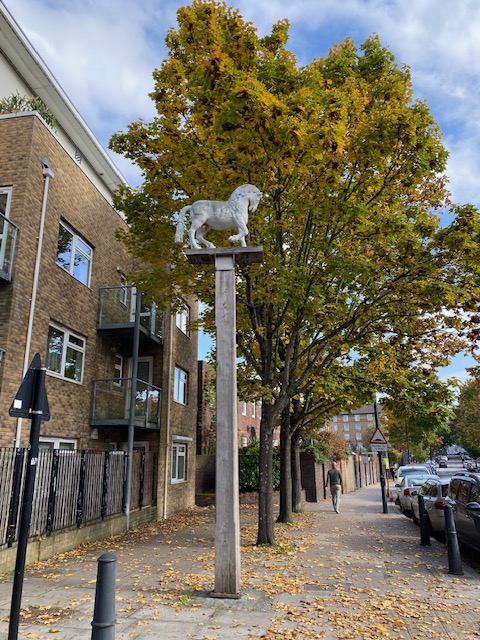
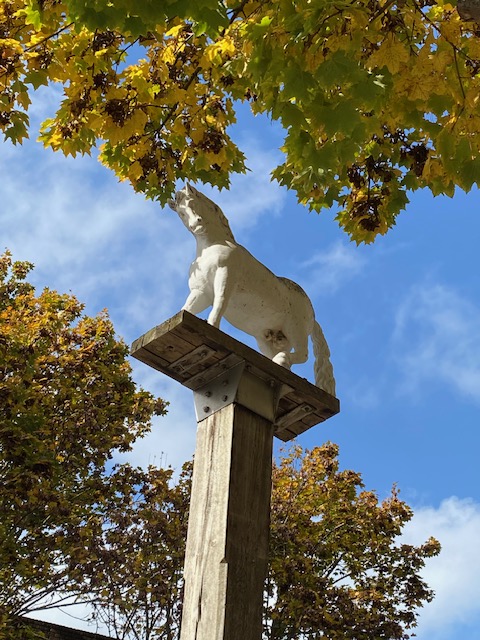
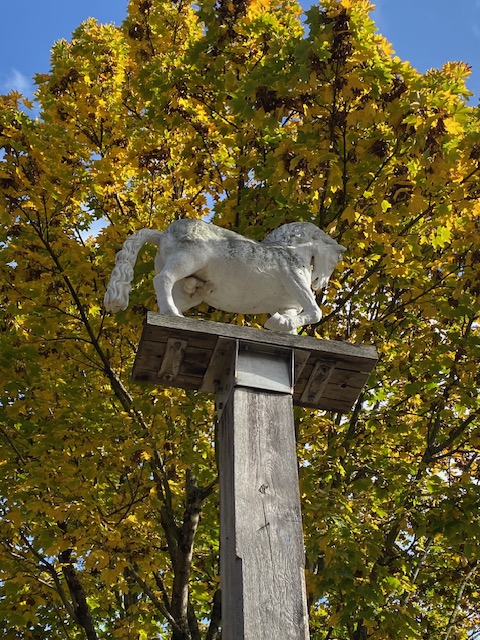
Alight here to see a pub sign for The White Horse. These days, it’s a pole with a model of a white horse on top – at the site of what was once a pub called, of course, The White Horse. There had been a pub on this site since the late 17th century and the one that was here in 1740 gained notoriety due to its landlords, Mr and Mrs How. Except that they were two ladies … The Mr How had decided at the tender age of 16, to live her life as a man, and at some stage, took her/himself a wife.
All went well until Mrs How died and somehow it was discovered that Mr How wasn’t a man. There was an attempt to blackmail him/her but the local community decided to rally round the pub landlord/lady and the blackmailer was taken to court. At the trial, and for the rest of her life, Mary East – our infamous Mr How – lived as a woman, and died in 1780. The White Horse survived the blitz, despite the building next door being bombed. As with so many old buildings, however, in 2003, it was demolished and some very ordinary-looking flats were built instead.
8. Limehouse Town Hall bus stop
The bus stops outside St Anne’s Church, which is another of Nicholas Hawksmoor’s churches and is also on bus route 15. The church was open so it was a pleasure to go inside and see its glory this time. It’s possible that it was named after Queen Anne as she raised money for it by taxing coal passing along the River Thames. Building was completed in 1727 and the church was consecrated in 1730. The original 1741 pipe organ was destroyed in a fire in 1850 fire and the replacement organ won first prize in the Great Exhibition of 1851 at Crystal Palace, and is much prized by musicians.
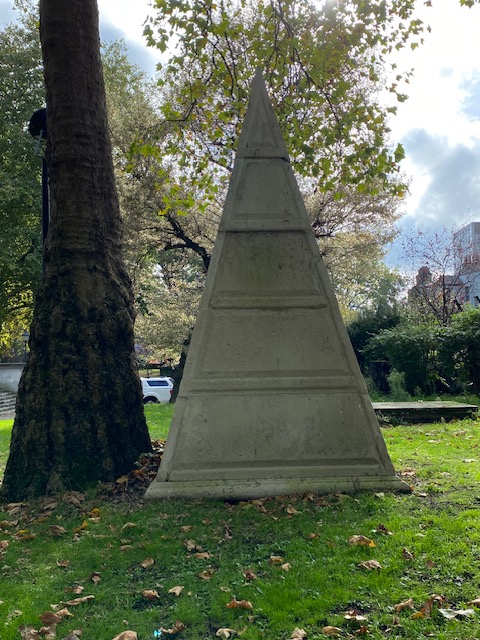
After the churchyard closed to burials, it was converted to public gardens which were laid out by the Met Public Gardens Association’s landscape gardener Fanny Wilkinson. She retained the iconic stone pyramid by Hawksmoor, dating from 1730 which bears the inscription “The wisdom of Solomon”. This is grade II listed while the church itself is grade I.
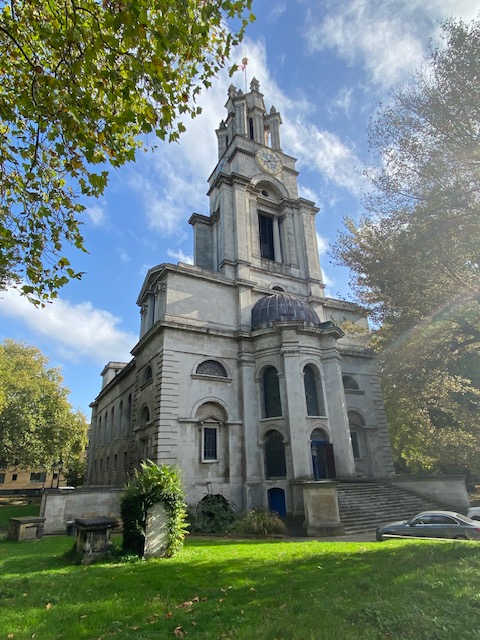
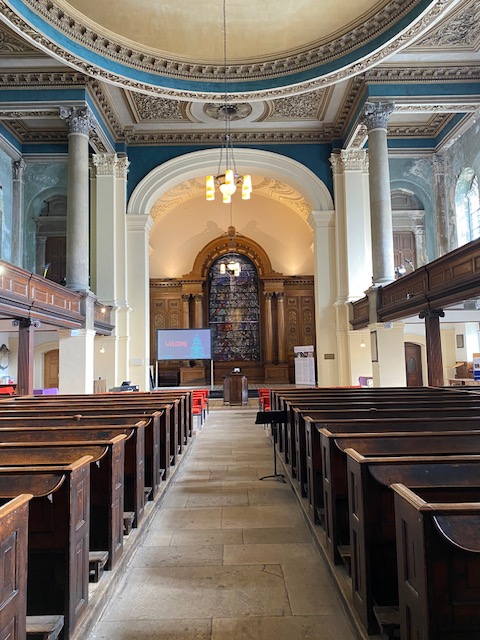
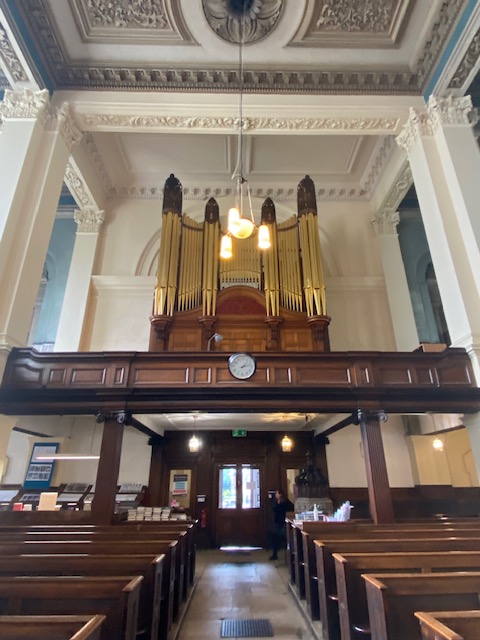
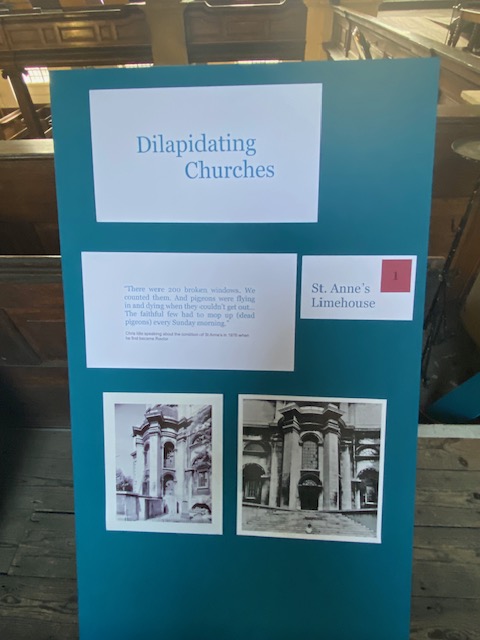
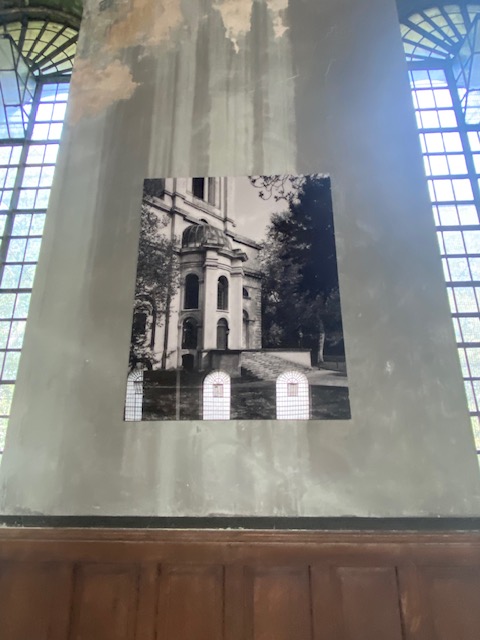
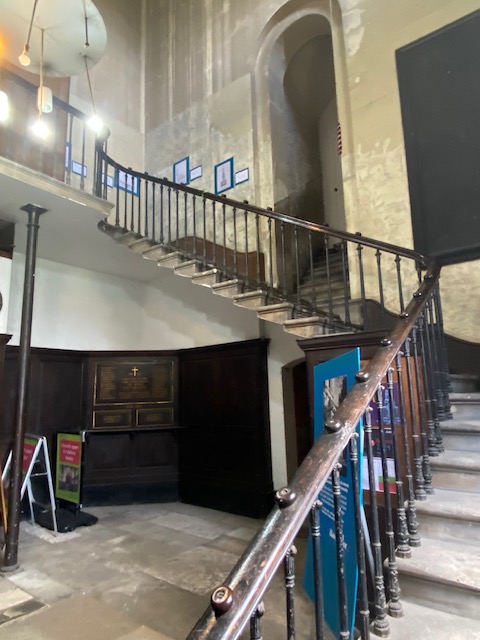
At present (October 2024), there is a small exhibition in the upstairs gallery, about Hawksmoor churches. Of the twelve, three were badly damaged by fire over the 3 centuries since they were built and four were threatened with demolition. Many were left dilapidated through neglect and lack of funds. St Anne’s is still on the at risk register. On the walls in the gallery are some images by artist Helene Binet from her Hawksmoor Churches Collection, and on the way to the gallery, you walk up some original Hawksmoor stairs.

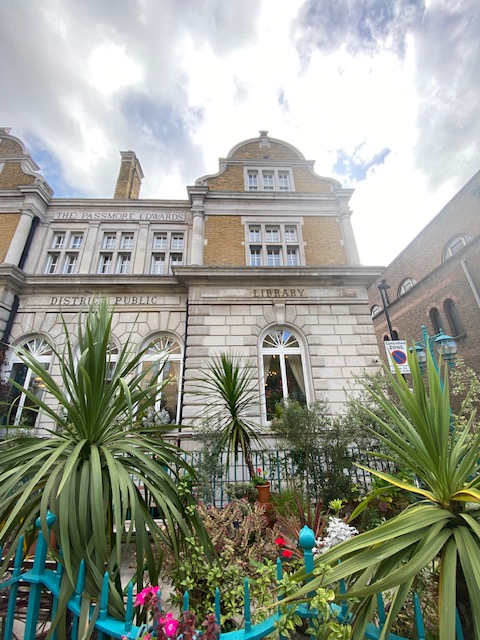
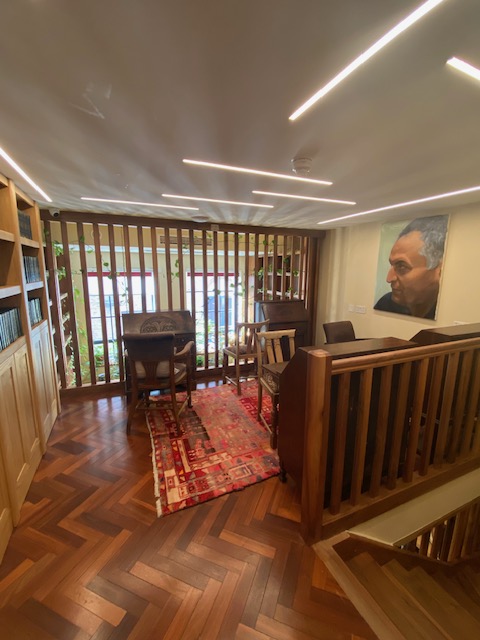
At the same bus stop and a short walk away is the former Limehouse Library, now a boutique and quirky hotel. Construction of the library began in 1881, and it was operational from 1901, thanks to the support of the philanthropist John Passmore Edwards. It shut its doors as a library in 2003 and these days it’s a boutique hotel, a library, a venue for bespoke events and a school of the culinary arts.
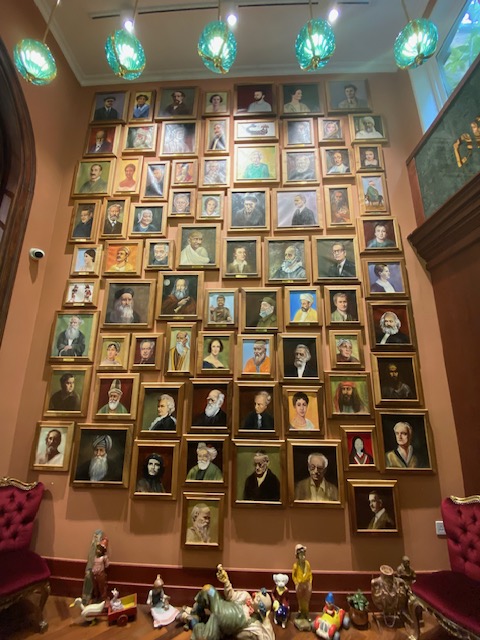
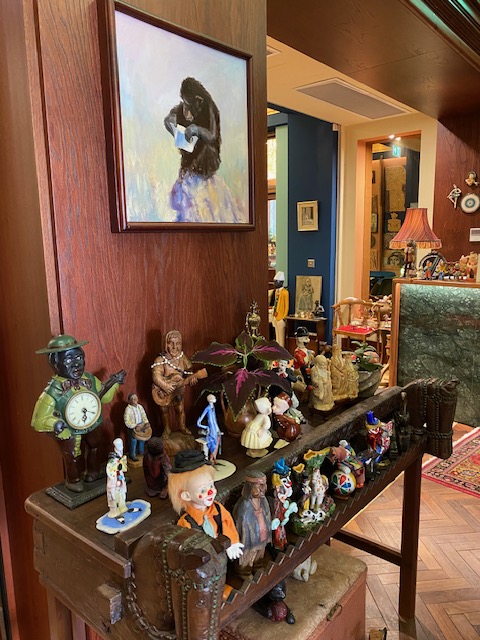
Each of the hotel’s 75 rooms has been named after a notable figure from history. These famous personalities come from the worlds of politics and the arts, of literature, science and philosophy, and portraits of them all are hung on a wall in the lobby of the hotel, so you can’t help but notice them as soon as you walk in the door. The library’s past life hasn’t been forgotten – there’s a library containing masterworks written by the 75 writers, politicians, scientists and philosophers who have inspired its rooms. Also, on almost every surface, are miniature models and toys that could amuse you for many a happy hour. It’s definitely worth having a peek inside, even if you aren’t intending staying there!
9. Marion Richardson School bus stop
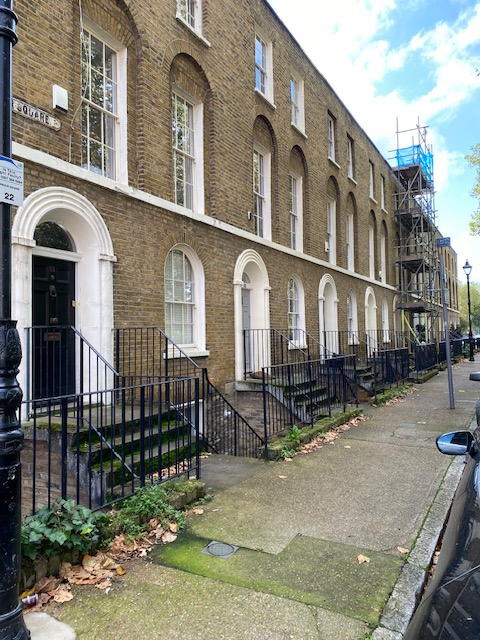
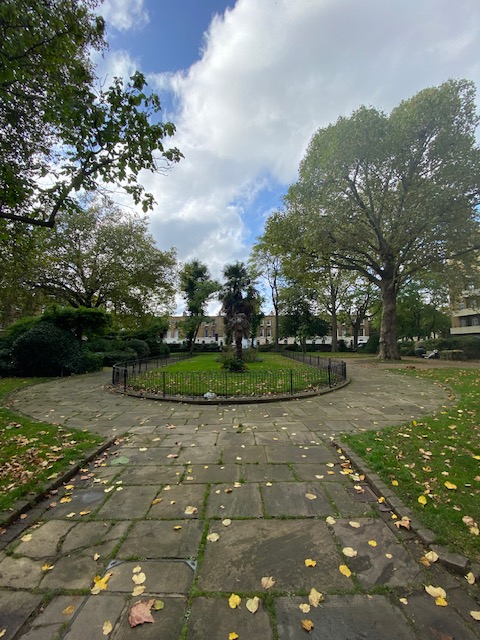
Walk round to Arbour Square, a late Georgian square in Stepney. It was laid out as a garden enclosure in 1819 and by 1830, there were buildings on all sides of the square and many of the surrounding roads. The south and west sides of the square are still made up of the original three and four storey Georgian townhouses which are Grade II listed. The east side was demolished and replaced by the Raine’s School building (also Grade II listed) in 1913, while the terrace on the north side was replaced by a block of flats in 1937. The Raine’s School building now houses part of Tower Hamlets College.
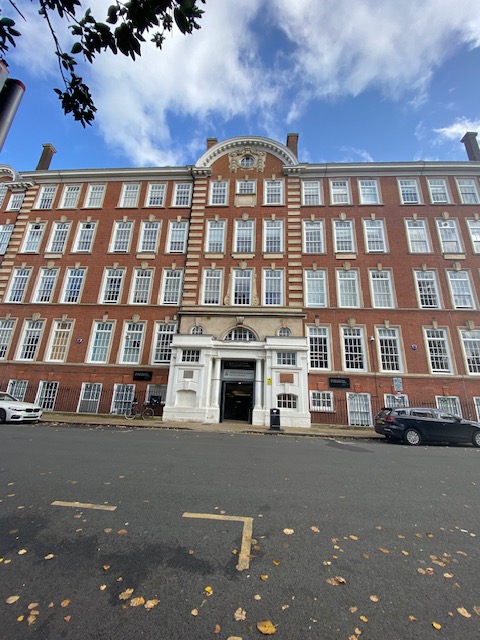
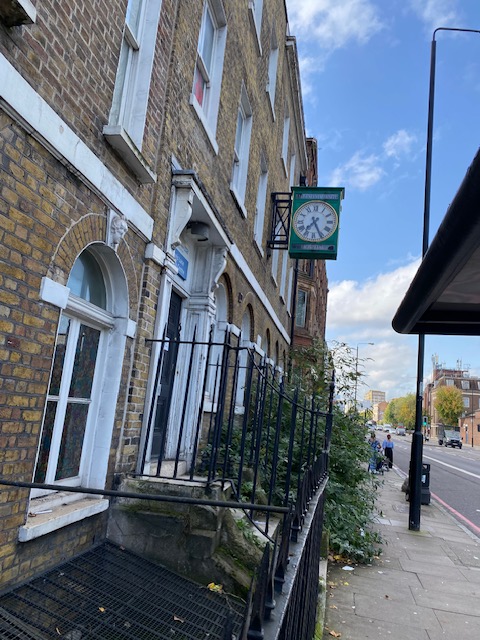
On the way back to the bus stop, take a look at the East End Maternity Hospital, an early 19th century building with its grade II listed wrought iron railings, sash windows and clock. Over the years the home went by various names: East-End Mothers’ Home; East End Mothers’ Lying-In Home; East End Maternity Hospital. The building was damaged in both wars but seems to have suffered no casualties. It was evacuated out of London in WW2. It was taken over by the NHS in 1948 and closed its doors in 1968.
10. Aldgate Bus station bus stop
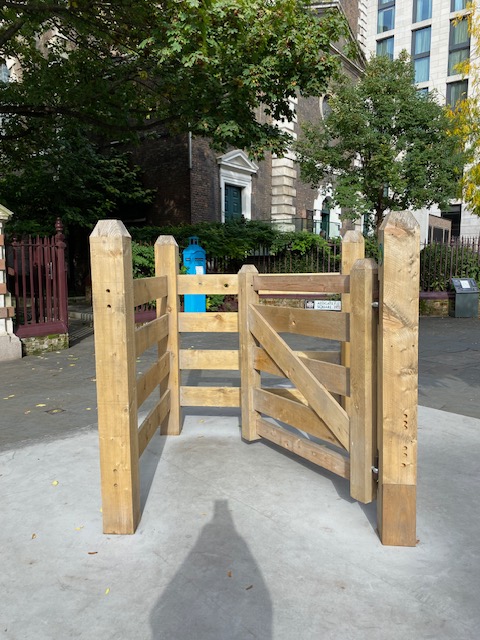
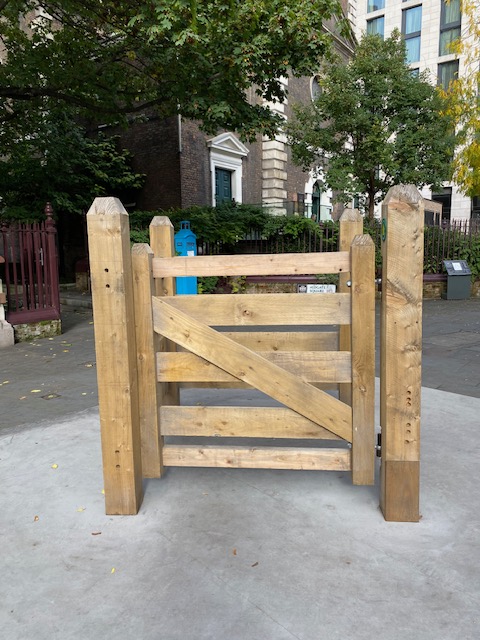
This is the final stop on the route and the area has been visited before on a variety of routes including 100. Outside St Botolph without Aldgate church is one of a number of sculptures featured in Sculpture in the City art trail. This is Kissing Gate by artist Maya Rose Edwards and is an interactive installation to invite romantic interaction between strangers. It’s never fully open or closed so it is an encounter with no right of way, in Edwards’ words “A hyphen, not a period (full stop).”
There was such an enormous mix of places to see on this bus route, with plenty of street art, interesting buildings and gardens. A couple of places stood out for me and I had no idea that I would find them fascinating when I was doing my research. It just shows that you have to see them in the flesh, in order to realise their worth and interest. I was totally smitten with the Gandhi Chaplin park, with its delightful mosaics and history. Completely different, but with its own charm, was the Limehouse Library Hotel where every space was filled with something that had to be examined and enjoyed. Definitely one of the more unexpectedly good routes.
Toilets that are open to the public and free of charge:
- Newham Library
- Limehouse Library Hotel
- Probably Abbey Arms pub
 london routemistress