
Ealing Broadway to North Finchley bus station
Highlights:
- Ealing Village
- St Raphael’s Edible Garden
- Arts Depot
1. Start of route at Haven Green/Ealing Broadway bus stop
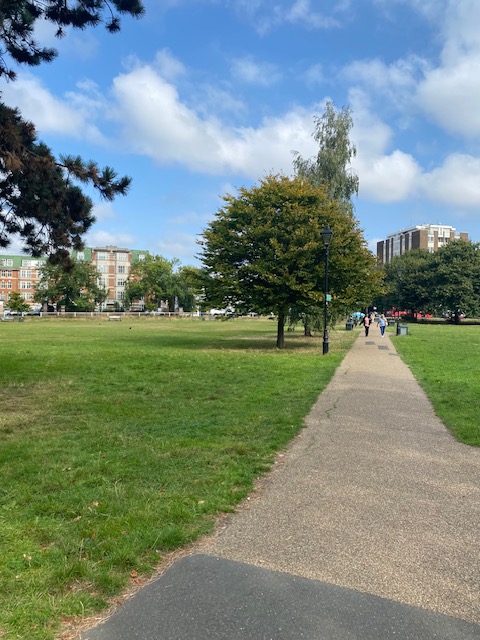
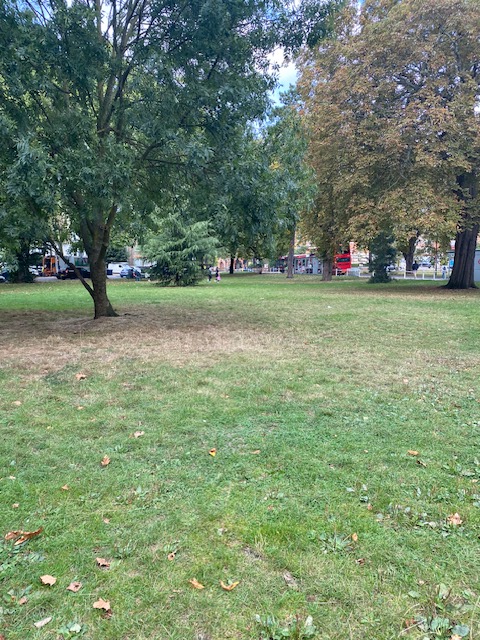
Haven Green itself has an interesting history. It lies at a very ancient crossroads where tracks to Anglo-Saxon settlements joined the old road from London to Oxford. It’s possible that Julius Caesar may have travelled north along this route and passed through Haven Green on the way to battle the Catuvellauni (Celtic) peoples of Hertfordshire. By the Middle Ages, this area was an important route for drovers. It’s thought that The Green was perhaps one of the last stops for sheep and other livestock on their way to slaughter.

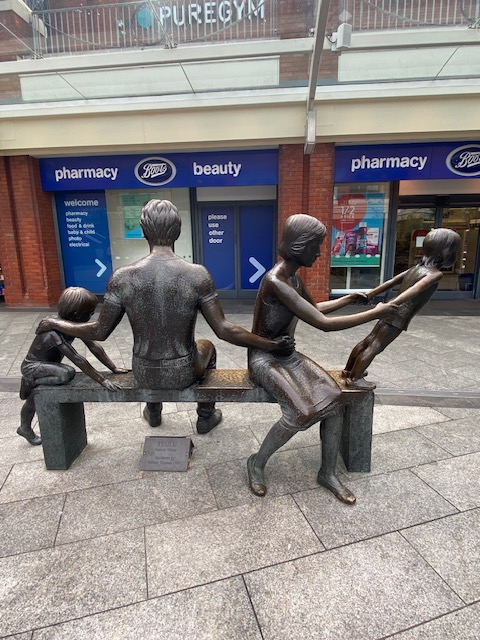
Over the road from the green is Ealing Broadway shopping centre where there are posters about the Ealing Blues Festival that took place in July and explains how much of the music scene originated in Ealing. One of the biggest groups of indie record labels started in Ealing High St and they mention that among the many alumni of Ealing Art School are Freddie Mercury and Ronnie Wood. Marshall amps were first sold in 1962 at 76 Uxbridge Road in Ealing. Outside the shopping centre, in the middle of the town square is a sculpture entitled Teulu (Family Group) by Robert Thomas. The mother and father sit in opposite directions each with a child – one climbs onto the bench and the other is standing.


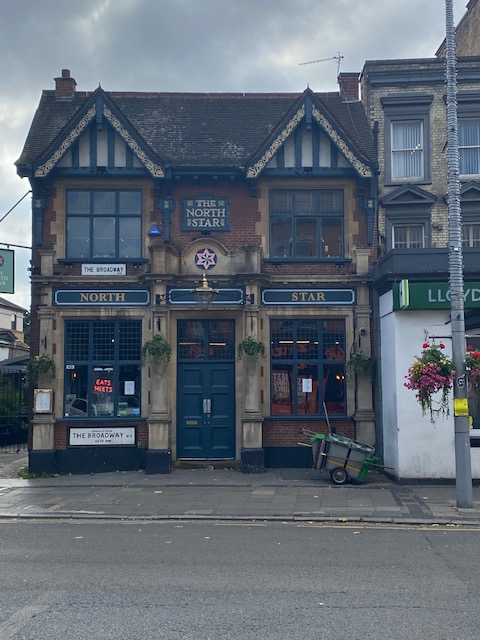
On the way back to pick up the bus at Haven Green, you’ll pass the North Star, a pub which was built in the early 1800s and started out life as a beer shop in 1851. The old building stands out as it in contrast with the modern architecture in the surrounding shops and offices.
Head back to the bus stop and just north of the stop at the far end of Haven Green, is the Dolls’ House Museum. It looks to be open only on Saturdays. The museum was founded by local resident Nousha Pakpor Samari and exhibits over 900 dolls and other interesting miniature items from around the world. Amongst the exhibits is a wide range of ethnic dolls illustrating the costumes of many countries and cultures.


2. Westbury Road bus stop
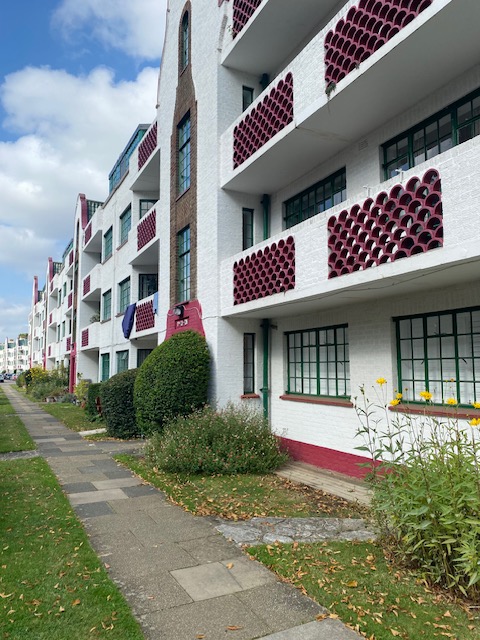
And so to the bus. Alight at this stop and walk round to Ealing Village, a private estate made up of five art deco blocks of flats which were developed in 1934-6. When first built, the flats were rented out but they were made available to buy in 1980. The Village is Grade II listed and is also protected by Ealing Council’s designation as an Area of Special Character of Local Importance.
The style of the village has been described as ‘Dutch-Colonial-Baroque’. This is particularly noticeable in the piers above the entrance archways which rise to a Dutch gable reminiscent of canal-side buildings in Amsterdam. Altogether there are 128 flats in two, three or four-bedroom size. The developer, R Toms & Partners, hoped to lure celebs from the nearby Ealing film studios by building a slice of Hollywood in west London but those celebrities preferred to lodge in central London hotels and be driven to set. So the Village was mostly occupied by film crew and ordinary local people.


3. Hillcrest Road bus stop
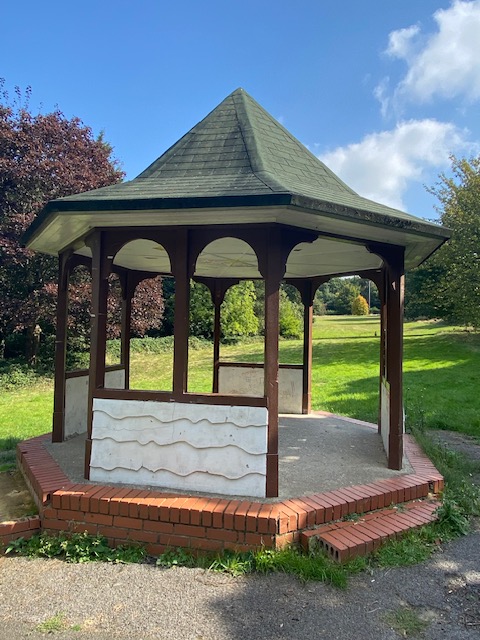
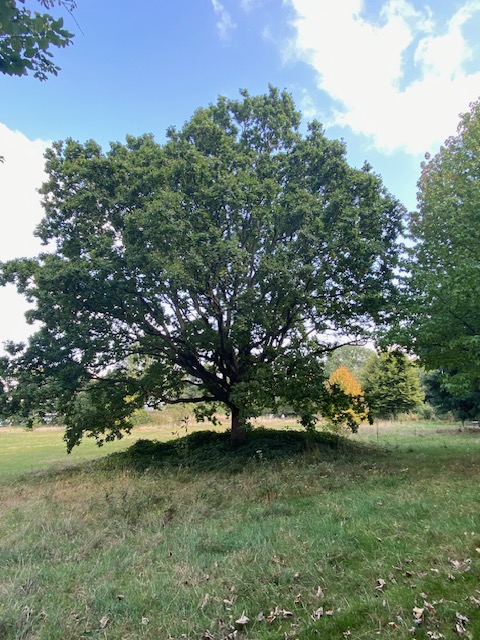
The bus stops just near Hanger Hill Park. This very pleasant open space has undulating ground and it’s thought these were air-raid shelters during World War 2. There are also natural springs and native oak trees, which grow well on the clay soils. In the middle of the park is a summerhouse, though it’s not obvious what it’s used for.

4. Beresford Avenue bus stop
The bus stops outside Ace Café, which was established in 1938 on the then brand new North Circular Road. It was a simple roadside café catering to travellers, particularly truckers. Being open 24/7, it soon attracted motorcyclists too. In world war II, the building was badly damaged during an air raid on the adjacent railway marshalling yards and it wasn’t until 1949 that it was rebuilt and reopened. Business continued until 1969 when owing to changing habits from motorbike to car, there was less demand for the use of a café here. 1994 saw a return of interest and by 1997, the Ace café opened its doors once more.


5. Conduit Way bus stop
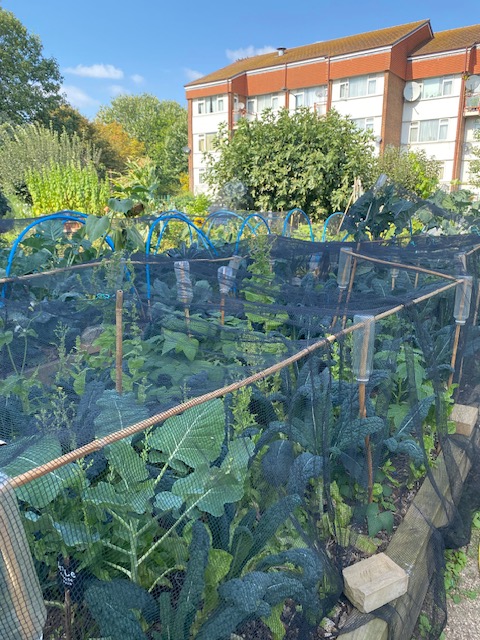
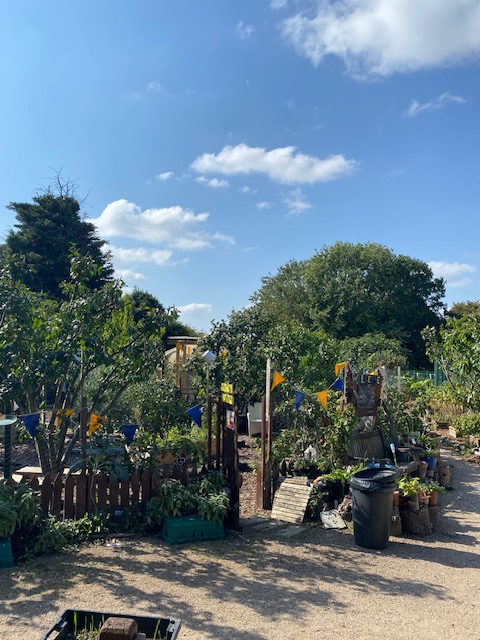
This is a lovely stop, as it takes you to St Raphael’s Edible Garden. It was set up initially by the residents of St Raphael’s estate who wanted a community garden. It was given approval by the local council but the estate didn’t have enough funds to cover costs so they approached Sufra, a charity that helps defeat poverty. As a result, the community garden was set up to provide a food bank for anyone that needs it but it’s very much more than that. Food is harvested in the garden and every Saturday, people are welcome to pick the produce and pay whatever they can afford. But it’s even more than this – it’s a haven for the disadvantaged, a place to adopt new skills, meet new friends and take advantage of the facilities including a wildlife pond, a teaching yurt, many fruit trees and even a pizza oven.
Also close by is the Wembley East Tower Flagpole Base. The ‘twin towers’ of the original Wembley Stadium were demolished in February 2003. The flagpole base was unveiled in the park in June 2003. It was originally going to be placed in a museum in the new grounds of the Stadium. However it was moved to Tokyngton Recreation Ground, which lies half a mile from the elegant arch that dominates Wembley nowadays.


6. East End Road bus stop
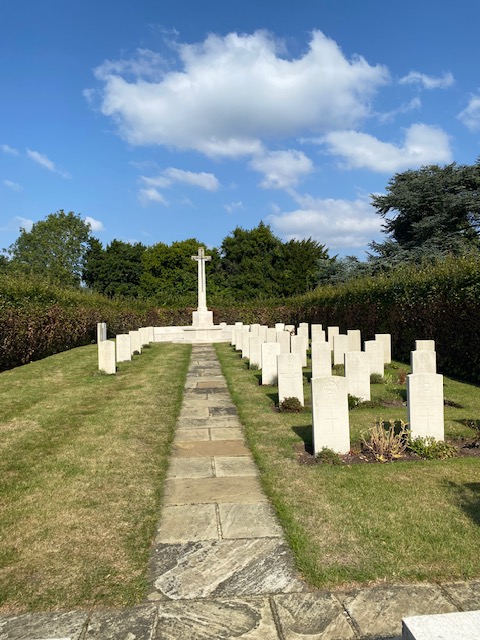
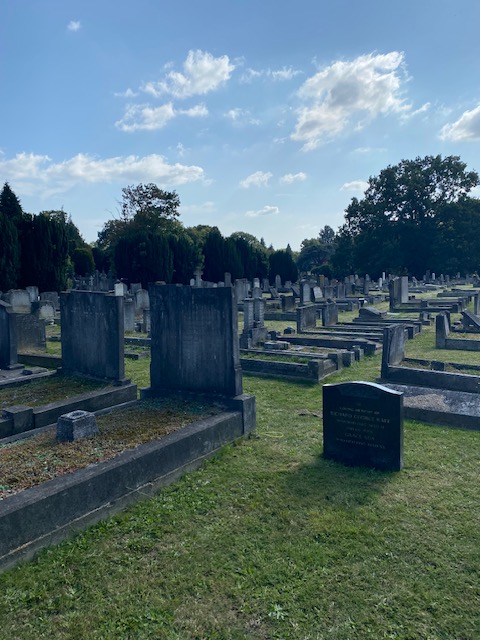
Walk up some steps from the bus stop and you’ll find yourself at St Marylebone Cemetery, which has been here since 1854. In the 900 years since St Marylebone Parish Church was established, its parishioners have been buried in several places. The first burial grounds surrounding the first parish church of St John the Evangelist, built c.1116, have long disappeared. However, other sites, including this one, still remain. There are a few well-known people buried here but it’s large and spread out so unless you have a specific slot number for the person/s you’re trying to find, you could wander round for a long time. There is a section specifically for servicemen and women who died during the two World Wars. I tried to find the grave of Heath Robinson, the cartoonist/artist and Lord Northcliffe, newspaper proprietor, both of whom are buried here, but wasn’t able to identify their whereabouts.


7. Tally Ho bus stop
The final stop of the route is also at the terminus. Of interest here is the Arts Depot, an arts centre that caters for all ages and interests. They put on a variety of performances in their 2 theatre spaces, run classes in the drama and dance studios, and serve refreshments in the café. They also have an exhibition area for local artists to display their work.


Over the road from the Arts Depot is the Tally Ho pub, which was built in 1927 and was named after nearby Tally Ho Corner where in the 1820s and 30s the Tally Ho Coach Company kept horses that were used for the first change of horses for the Birmingham mail coach. Near this spot is Lodge Lane, in which the home of Private John Parr, the first British soldier to be killed in World War I, is situated, and the actor David Jason. The latter’s home has been replaced with a car park but at the entrance to this is a Tommy silhouette. It was positioned here, near a school, local shops and the car park, so all who walk past will remember the sacrifice made by soldiers such as John Parr.


This isn’t a long route and as it’s more or less all in the suburbs, there wasn’t a huge variety of places and things to see. However, there were some definite highlights (see above) and I met some lovely people, in particular at St Raphael’s Edible Garden (Jo and Pauline – thanks so much for your time. Also the manager who cut some produce for me to take home). It was disappointing that I couldn’t find my way around the cemetery – the lesson learned here is to contact them beforehand so that I can get a guide as to what/who I’m looking for.
Toilets that are free and available to the public:
- Ealing Broadway shopping centre
- Ace Café
- Arts Depot
 london routemistress