
Kingston station to Heathrow Airport Central bus station
Highlights:
- Kingston mosaics
- Diana Fountain
- Garrick’s Temple to Shakespeare
1. Kingston station bus stop
Walk round the corner from Kingston station and find the railway bridge. Once there, you’ll be delighted to see several mosaic murals on both sides of the bridge, all of them with a railway theme. They’ve been there since 2002 and were the brain-child of Save The World Club in Kingston. Working with the local community, made up of children and adults alike, the mosaics were created using recycled pottery and Victorian earthenware and together make the most eye-catching collection.


2. Church Grove/The King’s Field bus stop
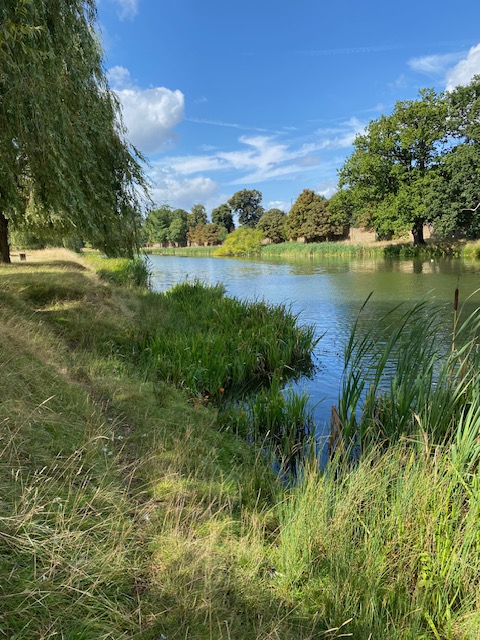
A couple of stops on the bus and you’ll arrive at Home Park, which is part of the Hampton Court estate. It’s vast so it’s best to keep to the area nearest the entrance gate, but just in this smallish area, there’s enough to see. Start off at the Ice House, which was constructed in the late 17th century by order of King William III. It was designed for the storage of ice. Once stored, the ice could be used throughout the summer for preparing summer desserts, cooling wines and preserving meat and fish for the inhabitants of Hampton court Palace. The water was gathered in winter from nearby ponds and the Long Water.
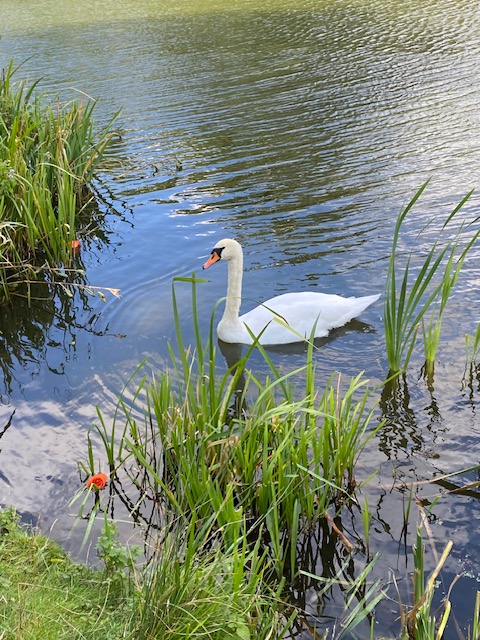
A little over to the east of the park is Hampton Wick Pond. Inside Home Park are many water features, the main one being the formal Long Water. The Pond is rather larger than the name suggests and is inhabited by much wildlife and on any day, there’s a plethora of birds. If you do have time, you might take a longer walk in the park to see what else it has to offer.


3. Chestnut Avenue/Hampton bus stop
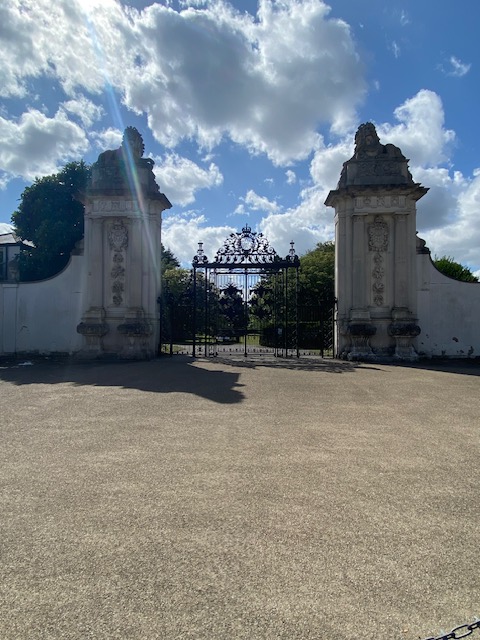
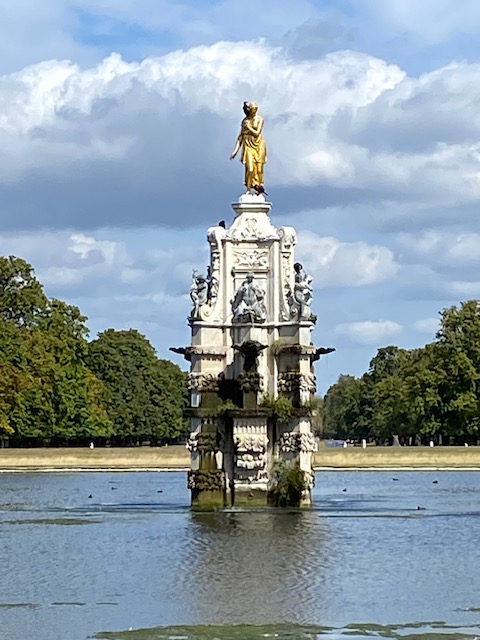
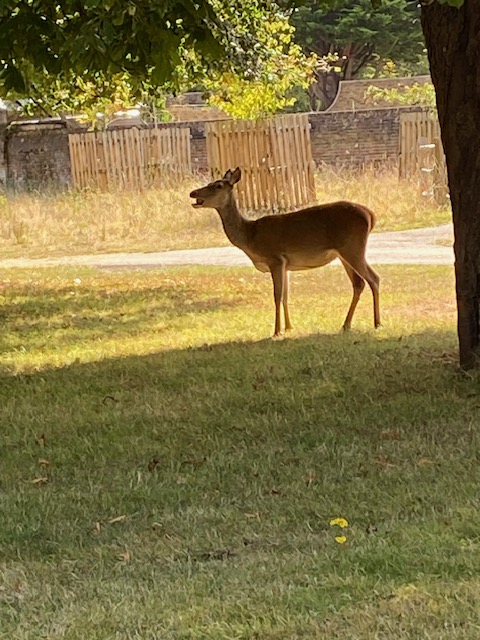
When you get off the bus, you’ll be confronted with a huge entrance gate which is locked – this is for Hampton Court Maze and is only accessible from a different place. Instead, cross over the road and you’ll be in Bushy Park. Keep walking straight ahead and you’ll see the Diana Fountain directly in front of you. The statue represents Diana, the goddess of hunting, not the Princess of Wales. It’s a 17th century statue ensemble and water feature in an 18th century setting with a surrounding pool and mile long tree lined vistas, created by Sir Christopher Wren. Diana stands on a tall base in the middle of the pool and the fountain has been granted Grade I status. As with other open spaces in this vicinity, deer roam freely and it’s possible to get up pretty close to them, if you’re lucky enough to find them.

4. St Albans Riverside bus stop
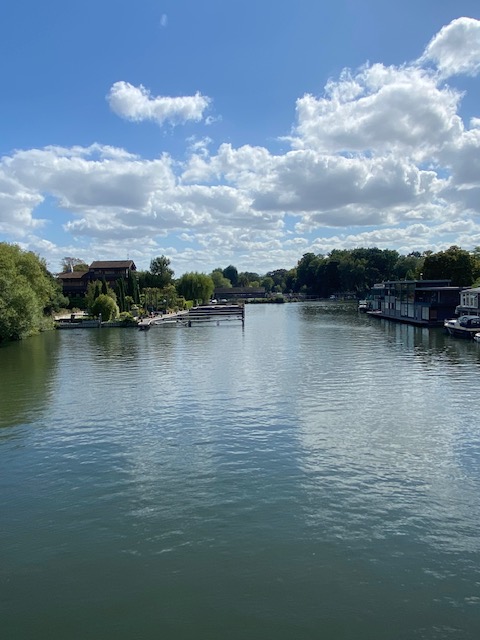
All along this part of the route is the river Thames, but it’s worth getting out at this stop to walk over a small bridge and take a peek at Taggs Island. It’s a private place (a bit like Eel Pie Island – see route 33). Houses are not permitted to be built on the island and it is surrounded by houseboats whose owners, in acquiring their mooring land, have the right to belong to the island’s residents’ association, which owns the island. Some of the Thames’ most expensive houseboats are on this stretch of the river – and they really are a sight to behold, if you can get near them. Thomas George Tagg rented part of the island though he eventually took out a lease for the whole island and in 1872, took out a licence for the one pub – renovating it and converting it into a hotel, which became a favoured venue of London high society, frequented by the likes of Edward, Prince of Wales (the future King Edward VII).


5. Garrick Villa bus stop
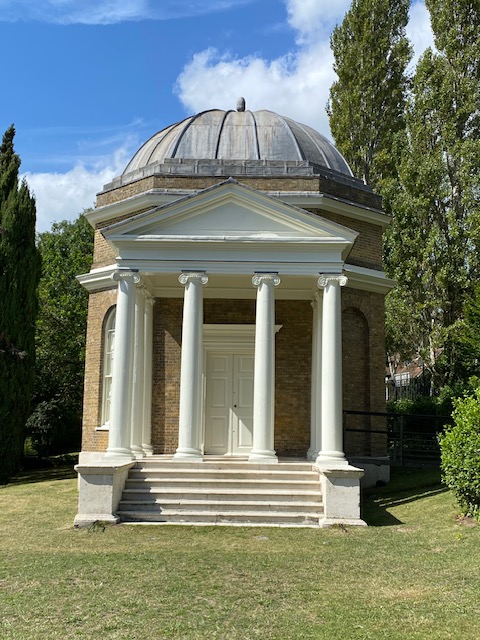
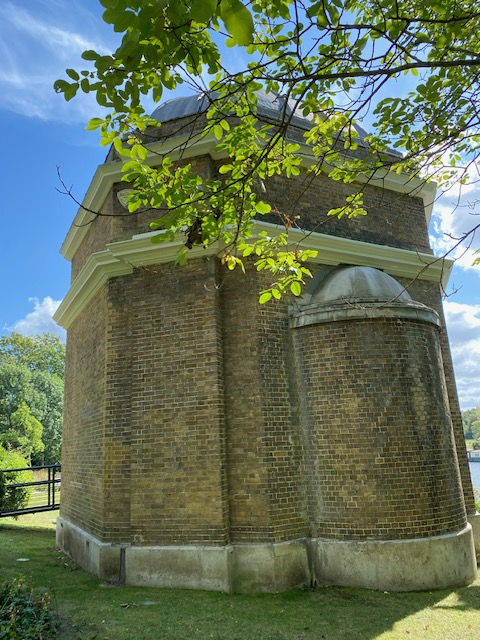
This is a bit of a “wow” stop. Two minutes from where the bus drops you is an architectural delight. It’s Garrick’s Temple to Shakespeare which is situated in Garrick’s Lawn, right on the river. In 1754, the celebrated actor David Garrick purchased Hampton House (now Garrick’s Villa), overlooking the Thames. In 1755 he decided to build a garden folly by the riverside which he intended to dedicate as a temple to Shakespeare whose works he had performed to great acclaim throughout his career. It now houses an exhibition about Garrick himself, featuring a number of reproductions of works by major 18th century artists, including Gainsborough, Reynolds, Hogarth and Zoffany.
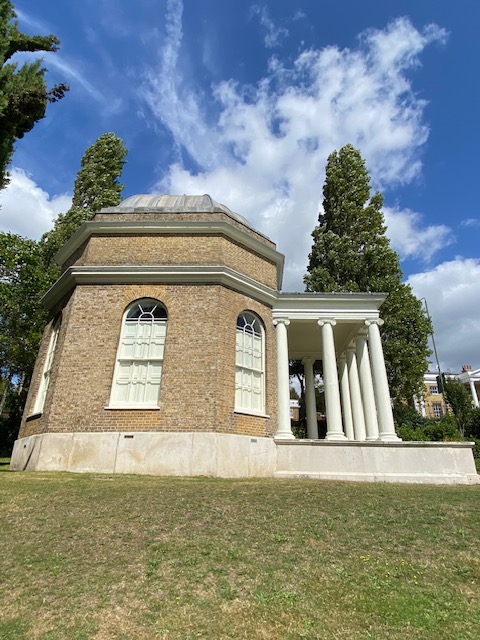

Over the road is Garrick’s Villa which is now a private residence, so it can’t be viewed internally. It was originally called Hampton House before it was bought by the actor and theatre manager David Garrick (1717–1779) in about 1754. Numerous alterations were made to it during Garrick’s tenure by the architect Robert Adam including the portico, the building of an orangery and the construction of a tunnel under the road to connect with his riverside lawn.
Almost next door to the villa is St Mary’s Parish church. A house of worship has stood on this site for at least 650 years, with records going back to 1342. In 1671 the tower became unsafe and a new brick tower was erected. Charles II contributed £350. Further additions were made and in 1726, King George I gave £500 towards the extension. So it very much has royal connections. If you venture into the churchyard, you’ll see an interesting pyramidal tomb belonging to John Greg and his wife Catharine, who had died in Hampton in 1819. This unusual monument is grade II listed.
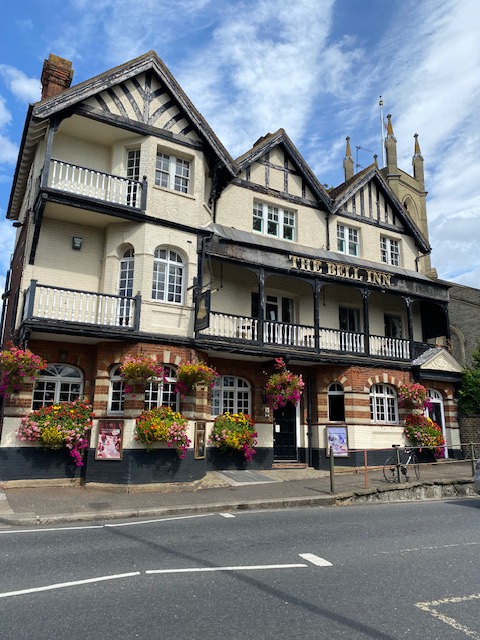
And next to the church is The Bell Inn. This long established inn was already in existence in 1557 when its owner, Robert Hammond, bequeathed an acre of land and the income from the inn to fund a free school in Hampton, the forerunner of today’s Hampton School. Although most of the original features are no longer there, the foundations remain the same and the inside of the pub is very welcoming, as is the staff. T.S. Eliot wrote of the inn “for to the Bell at Hampton he had gone to wet his beard” in his poem Growltiger’s Last Stand and this quote is written on one of the walls.


6. New Close bus stop
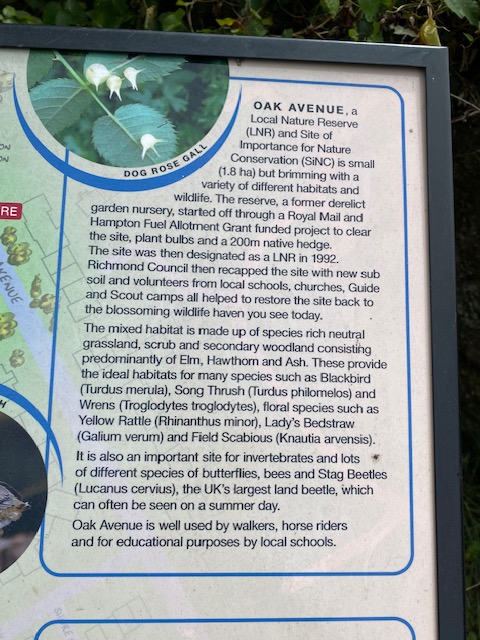
This is the stop for Oak Avenue Nature Reserve which has been designated a Site of Importance for Nature Conservation due to its variety of different habitats and wildlife. It’s a decent size space and the mixed habitat is made up of grassland, scrub and secondary woodland, providing homes for song thrush, blackbirds and wrens. At one end of the nature reserve is St Richard’s Church. It was originally built in 1965 and its skeletal reinforced concrete bell tower is a landmark in the local area.


7. St Leonard’s Church bus stop
Make your way to St Leonard’s Church, Heston, which dates from the 14th century, though there are records of a priest in Heston in the 7th century. The church tower has survived the necessary rebuilding works in the 19th century, as has the lychgate. The body of the church was rebuilt in the 19th century in the style of c.1300. The ancient lychgate dates from 1450 and was restored in 1974.
Over the road from the church is a war memorial with a statue of a soldier and the plinths state “in honour of the men of this village who fell in the Great War 1914-1918” as well as “remember also the men and women of Heston who gave their lives in the 2nd world war 1939-1945”.


8. Waye Avenue bus stop
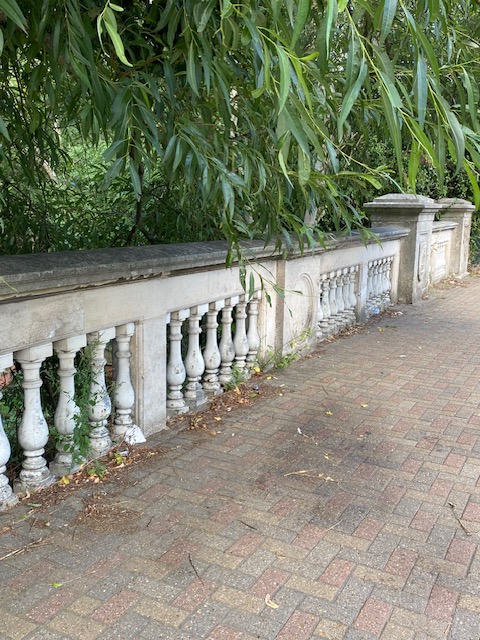
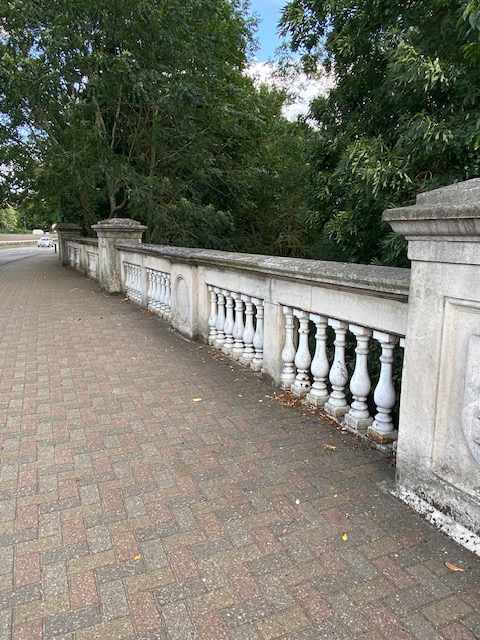
This is the final stop on one of the longest TfL bus routes (5th out of 440!). Walk towards the bridge and you’ll see a plaque on one side stating “Parish of Cranford/Parish of Bedfont” and on the other side of the road the stone plaque tells us that Cranford Bridge was erected in 1776 and rebuilt and widened in 1915.
Also known as Cranford Park Bridge, it is a Grade II listed building. It is part of Cranford Park which was owned by the Earls of Berkeley for 300 years, from 1618. The Earls built a large house, landscaped the grounds, and entertained royalty. The park was sold to the local authority in 1932, and the house was demolished in 1945. However, some historical features remain, including the 18th century stables, cellars, and this lovely river bridge.


As stated in the blog, the number 111 is the fifth longest TfL bus route and it definitely felt like it. I had to leave out several places I’d previously identified as worthy of seeing, as there was just too much to cram into a day. It seems extraordinary that a route can start as far south as Kingston and end up at Heathrow Airport. It wasn’t surprising, therefore, that there was a total mix of places to see and enjoy – and there is still plenty to discover on another overlapping route.
Toilets that are open to the public and free:
- Kingston station
- The Bell Inn
- Heathrow Airport bus station
 london routemistress
One response to “Bus route 111”
Congratulations
LikeLike