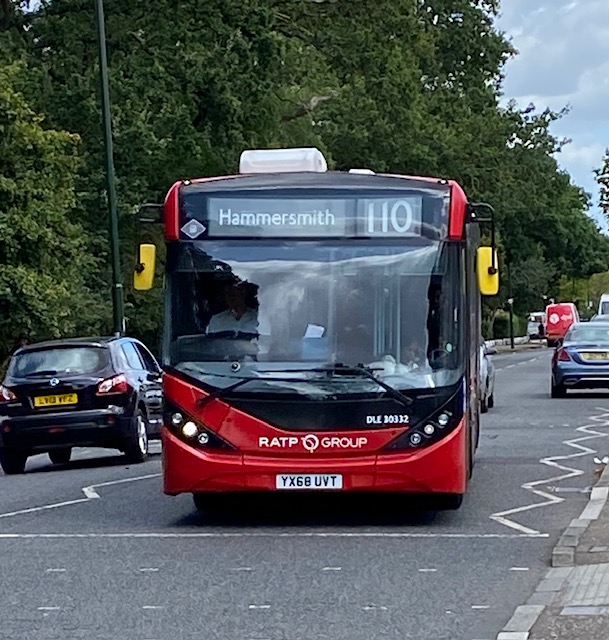
Hounslow to Hammersmith
Highlights:
- Turner’s House
- Banksy’s Goat
- Gainsborough’s grave and house
1. Hibernia Road bus stop
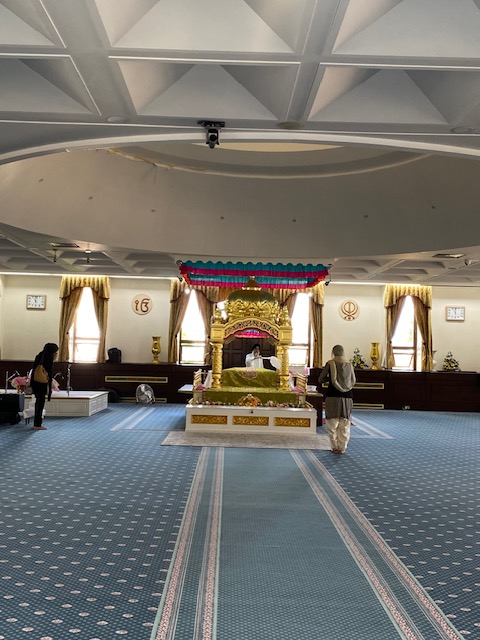
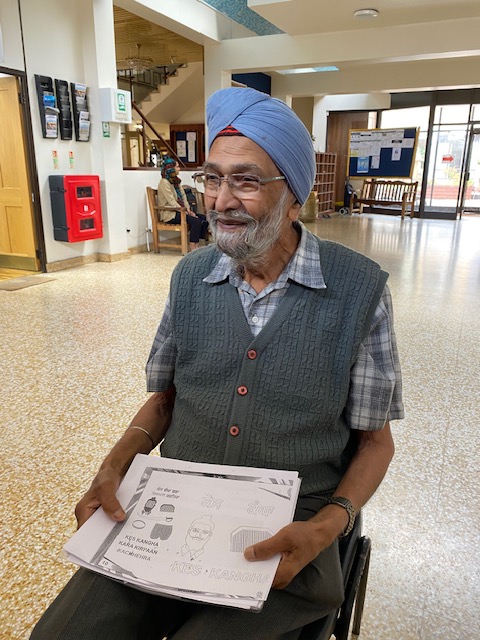
An easy place to start – cross over the road and take a look at Gurdwara Sri Guru Singh Sabha that provides space within which the Sikh community can congregate and worship in accordance with the faith. It’s possible to take a look round the inside, as long as you wear appropriate clothing and take off your shoes. The people are incredibly welcoming, happy for you to walk around and even partake of some food and tea. Upstairs is the large prayer hall and there are separate, smaller rooms for praying. I was given an introductory talk about Sikhism and its derivation, from one of the delightful volunteers.


2. Simpson Road bus stop
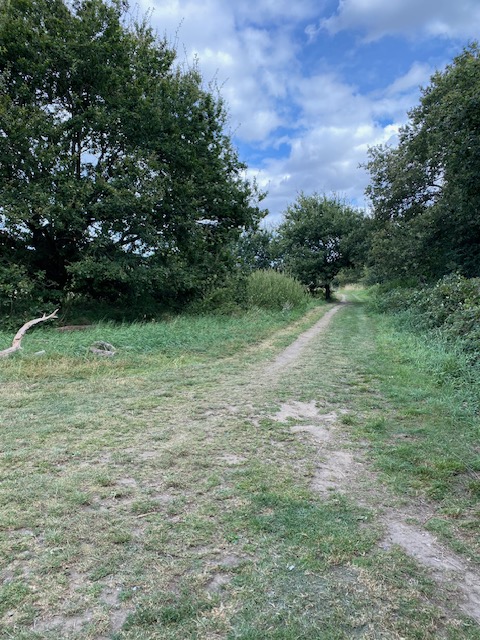
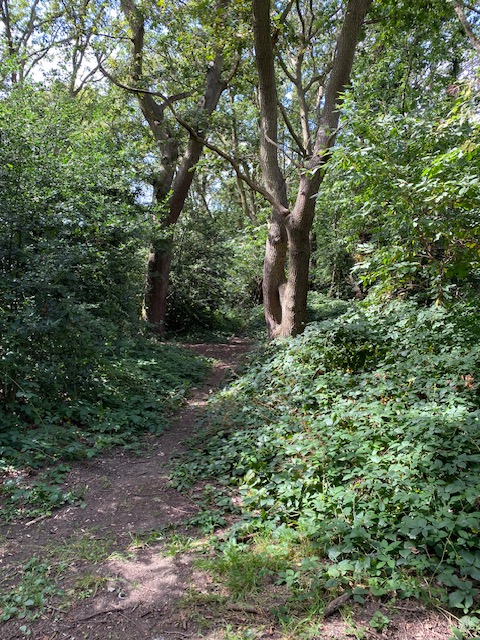
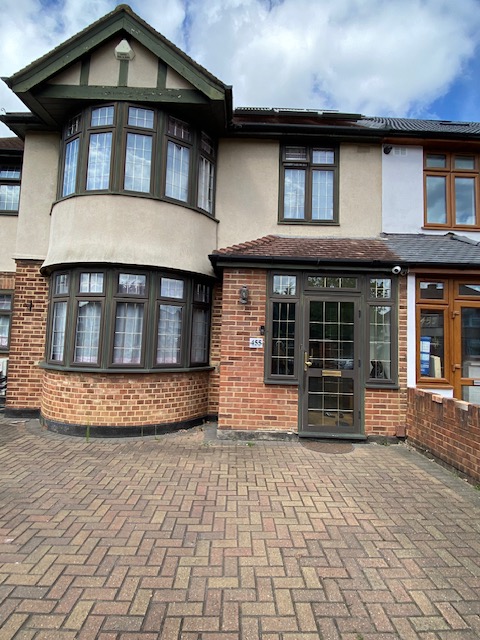
Near the stop is Hounslow Heath. According to google, there should be Poynters Farm Liveries just inside the heath but it doesn’t seem to exist! The Heath is rather beautiful with a mixture of green open spaces, woods, scrubland and wildflower meadows. I had also been informed that the childhood house of Phil Collins was around this area and though I thought I’d found it, it turns out I had the house next door.
3. Kneller Hall bus stop
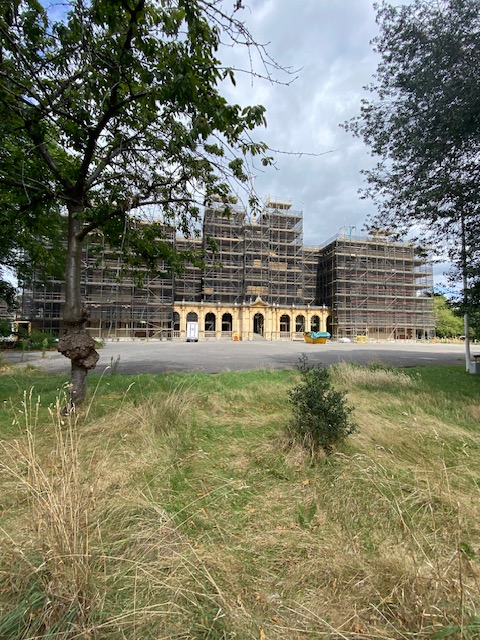
Yet more frustration on this route. The bus stops at Kneller Hall itself but it is more or less entirely covered in scaffolding so it can’t be seen in all its glory. It’s just about possible to get an idea of what it will look like once the scaffolding has been removed.
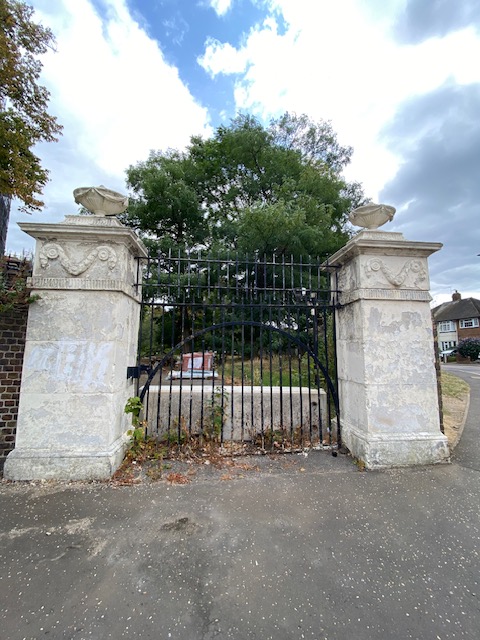
There has been a house on this site since the 1640s and in 1664 it was the fourth largest house in Twickenham. In 1709 the property was purchased by Sir Godfrey Kneller, court painter to British monarchs from Charles II to George I. He demolished the original house and replaced it with a new building, which after his death and over the next 100 years or so was considerably extended by each new owner. In 1845, the house was acquired by the government as a teacher training college. Some of the newer parts of the house were kept and the older sections were demolished and replaced in the neo-Jacobean style. The gate piers and house are both Grade II listed.
The students were expected to teach the poor of the vicinity but no resources were set up for them so the school closed after only a few years. In 1857 the building was taken over by the War Office as the base for a school for army bandsmen, which then became the Royal Military School of Music. This lasted until 2016 when it was decided to be sold as part of the MoD’s drive for greater efficiency. From now, the hall will become the Upper School for Radnor House School, Twickenham – which is why the building is covered in scaffolding, ready for its new purpose.
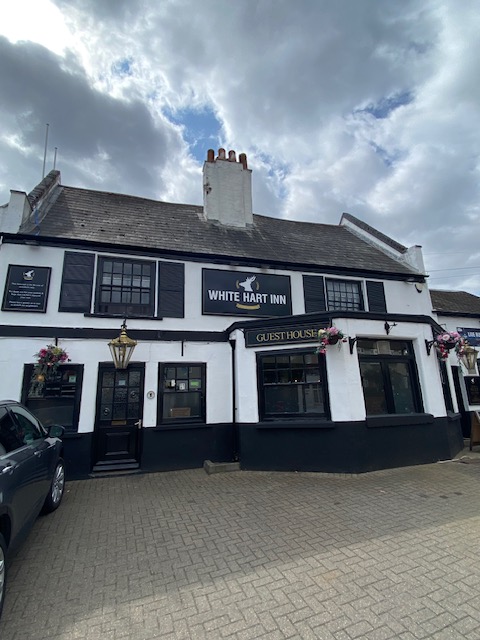
The route gets better from here on in. Walk from Kneller Hall to The White Hart Inn – this is the oldest inn in Whitton. It was first called the White Hart in 1727 but it is undoubtedly the pub that’s mentioned in the James II census of such establishments as early as 1685. The building itself can be traced back to 1660.
The White Hart is the fourth most popular name for a pub in the UK (top one being Red Lion). It became popular in medieval times, coinciding with the beginning of Richard II’s reign in 1377. It was the monarch’s heraldic symbol, and he ensured all members of his household wore the device. It was considered wise for tavern and inn keepers to use the name as it showed allegiance to their king.
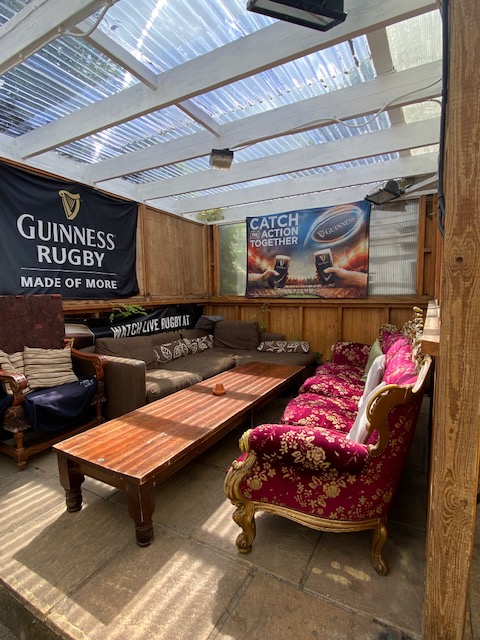
This White Hart Inn doesn’t have any original features remaining, sadly. It does have a lovely garden and plenty of seats both in and out, as well as providing accommodation for guests.
4. Sandycombe Road bus stop
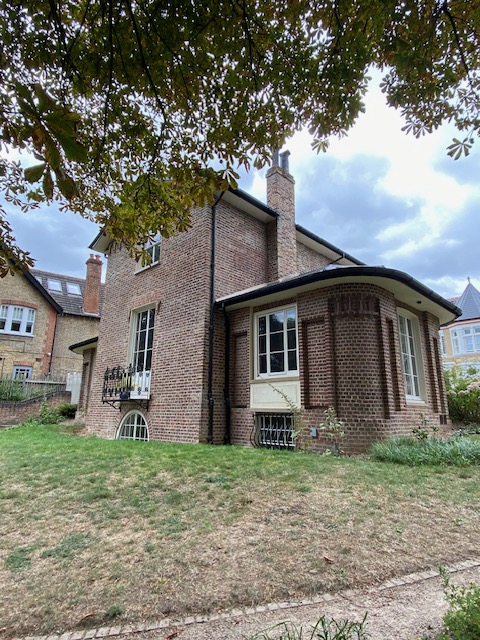
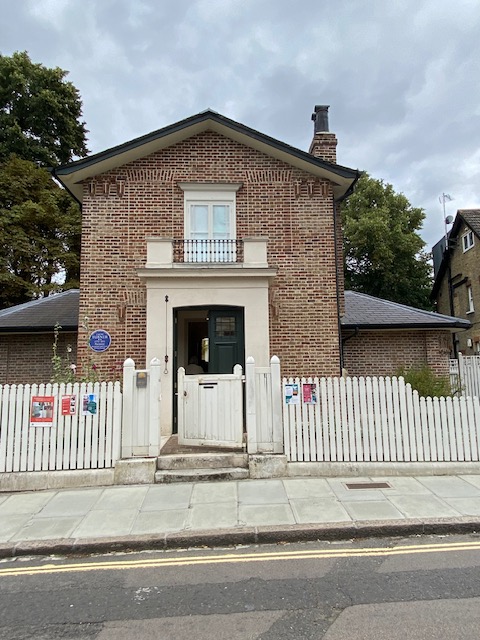
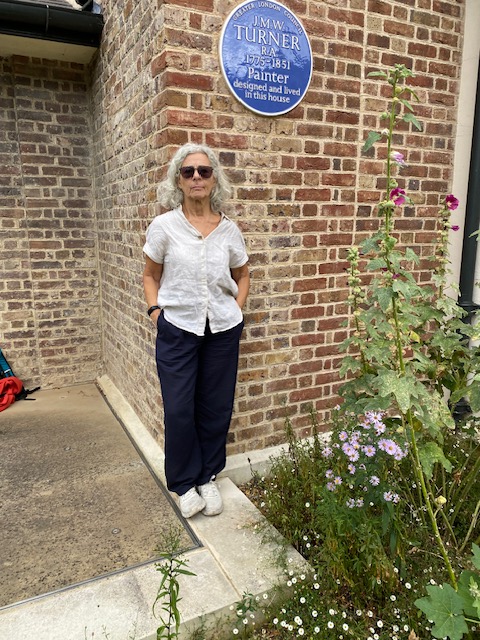
This is a great stop and should definitely not be missed. This is where you’ll find Turner’s House, which he designed in 1813 and where he lived for several years. He built it as a country retreat where he could relax with friends and use as a base for sketching and fishing trips. It was also a home for his father in retirement until the house was sold in 1826.
It was lived in at a later date by a Professor Livermore and his wife, until the professor died in 2010. The Lodge was then bequeathed to Turner’s House Trust to be used as a monument to the great artist.
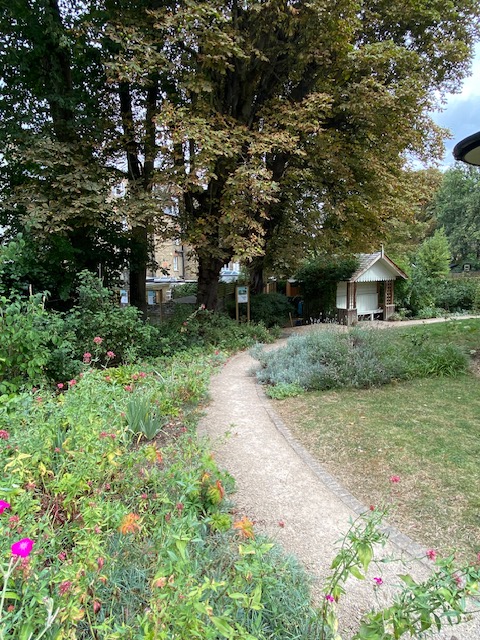
When Turner bought the plot of land in 1807, it came with two acres of land. His father grew vegetables and tended the extensive grounds. Today the garden is substantially reduced in size and has been planted with varieties of flowers such as valerian, cyclamen and hollyhocks, all of which could have been here in Turner’s time.
5. Kew Bridge bus stop
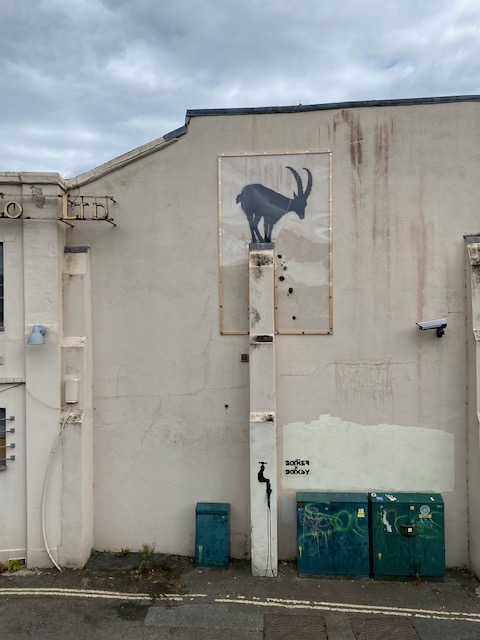
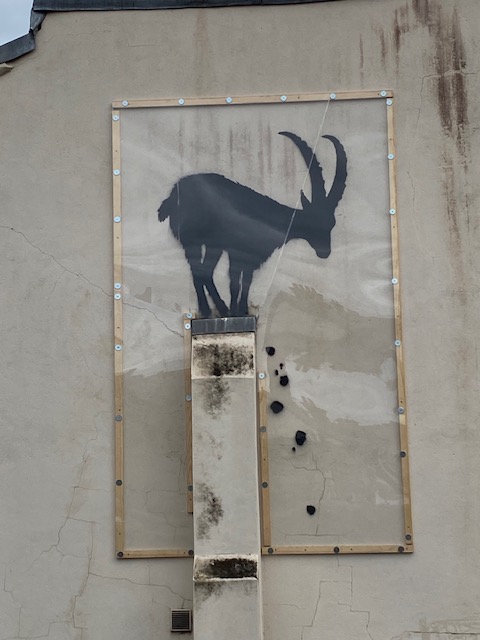
As soon as you get off the bus, you’ll look over the road and see the first of Banksy’s latest animal murals. It shows a black mountain goat perched on a wall support structure that faces a surveillance camera near Kew Bridge. The giant goat has rocks falling down below it, to just above where a CCTV camera is pointed.
There have now been nine of the artist’s murals that appeared in London in as many days. There is a lot of scratching of heads to understand what, if anything, the animal theme signifies. In the past, Banksy, as a political artist, has made statements in his art against hostility to refugees, war and Western capitalism. The question is – do these latest murals refer – as some commentators have thought – to the recent far-right riots in the UK, or are they just a bit of fun and amusement, to lighten up our lives? We may never know but no matter what, the goat is a pleasure to behold.
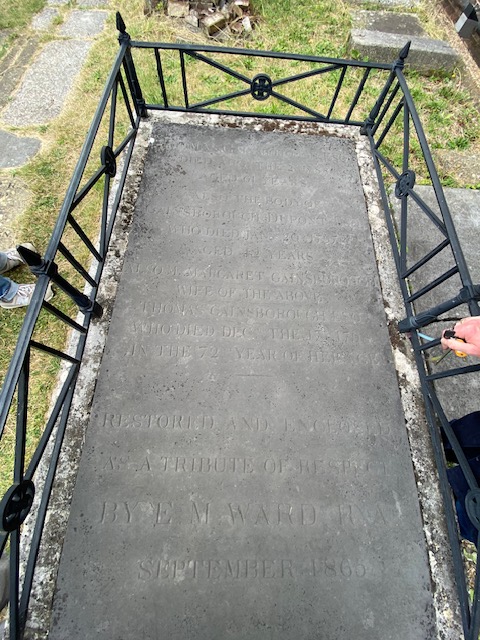
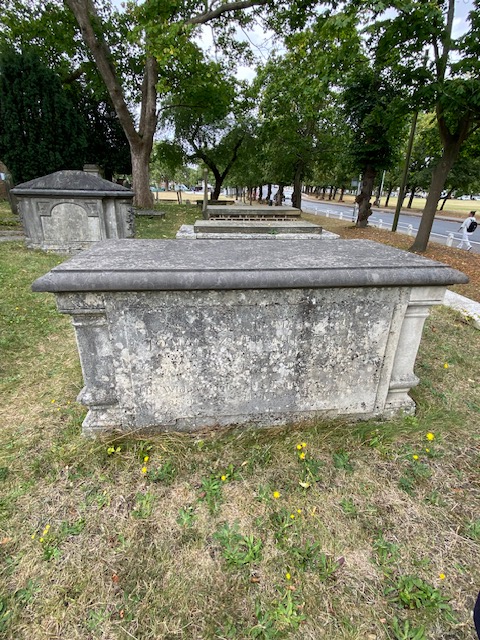
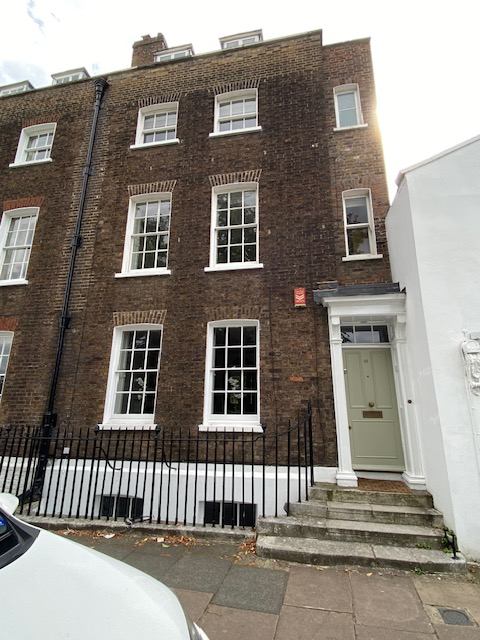
After Turner’s House and the Banksy mural, there is another artist to find, this time it’s Thomas Gainsborough. The artist’s grave is in the churchyard of St Anne’s church in Kew and in fact, his house is on the Green opposite the church. Gainsborough won fame for his landscapes and portraits and along with his major rival, Joshua Reynolds, he is considered one of the most important British artists of the second half of the 18th century. He moved to London in 1774 and died here in 1788. He is interred in this churchyard and it was his express wish to be buried near his friend Joshua Kirby. At a later date, his wife and nephew Gainsborough Dupont were interred with him. It is thought that this nephew was the boy in his uncle’s The Blue Boy painting. Also in the churchyard is buried the German artist Johan Zoffany, who had lived in nearby Chiswick.
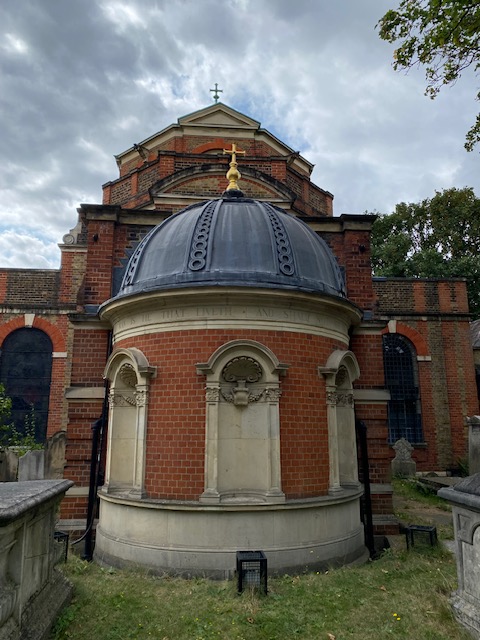
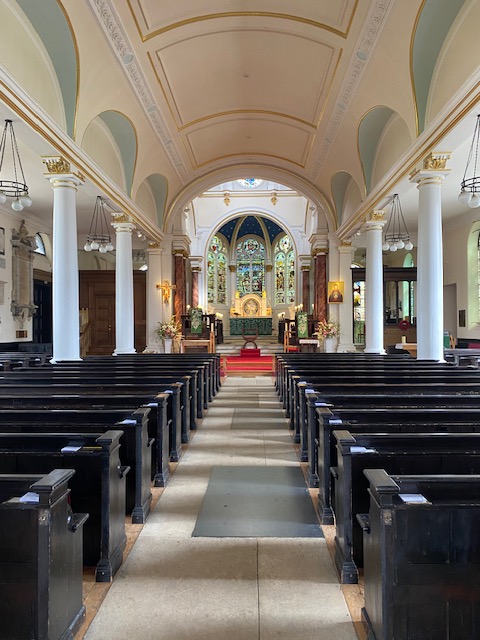
The grade II* listed church of St Anne’s is also worth a visit. The first church on this site was built in 1714 on land given by Queen Anne, and largely at her expense. The building was greatly enlarged in 1770 at the expense of King George III, with further extensions over the next 50 years or so.
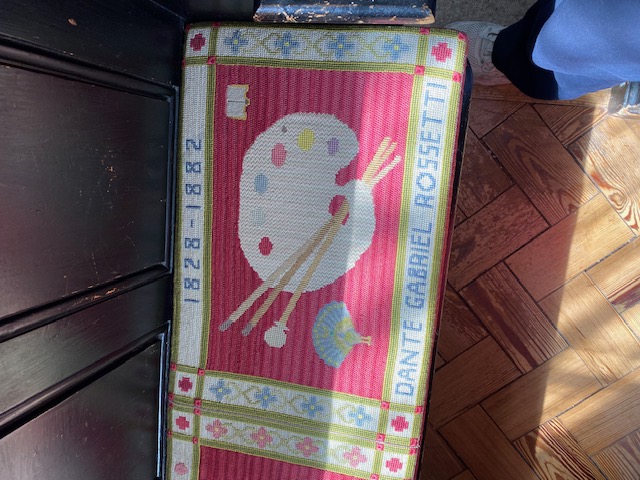
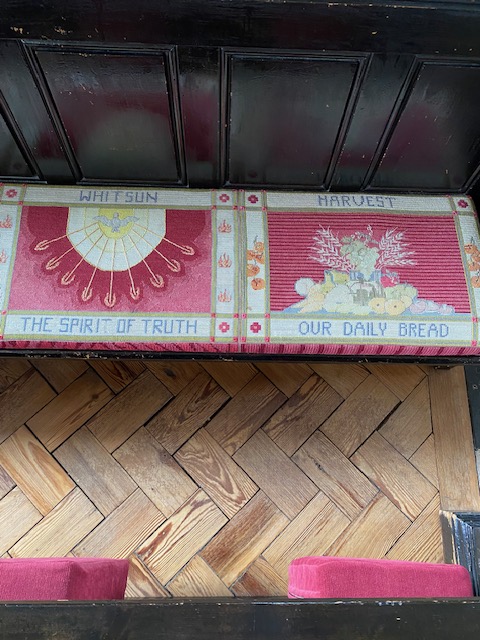
In 1961, a bold scheme was initiated to make cushions for all the church pews, with each cushion illustrating some person, place or thing connected with the history of the village of Kew. An embroidery guild was formed and a standard pattern was designed. It’s true to say that the Pew Cushions have added greatly to the beauty of the church, providing an historical record of the village and have attracted much interest.
6. Thorney Hedge Road bus stop
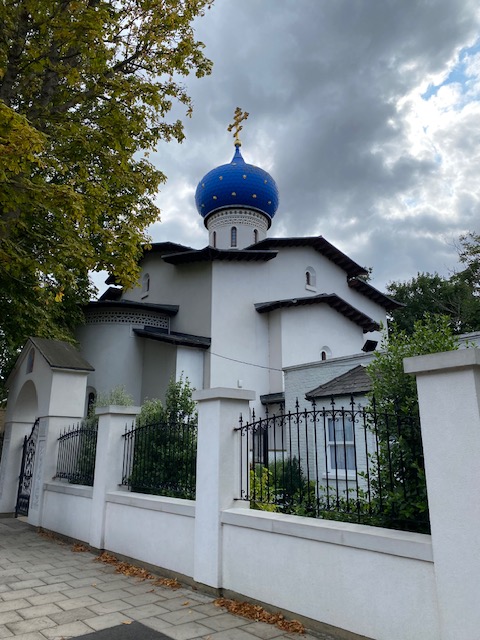
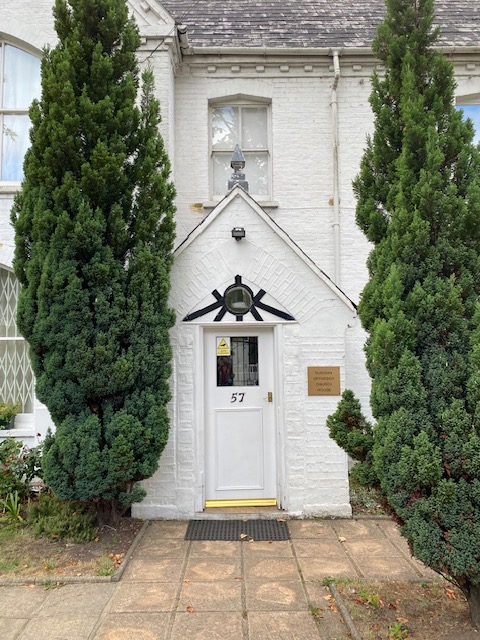
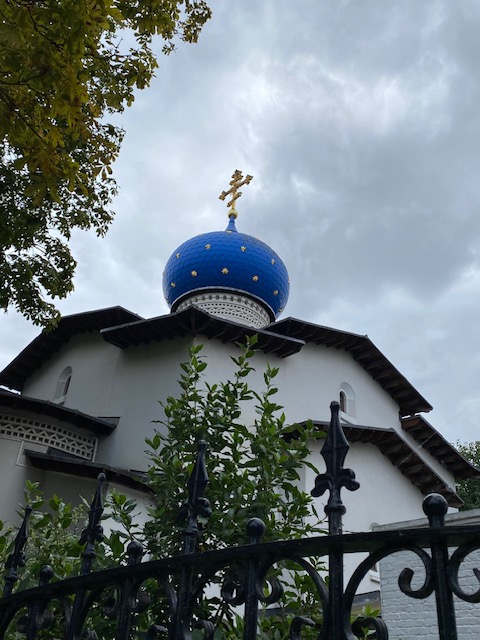
Walk around the corner for a few minutes and find yourself at the Russian Orthodox Church in Harvard Road. You can see the blue star-studded dome from the street and there is a granite cross to commemorate the Royal Martyrs (the Russian Royal Family executed by the communist revolutionaries) just inside the gate. Its full name is The Cathedral of the Dormition of the Mother of God and the Royal Martyrs, and it opened in 1999. There are times when it’s possible to go inside and sometimes you can be lucky to find a dignitary who will show you around.
7. Hammersmith station bus stop
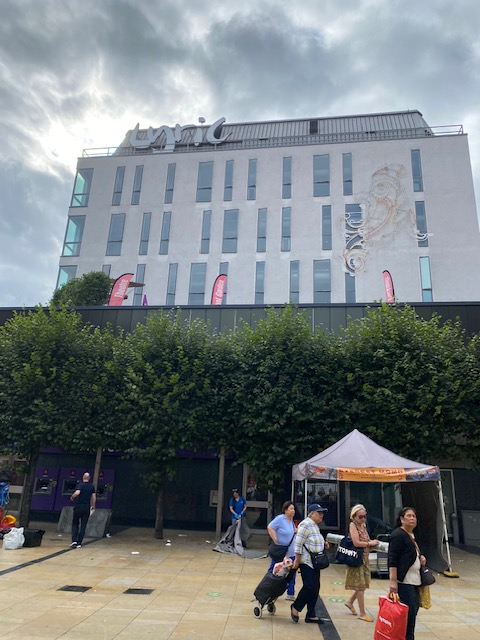
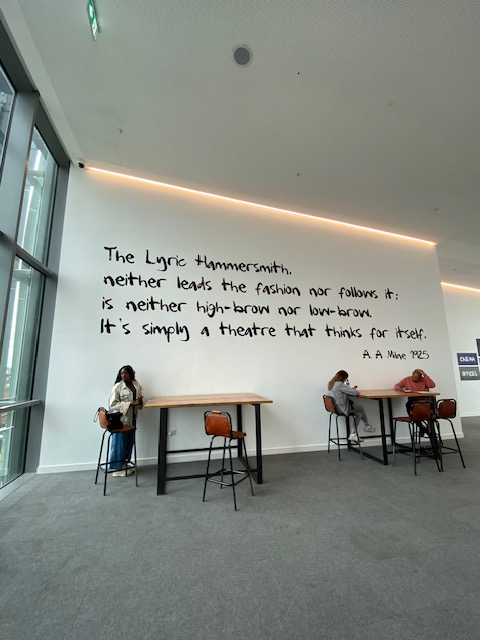
Really near the underground station is the Lyric Theatre. According to A. A. Milne, ‘‘The Lyric …it’s simply a theatre that thinks for itself.’’ In 1895, the Lyric opened as The New Lyric Opera House. An address was given by the famous actress Lillie Langtry and was followed by a performance of a one-act play “Dora”.
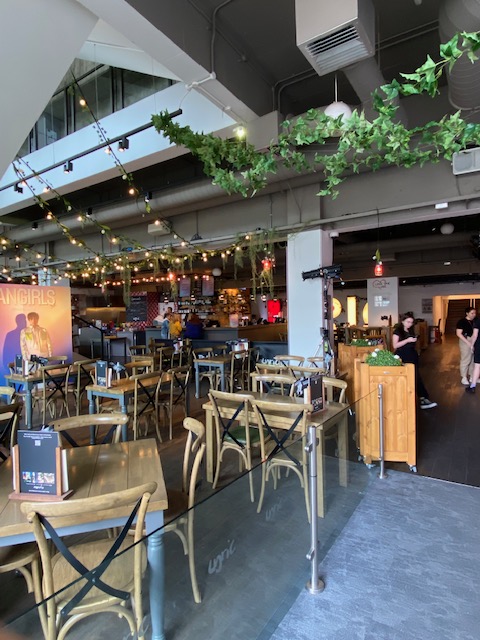
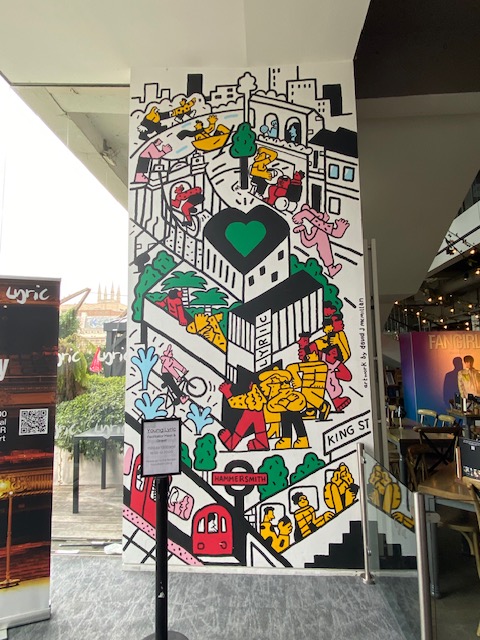
Over the years, the Lyric has put on dramas and pantomimes and music/dance performances. Iconic figures such as Dame Edith Evans and Ellen Terry performed here. There was a decline in numbers in the pre-war years as audiences were attracted by motion pictures. Numbers gradually built up again in the early to mid 1960s but by the end of the decade, they had noticeably dwindled again. It was bought by the local council in 1969 and renovation took place. It was reopened by HM the Queen and HRH Prince Phillip in 1979. These days, there’s a positive vibe as you walk through the door. Current show (August 2024) is Fan Girls with a wealth of diverse plays and concerts in the upcoming schedule. The café is open to all and it’s worth venturing up to the roof garden for a magnificent view of the locality.
This was a really great route, once the initial disappointment of not finding places that should have been there and seeing the scaffolding covering the whole of Kneller Hall. Turner’s House was a total delight, including the garden, and finding where Gainsborough lived and was buried was a bonus. Banksy’s Goat has to be the cherry on the cake but even without all those cultural places, there is plenty to see. The only down-side is that the bus has a reduced schedule compared to other routes – at best, there are 3 an hour.
Toilets that are available to the public and free:
- Gurdwara
- White Hart Inn
- Turner’s House
- Lyric Theatre
 london routemistress
One response to “Bus route 110”
wow!! 86Bus route 111
LikeLike