
Heathrow Central bus station to Greenford station
Highlights:
- Manor House and Grounds
- William Roy’s baseline marker
1. Nene Road bus stop
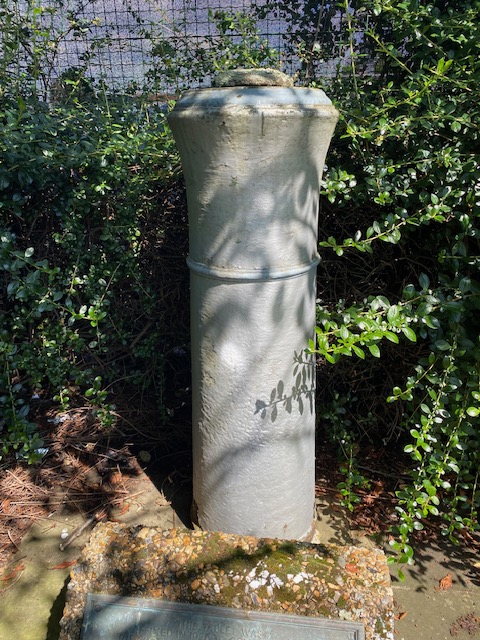
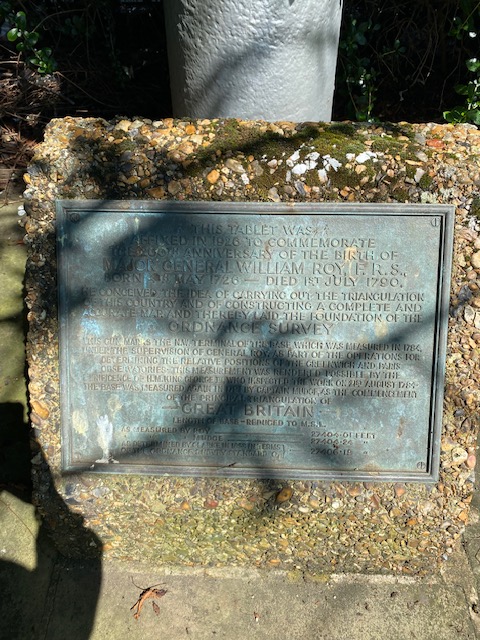
Just a couple of stops from Heathrow Central bus station is Nene Road and a short walk from the stop is William Roy’s (baseline) north west marker. If you didn’t know it was there, however, I doubt you would ever find it! Who was he and what did he do to merit a marker? The origins of Ordnance Survey go back to a triangulation survey carried out for King George III and The Royal Society between 1784 and 1790. The survey, carried out by Major General William Roy, determined the relative positions of the Greenwich Observatory and L’Observatoire de Paris, and measured the distance between the two observatories. Roy’s first action was to measure a survey base-line across Hounslow Heath during the summer of 1784. The marker is a cannon and has a plaque explaining the significance of the site and the importance of the work that was carried out by Roy.
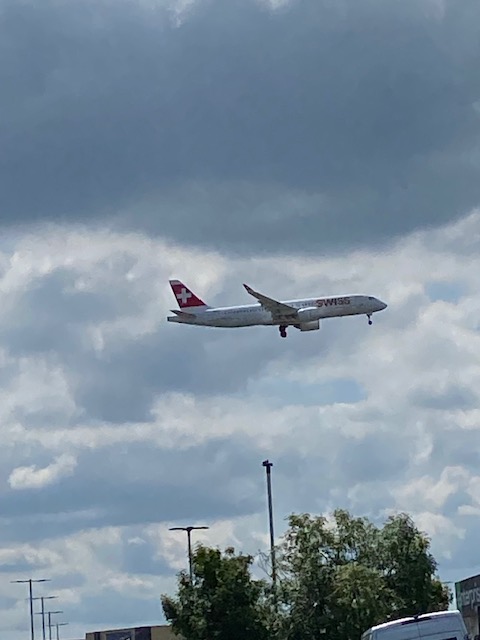
The position of the cannon is on the perimeter of one of Heathrow’s runways so every minute or so, it’s possible to catch sight of one of the many planes that arrive at the airport. It would be best to go to the top of one of the hotels but it seems that that is a privilege reserved for guests of the hotel.
2. Craneswater bus stop
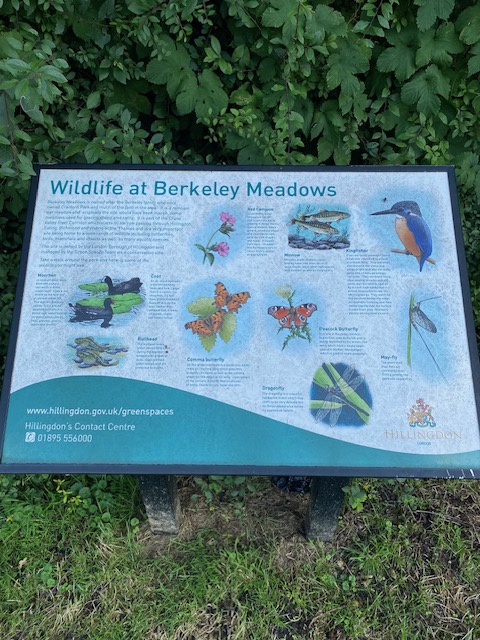
This stop sees the first of several outdoor spaces on this route. It’s Berkeley Meadows that takes its name from the Berkeley family who once owned Cranford Park and much of the land in the area. It would have originally been marsh, damp meadows used for grazing sheep and cattle. Running along the east side of the park is the river Crane that rises in Harrow and reaches the Thames where it becomes tidal. The park is teeming with wildlife including butterflies, birds and insects.


3. The Parkway bus stop
On the way to this stop, you’ll pass a beautiful building that is a Doubletree hotel, and is the former Berkeley Arms Hotel. It was built in 1932 to the designs of E P B Musman and was constructed in a ‘chateau-type’ style. Built as a group of three château-type buildings with crow stepped gables and little slated turrets, they were described as “ingenious architectural fun” in the journal Architectural Review in 1939. Above the front entrance, the Berkeley shield of arms remains and is a reminder of the aristocratic owners of Cranford Manor since the time of James I.
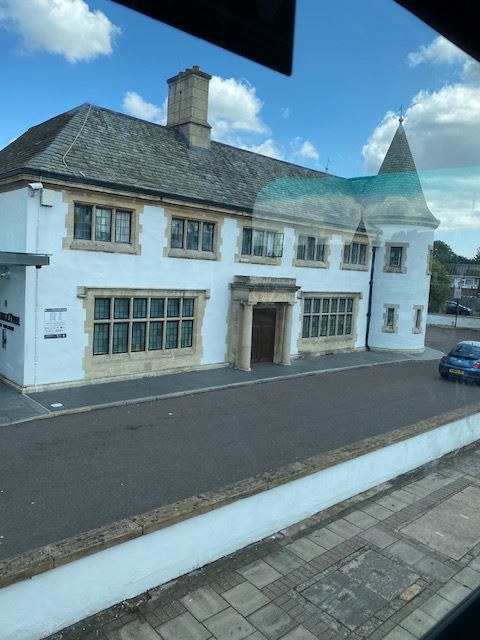


When you get to the Parkway stop, it’s a short walk to Avenue Park. The river Crane runs through here as well as Berkeley Meadows and it provides a pleasant enough walk with shade from trees, if you happen to be there (as I was) on a warm, sunny July day. Next door is the Church of our Lady and St Christopher, which was something of a pleasant surprise. The building is considerably more modern than many that are in the suburbs written up about in these blog entries but there is a certain charm in its symmetry.


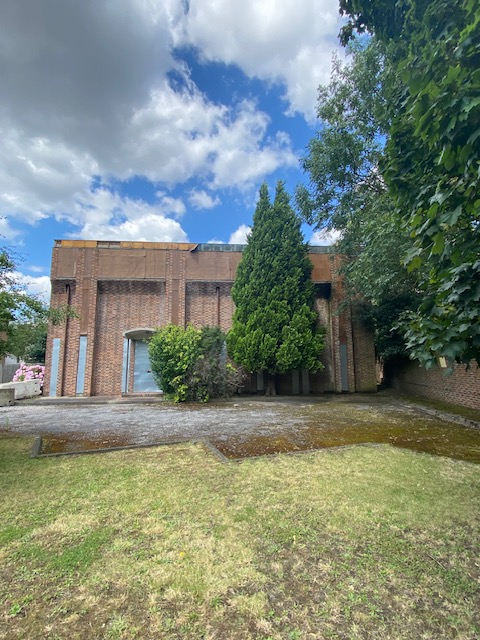
4. Wentworth Road bus stop
There are a few things to see from this stop. First of all is the Southall part of the Grand Union canal and its riverside family restaurant, The Grand. The Grand Union was originally known as the Grand Junction Canal, designed to link the capital city with the UK’s second city, Birmingham. Historically, Southall once boasted one of the world’s largest margarine manufacturing plants. Established in 1894 by a Danish margarine magnate, it produced 800 tonnes each week and was so large that a branch canal was needed to carry coconut oil to the factory.
There is a Sikh temple in close vicinity, the Shri Guru Ravidass, so named after Guru Ji who was born in the 15th century in Kanshi province in India. It’s not an ostentatious building but quite low key and is open for worshippers at all times.


5. The Green bus stop
This is arguably the most interesting place to visit on this bus route. The bus stops opposite Southall’s Manor House and its grounds and it’s definitely worth a visit. The house was built in 1587 and is a timber-framed structure. It is a grade II listed building and one of a few Elizabethan manor houses still surviving. The frontage of the house and its original chimneys still show off its Tudor heritage but, over the centuries, parts of the building have been added to and altered so much by the house’s procession of wealthy owners that a great deal of the current structure is not original. That said, it’s still a stunning building and the grounds around it are similarly lovely. The house has been left in a state of disrepair at times but Southall council has given permission for it to be restored to its former glory.

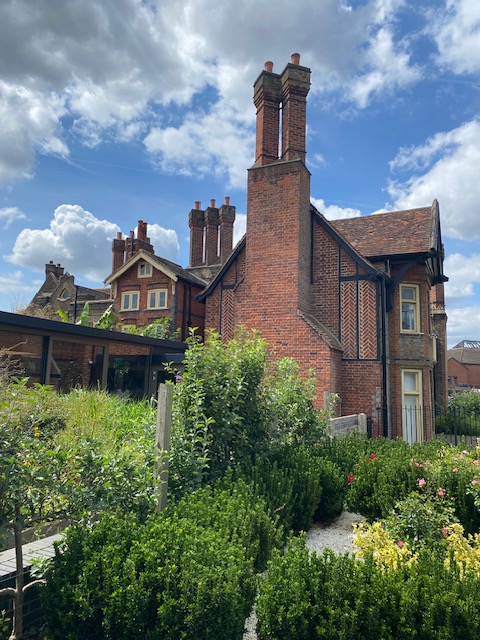
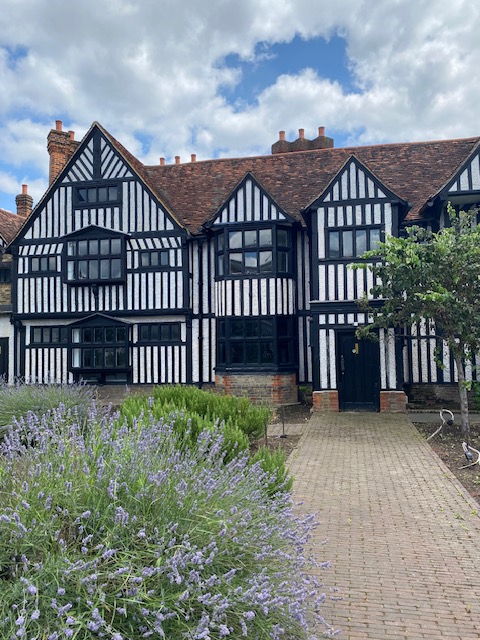
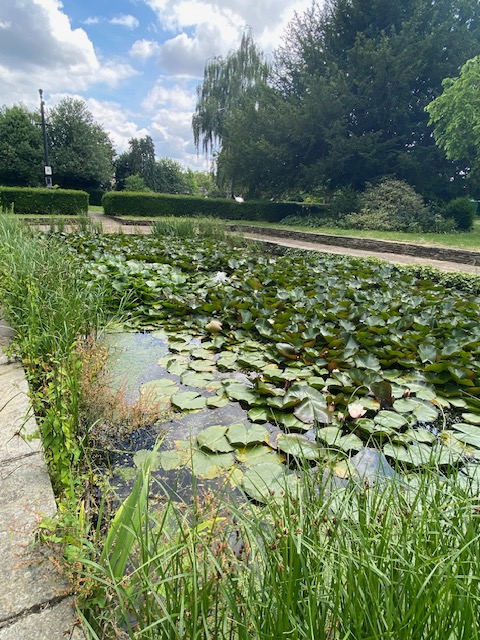
The magnificent grounds of the Manor House are a peaceful retreat with some wonderful yew trees and an old mulberry tree that are said to have been planted by Henry VIII. Set within the grounds is a lily pond, dating back to the 1850s. The grounds were opened to the public in 1902 and the grassy banks of the pond were replaced by Dutch style stone terraces that are still there today.
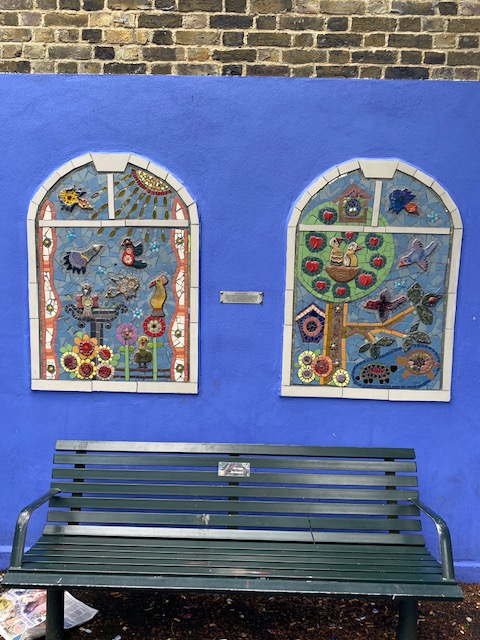
Further within the park is a wall with the Aviary Mosaics placed on it. These mosaic and ceramic panels are so-called due to their position on the site where there was once an aviary. There are seven panels in all and each one is a piece of art. The birds are all made from ceramic and were made in 2013 by community arts group Art4Space who worked with a combination of children at Dormer Wells Nursery, the Mael Gael Elderly Group and pupils from Anslem Primary School.


6. Southall Town Hall bus stop
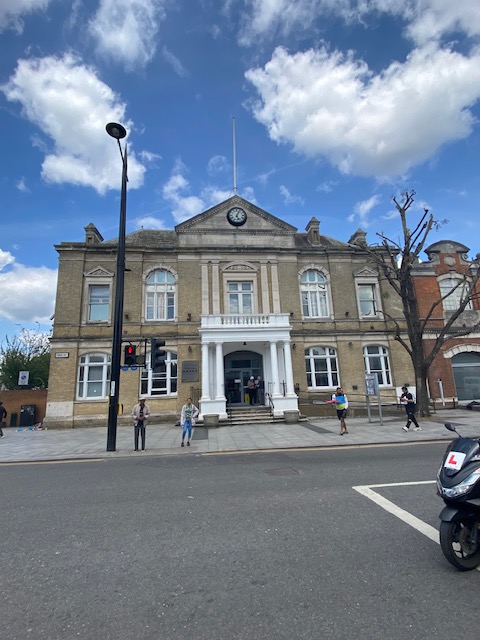
Southall Town Hall is also on the 95 bus route. Its foundation stone wasn laid in 1897. The building has a symmetrical main frontage with five bays facing onto the High Street; the central section featured a porch with Doric columns on the ground floor and there was a window with a balcony flanked by Doric pilasters on the first floor. Above this is a pediment containing a clock. On the side of building are some blue plaques, one of which is for Gurdip Singh Chaggar an 18 year old Sikh student who was brutally killed near this spot in 1976, and another is for Blair Peach, a teacher who had been killed in an anti-riotism demonstration on the 23rd April 1979.


7. Greenford station bus stop
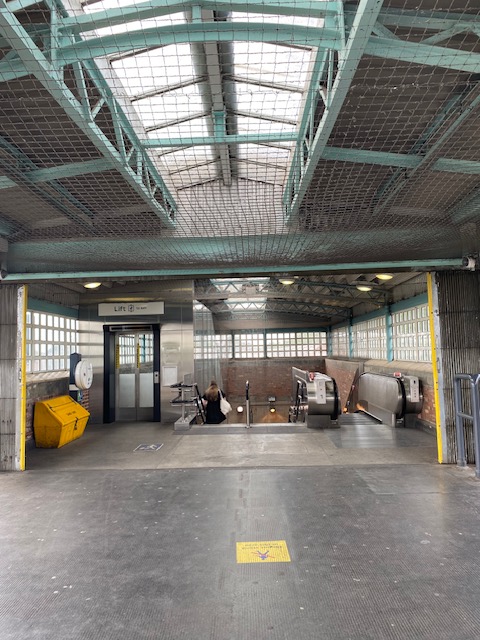
This is the last stop on the 105 route. The original station was opened in 1904 as part of the Great Western Railway. This part of the station closed in 1963 and management was transferred to London Transport. Greenford was the first London Underground station to have an escalator up to platforms above street level. Design of the new station began in 1938 and building had to be temporarily halted due to World War II. The architect had included a wooden escalator which was still in existence until the fire that engulfed Kings Cross station, after which all wooden escalators were replaced by metal ones.


I didn’t find many places that I would definitely recommend to see on this route but the exception to this is undoubtedly Manor House and Grounds, including the beautiful bird mosaics. I realise that some routes are more interesting than others and of course, the more I travel on TfL buses, the more I appreciate that there are overlaps in the routes. But there are still hidden surprises and there’s no way I’m giving up on this very enjoyable project.
Toilets that are free and open to the public:
- Heathrow Airport central bus station
- Renaissance Hotel at Heathrow
 london routemistress