
Beckton bus station to Stratford bus station
Highlights:
- East Ham Nature Reserve
- The Who shop
- West Ham park
1. Start of the route and Lonsdale Avenue bus stop
This is the second bus route that starts at Beckton (see number 101). At the bus station is a stainless steel sculpture of three horses being led by a man. It’s the creation of artist Brian Yale and was intended to cheer up an otherwise bland part of Beckton.
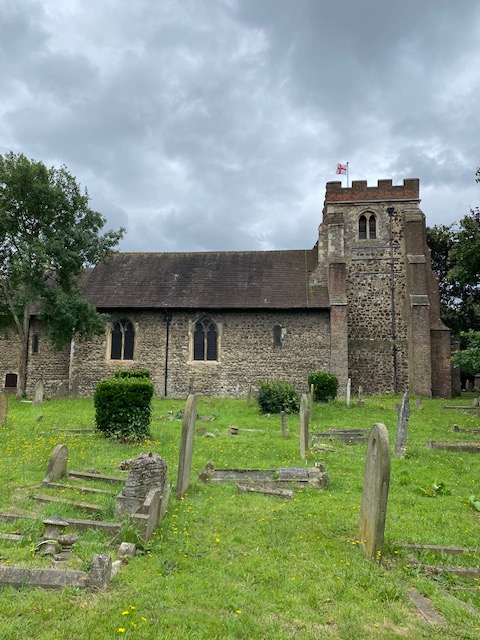
Start the journey at this stop and alight at Lonsdale Avenue for East Ham Nature Reserve. It’s in a busy part of London but is a bit of an oasis with its peaceful surroundings, set in the grounds of St Mary Magdalene churchyard. The church tower probably dates to the early 13th century and partly rebuilt in the 16th century – it is claimed to be the oldest parish church still in weekly use in Greater London and is a grade I listed building. Since 1977, the churchyard has been managed as an educational nature reserve which was officially opened by HM the Queen in 1983.
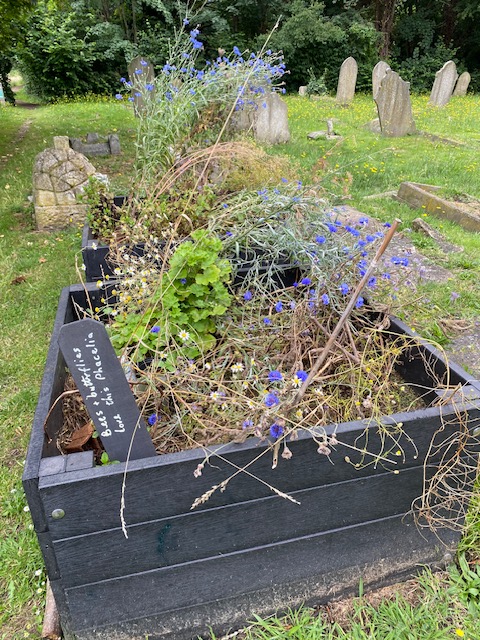
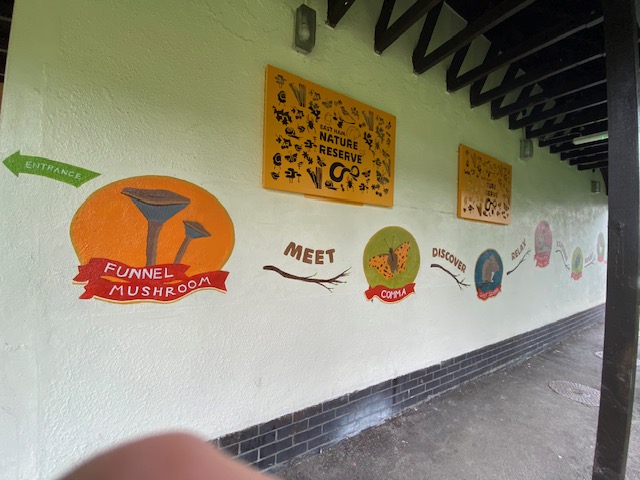
Scattered throughout the grounds are tubs and troughs, filled with flowers and other flora, to attract bees and butterflies. In the 9 acres of woodland, grassland and scrub, it’s also possible to find worms and lizards. The colourful new entrance gate, welcome sign and mural were the creation of artist Matt Ponting, with input from volunteers and local residents.

2. Sandford Road bus stop
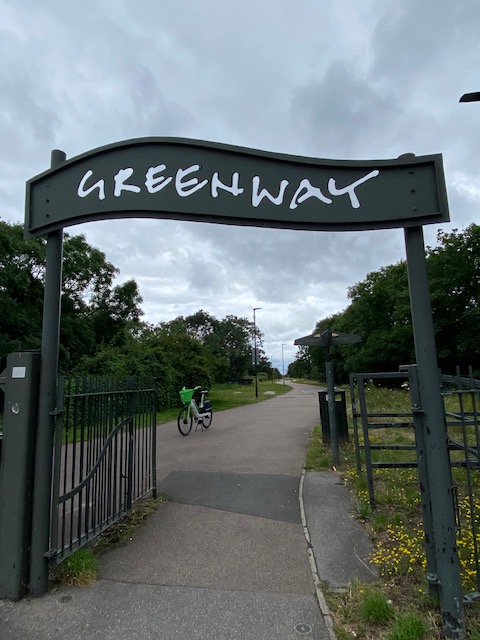
The Greenway footpath can be picked up at this stop. It’s considered a site of importance for nature conservation. It’s a 7 km long footpath and cycle path and is mainly in the LB of Newham. When Mahatma Gandhi was in London for 3 months for talks on the future of India, he would take an early morning walk along this walkway.
3. Upton Park Boleyn bus stop
There is a surprising amount of places to see at this stop and there’s something for everyone. Opposite the stop is the Boleyn Tavern, which has been in this spot since 1900. It was frequented by West Ham FC supporters when the team played at the nearby Boleyn ground. It was also patronised by Gandhi when he was in London in 1931.


And so to the Who shop – not, as I had originally thought, a store dedicated to the merchandise of Roger Daltry, Jon Entwistle et al, but of course to the one and only Doctor Who! The shop is a show piece for all things related to the Doctor and is the brainchild of Alexandra. As you would expect, you can find everything from signed copies of the various Doctors, to life-size daleks, a tardis which is the entrance to the museum and all sorts of memorabilia from William Hartnell’s doctor to the present day. Alexandra started the shop nearly 40 years ago – in December 1984 – in a warehouse in Wapping and came to its present location in Upton Park in 2009. It’s the foremost retailer of Doctor Who merchandise and as such, has built a deserved global reputation.


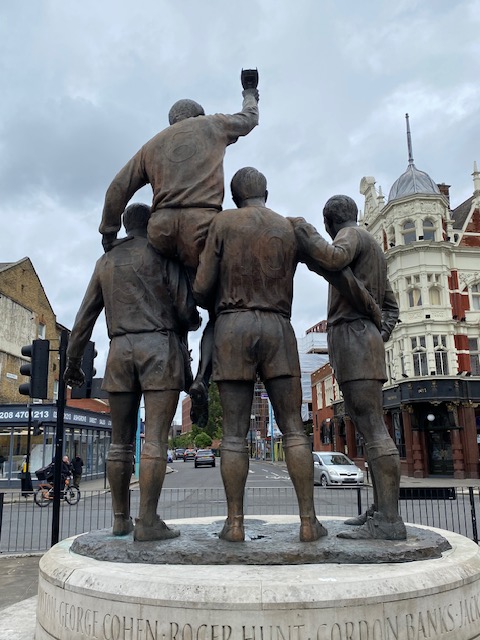
Round the corner from the shop is a large mural of two former West Ham FC players – Trevor Brooking and Billy Bonds. And on the football theme, along the road is a large bronze statue of “The Champions” the four West Ham players who helped England to victory in the World Cup 1966. They are Bobby Moore, Geoff Hurst, Martin Peters and Ray Wilson. The names of the rest of the team are etched on the pedestal of the sculpture.
This piece was inspired by the actual lifting of Bobby Moore – captain of the victorious team – by his team-mates. They were allegedly grimacing due to his weight but poetic licence allowed Jackson to make sure they were smiling for this sculpture!


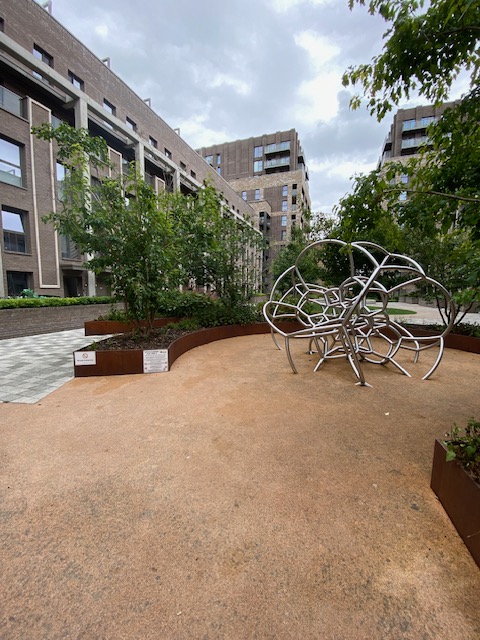
Still at the same bus stop, head towards the Boleyn Ground Memorial Garden, a small space but one that reflects on the importance that supporters brought to the club (West Ham FC, once at home at Boleyn Ground). Then the final place to visit here is Our Lady of Compassion church, a catholic church that was completed in 1911 and blessed two years later. Catholics in the area had previously worshipped at chapels attached to local schools until the church and its parish were both established in 1911. The church tower is currently undergoing renovation so is covered in scaffolding.


4. St Antony’s Road bus stop
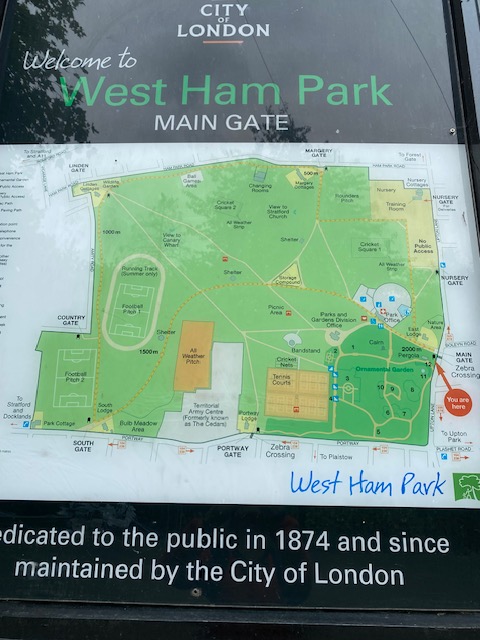
Like the last stop, there is a considerable amount to see around here. First is West Ham Park which is on the site of the original Ham House. It was first recorded in 1670 and named Upton House some time later. By the late 1780s it was renamed Ham House to avoid confusion with another Upton House which is nearby. Ham House was demolished in 1872 and its grounds opened to the public as West Ham Park in 1874. At the site of the House is now a cairn of stones with the inscription “This fountain is erected on the site of Ham House for many years the residence of Samuel & Elizabeth Gurney and their family 1876”.
Also within the park is an ornamental garden and very pretty pergola, especially at this time of year (summer).


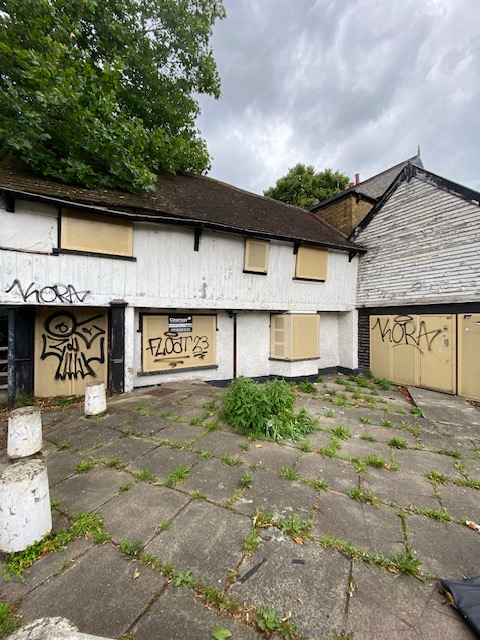
Walk through the park and head for the old Upton Lodge. Sadly it’s now in disrepair but it’s still just possible to see how it might have been a building worthy of a king. By the 17th century, Upton had become a prosperous hamlet. The ward of Upton contained 25 dwellings in 1670 many of which were considered to be for “genteel existence”. One of the houses in existence at that time was this ancient timber-framed structure said to have begun life as Henry VIII’s Forest Gate hunting lodge and/or dog kennels, (though there’s not much evidence for this). The house was later extended and converted into an inn called the Spotted Dog.
‘The Dog’ has survived and is the oldest non-ecclesiastical building in the London Borough of Newham. However, it has been abandoned for many years and is boarded up and left to rot. There is a possibility that it will be renovated in the coming months as a restaurant/hotel.


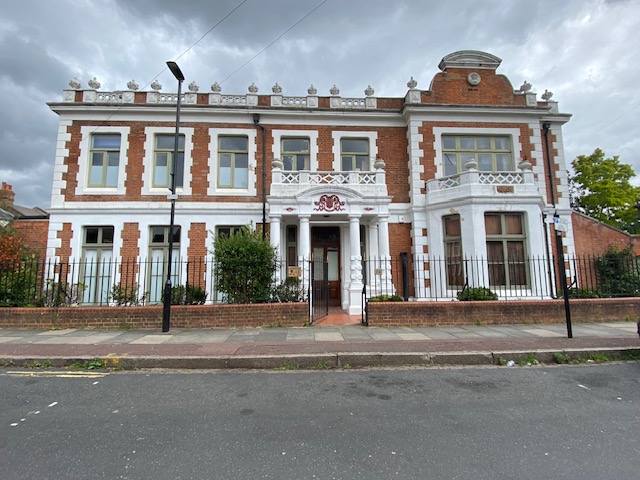
Around the corner from this spot is The Red House, a grade II listed building. It is St Anthony’s Catholic Club – known as The Red House because of its red brick façade. It began life in the 18th century as the home of a Dutch merchant and was extensively remodelled in the 1880s. It was later the home of a manufacturer of early trade union banners, after which it served as a Catholic club until its recent conversion back to residential use. There’s an interesting plaque on the front of the house that looks like two fishermen in a rowing boat – this might be connected to the Dutch merchant, though it’s not obvious.
One more place of interest to see here and it’s the Megg’s almshouses. These were built by the Whitechapel parish in 1893. The site had been chosen by the Rector and Churchwarden of Whitechapel, who were trustees of the charity established by Williams Meggs. They are still in use as retirement housing. There are 12 self-contained one-bedroom apartments. Above the central doorway are mounted the arms of the Meggs family and the memorial stone, which is sadly almost illegible.


5. Paul Street bus stop
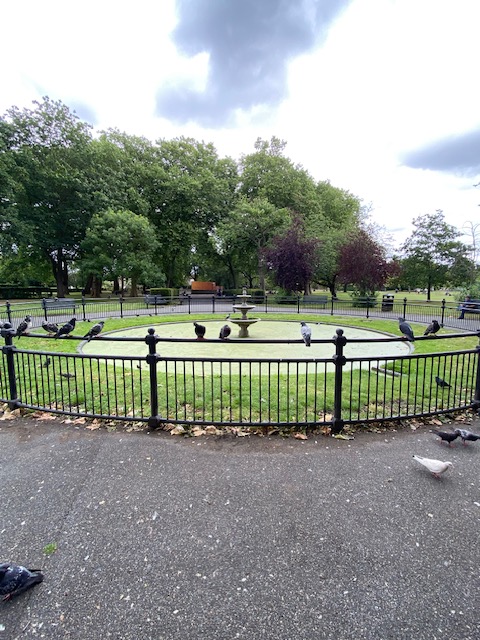
This is the stop for Stratford Park with its ornamental and sensory gardens. The park dates back to 1899 and it has retained many of its original features including the layout of paths, park buildings, ornamental fountain and the cast iron boundary railings and entrance. There is plenty of flora and fauna, with the park providing a range of habitats for birds, insects, butterflies, squirrels and foxes. Bedding flowers are a feature of the park as well as shrub borders, hedges and meadow areas.


6. Stratford bus station bus stop
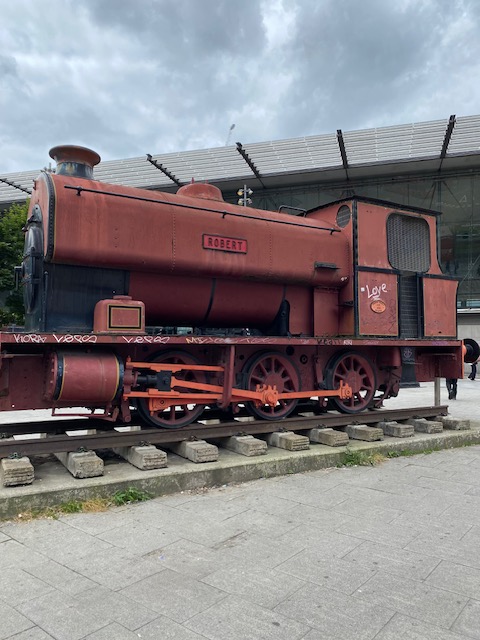
Final stop on this route is at the station where just outside is Robert, the Red Steam Train. This locomotive was built in 1933 to be used by the Lamport Ironstone Mines Railway in Northamptonshire. After the railway closed in 1969, Robert worked on a number of heritage railways until it was bought by London Docklands Development Corp as an example of a 20th century industrial steam locomotive. It was placed here in Stratford in 2011 to commemorate the area’s long association with railways – which started in 1839, with the first station opening here by Eastern Counties Railway.


What a varied and interesting route this turned out to be. Plenty of places of interest in which to stroll and discover the old (St Mary Magdalene church and the cairns on the site of the old Ham House) and the relatively new (East Ham Nature Reserve, The Who shop and the Champions bronze statue).
I have said this before so at the risk of repeating myself, I am constantly amazed at just how much London has to offer that’s off the beaten track and wouldn’t be found on a regular tourist trail. I can’t think of any of the routes I’ve travelled on to date, that doesn’t have at least one remarkable place of interest.
Toilets that are available to the public and free:
- East Ham Nature Reserve
- West Ham Park
 london routemistress