
Edmonton Green to Brent Cross Shopping Centre
Highlights:
- Charles and Mary Lamb’s tomb
- Pedestrian crossing, Edmonton Green
- The Old Bakery gin distillery
- Oliver Tambo bronze statue in the park
1. Edmonton Green bus station bus stop
This is definitely one of those routes where there is plenty to see before starting the journey. The first place to find is Church Street where you will soon come across a red brick building that was the Charity School House. The plaque on the wall says it was Edmonton Girls Charity School. Founded in 1778, the school’s purpose was to train young ladies to go into domestic service, so the emphasis was on sewing, washing and ironing rather than academic subjects. The school closed in 1903 as a consequence of the 1902 Education Act. Above the doorway is a statuette of a female pupil dressed in blue.
The school was financed by subscription from wealthy benefactors. Subscribers who donated at least £1 a year could nominate one pupil. There were benefits of obtaining a place for your daughter. As long as she behaved herself, she would be supplied with a petticoat, overdress, stockings and shoes.


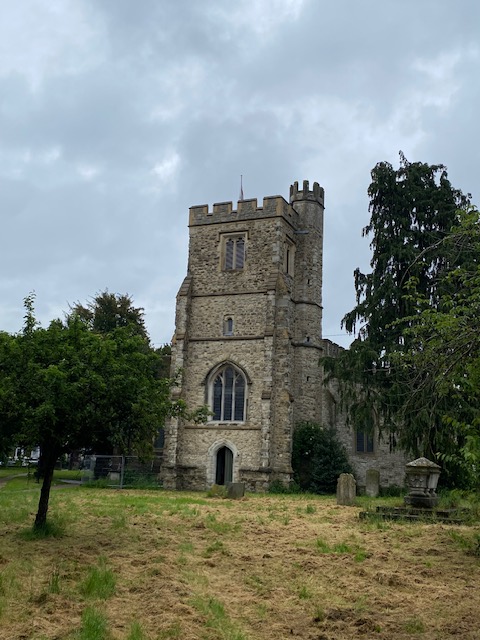
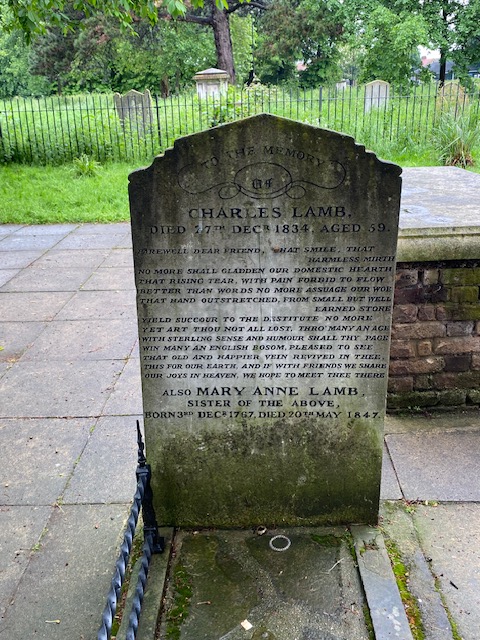
Just up the road from here is All Saints Church which in itself is worth a visit but in particular, there is the tomb of Charles and Mary Lamb, the brother and sister who were both writers, in the churchyard. They collaborated on the “Tales from Shakespeare”, a retelling of the plays for children. Charles was the more prolific with his greatest achievements being his remarkable letters and essays. He was also a renowned poet and a good friend of Samuel Taylor Coleridge, with whom he had spent several of his formative years at Christ’s Hospital school.
The Lamb family was poor and their mother, who was an invalid for much of her life, was almost entirely dependent on Mary for her care. On September 22, 1796, in a fit of madness, Mary stabbed and killed her mother. She was declared temporarily insane and placed under the guardianship of her brother Charles. For the rest of her life Mary was subject to recurrent bouts of mental illness.
Although Charles was 11 years her junior, he died 13 years earlier than Mary, in 1834. He died in Edmonton and it was here that he was buried. When Mary died in 1847, she was interred in the same tomb as her brother.
A church has existed on the present site since at least the early 12th century. Inside the church, fragments of the South Door of the Norman church can be seen in the West wall. However, rebuilding of the church in the late fifteenth century obliterated almost all traces of the earlier building. Surviving medieval features of the church include the chancel, the nave, the north aisle, the vestry and the tower.


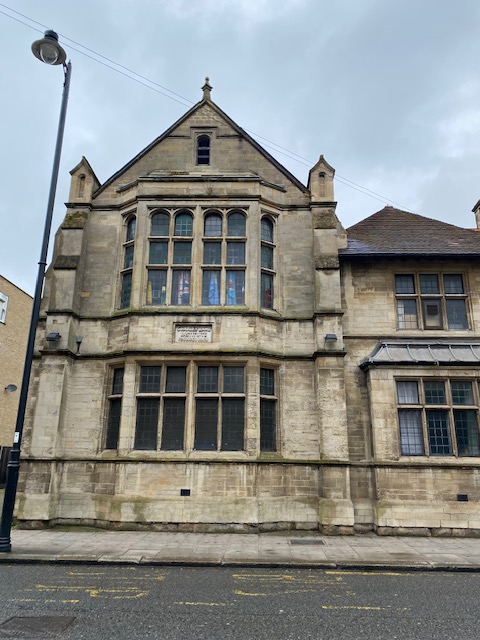
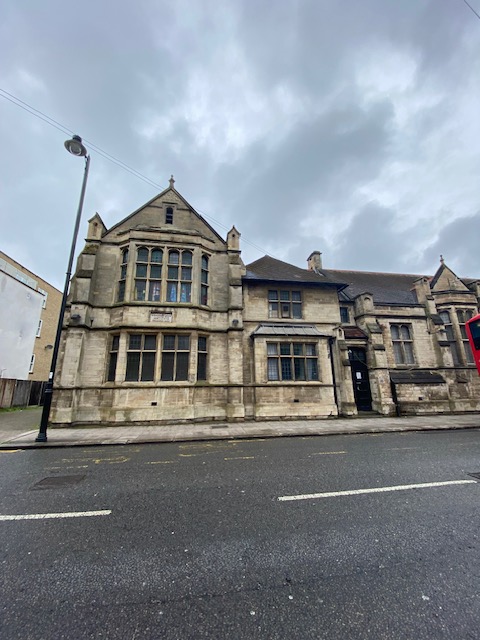
Walking back towards the bus stop, on the opposite side of the road is the Charles Lamb Institute, which was founded in 1908 and is grade II listed. The building is faced with stone in the style of a Tudor college and was originally the parish hall for All Saints Church. These days it’s used as a gym.
Opposite here are some almshouses. There are twelve flats that were built in 1679 and rebuilt in 1754. They were a gift from a Mr Thomas Styles for 12 poor parishioners – six men and six women. They were further demolished and ten were rebuilt by the trustees in 1903.
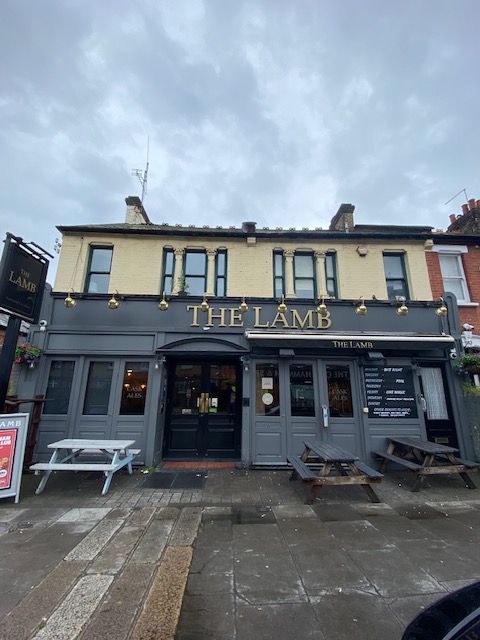
On the same side of the road is The Lamb, a pleasant looking pub which has been named after one of the more celebrated residents of Edmonton.

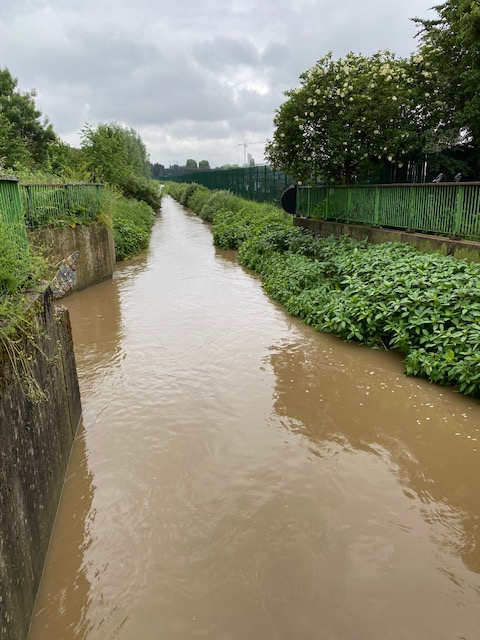
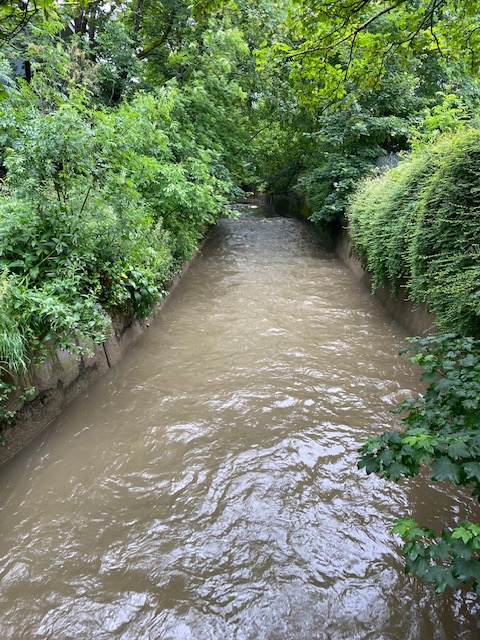
On the way back to the bus stop, you’ll come across Salmon’s Brook, a minor tributary of the river Lea. There is a flood alleviation scheme here, set up because in October 2000 there was heavy rainfall causing a rapid rise in the river with the resultant flooding of nearly 200 homes in the area. Salmons Brook came into being about 400,000 years ago, after the Anglian glaciation ( the most extreme glaciation during the last two million years).
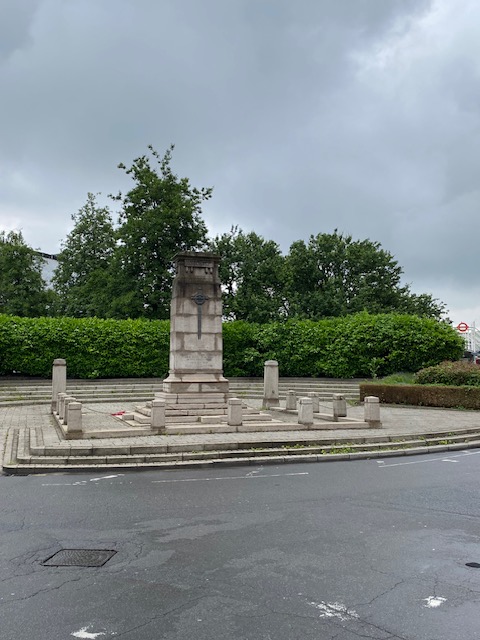
Almost at the bus terminal at Edmonton Green, there is the Edmonton war memorial in the form of a cenotaph, to commemorate those who fell in both world wars.
And finally, on arriving at the terminal, is a jolly sign to greet you there.

2. Edmonton Green Police Station bus stop
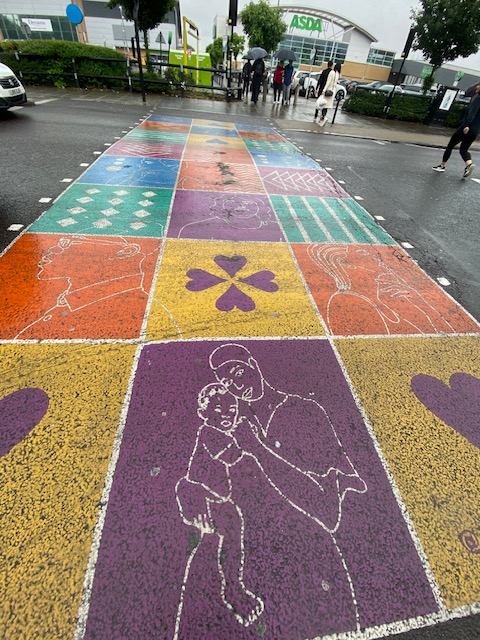
The first place to alight is to see the cheerful pedestrian crossing near the police station. It was created by Kareen Cox, one of the five local artists that Enfield Council approached to create art for pedestrian crossings throughout the borough. In particular they were asked to reflect the multi-cultural communities that live in Edmonton.
Kareen felt it important to make sure that ethnic diversity was inherent in the design of her illustration. To this end, she created a series of mini portraits or facial outlines that overlapped into patterns, resulting in blocks of vibrant colours that represent community spirit.
Just at the crossing, is the Old Town Hall clock tower. This clock was originally part of Edmonton Town Hall and dates from 1903. The clock originally hung from the Town Hall frontage but was later moved to an end elevation. The Town Hall was demolished in 1989, but fortunately this clock was saved. It had been found languishing in 2004 in an industrial estate and Michael Potts, the only remaining member of the family firm Potts that had originally made the clock, carried out a report on the feasibility of getting the clock restored. It was duly restored by Enfield Museum and erected in this spot on Edmonton Green in 2012 to commemorate the Queen’s diamond jubilee.


3. Pymmes Park bus stop
When you leave the bus, you’ll find yourself almost straight away at Pymmes Park wetlands. The wetlands were set up to allow water to flow freely into the lake and minimise pollution from sewage. It’s now a lovely nature reserve area, providing a home for plenty of wildlife.
Set within the park is the visitor centre, once a drab, former WW2 civilian defence centre, now transformed into a cultural landmark by local artists. The exterior of the building has been creatively painted to reflect both the urban nature of the surrounding area and the natural environment. The aim of the local artists was “to make something beautiful, reinventing the space as something representative of the park, and the people that use it.”
The abstract mural cleverly takes the form of a pattern often used on ships called ‘dazzle camouflage’ – a nod to the building’s use in World War Two. These decorated vessels, with their intense combinations of shapes and colour, appear invisible on a horizon line. These days the centre offers housing advice, support & advocacy for rough sleepers and those at risk of homelessness in Enfield & Haringey.
Inside the centre is a cross section of a cedar tree that had been in the park since the 1880s, but was cut down to make way for the nearby North Circular Road. It was done during one night, before anyone was able to protest or stop it happening. Also inside is the history of the park and its surroundings.
Outside the centre, and hidden from view, is a beautiful walled garden, which is the only remnant from Pymmes Park House that was bombed in 1940. It’s locked more often than not, but it’s possible to get a glimpse of it from the gate.


4. Angel Corner/Silver Street station bus stop
The bus stops at Silver Street station and if you look carefully, you can see a dip in the road underneath the railway bridge. When the first double-decker bus drove under the bridge, its roof was torn off. So a depression was made in the road. It used to fill up with water which seriously caught out cars not realising how deep the water was.
This part of Edmonton was named after an inn, the Angel, which has long been gone. The old taverns were a focus of Edmonton social life, hosting everything from riotous fairs to petty sessions and manorial courts. There’s a plaque at the site of the Angel, stating that the Stamford Hill and Green Lanes Turnpike Trust met here from 1713 until 1826.
Pymmes Brook is nearby and along with the previously-seen Salmons Brook, is a minor tributary of the River Lea. This brook, along with all the other places called Pymmes, is named after William Pymme who was a local landowner and a member of the Pymme family who had been granted land by Edward II in the 14th century. The brook mostly flows through urban areas and is particularly prone to flooding in its lower reaches. To alleviate the problem the brook has been culverted in many areas.


5. Millfield Theatre bus stop
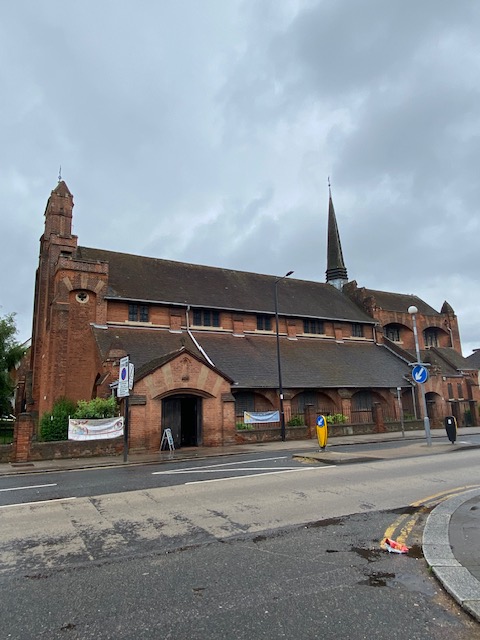
There are two rather splendid but quite different, buildings to be seen at this stop. Over the road is St Aldhelm’s Church, a Grade II listed church, built in 1903. It has a fleche (small spire) on the crossing and a bell turret and is described in its listing as “Gothic style very individually interpreted with Art and Craft influence”. It’s rather like the Tardis, as it seems larger on the inside than the outside.
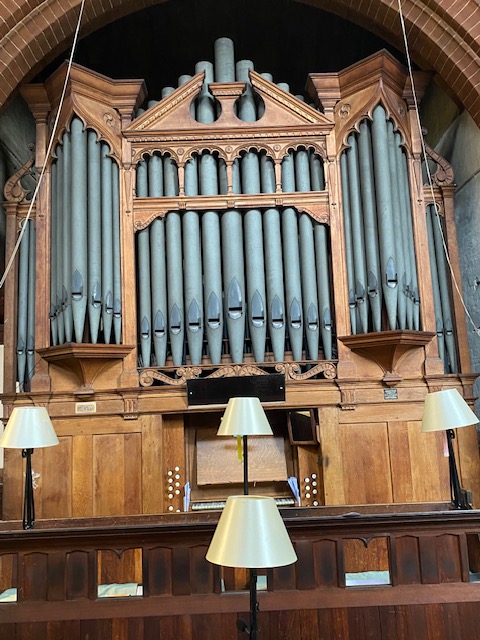
Inside, the remarkable reredos painting behind the altar and the stained glass windows were all made by the same artist, Walter Starmer. The reredos depicting the Ascension was added in 1947 as a War Memorial and the charming and intimate stained glass windows were added over the next few years – they mostly depict individual figures, either saints or characters from the Bible.


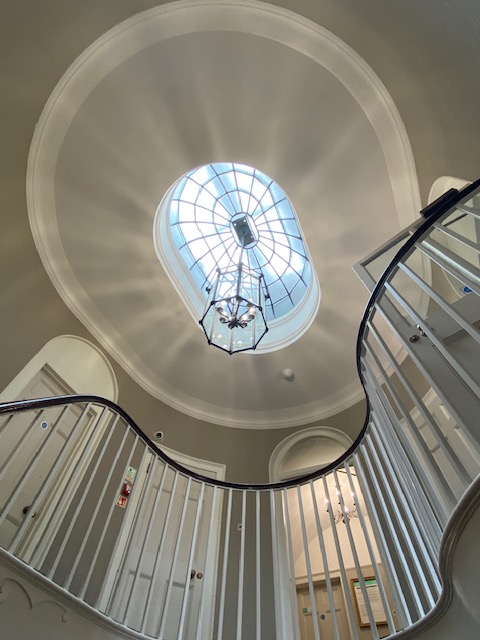
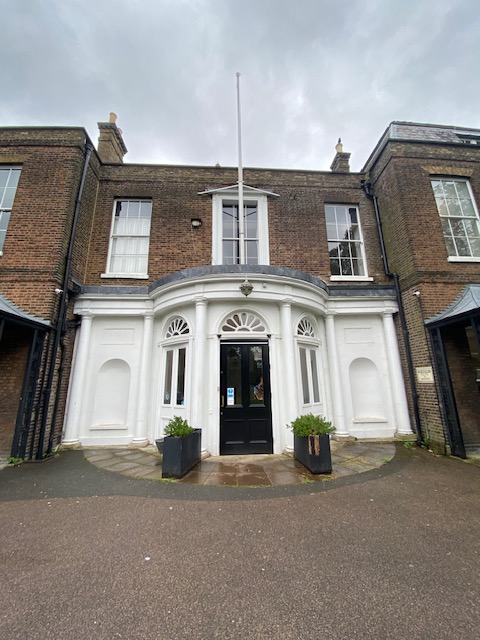
The other building here is Millfield House, a Grade II* listed building. Previously a private house, it has been used as an arts centre since 1979. It’s also on bus route 34. The house dates back to at least 1796 when it belonged to John Wigston of Trent Park. Changing hands several times, in 1849 it became a school for London workhouse children, and over the next 40 years several extensions were made to the house which by 1897 housed 400 children. In 1913 the school closed and by the beginning of World War I housed Belgian refugees. In the 1970s, Enfield Council bought the house and over the next few years, renovated it and by 1979, it became an arts centre and included Millfield theatre.


6. Pymmes Road bus stop
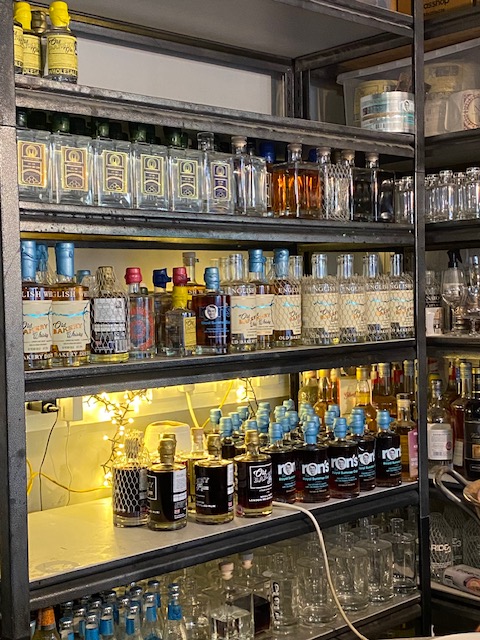
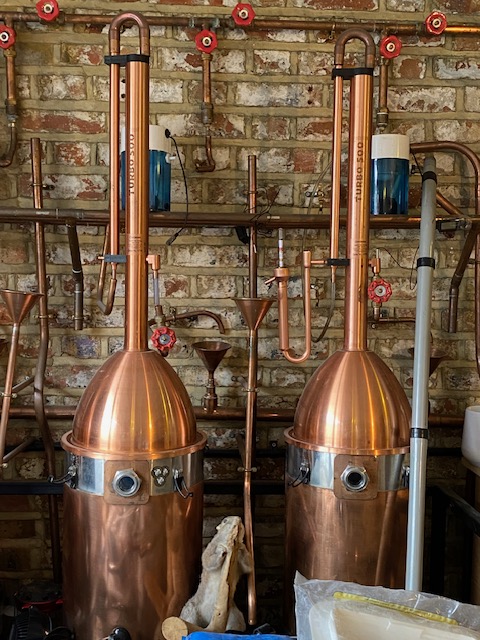
Head round the corner to the cobbled Pymmes Mews and you’ll find yourself at the Old Bakery, now a gin, rum and whisky distillery. The distillery used to be an Old Bakery with a beautiful 140ft tall brick chimney, which was discovered to be unsafe so had to be taken down.
Next door was The Old Grain Store where it’s believed that illicit Gin was made. These properties in Pymmes Mews were run down when Ian Puddick bought them in 2013. He dug into the history of the Old Bakery and discovered that it wasn’t just bread that was being made here – but illicit gin. He tried to track down the original recipe and although he wasn’t successful in doing so, he was inspired to create his own recipe and thus the Gin Distillery came into being.
The buildings are currently (end May 2024) having a big make-over so no gin is currently being distilled though it’s possible to get enough of a flavour (excuse the pun!) to recognise that it really is a gem of a place. There is going to be a gin festival in the mews in June so if you’re in that part of London around that time, do pop in – I’m sure they’d be delighted to see you.


7. Albert Road Muswell Hill bus stop
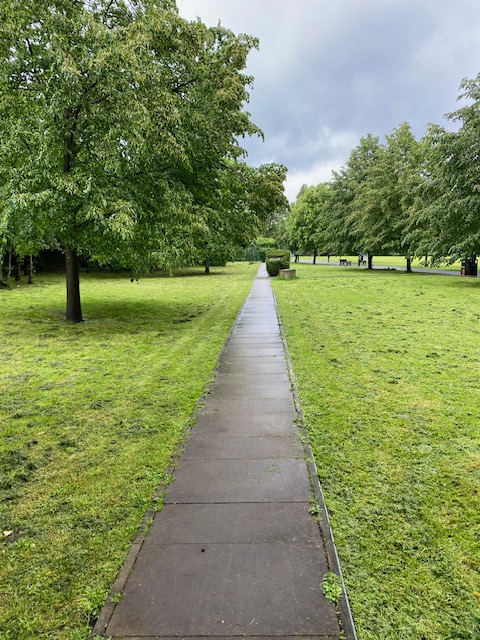
A short walk from the stop is the Oliver Tambo Rec Ground. Over a hundred years ago, the Rec was just an area of land with a brook running through it and no hint of residential homes nearby. The land around it was developed in the 1900s for housing. In 1925, the Rec changed from an informal open space to a formal recreation ground.
It used to be called the Albert Road Recreation Ground, and it was only in February 2021 that the park was renamed Oliver Tambo Recreation Ground. It was renamed in memory of the world-renowned South African anti-apartheid campaigner, Oliver Reginald Tambo.
Not many people know this fact that Oliver Tambo lived in Haringey in exile for over two decades, settling with his family in Muswell Hill. Mr Tambo had been an anti-apartheid activist and served as president of the African National Congress from 1967 – 91. He had been exiled to London in 1960, from where he continued to campaign against the apartheid regime in his native country.
Tambo was directly responsible for organizing active guerrilla units, along with Nelson Mandela and Walter Sisulu. He returned to South Africa in Dec 1990, after many years in exile. He had unfortunately had a stroke the year before, so he had to relinquish his post as President of the ANC and was given the honour of being its chairman. Sadly, he died before the end of apartheid and a year before the inauguration of Mandela as President of SA.
To commemorate his life in the borough, The South African High Commission gifted Haringey a bronze bust and statue of him which can be seen at the entrance to the grounds.


8. Muswell Hill Road bus stop
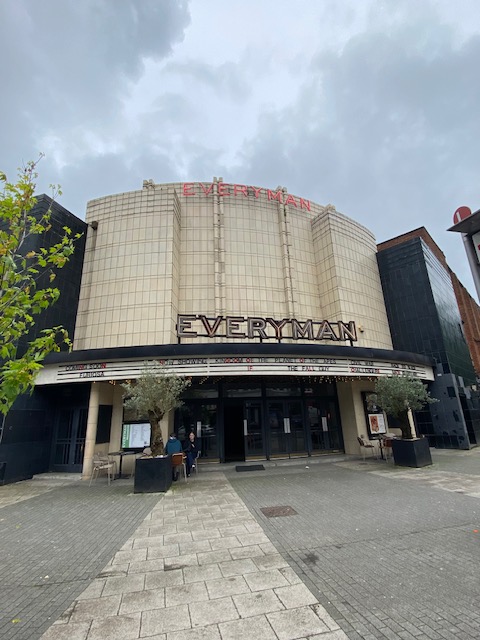
Near the stop is the Everyman Cinema in Muswell Hill, formerly The Odeon which is a grade II* listed building, built in 1935-6. The cinema is tucked on to Fortis Green Road because the prominent corner site originally intended was opposed by members of the church opposite. Because of the church’s opposition, the façade of the cinema was deliberately made relatively low-key. The design is styled on the lines of German cinemas of the late 1920s. The style was adopted in Britain as a more sophisticated alternative to the “historicist pastiches” employed in cinemas of the late 1920s and early 1930s, and one more suited to the middle-class clientele of Muswell Hill.
Muswell Hill is a leafy suburb in north London and the name is believed to come from a natural spring or well (the “Mossy Well”). In the 18th century, it was a village that consisted of large villas and gardens. By the end of the 19th century, more development took place, largely because of the opening of Alexandra Palace in 1873. By early 20th century, elegant Edwardian parades of shops were erected, which are still there to this day and have an array of independent, small shops.
A short walk away from the cinema is 6 Denmark Terrace, the former childhood home of Ray and Dave Davies of the Kinks. Apparently, in 1964 in the front room Dave missing his girlfriend took a razor blade and slashed the speaker cone in a fit of rage and created the fuzz guitar sound on “You Really Got Me”. You’ll have to listen to it again now …


9. Fairlawn Avenue bus stop
The Phoenix Cinema is at this bus stop. Planning permission was approved for the building of the Premier Electric Theatre in 1910, but before the building could be opened, the company went into liquidation and the building was acquired by Picturedrome Theatres Ltd. The first film shown was in May 1912 when “The Ill-Fated Titanic” was screened for 3 days. It changed hands several times over the years, until 1974 when it became an independent arts cinema, owned by Rex. It was in 1985 that it became the Phoenix, and it kept many of the original features, including the 14 art deco panels inside the auditorium.
Over the road from the cinema is East Finchley underground station. If you look upwards when you’re at the station, you’ll see a sculpture by Eric Aumonier called ‘The Archer’. It links the station to its historic surroundings as an ancient hunting area, with the archer’s bow pointing towards the growing metropolis of London. The station is on the edge of the site of the Royal Forest of Enfield, where the court and commoners used to hunt. Indeed, this was the Bishop of London’s stomping ground — hence nearby The Bishops Avenue, one of the most expensive roads in London.
The sculpture dates back to 1940, just a year after trains started running at the station. The sculpture formed part of a wider initiative to link stations to their local area – stopped short by the Second World War, leaving ‘The Archer’ as the only completed work. Archie is actually twice the size of a normal man and is made of beech wood over a steel support, covered with lead.


10. The Market Place bus stop
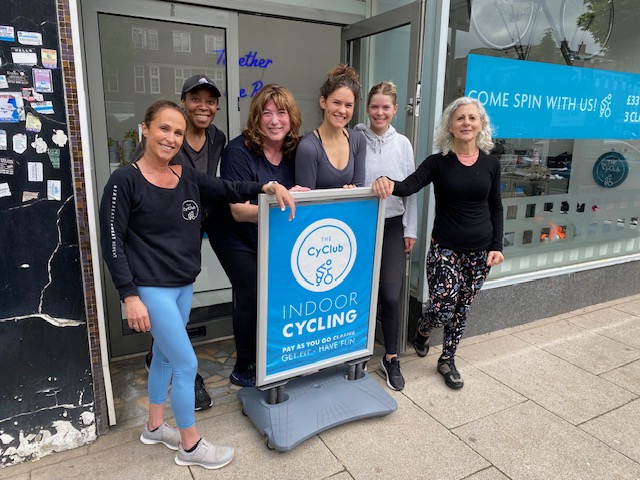
Nearly at the end of the route, the bus stops opposite a spinning club called The CyClub, offering indoor spinning classes. It was started 7 years ago by two ladies who recognised there was a need locally for indoor cycling and initially set up a pop-up solution. They soon realised that the demand was huge so swiftly moved to new and permanent premises. These days, it’s more than just spinning classes they offer – it’s transformed into a club with friendships formed and mutual support.
When I arrived, I was lucky enough to be there just as one of the classes had finished and managed to grab a photo with a few of the (hot and sweaty!) spinners. They all assured me that they have never felt healthier since they’ve started spinning – I have to admit, they certainly looked happy but that might be because they had just survived a challenging class!
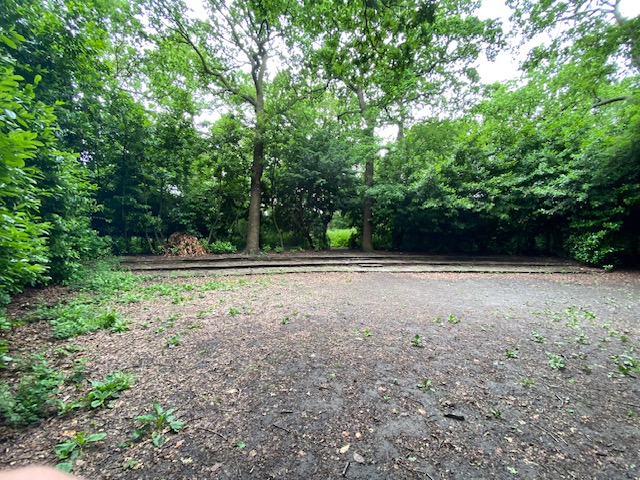
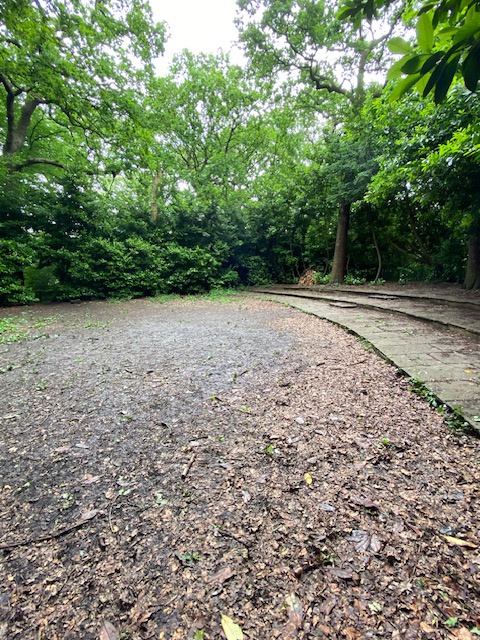
The final place of interest was Little Wood and its amphitheatre, also in Hampstead Garden Suburb. The woods have been a forest for over 1000 years, and were probably part of land given to the Bishop of London in about 704. The area remained in church ownership until the twentieth century, and in 1911 the woods were part of lands leased to the Hampstead Garden Suburb Trust by the Ecclesiastical Commissioners. In 1933 the freehold of the woods was transferred to Finchley Urban District Council, and in 1965 the land passed to its successor, the London Borough of Barnet.
Little Wood has an open-air theatre, built in 1920. The Garden Suburb Theatre is one of North London’s oldest amateur dramatics groups, staging shows in professional theatres as well as here in Little Oak Wood’s amphitheatre.

This was a really interesting route, one that was quite unexpected. I was surprised at just how much there was to see in Edmonton, a suburb that I’d not visited before. And I found out a lot of history, including the discovery that Oliver Tambo lived locally, the tragic plight of Mary and Charles Lamb and up to finding an indoor cycling studio that doubles as a supportive club.
Toilets that are open to the public and free:
- Edmonton Library
- Pymmes Park community centre
- Millfield House
- Phoenix cinema
 london routemistress