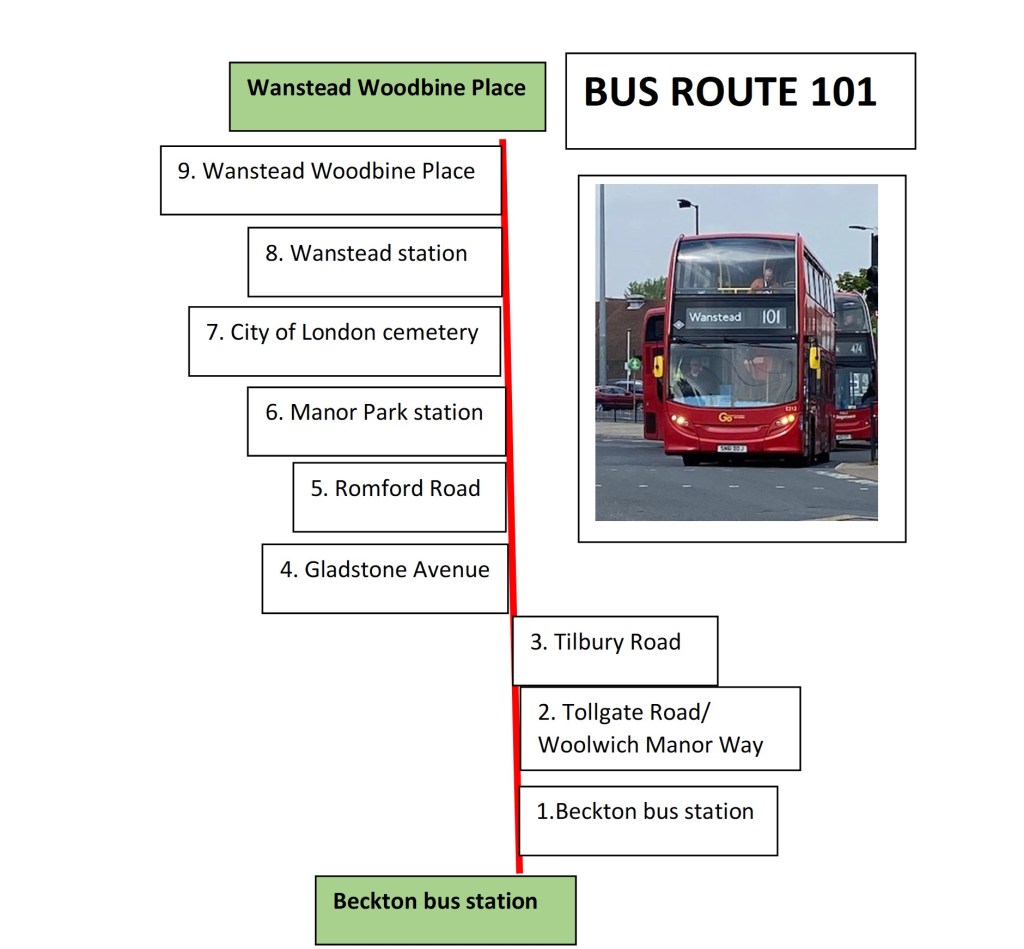
Beckton bus station to Wanstead station
Highlights:
- Passmore Edwards Library (now Applecart Arts)
- City of London Cemetery
- Nightingale mural
1. Beckton bus station
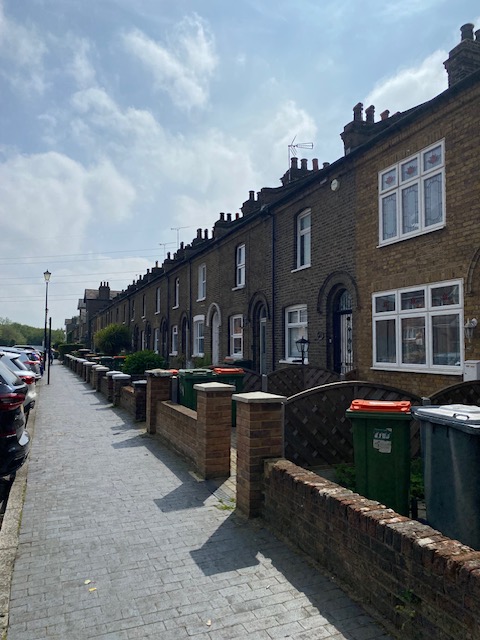
Before getting on the bus at the bus station, it’s worth taking a walk to Winsor Terrace. In 1870 the Gas, Light & Coke Company began producing gas in this area of London. The coal arrived by boat and was unloaded at the firm’s jetties along the Thames and at Barking Creek. Winsor Terrace was originally the firm’s own private road for their own use. Several original properties survive on Winsor Terrace, with two-up-two-downs for the workers and generously proportioned end-of-terrace houses for foremen.
The name Winsor comes from Freidrich Winzer who founded the company in 1812. By 1870, the head of the company was Simon Beck, who installed the firm’s railway system and built houses for his employees. That is why the area is called Beckton.
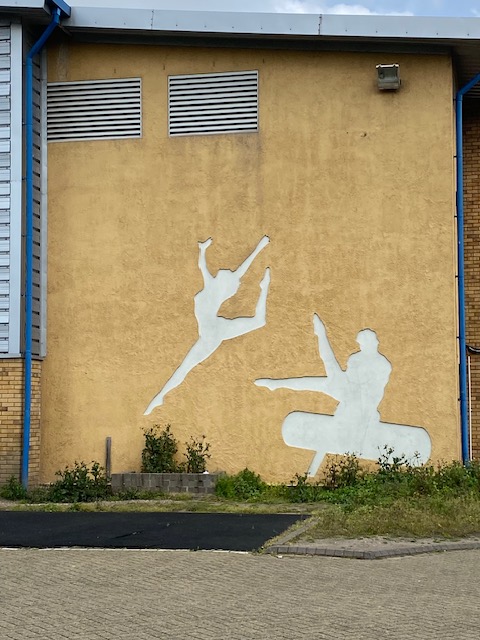
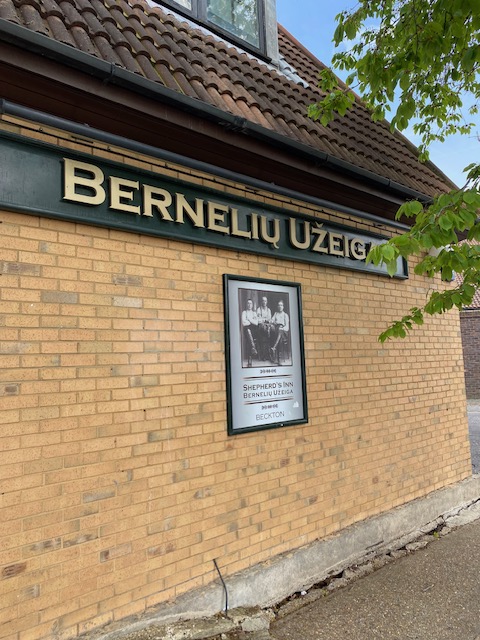
On the way back to the bus, you’ll pass the East London Gymnastic Club with its silhouettes of gymnasts on the exterior walls. It’s next to the Shepherd’s Inn, also known as Berneliu Uzeiga, one of the few Lithuanian restaurants in London, proud of its Eastern European heritage.

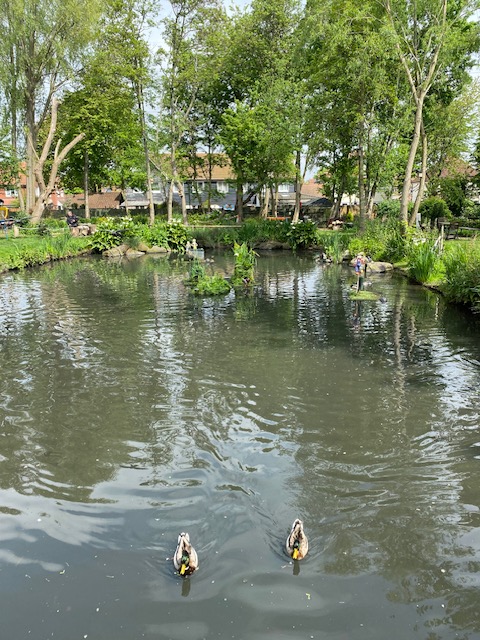
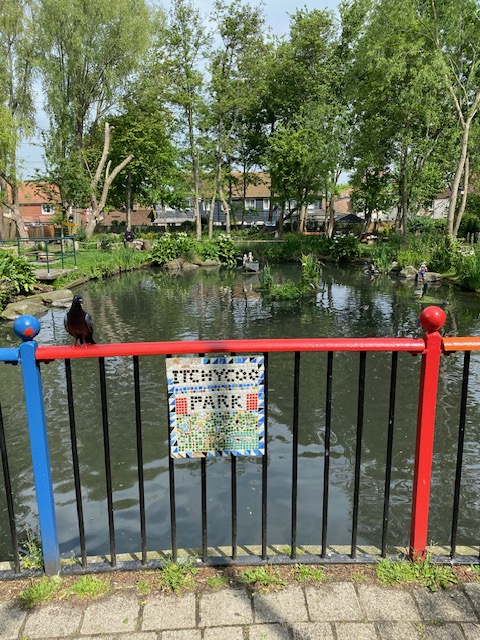
Also not far from here is somewhere called Itchycoo Park, apparently not named after the song by the Small Faces. It used to be an area that was overrun with weeds and rats and rubbish. It became a hangout for people who sold drugs due to how dark and forgotten it was. The pond was a swamp with more shopping trolleys than ducks in the water. It was rescued by a local resident who lovingly improved the small park so that it is now a place of calm and peace for the community.

2. Tollgate Road Woolwich Manor Way bus stop
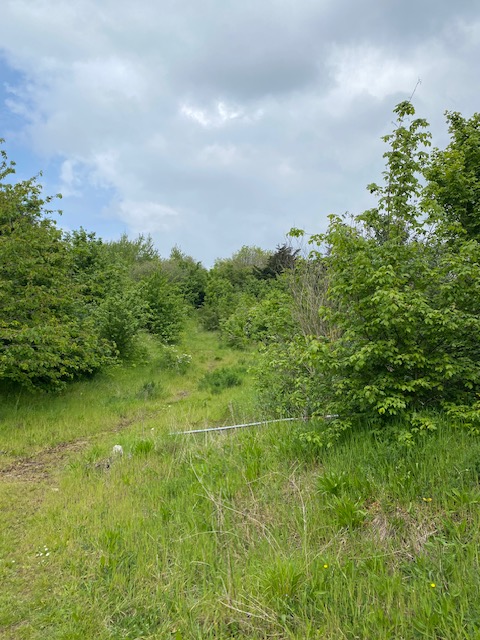
Near this stop is an area called Beckton Alps. It’s the name given, somewhat ironically, to the toxic spoil heap left over from the now-defunct Beckton Gas Works. These Works opened in 1870, operating until 1969. The toxic ash it produced was piled in heaps around the area, which was mainly scrubland. Much of this waste was removed when the area was redeveloped in the 1980s, but one heap of waste remained, and it was decided to make something of it.

3. Tilbury Road bus stop
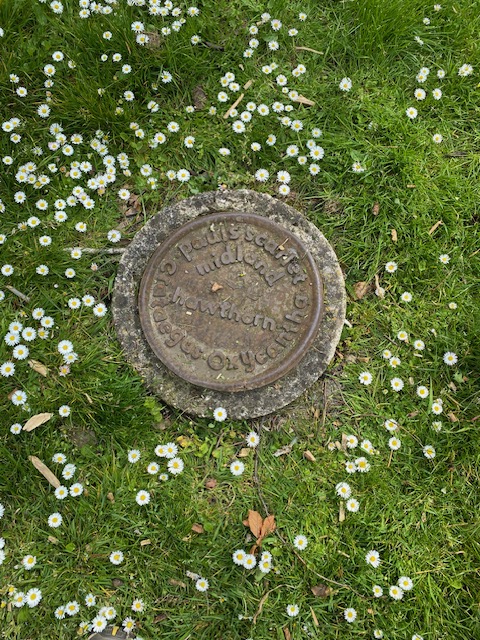
The bus stops at East Ham Central Park which is also on bus route 58. On that route, I wrote about the war memorial and the Discovery Garden. This time I revisited these places but also went to see the Edwardian Garden with its tree trail with very sturdy markers, which in some cases have outlasted the tree. Set within the garden is a brand-new drinking fountain.
Outside of the park and on a wall at Vicarage Primary School is a plaque stating The Cookery Centre. The school started in 1901 but the buildings were only erected in 1911. At that time, girls and boys were educated separately and this building was put up so that the girls could learn how to be good housewives. Above the building’s name is the coat of arms of East Ham.


4. Gladstone Avenue bus stop
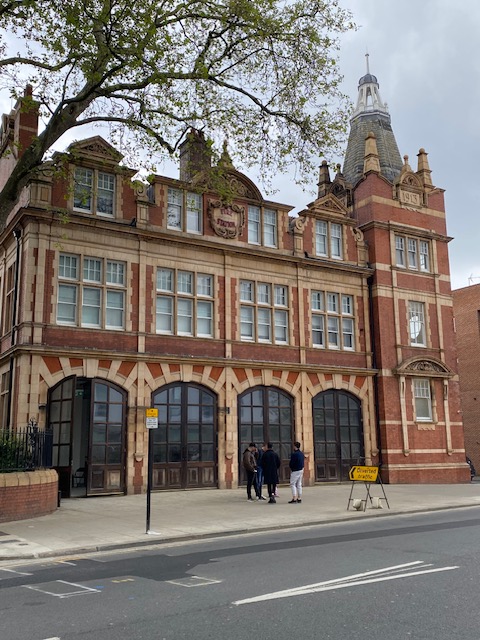
While on the number 100, you’ll pass the old East Ham Fire Station which has subsequently been converted to affordable rent homes. The redbrick building with its heritage windows provides plenty of light and living space. This lovely old building was built in 1913 and continued to be one of two local fire stations until the 1960s.
Alight at Gladstone Ave bus stop and walk round to Plashet Park where there is a very pleasant ornamental garden. Plashet Park was first opened in 1891, from land that was taken from the former grounds of a late 18th Century manor, Wood House. The park is truly a heritage site as its layout has largely remained how it was during the Victorian era, although some features, including its bandstand and drinking fountains, have now gone.
Set within the grounds of the park is the old Passmore Edwards Public Library which is now home to Applecart Arts. The original library was opened by Herbert Gladstone, MP, 30 November 1899. It was largely paid for by John Passmore Edwards, the philanthropist and proprietor of the Building News, who promoted libraries in the poorer parts of London. Applecart Arts was launched in 2008 and began by telling stories to a regular monthly audience at the White Hart Pub in Whitechapel. Moving to different premises over the years, it found its lasting home here at the old Library in 2022 and set about renovating the building, with its 50-seat theatre, rehearsal and exhibition spaces, art studios and welcoming community café. Applecart continues to work with emerging artists and tells stories that celebrate the diversity community.


5. Manor Park Station bus stop
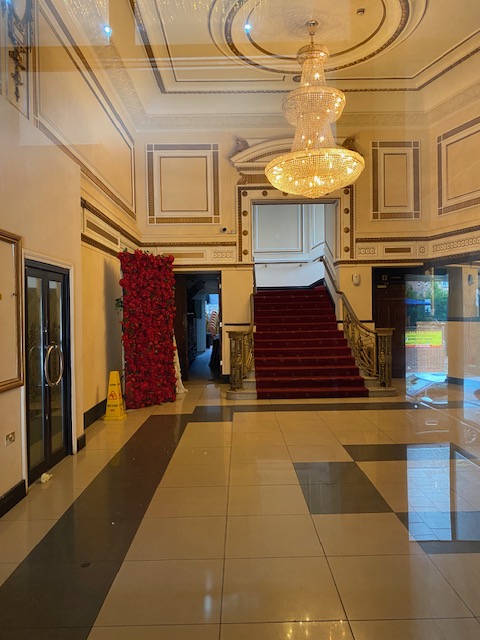
The bus stops outside the Royal Regency banqueting hall which was once the Coronation Electric Theatre and is a Grade II listed building. The Theatre was opened in 1911 and had a seating capacity of 600. However, it closed as the Coronation Picture Palace in 1920 and was substantially enlarged to become a ‘super’ cinema of its day, reopening as the New Coronation Cinema in May 1921 with Mary Pickford in “Pollyanna”. Seating was now for 1,904 and it was equipped with a small organ with an added facility of a cinema café. In 1929, the cinema was wired for sound and it became one of the first in the area to screen ‘talkies’. Stage shows ceased in 1938 and the café closed during the war.
In 1968, the cinema was sold and converted into a bingo hall, followed by a snooker club in the 1980s until 2008. The following year, after much renovation, the building was re-opened as the Royal Regency banquet hall, which it is to this day.
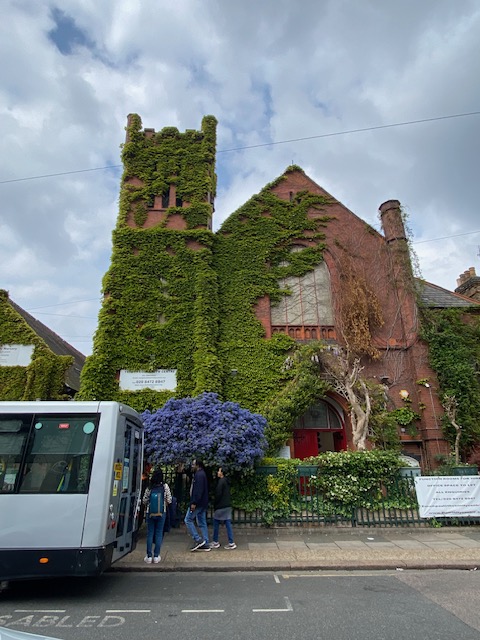
Across the road from this stop is a rather beautiful looking building which at this time of the year (early May) was particularly lovely as it was shrouded in foliage and colour. It’s the Trinity Community Centre which is housed in a converted church. Trinity Church originated in the 1890s, when Scotsman Alexander Thompson, began to hold Presbyterian meetings at his house in Victoria Avenue. With help from the Presbytery of London North a site was bought in East Avenue, and in 1900 an iron church was erected there. It remained a place of worship until 1972 when the building was taken over by Newham Community Renewal Programme.
Another religious building is nearby and is the Mahalakshmi Hindu Temple which was built in 1989 and consecrated on 2nd February 1990. They describe themselves as a “Community temple with different Hindu deities for worship, prayer rooms & outdoor pooja services.” It’s a lovely serene and peaceful building and worth a look at, if only from the outside.

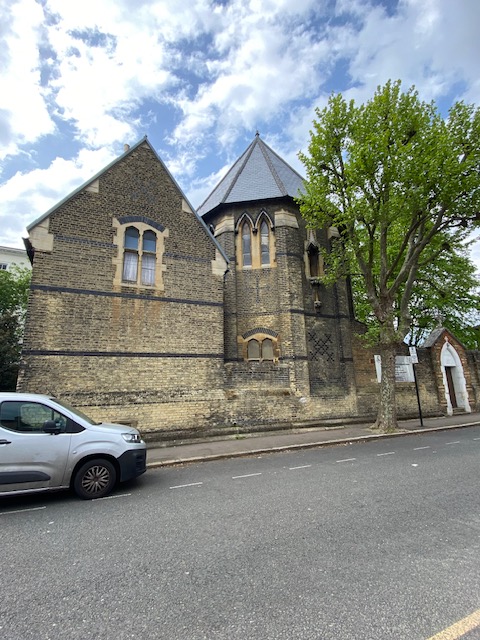
Yet another place of worship in this area is St Nicholas church. It originated in 1870 as a chapel for St Nicholas’s Catholic Industrial School for Boys, which occupied Manor House, previously home to the Quaker Fry family. In 1918 St Nicholas became a parish church in its own right as well as a school chapel. In 1925 the school closed, after which its site and buildings (other than the chapel and priests’ house) were sold to the London Co-operative Society.
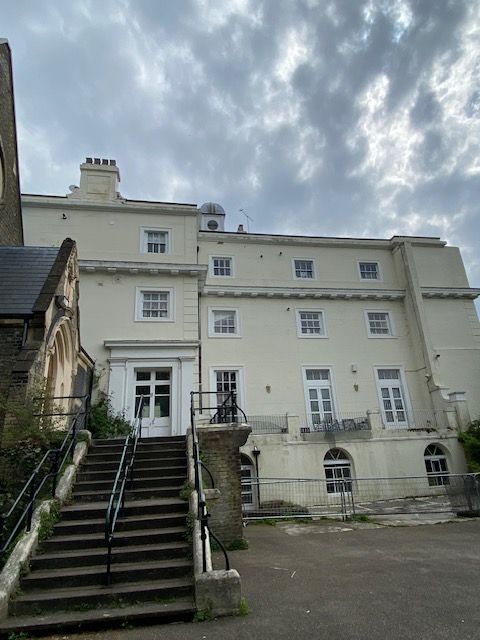
On your way back to the bus stop, if you glance up, you’ll see a colourful mural on the corner of Romford Road. I have yet to find out who is the originator of this art work but it’s quite striking, if a little strange.

6. City of London Cemetery bus stop
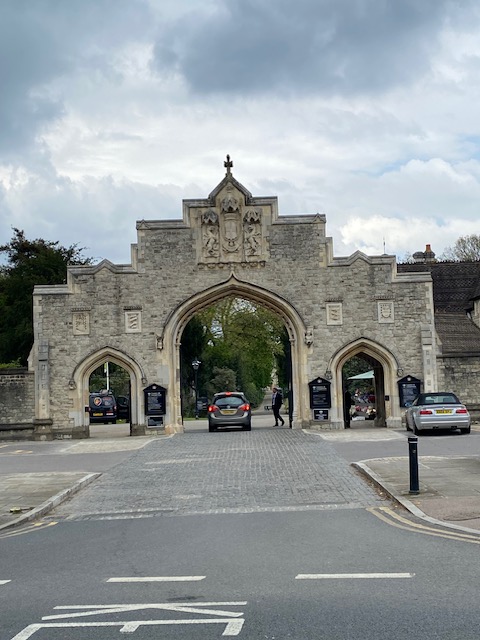
As the name of the stop suggests, this is very near the cemetery and crematorium. It’s also on bus route 86 so it might be worth taking a look at that blog page too. On that occasion, I visited the grave of Joseph Merrick who was known as the Elephant Man. This time, possibly rather ghoulishly, I was looking for the victims of Jack the Ripper.
Jack the Ripper was the pseudonym of the murderer of at least five women in or near the East End of London’s Whitechapel between August and November 1888. The case is one of the most famous unsolved mysteries of English crime. There were about a dozen murders between 1888 and 1892 that have been speculatively attributed to Jack the Ripper. However, only five of those, all committed in 1888, were linked by police to a single murderer.
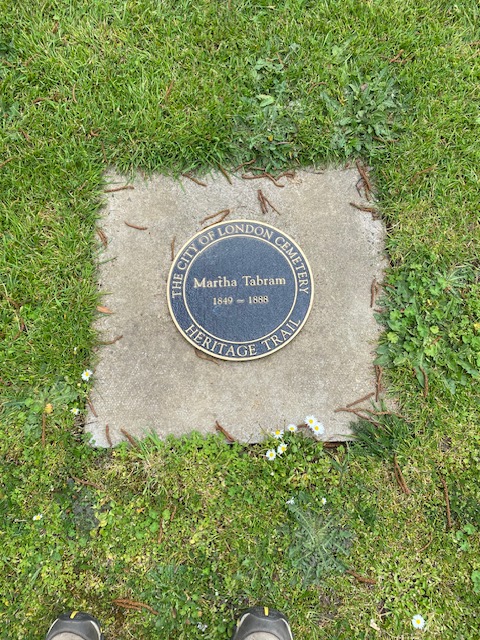
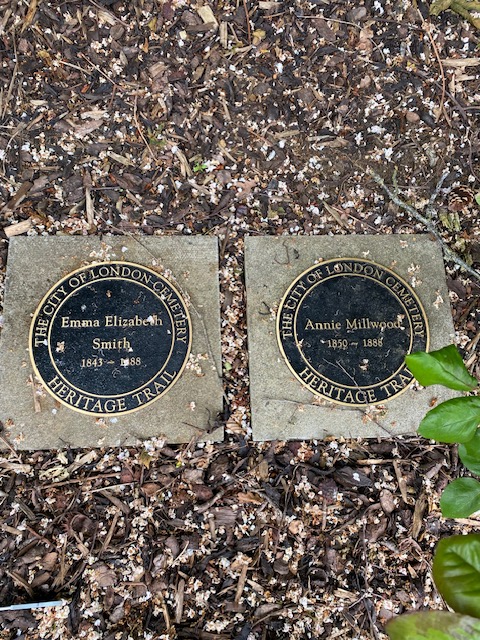
These so-called “canonical five” victims were Mary Ann Nichols, Annie Chapman, Elizabeth Stride, Catherine (Kate) Eddowes, and Mary Jane Kelly, all of whom are interred at the City of London Cemetery. The memorial stones are all tastefully placed within the Memorial Garden at the cemetery and it’s a very poignant reminder of how precarious and precious are our lives.


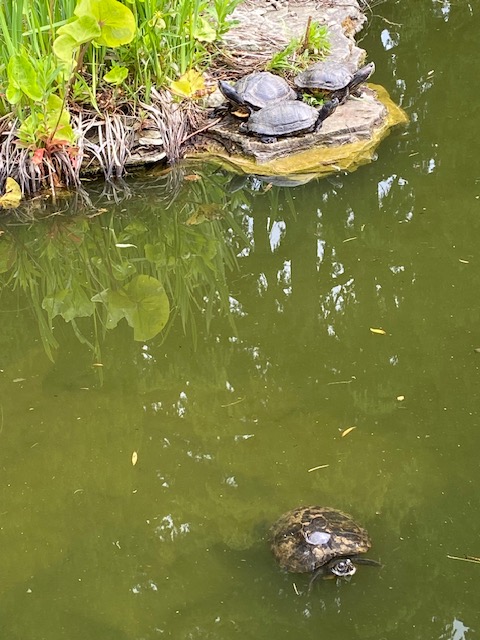
Also in the cemetery, is a very lovely pond with several terrapins swimming and basking in the sunshine. It’s an oasis of calm in the otherwise emotionally charged burial ground and it’s a pleasant way to spend some minutes in quiet contemplation. The cemetery has been open since 1856 and is available for burials of all religions and none. Occasionally, you’ll see a horse-drawn hearse or you’ll hear singing from a grave side.


7. Wanstead station bus stop
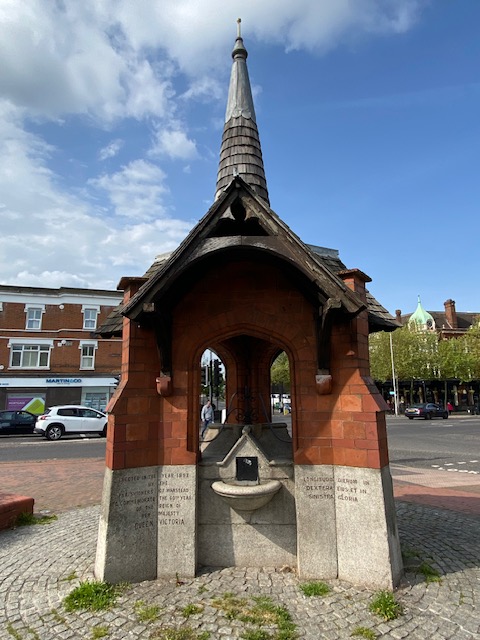
Take a quick walk to George Green where you’ll find Queen Victoria’s Drinking Fountain. As stated on one side, it was erected in 1897 to commemorate the 60th anniversary of the queen’s reign. It’s a three sided memorial with a drinking fountain and basin on two of the sides, with the third having an animal drinking trough.
It’s sometimes worth visiting a local library to see what exhibition they are showing, if any. It’s often something local and so it was at Wanstead Library where there were some interesting photos of times gone by in the local vicinity. Amongst photos of a successful football team and other forms of transport, there is a picture of a very old bus which seemed appropriate to see, considering it’s londonroutemistress writing this blog!


8. Woodbine Place bus stop
Final stop is also in Wanstead. Walk round to Christ Church which was built as a chapel of ease to meet population expansion in the Snaresbrook area caused by the railway boom. Built at the height of the Gothic revival, its architecture is the geometric style of the late 13th century. The foundation stone was laid on 18 May 1860 and it was consecrated on 19 July 1861 by Archibald Tait, Bishop of London. An extra bay was added to the nave’s original four in 1867, along with a south aisle to match the original north aisle. Two years later a tower and spire followed, though the vestries were only added in 1889.
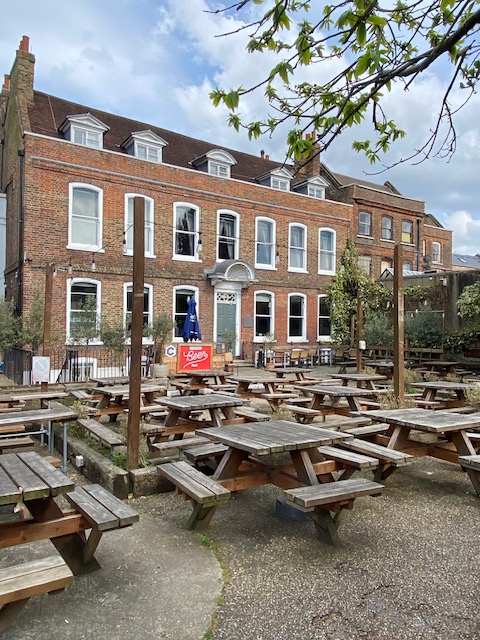
Also in this area is the Bull pub, allegedly so called because of the cattle that often used to roam the streets of Wanstead. Formerly known as The Manor House, the building was erected in the early 18th century. Possibly the most interesting historical aspects of the building occurred during the time it served as the West Essex Conservative Club from 1925 until 1997. It housed a bar, meeting rooms and servants quarters on the top floor. Sir Winston Churchill used the Manor House as his base between 1930 & 1940 as he served as MP for Epping and Woodford for 40 years between 1924 & 1964.
And finally, on your way back to the bus stop, take a minute to go to Nightingale Lane where there is a wonderful mural of a nightingale sitting on a branch and singing. It’s by artist Gavin McPhail and it certainly livens up this spot of Wanstead.


This is an interesting bus route and it’s another of those that has something for everyone. It helped that it was a lovely late spring day so that the sky was blue and the trees and bushes were in bloom. Even though I had visited part of this route previously, I still found plenty to see that I hadn’t come across before. The mural at the very end was an unexpected treat as was the pond in the City of London cemetery with its many terrapins.
Toilets that are available to the public and free:
- Asda at Beckton bus station
- Applecart Arts
- City of London Cemetery
- Wanstead Library
 london routemistress
2 responses to “Bus route 101”
Are you blogging 100 after 15th?
<
div dir=”ltr”>
<
blockquote type=”cite”>
LikeLike
yes, I don’t want to blog 100 till after 15th. I’m hoping to have some good/great photos!
LikeLike