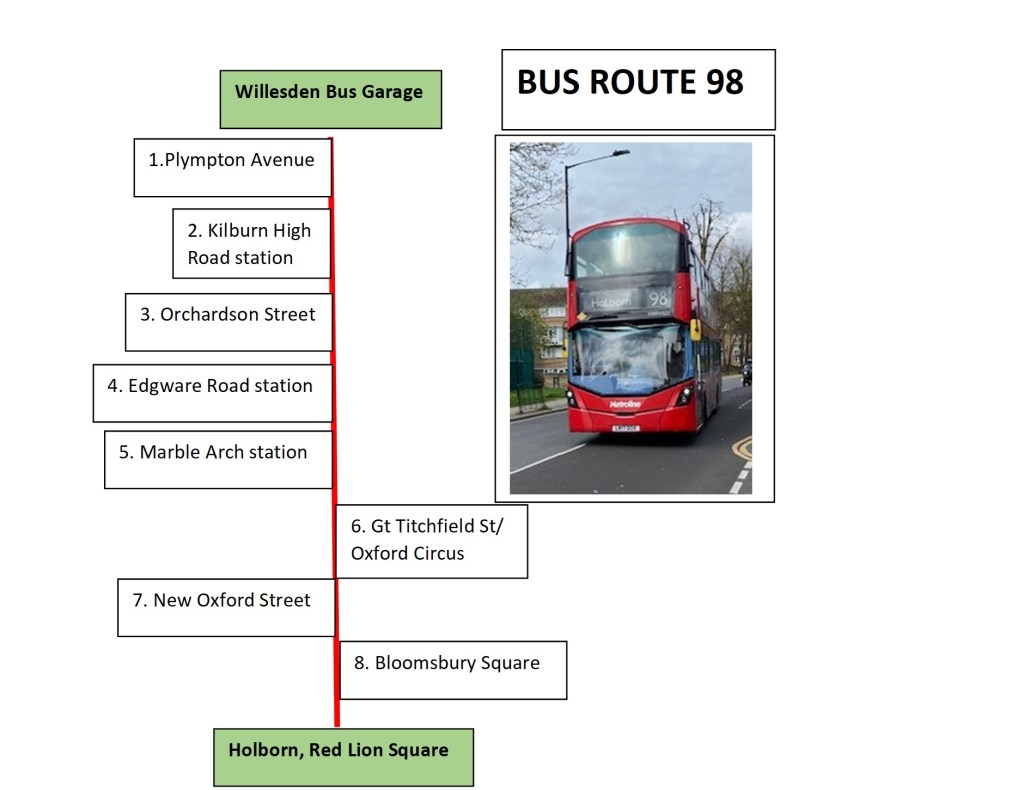
Willesden Bus Garage to Holborn
Highlights:
- Ben Uri Gallery
- Lisson Gallery
- October Gallery
- Marble Arch mosaics
1. Plympton Avenue bus stop
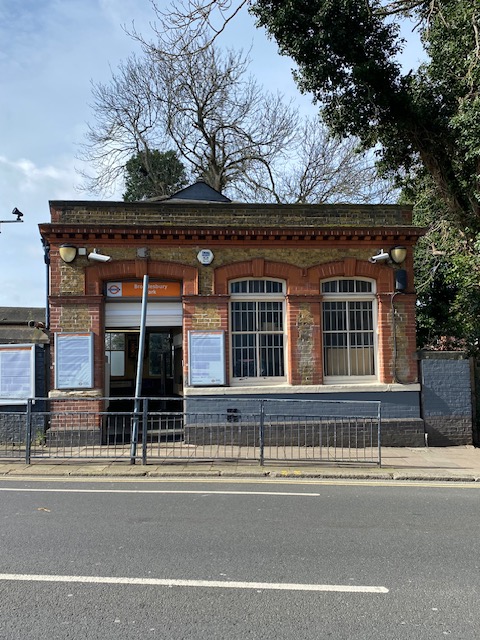
First place to see is a walk round to Brondesbury Park station. It’s one of the smallest station buildings and it was opened in 1908. From there it’s an easy walk to The Kilburn Arms pub with its lovely etched and cut glass windows, both inside and outside. The outside has a stone plaque that states this was the Prince of Wales 1899, presumably named after the prince, who later became King Edward VII. The modern vestibule entrance has some very rare curved cut and etched windows featuring floral and fruit decoration, as has the bar area. There is a large single storey room which looks like it could be used for functions and overall, the feeling is one of space and comfort.


Almost next door to the pub is Paddington Old Cemetery. Apparently Michael Bond – of Paddington Bear fame – is buried here but it’s not easy to locate his grave. Do look however at the two grade II listed gothic chapels in the centre of the cemetery. They are currently undergoing renovation but it’s still possible to admire their architecture.
It’s worth looking out for a couple of graves – one is that of Cuthbert John Ottaway, England’s first ever football captain. He was educated at Eton and Brasenose College Oxford and was evidently a rather brilliant student as well as sportsman. He excelled at cricket and sprinting as well as being considered the leading footballer of his generation.
Ottaway was selected to lead the England team travelling to Partick to meet Scotland on 30 November 1872 in what is now recognised as the first international match ever to be played. That match ended in a 0-0 draw and at the return fixture which took place in March 1873, Ottoway didn’t play. He did however captain the team in the 1874 match against Scotland – this time with the Scottish team winning 2-1.
Having trained as a barrister, he practised law until his early death, leaving a wife, and a daughter born after he died. It’s believed that he developed complications after catching a chill, which might have been exacerbated by diabetes that ran in his family. At any rate, he was only 28 when he died – having packed a successful legal career and many sports achievements into his short life.
Another grave stone that’s relatively easy to find is that of Laura Thistlethwayte, (1829 – 1894) (nee Bell) an Irish-born lass who was reputed to have been the most beautiful woman of her day. Starting working life as a shop assistant, she supplemented her income by working as a prostitute. She became a courtesan while living in Dublin and when she moved to London, she became known as The Queen of London Whoredom. Rich noblemen and dukes were entertained by her. She met Captain Thistlethwayte in 1852 and they subsequently married. However in 1887, he accidentally killed himself with one of his own guns – Laura never remarried.


2. Kilburn High Road station bus stop
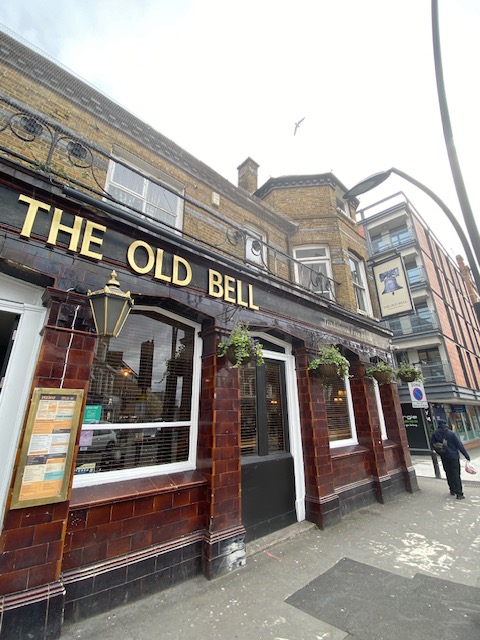
Near the stop is The Old Bell pub which has a long history, going back as far as 1750. Indeed it is quite possibly the oldest pub in Kilburn and may date back to the times of the Priory. During the 18th century Kilburn Wells, as the area was known then, had medicinal springs, including one in the grounds of the Old Bell pub. The site is right by the spot of the preaching field from medieval times through to the 1800s – and by the 1930s, became the main drinking hole for those using the nearby railway line after its arrival.
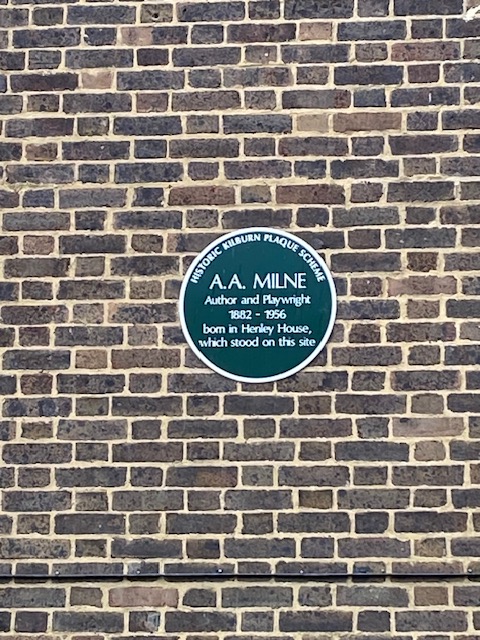
Around the corner is a large residential estate and on one of the walls of Remstead House is a green plaque stating that “A.A. Milne (Winnie the Pooh) author and playwright 1882 – 1956 was born in Henley House, which stood on this site”.

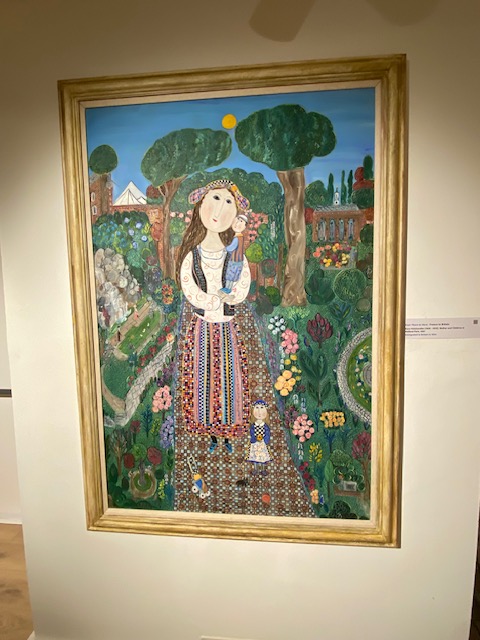
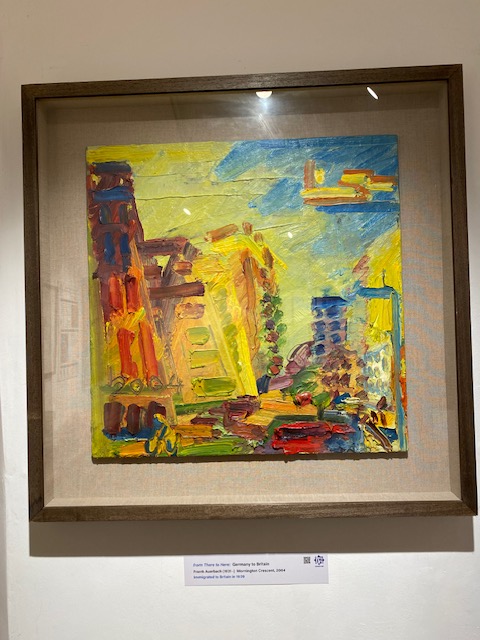
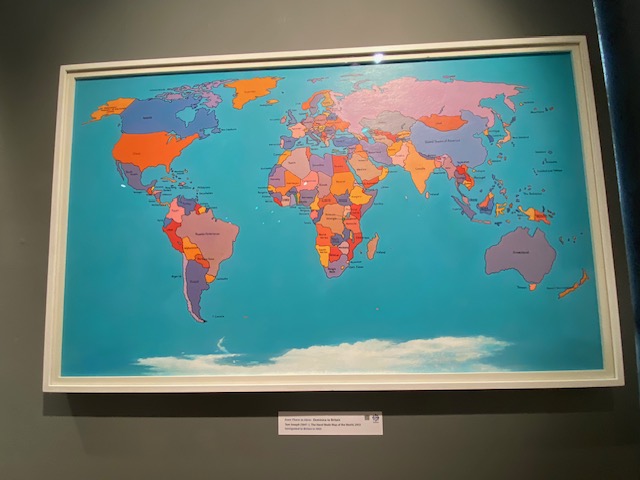
From here it’s a stroll to the Ben Uri Gallery, which was founded by Lazar Berson, an émigré Russian artist, in 1915 in Whitechapel. It was originally an art venue for Jewish immigrant artists who were unable to gain access to mainstream art societies at that time, due to social discrimination. Since its foundation, the Gallery has addressed contemporary and historical issues of identity and migration, and celebrates the richly diverse Jewish and other immigrant contribution to the visual arts.
The current exhibition is “From there to here – Britain’s gain” until mid June 2024. It brings together 1st and 2nd generation refugee and immigrant artists who have settled in the UK from Eastern Europe as well as the Indian subcontinent, Turkey, Iran, South Africa, Canada and the USA and who have all made a significant contribution to British visual culture since 1900.

3. Orchardson Street bus stop
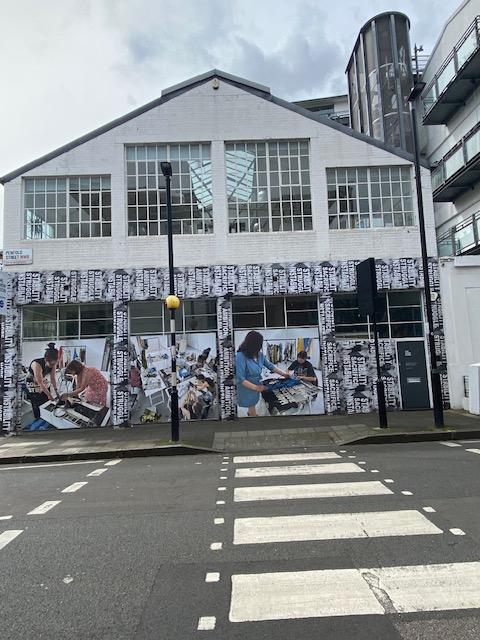
From the bus stop, walk round to Penfold Street and you’ll see the Wallis Building. Originally the Palmer Tyre factory, it’s a conglomeration of a number of buildings which apparently date back to the 1920s. They used to manufacture tyres for the Air Ministry for use on a variety of aircraft. The building itself is in a very attractive white art deco style and has dramatic tiled funnels to the front.
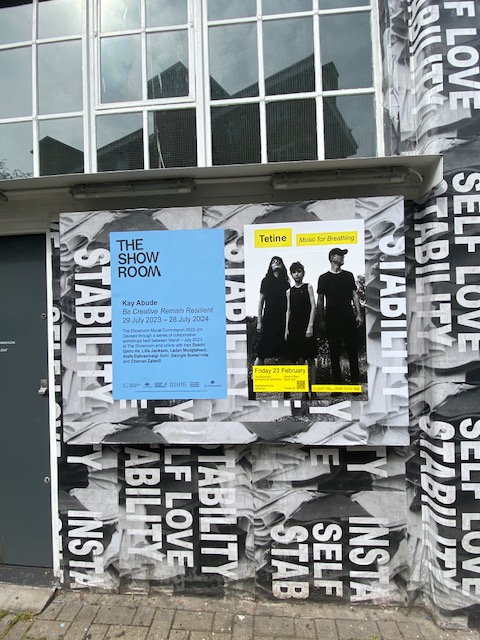
Next door is The Showroom which describes itself as, “one of the first galleries to be established in what is now a thriving East End art scene. The building has been reconfigured to provide a dynamic flexible space for its long-term growth.” They commission projects and an expanded education facility, hosting workshops, conferences and events for artists, writers and curators.”

4. Edgware Road station bus stop
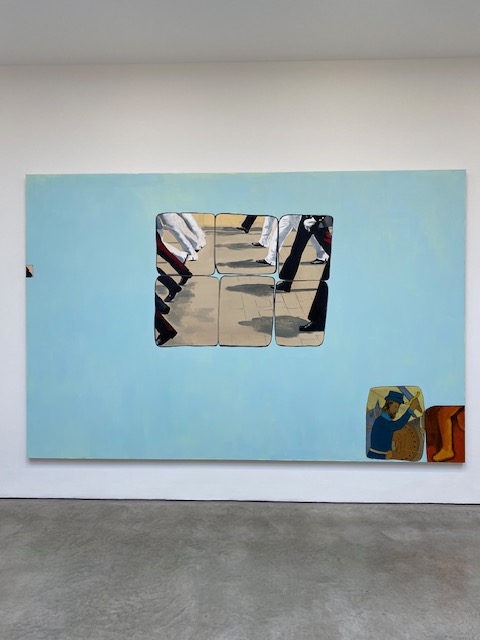
The Lisson Gallery in Bell Street is round the corner from the bus stop and currently (until 4 May 2024) has an exhibition entitled Accordion Fields. All eight featured artists, whether born or based in the UK or internationally, initially cultivated their artistic talent in London, studying at one of the city’s main arts schools and often in direct dialogue with one another. The title of the exhibition expresses the very nature of expansion and compression – reflecting the artists’ movements to and from London as well as their perspective on space and places. The gallery itself is bright and spacious and it’s easy to absorb the art work that’s on display. There is a sister gallery round the corner in Lisson Street where the exhibition continues.


5. Marble Arch station bus stop
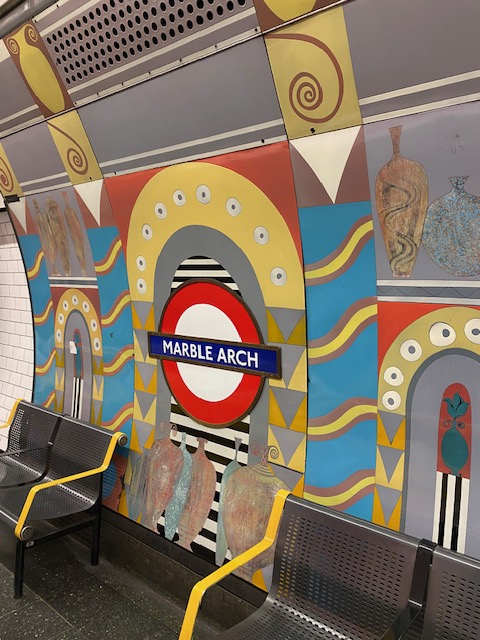
Head down to the platforms at Marble Arch underground station and you’ll have a very pleasant surprise. On both platforms you’ll find the walls filled with bright colours and patterns, all containing a version of the arch. They were created by artist Annabel Grey in the 1980s and each one is made up of 9 vitreous enamel panels. It took the artist 22 months to complete the panels and according to her website “each colour was hand sprayed by her, etched when dry and then fired before adding the next colour and repeating the process. Each panel required at least 10 separate firings.”


6. Great Titchfield Street/Oxford Circus bus stop
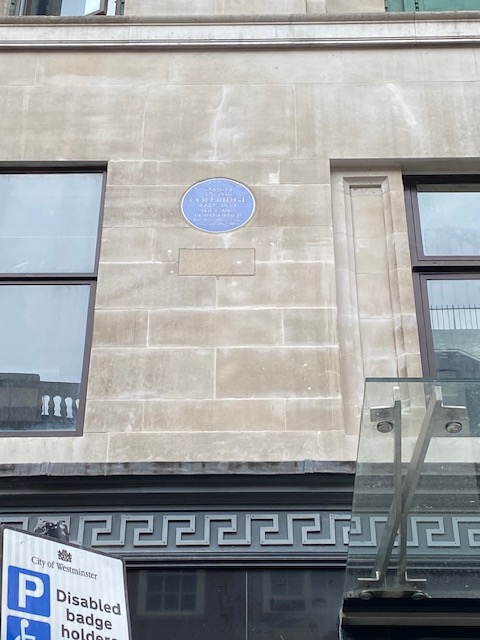
In Berners Street, a short walk from the bus stop, is a blue plaque for the poet Samuel Taylor Coleridge. It is placed on a building, the site of which the poet lived for one year 1812 -1813.
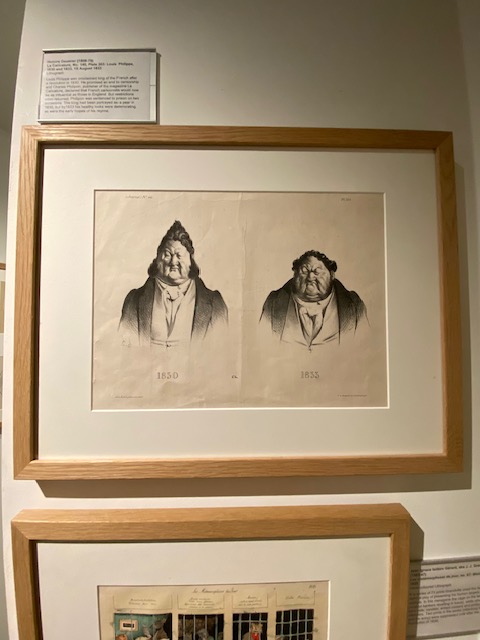
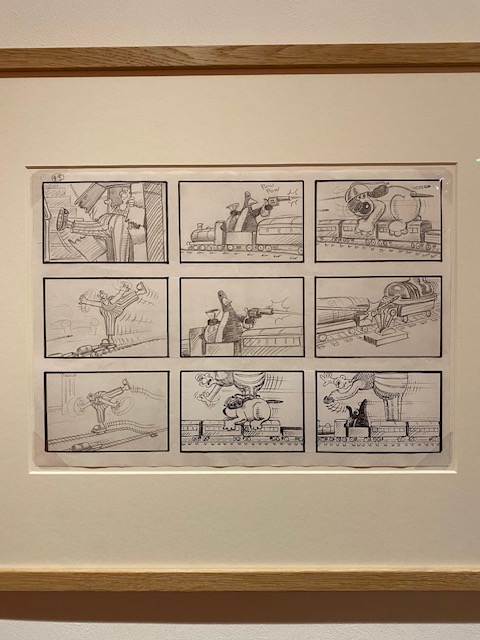
Around the corner from here is the Cartoon Museum. There is an entrance fee for this but it’s still possible to get a feel for the museum just by walking down the stairs to the entrance and looking at the selection of products for sale at the shop. All down the stairs, you’ll see a number of cartoons, both modern and older. At the bottom of the stairs is a life-size model of Superman. Although as londonroutemistress, I don’t recommend places that have entrance fees, nevertheless I do think it’s a great place and you’ll have lots of fun and laughter here. As well as permanent exhibitions, there is currently one about Wallis & Gromit as it’s the 30th anniversary of The Wrong Trousers.




7. New Oxford Street bus stop
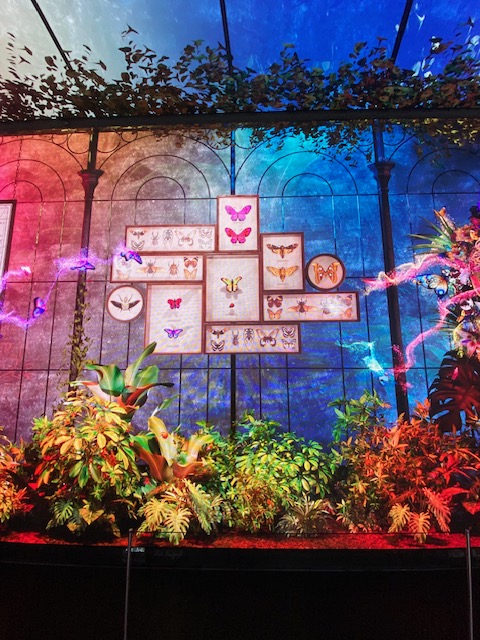
Head over the road to Outernet with its giant Ultra HD screens showing the most amazing audio-visual experiences. Currently is a lovely immersive display of a butterfly trail, which guides you through “the intrepid explorer Professor Peter Pelgrin’s Botanical Workshop, into his Glass House where you can interact and explore the experience using your smartphone.” The show is repeated several times a day and it really is quite breath-taking.

8. Bloomsbury Square bus stop
This is the final stop of the route but do conserve your energy because there is plenty to see round here. There’s Pushkin House which is also on route 38 – it’s the cultural home for Russian expats and anyone interested in Russian culture, where there is often an exhibition to see, events to attend or just browse in the bookshop.
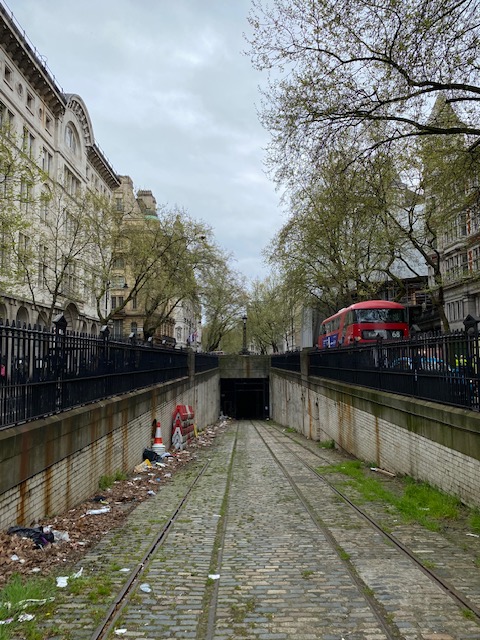
A short walk from here is the Kingsway Tram Tunnel. It’s a cut-and-cover tunnel and is the only one of its kind in Britain. Permission to build the tram tunnel was granted in 1906. The first trams allowed in the tunnel were made from non-flammable materials – wooden trams were not permitted through the subway, nor were double decker trams. By the late 1920s, due to extra demand, it was decided to allow double decker trams through the tunnel, so the headroom had to be increased. The first one through the tunnel was the number 31, in January 1931. However by 1935, it was decided to replace trams with more modern forms of transport and the trolley bus was introduced with trams being gradually phased out.

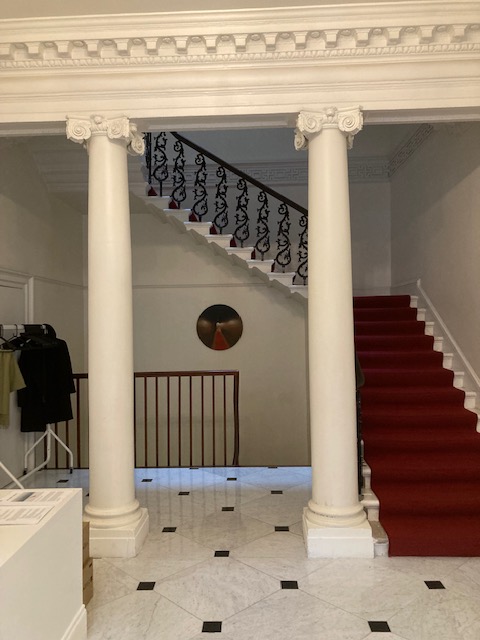
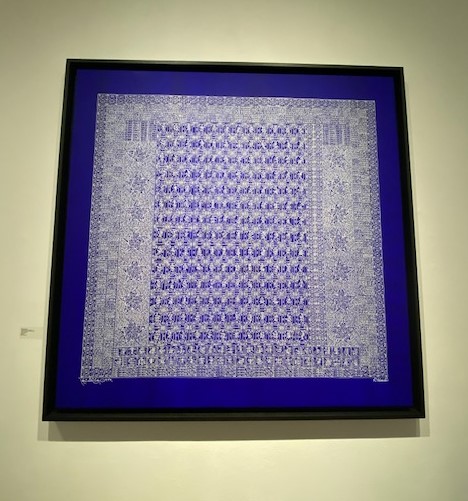
And so to the October Gallery, where the current exhibition is by Rachid Koraichi entitled Celestial Blue. The Algerian born artist has a predilection for the number 7 and so it is in his 77th year that this exhibition takes place. Each of the large square canvases on display is an original design, being white on an indigo blue background and is inspired by the poems of the 12th century Sufi mystic Ibn ‘Arabi. Most importantly, each one is painstakingly hand-painted by the artist.
The message from both Ibn ‘Arabi and Koraichi is one of love for all others, without exception. Koraichi’s Celestial Blue also explores his spiritual path with its over-riding message of tolerance for all – this especially in the turbulent times of today.
Unfortunately, the Celestial Blue exhibition at October Gallery has since finished. The next exhibition starting 18 April 2024 is entitled Twist by the artist LR Vandy.
As well as having a lovely space inside for exhibitions, the October Gallery has a large open-air courtyard garden. There’s a kitchen on the premises so it’s possible to hold events and social gatherings in this Victorian building.

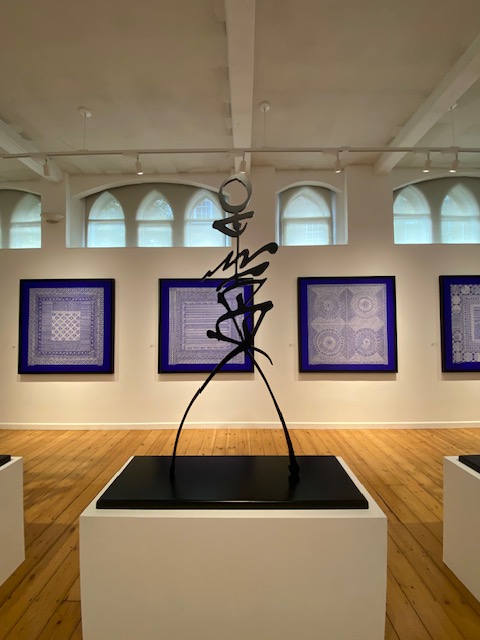

If there is a theme to the number 98 route, it’s probably around creativity since I visited three art galleries and could have gone to a further two. The mosaics at Marble Arch tube and the Butterfly Trail were inspirational as well as the beautiful etched glass at the Kilburn Arms pub. All in all, another great route with plenty to see.
Toilets that are open to the public and free of charge:
- Inside Kilburn Arms pub
- Ben Uri Gallery
- Lisson Gallery
- Cartoon Museum
- October Gallery
 london routemistress
3 responses to “Bus route 98”
Lovely journey . A friend works
LikeLike
Did you forget to finish your comment? I’m now intrigued to find out where your friend works!
LikeLike
Oops ‘the carto
LikeLike