
Bluewater Shopping Centre to Woolwich
Highlights:
- Orchard West Theatre
- Propella statue
- Woolwich Arsenal area
1. Start of route at Bluewater Shopping Centre
Once you’ve found your way to Bluewater Shopping Centre, take a walk around to the Winter Garden before getting on the 96. There’s quite a lot for kids including a Pirate Cove Adventure Park with crazy golf and a lake where it’s possible to hire a pedalo. The shopping centre itself is huge with the usual shops and food outlets.


2. Dartford Station bus stop
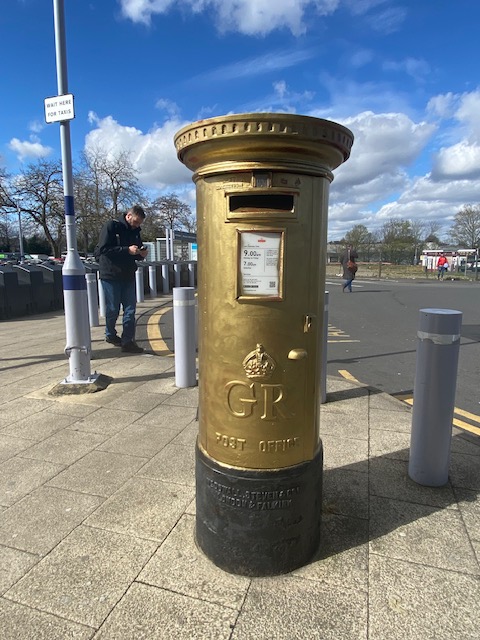
At the station is a gold painted post box, one of many scattered about Dartford. Earlier this year (2024) a number of post boxes in Dartford were mysteriously painted gold, including this one. First noticed and reported on January 31, over the following days and weeks new sightings of the gold post boxes at various locations within Dartford were found. Kent Police launched an investigation to look into it and released an image of “a person they wish to speak to in connection with these incidents of criminal damage”. They have been working closely with the Royal Mail since the post boxes started to be painted gold. Apparently Royal Mail is going to paint them all back to their original red as it is illegal to deface a post box in any way.
Walk over the bridge and find your way to Dartford’s newest theatre, Orchard West. It is in a temporary location as it’s replacing the Orchard Theatre which is being repaired due to a ceiling collapse. As you walk in to the theatre, you’ll likely remark how bright and new it looks, a delightful change from some of the older, darker theatres. There’s a definite positive vibe and plenty of smiles from the staff. The auditorium is much bigger than expected, holding more than 1,000 seats.


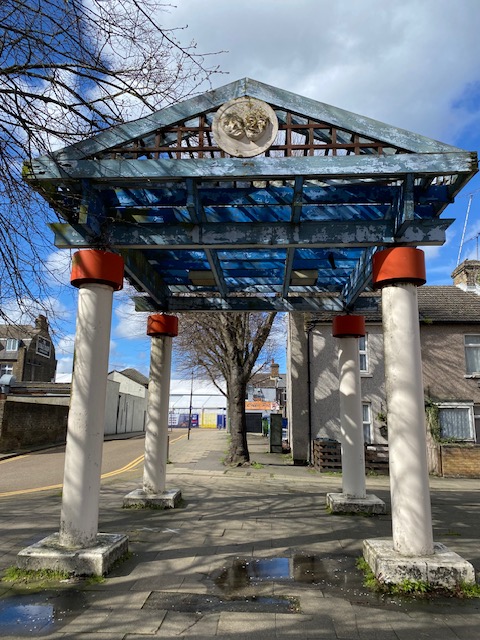
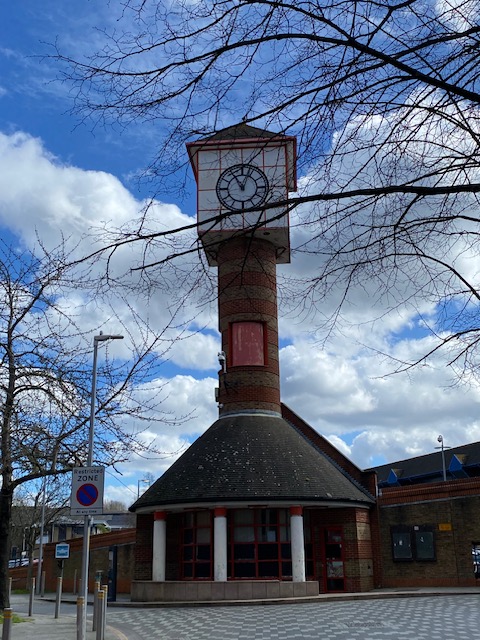
Near the Orchard Theatre is a colonnade with dramatic masks to let you know you’re near the theatre. Also within spitting distance is a clock tower. Apparently on the hour an automated display rotates out from this modern clock tower – it’s situated above what was the Bus Information Centre.

3. Crayford Town Hall bus stop
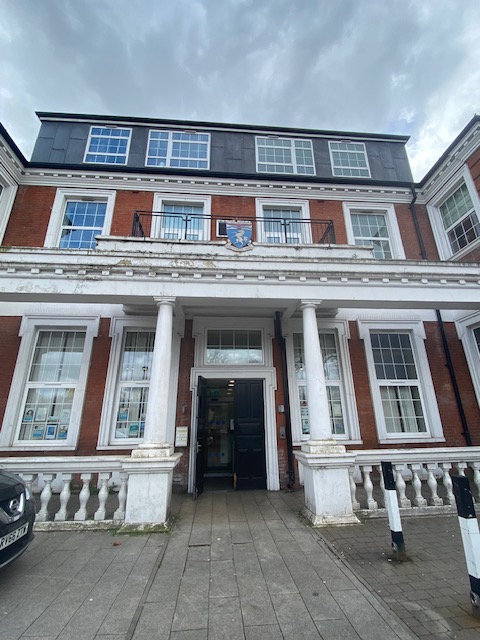
The bus stops outside the Town Hall and you will see a brown plaque on the wall that is dedicated to the civilian and service personnel war dead of Crayford and the surrounding areas from both world wars.
The building was originally commissioned as a canteen and mess room for the local armaments factory in Crayford in the 1880s. Following significant population growth during the First World War, largely because of the expansion of the armaments factory, Crayford became an urban district. Armaments production reduced significantly after the end of the war and the building became surplus to requirements and was acquired by the council in 1929. In the 1951 UK general election, one of the candidates standing for the Dartford constituency was the future Prime Minister, Margaret Thatcher, who gave a speech at Crayford Town Hall about the Conservative Party’s policy on peace. Today the building houses a doctor’s surgery on the ground floor and apartments on the upper floors.
Round the corner is Crayford Library and outside is a statue “Propella” by artist Andy Scott. He was inspired by a poster advertising Vickers aircraft, with a radiant image of a female in classical dress, standing on top of a rocky outcrop with her arms outstretched. This Propella statue holds aloft a Vickers propellor and the plinth she’s standing on represents the aircraft’s engine block. During WWI, there was a Vickers armaments factory in Crayford which manufactured aircraft and was in fact a major employer locally, employing as many as 12,000 men and women.


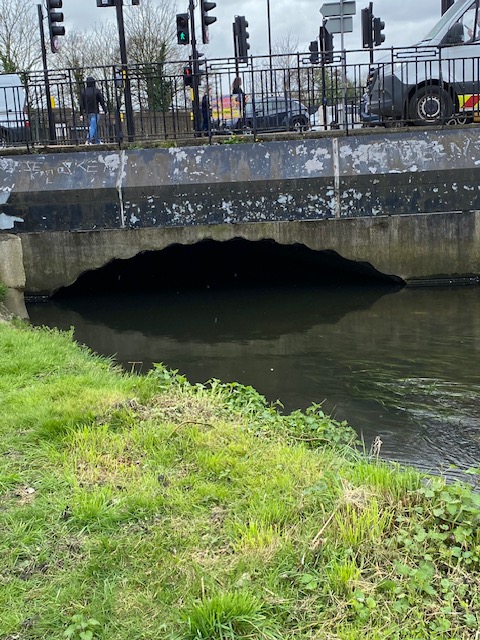
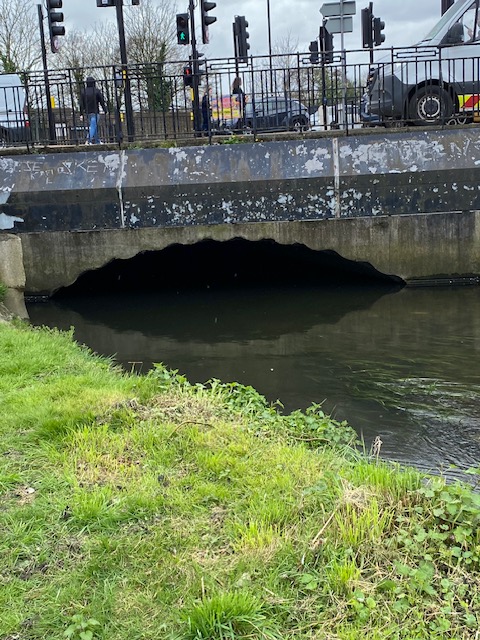
Back to the main street and head towards Crayford Bridge. There had been a ford across the river Cray in Roman times and it was used by livestock, carts and coaches. This was the main road from London to Dover and was first built in 1755. With the inevitable deterioration of the roads in the 18th century, turnpikes were erected to raise money to pay for repairs and to maintain better roads. In 1920 and 1938, the road was widened, presumably to allow for motor vehicles.
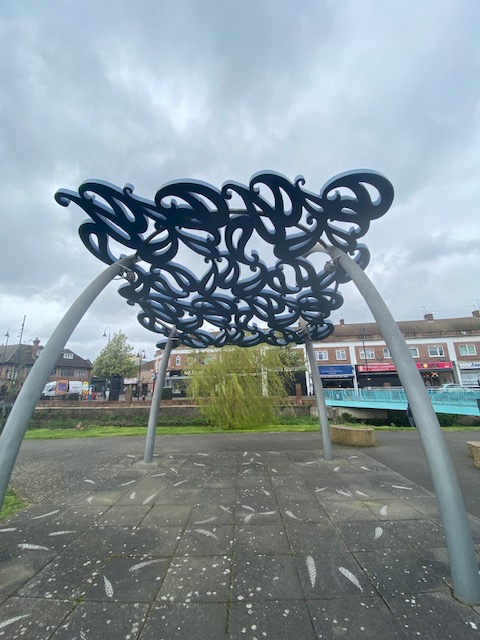
The bridge has an entrance into Crayford Waterside Gardens, a public park designed to celebrate Crayford’s industrial history, with modern forms depicting the silk screen printing, represented by the David Evans prints and the production of arms and armaments, notably the Vickers Vimy. Set inside the park are a sculptural pavilion, an interactive water feature (though not currently in use), a coffee shop with sun terrace and a performance space with amphitheatre seating.


4. Bexley Lane bus stop
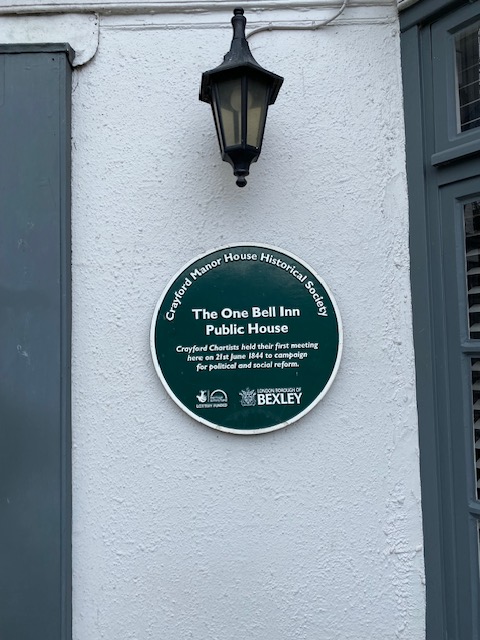
Up the hill from the bus stop is the One Bell Inn. According to a plaque on the outside this public house was the place where the Crayford Chartists held their first meeting on 21st June 1844 to campaign for political and social reform. The pub is grade II listed for its special architectural and historic interest and dates back to the 18th century. Back down towards the bus stop, there is another pub The Duke’s Head. It’s said there has been a pub at this site since the 18th century but this current Tudor-style building only dates back to 1926. It’s not obvious which Duke is referred to here though doubtless, there will be some reference to it inside the premises.


5. Civic Centre bus stop
It’s best to travel on a day when it isn’t pouring with rain but if you are unlucky enough to be caught out, you’ll find a welcome refuge at this stop, with Bexley Civic Centre close by. There is nothing noticeable to see here – unlike some civic centres that put on exhibitions about local history – but the foyer is big and bright and has an impressive roof. The building was originally designed in the style of a pagoda and built as the HQ of a building society. Once it was taken over by another company, the building became vacant in 2005. Since 2014, it has been used as the premises for Bexley Borough Council.

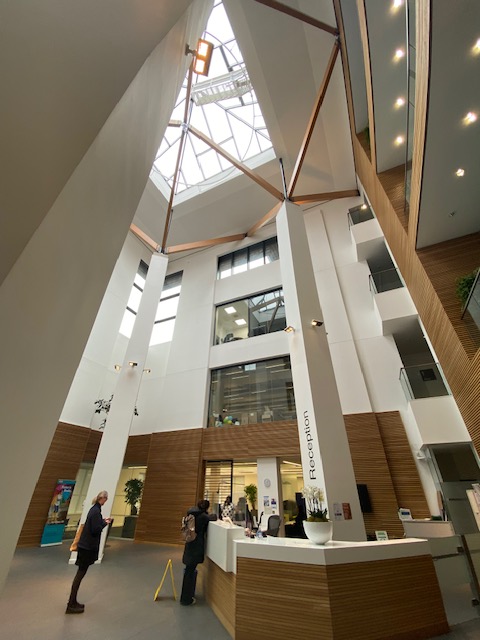
6. Welling High Street/Upper Wickham Lane bus stop
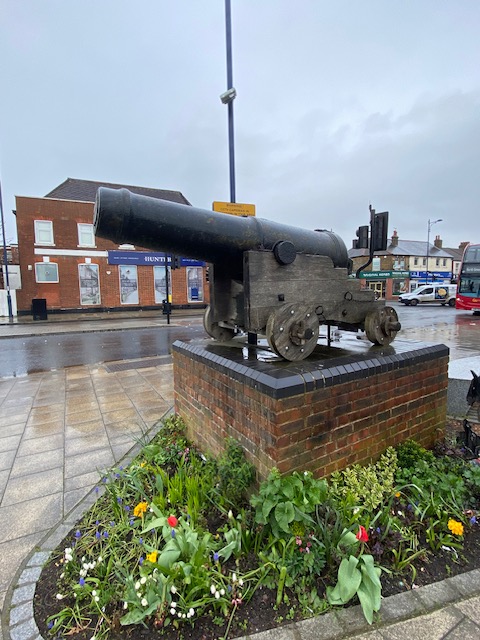
Head towards Welling Corner and you’ll be met with a Russian iron 36-pounder carronade (a short large-calibre cannon) which is on loan from the Royal Artillery Firepower Museum in Woolwich. This is the type of cannon that was used in the Crimean War (1853 – 1856) and is placed here on a wooden replica carriage. It was brought home by victorious British troops after the war.
It is a reminder of Welling’s early association with the Royal Arsenal, Woolwich, when huts at East Wickham were built to provide homes for World War I munitions workers.
On the side of the cannon is a plaque with a painting by the artist Sir John Milais, painted in 1856, depicting a wounded soldier recuperating at home. The children in the painting have been playing with Noah’s Ark and the animals represent the countries that participated in the Crimean War, now reflected in the seat decoration around the cannon. The lion represents Britain, a bear for Russia, a rooster for France and a turkey for the Ottoman Empire.


7. Upper Wickham Lane/Wickham Street bus stop
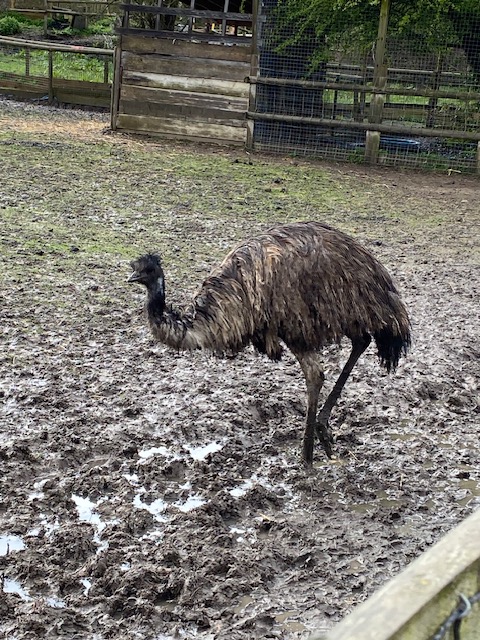
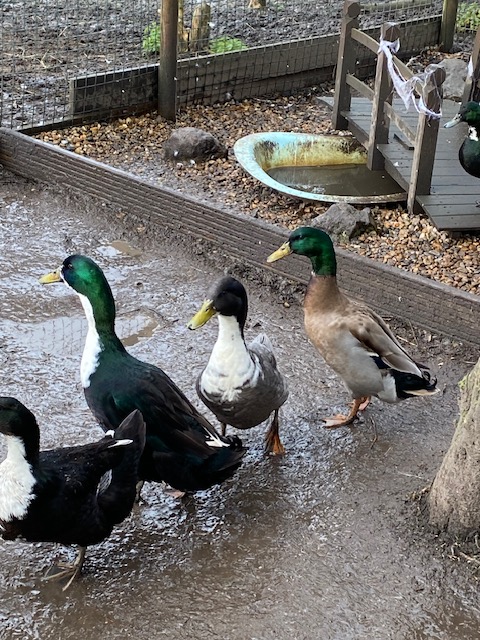
The bus stops right outside George Mead Memorial Stables and petting farm. It’s a lovely little farm, with many of the animals you would expect, plus one or two more such as an ostrich and alpaca, that are less common. It’s family run and is in memory of George, the son of the owners, who sadly died but had a great passion for horses. His parents wanted to open these stables in his name and to enable others to enjoy the animals.


8. Woolwich (Elizabeth Line) bus stop and
9. Thomas Street, Woolwich
This is a very easy stroll between the two stops. Walk through Maribor Park and find the Maribor Fountains, which are very near the Thames embankment. It might be that the fountains are only in use during summer months, or at least when the weather is fine – they were certainly not flowing on the day of this visit, a very rainy day. The fountains are in the form of a long, linear water feature. The brief for the design was that there should be a number of stone inclusions to direct the water’s flow, act as informal play elements for children and to be visually pleasing in their own right.
This area of Woolwich Arsenal is also accessed on other bus routes, namely 51 and 54. What is interesting to note is that all the street signs have a cannon on them, representing the Arsenal factories that used to be here. There are some really splendid buildings to see such as the Royal Military Academy and the old Royal Carriage Factory.
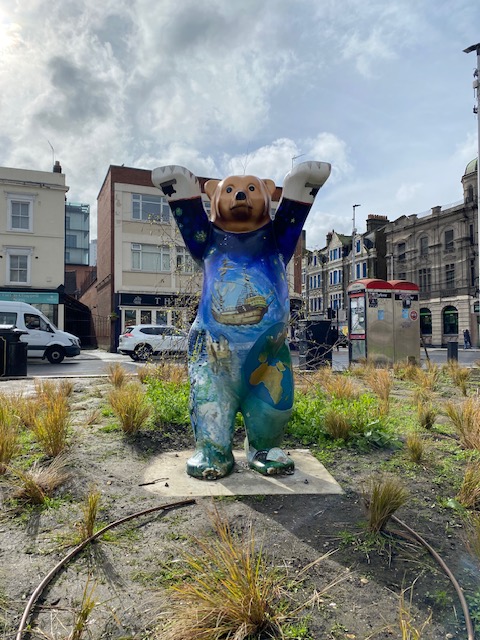
Final place to see is the Buddy Bear statue in General Gordon Place. The idea of Buddy Bears came from Berliners Klaus and Eva Herlitz in 2002. They wanted to bring art to the streets of Berlin and other cities and a bear was the obvious choice since it is a symbol on the city’s coat of arms. The first Buddy bear was designed by the Austrian sculptor Roman Strobl, in collaboration with the Herlitzes.
Within a few weeks, more than 100 Buddy Bears, designed by various artists, were introduced to the streets and squares of the capital, much to the delight of Berliners. Originally intended as a temporary art initiative, the Berlin Bears have developed into a permanent part of the Berlin street scene. There are now similar statues in other cities worldwide, such as this one in London, with the intention of promoting tolerance and peace amongst different religions and cultural groups.
Each statue is hand-painted in a unique pattern. Buddy Bear here has a ship and a map of Africa and the Middle East, amongst other things. The design was by two young school girls and was placed here in April 2016.
The inscription on a nearby plaque states” Buddy Bear presented to the Royal Borough of Greenwich by the Mayor of Reinickendorf, Berlin, Herr Frank Belzer on the occasion of 50th anniversary celebrations of the twinning link between the Royal Borough of Greenwich and Reinickendorf, Berlin.”


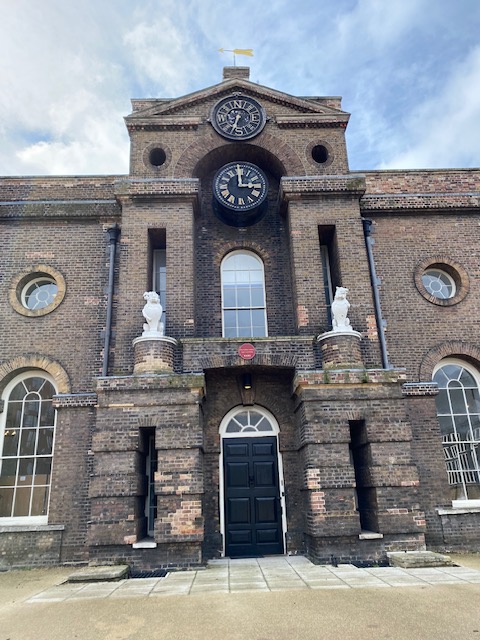
All in all, a good bus route and again, an eclectic mix of new (Orchard West theatre, Bexley Civic Offices) and old (Royal Military Academy, Crayford Bridge, The One Bell Inn). The start of the route at Bluewater Shopping Centre is probably the furthest out from the centre that TfL buses go. The pleasure is to finish at Woolwich, where there is always plenty to discover.
Toilets that are available to the public and free:
- Bluewater Shopping Centre
- Dartford Station
- Orchard West Theatre
- Crayford Library
 london routemistress