
Southall Broadway to Shepherd’s Bush Green
Highlights:
- St Mary’s Perivale
- Vishwa Hindu Mandir
- Mosaic at White City underpass
At the start of the route
Before getting on the number 95, walk round to have a look at the Southall Water Tower, also known as Southall’s Castle. It was built towards the end of Queen Victoria’s reign in approx. 1895 to 1903. It didn’t always have the hexagonal design as seen today. This came from the Queen herself who used to pass the tower on her way to Windsor Castle and described it as “obscene-looking”. She made the authorities build the castle structure around the existing tower.

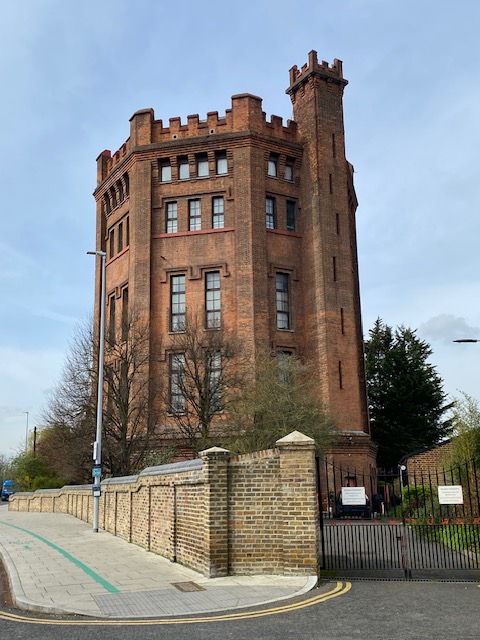
The building was used to supply water to the steam trains at nearby Southall station. When the station was decommissioned in 1968, the building became derelict, laying empty for years, falling victim to vandalism. In the early 1980s work was done on the tower to convert it into 37 flats.
There are a number of buildings that have been redesignated in recent years and the few mentioned here are all at the start (or end) of the number 95 route. The Himalaya Palace started out as the Palace Cinema in 1929, with its first film shown being Alfred Hitchcock’s “Blackmail”. It was built in the form of a Chinese temple and is the only cinema of its kind in Britain. It has kept its tiled exterior and red pagoda roof with dragons and is a well-loved local landmark. Despite the fact it’s a grade II* listed building, it stopped being a cinema in 2010 and is now a covered market.
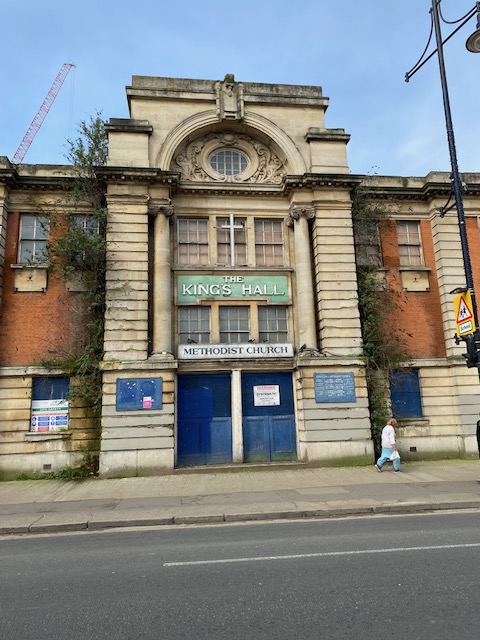
The King’s Hall started out life in 1916 as a Wesleyan Mission and it was soon screening religious films. By 1926, it was operating as a regular cinema, still managed by the Methodist church. The cinema was closed in 1937 and reverted back to being a Methodist Church. This then closed in January 2013 and stands vacant to this day. The inside of the building is reported to be something of a gem – it would be wonderful if it was renovated to its former glory.
The Glassy Junction was once a pub, and was the first in the UK to accept rupees as payment. A Glassy Junction in Punjabi literally means the junction of drinks. This pub opened in 1994 and closed in 2012. Rumours abound that not only were drinks served here but other services were on offer to certain clientele. The Glassy Junction has since been replaced by a vegetarian restaurant.


1. Southall Town Hall bus stop
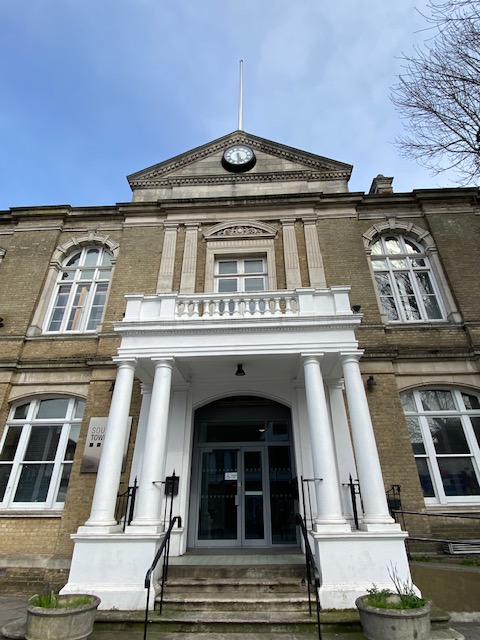
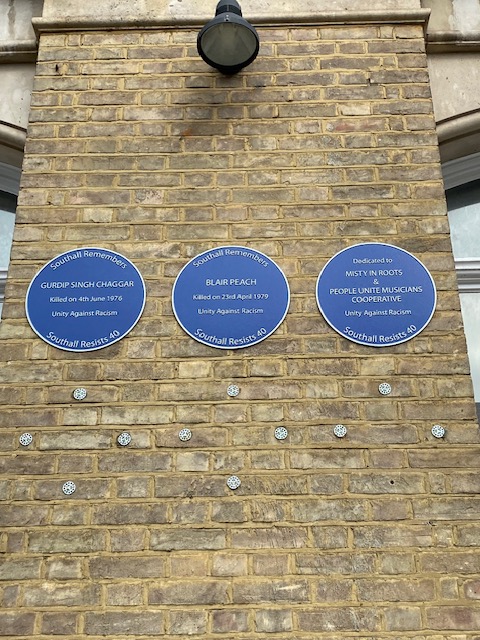
The bus stops just at Southall town hall, which is actually no longer a town hall. The foundation stone was laid in 1897 and the building was designed in the classical style. It’s an attractive building with its five bays and Doric columns. It stopped functioning as the local seat of government in 1965 and became a training centre. In 1979 Blair Peach, a New Zealand teacher and anti-racism campaigner, died after being hit on the head, during a riot outside the town hall. There is a blue plaque for him on the outside wall, alongside one for Gurdip Singh Chaggar, who had been stabbed to death on 4th June 1976.
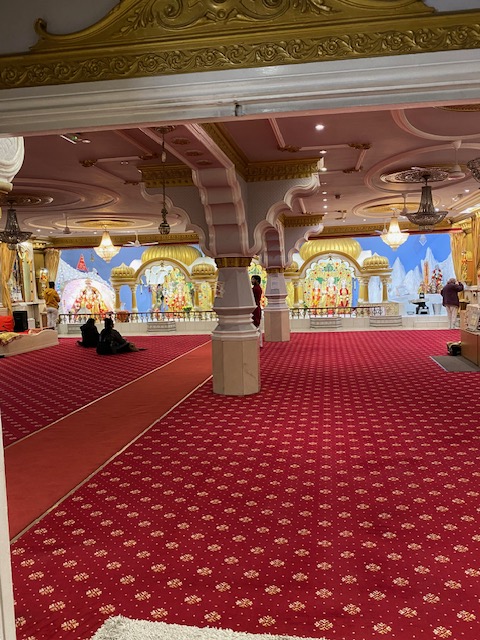
Very close to here is Vishwa Hindu Mandir, another attractive building both inside and out. With its white and gold exterior and its sumptuous red and gold interior, this Hindu Temple has tinkling bells and idols and priests chanting mantras. It has a definite feeling of peace as you step inside.

2. Pembroke Road bus stop
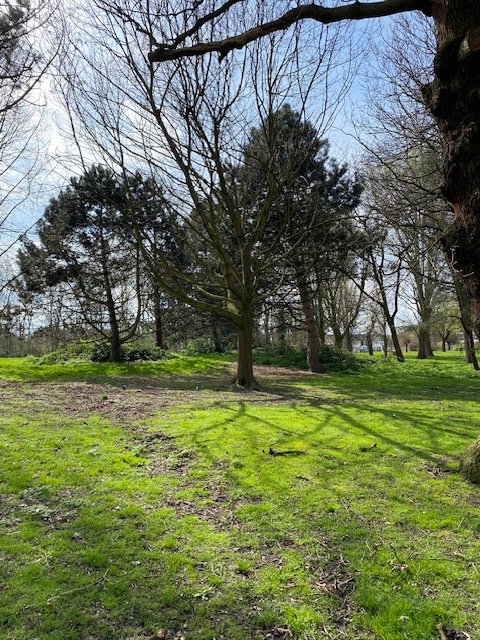
The bus drops you outside Ravenor Park. In days gone by, there were many farms in the Greenford area and Ravenor Park was formerly agricultural land forming part of Ravenor Farm and Costons Farm, both farms being named after local families. With the advent of transport to what had been a leafy village, the suburb of Greenford arose and it was felt that some green space was needed. The local council bought a parcel of farmland and turned part of it into a public park, which opened in October 1928. In common with a number of other parks in Ealing, Ravenor Park had an underground air raid shelter for use by local people during World War II.
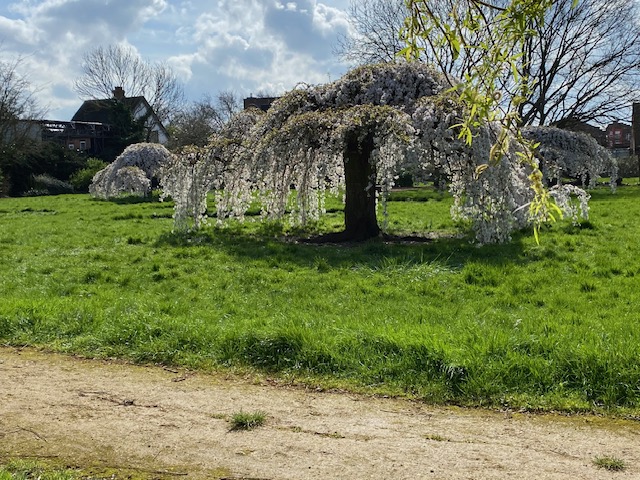
The park is known locally for its extensive wildlife, in particular birds that arrive in the winter months – these include black headed and herring gulls. If you visit here in the spring, you’ll be lucky to find a cluster of cherry blossom trees that form a small memorial garden presented by the Royal British Legion Greenford Branch to commemorate the 50th anniversary of the ‘D’ Day Landings.

3. Teignmouth Gardens bus stop
This stop takes you to a real gem – St Mary’s Perivale. This pretty grade I listed building started out as St Mary’s Church and was built in the 12th or 13th century. During its religious lifetime dedicated to St Mary, it was the smallest of Anglican churches in the (now) dissolved county of Middlesex. Sadly, owing to the development and heavy traffic from nearby A40, it became separated from almost all of its parish’s population so that the parish was dissolved & the church disbanded in 1972. The local community formed a charitable organisation, the Friends of St Mary, and these days it functions as an arts centre, holding local exhibitions & performances of classical music.
The church tower is unusual, being clad in white weather-boarding. It contains a chime of three bells, all cast in 1949 as a World War II memorial for the war dead of the community and the small parish as a whole. Some features of the ‘wattle and daub’ construction within the nave walls found during the 1965 restoration suggest that it dates from the reign of King Stephen (1135-1154). Other architectural features also suggest a 12th or 13th century date, notable the ‘Early English’ features of the Vestry doorway, the ‘stoup’ for holy water by the vestry door, and the ‘leper window’ in the chancel. In addition, a silver penny from the reign of Edward I (1272-1307) was found by the church in the 19th century. All this evidence points to the church certainly dating back to the 13th century and probably the 12th, though it’s impossible to give a more precise date.
The churchyard still exists and one of the more interesting graves is the “Maiden’s Tomb”. This is the chest tomb of Elizabeth Colleton, who died in 1721. In fact, she was no “maiden” but the mistress of Richard Savage, the Earl Rivers. She was also the widow of a Cornish baronet whom she had married in Barbados.
She lived in Ealing and when her lover, Earl Rivers, died, he left his fortune to her and not to his wife and daughter (presumably much to their chagrin). At some stage, she predicted that if there were a just God, trees would grow out of her tomb, and amazingly, this is what actually happened.
By the late 1800s the tomb had collapsed, with trees and shrubs bursting outwards, displacing the stone and ironwork. It took some time, but her tomb was rebuilt in 1998, with the help of local architect Adrian Cave. It has since been awarded Grade II status as an exceptional example of an 18th century chest tomb. On the end panel, there is a relief carving of a sacred still-life with a winged hour glass, crown, book and quill, and of an armorial cartouche.


4. Hanger Lane bus stop
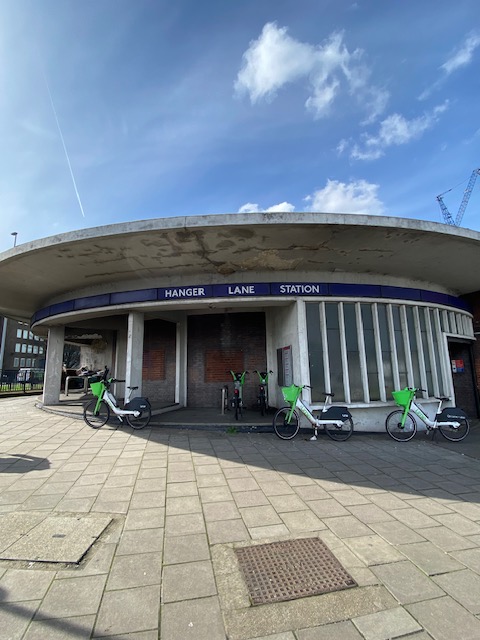
Set in the middle of the Hanger Lane Gyratory System is Hanger Lane underground station, only accessible by underpasses, though the station entrance itself is overground. There are several subways to reach the ticket office, each one is long and prettily tiled. The central part of the station is huge and circular, as is the exterior of the station. The station started to be built in 1939, but as with other buildings at this time, completion was delayed due to the war and it finally opened in 1947.

5. White City Estate bus stop
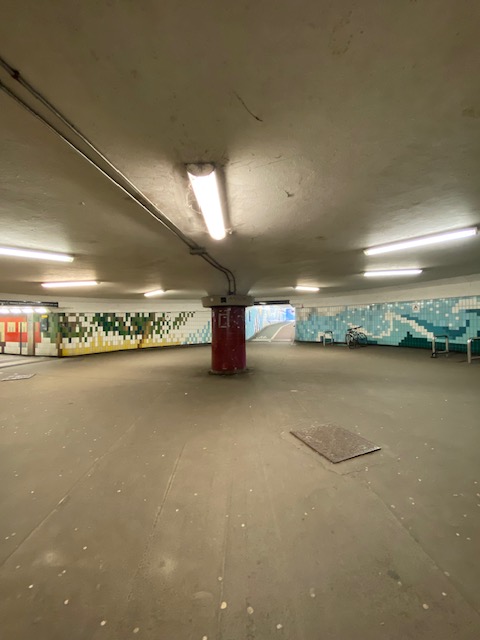
On your way to White City from this stop, you will walk down another pedestrian underpass – this one has a mural at either end though one is rather the worse for wear. The two glazed porcelain mosaics were created in collaboration with children at a local primary school on the theme “It’s Good To Be Me”. The one displayed here uses the children’s self portraits created after a workshop at the National Portrait Gallery in London. The resulting portraits were fired onto ceramic.
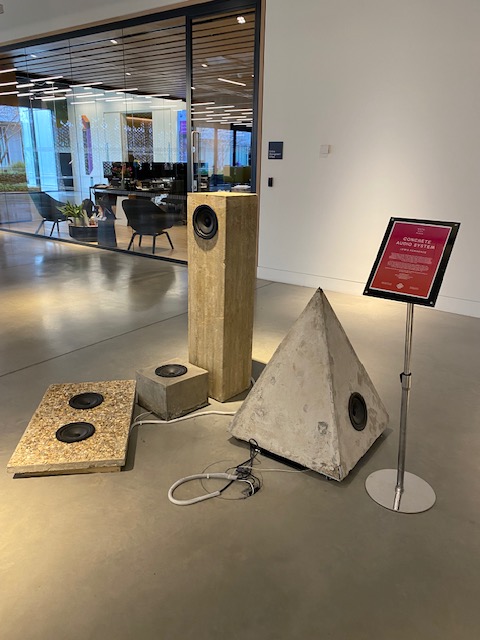
Once through the subway, head for White City Place which used to be the BBC Media Village. These days, it’s still a media centre, being the home of ITV Studios and it’s where the BBC still make certain programmes. There is also a Garden House, home of the Royal College of Art. In the outside courtyard is a plaque with the medal tally of the 1908 London Olympics as this is near the site where the games took place. There is also a metal structure “The Helix” which is an interactive light and sound art installation, inspired by the structural spiral-like form of a DNA helix. Inside the West Works building is a sculpture by Lewis Kemmenoe “Concrete Audio System” a piece of art that sits between sculptural form and audio design.




6. Uxbridge Road/Westfield bus stop
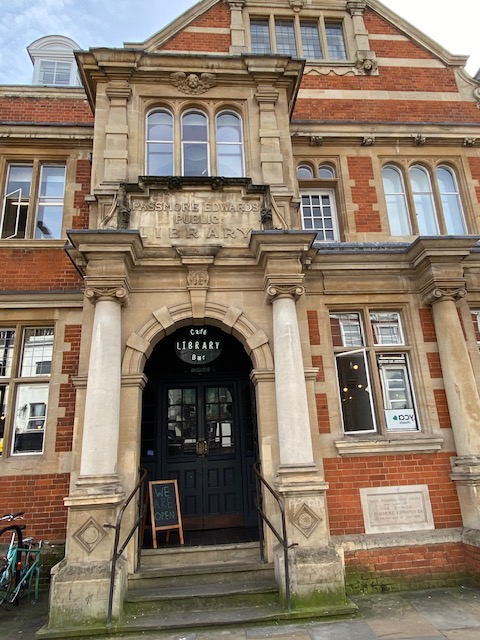
As you approach the Bush Theatre, you’ll notice on the wall a plaque saying Leigh Hunt and Charles Keene Memorial. The theatre was once a public library, built at the end of the 19th century and the theatre moved into it in 2011. Leigh Hunt (1784-1859) was a critic, writer and poet who is alleged to have died in Shepherd’s Bush. The philanthropist John Passmore-Edwards who had established this library, amongst others, liked to erect plaques of famous people in the places near where they had died. Charles Keene was an artist and illustrator, working in black and white – it’s assumed he died near this site too.
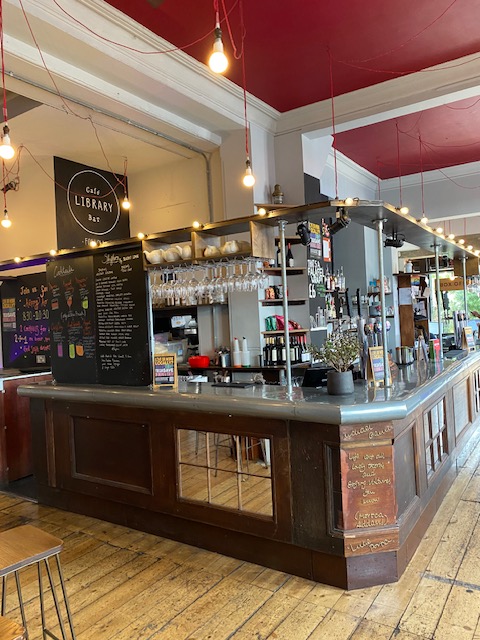
And so climb the steps up to the Bush theatre. To the left is the script library and in front is the library bar. The theatre has a reputation for new writers and plays and their performances often go on to the West End. The Bush started out in 1975 at Shepherd’s Bush Green and nurtured such talent as Alan Rickman, Victoria Wood and Phoebe Waller-Bridge and award-winning playwrights including Simon Stephens and Lucy Kirkwood. It moved to this site in 2011.


7. Shepherd’s Bush Green bus stop (also on bus route 72)
It’s actually an easy stroll from the theatre to the final stop on this route, but the bus also stops at the Green. One of the buildings confronting you is the Sindercombe Social, a pub that is on the site of previous drinking establishments since the end of the 19th century. It’s an interesting name for the pub – Miles Sindercombe (d 13 February 1657) was the leader of a group that tried to assassinate Oliver Cromwell during the period of the Protectorate in 1657. He had been staying at the nearby Bush Hotel hence naming a local hostelry after him.
Next door is the Shepherd’s Bush Empire, built in 1903 as a music hall with performers including Charlie Chaplin making an appearance here. This impressive grade II listed building became the BBC Television Theatre in 1953, putting on shows like This is Your Life and The Old Grey Whistle Test. Owing to its fairly large capacity (2,000 seats), it has since become a venue for small gigs and a venue for ‘surprise’ warm-up gigs. Prior to their 1999 tour, the Rolling Stones put in a performance.


This route was surprisingly enjoyable, even though I had visited parts of it on previous bus routes. As with many others, there was a good mix of both inside and outside things to see and a combination of older buildings with changed usage to newer places.
Toilets that are available to the public and free:
- Greenford Library (near Ravenor Park)
- The West Works in White City Place
- Bush Theatre
 london routemistress
2 responses to “Bus route 95”
I went to the HimalayanPalace a few times ,a gorgeous cinema , but by then it was quite rundown.
<
div>
<
div>
<
div>Jill
<
div dir=”ltr”>
<
blockquote type=”cite”>
LikeLike
Was it splendid inside then? It’s so disappointing when these interesting buildings are converted into something less than lovely.
LikeLike