
Acton Green to Piccadilly Circus
Highlights:
- Mosaic House
- Coronet Theatre
- Italian Gardens
- Iconic Images Gallery
1. Acton Green bus stop
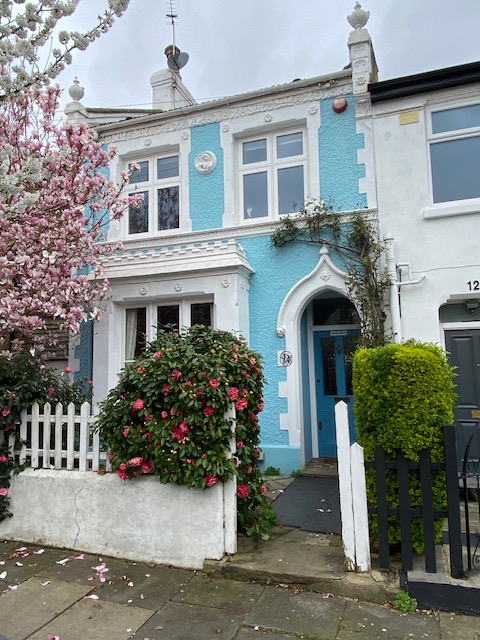
There are a considerable number of interesting places to see before starting on the journey. First off, take a walk to Fairlawn Grove and see The Mosaic House.
This remarkable house is the home of Carrie Reichardt, a mosaicist and ceramicist and is covered from top to bottom and front and back in bright, colourful mosaic tiles. At the moment, half the house is covered with scaffolding but it’s possible to enjoy the secrets and stories set within the walls. If you look closely, you can see amongst other things, tributes to American prisoners, part of her long-running art campaign against the death penalty.
In particular, there is a significant memorial to Luis Ramirez. He and Reichardt corresponded while he was on death row in the early 00s. He somehow managed to send her his prisoner ID card, which has been preserved in resin on the back of the house.


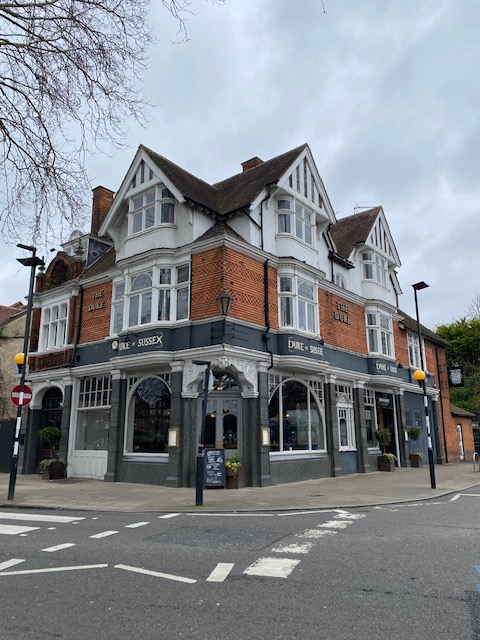
Round the corner in Rothschild Road is the Gothic House. It certainly doesn’t look gothic from the outside so it must be assumed that the interior reflects the genre. Walk towards the start of the route at Acton Green and you come to The Duke of Sussex pub. Built in 1898, it replaced a previous beer-house dated from 1842. It’s been awarded Grade II listed status and said to be “elaborately decorated”. The pub takes its name from Prince Augustus Frederick, Duke of Sussex (1773–1843), son of King George III and uncle of Queen Victoria.
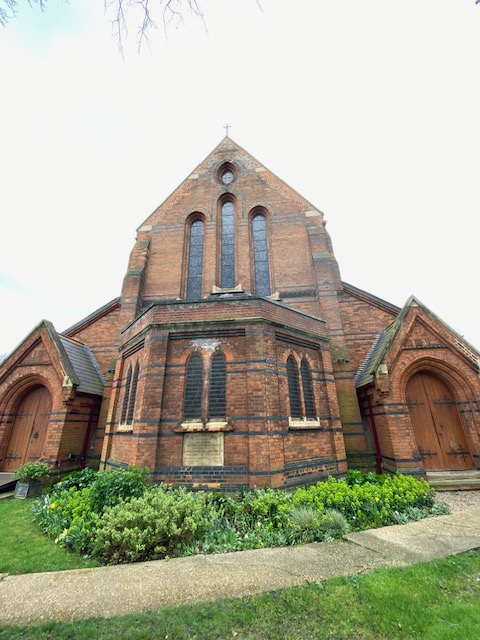
Another visit before getting on the bus is St Alban’s Church, with its neo-gothic Victorian architecture. Named after St Alban, the first martyr of Britain, the foundation stone was laid on October 18th 1887 and opened in the following year.
The bus starts at Acton Green and it’s worth a visit to the Green itself, not least because it’s where the Battle of Turnham Green was fought on 13 November 1642. The battle was between the parliamentarians and the royalists in the reign of Charles I. The parliamentarians’ front ran from what is now South Parade to the garden walls of Chiswick House. The royalist army extended from Acton Green across Turnham Green. The battle ended in a stalemate, with the armies facing each other for ‘many hours’ until the royalists drew off during the afternoon.

2. Turnham Green bus stop
Opposite the Green is a board welcoming the visitor to Bedford Park, which had been described by John Betjeman in 1960 as “the most significant suburb built in the last century, probably the most significant in the Western world”. The community grew up here from 1875, with a new kind of estate. The houses were aesthetically pleasing in the Queen Anne style and at affordable prices.
Plenty of famous people have lived in Bedford Park, probably the most notable of whom is W B Yeats. He wrote “The Lake Isle of Innisfree” from his home in Woodstock Road and after a period in Ireland he and his family moved back to this area.
The board is outside St Michael’s and All Angels church, in whose grounds is a sculpture by Conrad Shawcross entitled Enwrought Light, created in commemoration of the poet W B Yeats, who lived locally for 20 of his first 30 years. Round the corner is the Tabard Inn, a grade II listed building, which was built in 1880 as part of the development of Bedford Park garden suburb. As well as the pub, the 3-storey block contains stores and a manager’s house and is in British Queen Anne Revival style.


3. Notting Hill Gate Hillgate Street bus stop
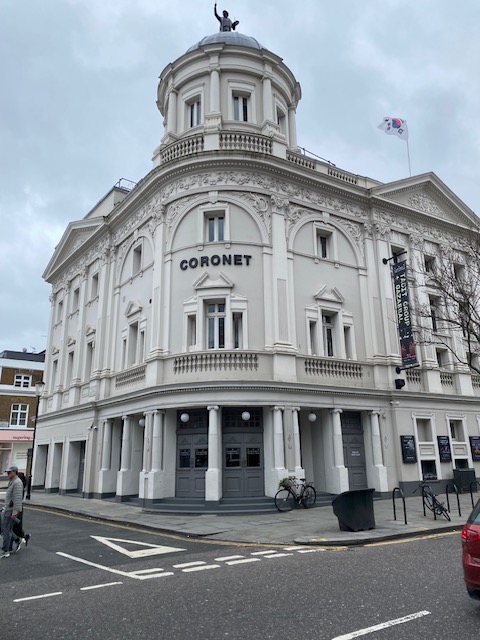
This is the stop for The Coronet Theatre, an off-the-West-End theatre. Built in 1898, the Coronet stages lesser-known work by classic authors such as T.S Eliot, Arthur Miller and Harold Pinter, and new works by contemporary dramatists such as Brian Friel. Famous actors who appeared at the theatre in its early days included Ellen Terry and Sarah Bernhardt. Over the years, it has been a cinema, a Pentecostal church and back to a theatre, as it is now. The Coronet featured in the film Notting Hill, with a scene in which Hugh Grant as Will Thacker is sadly watching a film starring Julia Roberts as Anna Scott, his love interest.


4. Palace Gardens Terrace bus stop
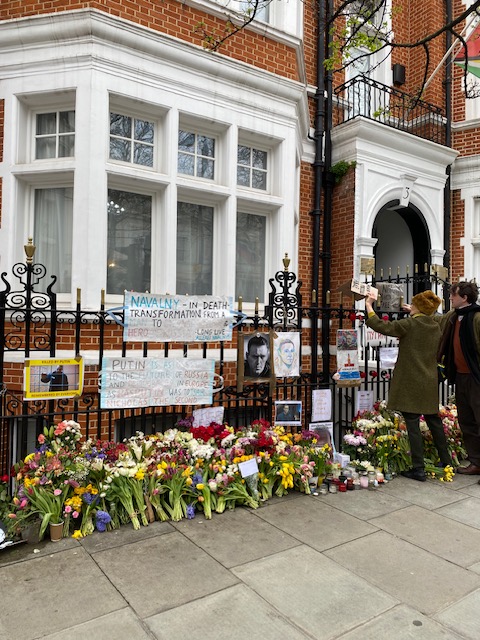
There is a poignant tribute to Alexei Navalny in Palace Court, opposite the Russian embassy. Many people, including Russians, have left flowers, candles and messages to the Russian opposition leader, who so recently met his demise in a penal colony.


5. Queensway station bus stop
A quick stroll from the stop takes you to Black Lion Gate, one of the many gates leading into Kensington Gardens. The cast-iron carriage gate is Grade II listed, for its architectural design of 2 leaves hung from open-work iron piers, which are crowned with a royal monogram, date and star of Order of the Garter.
Inside Kensington Gardens, along the Board Walk is the Elfin Oak, a stump of a 900-year-old oak tree which has been carved and painted to look as though elves, gnomes, fairies and small animals are living in its bark. This hollow log originally came from Richmond Park, and was moved to this spot in 1928. Over the next two years the illustrator Ivor Innes carved the figures of the “Little People” into it.
The plaque on the outside of the cage states “Kindly respect this very old tree and the fragile little figures. Please help protect by advising those intent on damage and taking money”. Spike Milligan was a lifelong fan of the elfin tree, and in 1996 personally financed a successful campaign to have it restored. In fact, he repainted large parts of the tree himself.
Adjacent to the oak is the Time Flies Clock Tower and drinking fountain. This fountain was erected in 1909 and the text on the tower says ‘to the memory of’ two people: a ‘beloved son’ and ‘one who loved little children’. It is believed that Lady Emily Fortescue was the donor, together with her husband, Hugh, the 4th Earl. Their son, Geoffrey who died in 1900, aged 9 was probably the ‘beloved son’. The Earl’s father, who had 14 children and died in 1905, was the ‘one who loved little children’.


6. Lancaster Gate Columbia Hotel bus stop
Near the stop is Spire House, a residential development which incorporates the impressive Victorian Gothic spire of Christ Church, Lancaster Gate. The tall spire is visible from a considerable distance at various points in Kensington Gardens/Hyde Park. The last service to be held in the church was in 1977, following which the building was deconsecrated and the remainder demolished owing to concerns about dry rot (and also probably falling congregation numbers).
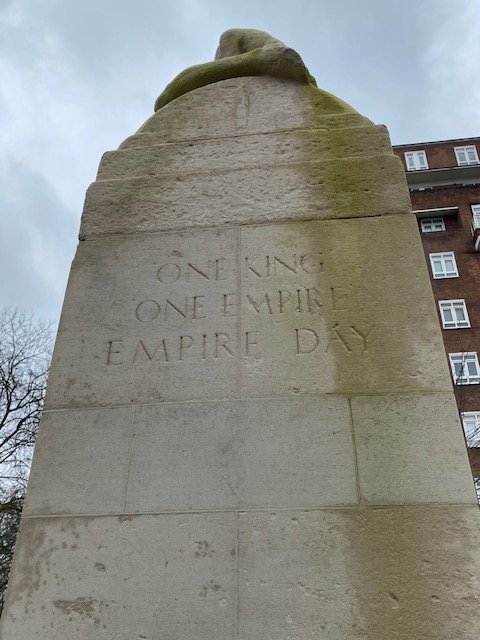
Situated on a traffic island in front of Spire House is the Meath Memorial, for Reginald Brabazon, 12th Earl Meath. In 1903, Brabazon created Empire Day, cleverly designed to coincide with Queen Victoria’s birthday, on May 24. In 1958 it was renamed Commonwealth Day. There are inscriptions on all four faces, with the east face stating “One king, one empire, empire day”.


7. Lancaster Gate station bus stop
The Italian Gardens are also in Kensington Gardens and are a total delight. They were created in the 1860s and have four main basins. They feature central rosettes and a collection of stone statues and urns. If you look close enough, you will see the five main urn designs – a swan’s breast, woman’s head, ram’s head, dolphin and oval.
The gardens are believed to have been a gift from Prince Albert to Queen Victoria. The layout of the Gardens can be traced to Osborne House on The Isle of Wight, where the royal family spent its holidays. Prince Albert was a keen gardener and took charge of the gardens at Osborne House, where he introduced an Italian garden with large raised terraces, fountains, urns and geometric flower beds. And so it was that in 1860 he brought the idea to Kensington Gardens.
Look out for Queen Victoria and Prince Albert’s initials on one of the walls of the Pump House, at the north of the gardens. This building once contained a steam engine which operated the fountains – the pillar on the roof is a cleverly-disguised chimney. A stoker kept the engine running on Saturday nights to pump water into the Round Pond, so on Sundays there was enough water pressure to run the fountains.
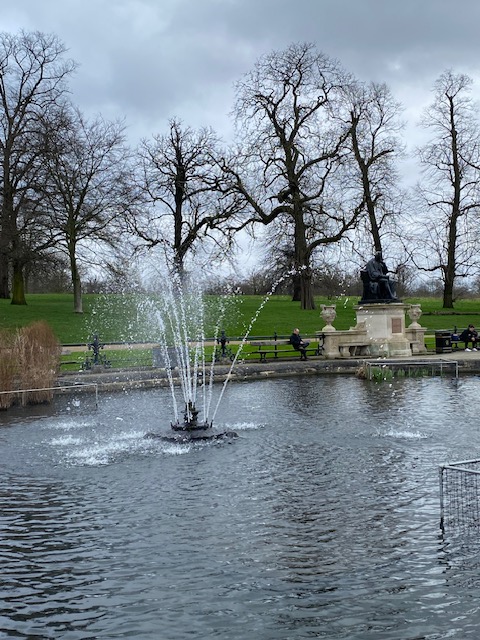

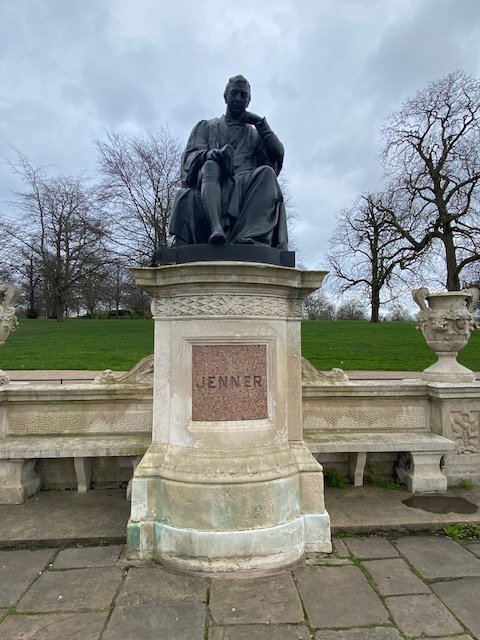

Also in the gardens is a statue of Edward Jenner, the physician, scientist and pioneer of the world’s first vaccine, for smallpox. The statue was originally in Trafalgar Square and was unveiled by Prince Albert in 1858, before being moved to this location in 1862. Walk a little further inside the gardens and you’ll come across Buckhill Lodge, a Victorian detached cottage, built in 1858 as a park lodge. Its style is Tudor influenced and is now Grade II listed.
8. Marble Arch/Bayswater Road bus stop
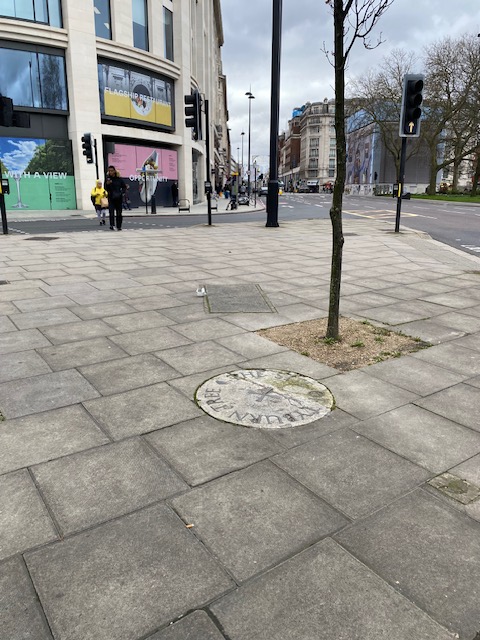
A visit to the site of the Tyburn Tree is also on the number 16 route. Tyburn’s ‘tree’ was in fact a wooden gallows where criminals were hanged to death. It was renowned as the principal location for public executions in London. Prisoners sentenced to death would begin their last day at Newgate Prison in the City. They’d then be thrown onto a horse and cart for a very public journey from the City, along Oxford Street, to arrive at the Tyburn Tree – their final destination. The route would have been crowded with people wanting to get one last look at the condemned. Executions were thought to be a deterrent to crime and so spectators were welcomed in their thousands.
In an island near the Tree are the Marble Arch fountains. On the day of my visit, they were undergoing repairs so the fountains weren’t working. There are three bronze fountains and they are usually lit up at night with constantly changing multi-coloured lighting.


9. Marble Arch bus stop
It’s possible to walk from the Tyburn Tree and fountains but if not, alight the bus at this stop. From here, walk round to 17 Dunraven Street which is the final home of fashion legend Alexander McQueen. This townhouse was originally built in 1897, and was the home to various residents including His Highness Alexander Mountbatten and author PG Woodhouse. McQueen lived here for just a year from 2009 until his early death aged 40 the following year. Along the road, on the corner with North Audley Street is a florists with the name McQueens. I assume the owner bought the shop and named it after the designer, as it’s a stone’s throw away from his home.


10. Charles II Street bus stop
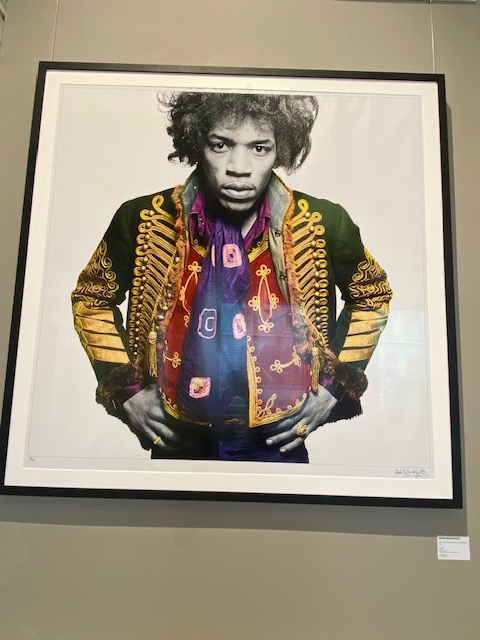
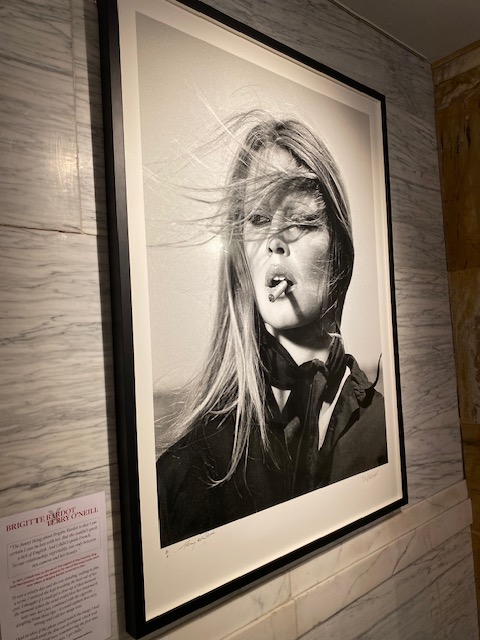
Walk round to Waterloo Place and visit the Iconic Images Gallery where there is at present (March 2024) an exhibition entitled Bright Lights Big City. The exhibition explores “our changing perspective on urban landscapes, from the bustling rush-hour sidewalks of Ted Williams’ never-before-seen images of 1950s Chicago, through Terry O’Neill, Gered Mankowitz and Douglas Kirkland’s star-studded London and LA of the 60s and 70s,
Norman Parkinson’s dizzying fashion in Paris, and the gritty glitz of New York City from the 50s onwards through the lenses of Eve Arnold, Sonia Moskowitz, Allan Tannenbaum and Dafydd Jones.”
If you were born and brought up during this era, then this is definitely the exhibition to see, if you see nothing else this year. The images capture the times and will transport you back to your youth.




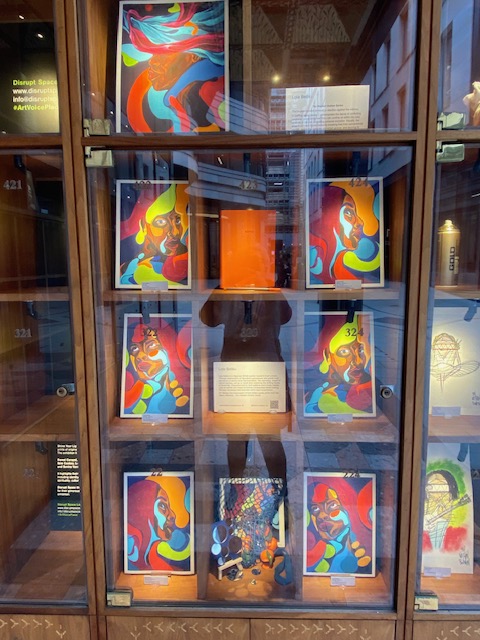
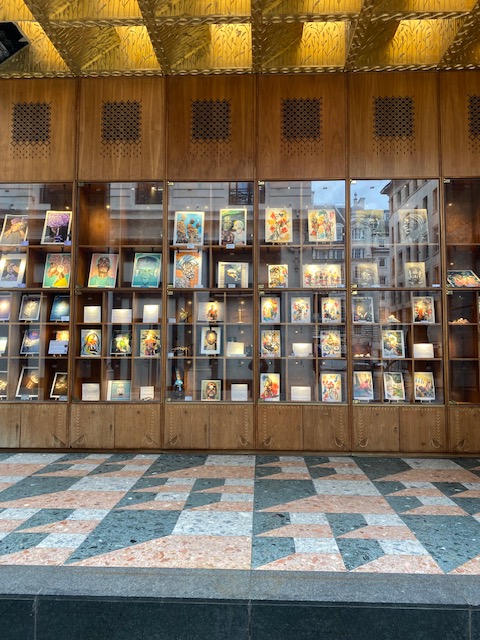
As if this wasn’t enough art for one day, on the way back to the bus stop, you’ll pass St James’s Market Pavilion where the contemporary black arts agency, Disrupt Space, has Shine the Light exhibition. The agency specifically challenges the mainstream and “is the self expression of the African Diaspora through the lens of contemporary Black art.”
Several artists’ works are shown in the window in Piccadilly and highlighted here is the artist Lola Betiku aka labet. Labet is a self-taught Nigerian-British painter based in East London. Her work is both figurative and abstract and her main themes are around identity and representation. All the many artists’ works are divided into cabinets, allowing each one to showcase their talent.
A really enjoyable bus route with something for everyone, from the amazing mosaic house to the site of the battle of Turnham Green and culminating in the brilliant photographic exhibition at the Iconic Images Gallery in Piccadilly.
Toilets that are available to the public:
- Acton Green (20p to pee)
- The Coronet Theatre
- Pret a Manger Marble Arch
 london routemistress

_front_(%3D_South_face).jpg)
One response to “Bus route 94”
Did you enjoy it? I had hoped to come too.
<
div>Jillxx
<
div dir=”ltr”>
<
blockquote type=”cite”>
LikeLike