
North Cheam to Putney Bridge
Highlights:
- Whitehall (when open)
- Wetlands Boardwalk
- Wimbledon Museum
1. Malden Road/Priory Road bus stop
It’s a fair walk to the first places to visit but it’s worth the effort. Around 12-15 minutes’ walk from the bus stop is Whitehall Historic House, with its white timber-framed cladding.
Whitehall is a timber-framed historic house and museum in the centre of Cheam Village. It was believed to have been built around 1500 and was originally a wattle and daub yeoman farmer’s house. It is Grade II* listed. It was probably the first “council house” – it was so-named once, owing to its use by Queen Elizabeth I, for holding an impromptu council meeting for signing papers while on a hunting expedition from Nonsuch Palace.
The house contains an eclectic mix of Georgian, Victorian and Edwardian eras. Apparently there are plenty of rooms to explore – the hall, the parlour (possibly the original kitchen), the lower kitchen, the porch room, the Roy Smith art gallery (once a wash room or scullery), the Harriet Killick dressing room and the bedroom.
One room has a display about Nonsuch Palace, built nearby by Henry VIII and pulled down in the 1680s. In the garden there is a medieval well which served an earlier building on the site. The house has had various owners, including the Killick family, one of whom was the captain of the tea clipper Challenger. These days it’s run by the LB of Sutton along with Friends of Whitehall and is open to the public on Thursdays, Fridays and Saturdays.
Round the corner to Whitehall is a picturesque street of weatherboard cottages, called Park Lane. They used to form part of the Cheam House estate, built in the 1820s for a tea merchant called Archdale Palmer. And over the road from Whitehall and Park Lane are The Parochial Rooms. These were built on land given by Spencer Wilde of Cheam House. Over the door, with the date 1869, is “Serve God and be Cheerful”, the motto of the John Hacket, Rector here 1624-62. These days the rooms are used as a community venue.


2. South Thames College bus stop
Walk a few minutes to St Lawrence Church and find yourself in the churchyard, where you can look up to see the tower. A plaque tells you that there are three bells inside which must be tolled and not swung because the frame isn’t strong enough any longer. Amongst those who are buried in the churchyard is the family Rudd, the most prominent of whom was Austin (Arthur). The Rudd family tomb is in the form of a cut-off pillar, which was previously popularly used to show the end of the male line, though this isn’t the case here. The tomb also contains the remains of Austin’s wife Elizabeth, several other members of the family and a grandson, Edwin, who died in 1973.
Arthur Rudd was one of Britain’s best loved music hall comedians and singers. He had a large repertoire of songs, many of which he wrote and composed himself, including “Sailors Don’t Care”.

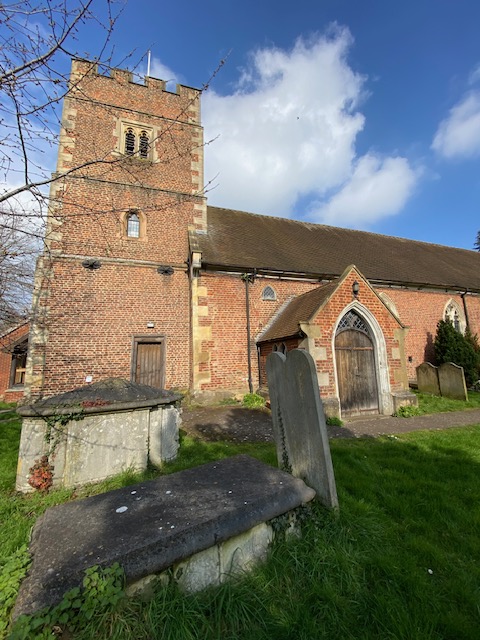

Near the church is a lovely old building, now Morden’s Parish Hall but once The School House. It had been donated by the benefactress Elizabeth Gardiner. In 1719, the twice married Mrs Gardiner, daughter of George Garth II, died and left £300 to provide free schooling for poor children of the parish. The school opened in 1731. It was enlarged in 1872 and an infants’ room added in 1889, giving a capacity of 190 children.


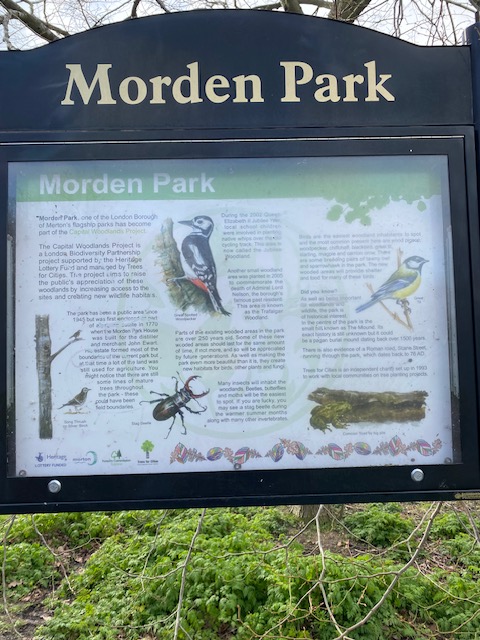
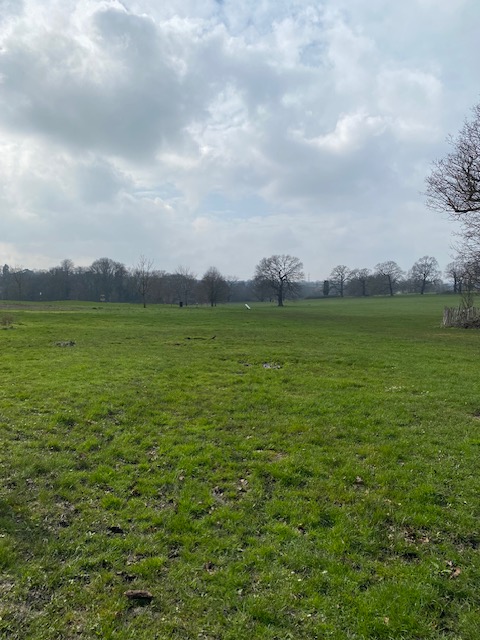
Morden Park is also near this bus stop, as well as being on bus route 80. Morden Park House is set within the park in all its grandeur. This Grade II Georgian manor house was built in 1770 by John Ewart and had been left to go derelict until LB Merton changed it into a Register Office and a venue for celebrations.

3. Morden Court bus stop
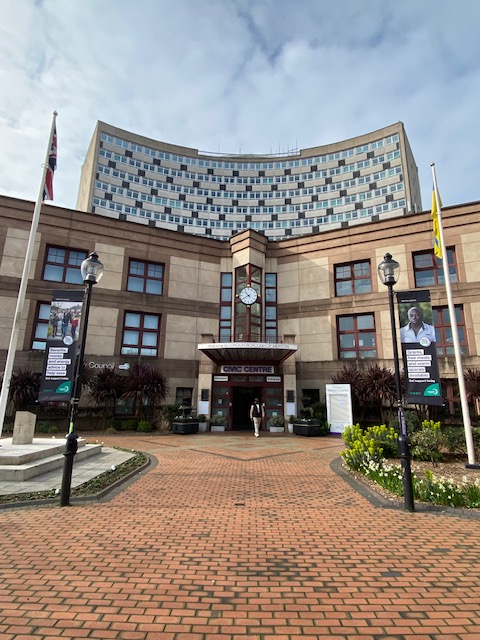
Round the corner to the stop is Merton Civic Centre and similar to many others of its ilk, there is a library and exhibition inside. The building itself is in the Modernist style and was built in 1962 on the site of a former post office. The design involved a 15-storey curved structure with layers of continuous concrete panels above and below a continuous row of glass windows on each floor.
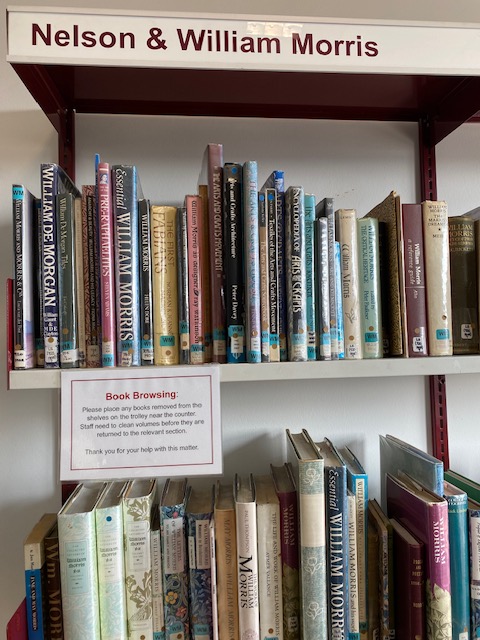
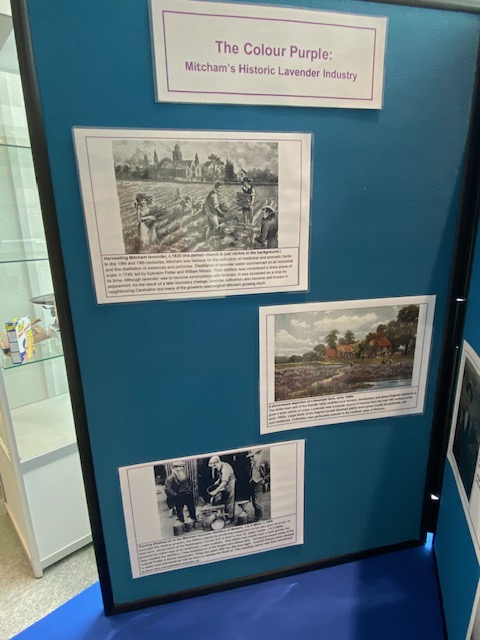
In the library upstairs is an extensive selection of books about Horatio Nelson and William Morris, both of whom had connections with Merton – Nelson occupied Merton House and Morris moved his workshop to nearby Merton Abbey in 1881. There is also a small exhibition about Mitcham’s lavender history – Mitcham being in the London Borough of Merton. Alongside images of the lavender harvests and farms, there are display items such as a hand sickle, lavender bags and a souvenir mug.

4. Morden Station bus stop
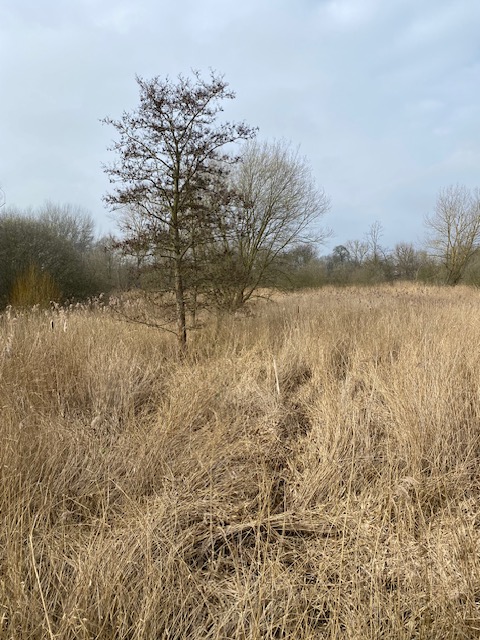
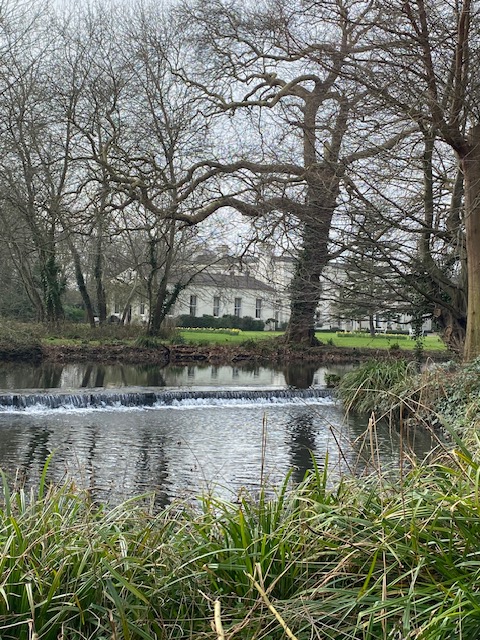
Not to be confused with the aforementioned Morden Park, take a walk from the station towards Morden Hall Park, a National Trust property and open space. This is also on bus route 80. One of the main features of this park is the river Wandle that runs through large parts of it. Not far into the park is The Wetland Boardwalk, which is rich in wildlife. It winds its way through bulrushes and reeds, which provide nest sites for herons and snipe that breed here in the spring.


5. Morden Road/South Wimbledon bus stop
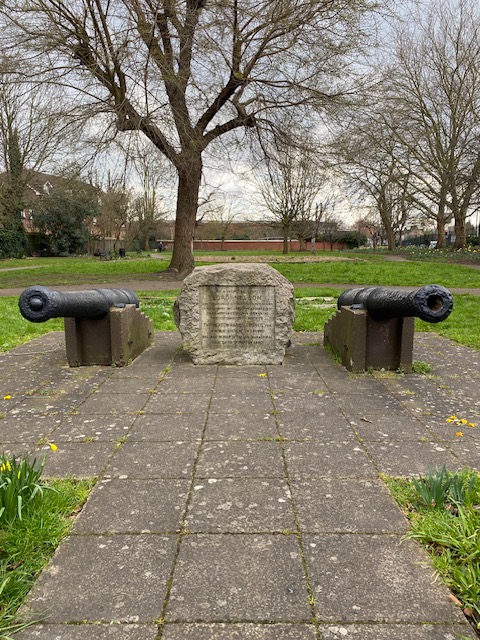
A short walk takes you to Nelson Gardens. These opened in 1906, created to honour the first centenary of Admiral Lord Nelson’s death. Nelson had lived at Merton Place from 1801-1805, which had extensive estate lands within which was the plot that is now Nelson Gardens. Nelson set out for the Battle of Trafalgar from Merton Place and in fact Lady Hamilton continued to live there after his death.
Two 12 pounder guns flank a block of stone with an inscription about the garden’s dedication. It says:
“As a memorial to Lord Nelson and the splendid services which he rendered to his country.” By a great nephew of the later Rear Admiral, Isaac Smith of Merton Abbey”.


6. High Street/Wimbledon Village bus stop
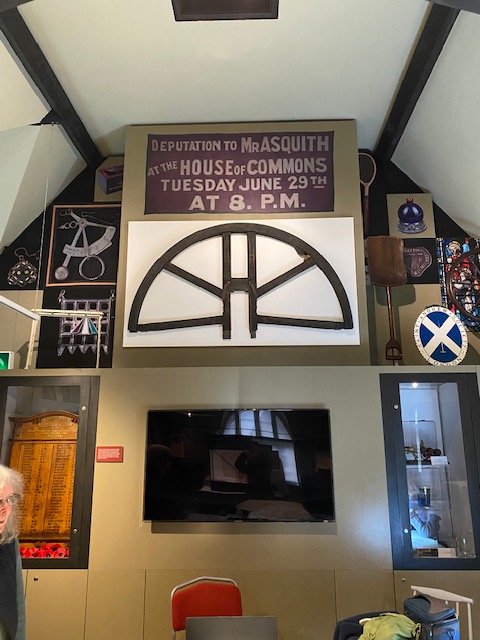
A short walk from the stop is The Museum of Wimbledon, a local history museum which was established in 1916. It’s open Friday, Saturday and Sunday so I was lucky that on the day I visited (Wednesday), the curator was in attendance and in the process of rearranging the displays. One of the exhibitions gives a potted history of how the museum came into existence.
A Miss Kezia Peache was born in 1820 and inherited half of her father’s fortune at the age of 38. She decided to use it to help others less fortunate than herself, building many cottages for those with limited means. She also saved the Wimbledon Village Club building from closure and it’s here that the museum is now located. There is a portrait of her by J Edgar Williams. A replica of the dress she was wearing for the painting is shown in the museum.
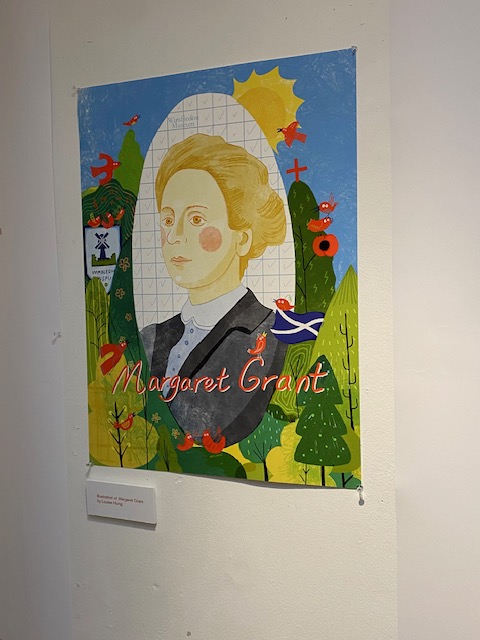
In 1920 a certain Margaret Grant was appointed the first curator of the Museum, a post she kept for 30 years. Setting high standards of care for the museum’s collections, she was also the secretary of the Women’s Social and Political Union’s (WSPU) Wimbledon branch.


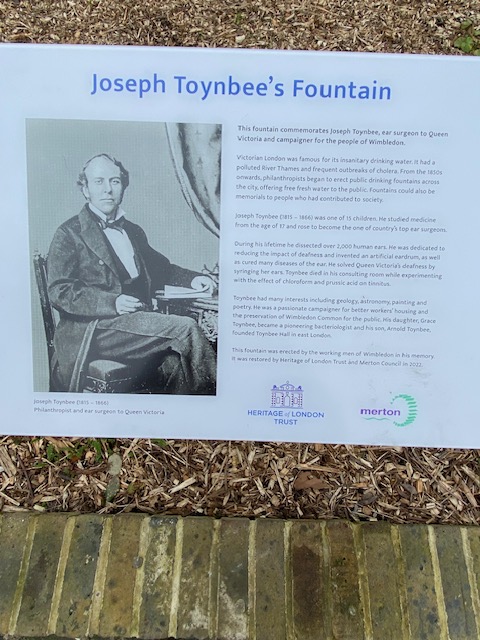
On the way back to the bus stop, you’ll come across Joseph Toynbee’s Fountain. He was an ear surgeon to Queen Victoria and a campaigner for the people of Wimbledon. He was dedicated to reducing the impact of deafness and invented an artificial eardrum and even cured the Queen’s deafness. The fountain was erected by the working men of Wimbledon in his memory.

7. Marryat Road bus stop
This is the nearest stop to the part of Wimbledon Common that contains Rushmere Pond. It is the oldest pond in the common, probably going back to medieval times. Even in severe drought conditions, Rushmere does not dry up, and in earlier days, was a convenient and valuable source of rushes for thatching and a place where villagers could keep their domestic ducks.


8. Putney Library bus stop
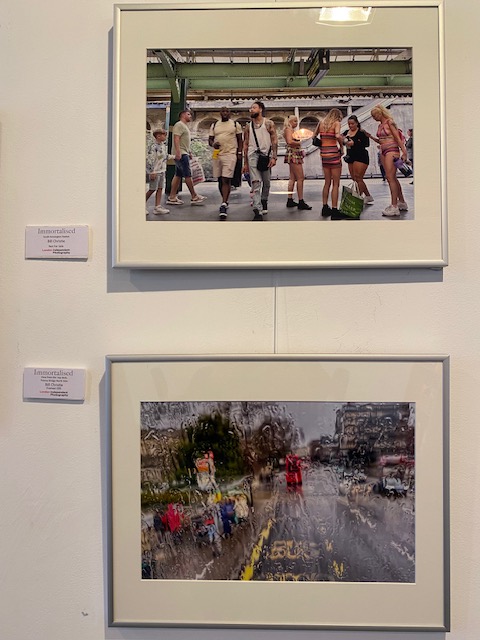
This grade II listed building was paid for by George Newnes, who established “Tit-Bits” magazine, and was opened in 1899. The original entrance door is no longer in use but it has the words “Newnes Public Library” inscribed over the doorway. As well as housing thousands of books, the library also puts on events and exhibitions, the latest one being a photographic exhibition of fine art entitled Immortalised. Sixteen local artists show their work, including the bustling shops, people and architecture on and around the streets of Putney.



9. Putney Bridge station bus stop
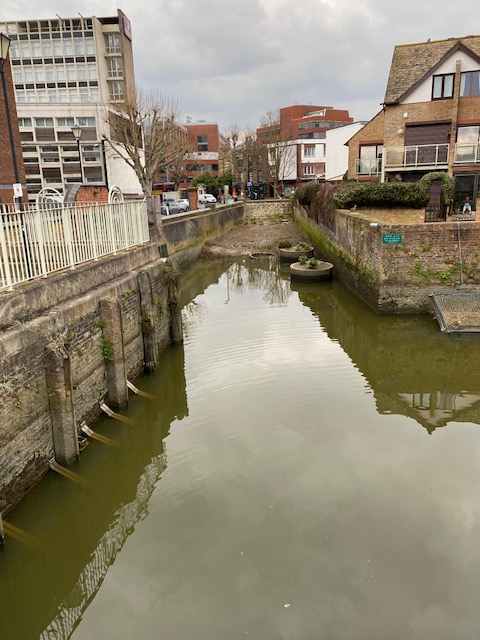
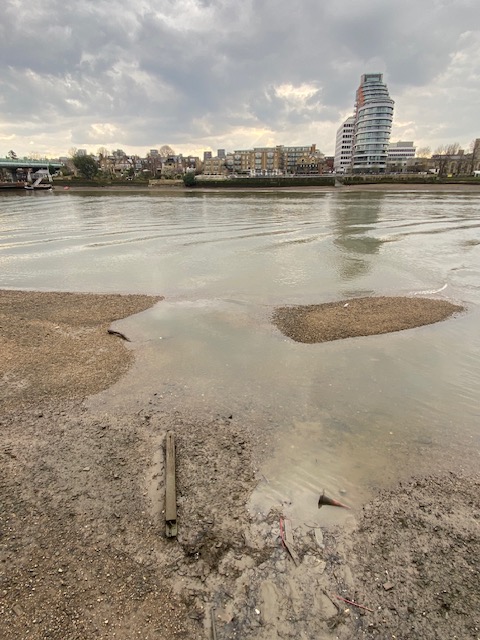
Final stop of the day and is in fact the end of the route, walk round the corner to see Swan Draw Dock, which forms part of the River Thames and protects the local community from flooding. Although in its later life, the dock was used by rivermen to draw their craft onto a short slipway for repairs, the name of the dock relates to an inn that stood nearby.
Before the first Putney Bridge was built, Fulham and Putney were on either end of a ferry crossing. The ferry was busy and many inns were erected to cater for travellers who wished to refresh themselves on the journey while their coaches were loaded onto the ferry. The most famous of these hostelries was the Swan Inn which was situated by the ferry, about 100 yards to the east of today’s bridge. It sadly burnt down, probably by an arsonist in 1871.
While here, take a look at Fulham Bridge and the river Thames at that point.
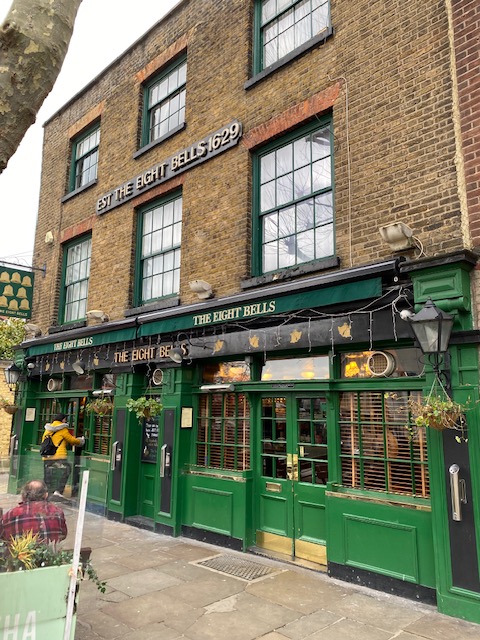
As you walk to Putney Bridge station to finish the journey, you’ll walk past the Eight Bells pub. This was once a location where dog shows would take place in Victorian London. When the original wooden Fulham Bridge was replaced by Putney Bridge, the footfall diminished and the Eight Bells received compensation for their loss of trade. It’s the oldest surviving tavern in Fulham. Licensed in 1629 as the Blue Anchor, it progressively changed its name over the following century to the Anchor, The Anchor and Eight Bells and finally the Eight Bells by c1754.

I found the 93 to be a very interesting route, with plenty of places to see. There is an overlap with the number 80 but I still managed to find places I hadn’t been to previously. It was a shame that Whitehall wasn’t open but apart from that, everything else was available and open. It helped that the weather was clement.
Toilets that are open to the public and free:
- Merton Civic Centre
- Wimbledon Museum
- Putney Library
 london routemistress