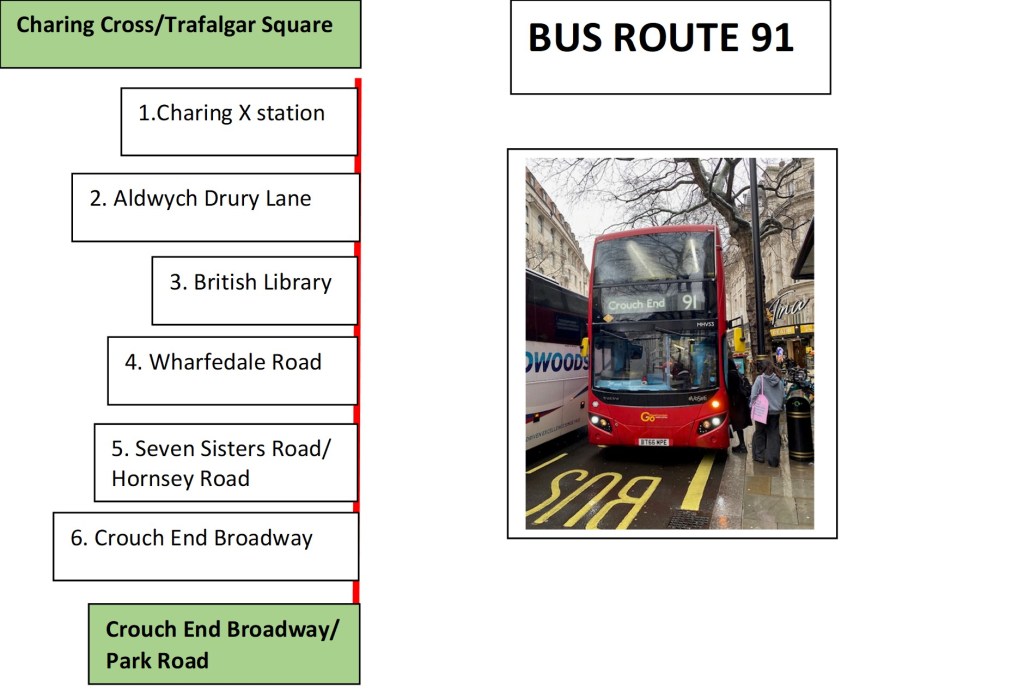
Trafalgar Square to Crouch End Broadway
Highlights:
- Courtauld Gallery
- Crypt Gallery
- Housman’s Bookshop
1. Charing Cross/Trafalgar Square bus stop
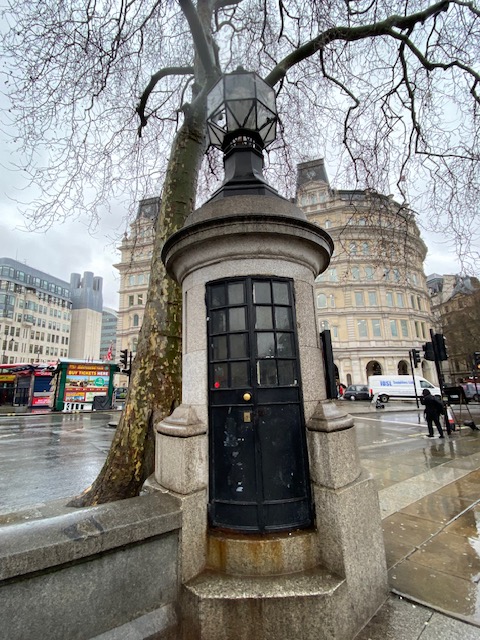
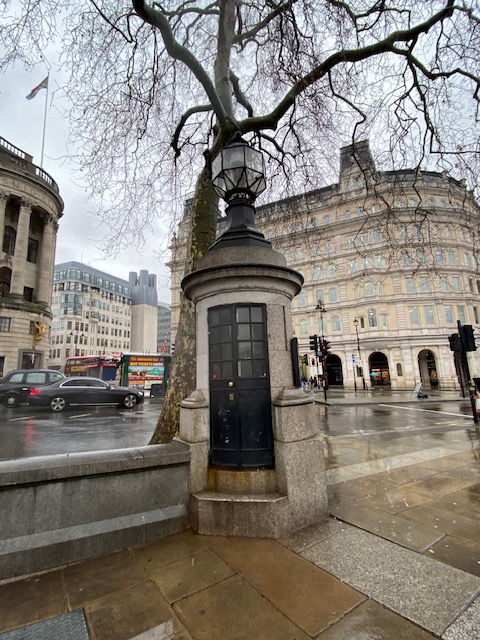
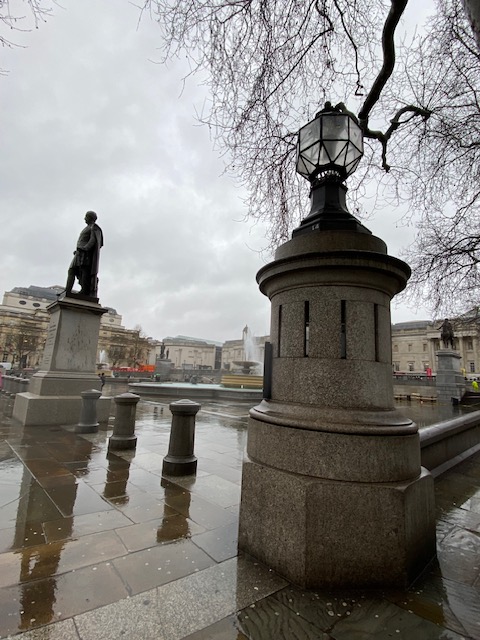
Really near the bus stop but easily missed is Britain’s smallest police station. It’s on the south-east corner of Trafalgar Square and if you don’t know it’s there, you would walk straight past it. It was built in 1926 so that the Metropolitan Police could keep an eye on troublesome demonstrators. At the end of World War I, a temporary police box near Trafalgar Square station, was due to be renovated and made more permanent. There was a public outcry for it to be scrapped so a less “objectionable” police box was erected instead – and inside a light fitting!
The light fitting was hollowed out and it was installed with a set of narrow windows to provide a view across the square. A direct phone line back to Scotland Yard was installed in case reinforcements were needed in times of trouble. In fact, whenever the police phone was picked up, the ornamental light fitting at the top of the box started to flash, alerting any nearby officers on duty that trouble was near.
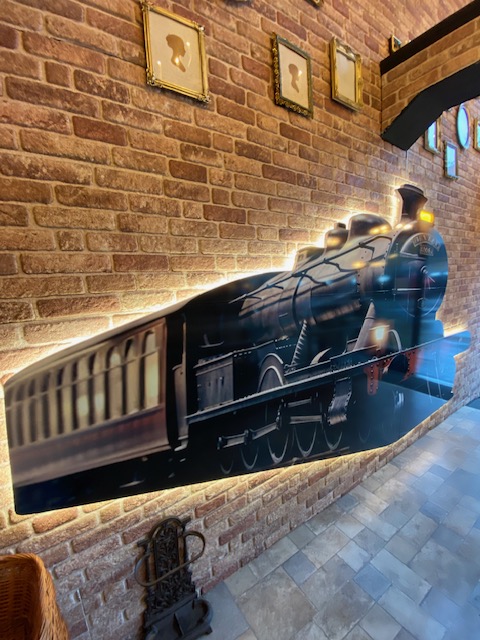
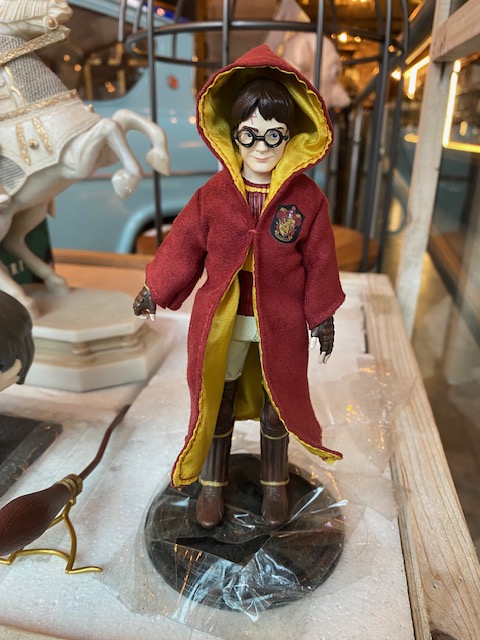
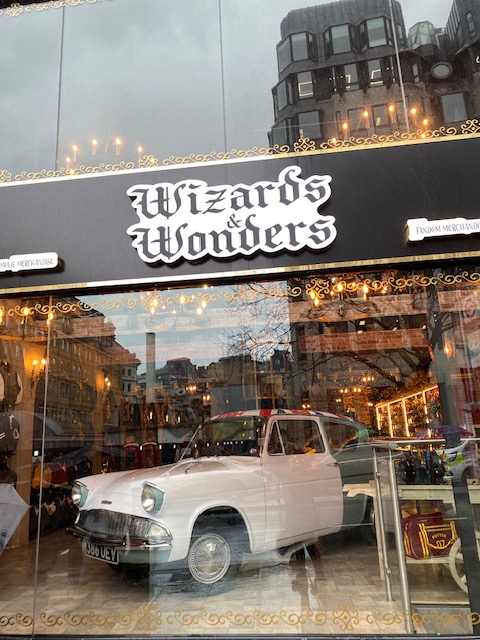
At the bus stop is a Wizards and Wonders shop, selling all sorts of Harry Potter and other wizardry things. On such a rainy day, as it was on the day of going on the 91, it made a welcome shelter and was full of witching and wondering treats.
2. Aldwych Drury Lane bus stop
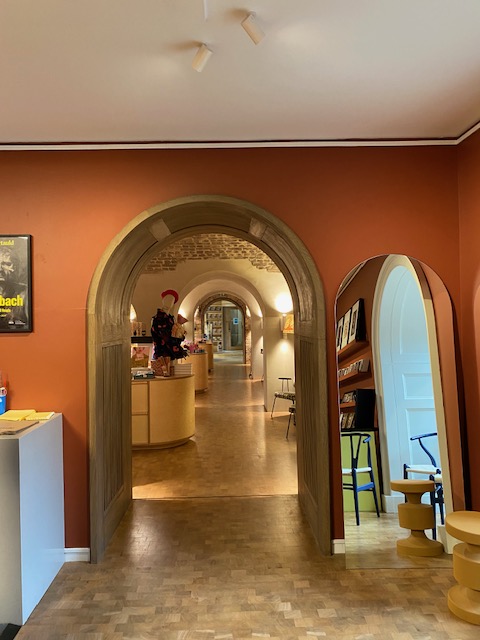
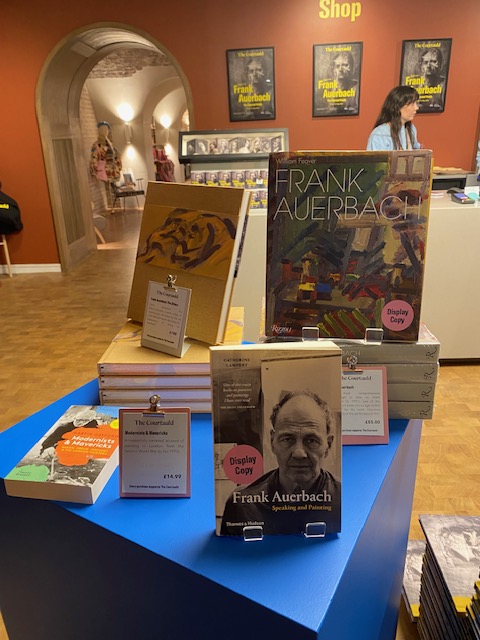
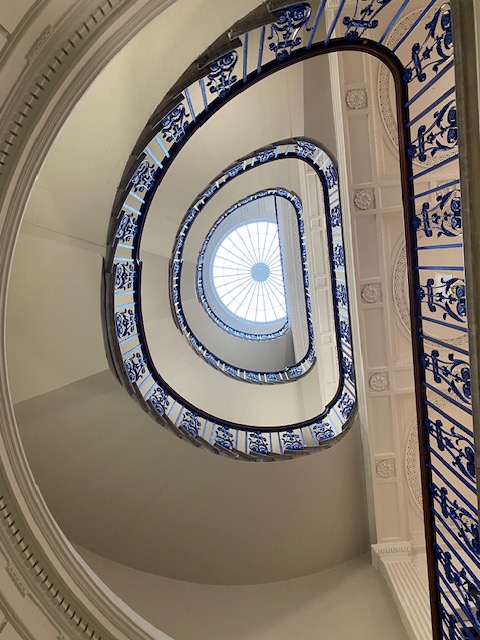
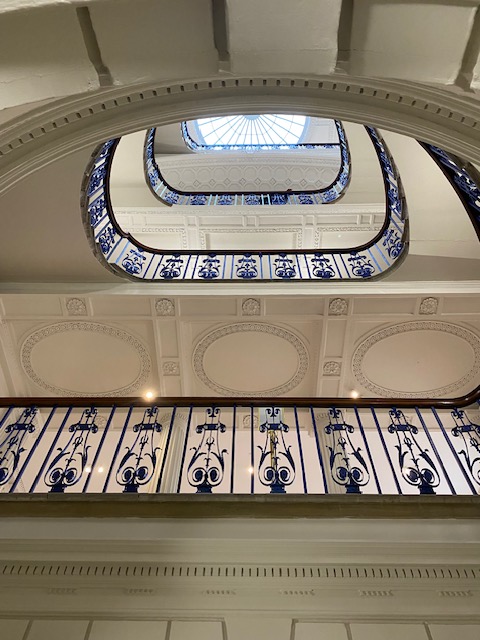
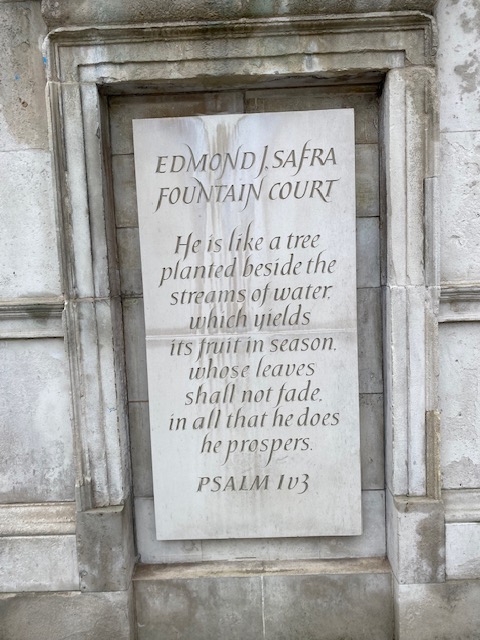
This is the stop for the Courtauld Gallery which has an entrance fee, but it’s possible to visit the shop which is underground and set within the original vaults of the building. Everything is beautifully laid out here. Just outside the shop, but inside the building, is a remarkable set of stairs, a majestic, swirling staircase. In the late 18th century, the renowned architect Sir William Chambers was commissioned to redevelop Somerset House and he is credited for designing this staircase, including decorated landings, or “stations of repose” from which spectators, “might find entertainment, to compensate for the labour past, and be encouraged to proceed”.
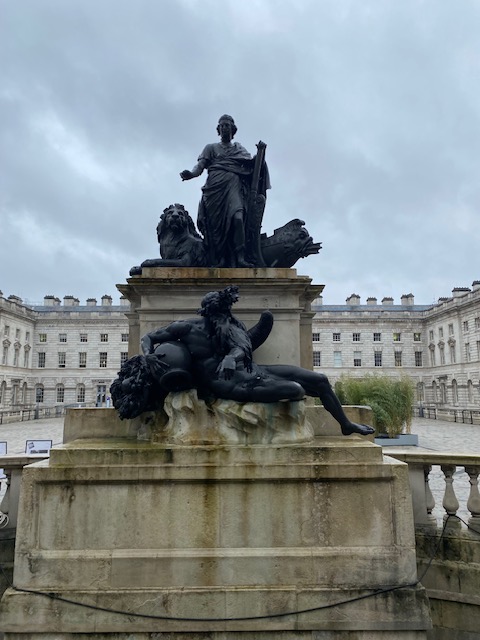
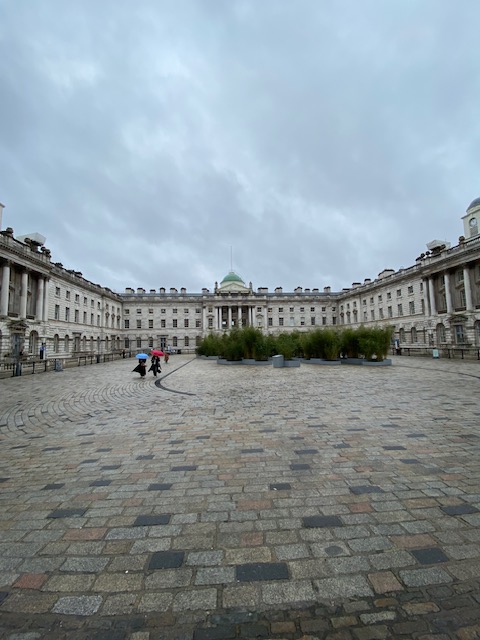
Outside the gallery is the even more majestic Somerset House and in the courtyard is a statue of George III and the River Thames, a Grade I listed outdoor bronze sculpture by John Bacon. The king is dressed in Roman apparel, leaning on a rudder, flanked by the prow of a Roman boat and a lion. Father Thames is reclining on a lower, semi-circular plinth, one hand on an urn with a cornucopia behind him.
3. British Library bus stop
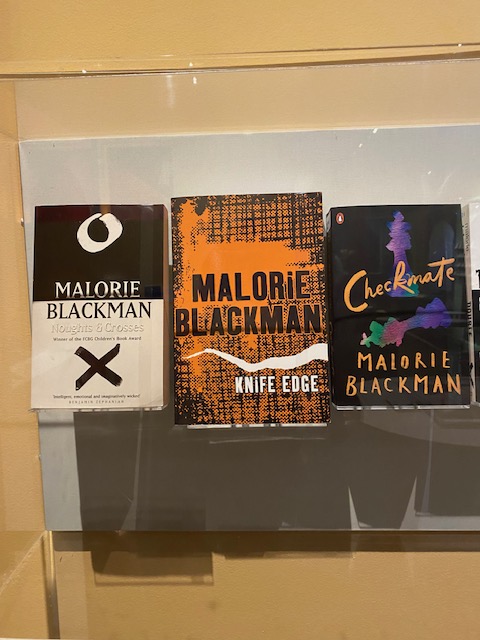
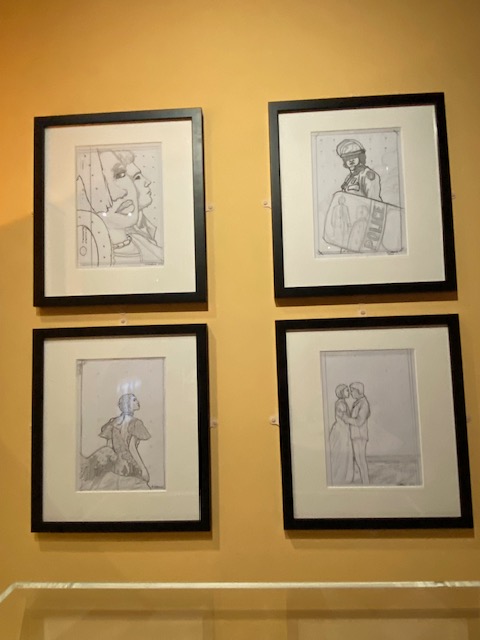
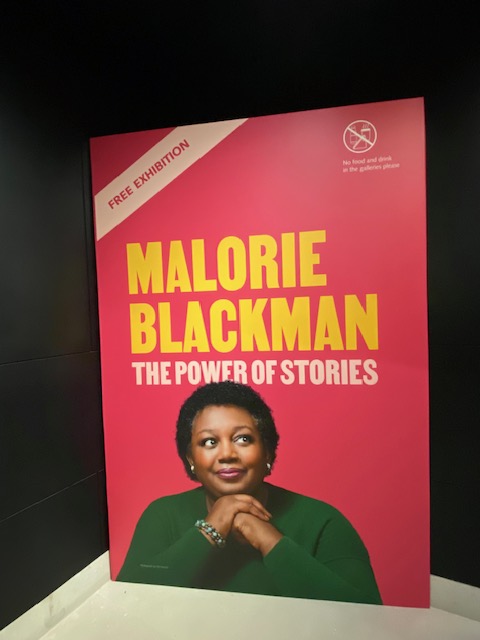
There’s always something new to see at the British Library and at present (February 2024) is an exhibition called The Power of Stories and it focuses on Malorie Blackman, a celebrated children’s author. When growing up, an avid reader, she realised that there was a dearth of books by black writers about black children. This exhibition highlights her books including the iconic series Noughts and Crosses, which have been illustrated beautifully by the Nigerian graphic designer Kingsley Nebechi.
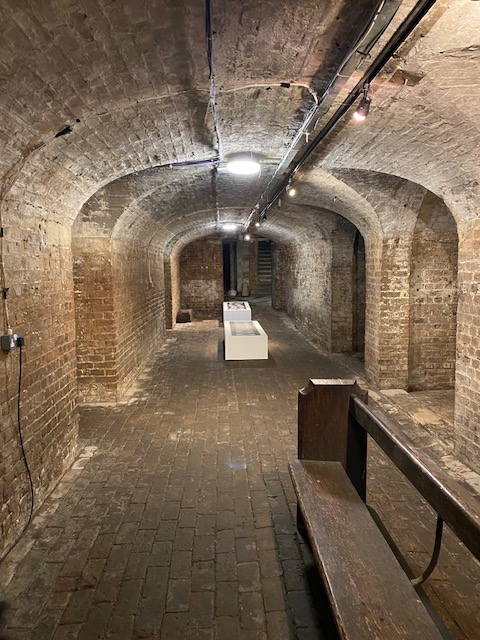
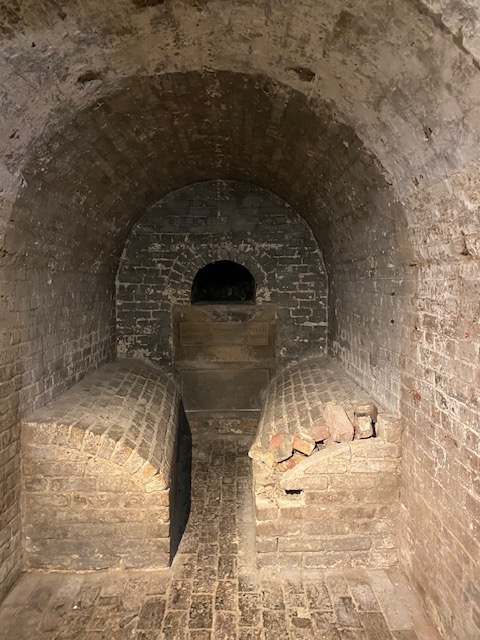
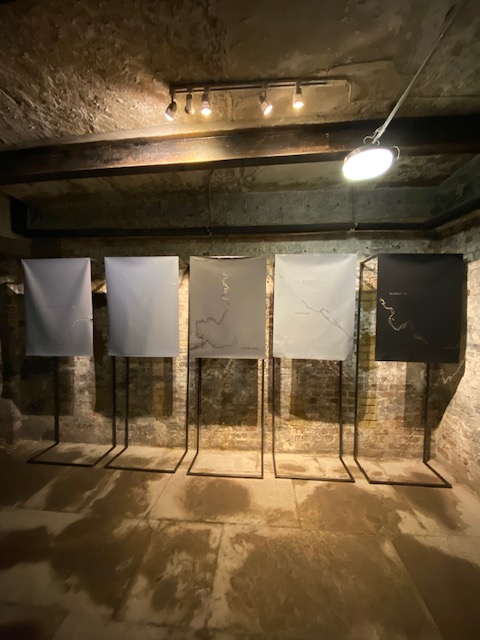
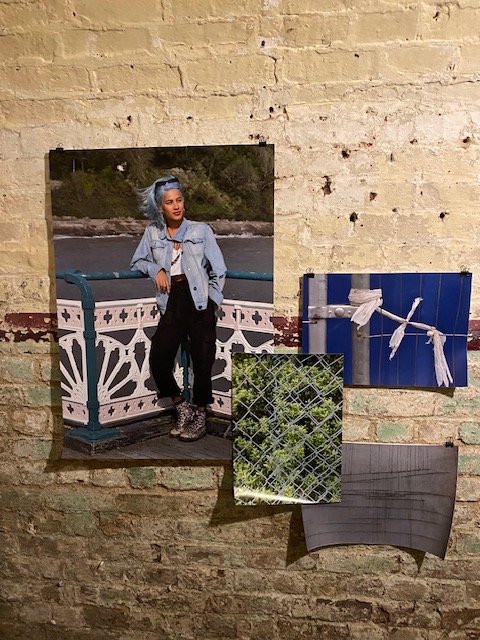
Over the road is the Crypt Gallery underneath St Pancras new church on the Marylebone Road. The gallery is only open when there is an art exhibition so you’ll need to time your visit to coincide with one. At present (February 2024), there’s Betwixt with one of the four locations being here at the Crypt. It’s suitably called “beneath” which shows the work of six artists who are delving into the unknown. It’s set underneath the church where there are family vaults dating back to early 19th century.
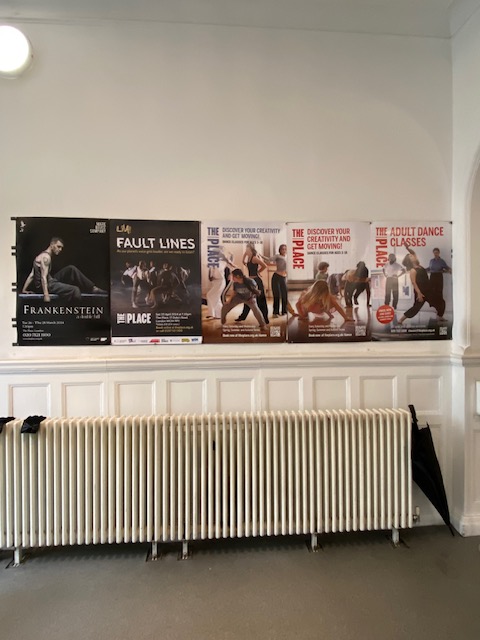
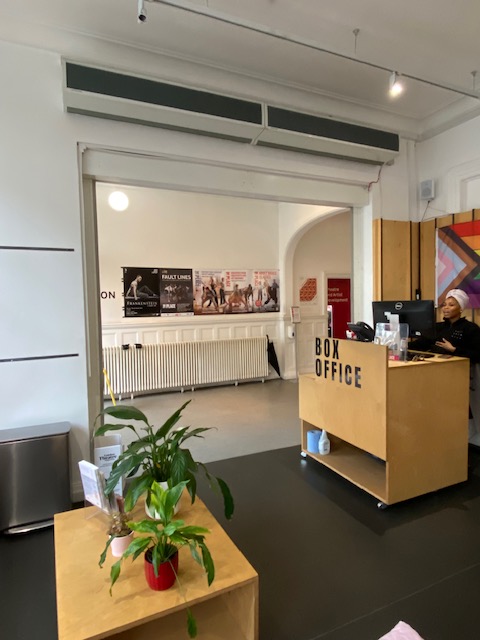
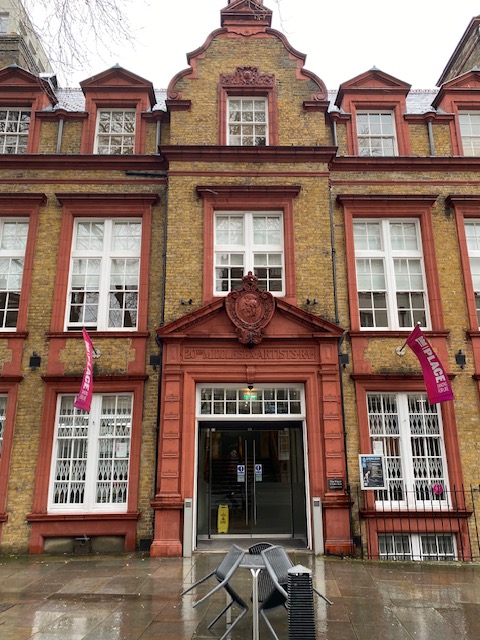
Directly over the road from the Crypt is The Place, an impressive building that’s home to a dance and performance centre. It was built in the 1880s and was officially opened by the then Prince of Wales (later King Edward VII). It was originally the HQ of the 20th Middlesex (Artists’) Volunteer Rifle Corps, which became a battalion in 1908. The battalion was mobilised at the drill hall in August 1914 before being deployed to the Western Front. The drill hall was colloquially known as “The Artists Place” until it was taken over by the Contemporary Ballet Trust in 1969 and henceforth called The Place. Above the door to the building is a badge depicting Mars (god of war) and Minerva (goddess of wisdom).
4. Killick Street bus stop
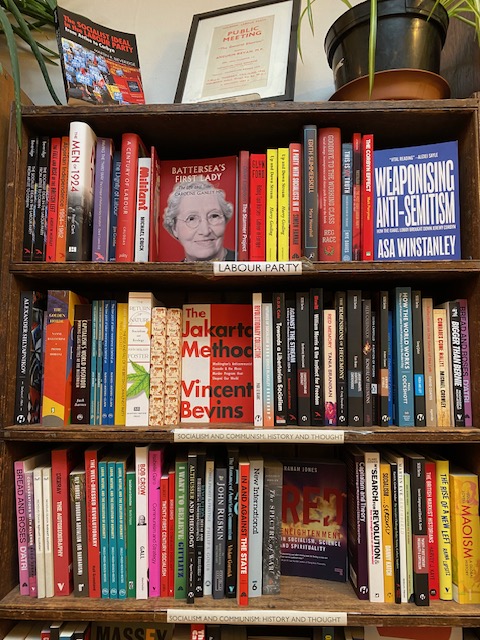
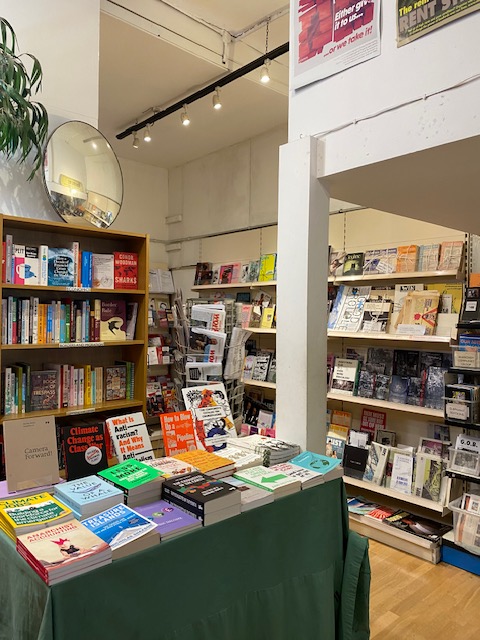
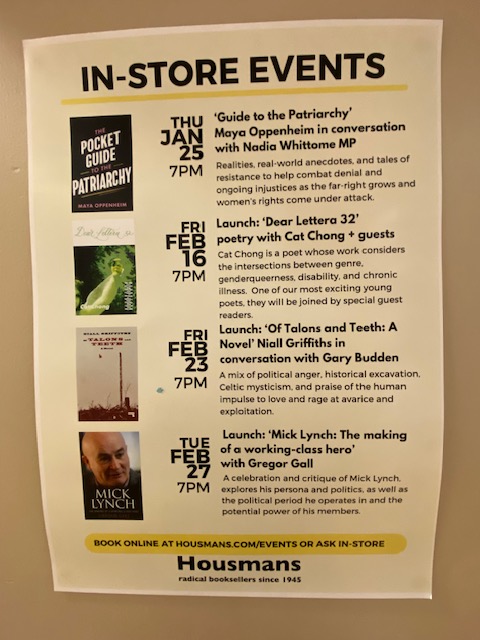
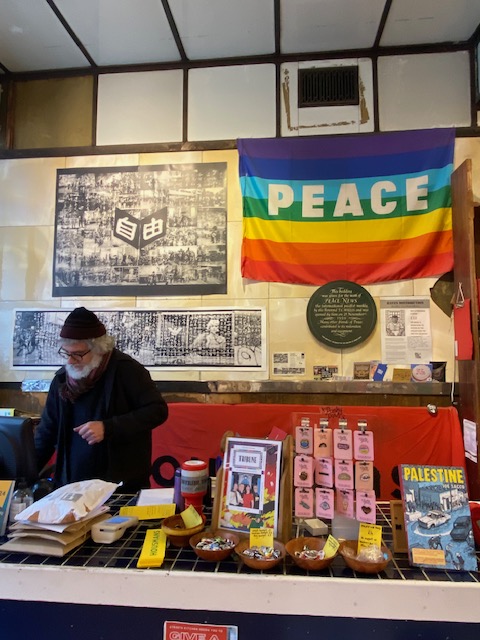
As a rule, I don’t visit shops on bus journey days but I made an exception on the 91 and chose to see Housman’s Bookshop. So called after its founder, Laurence Housman (brother of AE Housman), the bookshop was established “to promote ideas of peace, and also the ideas of human rights and a more equitable economy by which future wars, and all their inherent suffering, might be avoided.” During the summer of 1959, Housman’s became a fully fledged bookshop, and it was officially declared open in the presence of Vera Brittain, at a ceremony on 20 November. These days, Housman’s specialise in books, magazines, and periodicals of radical interest and progressive politics, such as feminism, pacifism, Black politics, LGBTQIA+ politics, environmental justice and anarchism.
5. Seven Sisters Road/Hornsey Road bus stop
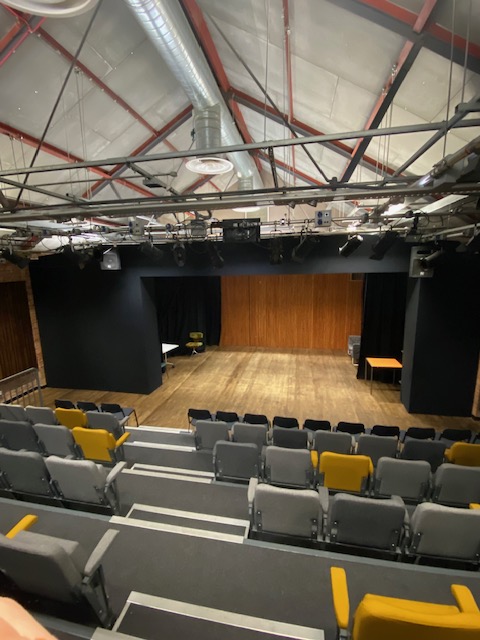
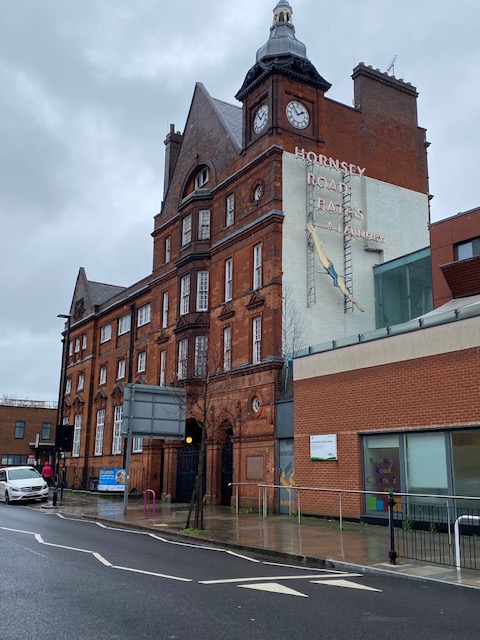
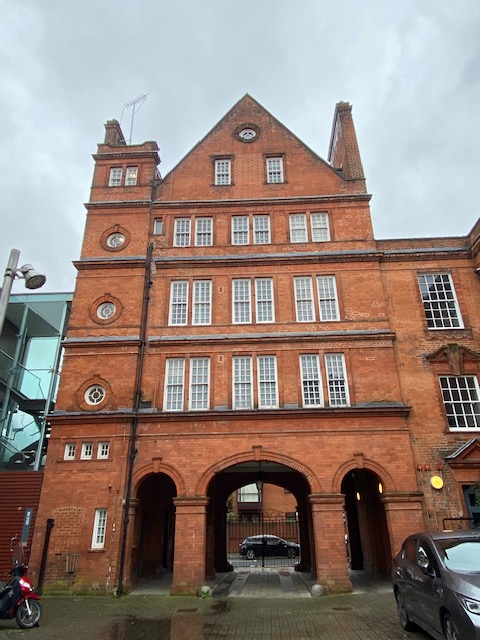
Not far from the stop is the Collective Theatre, a community of artists, that “brings new voices to a brand new stage in North London. Also home to the Collective Acting Studio, it’s the space with collaboration at its core.” The theatre’s mission is to be the leading provider of actor-training in the U.K. for students from underrepresented groups. There is a reasonable-sized auditorium inside the building, which was once home to Hornsey Road baths and laundry. Construction began in 1891 and opened the following year, with the wash-house being added two years later. The neon sign of a female diving, on the outside of the building, was added in 1930 and is now the only one of its kind left in London.
6. Crouch End Broadway/Park Road bus stop
Crouch End is a suburb of London that in 2023 was voted the best place to live in London by the Sunday Times. It has a long association with the arts and entertainment industry and indeed many artists, musicians, film and TV makers and performers moved to the area in the 1970s.
As well as the number 91, the 41 comes through Crouch End so please see that blog for some of the places that aren’t mentioned here, such as the Clock Tower, the Queens pub and the Town Hall.
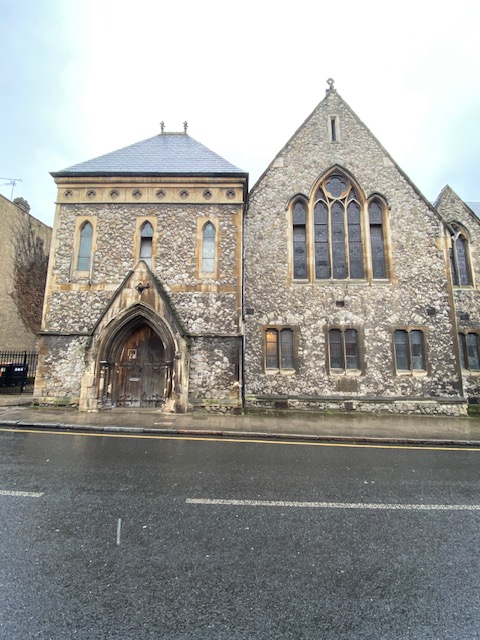
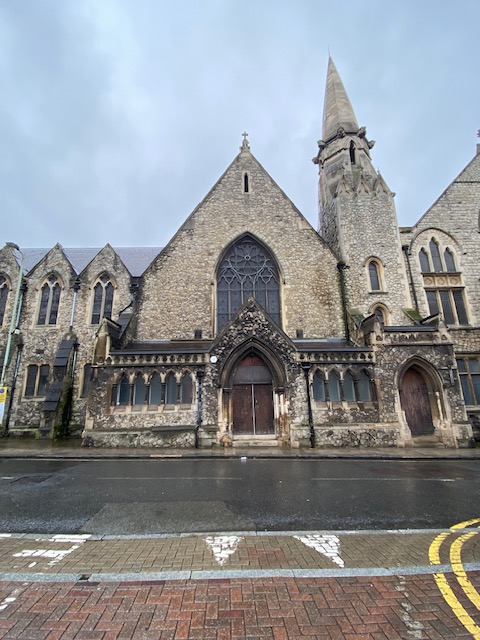
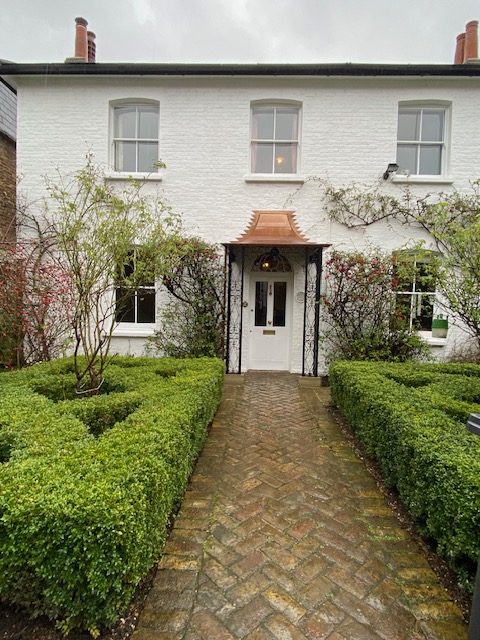
One of the more famous buildings is The Church Studios, formerly Park Chapel. It was turned into a studio in 1984 by the Eurythmics and has since had such illustrious artists as Bob Dylan, Radiohead, U2, Adele and very many others, rehearsing and playing here. Along Crouch Hill are some villas that were first built in the first half of the 19th century, amidst what was then farmland. One such is at 120 and is beautifully kept.
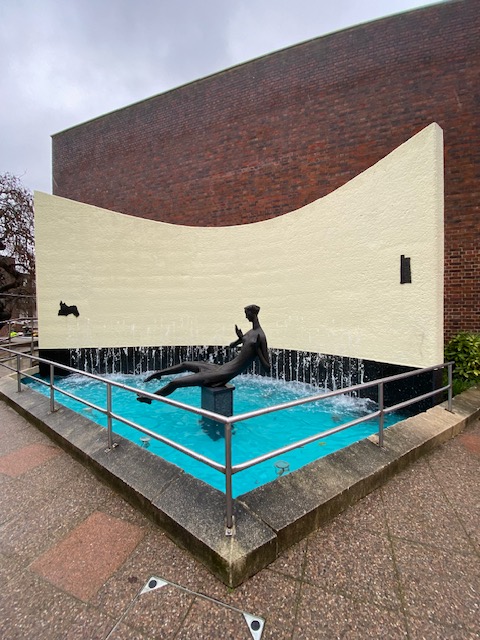
Situated on Haringey Park is Hornsey Library, with its remarkable sculpture “Reclining Figure” by Thomas Bayliss Huxley-Jones just outside. It’s set within a fountain and has been awarded Grade II listed status. The library was opened in 1965 by Princess Alexandra and puts on regular exhibitions as well as featuring authors of the month, with Michael Morpurgo being the one in February 2024.
The day I went on the number 91 was unfortunately a very wet and cold one so it was impossible to walk outside to the many other places of interest I had previously identified – such as Penn Road Gardens, Phillip Noel-Baker Peace Garden and parts of the Parkland Walk. I will try to go back on a more temperate day and will report on them then.
It was lucky that there were many places that were indoors on this route and I hope I have done them justice.
Toilets that are available and free to the public:
- Courtauld Gallery
- British Library
- The Place
- Collective Theatre
- Hornsey Library
 london routemistress
2 responses to “Bus route 91”
Subject to checking, I think you only have to pay entry fee for special exhibitions at The Courtald. I went there in November and enjoyed seeing the permanent collection again – and the really fabulous shop.
LikeLike
I thought there was an entrance fee (though free for me as I have an Art Pass) but thanks for the info. I’ll def check it up.
LikeLike