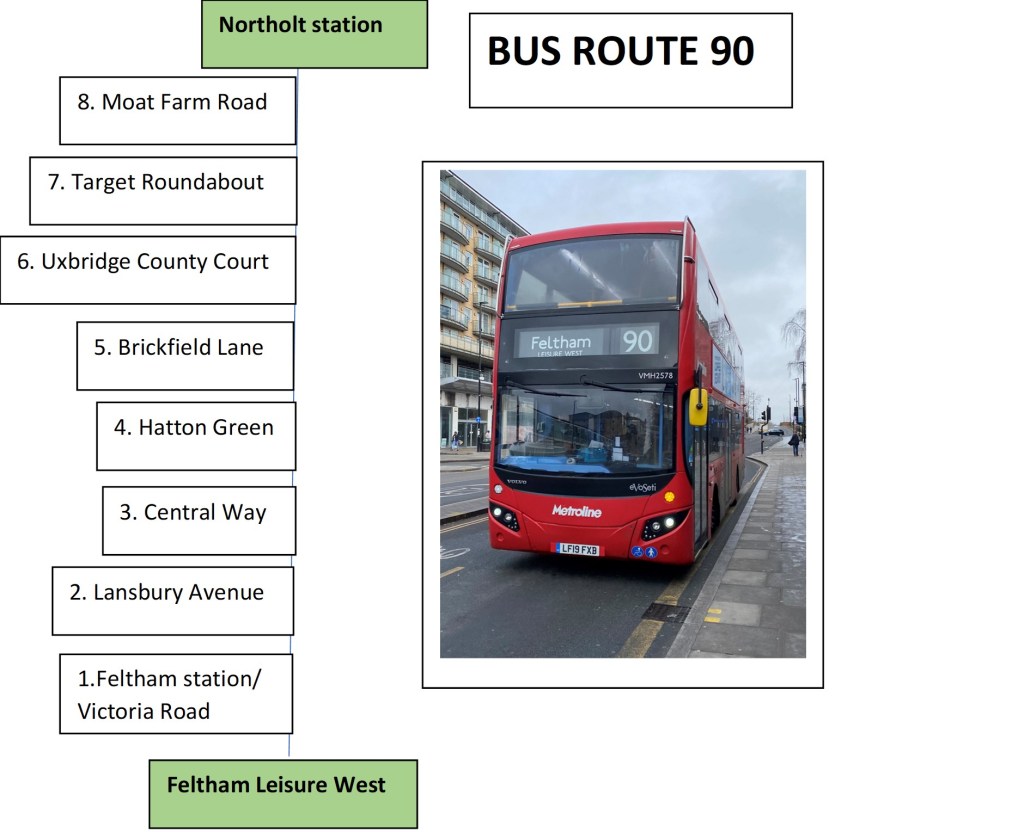
Feltham Leisure West to Northolt station
Highlights:
Bridge House pond mosaics
Hounslow Urban Farm
Northala Fields and View Point
- I don’t usually suggest this but it might just be a good idea to start at the Northolt end of the route rather than finish there. There is a viewing point that has to be climbed up to reach the top and if you arrive there after a full day on the bus and visiting sites, you might just be too tired!
- 1. Feltham station/Victoria Road bus stop
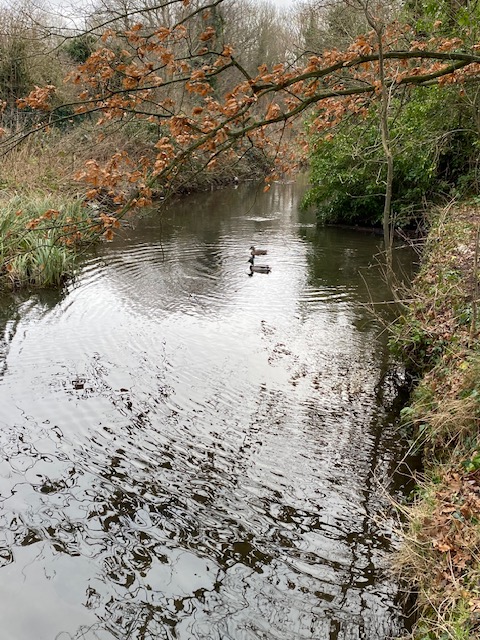
- Hanworth Park House is situated not far from the bus stop but at present it’s boarded off and it’s not possible to take a look, which is a shame because it’s steeped in history. It dates back to Henry VII who used it as a hunting lodge. Near the house is the river Longford which is in fact an artificial waterway which was built for King Charles I in 1638-39 to supply water for Hampton Court.
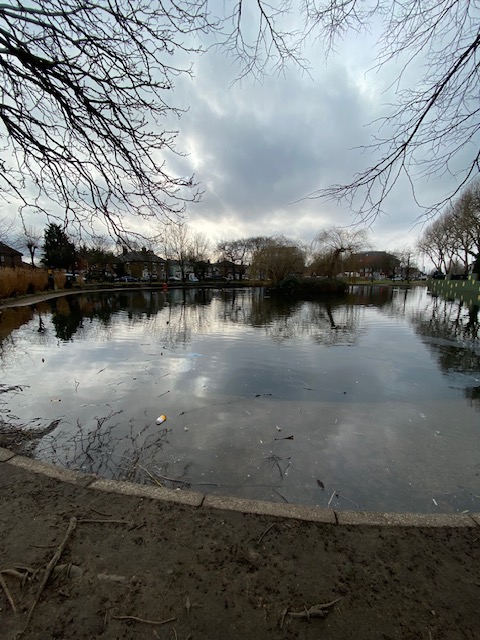
- Feltham Green has a pretty pond in the centre. Many centuries ago, Feltham village was part of Hounslow Heath, which was covered in ponds. Feltham Pond is the last heathland pond still remaining. It was mentioned in the licensing of Feltham’s oldest pub, the Red Lion, in 1722. There is also an impressive war memorial for those who died in both world wars.

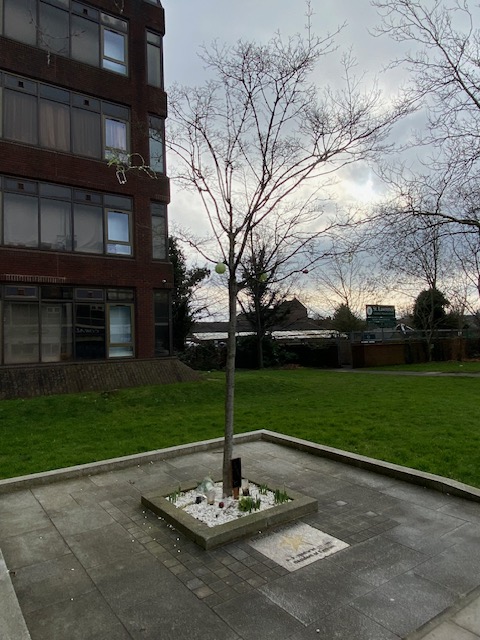
Look out for a small tree that is a memorial to Freddie Mercury who had lived in Feltham from 1964-68. If you look carefully at the bottom of the tree, there’s a silhouette of a typical Freddie Mercury pose with the single word “forever”. The stone in front of the tree is a simple one with his name, a five-pointed star, his dates of birth and death and the words “Resident of Feltham”.

From here, walk over the bridge to get to Bridge House Pond, where you will find a series of mosaics. These heritage mosaics tell the story of the history of Hanworth, Feltham & Bedfont – primarily focused on 1850-1950, but with other iconic references included as well.
Hanworth panel – features Hanworth Air Park & Hanworth Park House which was used as a Red Cross military hospital. In 1929 it became London’s first Air Park where the Graf Zepellin landed twice. During WW2, Spitfires were repaired here. Also on the panel are the Tudor Rose, representing Hanworth Manor, given to Anne Boleyn by Henry VIII, & later to Katherine Parr. The Swan, Squirrel & Nut represent pubs in Hanworth. The strawberries represent the jam made on Butts Farm.
The Feltham panel features the large glasshouses linked to the area’s market gardening heritage. Most famous of these was A.W. Smith, known as the ‘Cabbage King’. Also here is the railway, which came to Feltham in 1848 & some of the different vehicles made in Feltham – incl Aston Martin & the Feltham Tram. Here too is Bridge House Pond & a fire hat representing the fire station that was on the site until the 1960s. Finally in the sky is the military crest representing the MOD, & a windpump, which were seen across the area’s nurseries.
The Bedfont panel features planes – jumbo jets from Heathrow. It also features the peacocks associated with the area, including at Bedfont Church. The Bell on the Green pubs and Beehive are also included.
In another panel is the Feltham Urban District Council shield. The Rose represents Hanworth, the peacock is Bedfont, the sword represents Feltham’s MOD, the wings represent the aircraft heritage. The motto means ‘Let us go forward together’.


2. Lansbury Avenue bus stop
This is the stop for Feltham Lodge, a restored Victorian House. It used to be a day centre and was home until recently to Age UK. The local council recently agreed to sell the building after the charity moved out and it is now the Register Office for births, marriages and deaths. There’s a very pretty garden to the side and back of the building, where marriage ceremonies can take place.


3. Central Way bus stop
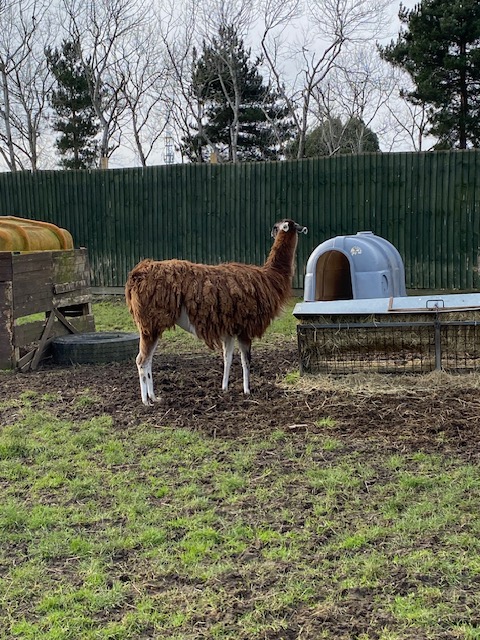
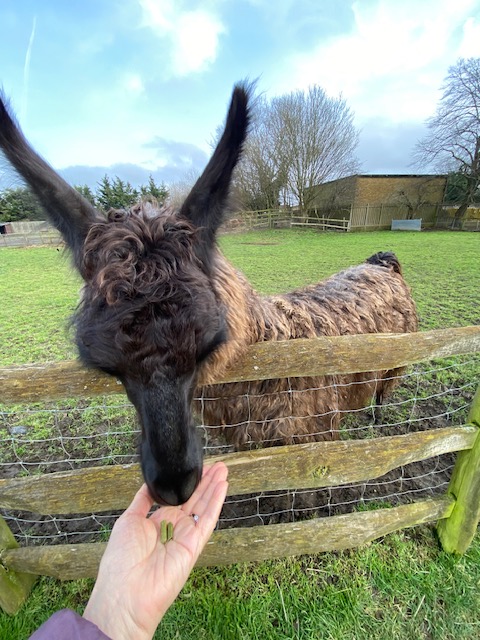
This stop is home to one of the highlights of bus route 90 – Hounslow Urban Farm. It’s a wonderful farm and a great place to visit, especially if you have young kids you want to keep amused. There’s a great variety of animals, all of which have plenty of room to roam and graze and are super-friendly. It’s a particularly interactive farm and you’re positively encouraged to fraternise and feed most of the animals. As well as providing a happy home, the welfare of the animals is paramount. The farm’s mission is to build London’s Largest Rescue Centre for smuggled, abused and imported exotic animals. There is an entrance fee to the Urban Farm but if you want to amuse your youngsters for a day, then it’s amazing value and neither you nor they will be disappointed.


4. Hatton Green bus stop
The Green Man pub has an interesting history. It was originally built in the 16th century and parts of the building date back to c1640. There have been a lot of legends surrounding the pub, including the ghost of The Grey Lady and Highwaymen, one of whom was the infamous Dick Turpin who allegedly hid in the secret chamber behind the fireplace.


5. Brickfield Lane bus stop
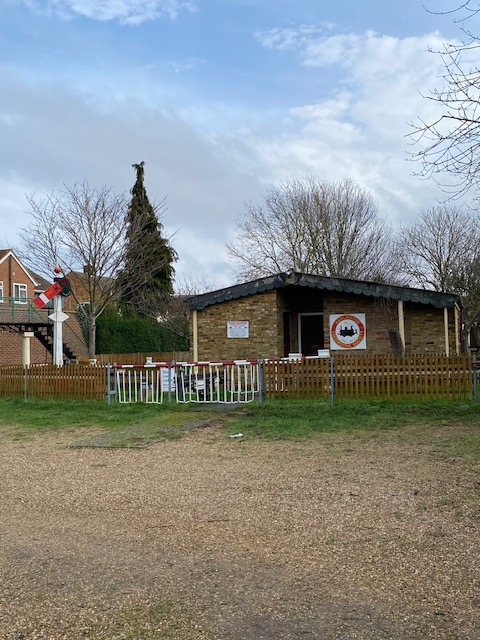
Near the stop is the Harlington Locomotive Society that runs miniature steam train rides on a regular basis from Easter each year. The next one is 31st March. The club has a large circuit of elevated track (about 400m) running both 5″ & 3½” gauge rolling stock. It also incorporates a short tunnel and some reasonable gradients. It definitely looks like a fun thing to do.
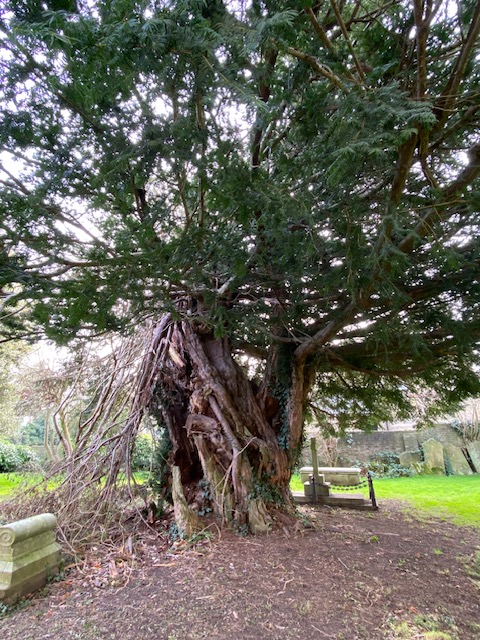
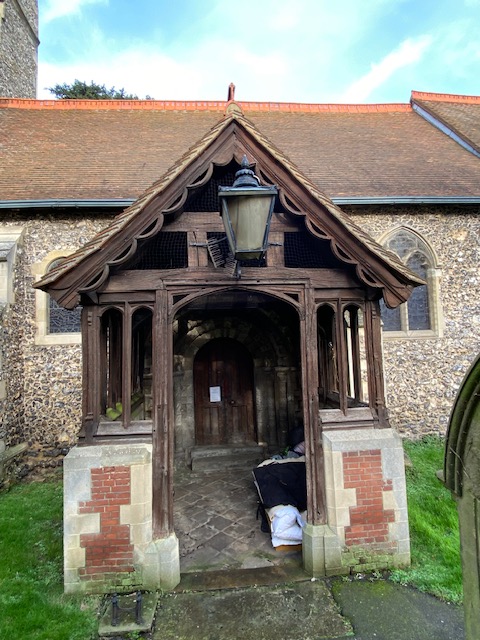
Then head for St Peter and St Paul’s church and churchyard. As with most churches currently, the doors are only open at specific times. However, the churchyard has the ancient yew, which is possibly the oldest of its kind in Great Britain. This ancient yew tree stands opposite the church’s south door, and is thought to be at least 1000 years old . It may well mark the spot where Christianity was first preached in Harlington.
During the eighteenth and early nineteenth centuries the tree became famous for its remarkable topiary work. For many years, until about 1825, the annual clipping of the yew tree was a local Whitsuntide festivity. The church itself is Grade I listed dating from 1086, representing the architectural styles of many centuries. St Peter & St Paul’s was mostly built in the twelfth century and is mentioned in the Domesday Book.

6. Uxbridge County Court bus stop
Round the corner from the bus stop is the Beck Theatre, so named after its benefactor Alfred Beck. It was purpose-built in 1977 as a community-focused theatre, and is set in a parkland next to the Norman Leddy Memorial Gardens. The theatre puts on an array of events including concerts, plays, musicals, children’s shows, films and opera. The Gardens were originally part of a private residence with a large ornamental garden surrounding the house. A walled vegetable and fruit garden was attached to the Gardens. Inside the gardens are several sculptures made out of the trunks of trees.


7. Target roundabout bus stop
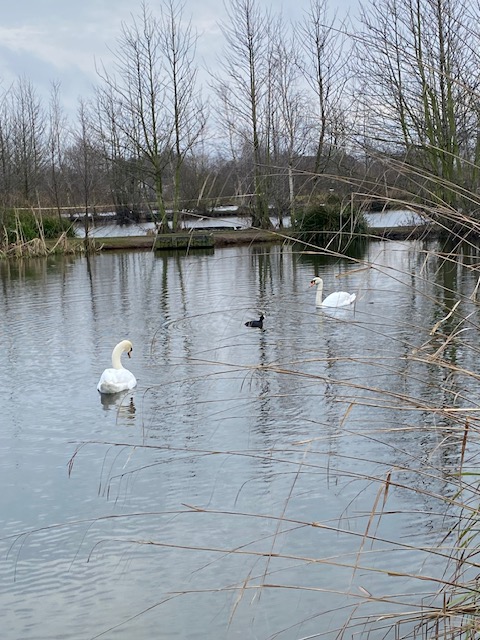
This place is the reason why it might be good to start at Northolt and end at Feltham. I have lived not far from this area for many years and I had no idea of the existence of Northala Fields and what they offer. You need some stamina to climb to the top of one of the four Viewing Points where (apparently) the views of London are magnificent. The hills were constructed using rubble from the demolition of the original Wembley Stadium, which was closed in 2000. As well as these hills, there are several fishing lakes and plenty of grassland and places to run around or play sports. Also a few wooden sculptures carved from tree trunks.



8. Moat Farm Road bus stop or Northolt station bus stop
The final place to visit on this route is equidistant from the two stops. It’s the Northolt clock tower which was built in 1937 to commemorate the Coronation of King George VI. It’s had repair work carried out and at the present time (January 2024) it’s nearing completion, though it’s still surrounded with fencing. Usually it’s a focal point for the area and a meeting place for local residents. It’s description is “it’s of rustic appearance, an oak frame with brick infill and a tiled roof surmounted by a delightful copper wind vane”.


It continues to amaze me that each route has a few things that are remarkable and worth visiting. This number 90 didn’t disappoint, with much to recommend it. London really has much to offer.
Toilets that are free and open to the public:
- On the South West train to Feltham
- MacDonalds Feltham
- Hounslow Urban Farm
 london routemistress