
Slade Green to Lewisham
Highlights:
- Howbury Manor and moat
- Sculptures in Bursted Woods
- Severndroog Castle
1. Forest Road Slade Green bus stop
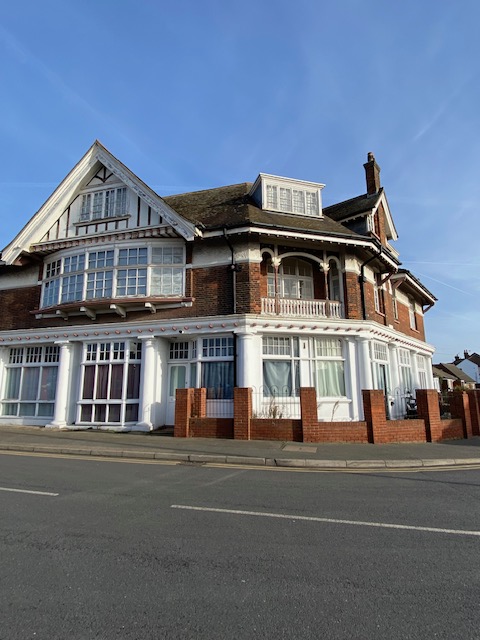
If you’ve never heard of Slade Green, now might be the time to discover some of what it has to offer. Opposite the station and bus stop is a building that was once the Railway Tavern. When the London and South Eastern Railway opened its depot at Slade Green in 1899, 158 houses for railway workers were built in the vicinity. The Railway Tavern was built at the same time. It has been converted into flats and is no longer a pub but the fabric of the building remains.
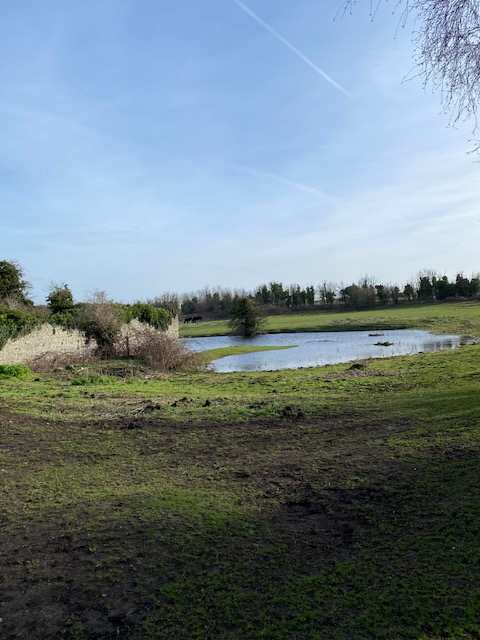
Then take a walk to what is left of Howbury Manor, a moated house situated next to a Jacobean tithe barn. There are only ruins left of the manor but the moat is still there and they constitute a scheduled ancient monument. The remains are on an island and aren’t accessible to the public but it’s possible to get near enough to take a picture.
Howbury Manor was probably built in the 16th or 17th century and as a country house included chimney breasts and a four-centred arch fireplace in the upper storey. The house is thought to have been built on a much earlier manor house, possibly dating as far back as 1000 A.D. It was used for farming in the early 1900s and was left derelict following bomb damage from the Second World War. Next to the moated house is a Jacobean tithe barn which is almost derelict, though parts of it look as if it’s still in use.


2. Rydal Drive bus stop
First stop on the bus journey is to visit Bursted Woods where you’ll find some lovely oak sculptures scattered around inside the wood. They’ve been carved out of tree trunks and were created by a local resident for the enjoyment of people walking in the woods. The two I came across were a bird and a shy young boy.


3. Bexleyheath Clock Tower bus stop
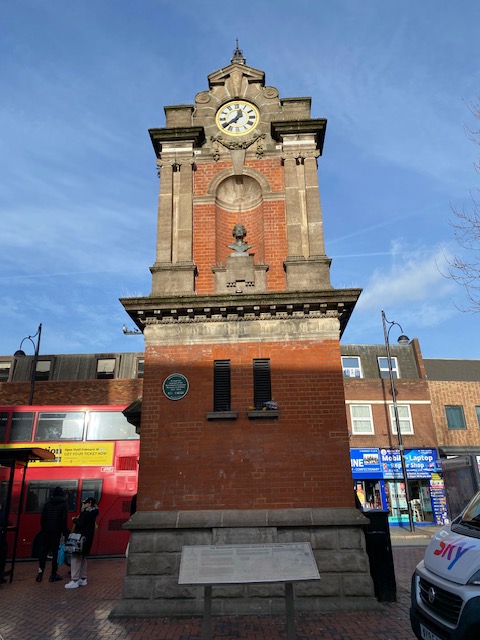
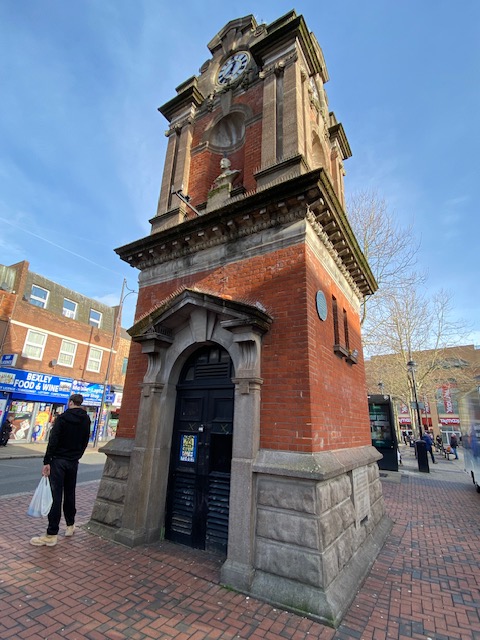
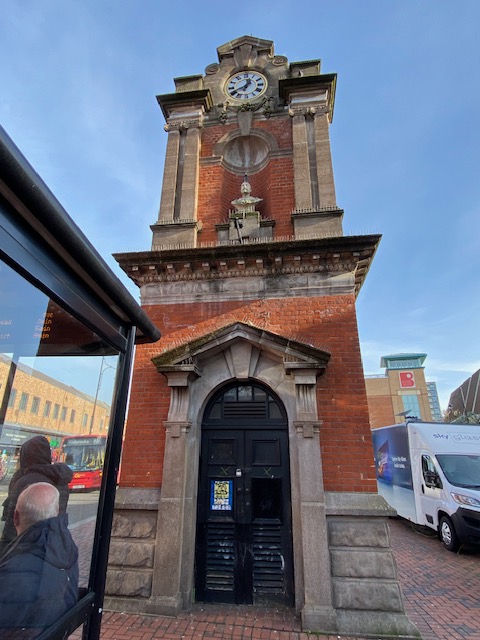
You can’t miss the clock tower as it looms tall in the shopping area of Bexleyheath. It commemorates the coronation of King George V and was formally opened on Bexleyheath Gala Day, 17 July 1912. The bust of George V was intended to be temporary and in fact in the 1930s it disintegrated and after the war it completely fell apart when being cleaned. It was recast and replaced and the bust can be seen in a niche on one of the sides of the tower. On 9th June 2013, a bronze sculpture of Queen Elizabeth II was installed on the south niche, in celebration of the 60th anniversary of her Coronation.
4. Trinity Place bus stop
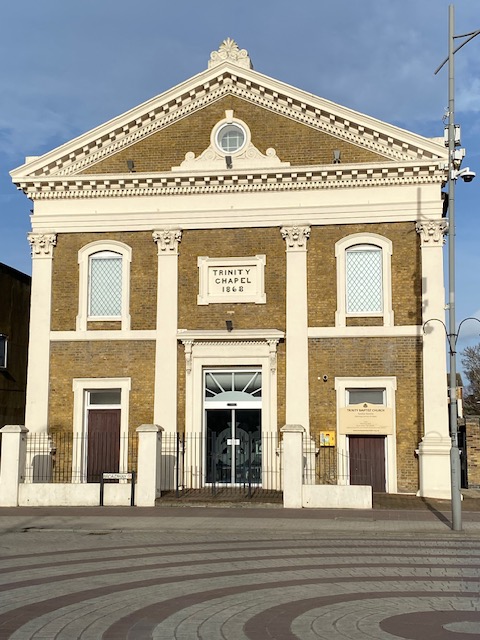
Up the road from the stop is Trinity Baptist Chapel, a really splendid-looking building in Grecian architectural style. The opening service was held in October 1868. The Baptists had begun meeting in Bexleyheath as early as 1823 and their first church was on the Broadway. Needing more space, the Trinity Baptist Chapel was built in 1868 at a cost of about £2000.
5. Park View Road/Crook Log bus stop
The bus stops at the entrance to Danson Park with its ornamental gates that, according to the plaque, “were presented to the Bexley Urban District Council on 22nd March 1929”. The park is pretty big and has some interesting places to visit. Danson House is a Grade I listed Palladian villa that was officially re-opened by Queen Elizabeth II in July 2005. It was built by Sir John Boyd in 1766 for his second wife Catherine Chapone. In the 20th century, the house fell into an almost ruinous state but having been identified in 1995 by English Heritage as being ‘the most significant building at risk in London’, there followed a decade of restoration. In 2005 the restored interior opened to the public for the first time in thirty years. Today it’s a register office and is a beautiful venue for weddings.


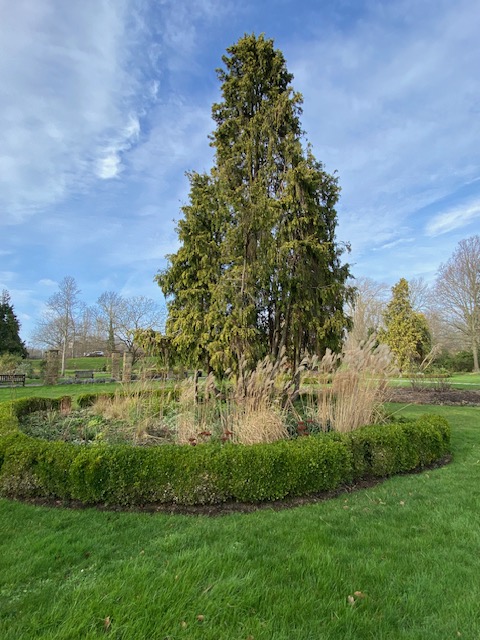
Also in the park is an Old English Garden. It’s a pretty place to walk around and see what is growing at this time of year (January). In the middle of the garden is a sundial that was unveiled by the former Prime Minister Sir Edward Heath, with an inscription on the top saying E:R Danson Park 1997.


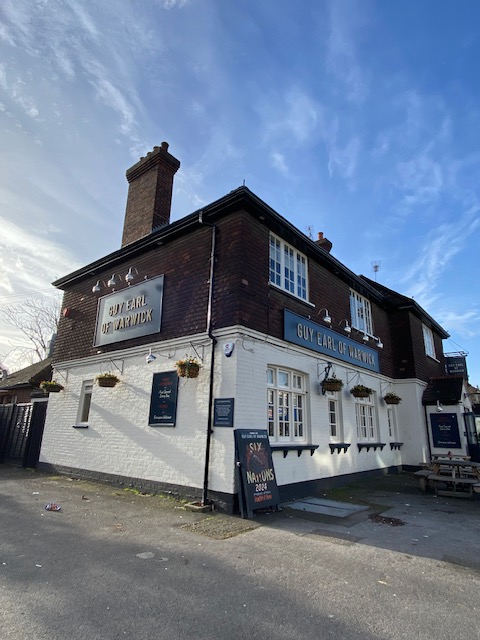
6. Guy Earl of Warwick bus stop
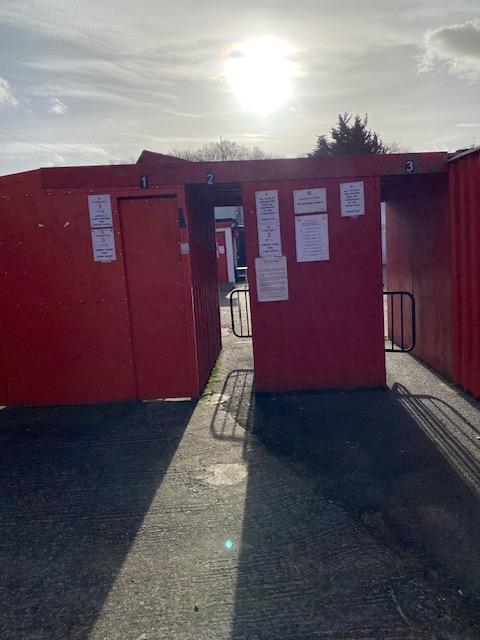
Once you get off the bus, you’ll pass Welling United FC ground, which has been their home since 1977. Before that, it had been used by Bexley United. Its men’s first team play in the National League South and actually won the Conference South league in the 2012–13 season.
Nearby is the Guy, Earl of Warwick pub, after which the bus stop is named. Guy’s origins are more legend than history. According to legend, he was a 10th-century English hero who travelled the world on a series of daring adventures in order to impress the Earl of Warwick’s daughter – Lady Felice – and win her hand in marriage. The present “Guy Earl of Warwick” was built in 1926. The old pub, which was demolished, stood west of the present building. Licences for it can be traced back to 1730. The pub was enlarged in 1792.


7. Memorial Hospital bus stop
There’s quite a lot to see near this stop. Walk round the corner to Oxleas Woods and pretty soon you’ll come across an interesting sight – that of Severndroog Castle. It’s a bit of a folly, stuck as it is in the middle of ancient woodland, but it’s worth a visit. If you go, try to be there on a Sunday when it’s open to the public. The café is open other days but you won’t see inside the castle, nor be able to catch magnificent views of London from the viewing platform. Severndroog Castle was built in 1784 as a memorial to Sir William James by his wife Lady Anne James. It celebrates his most famous exploit, the capturing of the island fortress of Suvarnadurg.
Round the corner from the castle is Castle Wood, one of Britain’s few remaining ancient deciduous woodland sites, dating back over 8000 years. It is a site of Special Scientific Interest. There are a number of viewing spots here too but beware, being so high up, the steps down to the rose garden are steep.


8. Shooters Hill Road/Baker Road bus stop
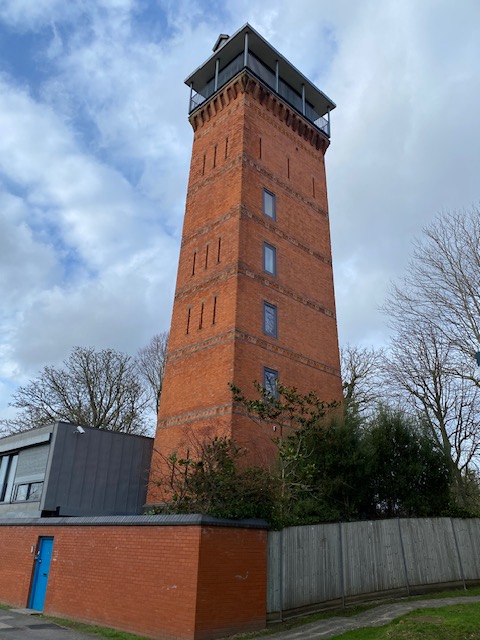
There are two water towers in Shooters Hill. The more famous and distinctive one is covered in scaffolding at present (January 2024) but the second one can be easily seen. It was originally built in the 1890s to supply water to the ‘Brook Fever hospital’, which was demolished in the 1990s, to be replaced by a housing development. The tower consists of a plain brick pillar ornamented with bands of terracotta tiles and windows like arrow slits. It is not listed, but it was cleaned, repointed and underpinned for conversion into a family home.

9. Blackheath station bus stop
The Blackheath Conservatoire and Blackheath Halls are a couple of minutes’ walk from the stop. The former’s mission is to be the home of creativity for people in SE London, of all abilities and backgrounds, seeking excellent learning in music, art and drama. The Music Building is built in the Queen Anne style of Leicester brick and has three storeys and five windows at the front. The basement was used as an air raid shelter during World War II. Graffiti from this time still exists on the walls.
Next door is Blackheath Halls, a concert venue which dates back to 1895. It is part of the oldest surviving purpose built cultural complex in London. In its early years, it hosted lectures by Sir Ernest Shackleton; suffragette rallies and it was from here that George Bernard Shaw pleaded for the establishment of a National Theatre. The Halls also played host to renowned early 20th century composers including Sir Edward Elgar and Percy Grainger. These days, it’s used as a rehearsal and recording venue, hosting English National Opera and the Royal Philharmonia.


10. Lewisham station bus stop
Final stop of the day is to see the Ladywell Suffragette Mural under a bridge near the station. This mural is dedicated to the Suffragette movement and was originally planned for 2018 to mark the centenary of when some women finally won the vote. It was eventually finished in 2019, after Network Rail had completed their repairs to the bridge.
The mural celebrates the role of Lewisham’s suffragettes. It features Rosa May Billinghurst, an outstanding suffragette who lived in Lewisham. She was a polio survivor (which left her unable to walk) and a wheelchair user who was dedicated to the fight for women’s rights. Also featured in the mural is the suffragette Emily Davison – famous for throwing herself under the King’s horse at the Derby. She was born not far from Ladywell in Blackheath, in 1872. She joined the Women’s Social and Political Union (WSPU), founded by Emmeline Pankhurst, in 1906. It was a real treat to come across this mural, situated under a bridge – and with an important reminder of what women suffered and fought for in order to achieve the ultimate goal of votes for all.


I never know exactly how the route is going to work out beforehand, despite all the research and preparation. Sometimes I’m disappointed that a place is closed or covered in scaffolding, and that the website hadn’t given me that information.
But this bus route didn’t disappoint – from the old ruins of Howbury Manor to the folly castle in the woods, and much in-between, there was a lot to delight.
Toilets that are free to use and available to the public:
- Slade Green station
- Danson House
- Possibly inside Danson House café
 london routemistress