
Romford station to Stratford bus station
Highlights:
- SPACE art gallery
- Fish & Turtle Island
- Joseph Merrick grave
- Discover Children’s Story Centre
1. Romford station bus stop
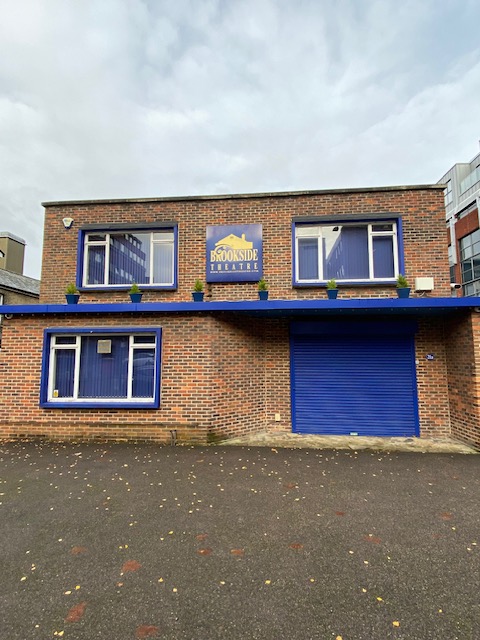
Before getting on the bus at the start of the route, walk to the Brookside Theatre. It was formed in 2012 with the aim of bringing top quality musical productions, both new and established, to the area and to involve local performers. Their aims are to provide entertainment for all the family, to engage local talent such as singers, dancers and musicians and also to raise funds for local charities.

2. Mawney Road bus stop
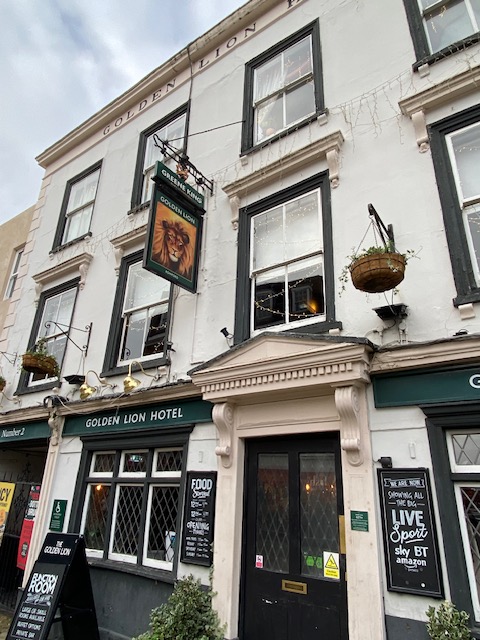
Round the corner is the Golden Lion pub, a Grade II listed building which dates back to the 15th century. It has a connection to Francis Bacon, the English philosopher (16th-17th centuries) who owned the pub for a time. It’s claimed that it’s the pub which has been in the longest continuous use as an inn in the country, having been trading since the early fifteenth century. It’s located on Romford’s High Street, which was once the main road between Colchester and London, so it was an ideal location for a coaching inn. It has generally kept the same name throughout its history, although it was known as the Red Lion for a period during 15th-16th centuries.
Opposite the Golden Lion is Havering Museum. Despite the website saying it’s open every day except Monday, it was closed on the day I visited (a Wednesday) and in fact it was the third attempt at trying to visit. However the windows are interesting, showing a number of dioramas (a model representing a scene with 3-D figures), such as “Gangsters” depicting American gangsters in a back alley, 1930s. Also one about Amy Johnson (1903 – 1941), the pioneering aviator.


Before going back to the bus, it’s worth a look around Romford Market. Romford was granted a charter by King Henry III, and the market started as long ago as 1247. Formerly a livestock and agricultural market, cattle was last sold here in 1958. Rival markets are prohibited within 6.66 miles (10.72 km). It’s still open every Wednesday, Friday and Saturday and has a whole host of stalls to satisfy all tastes and budgets.


3. Cotleigh Road bus stop
Head towards Cottons Park and you’ll find an interesting sculpture circle, made of sculpted logs. It was installed in 2009 to commemorate six local civilians who had died as a result of German bombing during World War II. Three of those killed were from the Cole family including 2 children and the other three were from the Ellis family, also two of them children. They were all in Cottons Park’s underground public air raid shelter, but with no “blast wall” in front of the entrance to protect them. The sculptures were carved out of Corsican pine trees and contain various shapes and images. It’s a lovely tribute to the six who died.
A short walk back to the bus stop and on the way you’ll pass the Salem Church on the London Road. This Baptist church is almost 200 years old and was the only church in the area to remain open throughout world war II, in spite of the air raids and the church hall suffering a direct hit by two incendiary bombs.


4. St Chad’s Road bus stop
St Chad’s church has a rather lovely church tower. By the 1800s Chadwell Heath had grown into a large village and, in 1877, a group of local clergy and gentry met to discuss the possibilities of building a church to serve the growing community. The foundation stone was laid in May 1884, but it took another 2 years for the building to be used for Sunday services. The clock tower was built to celebrate the Diamond Jubilee of Queen Victoria in 1897 and was a gift of T.H. Sale of the Bengal Engineers.


5. Japan Road bus stop
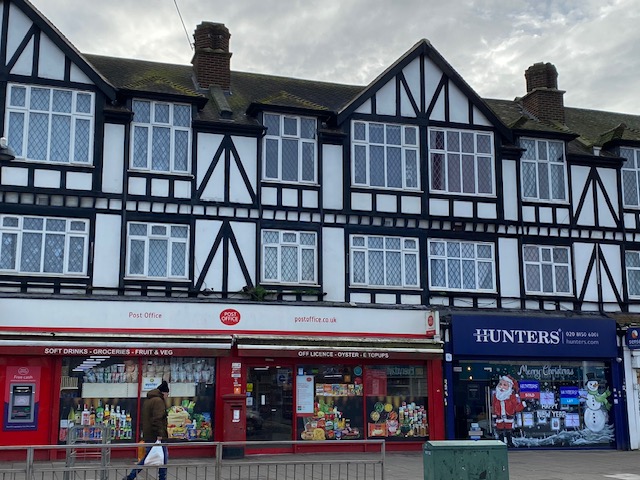
It’s possible to walk from the last stop to this one but if not, alight here and take a look around. Tudor Parade was built on the south side of the High Road in 1938. The suburban development in Chadwell Heath began in earnest at the end of the 19th century and most of the present housing stock dates from between the world wars. During the 1930s the idea of constructing homes and shops in a half-timbered Tudor style was much in vogue and Tudor Parade is a classic example of a line of shops in that style.
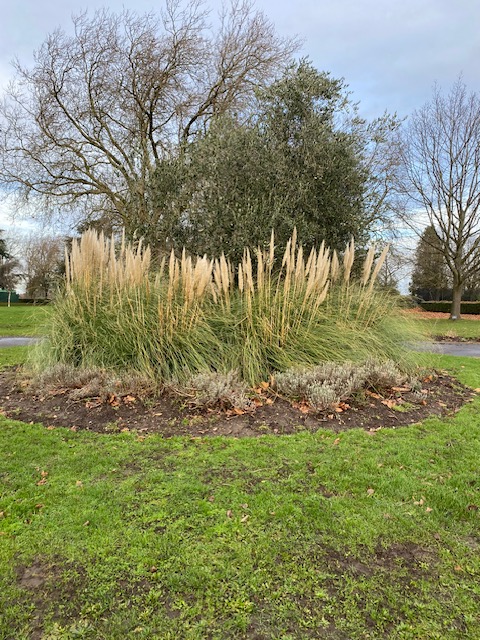
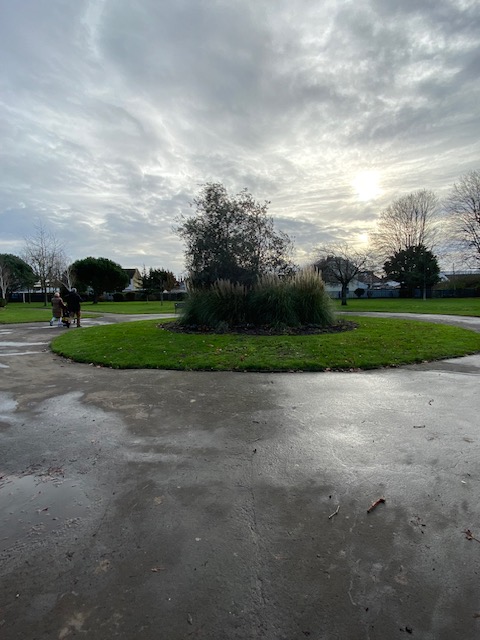
Over the road is St Chad’s Park with its ornamental garden. This Victorian style park is the oldest in the borough with its origin dating back to 1830. The park is protected by Fields in Trust, which champions and supports London’s parks and green spaces.
6. Ilford Fire Station bus stop
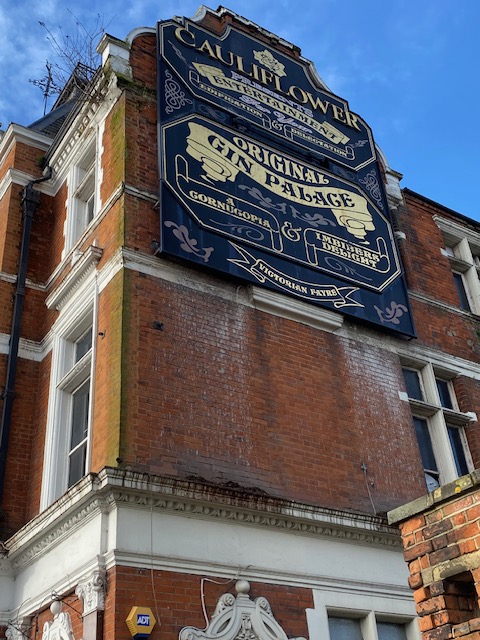
Over the road is the old Cauliflower inn, a former Gin Palace. The Cauliflower was built on an old market and cauliflower patch, hence the name. The date when the Cauliflower was built is unclear. It was a pub before 1897 when building plans for the Cauliflower Hotel were submitted. It was opened in 1900 and in its heyday became a popular hotel used by the elite in London and Essex. It went on to become a popular music venue and acts such as The Small Faces and Ian Dury had performed here. Though now derelict but with plans to return it to its former glory as a pub and hotel, it has received listed status.


7. Hainault Street bus stop
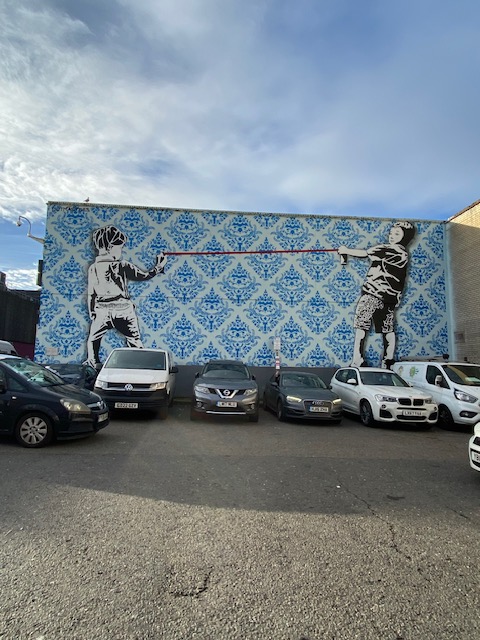
When you walk from the bus stop, you will come across a couple of impressive, large murals, one entitled End of the Line by artist Dotmaster in 2021 and the other Survival by Ben Eine also in 2021. The former is a visual of the pandemic (COVID) with two naughty kids Max and Louie playing at a safe distance from each other. Survival is a statement about society’s will to overcome difficult circumstances.
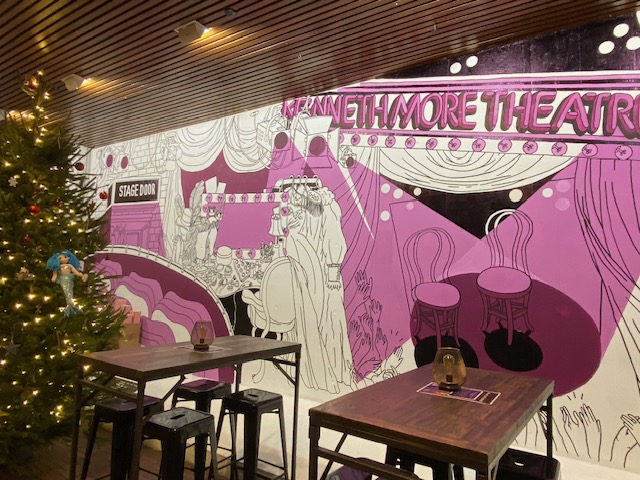
These are both near the Kenneth More Theatre which was named after the (much loved) British Film and Stage actor Kenneth More who died in 1982. It opened on the 31st December 1974 with a preview of “The Beggar’s Opera”. There were further previews on January 1st and 2nd, and the official opening was on January 3rd, 1975. The theatre balances its commitment to amateur theatre by providing 26 weeks each year for local amateur companies. The remaining half of the programme consists of a mixture of visiting professional shows and professional in- house productions.


8. Redbridge Central Library bus stop
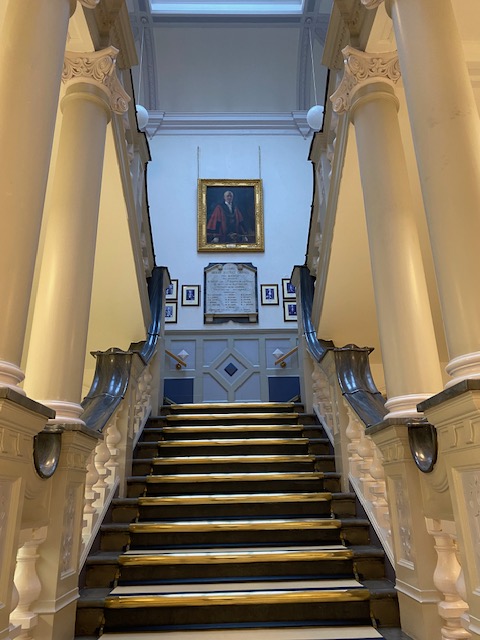
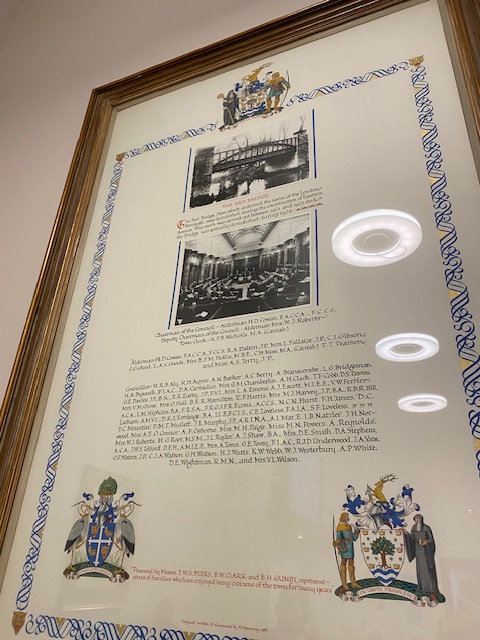
The bus stops very near Redbridge Town Hall and although it’s not possible to visit most of the building, it’s nevertheless worth seeing the lovely staircase and finding out about The Red Bridge, after which the borough is named. Before it was The Red Bridge, it was known as Hocklee’s and it was over the River Roding. It was made of red brick, unlike other bridges in the area made of white stone. It was demolished when construction started on building streets for new residents to the area. The work was carried out between 1921-25 and the bridge was actually demolished in 1924.
Redbridge Town Hall is a late Victorian Grade II listed building, which was constructed in 1901, and is now used for events in the main hall.

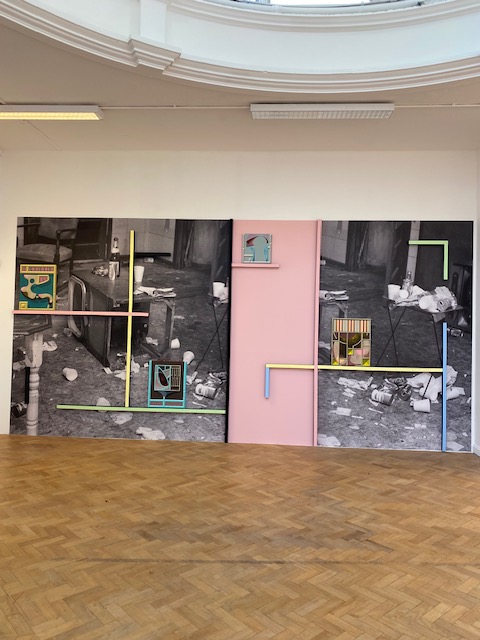
Round the corner is SPACE art gallery – where SPACE stands for Space Provision (Artistic Cultural and Educational). It is a leading visual arts organisation that supports artists by providing creative workspace, advocacy and professional development. They enable artists to exhibit their art and also provide awards and training opportunities. Currently on display (December 2023 until Feb 2024) are two exhibitions – one is by Ben Cove with an explanatory video by his sister (Ben sadly died in 2016). His artwork “investigates ideas of the constructed world, with reference to a broad range of influences, including 20th century modern architecture, art, design, museology and furniture.” One such piece is entitled Biker Gang Hideout, plans of which were only discovered after his death and was installed posthumously by the artist Stewart Gough.


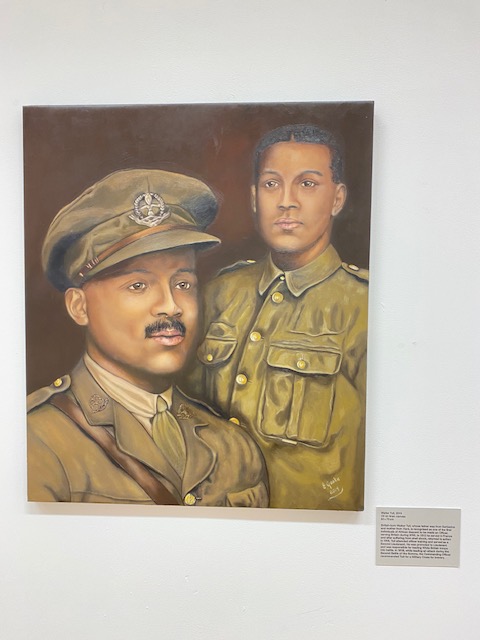
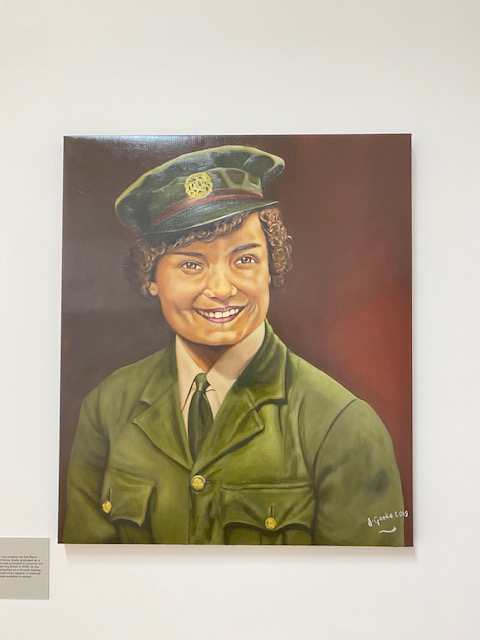
Also on display at this gallery are paintings by Jacqui Cooke called “Evidence of those not seen” which highlights the contribution and achievements of individuals of African descent and First Nation who supported Britain in world wars I and II. Some received recognition for their service and others, despite facing adversity from those they served, exceeded expectations to become officers. Many returned to Britain to help rebuild the country they called “The Mother Land”.

9. Rabbit’s Road bus stop
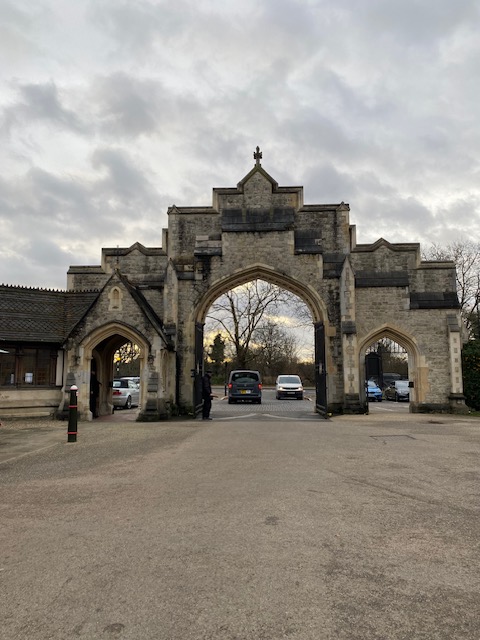
This is the stop for the City of London Cemetery and Crematorium, which was opened in 1856, and is a Grade I listed landscape. As well as a burial ground, there are beautiful formal gardens, tree lined avenues and local heritage. This is one of the largest municipal cemeteries in Europe and anyone may be buried here irrespective of City connections or religious beliefs.
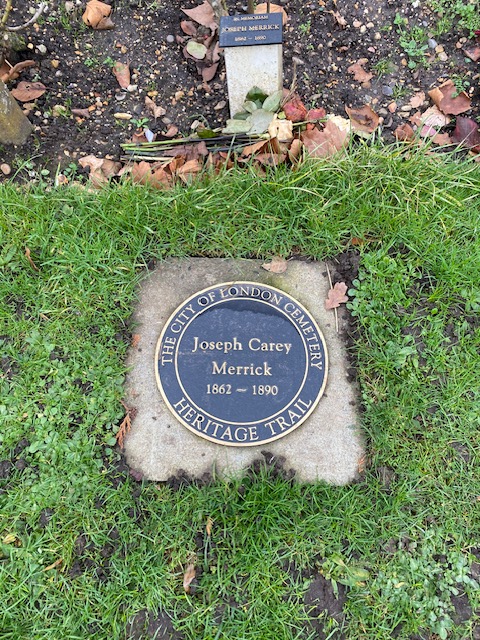
One of the most poignant graves here is that of Joseph Merrick aka The Elephant Man. His life had been tragic owing to his immense deformities although he luckily found kindness through a surgeon at the London Hospital, a Mr Frederick Treves. Most of Merrick’s life was spent being on display at Penny Shows where he would receive minimal money, barely enough to sustain him. When he revisited Mr Treves, the latter wrote to the Times and as a result, a public fund was set up so that money was raised to house Merrick in a wing of the London Hospital, where he lived until his early death in 1890 at the age of 28.
Set within the grounds of the cemetery is Fish and Turtle Island. It’s a very small island but it’s got a lot of character and is very pretty. At this time of the year – December – there wasn’t too much wildlife but it was worth a visit for its charm, and of course its name. At other times of the year, people have noted that the water is teeming with fish – I’m not sure about the turtles!


10. Stratford Centre bus stop
Final stop on this route was to see the Discover Children’s Story Centre in Stratford. It’s an amazing centre for kids and prides itself on being “a place where children and their families can enjoy playing, learning and making up stories together.” The facilities are fantastic – it’s a purpose-built Story World and Story Garden that are creative play spaces designed to inspire children’s curiosity and imagination. They have interactive exhibitions to immerse families in the worlds of their favourite authors and illustrators, from Michael Rosen to Julia Donaldson and Axel Scheffler to Judith Kerr. They have Story Builders who lead interactive exhibition sessions and 0-3s Storytelling, and pop up in the Story Worlds and Story Garden to tell more tales.


It was a really inspiring place to finish off the number 86 bus route. This was another route with plenty to see and with a variety of places to visit.
Toilets that are free and available to the public:
- St Chad’s Park
- Kenneth More Theatre
- Redbridge Library and Museum
- City of London Cemetery & Crematorium
- Discover Children’s Story Centre
 london routemistress

One response to “Bus route 86”
So many interesting and great places to visit!
LikeLiked by 1 person