
Kingston to Putney Bridge station
Highlights:
- Coombe Estate
- Putney Vale cemetery
- Kingston
1. Guildhall Rose Theatre bus stop
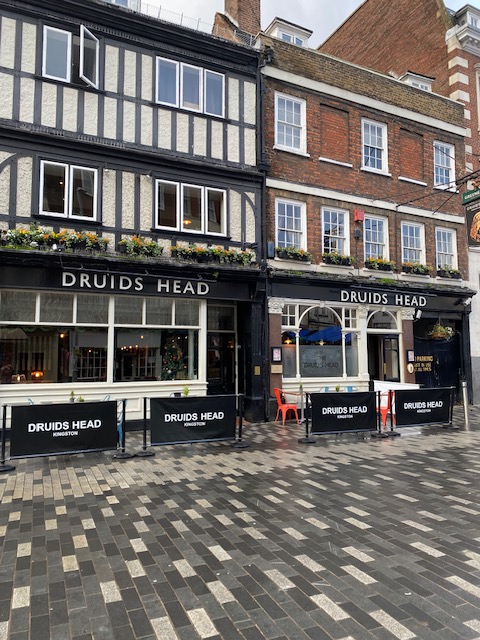
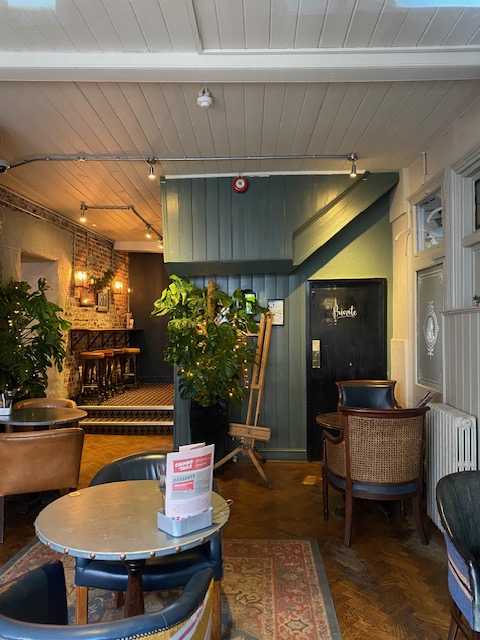
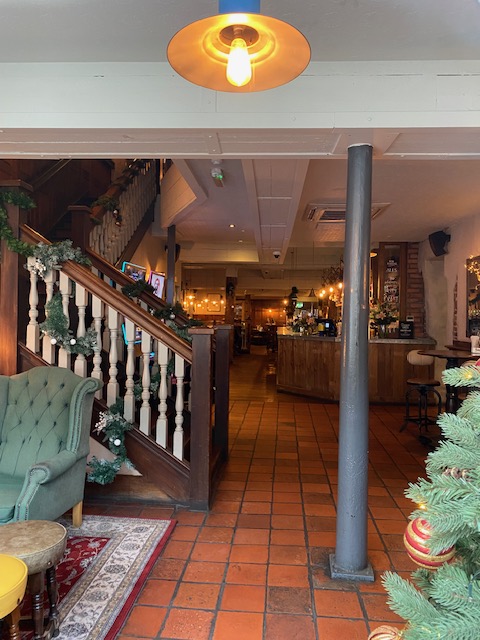
There is so much of interest to see in Kingston that it’s lucky there are a number of TfL buses that go there. Head over to the Druids Head pub in the Market Place. It was built in the 17th-18th centuries and originally consisted of two pubs: The Druid and The Hog’s Head. Situated side-by-side, they merged in the 1980s. It is the oldest surviving pub in Kingston. Originally a coaching inn, it was frequented by a number of patrons including Charles Dickens and Jerome K. Jerome. The latter left an inscription on the upstairs window and in fact wrote his renowned “Three Men in a Boat” here.
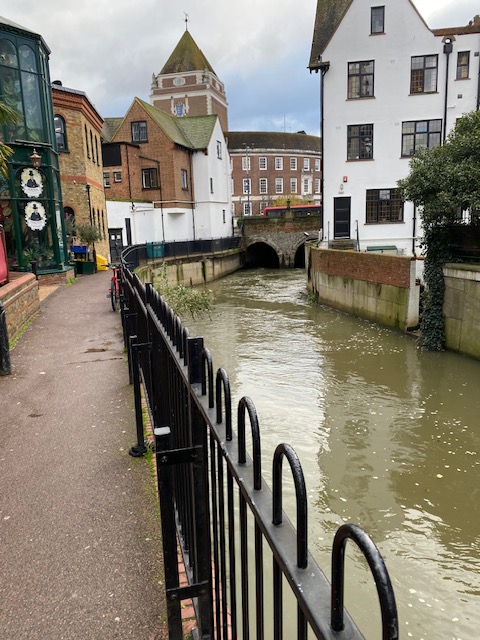
A few minutes’ walk from here is Charter Quay, a previously under-used and unsightly former industrial riverside site. The town of Kingston was granted a charter by King John in 1200, but the oldest one to survive is from 1208 and this document is housed in the town’s archives. Other charters were issued by later kings, including Edward IV’s charter that gave the town the status of a borough in 1481. These charters are the reason the quay is thus called. There has been a complete overhaul of the site with a new commercial, cultural and residential quarter overlooking the river.


2. Eden Street bus stop
Bus 71 also goes through Kingston and I commented then on the “Out of Order” installation in Old London Road. The installation is still there as is a bronze sculpture of Flick the Chimp by Gillie and Marc. Part of a larger art display, Flick represents a Wild Chimp Foraging. Many of the other sculptures are scattered around Kingston and will move to Nine Elms in early 2024. As this journey today was in December, there were a lot of Christmas displays and it was interesting to see that the phone boxes from the “Out of Order” display were featured along with Christmas trees and lights.


3. George Road bus stop
It’s difficult to describe just how gorgeous are the houses on the Coombe Estate which is only a few minutes’ walk from the bus stop. Situated near Coombe Wood Golf Club, the houses are mainly gated and very large – each one is individual and set within grounds. Numerous famous people have lived or now live on the estate, notably the writer John Galsworthy, PM William Gladstone and Dame Nellie Melba. And apparently Queen Elizabeth I visited the estate in 1602. The private Holy Cross Preparatory school has a conduit (Ivy Conduit) in the grounds – one of three that supplied water to Hampton Palace, with one other – Gallows Conduit – being set inside the grounds of Hampton Spring next to the school.


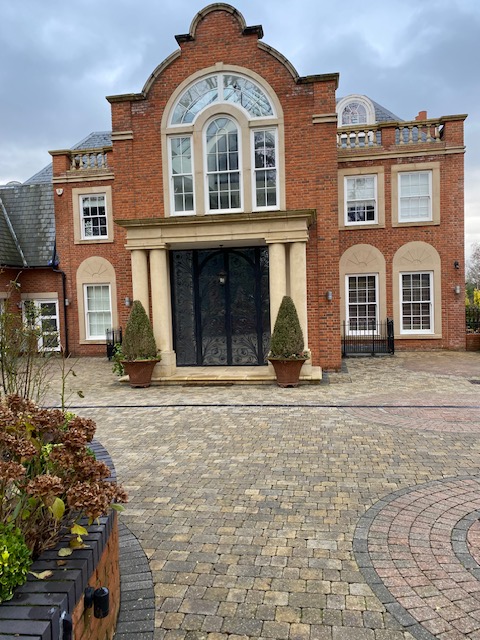

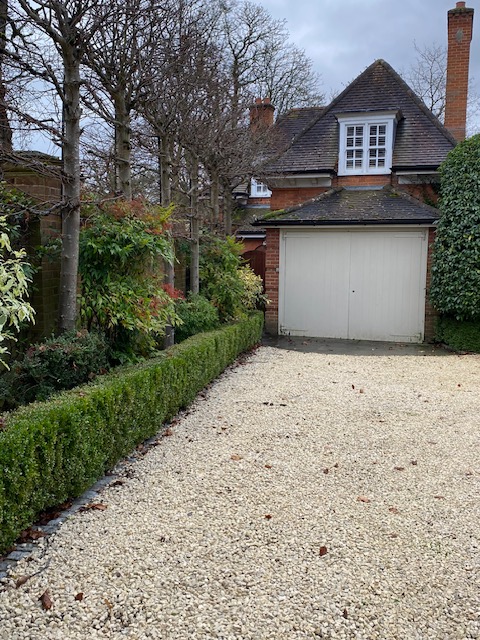

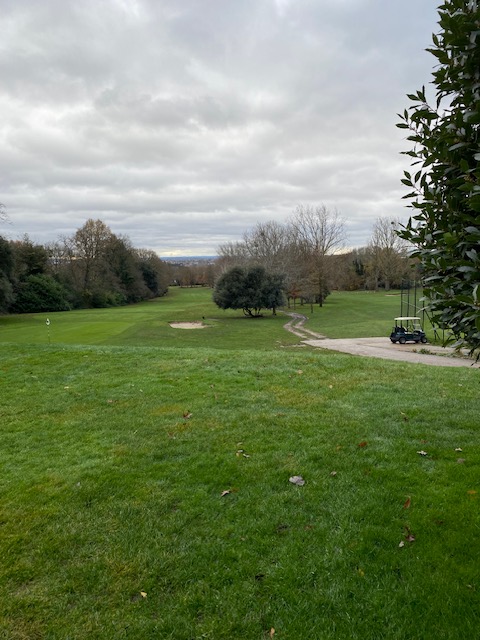
4. Warren Road bus stop
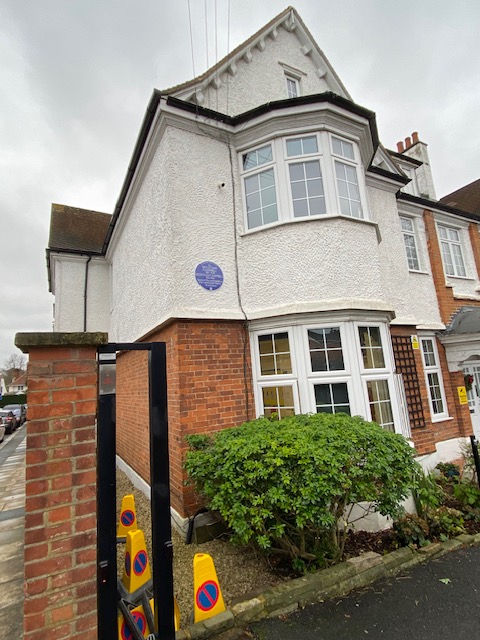
Near this stop are two plaques celebrating the lives and homes of a few famous people. First is the house that was lived in by both Sir Malcolm Campbell and his son Donald Campbell, both speed record holders on land and water. They lived there from 1919 to 1922 and in fact it’s where Donald was actually born. The house is now Canbury School and the blue plaque sits on a corner wall.
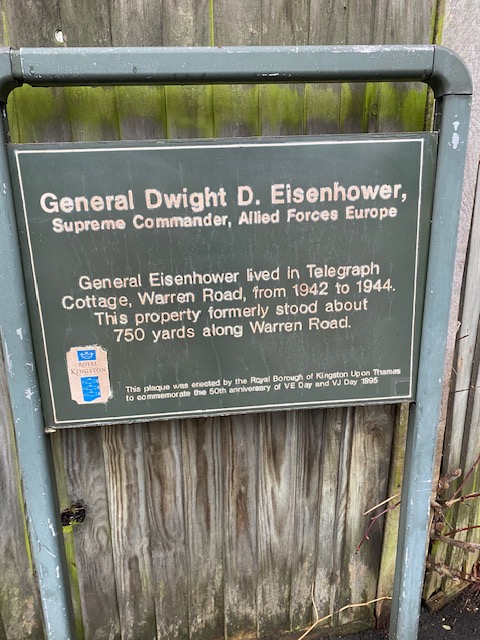
The second plaque is to commemorate that General Dwight D Eisenhower lived in Warren Road, Kingston from 1942 to 1944 and the plaque sits on the corner of Kingston Hill and Warren Road. It was from here that he made the decision to launch the D-Day campaign and his residency was a heavily guarded secret, enabling him to enjoy some respite during these arduous times.

5. Robin Hood Lane bus stop
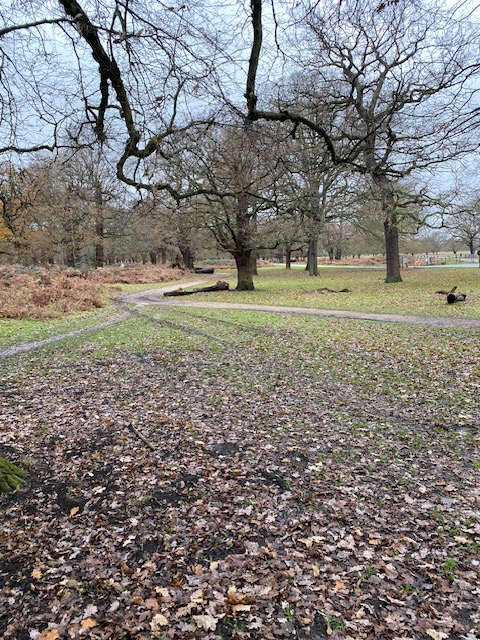
Round the corner is one of the entrances to Richmond Park, Robin Hood Gate. The name of Robin Hood has long been associated with the Kingston Vale area, with the name of the gate appearing in records from at least 1785. The association with Robin Hood is thought to have arisen from the Robin Hood plays and the May Day Games put on in Richmond Park for the entertainment of Henry VIII. Richmond Park is vast, with hundreds of deer roaming freely throughout. In early winter, it’s the culling season for female deer (male deer in February) so taking dogs at this time is not advised.
Just outside the entrance to the park is Stag Lodge Stables which offers horse riding lessons to adults and children. It was founded in 1790 and being so close to both Richmond Park and Wimbledon Common, is a great place to learn to ride.


6. Roehampton Vale Asda bus stop
This is the stop for Putney Vale cemetery, where many famous people are buried. It was opened in 1891 and has two chapels, one C of E and the other multi-denominational. There’s a lovely Garden of Remembrance too. It’s not so easy to locate specific graves but I managed to find a few that were on my list. One of these was that of Howard Carter, Egyptologist who was the discoverer of the tomb of Tutankhamun in 1922. After many years of searching the Valley of the Kings for the tomb, he struck lucky in November 1922 and was the first to enter it, closely followed by Lord Carnarvon and his daughter.
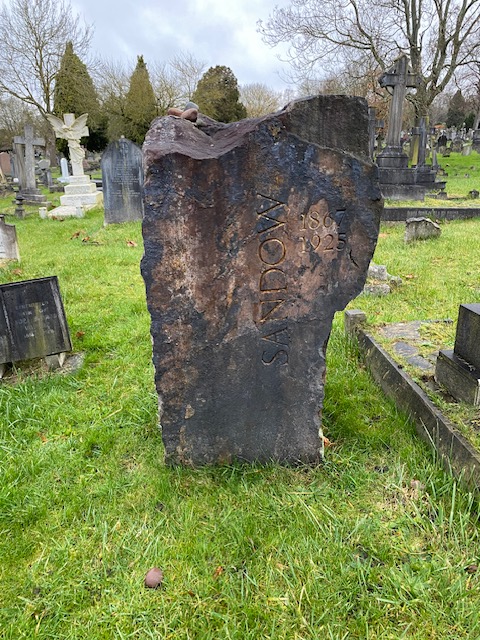
Also within the cemetery lies the gravestone of Eugen Sandow, a Prussian body-builder and showman. He made his name by coming to London to take part in a strongmen competition. Easily beating the reigning champion, he attracted the attention of the impresario Ziegfeld who found that the audience was more fascinated by Sandow’s bulging muscles than by the amount of weight he was lifting. He married a Manchester girl in London and opened the first Sandow Institute, where he taught methods of exercise, dietary habits & weight training. He was designated special instructor in physical culture to King George V.
He lived in Kensington for 19 years until his death in 1925. At the request of his wife, he was buried in an unmarked grave at the time and it was only in 2008 that this gravestone was erected by his great-grandson with the simple inscription “SANDOW 1867 – 1925”.


Two other resting places I found were those of Henry Saxon Snell, a renowned architect who designed workhouses and more notably hospitals both here and in Canada. The other is a mausoleum for Mostyn Pritchard and made by the sculptor W.E. Buchanan. I can find nothing of note of either Pritchard or Buchanan but the mausoleum itself is a beautiful structure, made with granite.


7. Ringwood Gardens bus stop
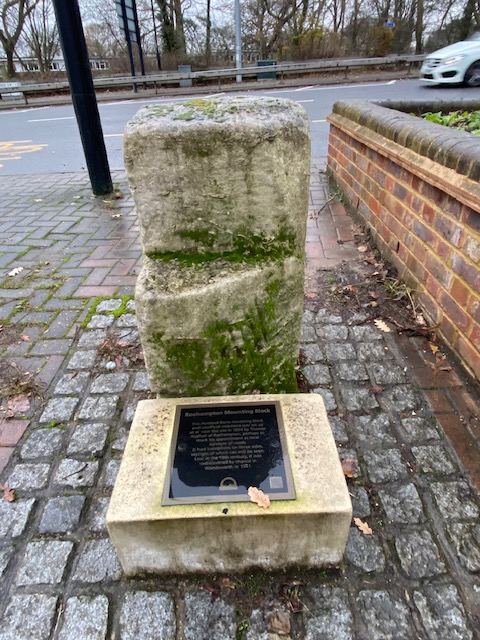
Near a different entrance to Putney Vale cemetery is the Roehampton Mounting Block. The historic milestone and mounting block is thought to date from 1654. It was used by riders to mount and dismount from their horses and has an inscription reading “From London Towne to Portsedown they say tis myls three score”.
It’s made from Portland stone and was originally set up at or near this site in 1654 by Thomas Nuttall of Roehampton – possibly to mark his appointment as local surveyor of roads. The stone was mentioned by local historians in the early 19th century and then seemed to disappear, maybe to make space for road improvements. It was rediscovered by chance in Wandsworth in 1921, during the demolition of a barn. It’s not known how it came to be there but it was identified by local historian and nurseryman Ernest Dixon, who purchased it and displayed it in his nurseries. It was subsequently moved to the garden of a local house then stored at Wandsworth Museum until it was re-installed at its present site in 2018.


8. Putney Heath/Green Man bus stop
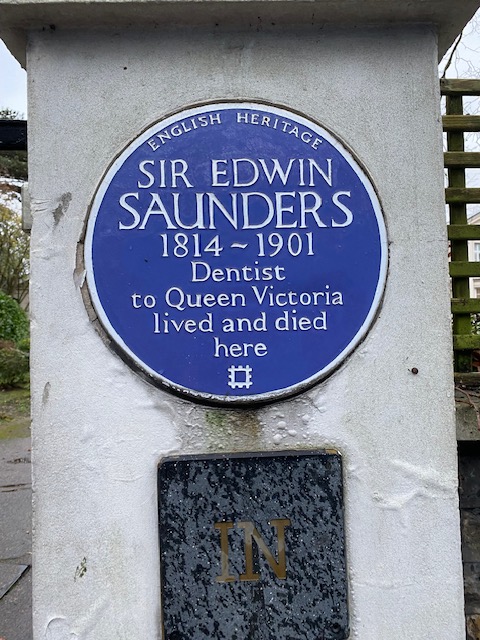
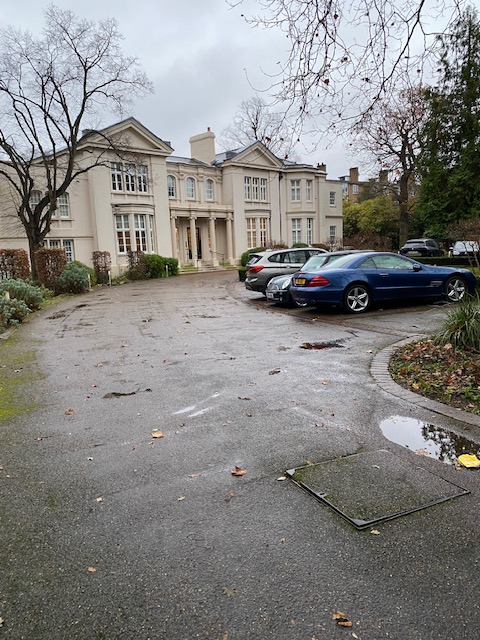
Final stop of the day was to the see the former home of Sir Edwin Saunders, personal dentist to Queen Victoria. The house, known as Fairlawns is a grade II listed building and is positioned overlooking Wimbledon Common. Sir Edwin first moved into Fairlawns in 1853 when he was 39 and moved there again decades later after retiring at the age of 80. He spent his last years there, cultivating chrysanthemums in a much loved garden that still survives today though it can’t be seen from the street. He was the first dental surgeon ever to be knighted and the first to occupy a position of special distinction in the British Medical Association.
Today Fairlawns has been converted into flats and has been restored and is set behind gates overlooking Wimbledon Common. It has listed wood panelling with views over what are now communal gardens. A blue plaque at the front gates, recalls Saunders’ long and happy residence there.

The shame of this journey was the weather – it was a miserable, cold and rainy day making it difficult to be outside for too long. That said, there were still some lovely places to see, not least the beautiful homes on the Coombe Estate.
Toilets that are free and available to the public:
- Kingston College
- Richmond Park near Stag Lodge Stables (20p to pay)
- Asda Roehampton Vale
 london routemistress