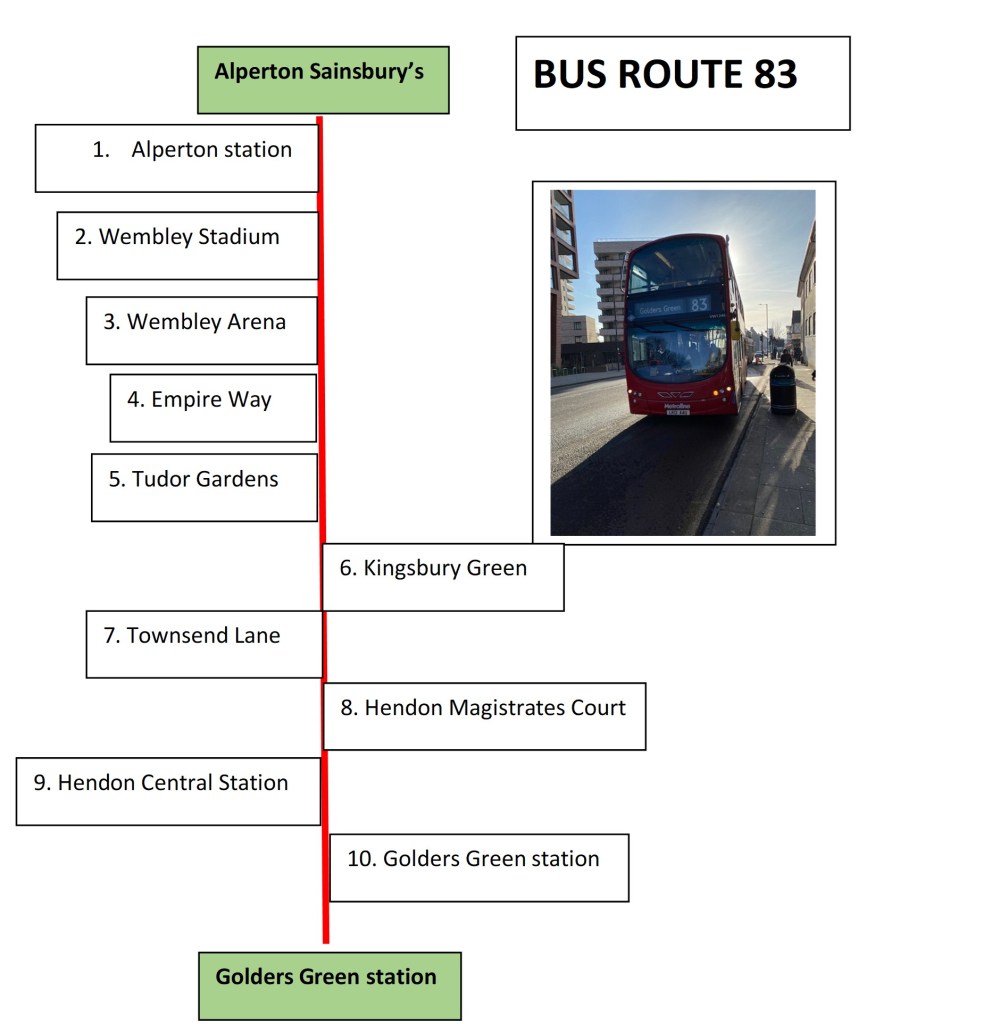
Alperton Sainsbury’s to Golders Green
Highlights:
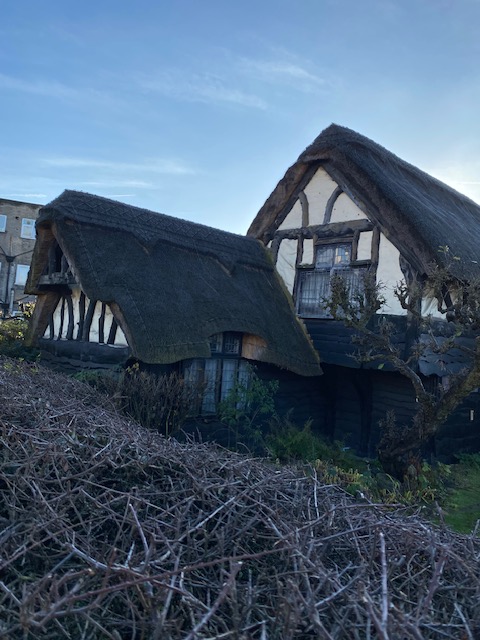
- Trobridge Houses in Kingsbury
- Brent Civic Centre and its exhibition
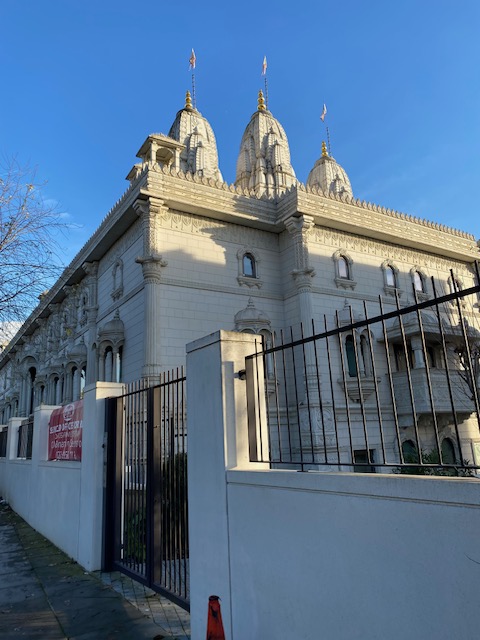
- Shri Swaminarayan Mandir Temple
1. Alperton station bus stop
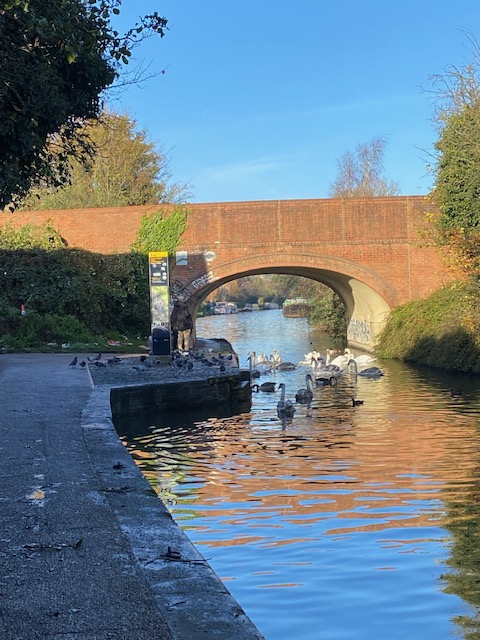
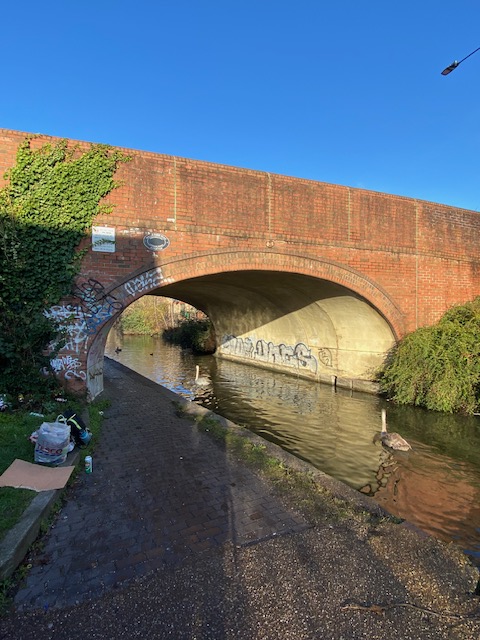
There’s a great-named bridge about a five minute walk from the bus stop called Piggery Bridge. Whilst there doesn’t seem to be evidence of their having been a piggery around this area, there was probably a smallholding nearby. “In the late 19th century, as the most industrialised village in Wembley, Alperton was famous for disgusting smells. The source included a sewage farm, two recycling plants producing manure, and three large piggeries.”
The bridge was built in the 19th century and is over the Grand Union Canal at the Paddington branch. There’s a good towpath alongside the canal and with a preponderance of swans swimming, it makes for a lovely walk.


2. Wembley Stadium bus stop
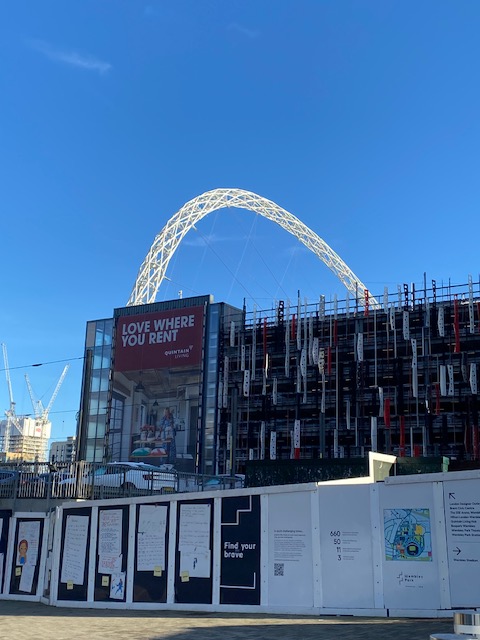
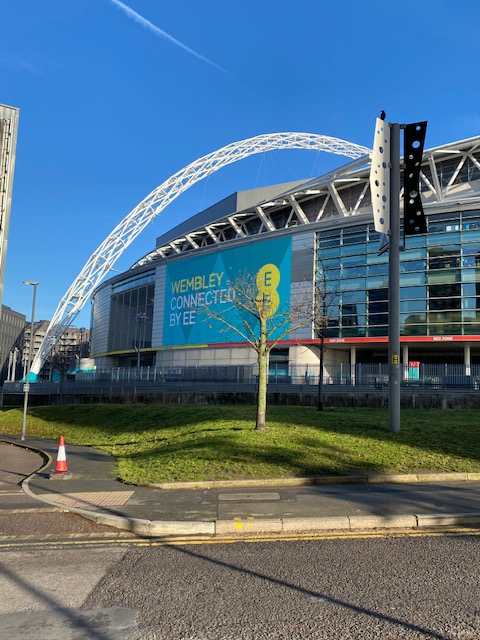
Obviously the place to visit here is the Stadium itself. It’s only open on match days but you can get a feel for the size and majesty of the place. Wherever you go in this area, you’ll look up and see the Wembley arch, which towers over the buildings.
Round the corner to the stadium is White Horse Square. It is named after a Metropolitan Police horse named Billy, that was used to restore order after the huge numbers of spectators – (approx. 200k – 300k) who turned up to witness the 1923 FA Cup Final, the first to be held at the old Wembley Stadium, spilled onto the pitch before kick off. In the square are modern art installations with three digital totems providing estate information and seasonal art campaigns.


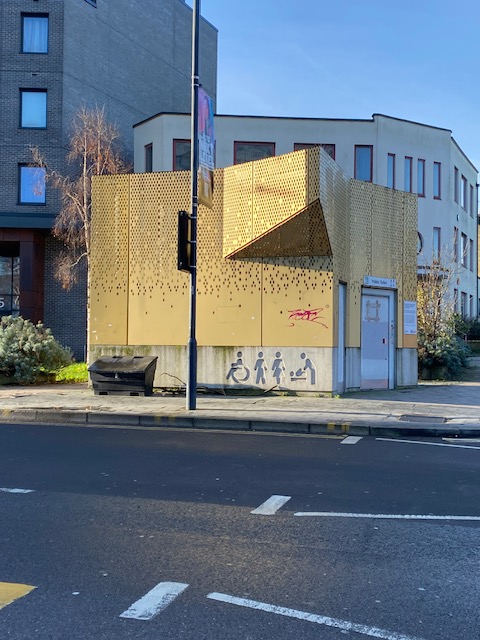
Walk up the road from the stadium and the square and you’ll find the Golden Public Toilet. Designed by architects Gort Scott, having been commissioned by Brent Council, the Public Toilet aims to “evoke the days when lavatories were civic buildings that aimed to inspire confidence and pride in a place”. It has a perforated diamond pattern on its metal façade so that during the day the perforations filter sunlight into the interior, while at night the structure appears to light up from within.
Opposite the public loo is a monument of a lion’s head, originally part of the Palace of Industry which had hosted the British Empire Exhibition. The lion’s head was saved from the scrapheap in 2013. The lion was a symbol for the exhibition that had showcased the best industrial and natural resources the British Empire had to offer – attracting around 27 million visitors to Wembley in 1924 and 1925.


3. Wembley Arena bus stop
Brent Civic Centre is an impressive, modern building, that serves not just as a civic centre but also a whole range of public services including spaces for events. There was a small exhibition on the day of my visit on Celebrating the Forgotten Black Heroes. It was to pay tribute to the Black women and men who valiantly fought in World War II and who rose above discrimination and adversity whilst many miles away from home. They came from the Empire and Commonwealth to join the armed forces and to carry out vital war work in factories. According to the exhibition, these brave volunteers were descended from enslaved African people and wished to defend the “mother country” and freedom.


Opposite the civic centre is an even more spectacular view of the Stadium with a statue at the top of the steps of Sir Bobby Moore.


4. Empire Way bus stop
A short walk from the stop is the Troubadour Wembley Theatre, a new state-of-the-art theatre and cultural hub. It was previously known as Fountain Studios, and having been recently renovated, it is available for hire as a venue for TV and films. It’s not always open (it wasn’t on the day I visited) so it’s best to find out when there is a production on so you can visit inside.
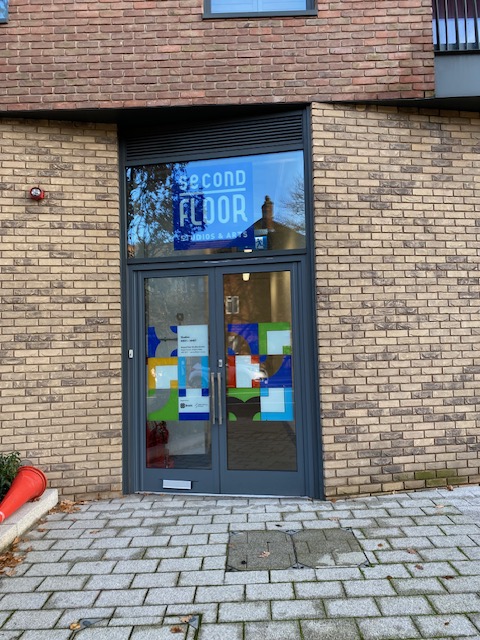
Around the corner is a building known as the Second Floor Studios, where artists and other creatives can rent studio space. As part of LAASN (London’s Affordable Artists Studio Network), they not only offer affordable studios to upcoming artists but actively encourage, promote and support individual member projects. Some of the studios are on street level and it’s possible to get a glimpse of the work of some of the artists.



5. Tudor Gardens bus stop
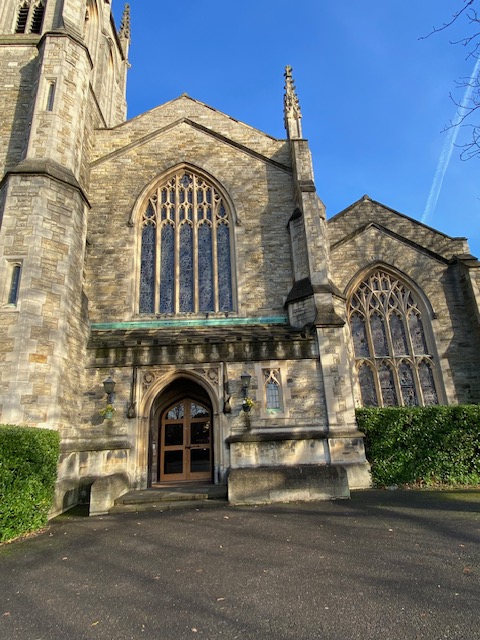
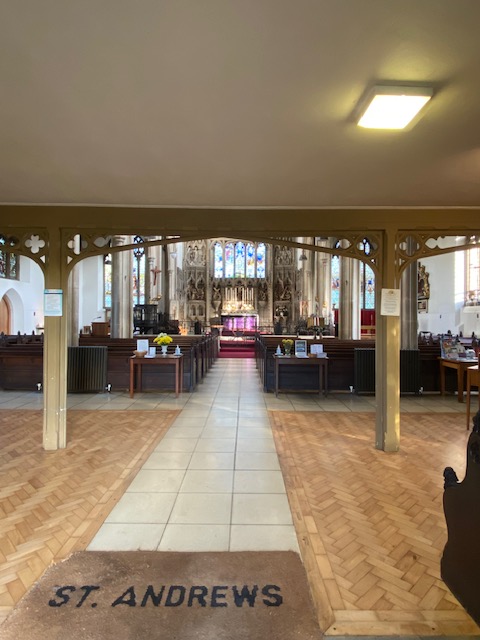
There are two churches in the same spot near this stop. The first is St Andrew’s which was originally built in the heart of the West End, in the middle of the nineteenth century. It was well attended until the advent of commercial properties and warehouses and it was expected to be demolished. However, it was declared too beautiful a building to be destroyed so it was rebuilt brick-by-brick in the newly-popular area of Kingsbury. It was finally reborn and reconsecrated on October 13th, 1934. It still has a thriving community but these days it tends to open only when there are services.
At the rear of St Andrew’s is Biserica Ortodoxa, a Romanian Parish church. The church building is small but pretty and it’s surrounded by a churchyard. The Romanian community in Burnt Oak, which is only a couple of miles away from Kingsbury, is the largest in London.


6. Kingsbury Green bus stop
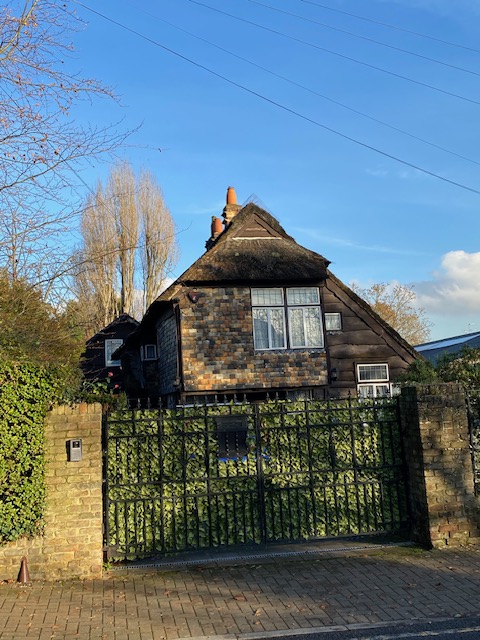
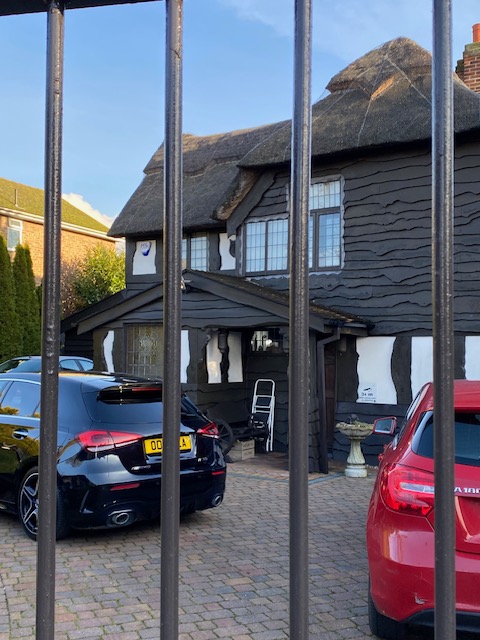
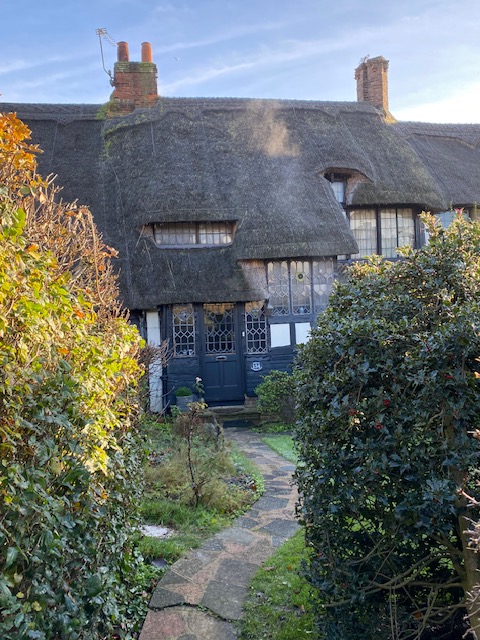
Ernest Trobridge built an estate of thatched houses in Kingsbury over a hundred years ago. Walk from the bus stop round to Slough Lane to get sight of those that exist to this day. Trobridge had moved to Kingsbury in 1915, and developed his ideas while growing food on a smallholding in Hay Lane, to feed his vegetarian family during the First World War. He had already bought a small field, at the corner of Kingsbury Road and Slough Lane, ready to build his houses. This is where you can see some, now Grade II listed buildings.
7. Townsend Lane bus stop
Near the stop is Shri Swaminarayan Mandir Temple. It’s the principal temple in south England of Maninagar Shri Swaminarayan Gadi Sansthan – the worldwide centre for spiritual, cultural and social welfare, based in Ahmedabad, Gujarat, India. The Kingsbury Mandir held a Grand Opening Festival in 2014 to celebrate the 50th anniversary of the first of the communities to come to London, establish roots and spread the Faith. There are actually three buildings here – a Hindu temple, a facility that can hold sports activities as well as functions such as weddings and an admin block with offices. It really is a sight to behold, standing majestically as it does on the main road in Kingsbury.


8. Hendon Magistrates Court bus stop
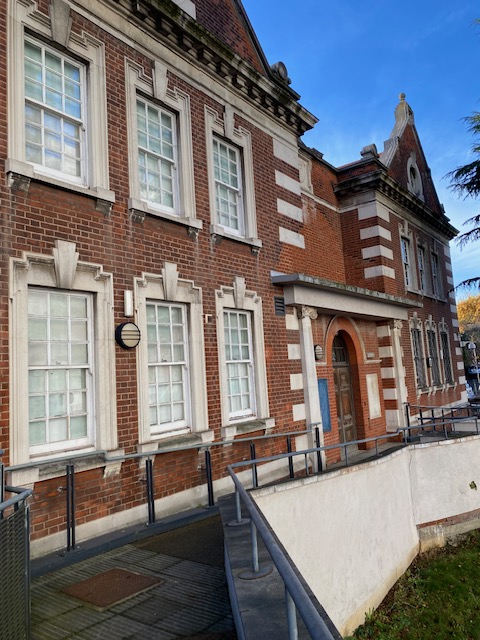
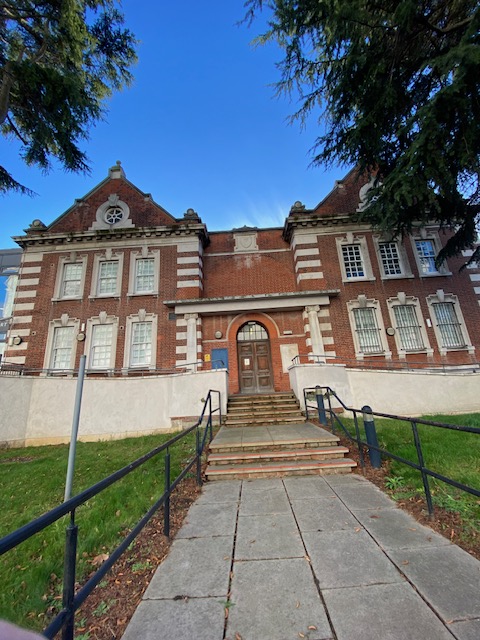
Hendon Magistrates Court is opposite the bus stop and was built in 1913. For many years, it was one of the quietest magistrates courts but since Covid, a backlog of cases needed to be heard and Wood Green Magistrates Court transferred many of its cases to Hendon, transforming it into a crown court, with a jury to hear the cases. Space within the courts is limited and many of the rooms have had to be converted to jury deliberation areas.

9. Hendon Central Station bus stop and
10. Golders Green Station bus stop
Near both bus stops are interesting buildings with a history of theatre, cinema and music halls. Opposite Hendon Central station is what was the Ambassadors Cinema, which opened its doors in 1932. It was equipped for live variety shows and its facilities included a café and a Compton theatre organ. It was subsequently taken over by Gaumont and Classic cinemas until in the early 21st century, it was turned into a health centre and gym.
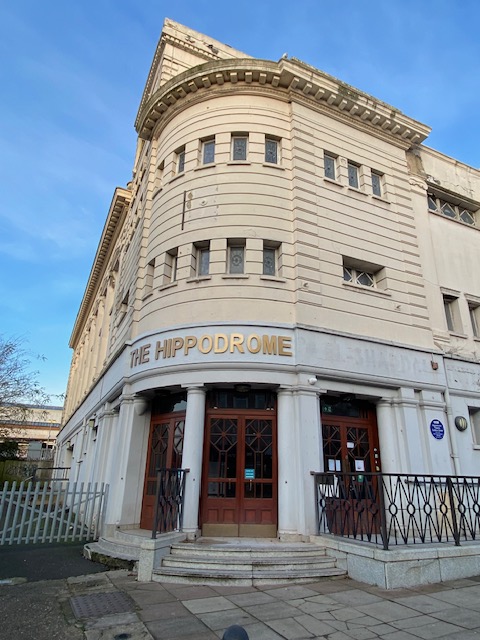
And opposite Golders Green station is the former Hippodrome, which was built in 1913 as a 3,000-seat music hall and opened on Boxing Day in that year. Its capacity was reduced by half with the construction of a full theatre stage, and it was used as a receiving venue for West End transfers – actors and artists including Laurence Olivier, Marlene Dietrich, Stephane Grappelli, Django Reinhardt and Chico Marx all played there.
In 1969, the Hippodrome was taken over by the BBC and converted into a radio studio and concert hall with reduced capacity of 700 seats, and became home for the BBC Concert Orchestra. In 2003, the BBC announced its intention to leave the building, and the BBC Concert Orchestra relocated to various central London locations. The building deteriorated considerably, such that it was placed on English Heritage’s ‘buildings at risk’ register in 2005. These days it’s a place of worship, though thankfully it has kept its original frontage.


This bus route was another good one with some fascinating buildings from Trobridge’s thatched houses in Kingsbury, through the Mandir Temple also in Kingsbury and the two former theatres/music halls at the end of the route.
Toilets that are free and open to the public:
- Ibis Hotel Wembley Stadium
- Brent Civic Centre
- Sainsbury’s opposite Hendon Magistrates Court
 london routemistress