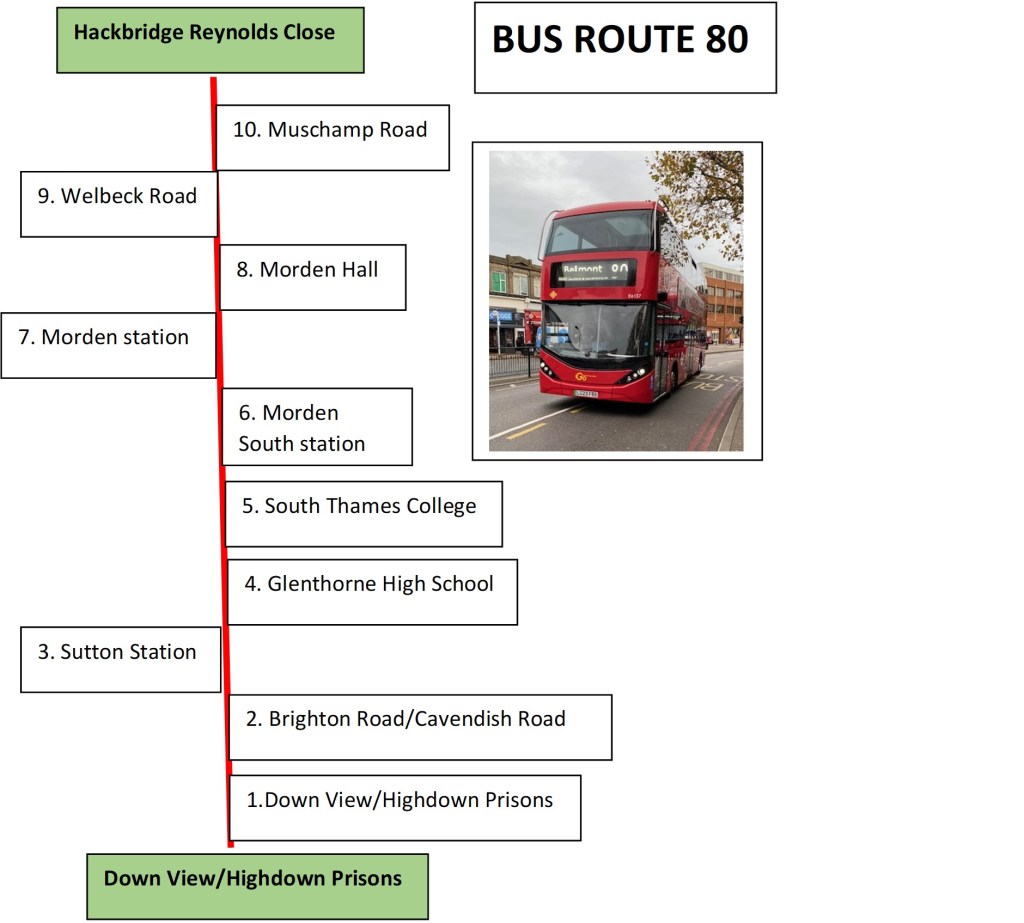
Down View/High Down Prisons to Hackbridge
Highlights:
- Southern Magnolia
- Sutton Twin Towns mural
- Morden Hall Park
- Empire of Austenasia
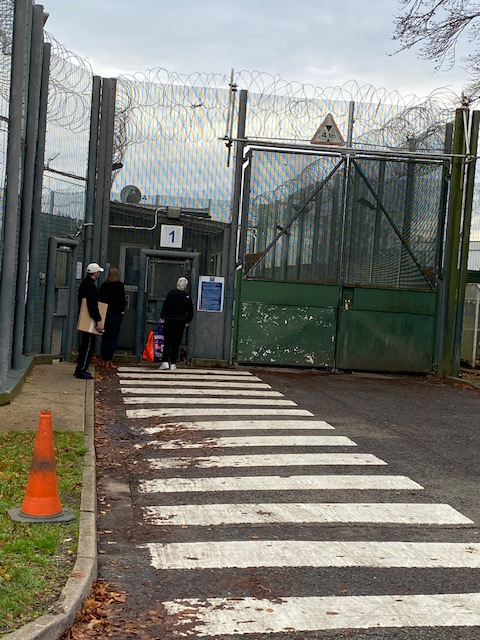
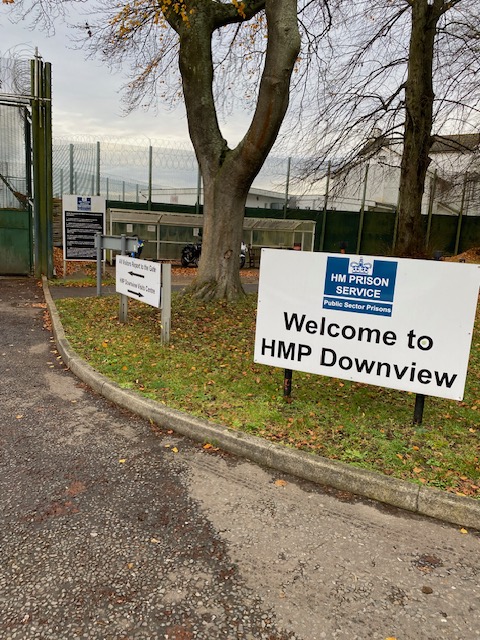
1. Down View/Highdown Prisons bus stop
This is the start of the route and apart from the two prisons, there’s nothing else to see here. HM Prison High Down is a Category C men’s training/resettlement prison, where prisoners can wear their own clothes rather than uniforms. Various programmes are run for the inmates, to prepare them for life outside the prison. HM Prison Downview is a women’s closed category prison, offering vocational training courses and NVQs for inmates. The resettlement wing provides opportunities for the prisoners to work and receive education outside the prison.

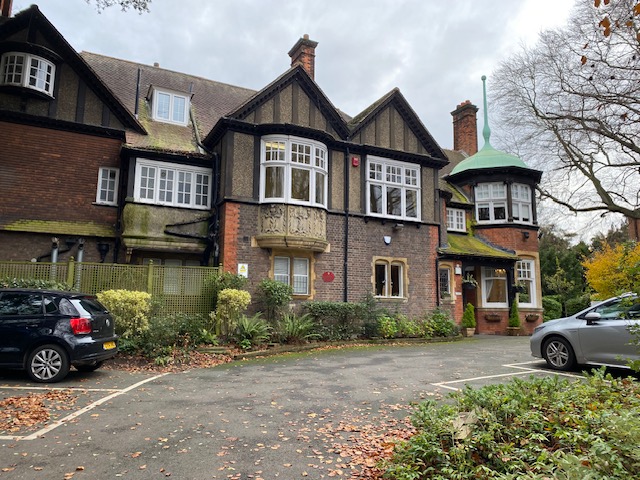
2. Brighton Road/Cavendish Road bus stop
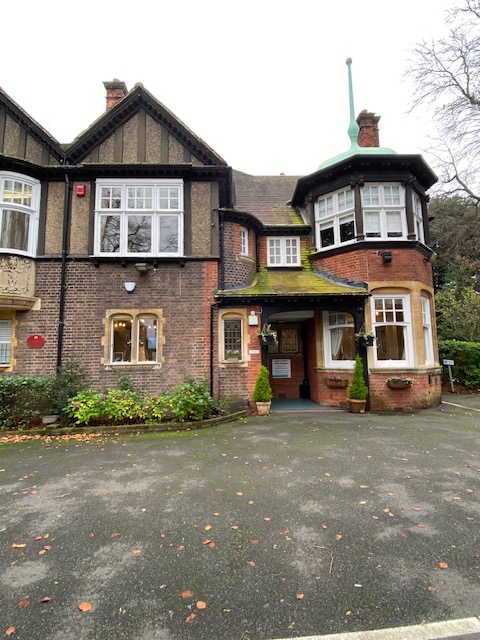
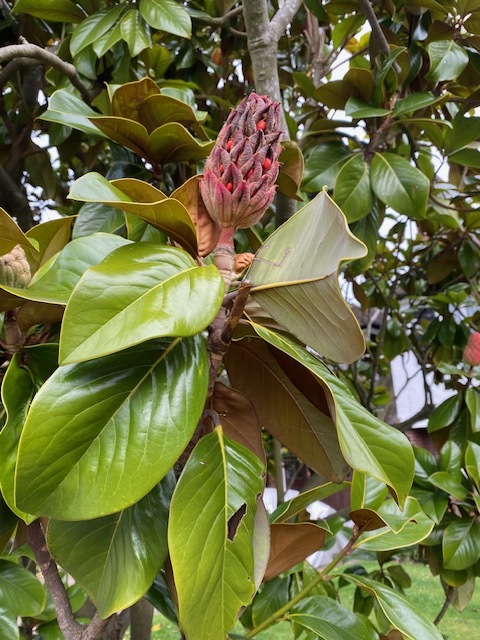
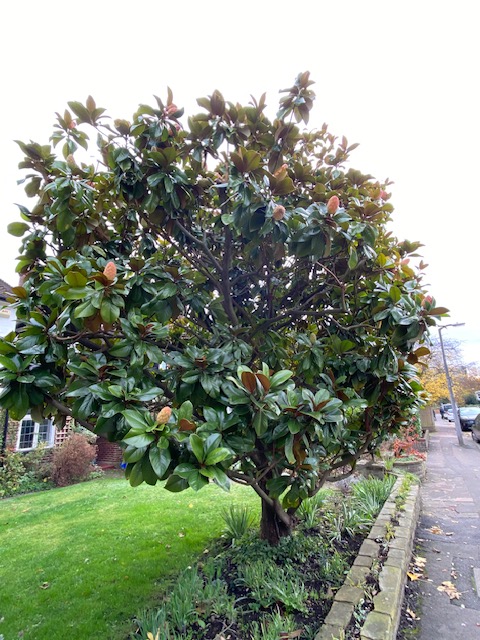
Alight here for Russettings, now a register office, but formerly a private home, once owned by Thomas Wall, the ice-cream and sausage manufacturer. According to the plaque on one of the walls, the house was built in 1885 and Mr Wall lived here from 1899. The plaque was donated by Sutton Talking Newspaper for the Blind to commemorate the 1000th weekly edition, produced at this site in December 1994. On the way back to the bus stop, there’s a beautiful southern Magnolia tree that was in bloom. Although indigenous to southern USA, it’s able to thrive in cooler climates owing to its hardiness. It was a delight to come across it, in a front garden on the main road.
3. Sutton station bus stop
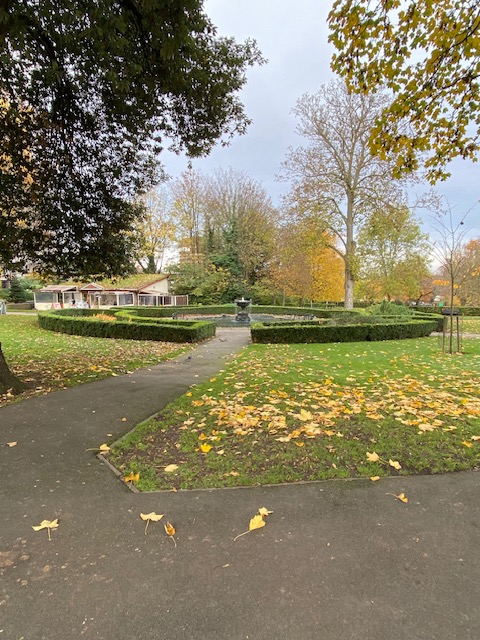
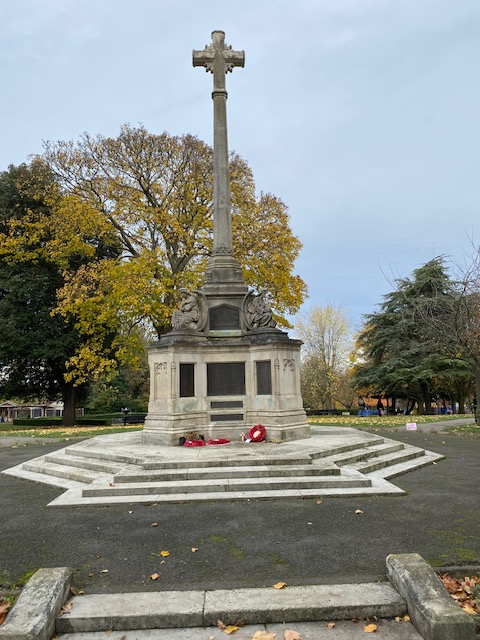
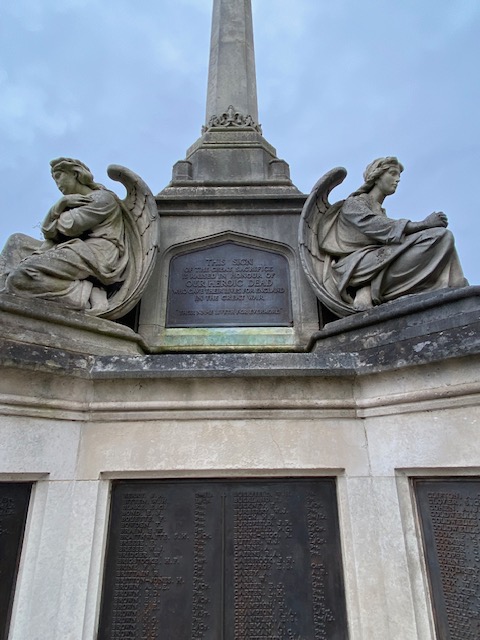
This is the stop for Manor Park. As you enter the park, you immediately see the War Memorial. In 1921 the War Memorial Committee bought two houses adjacent to the park, and erected the war memorial in their place. The memorial was unveiled at a service in June 1921 by Sir Ralph Forster, a wealthy local resident whose son died in the war. 524 men who died in the First World War are commemorated on the memorial. As well as the plaques containing names of the fallen, there are four angels on the plinth overlooking the park. The inscription reads:
“This sign of the great sacrifice is raised in honour of OUR HEROIC DEAD, who gave their lives for England in the Great War. Their name liveth for evermore.”
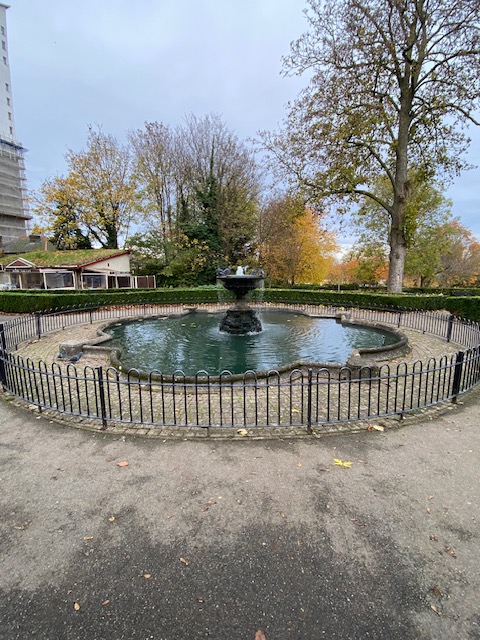
The other main feature of the park is the iconic water fountain, which was installed in 1924-5, when it was donated by the chairman of the Sutton Urban District Council , Councillor Charles Yates. This was one of a series of donations made to the park from people in the locality. A plaque on the pool surround gives recognition to this donation.
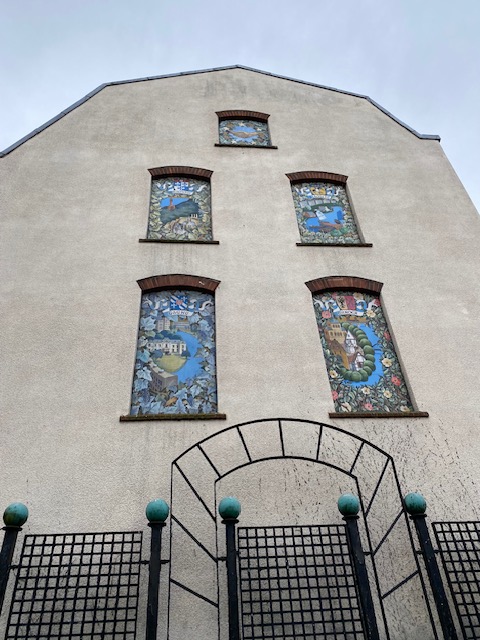
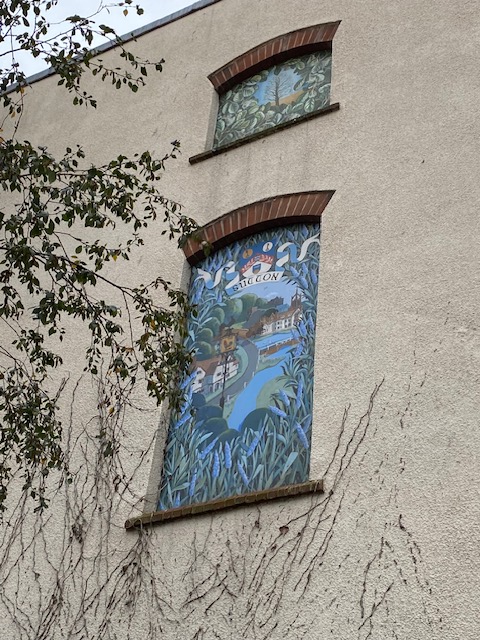
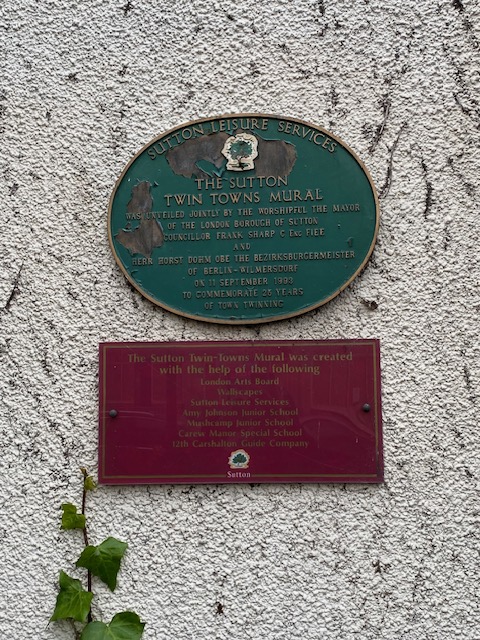
On the way back to the bus stop, there’s a wall with seven individual paintings that turn out to be the Sutton Twin Towns mural. The mural was created in 1993 by two artists Gary Drostle and Rob Turner on the 25th anniversary of Sutton’s twinning in 1968 with Wilmersdorf in Berlin. The paintings depict scenes of the London Borough of Sutton and its four European twin towns: Gagny, a suburb of Paris in France; Gladsaxe, a suburb of Copenhagen in Denmark; Minden in North Rhine-Westphalia in Germany; and Charlottenburg-Wilmersdorf in Berlin in Germany.
The five main paintings show a number of the main features of their respective areas, along with the heraldic shield of each above the other images. Each painting also features a plant as a visual representation of its subject’s environmental awareness. The other two paintings to the left of the five main ones, feature Sutton as a large painting and a separate smaller one (above the main one) showing a beech tree, intended as a symbol of prosperity and from which Carshalton Beeches in the borough derives its name.

4. Glenthorne High School bus stop
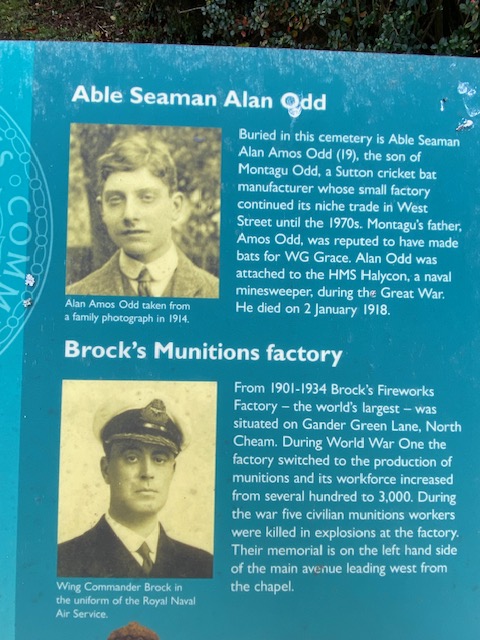
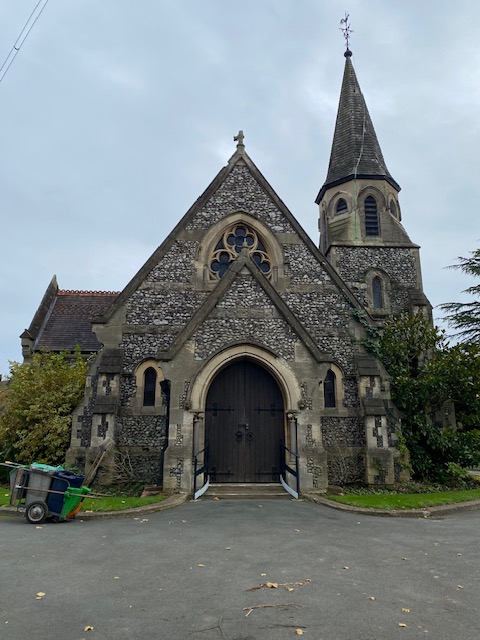
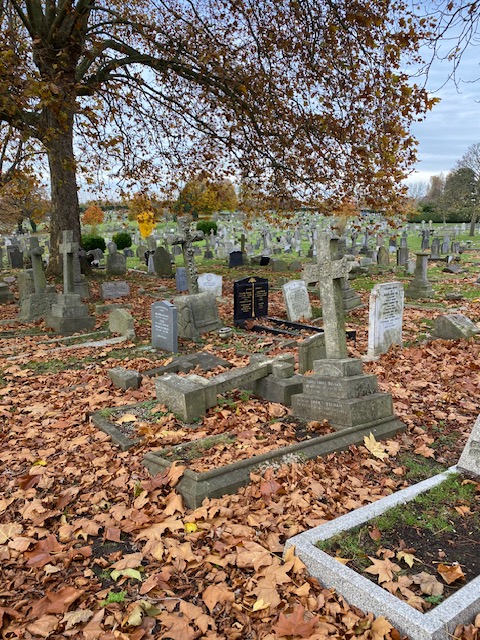
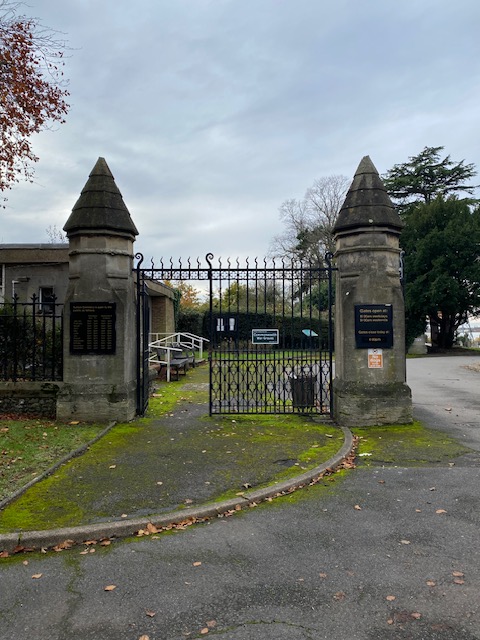
A few minutes’ walk from the stop is Sutton Cemetery, which was established in 1889. Set inside the cemetery is a small, Victorian-style burial chapel. There is also an area for war graves from both world wars and some commemorative plaques for specific individuals – two such are Able Seaman Alan Odd, who was attached to the HMS Halcyon, a naval minesweeper, and who died on 2 January 1918 and Wing Commander Brock – whose family business was Brock’s Fireworks, and who had been in the Royal Naval Air Force.
5. South Thames College bus stop
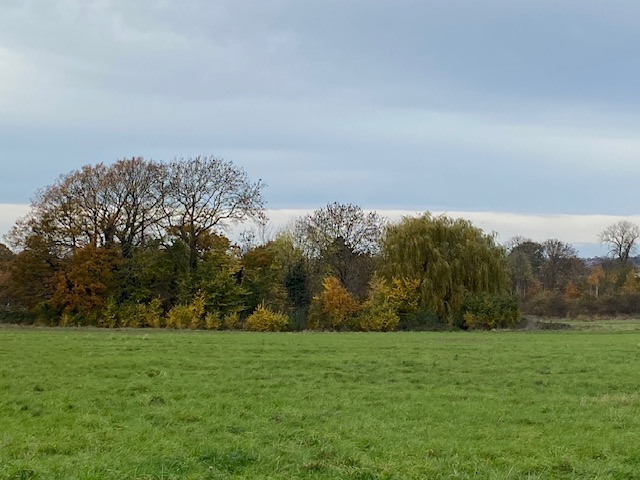
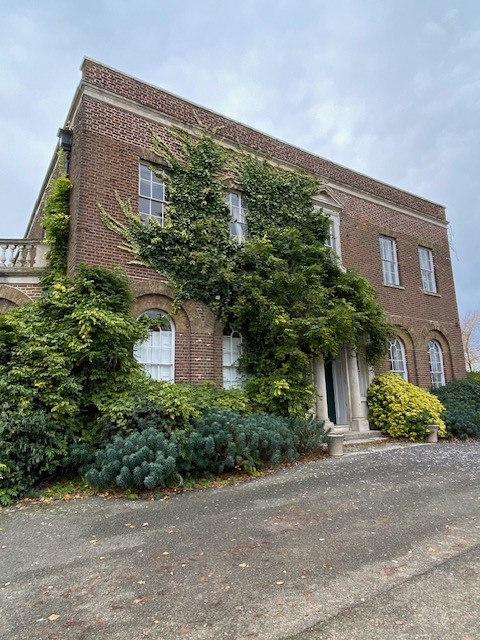
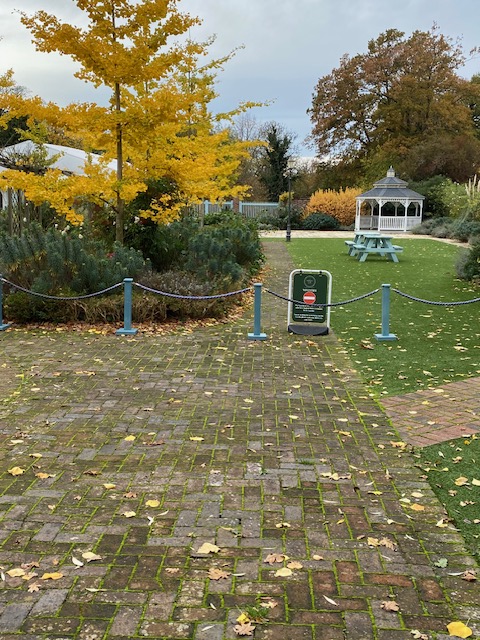
There are two major parks in Morden and the one nearest this stop is Morden Park (the other being Morden Hall Park). Within the park is the former Morden Park House which is now a register office and a venue for wedding ceremonies. The charming Georgian manor house has been a permanent feature of Morden Park since it was built in 1770 by John Ewart. As well as the interior ceremony rooms, there’s a unique courtyard outside complete with a vintage-style gazebo. The park itself is quite extensive with its own Disc Golf Course – the game is a flying disc sport in which players throw a disc at a target, using similar rules to regular golf.
6. Morden South station bus stop
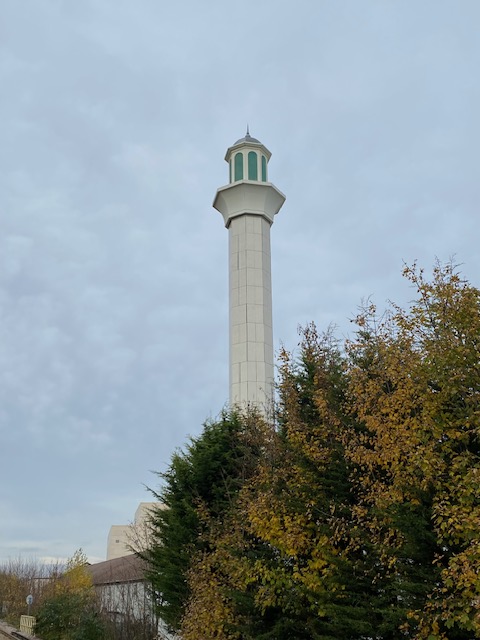
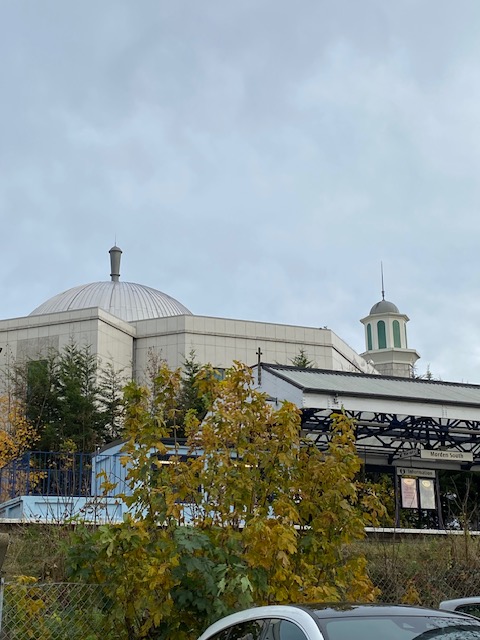
Take a walk towards the station and you’ll see from the road, the Baitul Futuh Mosque. I don’t think it’s possible to get really close to it or to enter but you can see quite a large part of it from street level or from a platform at the station. It’s one of the largest mosque complexes in Europe, with the main mosque being 23m above ground and the design is aimed to combine traditional Islamic design with modern British architecture. The mosque is of the Ahmadiyya Muslim Community and it is noted for its homeless feeding and national/local community cohesion efforts.
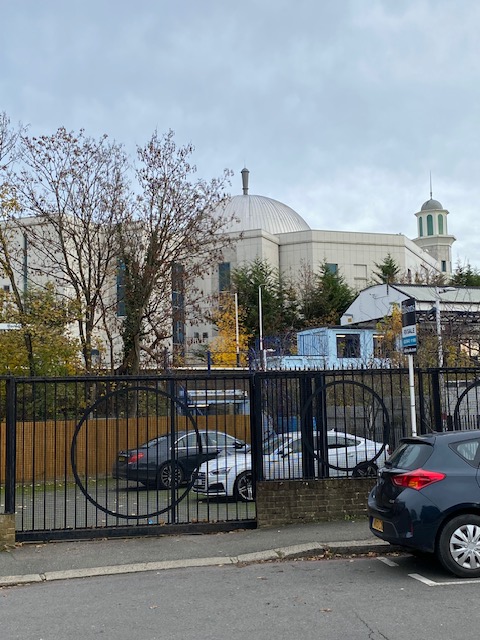
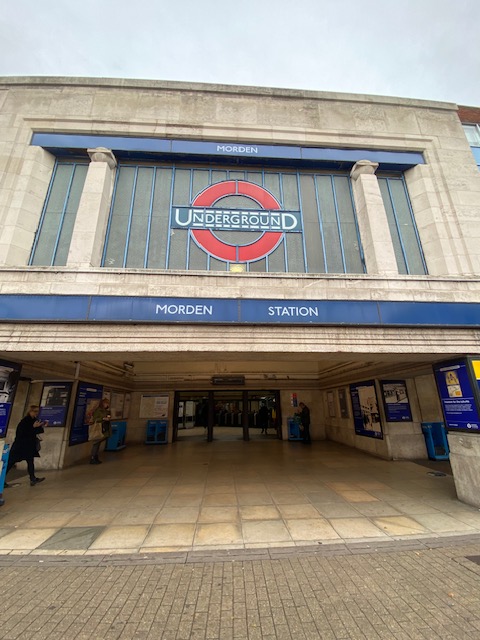
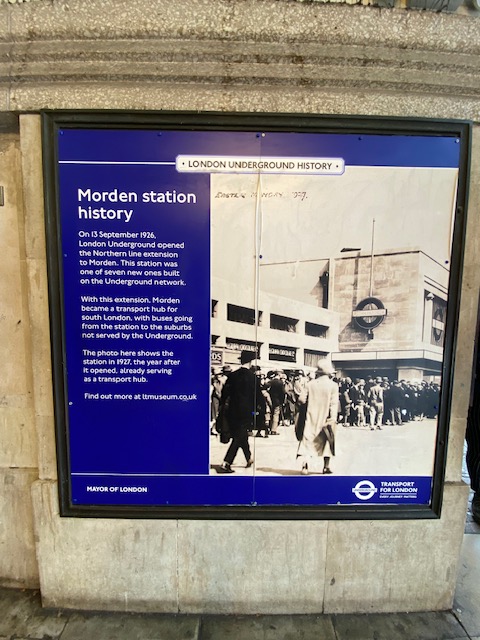
7. Morden station bus stop
The bus stops right outside the station and it’s worth just taking a few moments to have a look at the design. Morden tube station was one of the first modernist designs produced for the London Underground, opening in 1926. The design of the entrance vestibule takes the form of a double-height box clad in white Portland stone with a three-part glazed screen on the front façade divided by columns of which the capitals are three-dimensional versions of the Underground roundel. Although it’s not easy to see from the image, the ticket hall beyond is octagonal with a central roof light of the same shape.
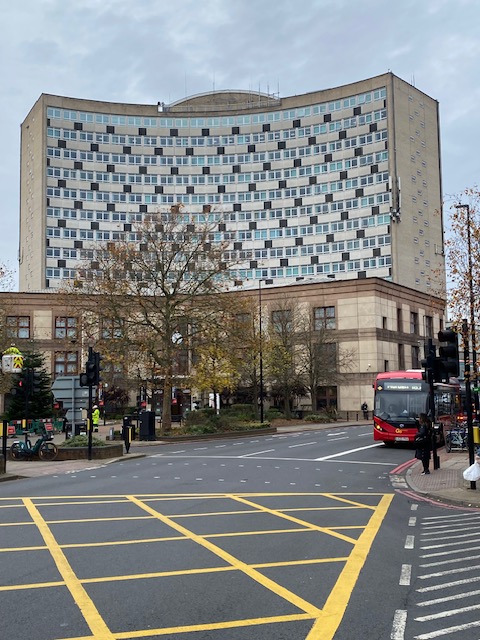
Glance sideways and you’ll see the iconic Crown House. This striking curved building was constructed in 1960 and originally housed commercial space and a postal sorting office. Merton council transferred the majority of its departmental offices to Crown House in 1985 and it became a fully functioning Civic Centre in 1990.
8. Morden Hall bus stop
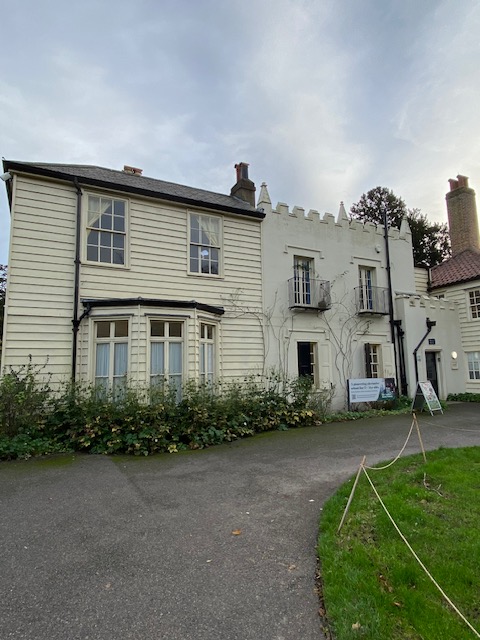
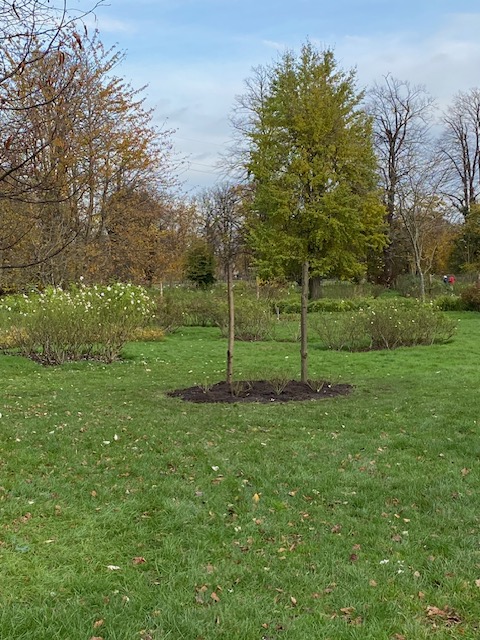
A few minutes’ walk from the stop is Morden Hall Park (not to be confused with Morden Park). It’s owned by the National Trust and the estate contains Morden Hall itself, Morden Cottage, snuff watermills and a restored stable-yard. Morden Hall Park Estate was originally owned by the Abbey of Westminster and was purchased in the 1550s by a Richard Garth. It’s believed that Morden Hall was built between 1759 and 1765 and it remained within the Garth family until the 19th century.
In 1867, the estate was bought by Gilliat Hatfeild, a successful tobacco merchant and partner in the firm that ran the Morden snuff mill. When he died in 1906, his son ran the estate. Morden Hall was loaned to the London Hospital as a convalescent home for military patients during the First World War and later opened its doors as a home for women and children run by the Salvation Army. When he died in 1942, Hatfeild Junior left the core of the estate, including Morden Hall, to the National Trust who took over direct management of the estate in 1980.
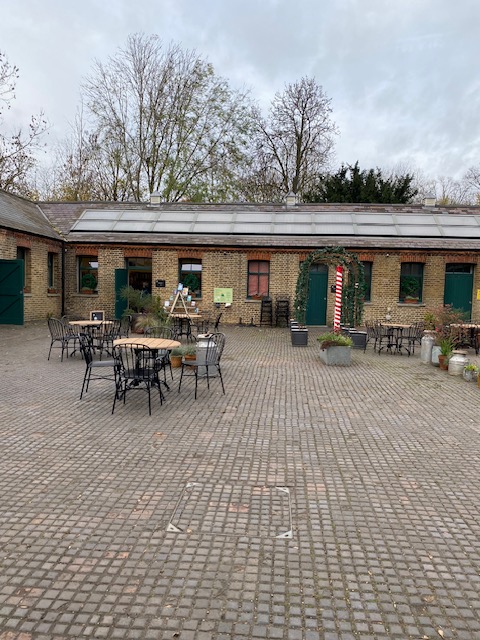
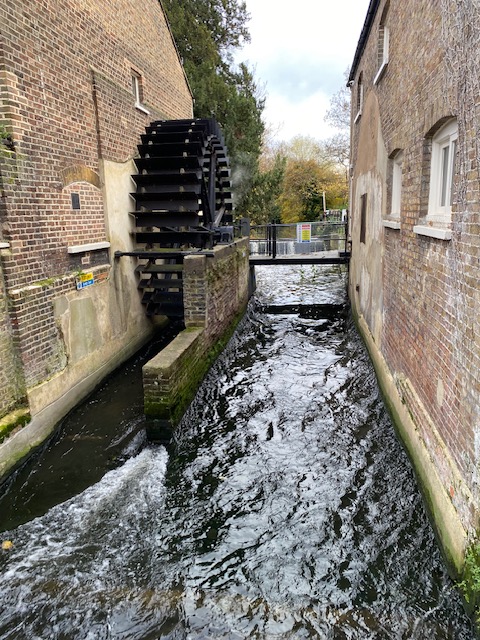
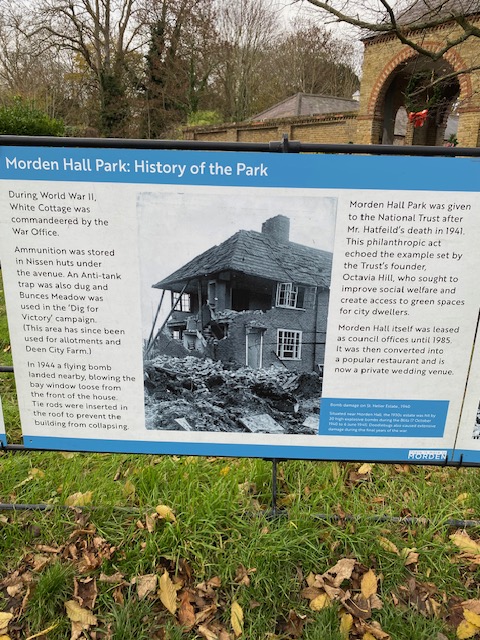
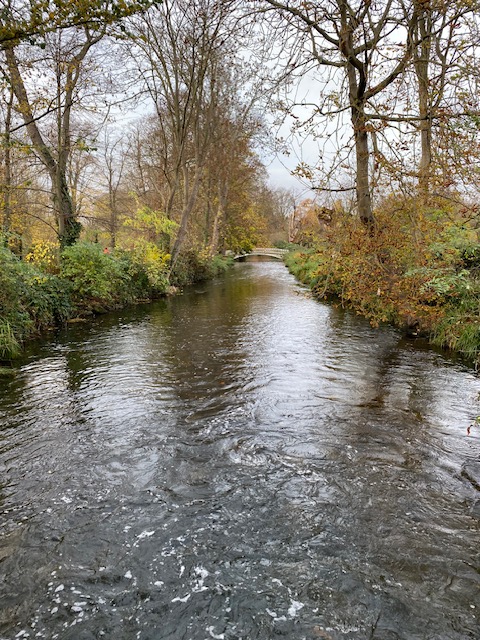
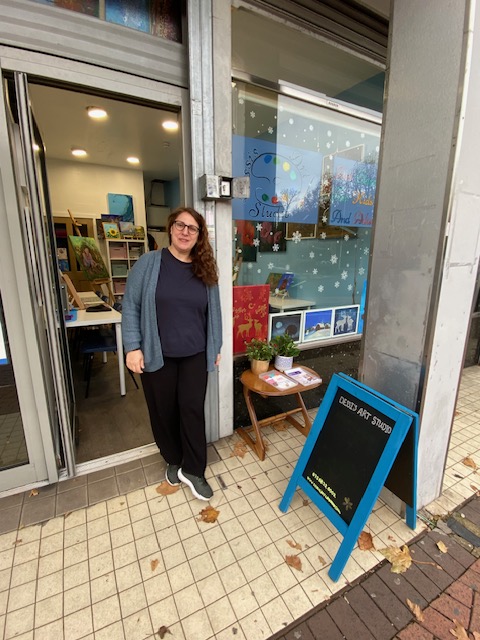
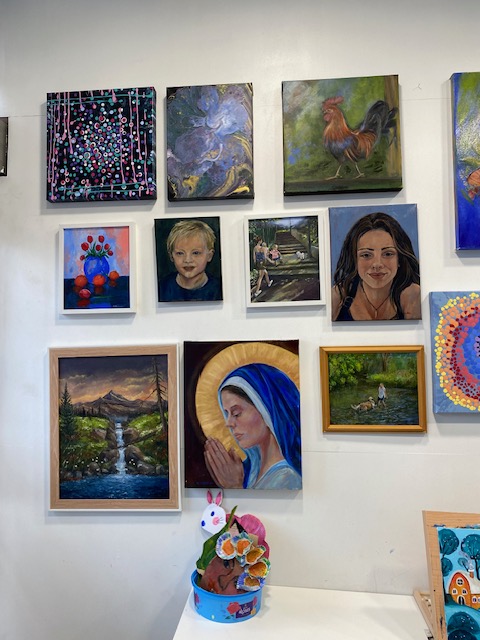
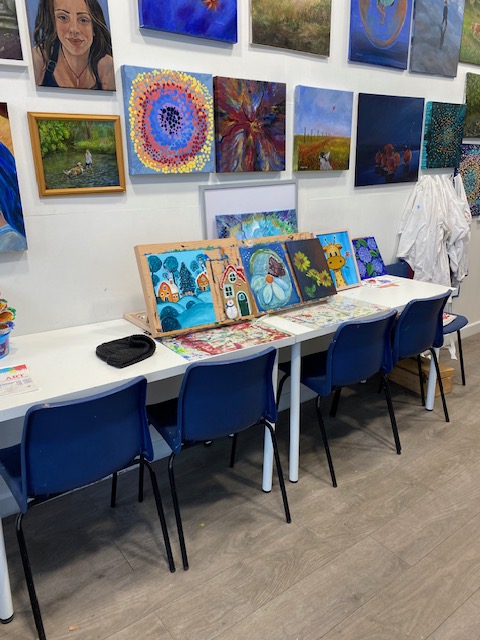
Over the road from the bus stop is a small art shop/studio. I met the lady who owns it called Dessi who was a delight to chat to and find out the history of the studio. She had been a nanny to a local family and when the kids were at full-time school, she realised she needed to fill her days. She is a talented artist in her own right and as well as painting, she teaches both adults and children in the art. Her small studio is full of hers and her students’ paintings – it’s a lovely place to look around and chat to Dessi.
9. Welbeck Road bus stop and
10. Muschamp Road bus stop
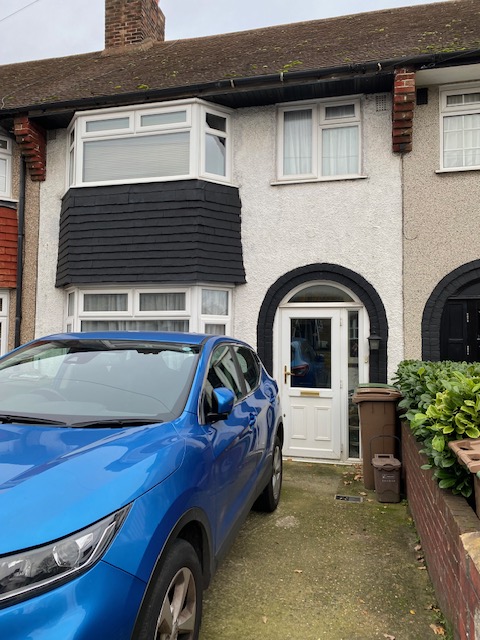
Perhaps the strangest place on all the bus routes so far is the one here, near the bus stop. According to the Wikipedia entry, it’s “the Empire of Austenasia, a micronation founded in 2008. Operating under the constitutional monarchy of its fourth Emperor, Jonathan I, it consists of dozens of properties that have declared themselves independent under the leadership of a house in the London Borough of Sutton.” Jonathan Austen and his father Terry founded the Empire, with Terry being the first Emperor and Jonathan its Prime Minister. Jonathan became its Emperor in January 2013 and began a programme of expansion which has seen people from across the world join the micronation by claiming properties which they live in or regularly visit. Not surprisingly, the Empire of Austenasia has gained a certain amount of fame within Carshalton as being a local “quirk”. The micronation produced and sold commemorative coins in 2018 in celebration of its tenth anniversary. You could be forgiven for walking past the house that is the HQ of the Empire …
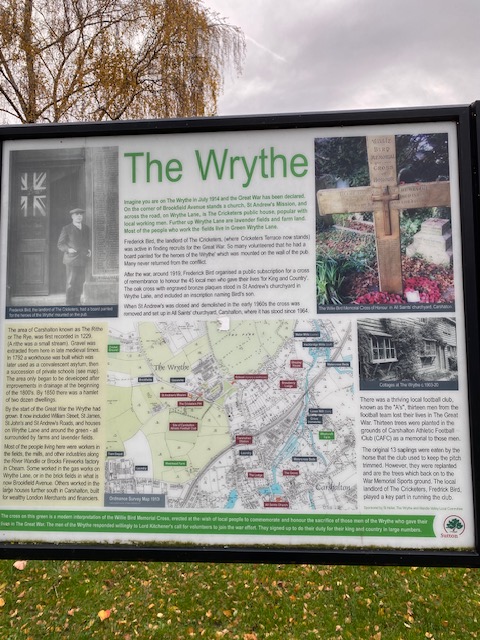
The final place on this route is The Wrythe, a small district in Carshalton. The name Wrythe derives from an old English word for streamlet. The river is first recorded in 1229 as Rithe, in 1450 as le Ryth and la Rye in 1484. The modern spelling “Wrythe” first appears on the Ordnance Survey map of 1867. Local history dates the area back to the Roman era, although it remained largely undeveloped until the 18th century.
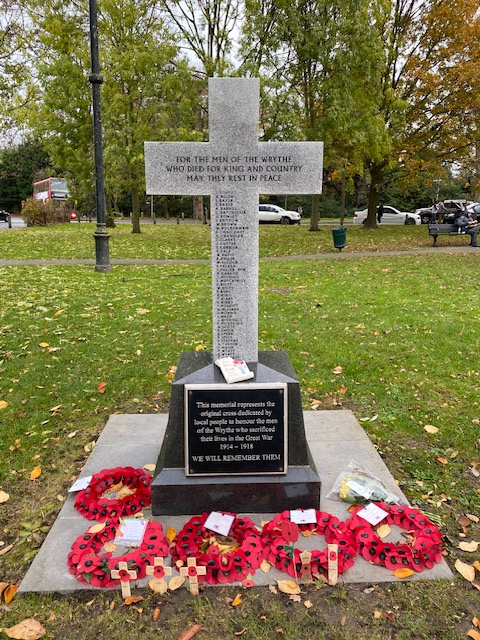
There is a small war memorial on the Green, erected to remember local people who died during the first World War. Thirteen members of the local football team, known as the “As” lost their lives during this war and thirteen trees were planted as a memorial to them.
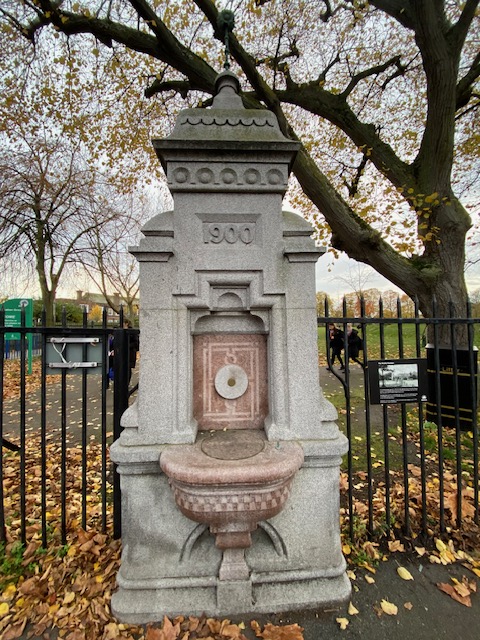
As you walk back to the bus stop, take a minute to look at the Water Fountain, which was built in 1900. It’s the main physical reminder of the stream that rose on a local site. Some of the residents of Wrythe still remember drinking from the fountain as children, on their way home from school. Over the years, it was vandalised and in 2019, restoration work was carried out, consisting of infilling the bowl with a red marble insert and replacing the tap with a finial/cap.
Another one of the routes that had an eclectic mix of places to see. War memorials, murals, parks and gardens mixed with an art studio and a micronation. So much to take in and absorb but a very pleasant journey.
Toilets that are free and available to the public:
- Sutton station
- Morden Hall Park
 london routemistress
One response to “Bus route 80”
Lovely
Sent from my iPhone
<
div dir=”ltr”>
<
blockquote type=”cite”>
LikeLike