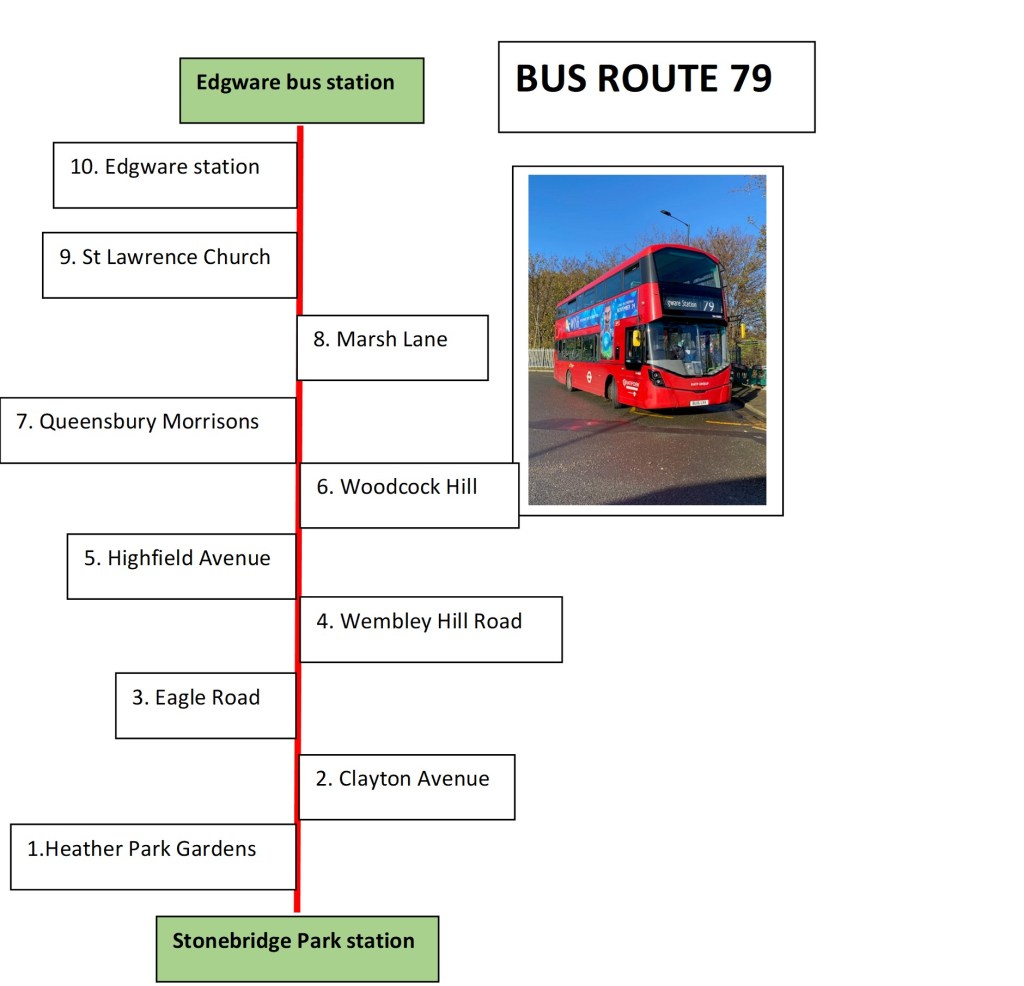
Stonebridge Park station to Edgware bus station
Highlights:
- Shri Sanatana Hindu Temple
- Variety Silk House
- George V Memorial Garden
Apologies to anyone who lives along the number 79 route and who loves it and finds it an interesting route! If you are intending taking this route to explore London, it’s imperative to go on a good-weather day as almost all the places worth visiting are outdoor – mainly parks of which there are plenty.
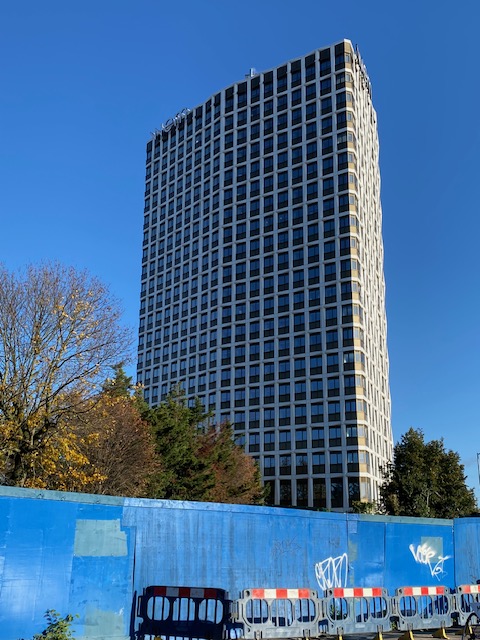
Before getting on the bus at Stonebridge Park station, look over the road to the 21-storey WEM Tower. It’s a landmark building, with apartments having unrivalled views of London.
1. Heather Park Gardens bus stop
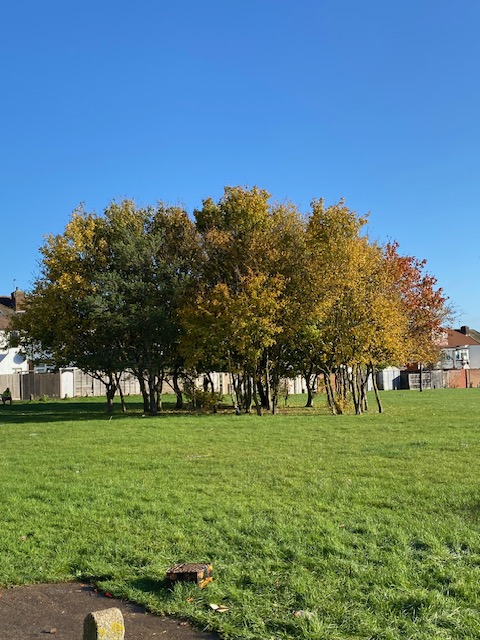
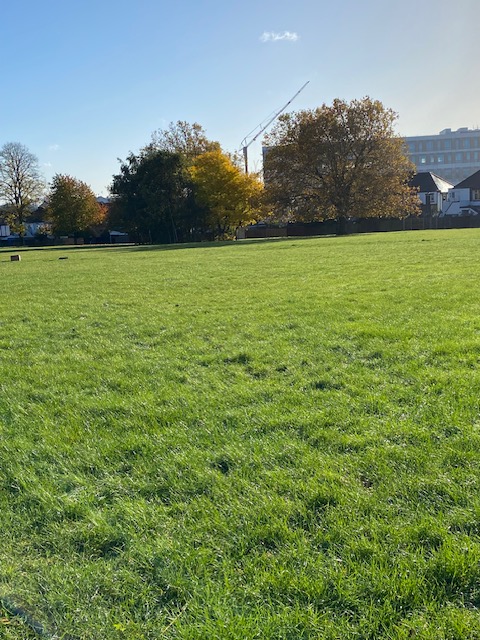
Heather Park is the first of many parks on this route. It is a small open space, which has recently undergone some refurbishment and improvements. At this time of the year (mid November) the trees are still in leaf with typical autumnal colours and are very pretty.
2. Clayton Avenue bus stop
This is perhaps the highlight of the route, with the iconic Shri Sanatana Hindu Temple. The bright sand-coloured walls and domes create an unmistakable landmark in this part of Wembley. From the outside, you can see intricate forms of carving and moulding which cover the exterior and interior walls. It was constructed according to the scriptures of the Hindu holy texts, and so contains no steel supports. The temple has many deities including Ganesh, Swami and Radha Krushna. There is a sister temple in Leytonstone and each one follows Sanatan Dharma, which is the true (original) name of the religion that was later referred to as ‘Hindu’.
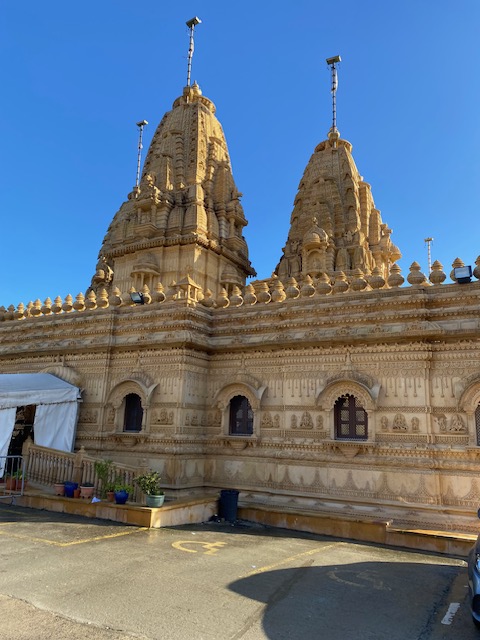


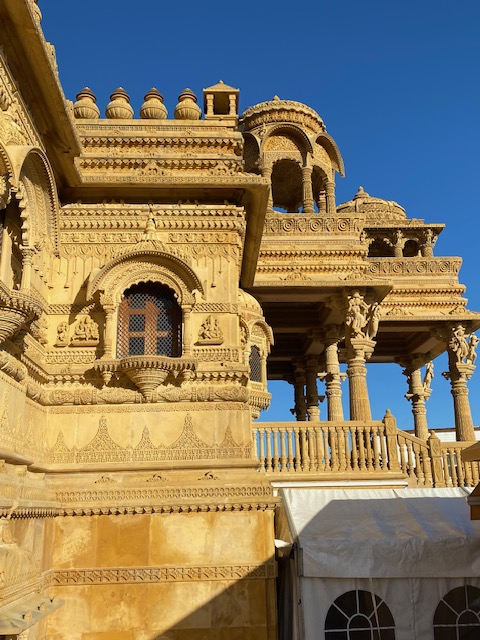
Walking along the road towards the bus stop, there are plenty of Indian stores including Festival, which sells a cornucopia of items including idols, Ganesh Murtis, Indian Murtis and garlands for all occasions, as well as Indian items for the home. It’s worth having a look around and admire the colours and the sheer extent of items on display.
Almost next door is Variety Silk House, a shop that specialises in outfits for special occasions as well as everyday Indian clothes. They have a large selection of saris and lehengas for women, and kurtas and sherwanis for men, using the finest fabrics. The business was established in Nairobi, Kenya in 1958, and the family moved to London in 1972, opening a small sari shop in Wembley. Since then, the family business has grown several-fold and it’s easy to see how it’s earned its reputation for being an outstanding retailer.


3. Eagle Road bus stop
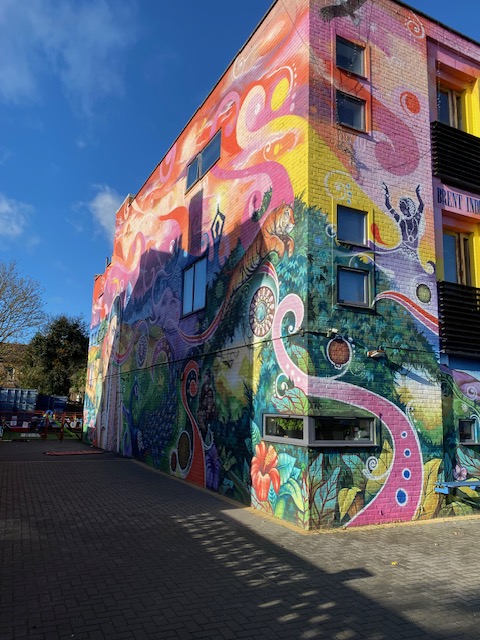
A few minutes’ walk from the bus stop is the Brent Indian Association. Immigration of Indians rose significantly in the late ’60s & people came here to settle permanently with a view to enriching their lifestyle. By 1965 the population of Indians in Brent was of a significant size but they were missing a central organisation where they could meet, discuss and celebrate, in particular, when it came to social and religious occasions. They needed somewhere to hold such events.
Some prominent members of the community suggested a cultural programme and once it was unanimously agreed upon, the Brent Indian Association (BIA) was established. In 1976, with a grant of £56,500, the BIA was able to purchase this building in Ealing Road. This colourful mural on the walls of the BIA was painted by Positive Arts who specialise in public/community murals, with many successful projects throughout London/UK under their belt.

4. Wembley Hill Road bus stop
Alight here to see the second of the open spaces on this route. King Edward VII Park was first opened to the public on 4 July 1914, reputedly by Queen Alexandra. There were facilities for tennis and bowling, and the lower part was laid out for cricket and hockey, separated by a belt of elms. There were gravelled walks and seating, formal planting and numerous beds with shrubs and trees. Today it’s part of the Fields in Trust historic protection programme and has been protected since August 2012 under the Queen Elizabeth II Fields protection type.


5. Highfield Avenue bus stop
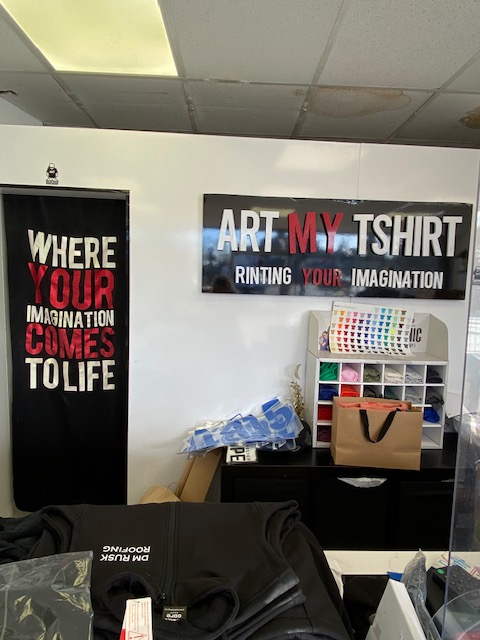
Within spitting distance of the bus stop, on a corner stands the Art my T-Shirt shop. Run by Adeel and a business partner, the shop supplies custom-printed T-shirts and other clothing. It’s a small area but it’s packed with items ready for printing the desired logo or text. They pride themselves on using the most up-to-date technology and printing equipment as well as quality T-shirts, sweats and even baseball caps. Basically, they cater for all sorts – whether it’s a hen or stag do, business promotion, team tops and hats or just for personal use, the quality is superb and everything is made with great enthusiasm, as is the welcome you receive.


6. Woodcock Hill bus stop
Set within John Billam Sports Ground is the Kenton Hall. It was originally built in the early 1900s as a sports pavilion and these days is primarily used as an events venue. Interestingly, the NHS promotes the John Billam sports ground on their website, as being a facility to help individuals get active and therefore healthy.


7. Queensbury Morrisons bus stop
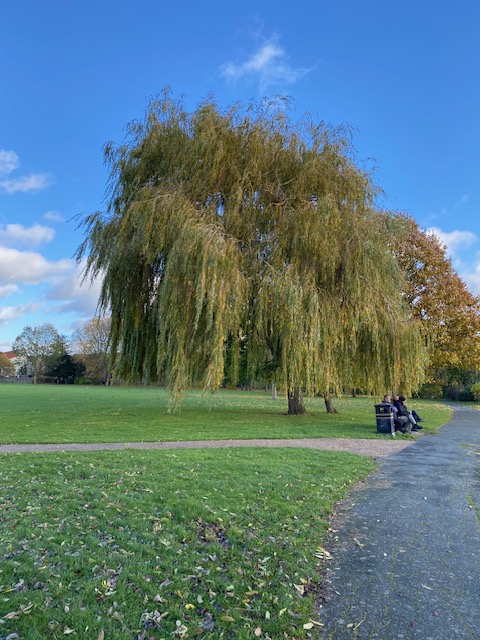
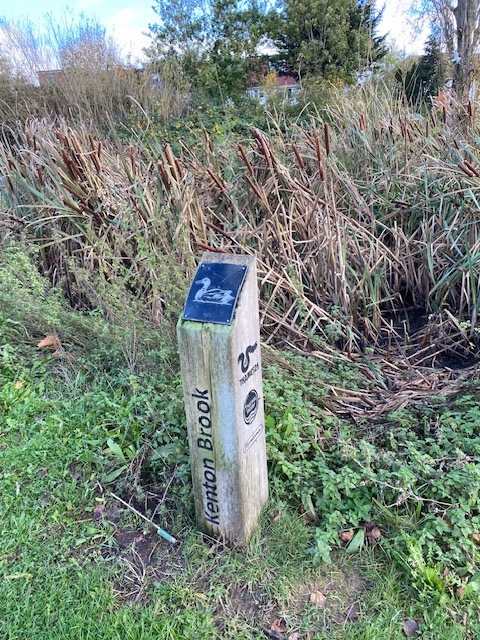
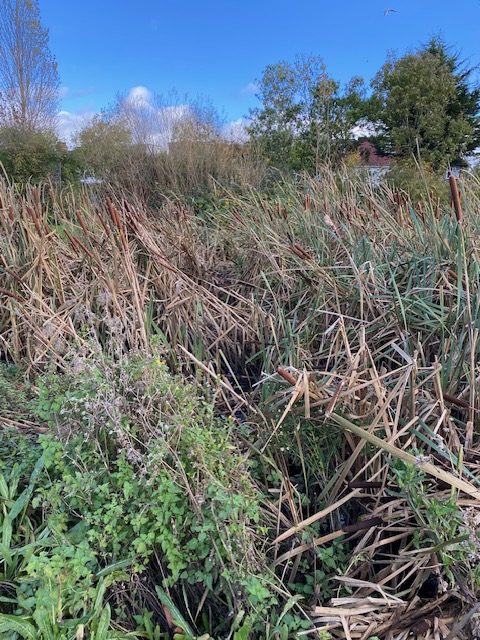
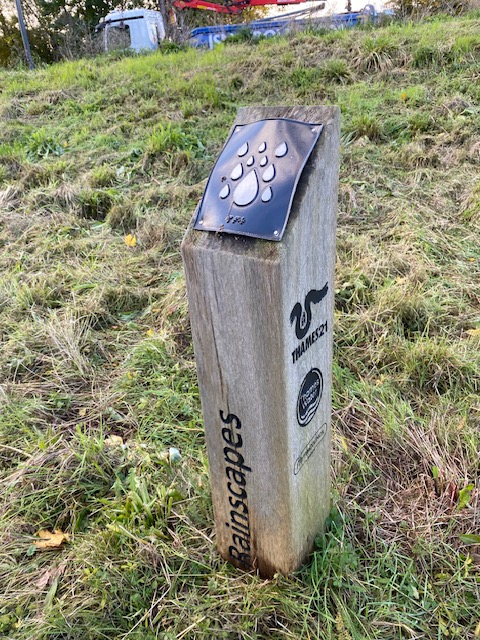
Here is another open space to explore – Queensbury Park. It dates back to 1936 and 80 years later the mayor of Harrow unveiled a new wetland area here, made possible after the Kenton Brook was widened and diverted through the park. There are markers set within the park, laid down by Thames 21, a charity that works with communities and schools, to improve rivers and canals for people and wildlife.

8. Marsh Lane bus stop
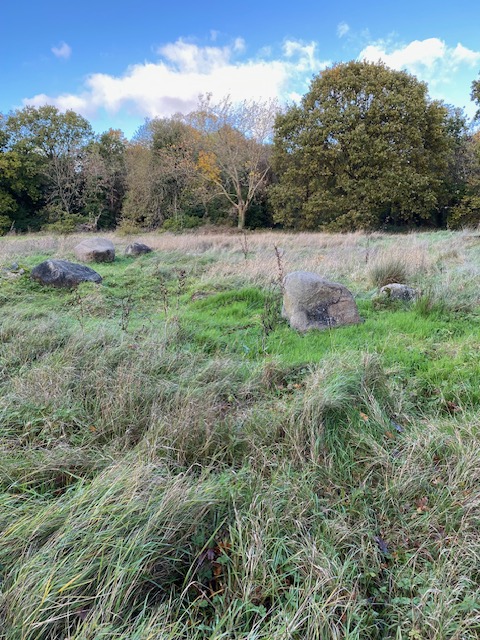
The bus drops you right at the spot for Stanmore Marsh, another open space on this route. Originally the area was farmland with Marsh farm being in operation at least since 1520. The marsh sat to the east of the common fields so a decree of 1582 allowed certain tenants of neighbouring Little Stanmore the right to graze their livestock on the marsh too.
In the 1950s the site was drained and the open ground set to boring short grass but during 2015-2017, the area was rewilded in a project that involved opening up the culverted Edgware Brook which now flows in a natural channel, dredging the Frog Pond, and creating depressions and swales over the ground to collect and hold rainwater before delivering it to the pond or to the Edgware Brook. The variety of plants and animals found on the site is large for a site so small and reflects the survival of species from the time before the site was drained.

9. St Lawrence Church bus stop
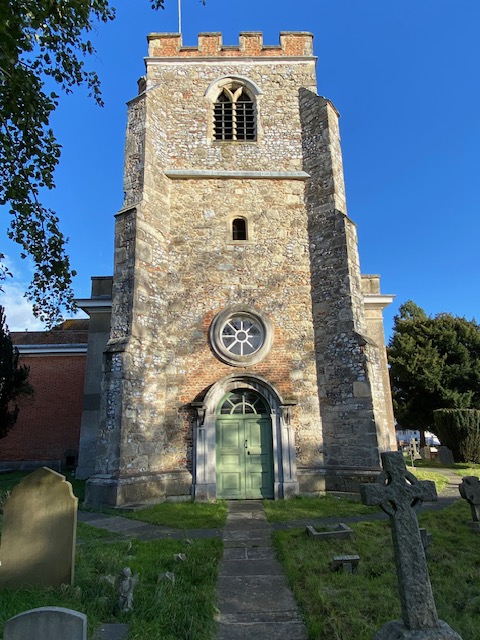
The church here is the one in which Handel once played the organ and where he was composer-in-residence. St Lawrence Church itself is Grade I listed. It retains a stone tower dating from c. 1360, but the main body of the building was rebuilt in 1715 in the Baroque style, at the request of its owner, James Brydges, who later became the first Duke of Chandos. .
Handel was employed by Brydges in 1717/18 as his composer-in-residence. This resulted in a number of works including the Chandos Anthems and it is believed that the church is where these Anthems were first performed. At the east end of the church is the organ, which is recognised as an historic instrument by the British Institute of Organ Studies. It is assumed to have been played by Handel. The church is open to the public at very restricted times so it’s worth checking beforehand for the opening times.


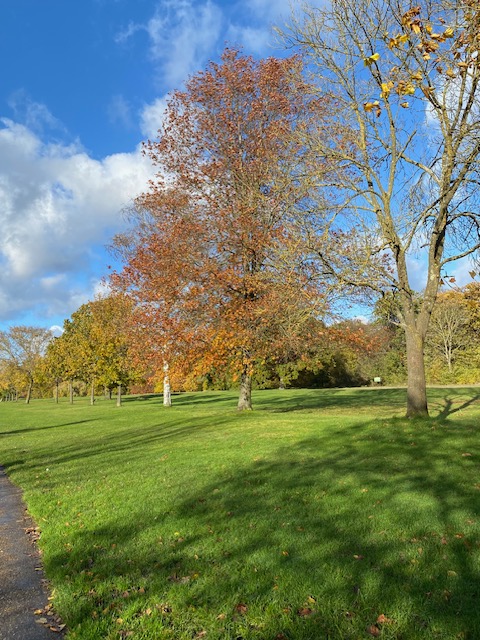
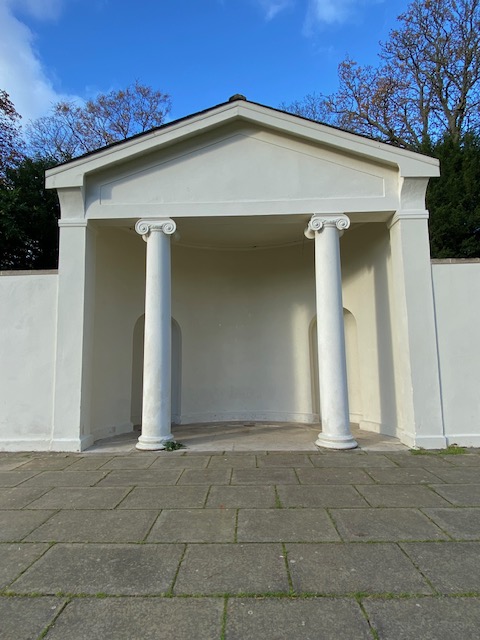
Adjacent to the church is Canons Park, the last of the open spaces to be seen on this route. Canons Park is largely located on the site of the magnificent early 18th-century country house Canons, built between 1713 and 1725 by James Brydges, 1st Duke of Chandos. A few years after his death, the house was demolished. A large portion of the original gardens of James Brydges’ house now form the public pleasure gardens of Canons Park. The modern park includes the George V Memorial Gardens and a folly known as ‘the Temple’.
The Memorial Garden is a walled garden and was originally part of the duke’s kitchen gardens and was re-designed in the 1930s. The garden reflects the 1930s period, with a structure of evergreens highlighted by seasonal displays. It features a central square pool surrounded by a raised terrace with steps, formal flower beds and a pavilion.


10. Edgware station bus stop
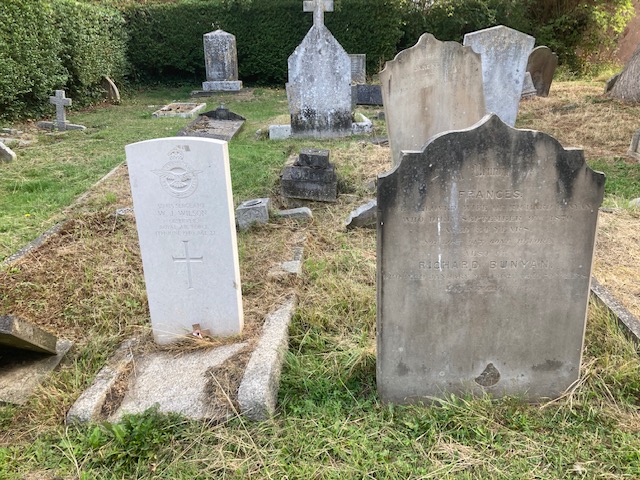
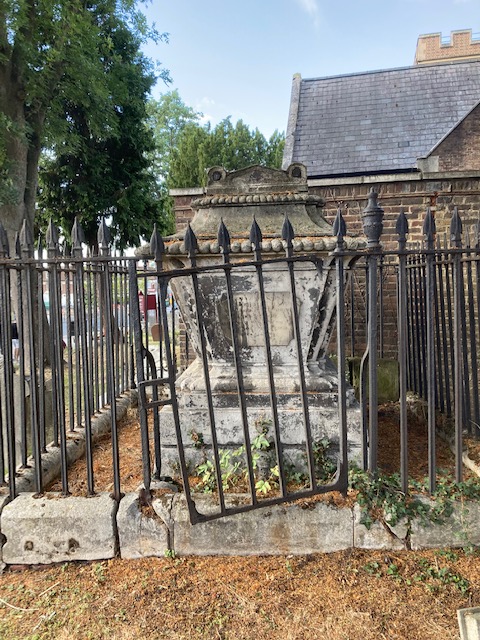
Final stop on this route is at St Margaret’s Church (also seen on bus route 32). Next to the church, there is a small Victorian hall, built in 1833, which was formerly the village school, and is called Truth Hall. It’s now used as a community hall. The adjoining churchyard has a mix of casualties from the world wars and local dignitaries. The church itself is a grade II building and it dates back to the 13th century.

This route is among the shorter ones and if truth be told, it was not one of the most interesting. That said, there were some lovely places to see, in particular the Hindu Temple near the start of the route. It can’t be expected that there will be some magical places to visit on each of the London bus routes, so it’s just worth enjoying what there is. There were at least many decent open spaces to explore and walk around. As it was autumn, the leaves on the trees were particularly pretty.
Toilets that are available and free to the public:
- Morrisons superstore at Queensbury
 london routemistress
One response to “Bus route 79”
Congratulations you did it
<
div>J
Sent from my iPhone
<
div dir=”ltr”>
<
blockquote type=”cite”>
LikeLike