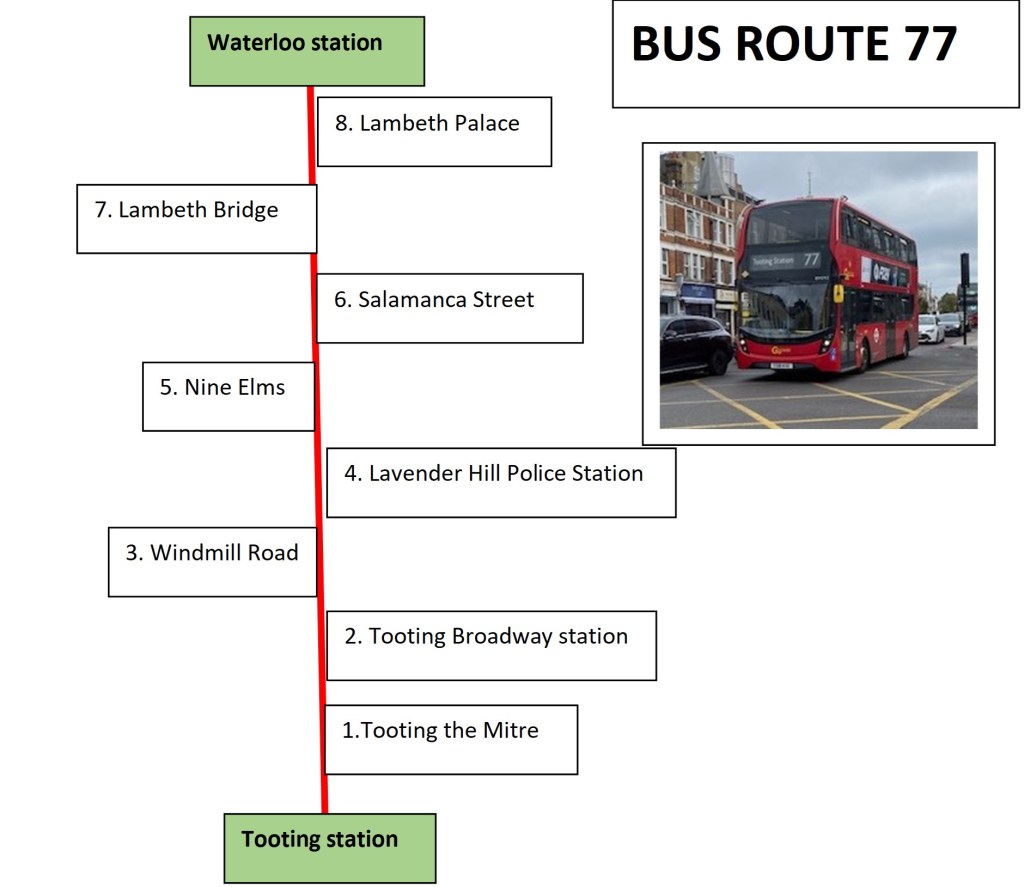
Tooting station to Waterloo
Highlights:
- Battersea Arts Centre
- Royal Victoria Patriotic Building
- US Embassy
- Newport Street Gallery
1. Tooting the Mitre
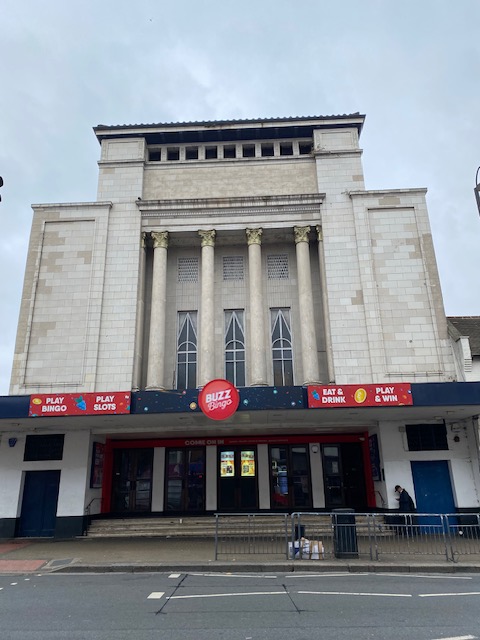
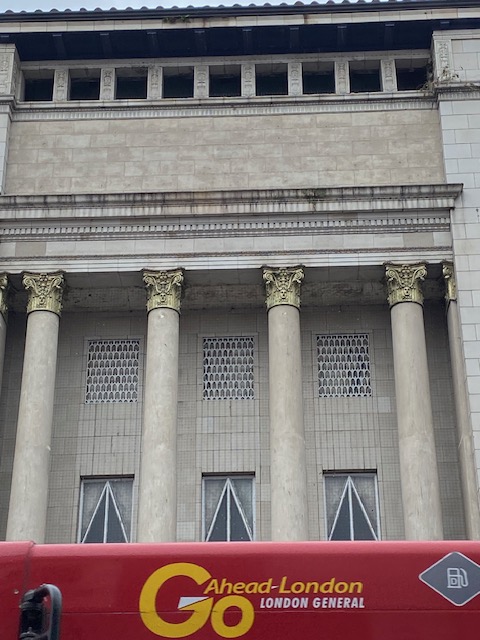
As soon as you get off the bus at this stop, you see an impressive-looking building over the road. It’s now plastered with bright signs that says it’s Buzz Bingo, a Bingo hall but it’s obvious it was something much grander. In fact it started life back in 1931, when it opened as the Granada theatre and cinema. The first-ever screening was the American comedy film Monte Carlo, and the building was popular with locals for 10 years until it became a music venue. Since then, it’s undergone renovation after renovation while playing host to the likes of The Beatles, Frank Sinatra, and the Rolling Stones. Locals stopped the building from being pulled down by applying for listed status and it’s the only grade I listed building in Tooting.
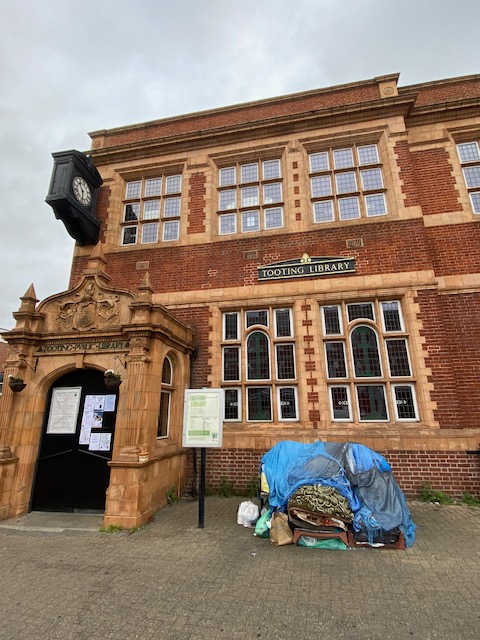
The Tooting library is also an interesting-looking building, which you’ll pass as you walk down the street. The building was originally built in two stages, the upper floor was built from around 1908, but the lower floor is older, dating back to 1902. The outside of the building retains its splendid brickwork and terra cotta features.
From here it’s an easy walk to St Nicholas Church, which is named after the bishop of Mycra in Lycia (now in southern Turkey), who is also the patron saint of Russia. The church was mentioned in the Domesday book of 1086 and has a mixture of Romano-British, Saxon and Norman styles with a round tower and a shingled steeple. When the population grew too large to be accommodated by 1814, it was replaced by a new church built nearby and consecrated in 1833. The new church was extended several times over the period 1873-1889.
There’s a poignant wall plaque in the churchyard which is a memorial to the 118 children from a Pauper Children’s Asylum, who died from a cholera epidemic in 1849 and who are buried in the churchyard.
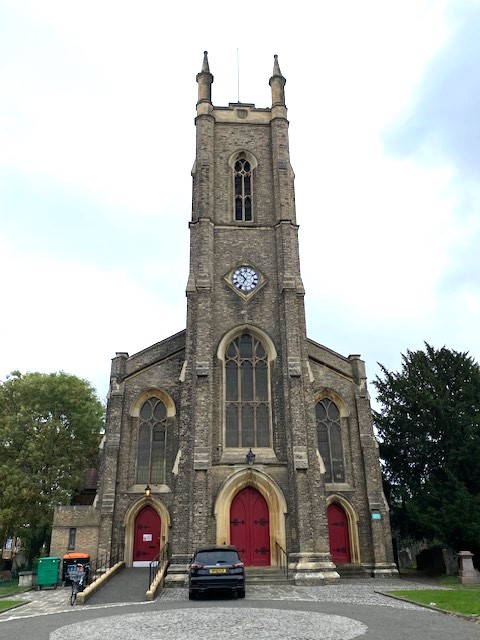
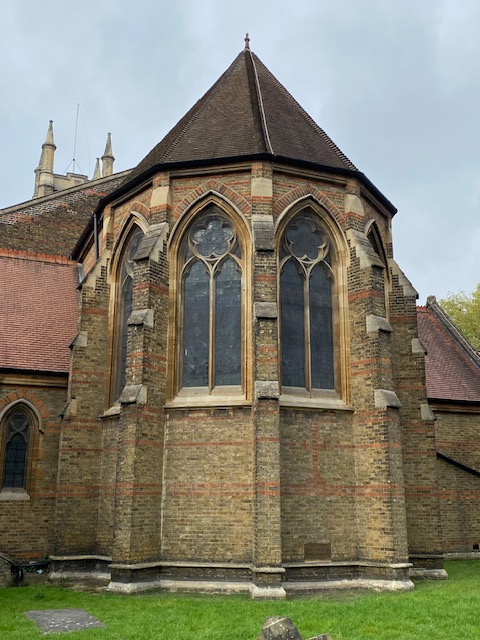
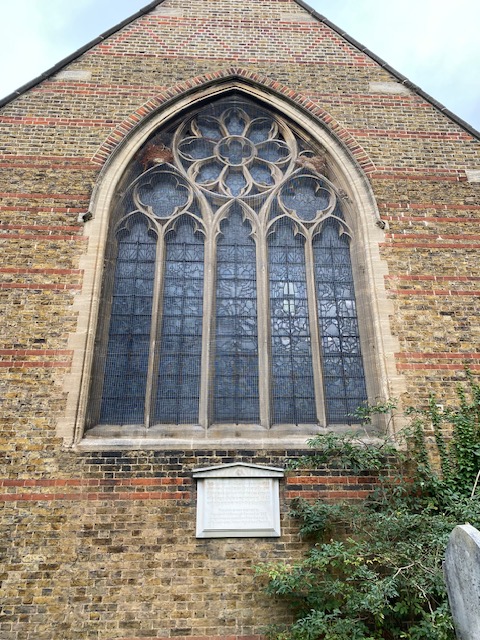
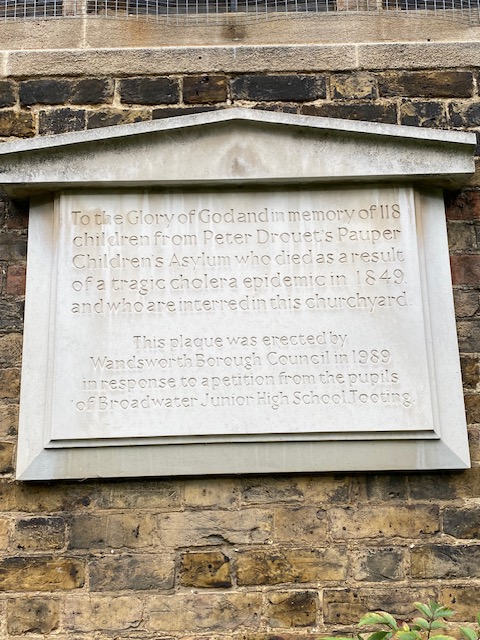
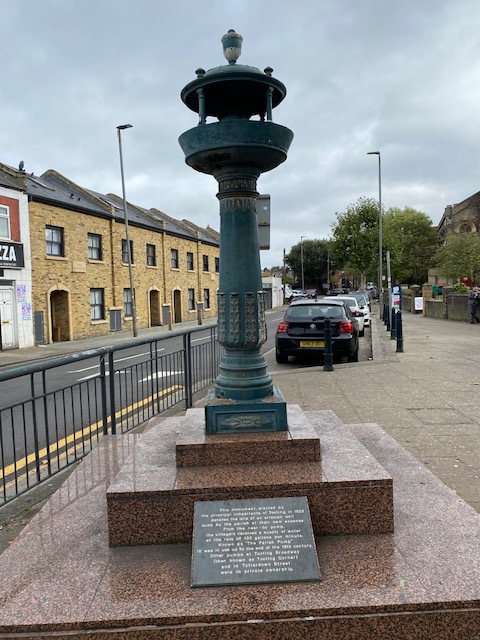
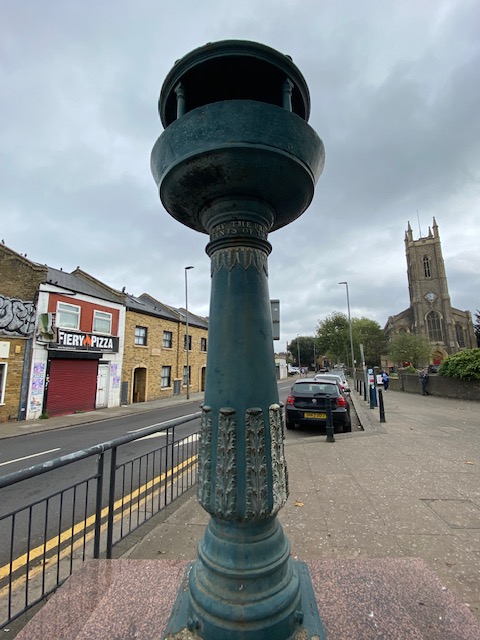
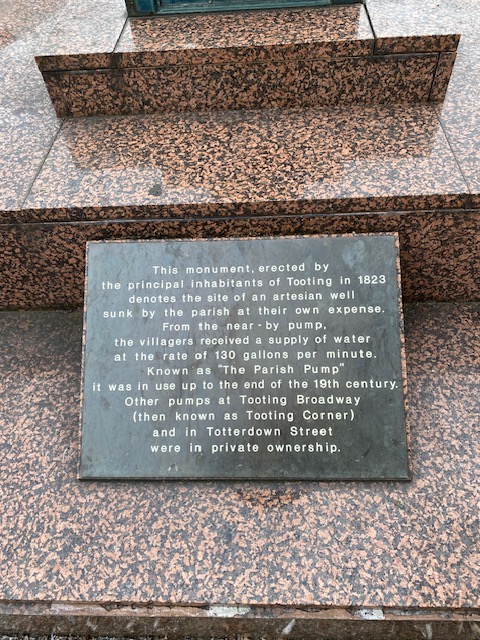
On your way back to the bus stop, you’ll see a monument on the site of an artesian well that had been sunk by the parish at their own expense. The villagers received a supply of water from the nearby pump, at a rate of 130 gallons per minute. It was known at The Parish Pump and was still in use until the end of the 19th century. The monument dates back to 1823 and was erected by the principal inhabitants of Tooting.
2. Tooting Broadway station bus stop
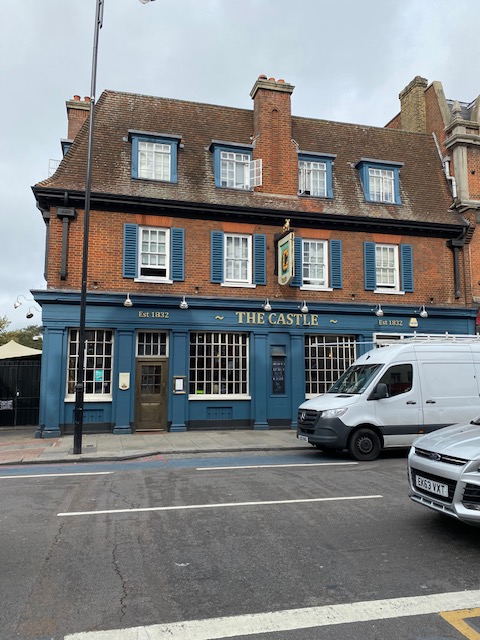
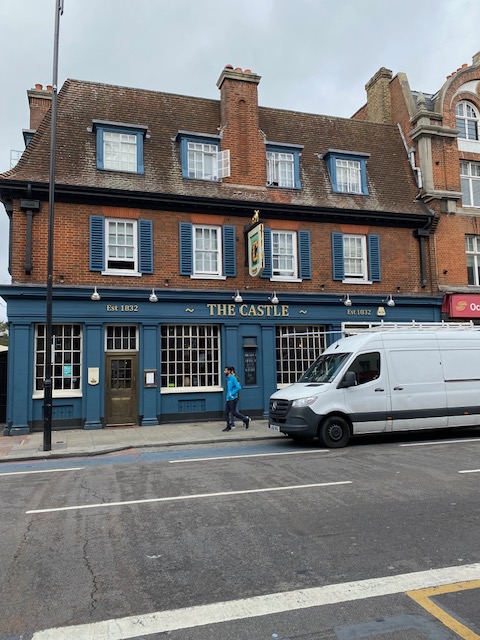
Here you’ll find the Castle Pub, which is one of Tooting’s oldest pubs, built in 1832. An inscription in the front part of the pub details some of the pub’s history as a music hall venue in the 1950s and 1960s when Danny Kaye and Peter Sellers were among the featured artists. The pub hosted the Tooting Blues Club in the 1970s which saw performances from some of the well known bands of the day, including the Faces and Mott the Hoople.
3. Windmill Road bus stop
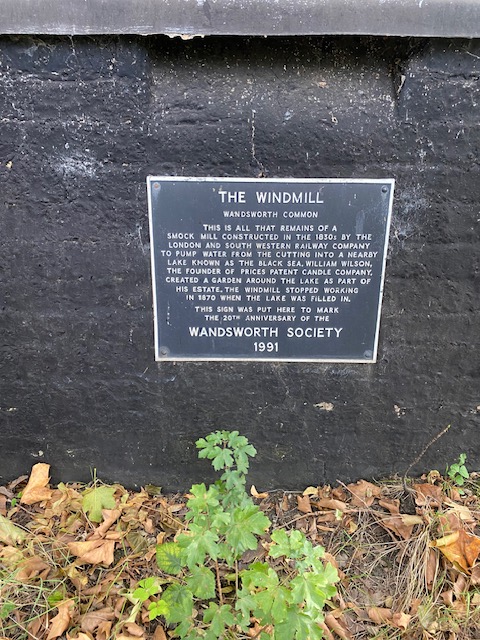
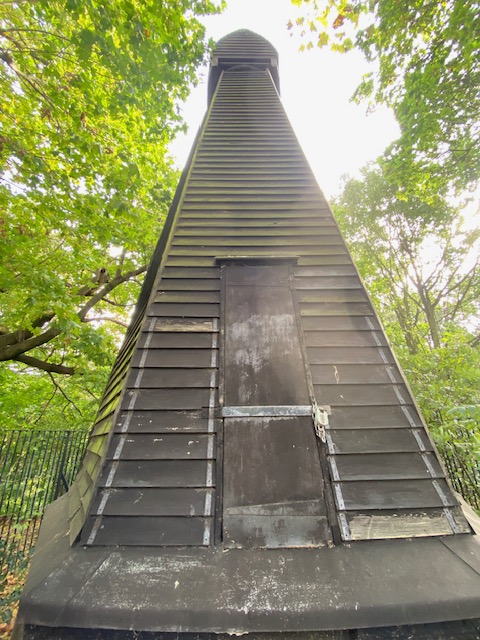
The stop is very near Wandsworth Common and the Wandsworth Common Windmill. The Windmill was built in 1837 to drain water from the railway cutting of the London and Southampton Railway. The water was pumped into an ornamental lake on Wandsworth Common known as the Black Sea, which had been dug by the founder of Price’s Candle Works. The mill was still working in 1870 but the Black Sea was drained and filled in around 1884. The mill then lost its purpose and ceased work, with the sails and fantail being removed. What is left here is all that remains of the smock mill – a small hexagonal mill built on a low brick base. It had a small cap and was powered by four Patent sails. The cap was winded by a fantail.
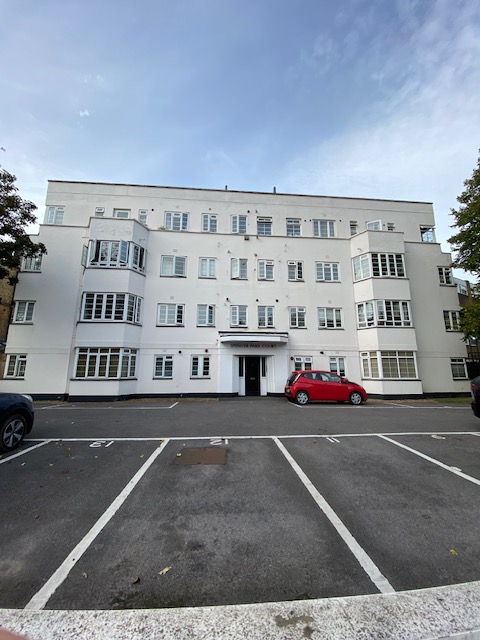
Walk along the road from the windmill and you’ll see Spencer Park Court. It’s a large building split into several apartments and built in the art deco style.

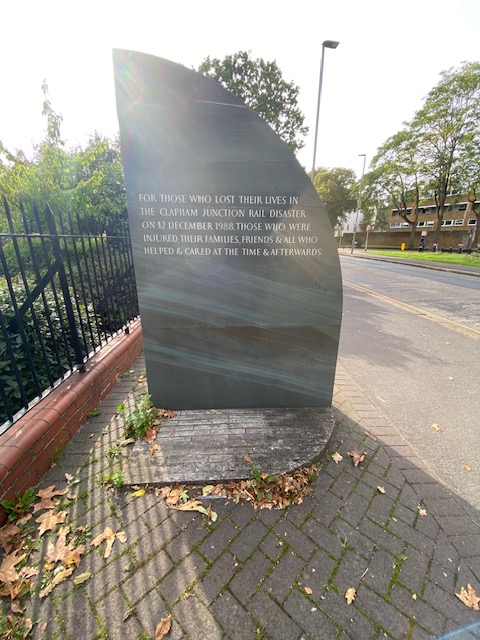
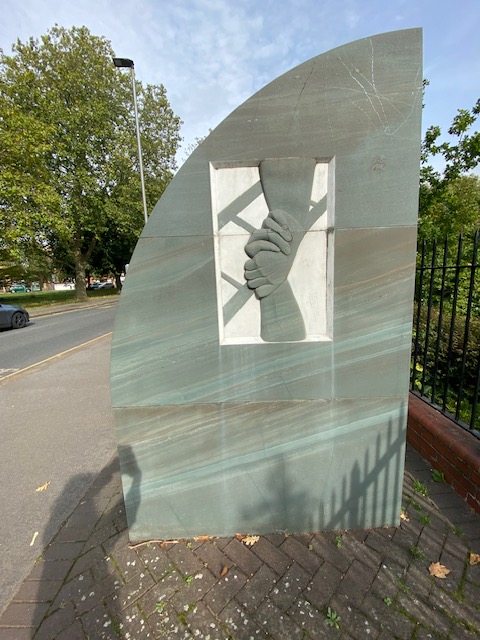
On the way back to the bus stop, there’s a poignant memorial to the people who died in the Clapham Junction train disaster in 1988. On one side the words state “For those who lost their lives in the Clapham Junction rail disaster on 12 December 1988. Those who were injured, their families, friends and all who helped and cared at the time and afterwards”. On the other side is a shape of two arms clasped across a section of railway track. The shape of the monument suggests a railway carriage cut in two.
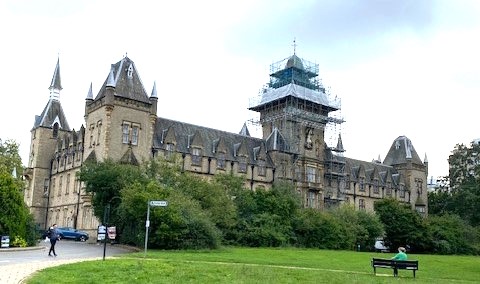
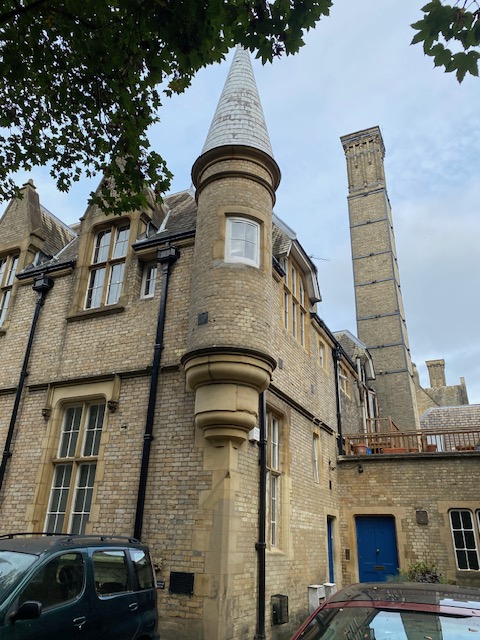
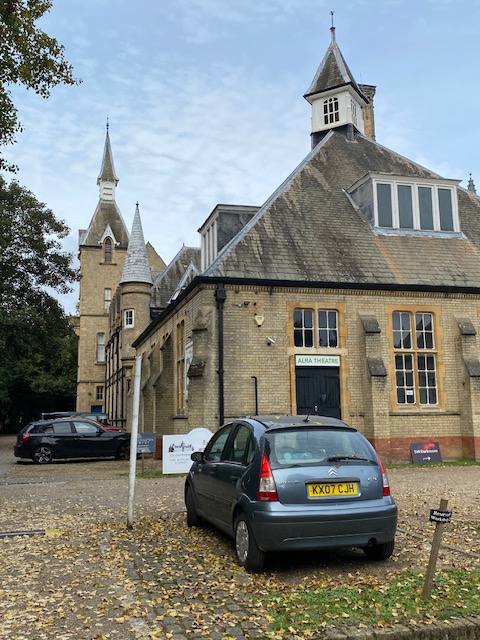
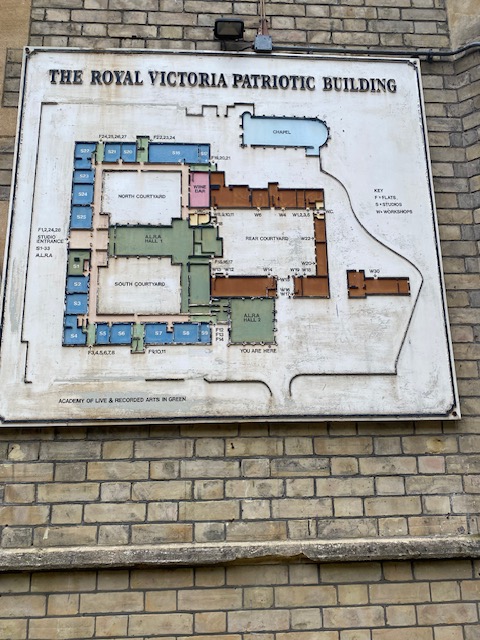
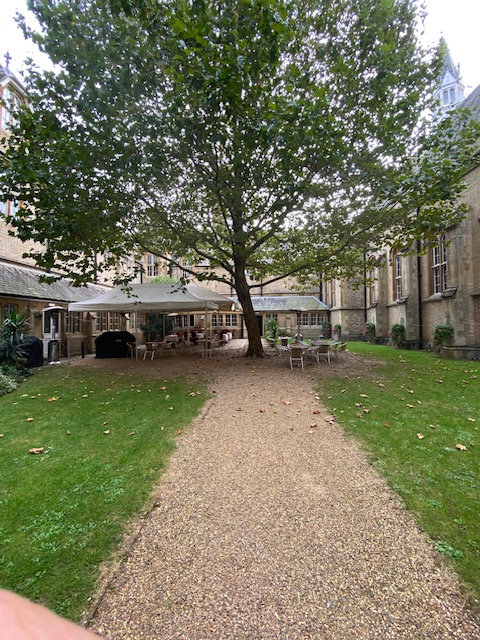
Next place to see is the grade II* listed Royal Victoria Patriotic Building. As the name suggests, it’s a large Victorian building in a Gothic Revival style with a hint of the Scottish castle and French chateau. combining Scottish Baronial and French Châteauesque. It was built in 1859 as an asylum for girls orphaned during the Crimean War. The foundation stone was laid by Queen Victoria on 11 July 1857.
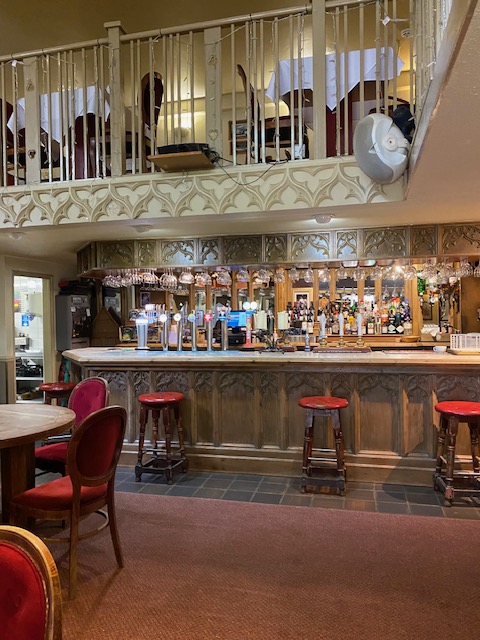
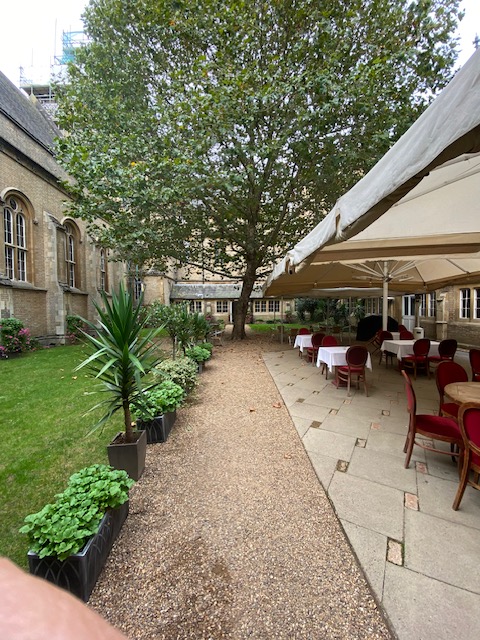
During the First World War, the building was requisitioned by the War Office for a facility for the Royal Army Medical Corps to treat military casualties. After the war, the building reverted to its earlier use as the Royal Victoria Patriotic School, still for girls, until the children were evacuated to Wales in 1939. During the Second World War, MI5 interrogators interviewed over 30,000 immigrants to the UK over a period of four years. After the Second World War, the building initially housed a teachers’ training college, then became a school but gradually was left into disrepair until the Victoria Society & Wandsworth Society campaigned and saved it and then it became a listed building. These days, it houses a variety of small businesses, 29 flats and the “Le Gothique” restaurant.
4. Lavender Hill Police Station bus stop
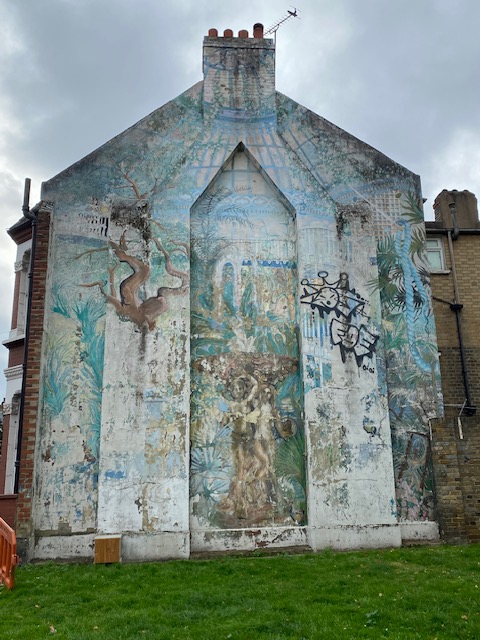
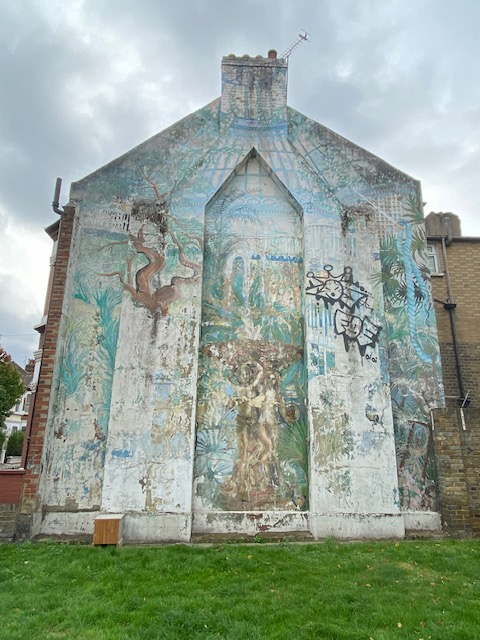
Walk round the corner from the stop and you come face to face with the Tapestry of Life mural. The house in Battersea is covered in what looks at first like peeling, abstract patterns in muted greens and blues. If you get closer, you can see the vivid details of an intricate mural emerge. The mural was painted in 1983 and depicts a scene from the Garden of Eden and features Adam and Eve in soft brown tones at its centre. The artist, Christine Thomas, was inspired by the botanical gardens at Kew. The design includes plenty of wildlife and the distinctive spiral staircases found at the botanical gardens at Kew. A little girl peeks out from one corner, near a bush of pink flowers. Sadly, the mural has aged over the decades and is now somewhat faded with large patches peeling away. Despite its state of disrepair, the mural retains its charm; if you’re in the area, it’s worth making a detour to see it while it lasts.
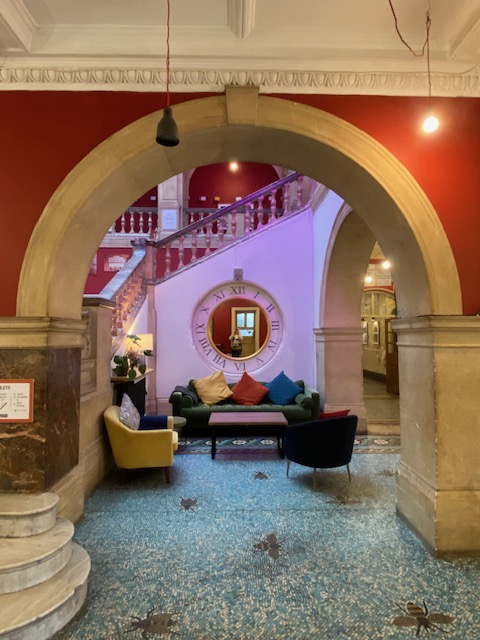
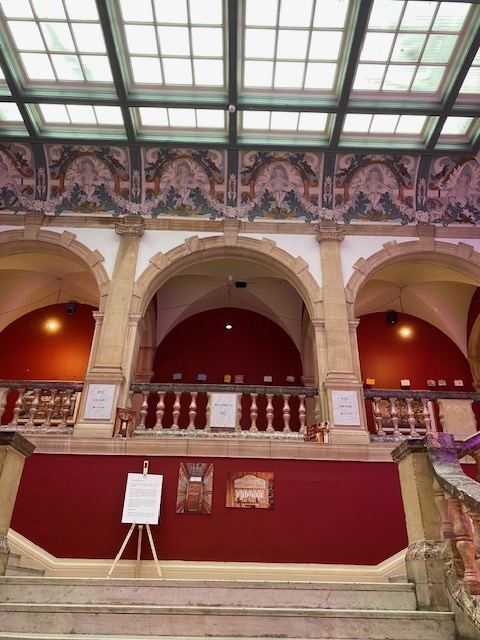
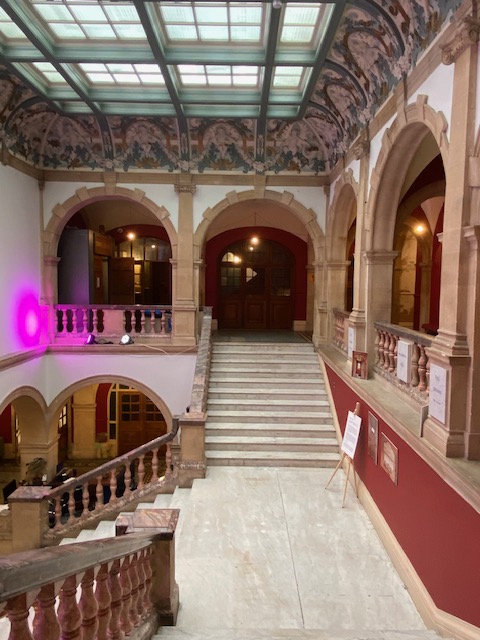
The Battersea Arts Centre (BAC) is the next port of call. It’s an absolute delight both inside and out and really not to be missed. This grade II listed building started out as Battersea Town Hall, which opened in 1893. By 1900, the Borough of Battersea was formed and the Town Hall was sitting at the heart of political, social and cultural life. Over the years, BAC has had many uses. In 1907, suffragettes Christabel and Emmeline Pankhurst and Charlotte Despard, used the building for campaign rallies resulting in the passing of the People’s Representation Act which enabled women of property, and all working class men, to vote.
Other activists such as Paul Robeson, used BAC as a venue to support a peace congress meeting and bands including Fleetwood Mac and Jam performed here in the 1960s. By 1965, it was no longer a town hall and in 1974, it became what is today, Battersea Arts Centre.
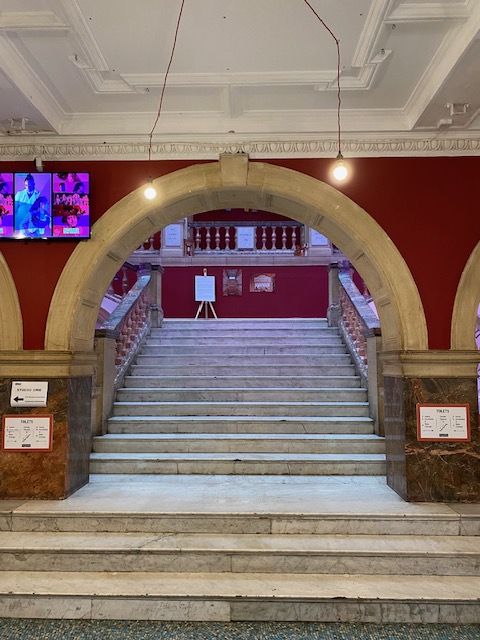
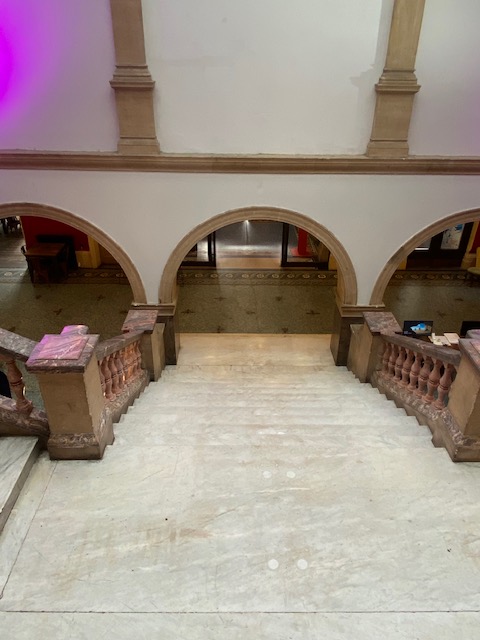
The building has lost none of its charm – the entrance hall is sumptuous with marble staircases and stone archways. There are gothic corridors and mosaic floors and you can see straight away why it’s used as both a film location as well as a perfect wedding venue. Mainly they put on events – plays, musical shows, dance – using the various rooms for rehearsals and studios and the productions in the Grand Hall.

5. Nine Elms bus stop
The US Embassy relocated from Grosvenor Square to Nine Elms and was formally opened in January 2018. The architect for the new building by US law had to be approved by Congress and had to be an American firm with “numerous security clearances”. The winning bid was won by KieranTimberlake. The design of the new building resembles a crystalline cube, with a semi-circular pond on one side and surrounded by extensive public green spaces and the Embassy Gardens housing development. It is also the largest American embassy in Western Europe.
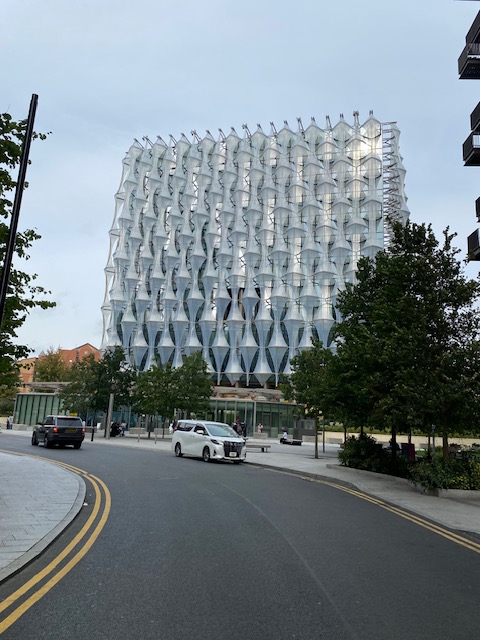

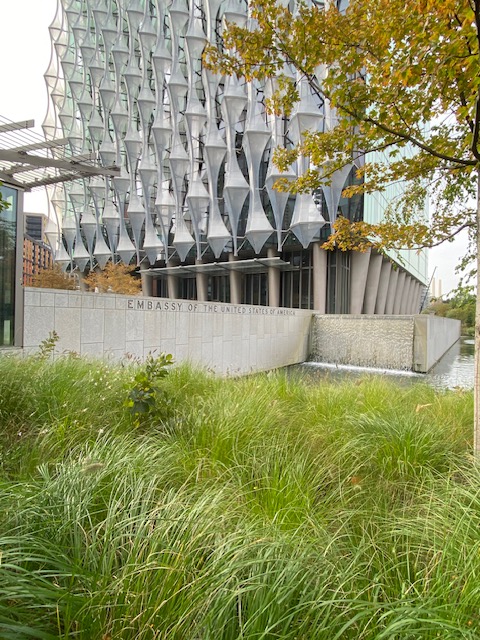
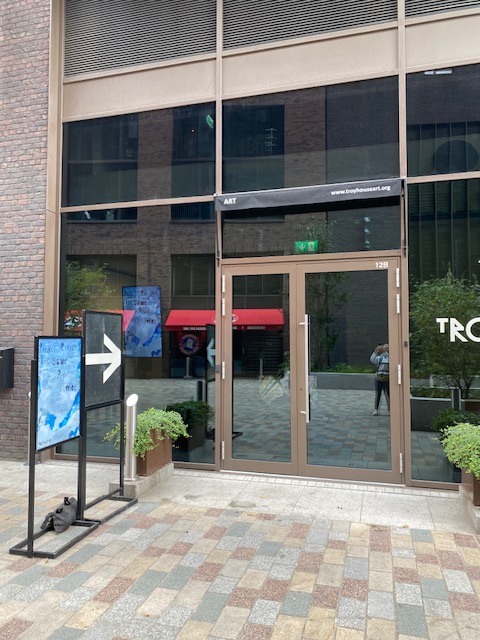
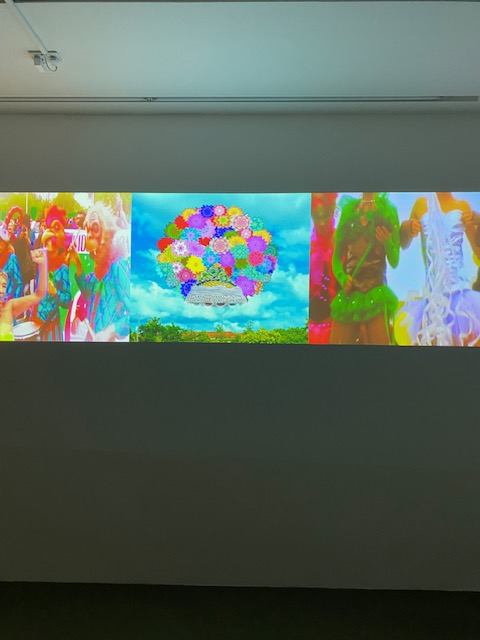
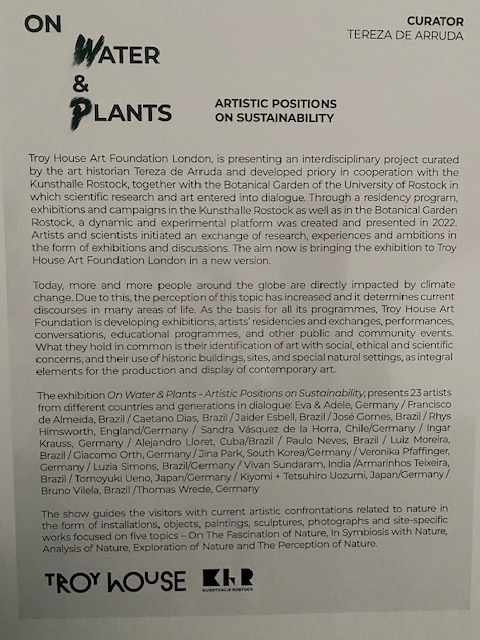
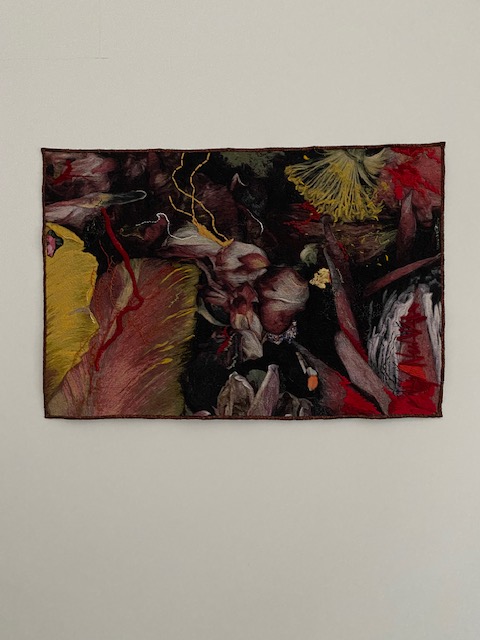
Very near the embassy is Troy House, a new art gallery, launched in 2017 by Shanghai-born artist and producer Yuan Gong to encourage exchanges in contemporary art and culture, particularly between Europe and Asia. Troy House Art puts on exhibitions, artists’ residencies and exchanges, performances, conversations, educational programmes, and other public and community events. Current exhibition (October 2023) is entitled “Never Cross the Same River Twice”, which traces recent video practices of ten international artists selected by Togoese curator Kisito Assangni. Another exhibition is “On Water and Plants”, an interdisciplinary project developed with the Botanical Garden of the University of Rostock in which “scientific research and art entered into dialogue.”
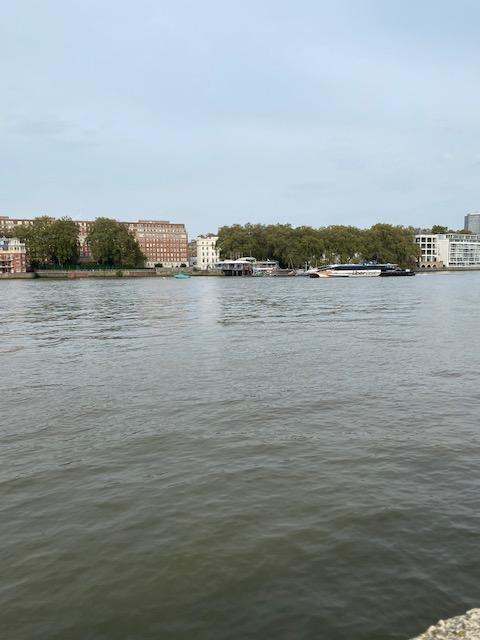
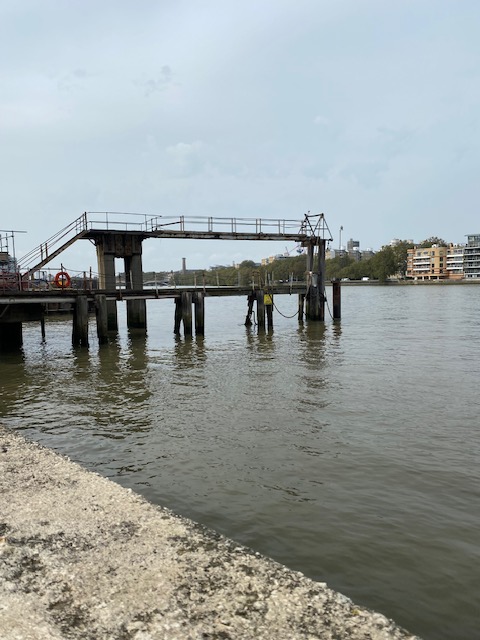
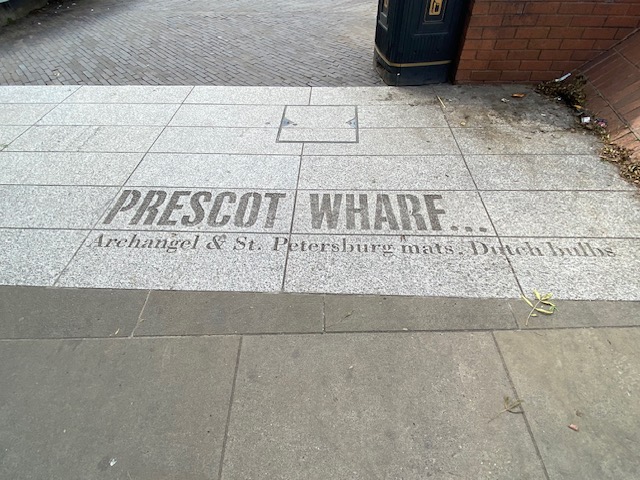
Before getting back on the bus, take a quick trip to the river and find Prescot Wharf, a small wharf which appears to be used for flower displays. On the nearby pavement it states “Prescot Wharf – Archangel & St Petersburg mats. Dutch bulbs”.
6. Salamanca Street bus stop
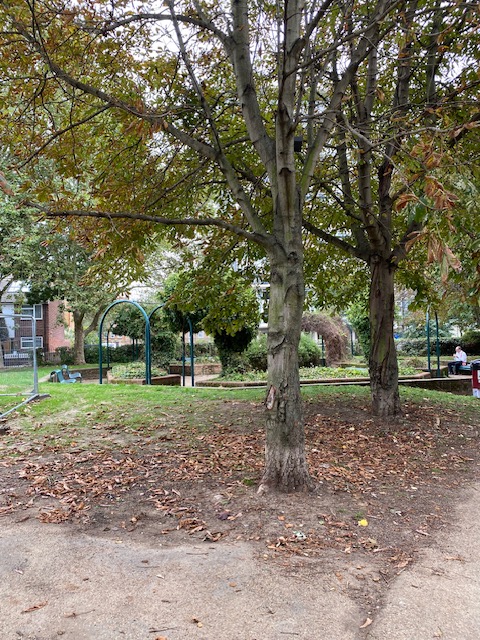
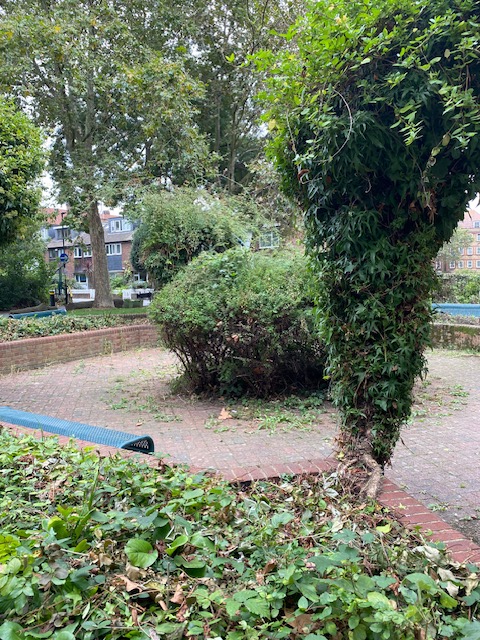
There’s a small park near the bus stop called Pedlar’s Park. The park is named after the “Pedlar of Lambeth”, a possibly legendary William Le Pedlar who is said to have bequeathed land to St Mary’s church in Lambeth around 1400.
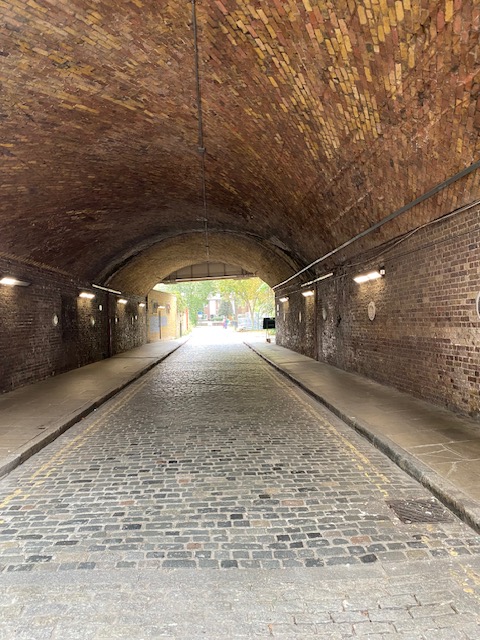
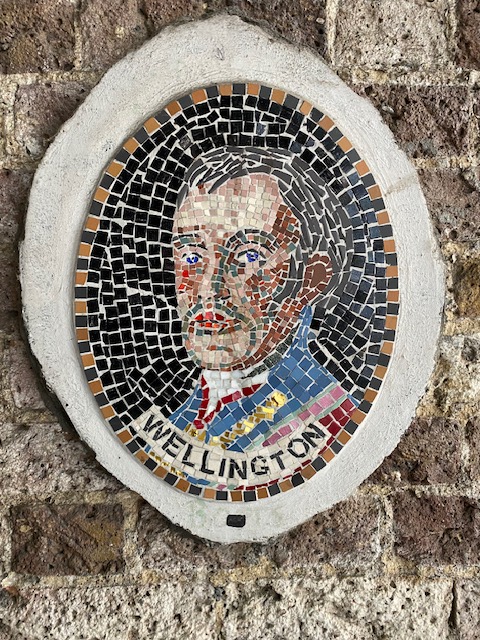
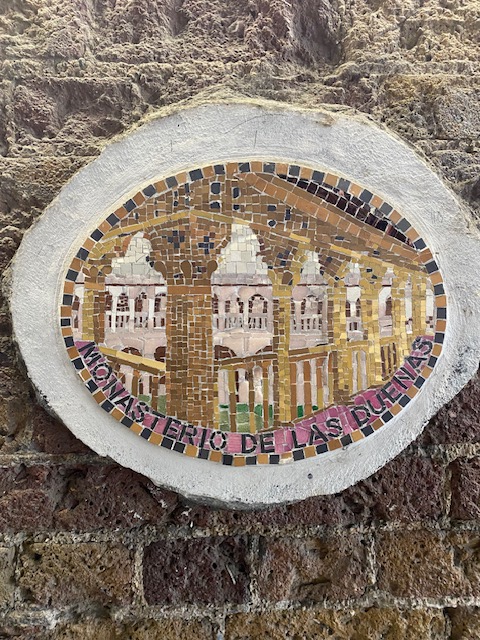
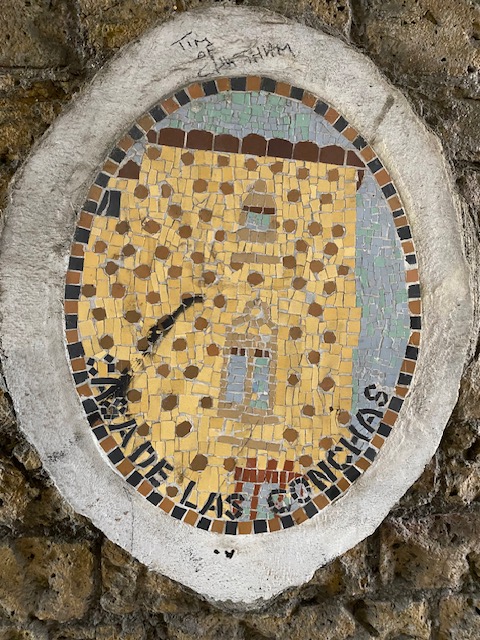
Near the park and the bus stop is a tunnel under a bridge, where each side has a series of mosaics. They mainly depict significant buildings in the city of Salamanca as well as one portrait of Wellington (Duke of). The ceramics use motifs drawn from the Lambeth wares of Doulton, which was a major ceramic manufacturer whose factories and kilns were spread around Salamanca Road and had its HQ nearby.
7. Lambeth Bridge bus stop
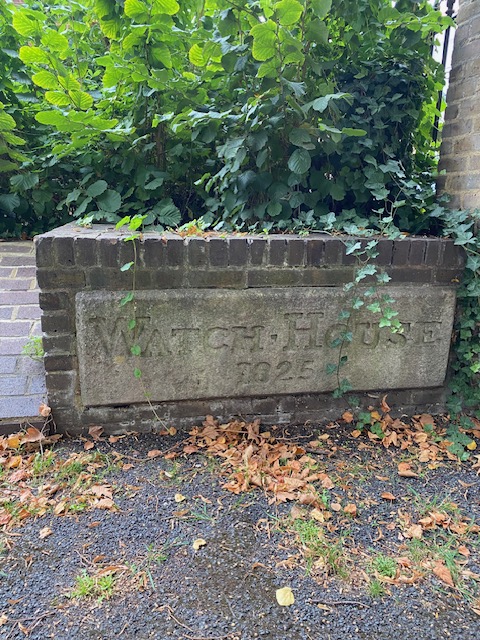
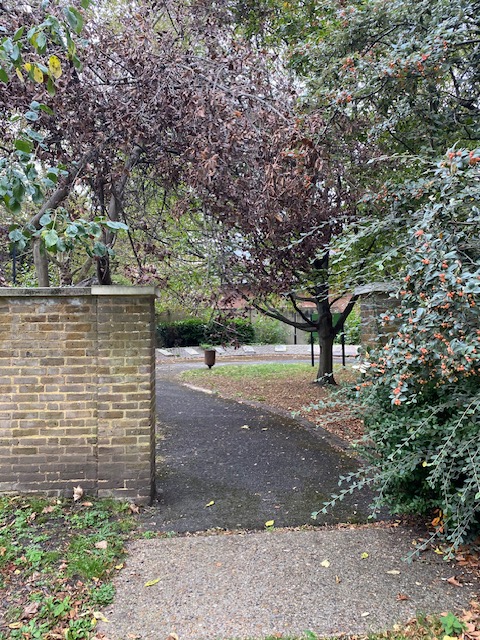
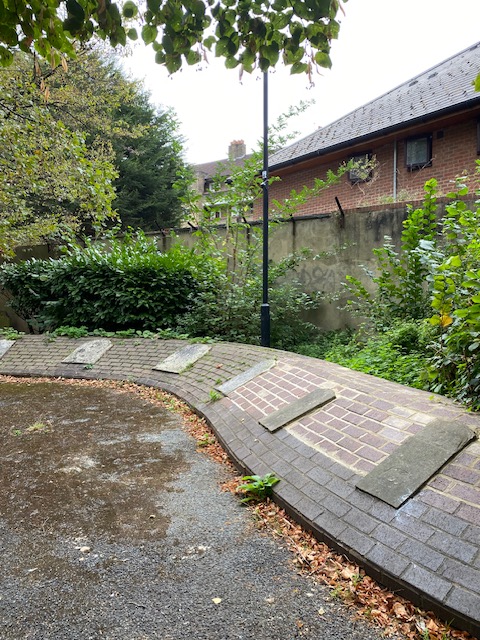
Head towards The Watch House next to Lambeth High Street, where there is now mounted into a low brick wall of the Recreation Ground, a large stone, inscribed in large letters with the words ‘Watch House 1825’. The stone was once set into the front wall of a two-storey house, the Parish Watch House of Lambeth. Its purpose was to hold the drunk and disorderly. The building is believed to have been demolished between the First and Second World Wars.
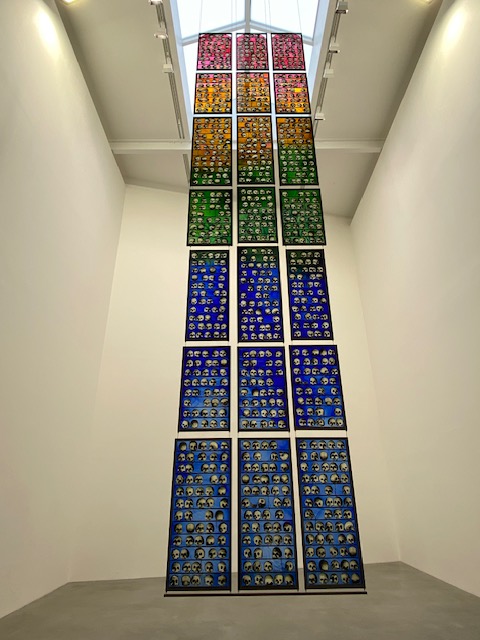
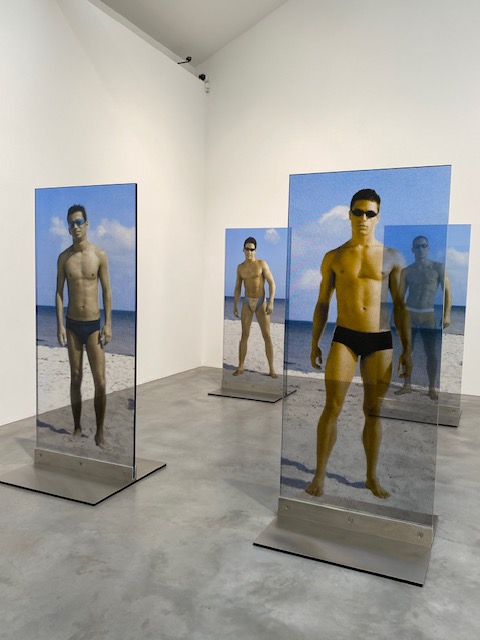
Go from here to Newport Street Gallery where the current exhibition is by artist Brian Clarke. The gallery presents exhibitions of work from Damien Hirst’s art collection. The construction of the Gallery involved converting three listed buildings, which were purpose-built in 1913 to serve as scenery painting studios for the booming Victorian theatre industry in London’s West End. With the addition of two new buildings, the gallery now spans half the length of the street.
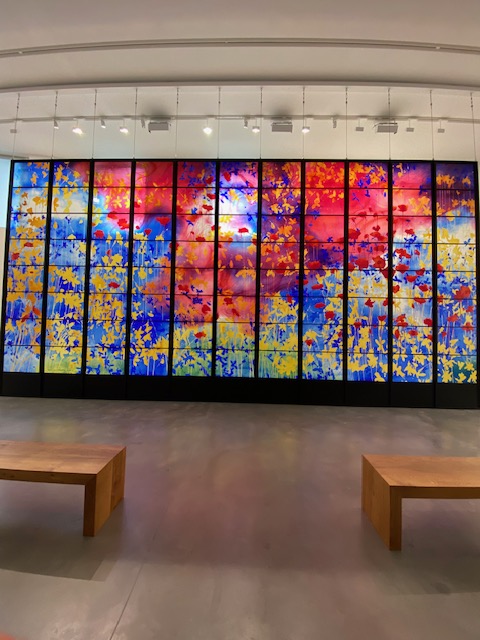
Brian Clarke is widely regarded to be the most important artist working in stained glass today. The works show how flexible the medium can be and there is a huge variety of subject matter, from a flowering meadow, through to Stroud Ossuary, which depicts hundreds of skulls towering 10 metres above the visitors and to large battleships and beachboys.
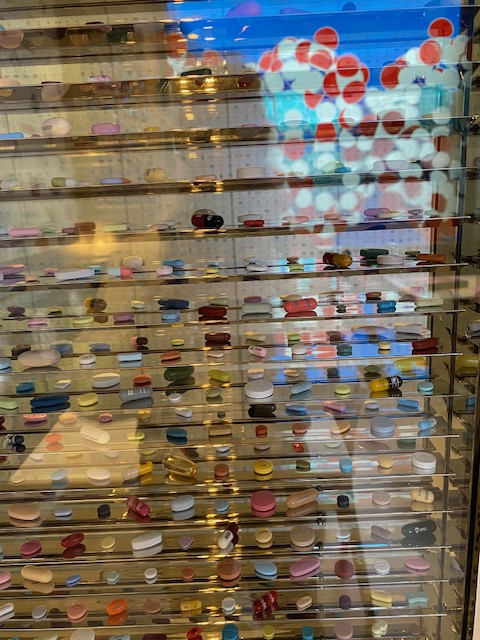
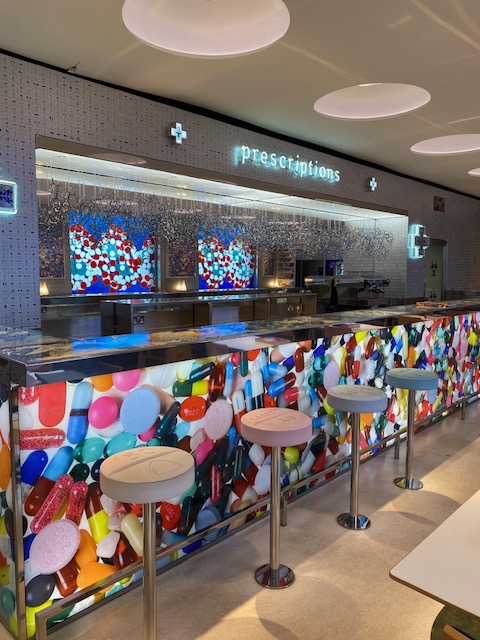
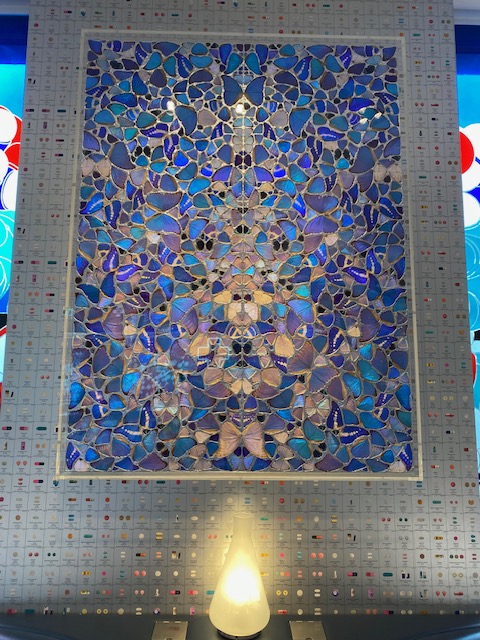
Set within the gallery is the Pharmacy 2 café, which hosts exhibitions of work from Damien Hirst’s art collection. It features custom pieces from a number of the artist’s own series, including the Medicine Cabinets and butterfly Kaleidoscope paintings.
8. Lambeth Palace bus stop
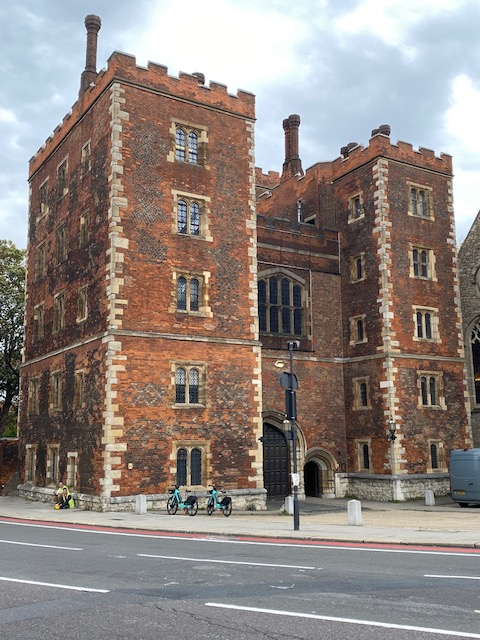
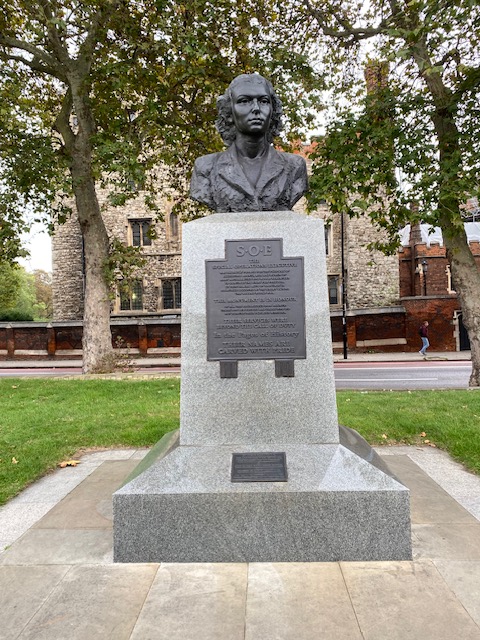
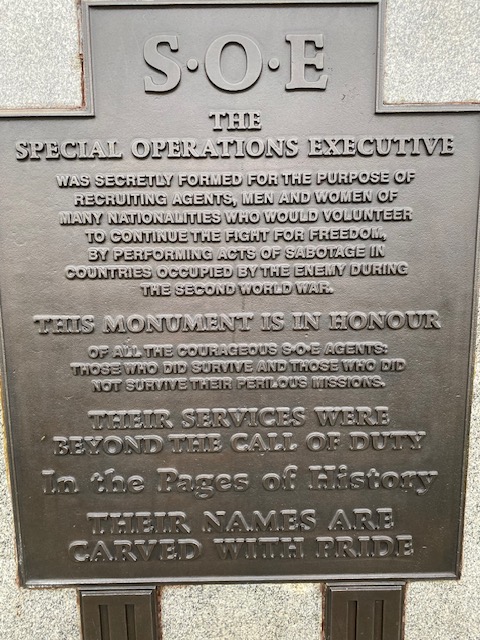
The bus stops opposite the palace which is not open to the public. Cross the road and walk along the river and you’ll come across the Monument for SOE Agents, the Special Operations Executive. This was a secret organisation of men and women who performed their covert duties behind enemy lines during World War II. Some 13,000 people worked for the SEO, of which about 3,200 were women. The bust on this particular monument is that of Violette Szabo.
I loved this route and pleased I managed to find a variety of places to visit. The art galleries were a surprise to me as was the US Embassy, which was magnificent close up.
Toilets that are free and available to the public:
- Battersea Arts Centre
- Royal Victoria Patriotic Building
- Troy House Gallery
- Newport Street Gallery
 london routemistress