
Croydon Fairfield Halls to Lewisham station
Highlights:
- Croydon Pumping station
- Croydon Stands Tall
- Watermen’s Almshouses
1. Croydon Fairfield Halls bus stop
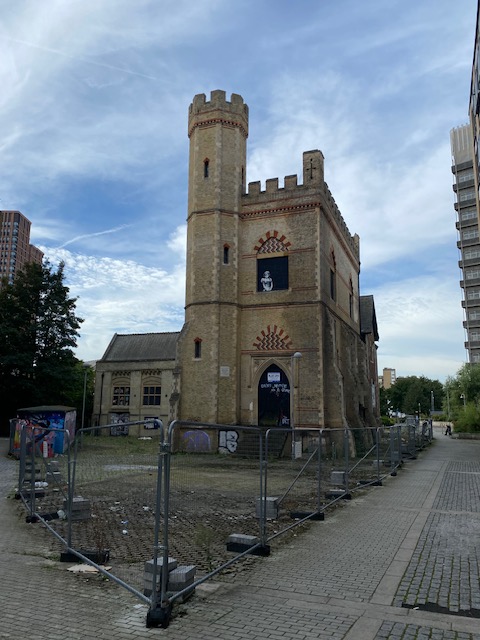
Before getting on the bus outside Fairfield Halls (also found on bus routes 50 and 60), take a walk to the old Croydon Pumping station near Surrey Street. This Pumping Station was built in 4 phases – the first stage was in 1851, with an engine house in 1867 and a further extension in 1876-7 to house a compound horizontal engine and finally a further extension in 1912. The original 1851 building is widely believed to be the converted and transported West Croydon railway station’s engine house of 1845. It’s built in a Neo-Tudor style and at the north end is the 1867 engine house, made up of 2 storeys with an octagonal castellated tower. The pumping station is Grade II listed and it’s hoped that it will be renovated as part of the Croydon Old Town regeneration project.


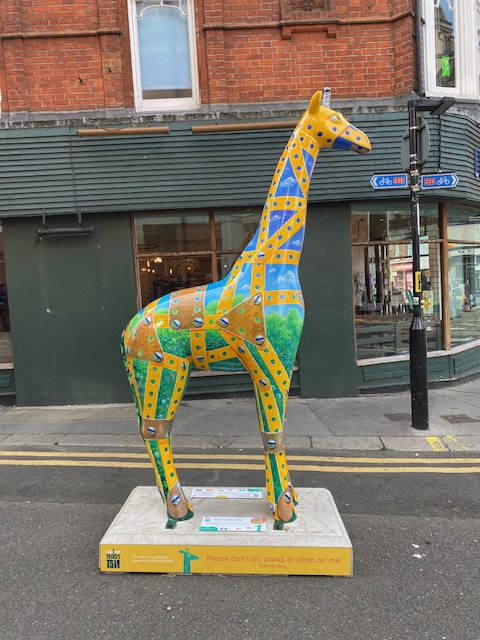
As you wind your way to the bus stop, you’ll come across several sculptures of giraffes in all different colours, scattered throughout the streets of Croydon. These are all part of Croydon Stands Tall, a really impressive public art trail and exhibition on behalf of the charity Crisis. The art trail is part of Croydon’s Culture programme 2023 to raise money for the Crisis Skylight centre. The centre offers vital help with housing, jobs, health and wellbeing to people experiencing homelessness.
More than 30 giant giraffe sculptures, decorated by local artists and communities have been created. Each of the patterns on the giraffe is unique – no two giraffes are the same. Mainly they stand alone but some are in pairs as the pair in the foyer of the Fairfield Halls.


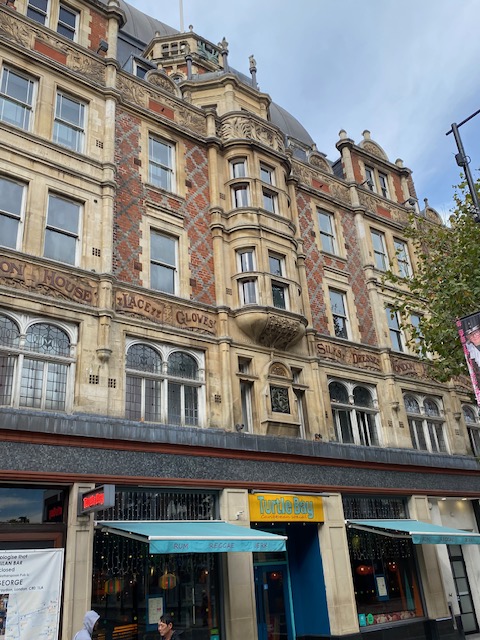
In the High Street is an old department store called Grants of Croydon. Originally built in 1894, Grants became a Grade II listed building in 1990. The two Grant brothers originally had a tailor’s shop across the road and with a booming business, the brothers bought out the surrounding shops opposite and opened Grants department store. During World War I, Grants was considered the Harrods of its generation. The store provided all the uniforms for the RAF and it was visited by swarms of French aristocrats who flew into Croydon simply to buy a suit.
The Royal Family were also frequent visitors to Grants and on occasion the Queen would come to the store. After World War II, times were hard and the store’s clothes were considered over-priced. Business became increasingly difficult, and eventually, by the 1980s, stiff competition forced Grants out of business.


2. Devonshire Road bus stop
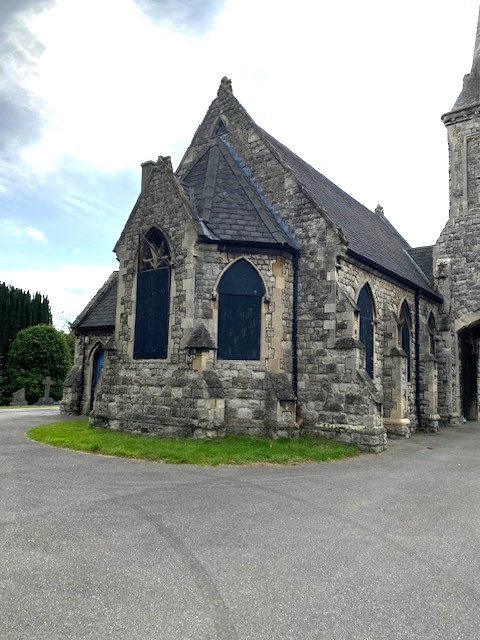
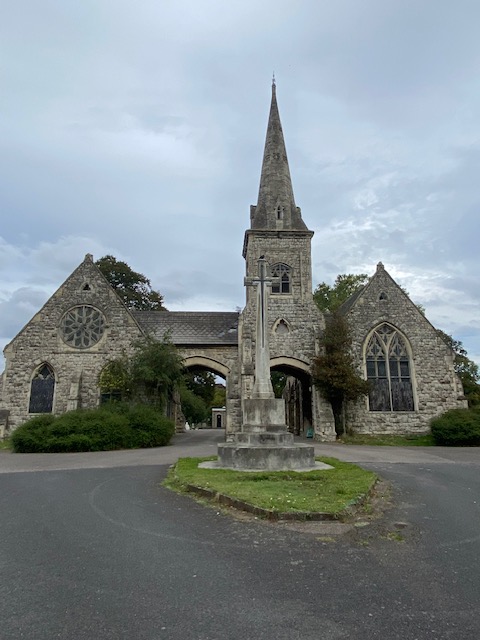
Make your way to Queen’s Road cemetery where there is a particularly splendid chapel. Overcrowding in London burial grounds enabled cemeteries to be built outside the City and this one opened in 1861. An award was given to an E.C. Robbins in October 1860 for the best design layout for the Queen’s Road chapels. The design featured two mortuary chapels, each having a simple nave with open timbered roof, and the Episcopal chapel also having a semi-octagonal apse at the east end. A lodge was built to accommodate the cemetery staff.

3. South Norwood Clock Tower bus stop
The bus stops right by the actual clock tower so just stroll over to see it close up. At the base of the tower is a plaque that reads “Erected by the inhabitants of South Norwood to commemorate the Golden Wedding of Mr and Mrs W.F. Stanley of Cumberlow, South Norwood. February 22nd 1907”. The Stanleys had done so much for the area including employing many local people and creating Stanley Halls and Stanley Technical School, that the locals wanted to raise money to erect this clock tower for them.
Up the road from here is a small green space with the wonderful name of Sensible Garden. Why is it called Sensible? Before it was a garden, it was a piece of scrub land and had a dilapidated bench sitting within it. The punk legend Captain Sensible had attended the school opposite and he was invited to unveil a plaque proclaiming it the Sensible Seat, to turn it from an eyesore into an attraction.


4. Selby Road bus stop
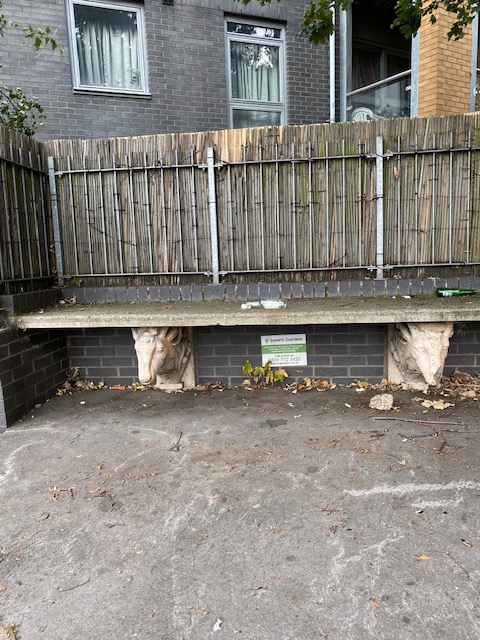
On the way round to the next place to visit, you go over Goat Bridge Road. Sitting on the side of the road is a bench with two goats’ heads underneath. A Goat House Hotel existed in the mid 19th century and it’s believed that a goat herd had originally been living there. There are no longer any goats but the name continues to this day on the bridge that had to be constructed for traffic over the new railway.
Round the corner is Betts Park and the Croydon canal. The canal opened in 1809 and closed in 1836, the first canal to be abandoned by an Act of Parliament. It linked to the Croydon, Merstham and Godstone Railway enabling the canal to be used to transport stone and lime from workings at Merstham. After the canal closed, sections were retained for leisure use, and some remained in water for a considerable time. The section at Anerley was used as a boating lake, and the area was called Anerley Tea Rooms. The canal in Betts Park was turned into a concrete trough in 1934, approximately 170m can still be seen at the northern corner of Betts Park. The public park was initially created from a house and land on the north side of the park donated by Mr. Frederick Betts, a local property owner. The house, a Victorian villa known as Oak Lawn, became a public library and the gardens became recreation grounds. Betts Park was opened in December 1928 and named in memory of Frederick’s late mother, Sarah Betts.


5. Penge/Pawleyne Arms bus stop
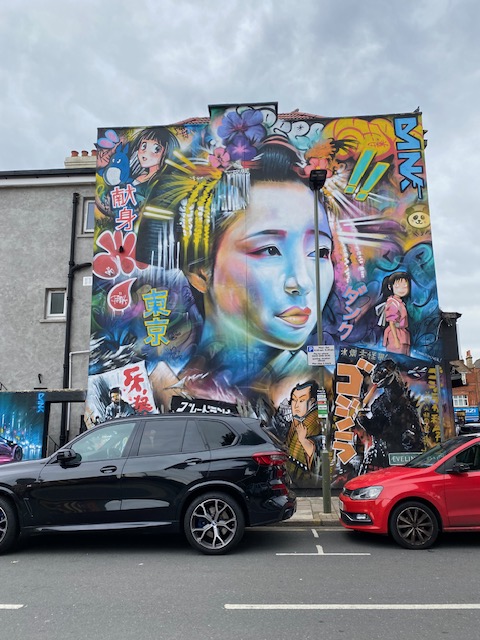
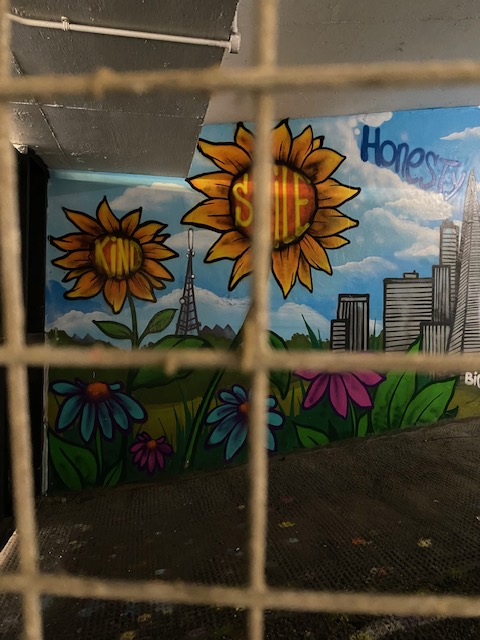
Near the stop is some street art and I had been told that there was a rooftop gallery in the local car park. Penge Street Art has set up a project to enhance the walls of Penge’s public spaces and cheer up the area. All the artists are qualified and the artwork stays in place for up to a year at a time. Sadly, it wasn’t possible to gain access to the rooftop but I did manage to peak through a gate to catch a glimpse.


6. Penge Lane bus stop
Near the bus stop are The Royal Watermen’s Almshouses which were built in 1840, on land donated by James Dudin Brown. There are 46 almshouses in all. The buildings are still lovely, with the former central chapel’s attractive leaded windows, topped by a blue and gold clock and a wind vane. In the central garden there are lawns and flowerbeds with a tall central marble obelisk and a long high wall with gargoyle statues atop.
The Almshouses were for aged watermen and lightermen and were built in the days when Penge was a rural hamlet surrounded by Penge Common. The watermen ferried people across the Thames during the Victorian era when there was only one bridge. The lightermen were pilots of small boats who delivered goods from larger ships to the banks of the river.


7. Penge East station bus stop
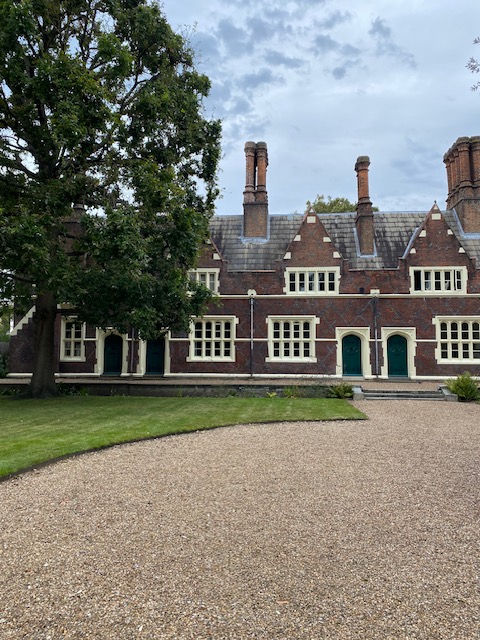
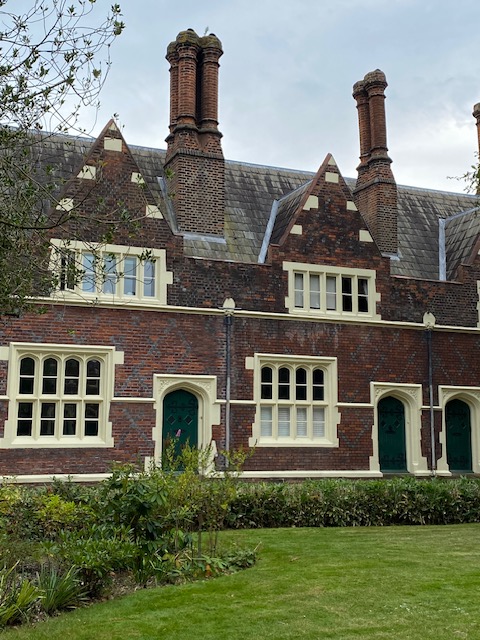
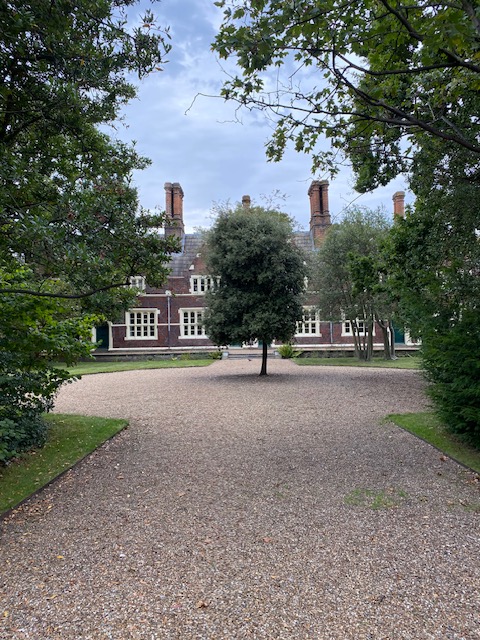
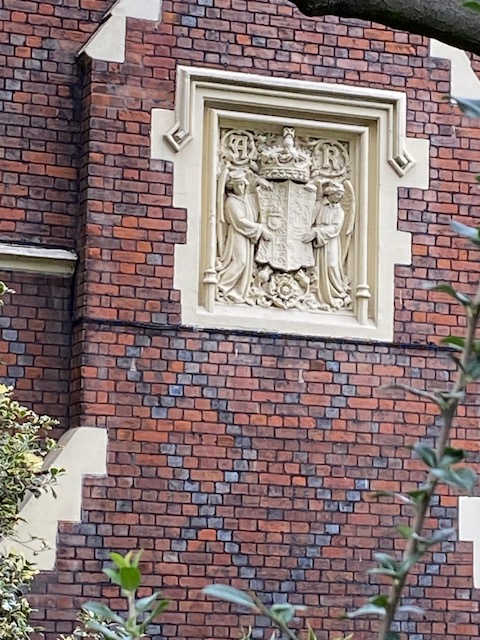
A short walk from the stop is the King William Royal Naval asylum. It was built in 1848. Queen Adelaide, wife of King William IV and Dowager Queen to Queen Victoria, decided, after the death of her husband in 1837, to build these almshouses for twelve destitute widows and families of naval officers as a philanthropic gesture. Adelaide had already donated money towards the cost of the Royal Watermen’s cottages (see above). The asylum was designed in the Tudoresque style with tall chimneys and a red brick building surrounding a communal garden. The twelve surviving widows and their families were to lack nothing in comfort. On one of the walls is a frieze with AR inscribed – presumably standing for Adelaide Regina.
8. Beechfield Road bus stop
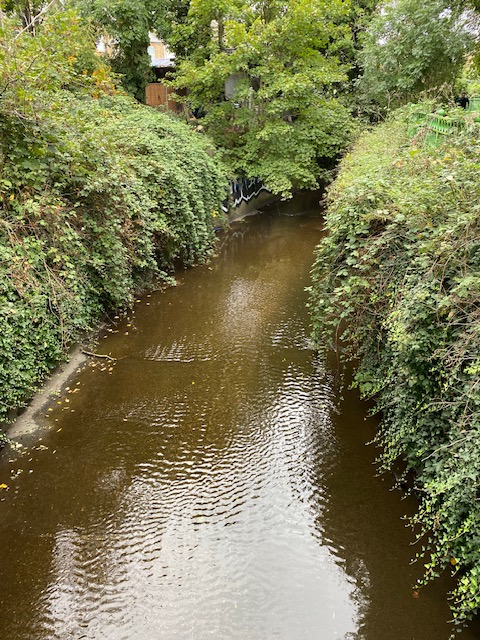
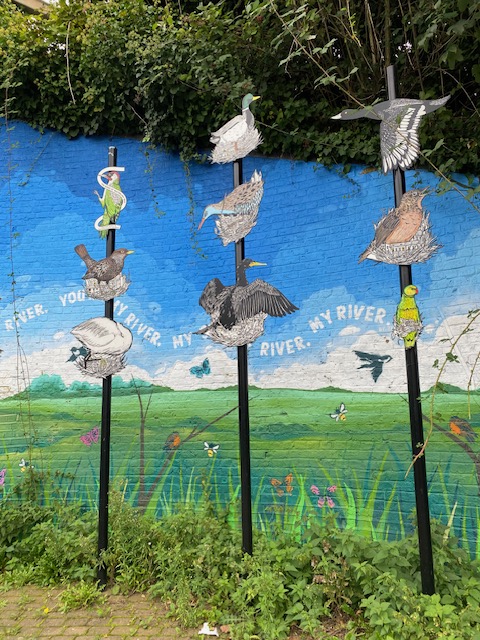
Alight at this stop for the River Pool linear walk and the Riverview walk. These walks follow the route of the rivers Pool and Ravensbourne and is part of the Waterlink Way, which is a walking and cycling route running from Sydenham to the Thames. By the side of the river Pool are some graffiti of birds and on the wall is a quote from a ten year old girl that says “I whisper to the river, you’re my river, my special river, my river”. The river banks have been planted with native trees and shrubs, herbaceous planting, wild flower grassland and wetland marginal planting. It’s a pleasant walk and on a flat path, so suitable for all.

On the way to the bus stop at Catford and Catford Bridge stations, you pass the Catford Bridge Tavern. The timber-framed pub was built in 1930 and had a chequered recent history in its previous incarnation as The Copperfield, losing its licence in 2011. In 2015, a huge fire, caused by lightning, engulfed the pub which suffered heavy damage. It reopened as the Catford Bridge Tavern in 2020.

An interesting mix of things to see on this route, as seems to be the case on all of them. I’ve discovered that if you search well, it’s possible to find really interesting and unusual places that might otherwise get overlooked.
Toilets that are available to the public and free:
- Fairfield Halls
- McDonald’s Penge
- London Bridge station (if travelling to Croydon via this station)
 london routemistress