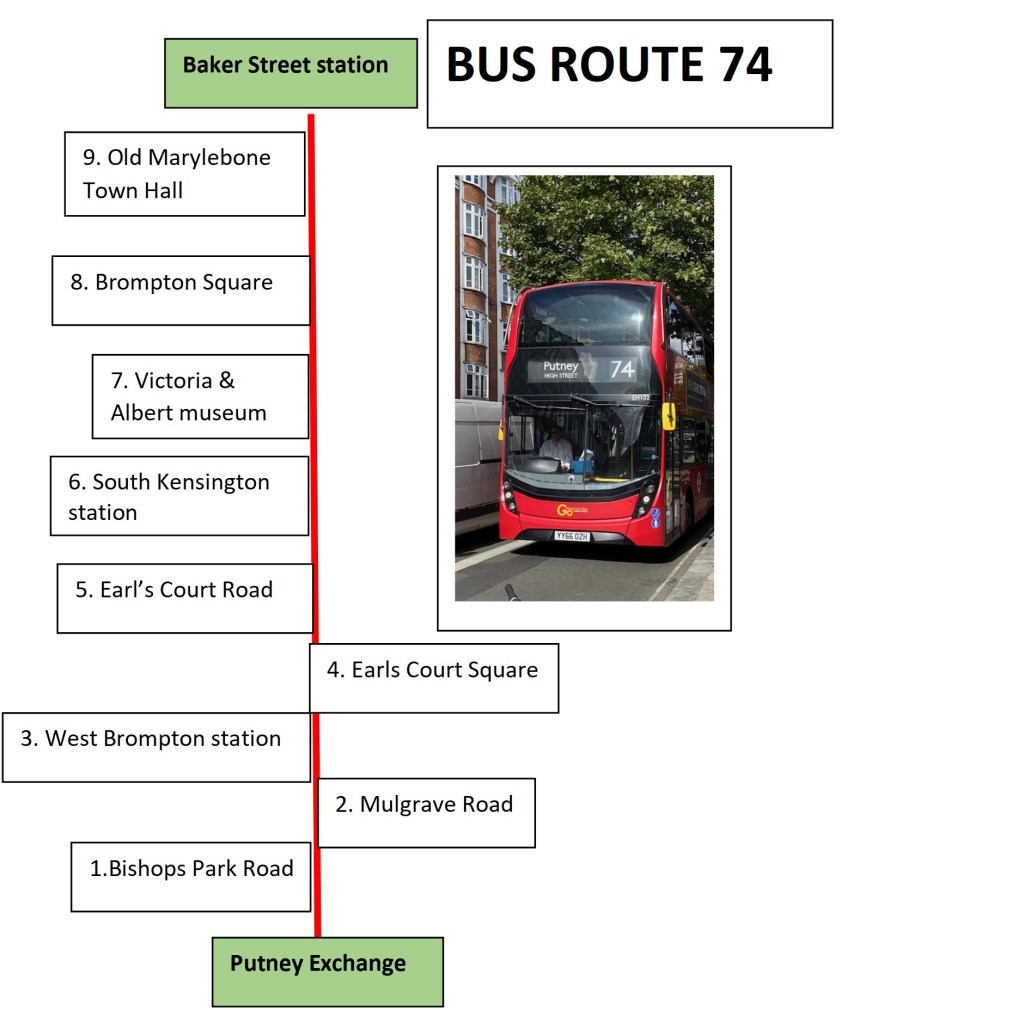
Putney Exchange to Baker Street station
Highlights:
- Brompton cemetery
- The Mosaic Rooms
- Oginisko Polskie
- Cromwell Place art gallery
1. Bishops Park Road bus stop
First place to see on this route is Moat Gardens, which are part of Fulham Palace and Bishops Gardens – these are also on bus route 14. The moat that once surrounded the original Fulham Palace grounds is considered to be medieval, although there is some speculation that it could even be from the Iron Age. It was once the longest moat in England, reaching 1.4 km long. It was filled in in the 1920s by Fulham Council at the request of the Bishop of London, Bishop Winnington-Ingram, who lived in the Palace from 1901 to 1939.
2. Mulgrave Road bus stop
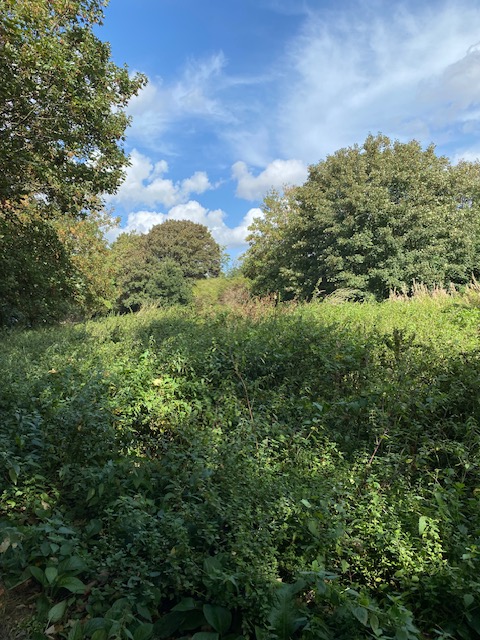
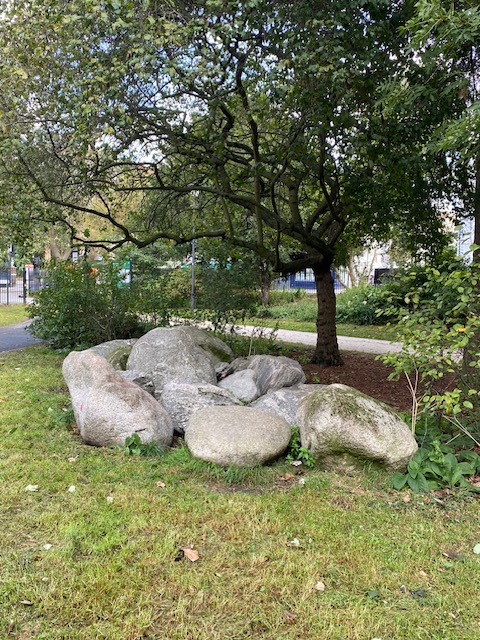
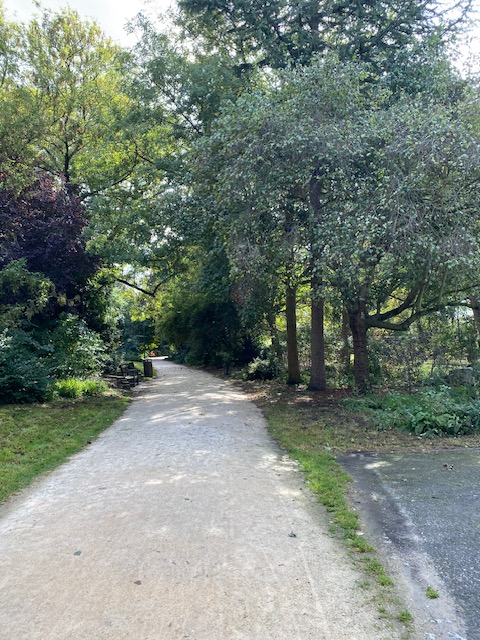
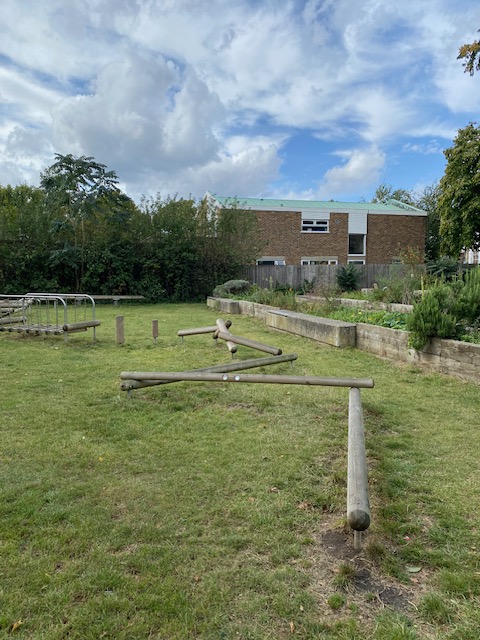
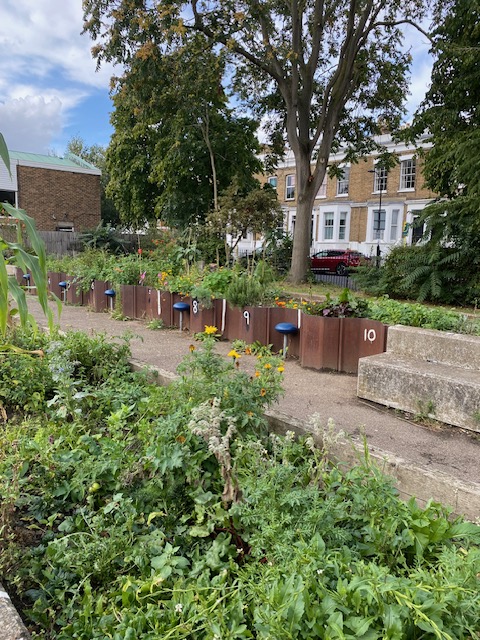
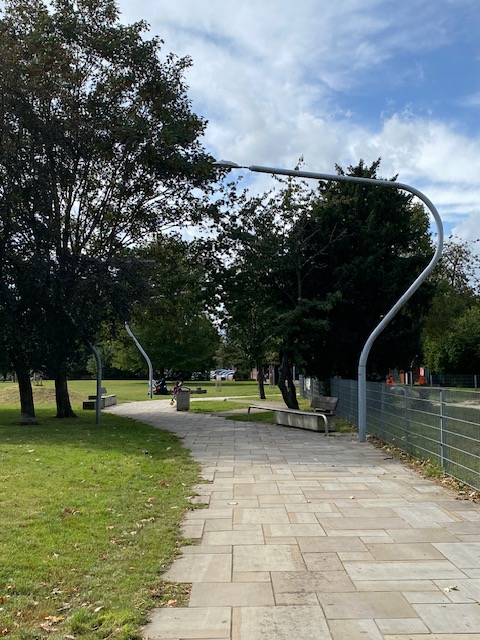
Very near the stop is Normand Park. The park is named after Normand House, built in 1649, one of many villas in the area. It served as an asylum for people with mental illness, a school and a convent. The house was demolished after being bombed in WW2. The park was redesigned in 2008 and has a central theme of playfulness which is integrated into the fabric of the park- benches that double as climbing blocks, wooden decks and grassy mounds become play terrain. A lighting installation enhances the lovely qualities of the trees by using light to transform the trees and make them more visible.

3. West Brompton station bus stop
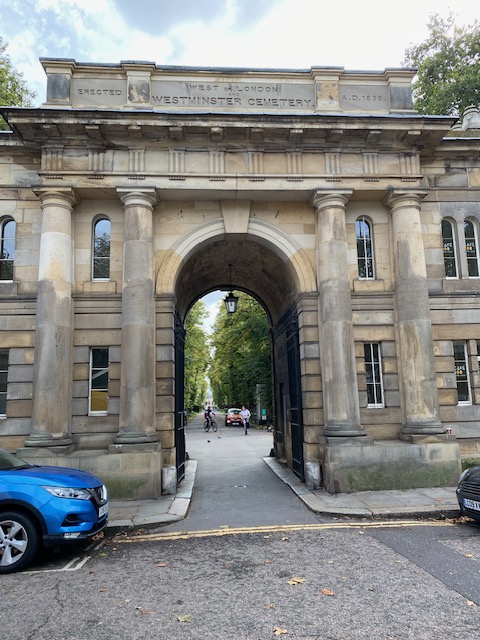
Near the stop is Brompton Cemetery, the burial ground for more than 200,000 people and one of the “Magnificent Seven” along with Highgate, Stoke Newington (Abney Park) and others. The cemetery is well laid out and reasonably easy to find your way around. But there is an information centre where you can get information from very helpful volunteers, who will be able to point you in the direction of any of the graves of people you know are buried here. Of the latter, perhaps the most famous is Emmeline Pankhurst, the brave leader of the suffragettes who fought for women’s right to vote. Nearby is the grave of pioneering Doctor John Snow, who proved that cholera was spread by infected water. One other who might be familiar is John Wisden, he of Wisden’s Cricketers’ Almanack fame.
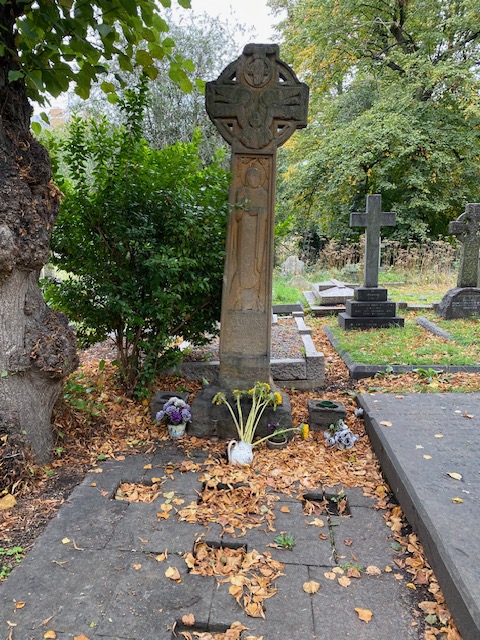
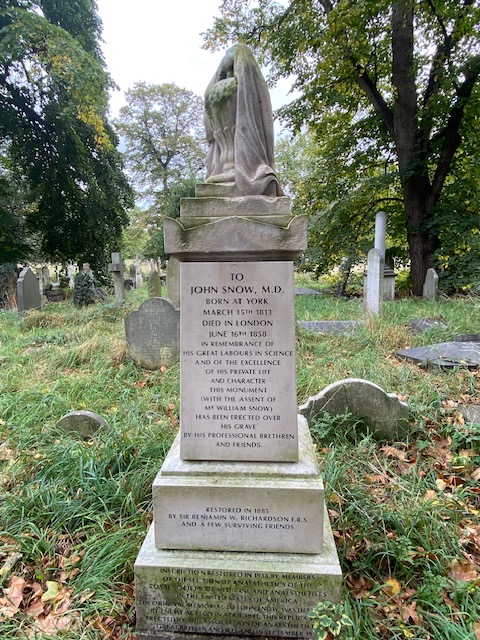
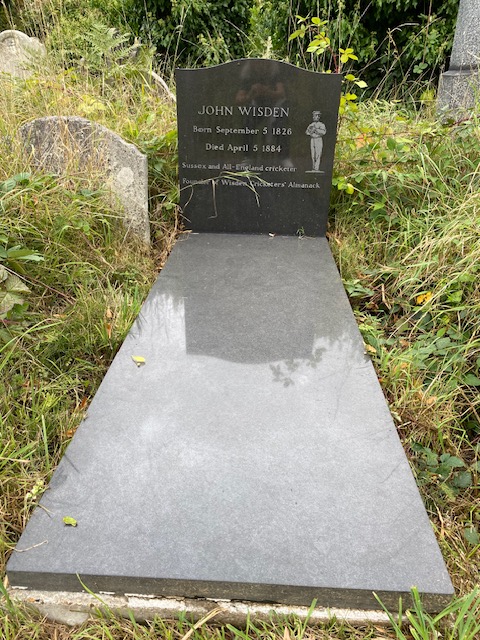
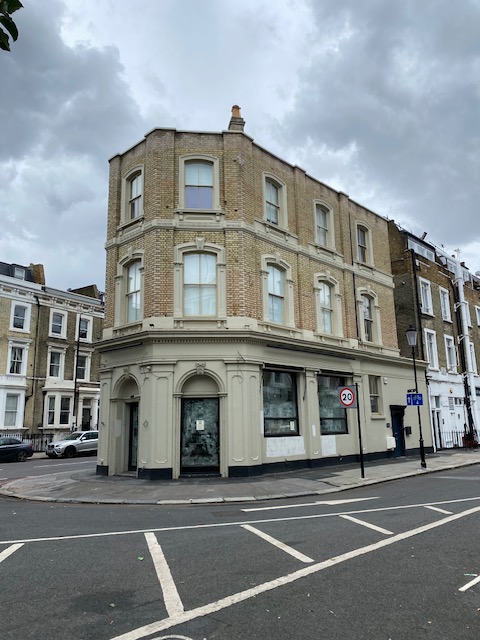
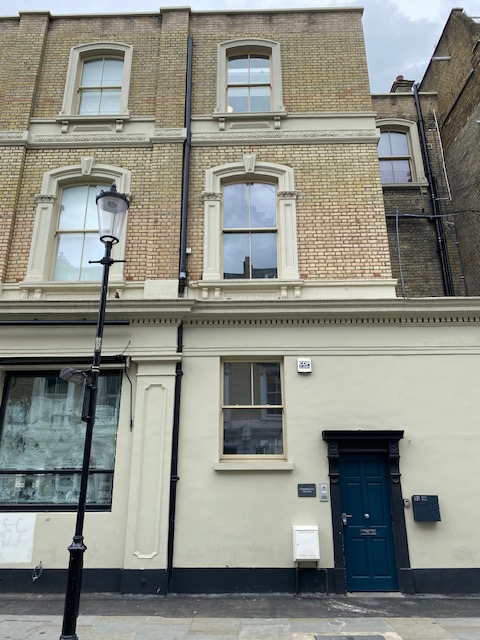
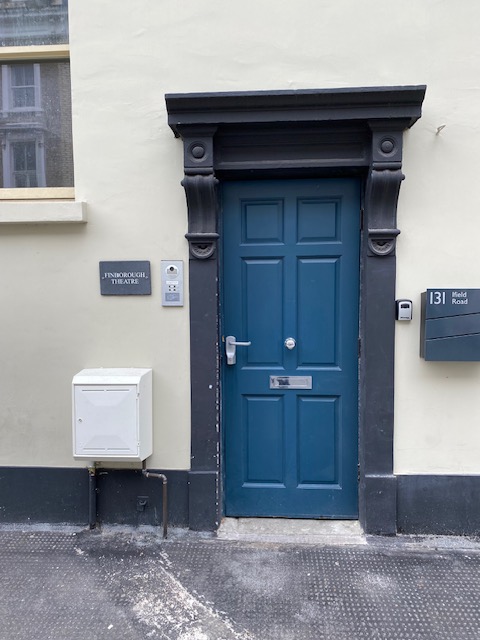
Round the corner from the cemetery is Finborough Theatre, a winner of several awards for being a pub theatre. At present, the pub underneath the theatre, the Finborough Arms, is closed but the theatre remains open. They pride themselves on nurturing new talent as well as rediscovering neglected works from previous centuries.
4. Earl’s Court Square bus stop
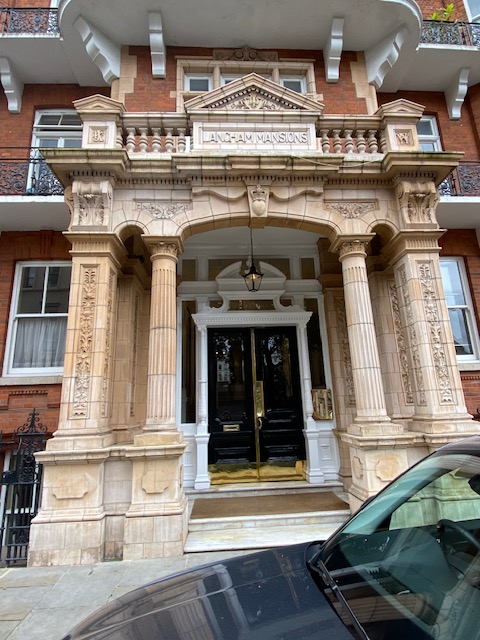
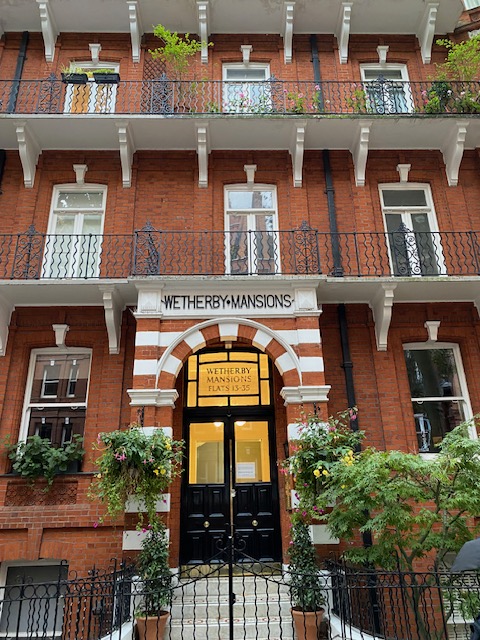
Earl’s Court Square itself is mainly very pretty, with a private garden in the middle of the square. The general style of architecture is stuccoed terraced houses with Italianate influence, but there are several styles in the square including buildings that have Jacobean and Second Empire influences. There are several purpose built apartment blocks, including Wetherby Mansions and Langham Mansions, with number 29 of the former, being the home of Syd Barrett of Pink Floyd.
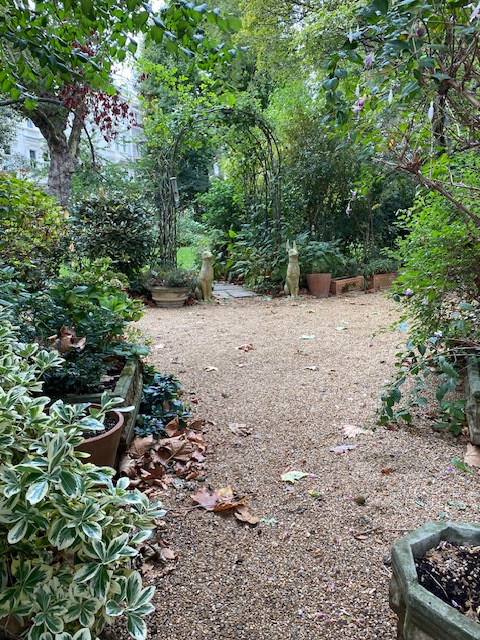
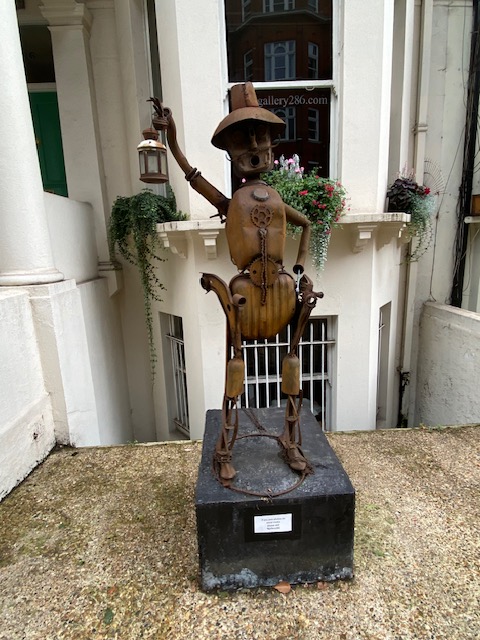
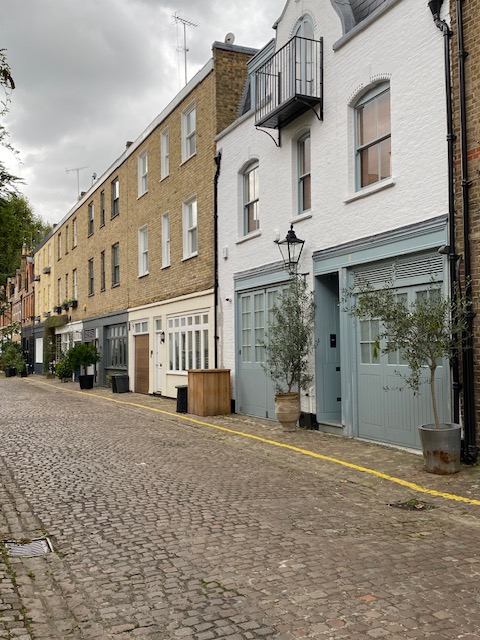
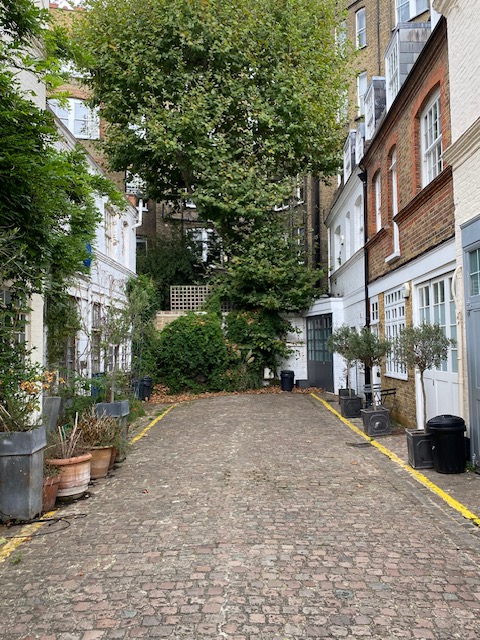
Also worth taking a look at is Hesper Mews and on the way, you can take in Gallery 286, though it’s not always open. It’s a private contemporary art gallery in a Victorian terraced house and on the day visited, it wasn’t open but there is a splendid sculpture in the front garden. Hesper Mews was laid out in 1884-85 as part of the Gunter Estate, developed by James Gunter and his descendants. Houses in the Mews are much smaller than in the higher-class streets adjacent and were used as accommodation for servants and stabling for horses. Later they were home to drivers and their vehicles and these days it’s particularly beautifully kept.
5. Earl’s Court Road bus stop
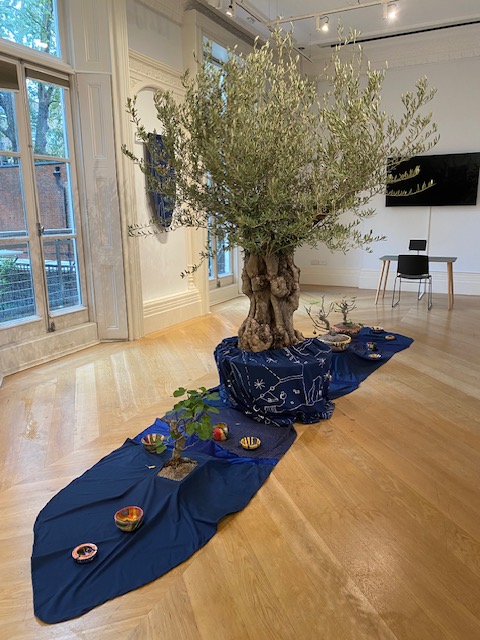
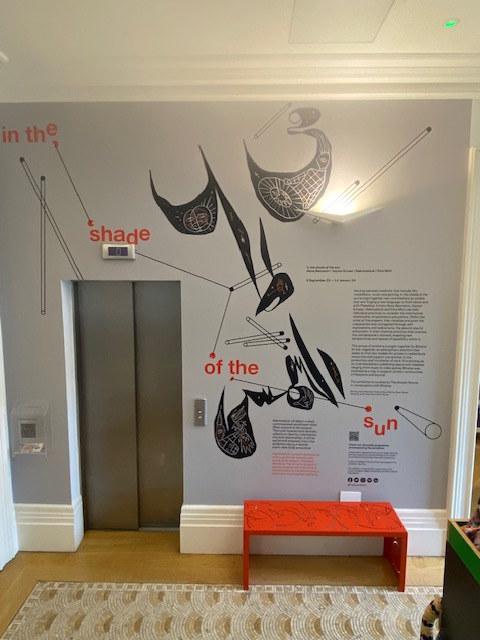
Just at the stop can be found The Mosaic Rooms, a non-profit arts organisation dedicated to supporting and promoting contemporary culture from the Arab world and beyond. The Mosaic Rooms pride themselves in championing creative and critical voices that are often underrepresented. Currently on display (until January 2024) is an exhibition entitled “In the Shade of the Sun” which contemplates the relationship between politics and aesthetics by a new generation of Palestinian artists including Mona Benyamin and Dina Mimi.
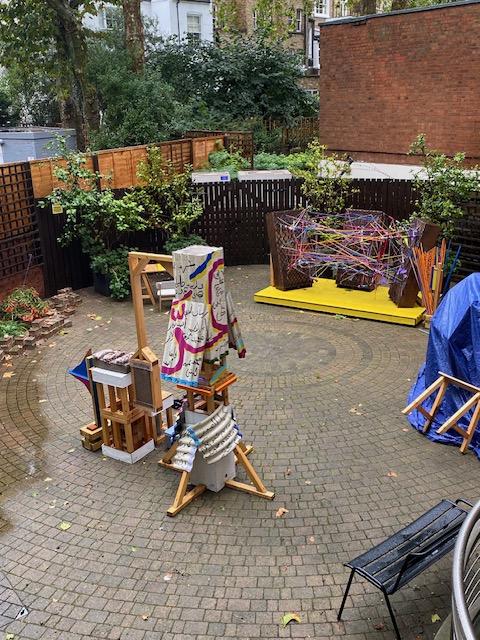
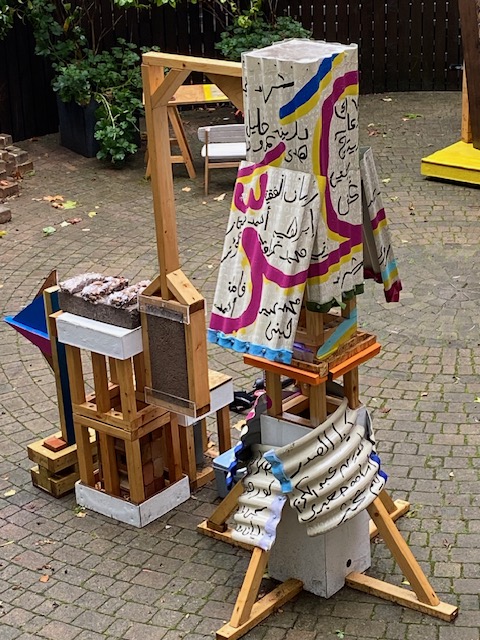
Outside is another exhibition “Tools for Solidarity”, with four ‘tools’ in the garden: ‘PRESS!’, ‘CONNECT…’, ‘NURTURE?’, and ‘#COMMUNICATE’. The aim is to help explore and question the solidarities that children express in their everyday lives, through tactile play and co-creation.
6. South Kensington station bus stop
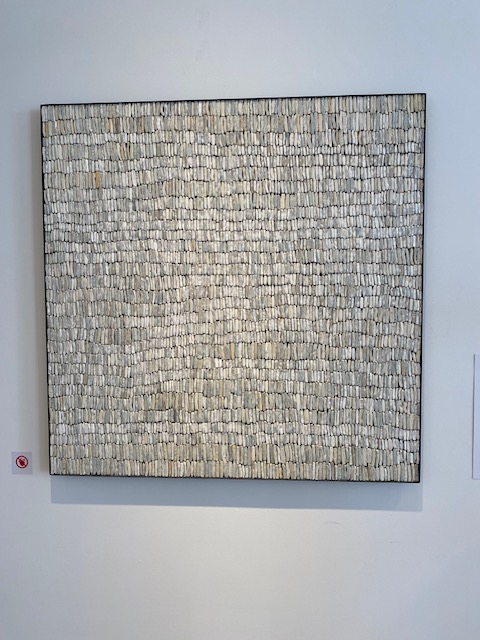
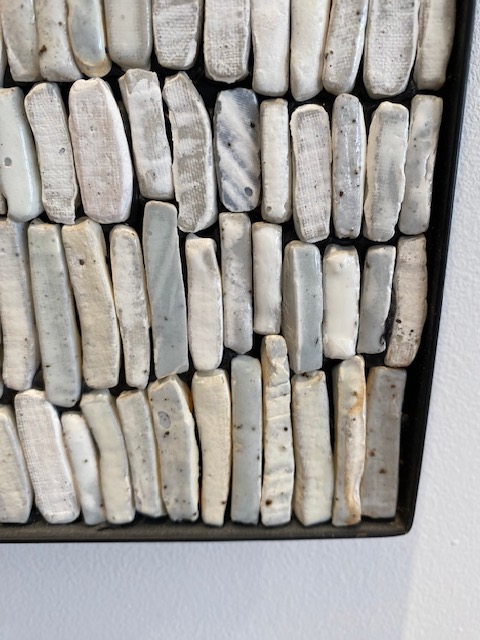
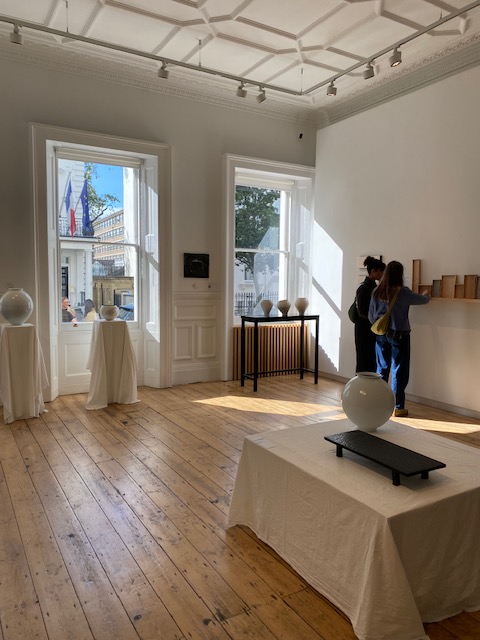
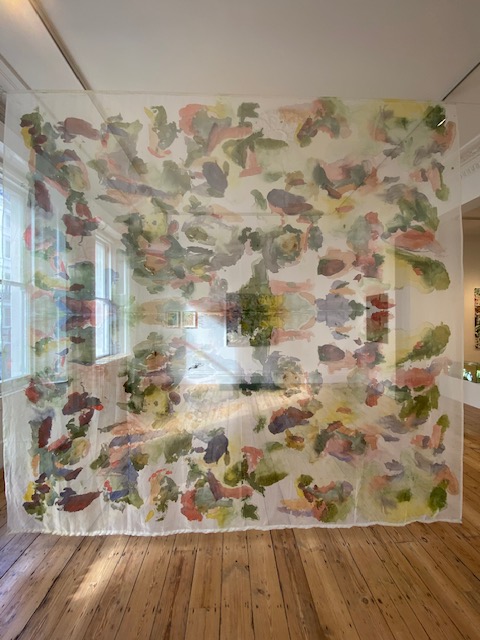
Walk round to Cromwell Place and you will arrive at the Cromwell Place Art Gallery, an international arts space for galleries, where collectors, dealers and other arts professionals can meet, exhibit and collaborate. The gallery is made up of 5 Grade II listed town houses and there is always something new and exciting on display. One gallery is exhibiting Korean ceramic artist Park Sung-wook with his “Moon Jars”, an iconic porcelain wall-hanging made up of hundreds of small pieces of stoneware.
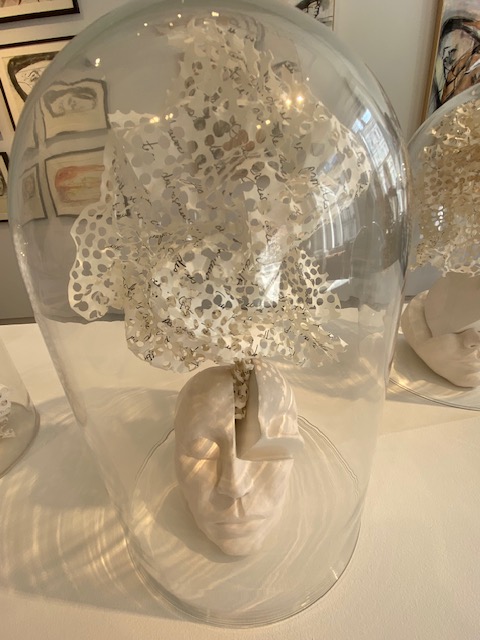
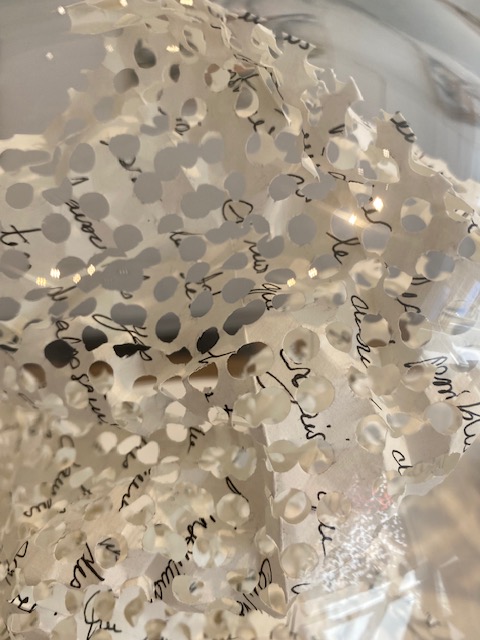
Opposite is another gallery with a collection entitled “Itinerant Practices” and features an exhibition by French artist Hélène le Chatelier, in collaboration with Calvin Pang. They have used themes such as memory and resilience, showing how art can provide comfort and well-being to anyone. The focus is on human ability to contain memories, by turning difficult remembrance into poetic objects.
Yet another display is by Sophie Kitching entitled Sight Specific. She explores the natural environment inviting us to see and discover individual plants and flowers within a meticulously cultivated garden.
7. Victoria and Albert Museum bus stop
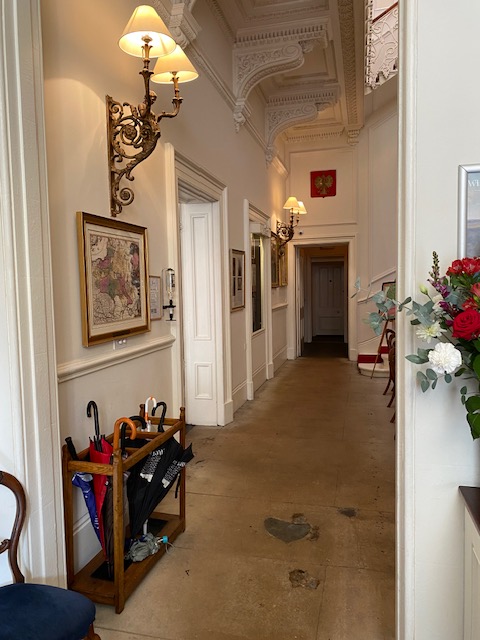
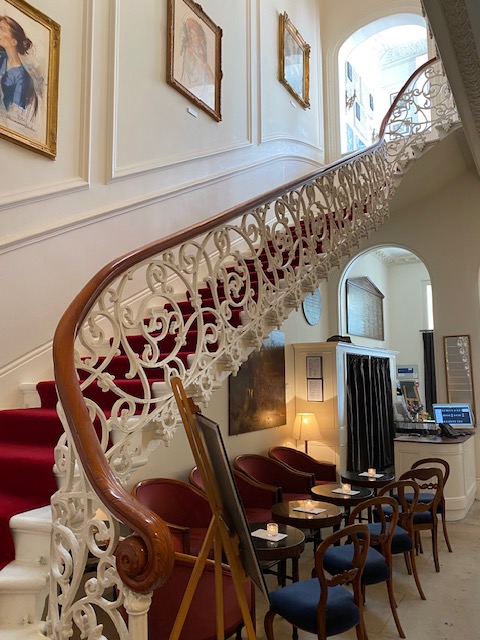
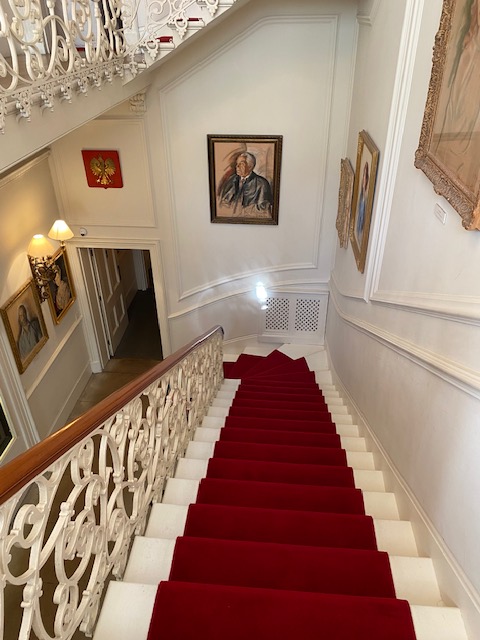
Of course there are lots of world-renowned museums to see around here but this blog is about places that are less well known – and so to Oginisko Polskie, the Polish Hearth Club. It was established in 1939 to “maintain the cohesion of the free Polish community in the UK during the Second World War”, and subsequently became the centre of social and cultural life for the Polish community in exile. It now provides a home for Poles to meet and build friendships, and is still a hub of Polish cultural and social life. In the entrance and in other common areas of the club, there are many portraits painted by Barbara Kaczmarowska-Hamilton and walking up the staircase to the ballroom on the first floor is a must, to see the beautifully ornate banister. The ballroom is used as an art exhibition area as well as a venue for weddings and other special occasions.
8. Brompton Square bus stop
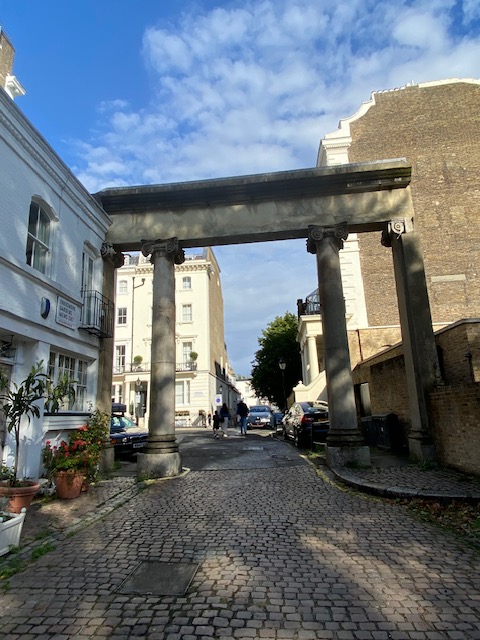
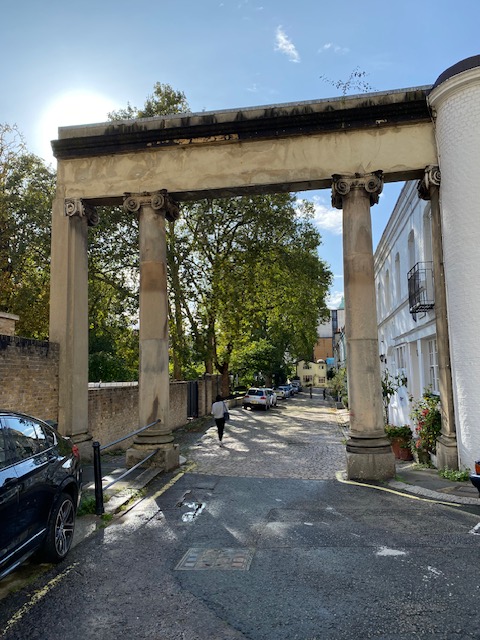
This is the stop to visit the Mews Arch, which is located at the end of Ennismore Gardens Mews. Together with houses in adjacent Ennismore Gardens, the mews were built between 1868 and 1874 by Peter and Alexander Thorn on land belonging to the 3rd Earl of Listowel. Dictionary definition of mews is a row of houses that have been converted from stables or built to look like former stables. Very popular in the 19th century, the Ennismore Garden Mews are typical of the time but the arch itself is more spectacular and unusual.
The arch – or entrance gateway – is Grade II listed, and features paired Ionic columns supporting an entablature (the upper part of a classical building supported by columns). This cobbled, L-shaped Ennismore Garden Mews, with the arch at one end, formerly accommodated the horses and coaches for those who lived at Ennismore Gardens.
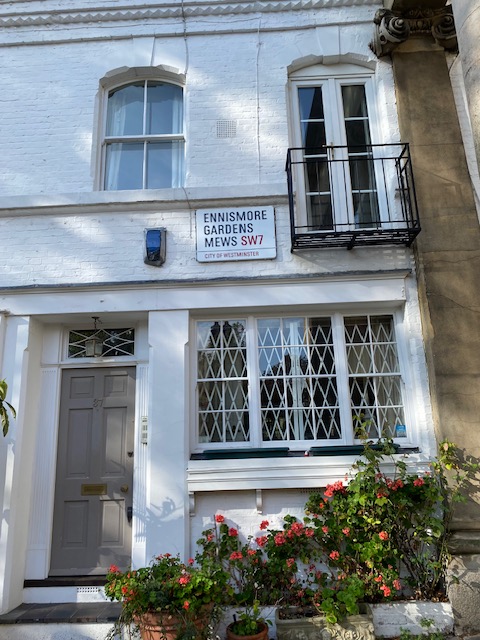
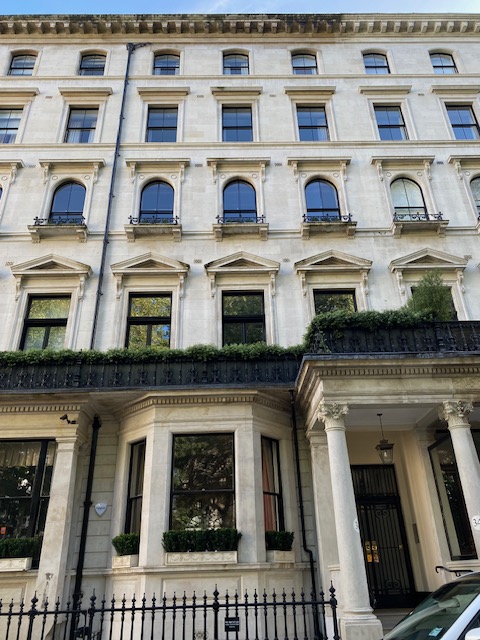
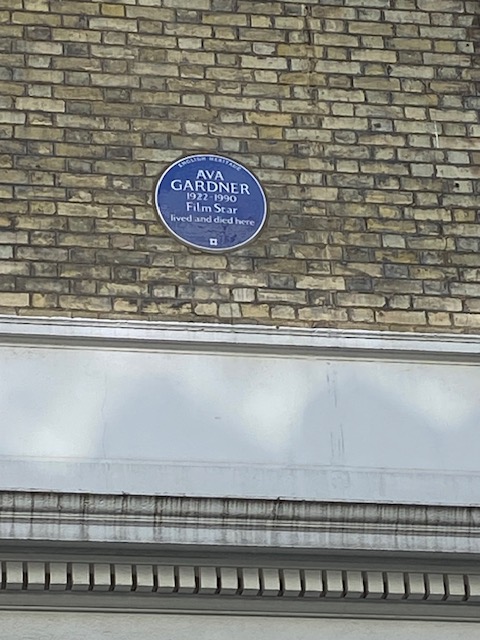
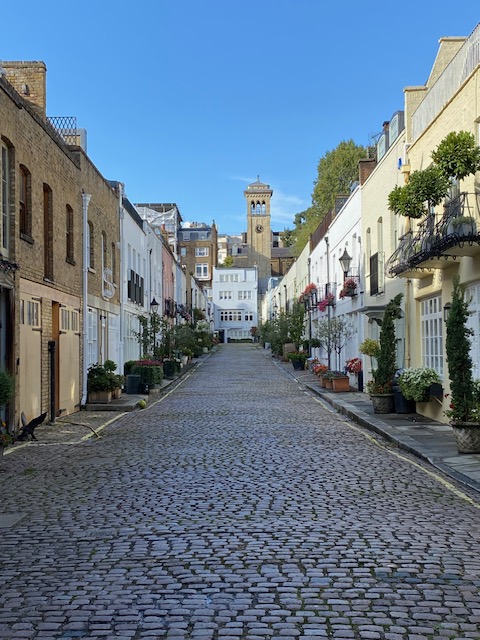
Round the corner from the arch is the former home of the actress Ava Gardner, with a blue plaque to commemorate her. She moved to London in the late 1960s and lived in a luxury flat at 34 Ennismore Gardens from 1972 until her death in 1990. Another pretty street round here is Ennismore Mews. The Mews is part of Kensington’s Conservation Area and contains late Georgian Terraces and Victorian Terraces, most of which were built between 1840 and 1880.
I hold my hands up here – the weather was so shocking on the day I went on the number 74, I had to abandon the bus here in Knightsbridge. The intention was to continue to Speakers’ Corner near Marble Arch bus stop and Old Marylebone Town Hall. These will have to be visited on another day and another bus route (maybe the 113).
Despite the weather, this was another great route, with an eclectic mix of places to see, from Brompton cemetery with its notable residents to unusual art spaces like The Mosaic Rooms and some very pretty London streets.
Toilets that are free and available to the public:
- Brompton cemetery cafe
- The Mosaic Rooms
- Cromwell Place Art Gallery
 london routemistress
One response to “Bus route 74”
What a good job despite the rain. You made the route come alive.
LikeLike