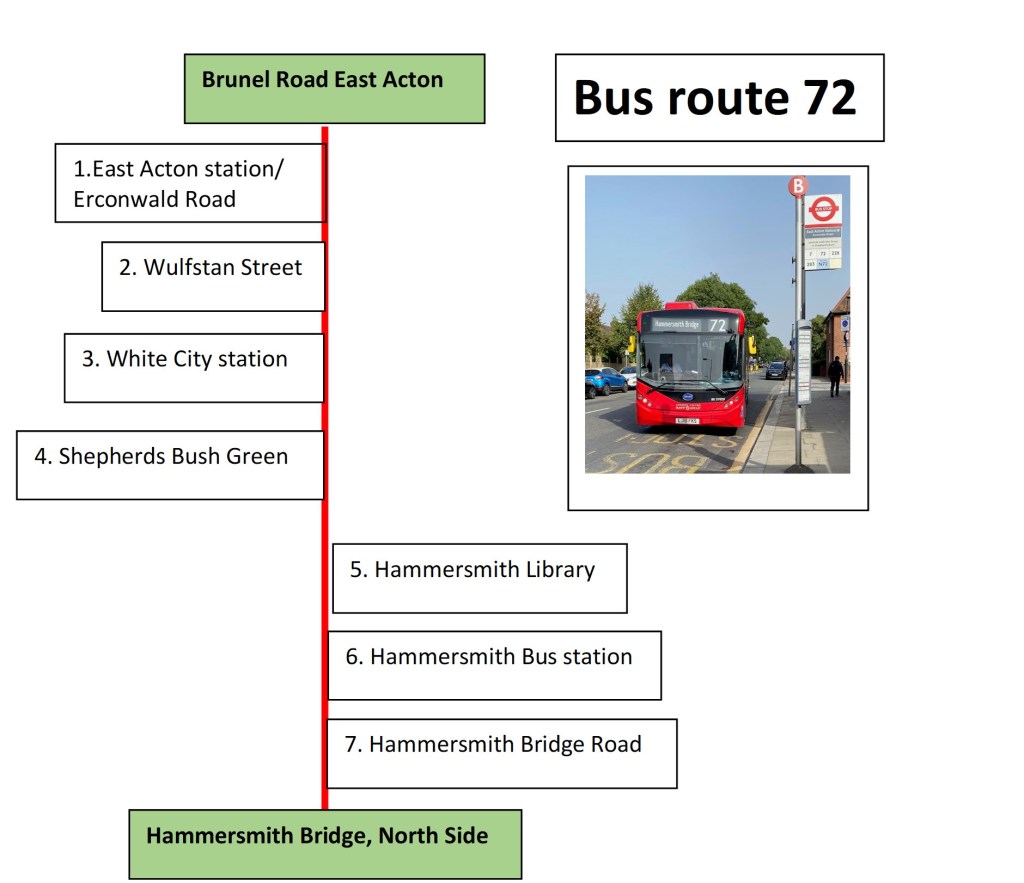
Brunel Road East Acton to Hammersmith Bridge
Highlights:
- Japanese Garden, Hammersmith Park
- Irish Cultural Centre
- Dove Pub
1. East Acton station/Erconwald Road bus stop
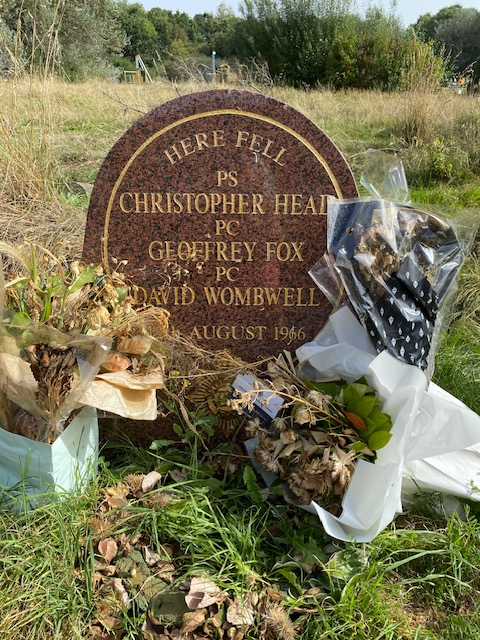
First place to visit on this route is Wormwood Scrubs parkland. On the edge of the park is a memorial to three policemen – PS Christopher Head, PC Geoffrey Fox and PC David Wombwell, all of whom were murdered on 12 August 1966. Known as the Shepherds Bush murders (despite being in East Acton), the 3 policemen were shot in close range by 3 criminals at this very spot. The 3 men who shot the PCs went on the run but were subsequently found and imprisoned.
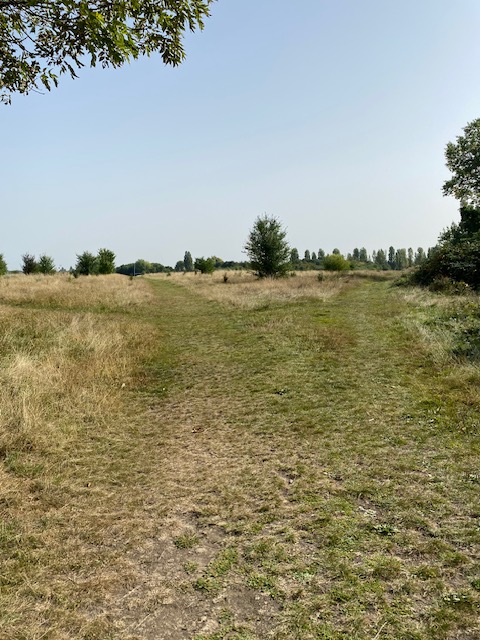
A short walk from here is the entrance to Wormwood Scrubs, which is rather a lovely open space, adjacent to the prison of the same name. Research says that the area has been an open space since the 12thC when it was known as Wormhold Scrubs. It was used for pasture for the cattle & pigs of the local manor. In 1812 Wormhold Scrubs was leased by the War Office from the Manor of Fulham. This was in order to exercise cavalry horses, which until then had been exercised in Hyde Park, Belgrave Square & Regent’s Park. This common land became known as Wormwood Scrubs.

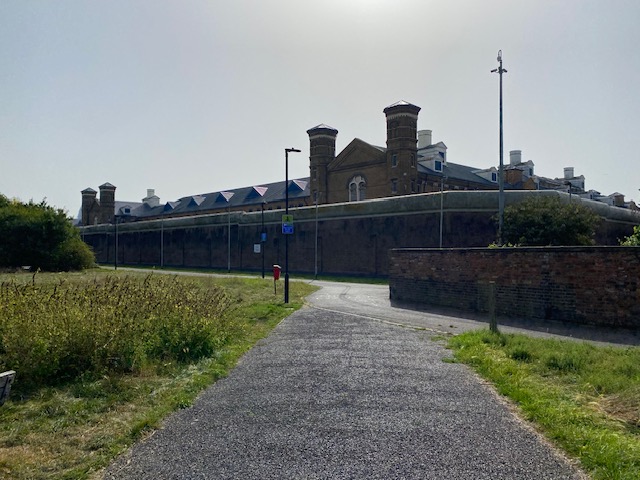
In 1873, the southern part of the Scrubs was purchased for the building of Wormwood Scrubs Prison, a class B category prison. It was built at first by prisoners, having been designed by Sir Edmund Du Cane, after whom the street in which the prison is situated, was named. Famous inmates include Ian Brady (Moors murderer), John Stonehouse (famously faked his own death), Lord Alfred Douglas (former lover of Oscar Wilde and imprisoned for libelling Winston Churchill) and the Rolling Stones’ Keith Richard for possession of drugs.
Set within the grounds of the scrubland is Linford Christie Stadium, which has facilities for numerous sports as well as a running track. The venue first opened in 1967 and was known as West London Stadium. It was renamed after Olympic 100 metres gold medallist Linford Christie, who often trained at the venue with the Thames Valley Harriers.


2. Wulfstan Street bus stop
It’s possible to walk from Linford Christie stadium or Wormwood Scrubs parkland to the front of HMP prison, or alight from the number 72 at this stop. Photos of the prison aren’t permitted which is a shame because the main entrance and gates are pretty impressive. The prison building dates mainly from the end of the 19th century and is listed as a Grade II building, principally because of its distinctive gatehouse. Next door to the prison is a Visitors’ Centre, which sounds as if it’s a welcome centre but in fact it’s where the inmates’ visitors go to deposit all their belongings while they make their visit. If anything, it’s rather chilling.
Next door to the prison, and built at a similar time, is Hammersmith Hospital. It was originally a workhouse infirmary built by the Hammersmith Poor Law Guardians in 1912. Its buildings were used during the First World War for military orthopaedics, before it became a general acute hospital in 1926.


3. White City station bus stop
The bus stops really near BBC’s Television Centre, which was the HQ of BBC Television between 1960 and 2013. Prior to 1960, the BBC broadcast programmes from Alexander Palace and Lime Grove Studios. In 2013, the building was sold and has been redeveloped, with apartments, offices, a cinema and hotels as well as maintaining a few studios. Many of the employees relocated to Salford Quays, including those in BBC Sport and BBC Breakfast. Some daytime programmes are still broadcast from the TV Centre including Loose Women and Good Morning Britain.
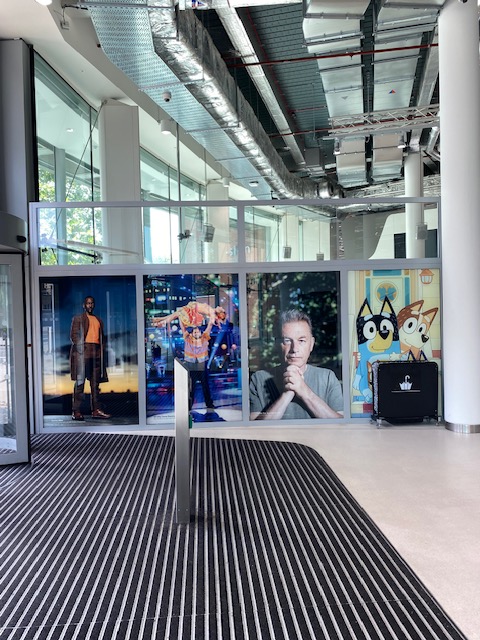

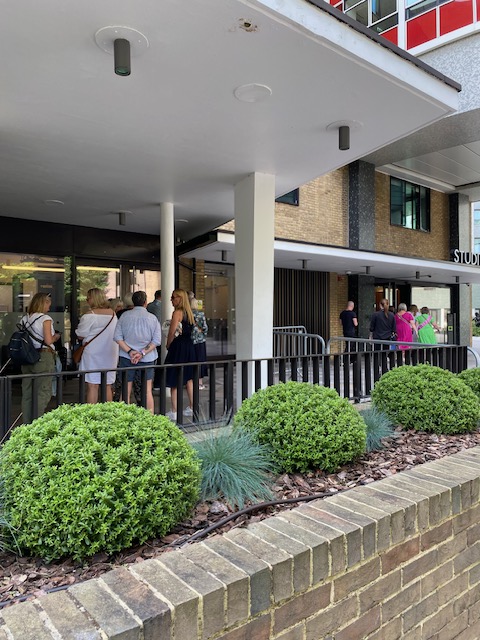
Walk through the TV Centre complex and at the other side is White City’s Hammersmith Park. The park itself is quite small but it has the most beautiful Japanese garden. White City was built as a grand exhibition site in the early 1900s – constructed in steel and concrete and painted white, hence the name White City. A major exhibition was held in 1910, in celebration of the Anglo-Japanese Alliance of 1902 – 1923. Among the exhibits were two gardens – The Garden of Peace and the Garden of the Floating Isle.
In 2010, to mark the centenary of the gardens, improvements were made including rebuilding the streams and Japanese-style rock formations. Eight years later, Stone Lanterns were added, both in and around the park, donated by local Japanese and British companies.


4. Shepherds Bush Green bus stop
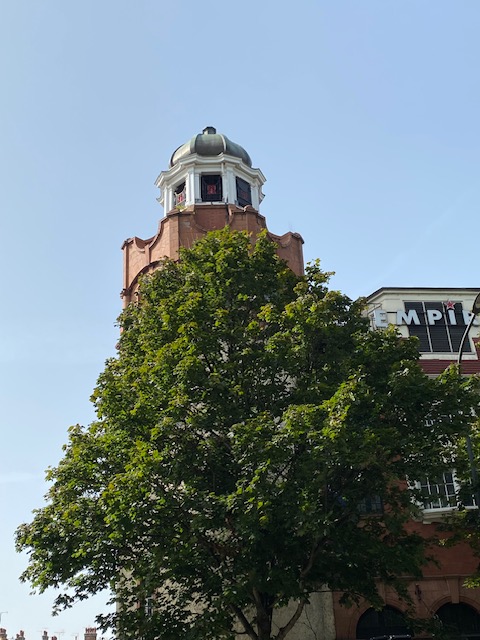
Across the Green itself is the Shepherds Bush Empire. It was originally built in 1903 for impresario Oswald Stoll and among its early performers was Charlie Chaplin. The Empire staged music-hall entertainments, such as variety performances and revues, until the early 1950s, by which time the popularity of these forms of entertainment was declining. In 1953, the Empire was sold to the BBC, and used as a TV studio–theatre, renaming it the BBC Television Theatre. These days it hosts gigs and dance nights and filming of live performances.
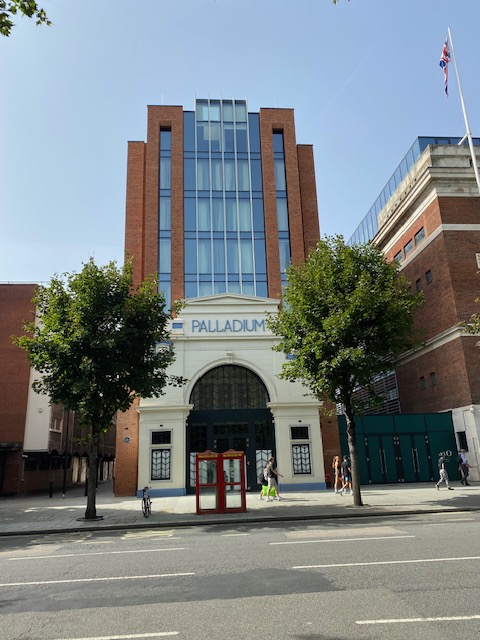
Next door to the Empire is an impressive building called Palladium. It was originally built in 1910 as the Shepherd’s Bush Cinematograph Theatre. The building had a number of owners over the years and finally stopped showing films in 1981. After standing empty for some time, it was eventually converted into a pub until 2013, when the building was sold to a property developer and turned into a 16-storey block of flats, retaining the original 1920s façade.

5. Hammersmith Library bus stop
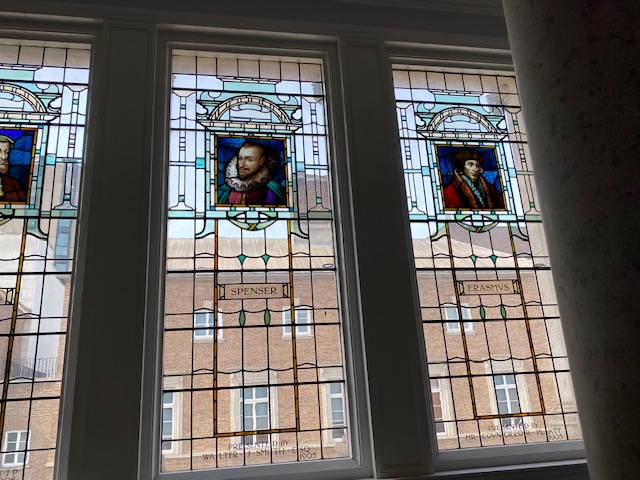
And so to the library itself. As you walk in and go up the stairs, you’ll pass the stained glass windows that depict four literary figures: Francis Bacon, Geoffrey Chaucer, Edmund Spenser and Desiderius Erasmus. Fitting of course for a library.
At the top of the stairs is a photograph of Andrew Carnegie, the philanthropist who was the main benefactor of the library and a tribute to Henry Hare, the architect of the building. Hare was a Yorkshireman who studied in Paris and settled into practice in London in 1891. He adapted his style to suit the purpose – Collegiate Tudor style for educational buildings such as Westminster College, Cambridge; Early Renaissance style for Oxford Town Hall; Neo Baroque for offices such as Ingram House in the Strand.



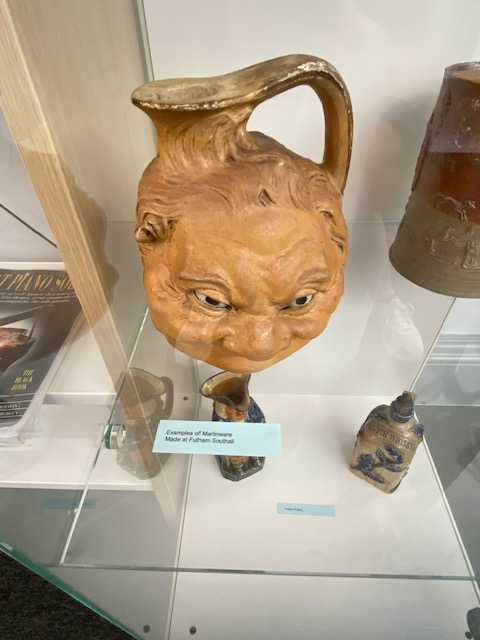
In the library downstairs, is a glass cabinet with some fine examples of pottery, in particular Martinware. From 1873 – 1914, four Martin brothers manufactured a distinctive type of stoneware pottery, from their studio in Fulham and later in Southall. Their output included both vessels and figures. They were best known for their bird sculptures and bowls, vessels decorated with sea creatures, and tiles, fashioned in a whimsical but highly skilful style. Most of their collection is on display at Southall library but Hammersmith have a few pieces too.


On your way back to the bus stop, you’ll see the Swan pub. It was built in 1901 as a hotel on the site of an old coaching inn, and is famous for inspiring artists. Its first portrait was as a coaching inn known as the ‘Old Swan’, and was the first stop from the City of London in 18th Century. It then became “The White Swan” and even later, “The Swan Hotel”. The Swan attracted great leading lights of the Arts & Crafts movement, such as William Morris as well as extending to Gustav Holst, (composer of the Planets) whose composition ‘Hammersmith’ reflected his impressions of the town where he worked.
6. Hammersmith Bus Station bus stop
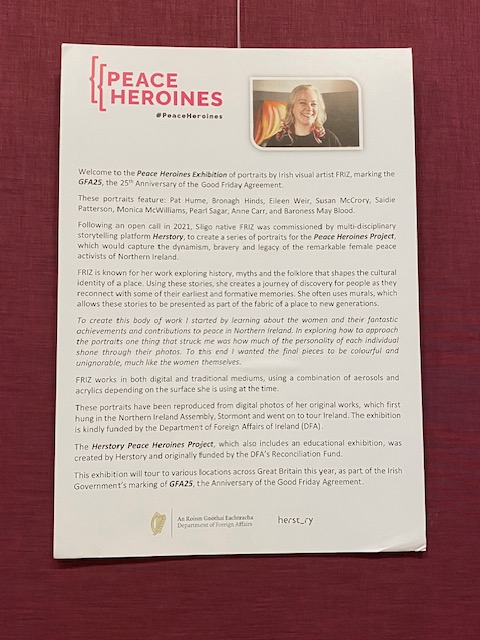
Walk round to Black’s Road and to the Irish Cultural Centre, which opened in 1995 specifically to promote Irish art and culture. They put on a variety of exhibitions and other cultural events and at present they have two art exhibitions – one is entitled Peace Heroines and features portraits of nine exceptional women by contemporary artist FRIZ. The portraits mark the 25th Anniversary of the Good Friday Agreement and intend to capture the essence and spirit of these women, depicting their strength, resilience, and unwavering commitment to peace.
Another exhibition is by the artist Aidan Hickey and is entitled “Painting Ulysses”, to mark the 100th anniversary year of the publication of James Joyce’s masterpiece. There are 18 paintings, each one representing an episode from the novel. The exhibition is on until March 2024 and is really worth a visit.



7. Hammersmith Bridge Road bus stop
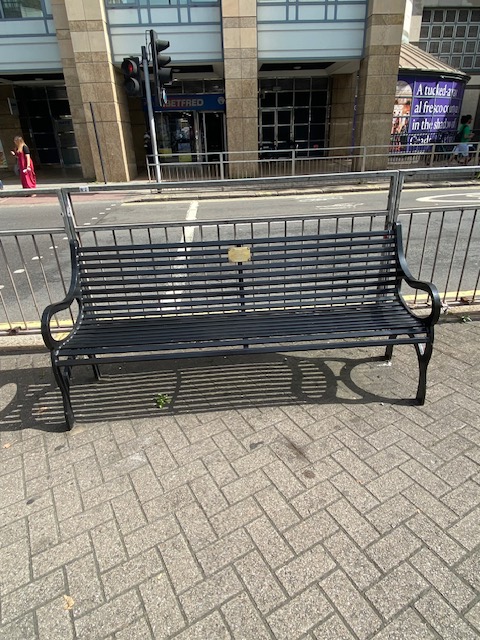
Final stop on this route. Near the bus stop, in the middle of the traffic island is a fairly nondescript bench that is a memorial to the Comedian Rik Mayall, with a brass plaque on it saying “In memory of the man, the myth, the legend, Dr Rik Mayall, Pan Global Phenomenon, Equality, Opportunity, Wisdom, Freedom & Love. Barbara: Love is the Answer”. The bench featured in the opening credits of the TV sitcom Bottom, in which Mayall and co-actor/comedian Ade Edmonson, both appeared.
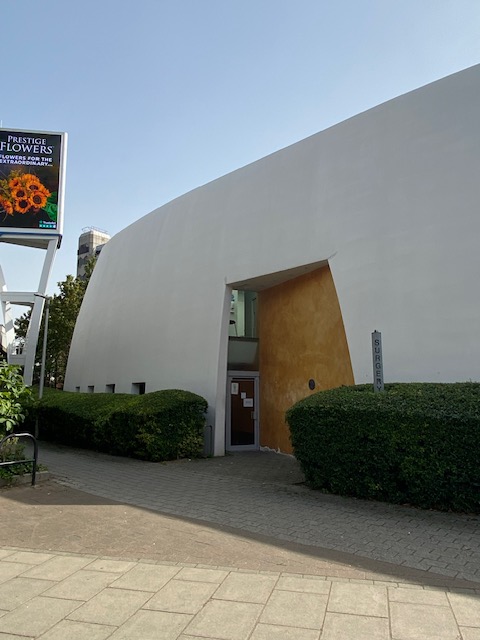
Walking towards the river, you pass an interesting building that had won an architectural award in 2001. It is the Hammersmith Medical Centre and is a dramatically curved building. The curved white shell is designed to insulate the surgery against the traffic on a nearby roundabout and the Hammersmith Flyover.

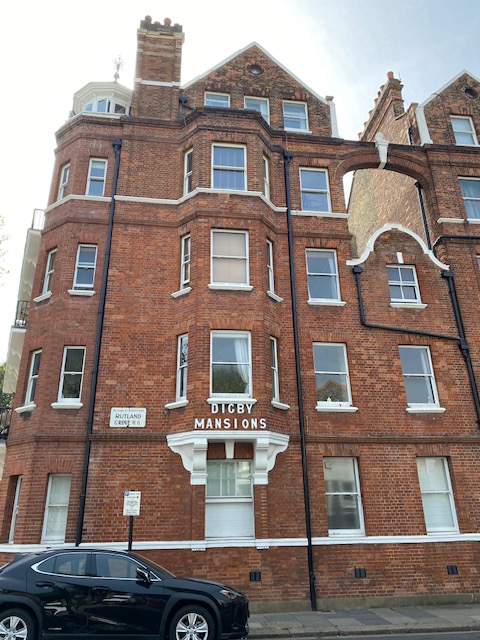
And still more to see before reaching the river. Digby Mansions, a block of flats that sits on the site of the old Digby House, was constructed in the 1890s. This was a substantial red brick Victorian mansion block, very modern for its day, with spacious high ceilinged family rooms and accommodation for a maid or manservant. The block is very much the same as it was in the old days and in particular, it’s worth looking out for the front balconies, overlooking the Thames, with their ornamental wrought ironwork.
And so to Furnivall Gardens, adjacent to the river Thames. In 1948, it was decided that there should be a public open space on bomb-damaged land between the river and the Great West Road, to coincide with the 1951 Festival of Britain. This new park was named after the scholar Dr Frederick Furnivall, who founded what is now the Furnivall Sculling Club in 1896.
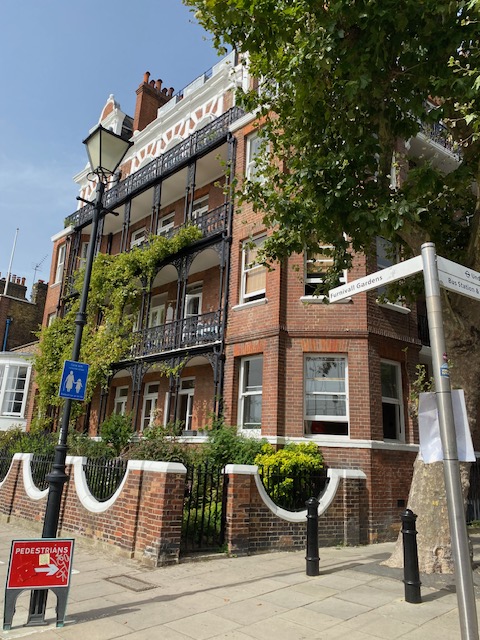
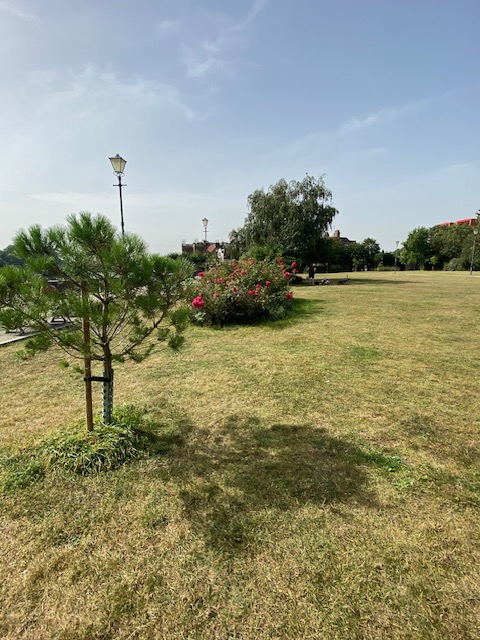

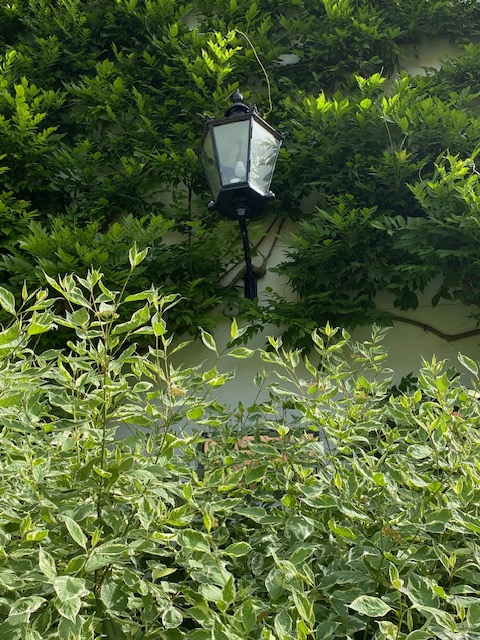
Set within the gardens is Westcott Lodge. In the 17th and early 18th centuries, Hammersmith was given over to market gardening with summer retreats for the wealthy. One such was Westcott Lodge which served as the vicarage to St Paul’s Church. On a side wall of the house is a street lamp that had formerly been in West Berlin was given by Willy Brandt, then Mayor of West Berlin, to mark Hammersmith’s twinning with the Berlin (previously West Berlin) district of Neukölln in 1963. It now stands on the wall of Westcott Lodge, facing the gardens. Below it is a plaque which reads: “The lamp above this plaque was formerly used to light a street in West Berlin. It was presented by Herr Willi Brandt, Mayor of West Berlin to Councillor Stanley Atkins, L. P., The Worshipful the Mayor of Hammersmith, as a token of friendship between the two communities on the occasion of the Jumelage held in this Borough, 1st June 1963.”

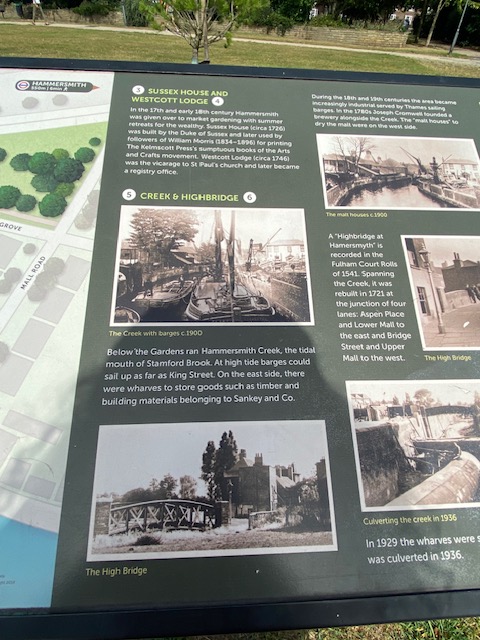
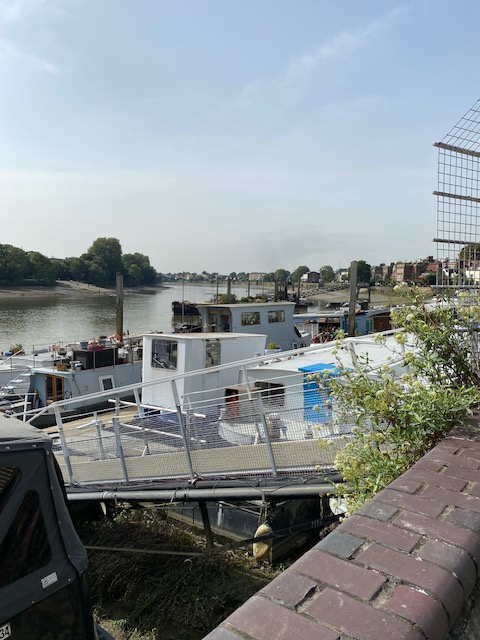
At this point of the river are two piers – Hope and Dove. The moorings at Hope Pier have reportedly been in the See family for five generations. It is believed that Charlie See established the Hammersmith moorings in the early 20th century, having obtained permission from the vicar of St Paul’s who was living at Westcott Lodge.
Dove Pier was built for passenger boats on their journey downstream to the Festival of Britain at Battersea in 1951. An original ticket office remains on one of pontoons. The pier was once owned by the Dove Pub but is now in private ownership.



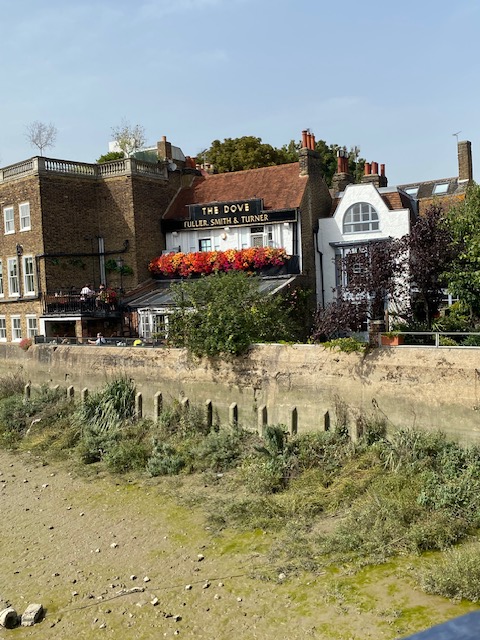
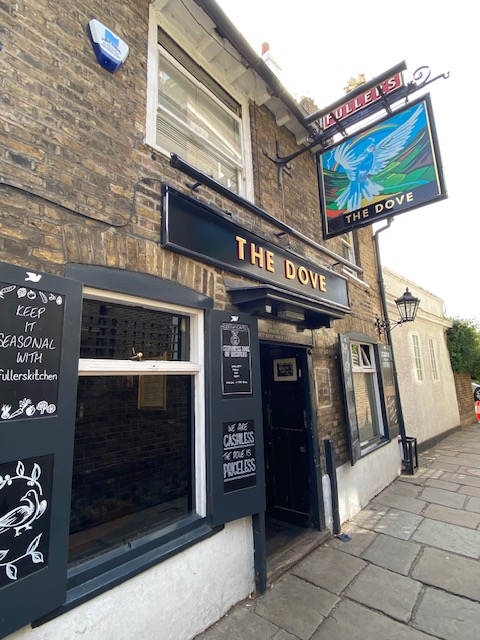
On the embankment is the Dove Pub – A public house has stood on this site since the seventeenth century. Throughout these years the bar has propped up some of the finest figures of English history. The poet James Thomson composed the familiar strains of ‘Rule Britannia’ here and copies of the sheet music is placed strategically throughout the pub. A major claim to fame of the pub is that King Charles II romanced and dined his mistress Nell Gwynne here.


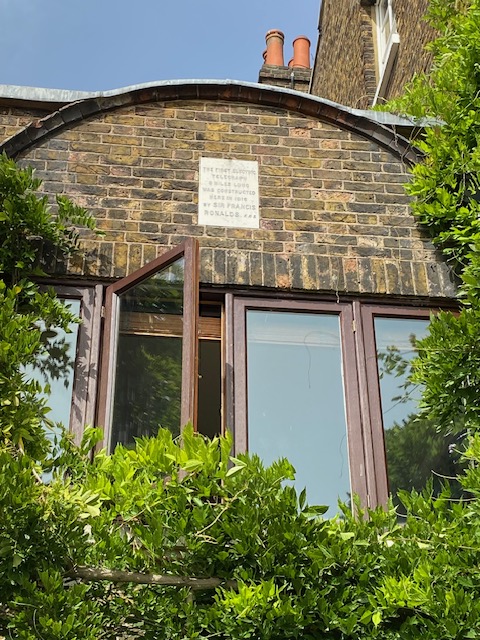
Walking along the embankment, you come to Upper Mall where there is a museum for William Morris. It’s only open 3 days a week so it’s best to check before thinking of going there. Above the doorway to the museum is a plaque that states “The First Electric Telegraph 6 miles long was constructed here in 1816 by Sir Francis Rolands FRS”.


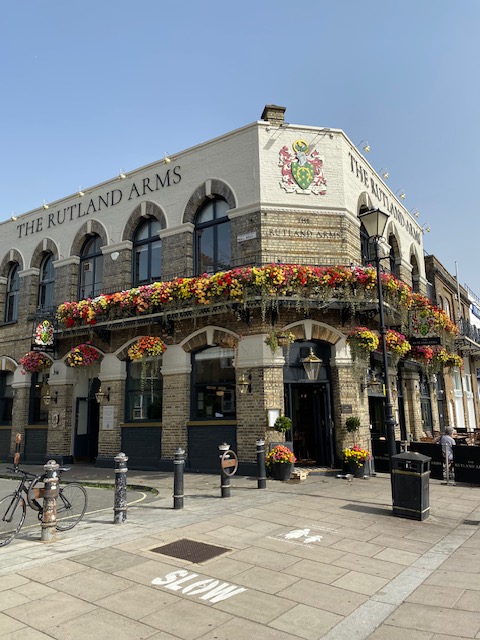
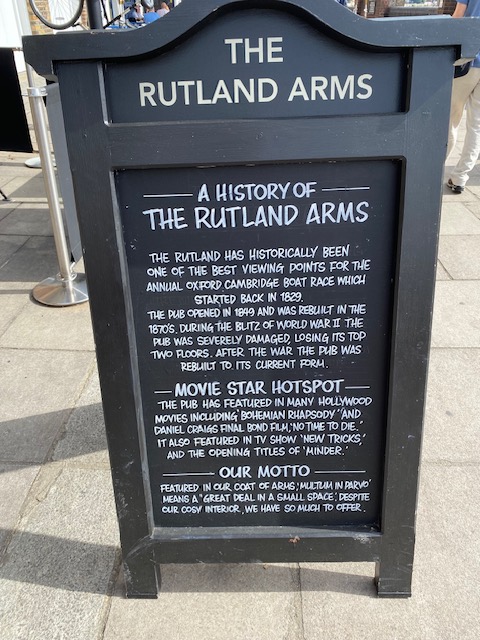
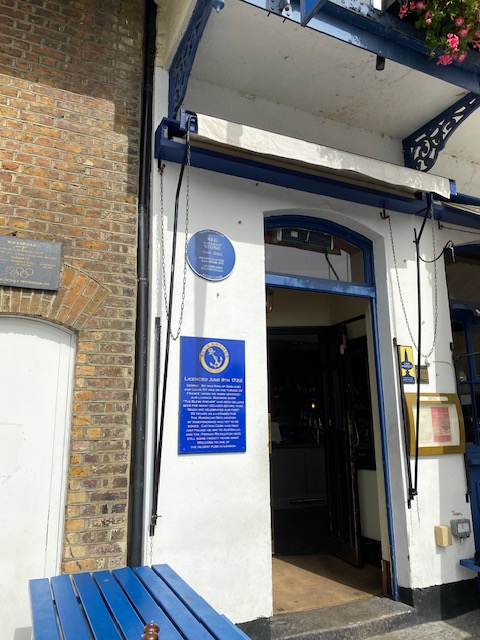
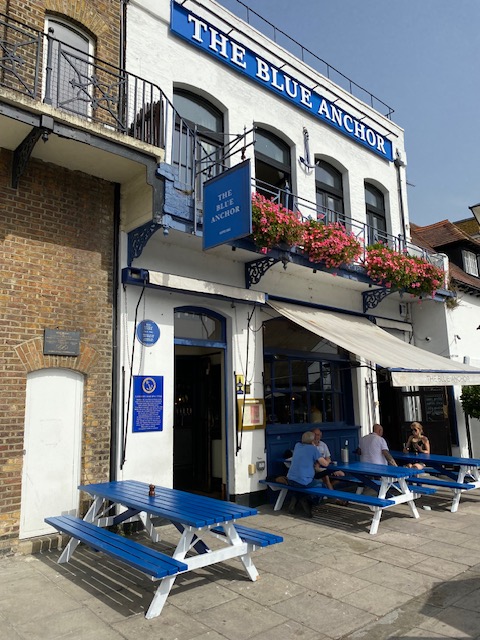
There are a number of pubs along Lower Mall and they are frequented in particular by onlookers of the Cambridge vs Oxford Boat Race. The Rutland Arms opened in 1849 and during the Blitz was severely damaged, losing the top two floors. The Blue Anchor dates back to 1722 when George I was king of England and Louis XV was king of France. It’s certainly one of the oldest pubs in England.
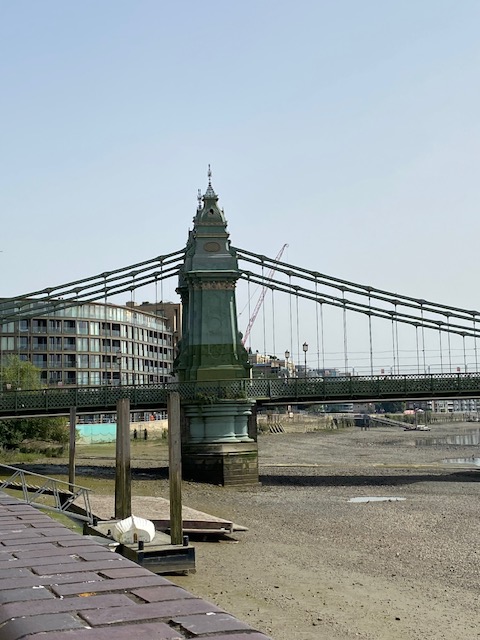
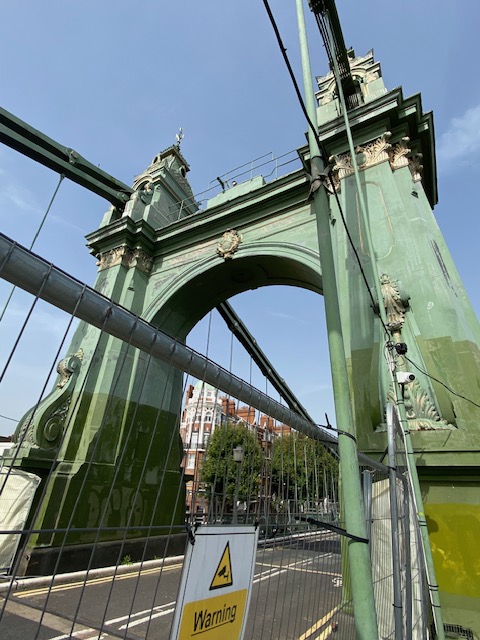
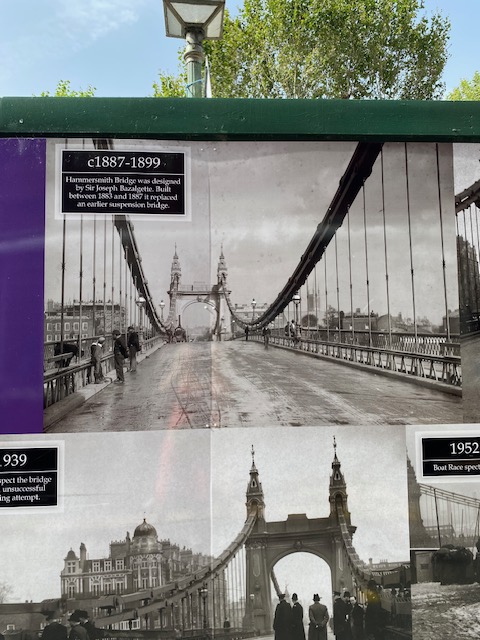
And to the final leg of the route towards Hammersmith Bridge. It was designed in the late 19th century by Sir Joseph Bazalgette and replaced an earlier suspension bridge. By the 1870s, the previous bridge was no longer strong enough to support the weight of heavy traffic and the owners were alarmed in 1870 when 11,000 to 12,000 people crowded onto the bridge to watch the University Boat Race. There were no immediate plans to replace the bridge, which remained sound, until a boat collided with it in 1882 causing damage, and leading to an Act of Parliament in 1883 authorising the construction of a replacement.
These days the bridge is closed to all traffic and only pedestrians and cyclists are permitted to cross over from one side of the Thames to the other. It’s not yet known when it will reopen to traffic but local residents can’t wait!

Although this route is one of the shorter ones, nevertheless there is plenty to see. From parks (Wormwood Scrubs, Hammersmith Park and Furnivall Gardens) to historic buildings (Shepherd’s Bush Empire and Westcott House) as well as cultural place of interest (Hammersmith Library and Irish Cultural Centre).
Toilets that are free and available to the public
- Linford Christie Stadium
- Television Centre White City
- Irish Cultural Centre
 london routemistress
2 responses to “Bus route 72”
Congratulations on a terrific take on72 bus route there are interesting places north of Shepherds Bush but you do justice to the wonderful bridge and the surrounding places .
LikeLike
That’s so kind of you to say! I really did enjoy the route and even more so when I started writing up about it. If you’ve never been to the Japanese garden in Hammersmith Park, it’s definitely worth a trip, though probably now rather than in the winter months
LikeLike