
Chessington World of Adventures to Kingston station
Highlights:
- St Mary’s the Virgin church
- Queen’s Promenade
- Out of Order art installation
1. Chessington World of Adventures
Chessington World of Adventures is an interesting start to this route – it’s quite a way out of London but nevertheless is served by London bus number 71. There is obviously an entrance fee to the Amusement Park so it’s fun to have a look round the hotels that are adjacent to it, without having to spend a fee. They are called Azteca and Safari and both outside and inside they have – as you’d expect from their names – many themed areas.


2. Church Lane bus stop
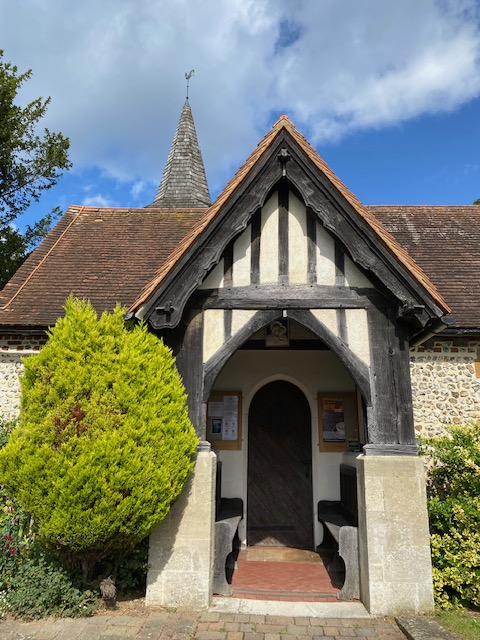
The bus stops right outside St Mary the Virgin church which has stood here since the twelfth century. The present chancel was once the original tiny church, reputedly visited by knights on their way to the crusades, who carved crosses at the side of the door that now leads to the vestry. The building is grade II listed and was first mentioned in the Merton Priory records of 1174. Major restoration works took place in 1854 and 1870 when the south aisle was added.
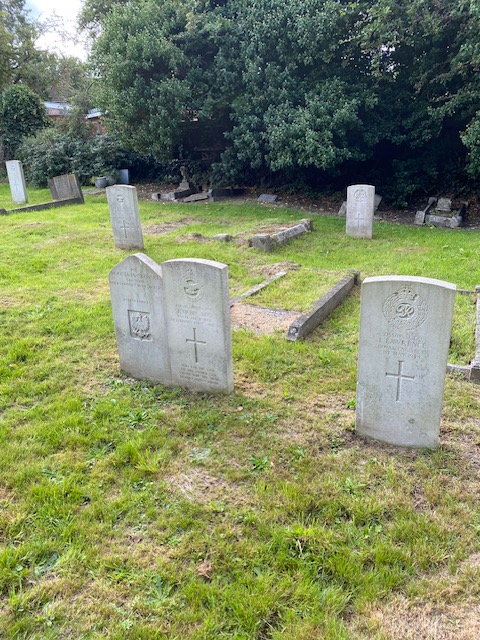
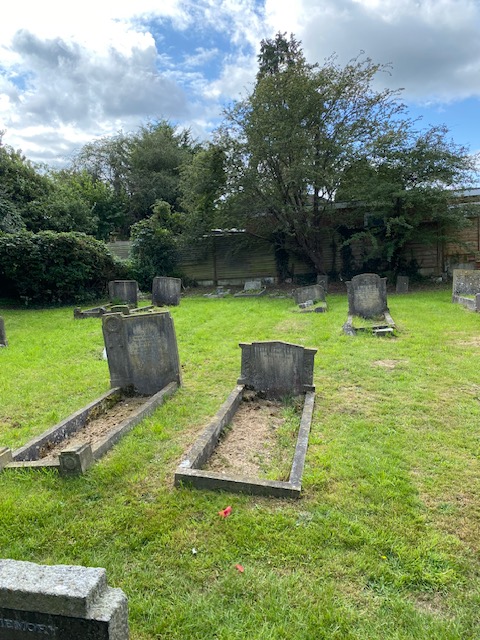
Outside in the churchyard there are several war graves and somewhere is a monument to the playwright Samuel Crisp. He was a friend of the 18th-century novelist and diarist Fanny Burney who wrote the epitaph.
3. Moor Lane bus stop
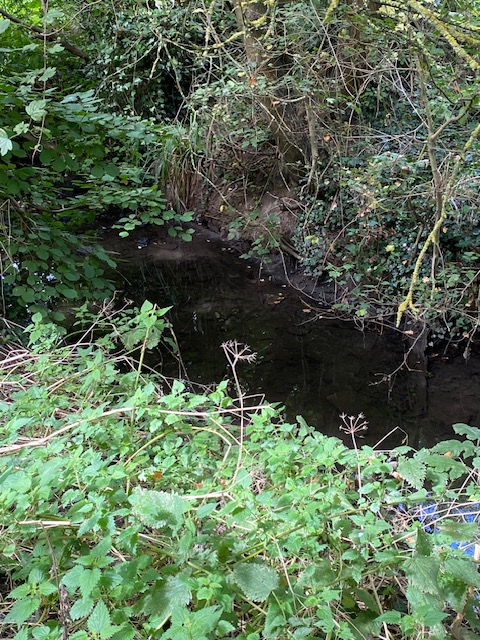
Round the corner from the stop is Bonesgate Open Space. This lovely open space is totally overshadowed by massive pylons and it’s hard to understand why they would have been placed in this otherwise beauty spot. Bonesgate is a linear park along the banks of the Bonesgate Stream. It is a public park, Local Nature Reserve (LNR) and Site of Borough Importance for Nature Conservation, Grade 1. It is mainly grassland with some coppiced hazel, which has the locally rare goldilocks buttercup. Birds include the great spotted woodpecker, song thrush and lesser whitethroat.


4. Chessington North station bus stop
Chessington North station is built in the concrete Art Deco “cinema” style of the 1930s. It was designed by the architect James Robb Scott, and it opened on 28 May 1939. The overhead bridge is in a similar style, also made with concrete in the 1930s.
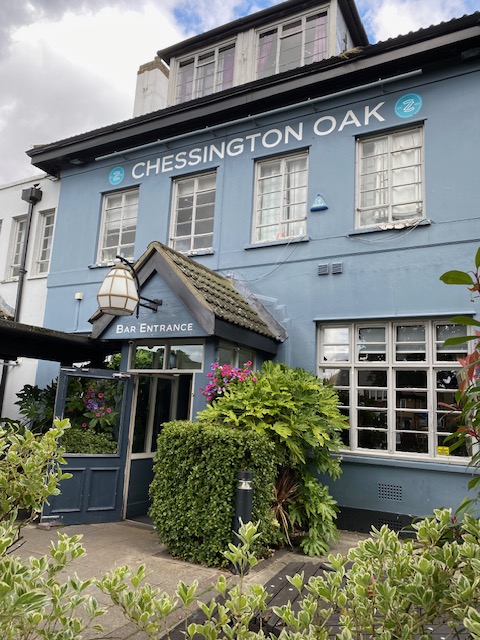
Down the road from the station is the Chessington Oak pub, formerly known as the Blackamoor’s Head and previous to that it was Blackamore Arms. Built in the 1930s, it was felt appropriate to change its name to the Oak, avoiding any PC issues!


5. Elmcroft Drive bus stop
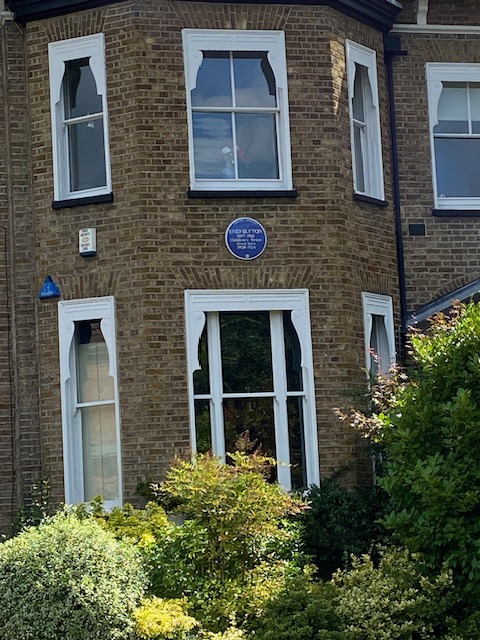
At 207 Hook Road is the former home of the novelist Enid Blyton. She lived here during 1920 – 24, having been born in Dulwich. She is most noted for her ‘Famous Five’ and Noddy stories. Her works have been translated into nearly ninety languages and have sold more than 600 million copies worldwide. In the changing climate of the 1960s, she was accused of racism and sexism, and her books were removed from some libraries.
Round the corner from here is Jaggers Barbers – most notable for the shop window with some really interesting artefacts, both old and modern, on display. You can see an old radio/wireless, a silver till and plenty of ancient razors as you gaze inside.


6. Surbiton Sainsbury’s bus stop
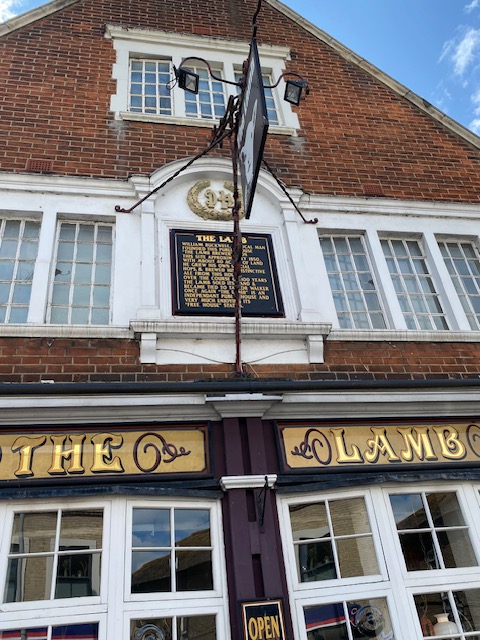
On the Brighton Road in Surbiton is The Lamb pub. Dating back to the 1850s, the pub had a small brewery in Victorian times. Over the front door, the plaque says “William Buckwell, local man, founded this public house “The Lamb Brewery” on this site approx. 1850 with about 40 acres of land. He grew his own special hops & brewed his distinctive ale from this house. Over the course of 100 years, the Lamb sold its land & became tied to Taylor Walker, once again “The Lamb” is an independent public house and very much enjoying its “Free House” status.”
A few minutes’ walk from here is what was once the Museum of Futures, now a sustainable community space with a community fridge next door. Inside the latter you’ll get a very warm welcome from Hasan and a colleague who will explain to you what they do to help the local community. Receiving free food and other essentials from the local shops and supermarkets, they actively encourage anyone who isn’t able to pay for these things out of their own pockets, to come and avail themselves here. A fantastic – if sadly necessary – service.



7. Surbiton Road/Penrhyn Road bus stop
On the way to the next place of interest, the bus passes Surbiton’s lovely grade II listed clock tower. It’s made from Bath stone and has a bronze medallion with a relief of the king’s head, and a weathervane bearing the initials of King Edward and Queen Alexandra. It was originally erected in 1905, to commemorate King Edward VII’s coronation which had taken place in 1902.
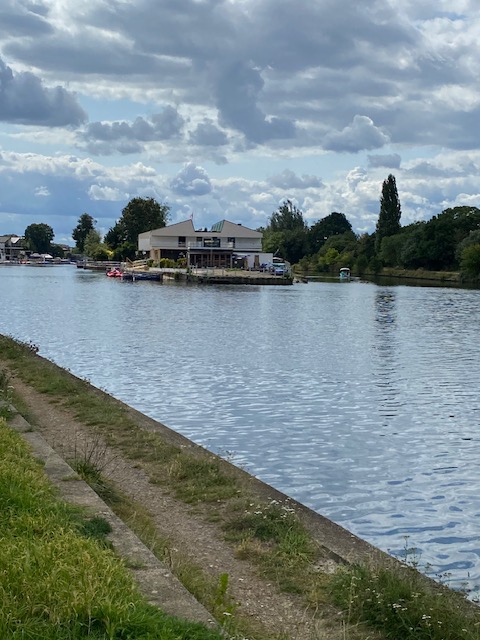
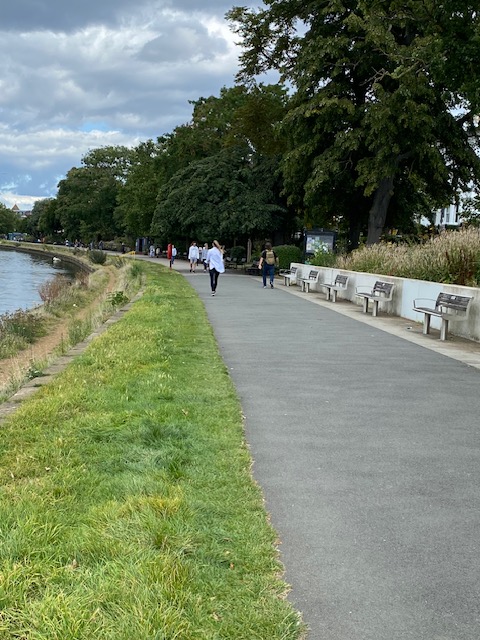
When you alight from the bus, head towards the river and you’ll come across the Queen’s Promenade. This is a beautiful stretch of the Thames and it’s lovely to walk along the riverside or take a boat ride. This sweeping promenade was inaugurated by Queen Victoria in 1856 when a thousand school children lined the road. The promenade stretches from Kingston Town centre to as far as Ravens Ait, a small island that was originally used to grow Osiers for Kingston’s basket makers. Dotted all along the promenade are benches, each one is dedicated to a person or persons so that their memories are preserved and they also serve as a welcome place to rest.
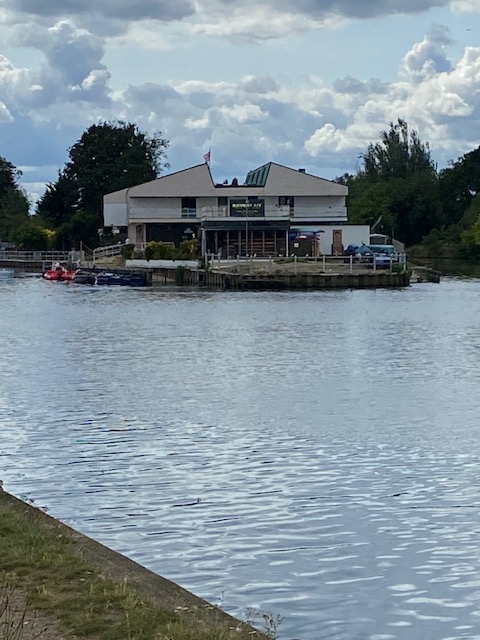

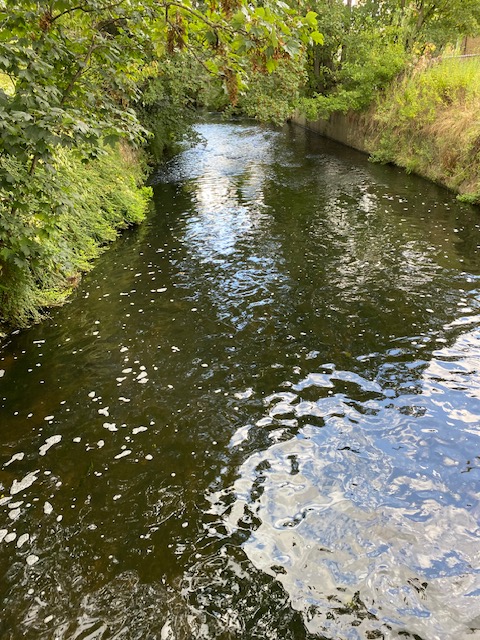
On your way back to the bus stop, you’ll pass over the River Hogsmill on Knights Park Bridge, which was constructed in 1892. The grey heron is a common sight along this stretch of the river though not seen every day.


8. Kingston Crown Court/Kingston College bus stop
Knights Court is an architectural delight, having a spectacular arched entrance with a symmetric contemporary design. It’s now converted into individual apartments and it’s not easy to determine what the buildings were originally or even when they were built, though it’s likely it was in the inter-war years.

9. Eden Street bus stop
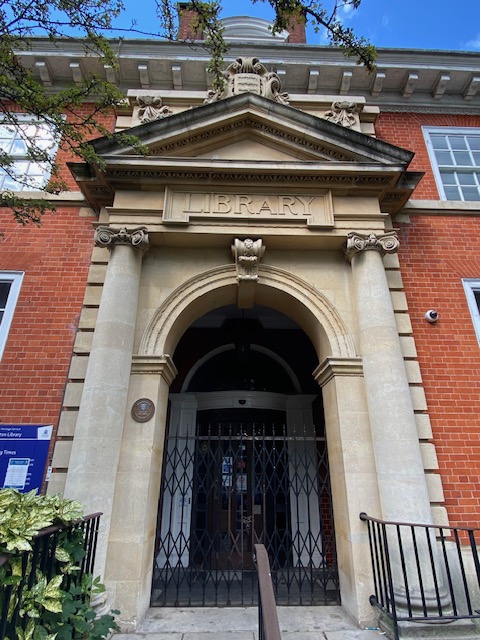
Final stop on this route is near the centre of Kingston town. The museum and library are close by but check before you go, to see their opening times – generally open Thursday to Saturday. The buildings are lovely, even if you can’t go inside. Kingston Library was organized on February 12, 1899 when, at the invitation of Mrs. William Lawton, Grand Regent of the Wiltwyck Chapter of the Daughters of the American Revolution, a “book reception” was held in the Common Council Room at City Hall. The library has benefitted from the generosity of benefactors including Andrew Carnegie.
Kingston Museum tells the story of the Royal Borough of Kingston from the earliest times to the present day. The Museum, built 1904 was designed by Alfred Cox with money given by Andrew Carnegie, and is Grade II listed. They put on regular exhibitions with the current one in summer 2023 about David Bowie.


Before ending the journey, walk round to Old London Road where a fantastic art installation “Out of Order” is on permanent display. This domino effect sculpture has been created with twelve of the UK’s iconic telephone boxes. It was installed in 1989 and has since become one of Kingston’s most iconic landmarks. Over the years since its installation, these disused phone boxes were reportedly infested with rats and rubbish until they were restored. To celebrate its 30th anniversary, “Out of Order” was repainted, refurbished, and restored to its erstwhile glory, much to the amusement and delight of passers-by.
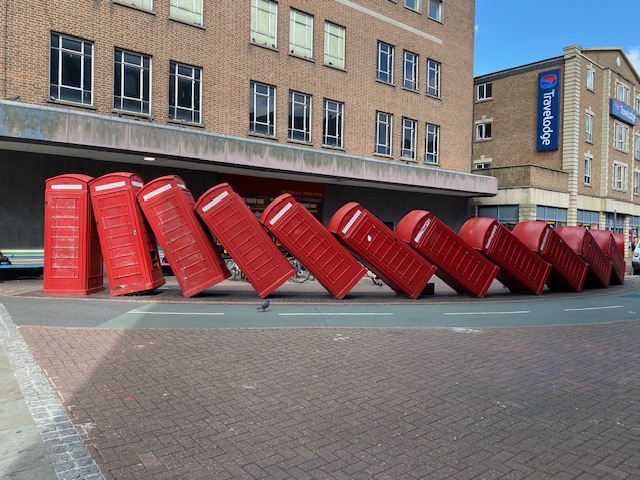


This art installation was a great end to the number 71 bus. Kingston is such a wonderful place with its Coronation Stone and Guildhall, it was a delight to come across something completely different.
Toilets that are free and available to the public:
- Azteca Safari Hotel
- Queen’s Promenade Kingston
 london routemistress