
Dalston Junction station to Wood Green station
Highlights:
- Abney Park and Cemetery
- Coronation Avenue
- Labyrinth in West Hackney Rec Ground
1. Dalston Kingsland station
Alight here to see the Rio cinema, which is only open from mid afternoon onwards. It’s worth a visit anyway, because the exterior of the building is a delight, with its Art Deco design. It was originally an auctioneer’s shop, converted into the Kingsland Palace in 1909. Owing to its success as a cinema, the properties either side were bought, and a new single-screen picture house, the Kingsland Empire, opened in 1915.
In the 1930s, it was refurbished in the Art Deco style and in the ’40s, it sustained bomb blast damage during the Blitz. And such is its importance these days, the bus stop outside is called Rio Cinema.


2. Amhurst Road
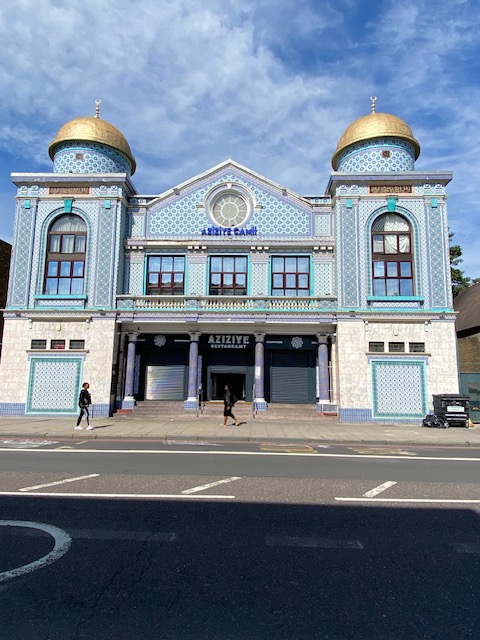
There are plenty of places to see from this stop. First of all, take a look at the beautiful Aziziye Mosque – it was funded in 1983 by the UK Turkish Islamic Association and includes a wedding hall and restaurant. Walk round to Farleigh Place to the Upfront Theatre -they put on workshops, facilitated by professional actors. Next door is an art shop Jackson’s, selling a whole range of paints and everything the budding and professional artist needs.


A short walk is the DIY art shop, which opens at 12 noon. They collaborate with artists as well as illustrators and designers and stock original artwork and limited edition prints as well as ceramics and jewellery.
The shop is opposite Shacklewell Green, a small conservation area with its green space and mature plane trees. In the middle of the green is a World War I memorial, stating “To the honoured memory of the men of Shacklewell who made the supreme sacrifice in the Great War of 1914 – 1918.


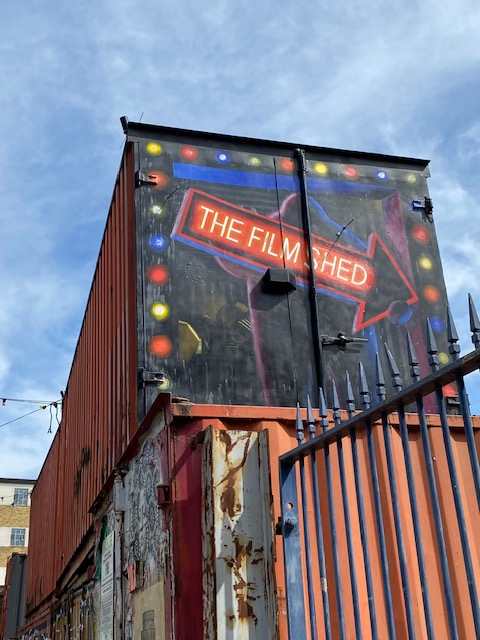
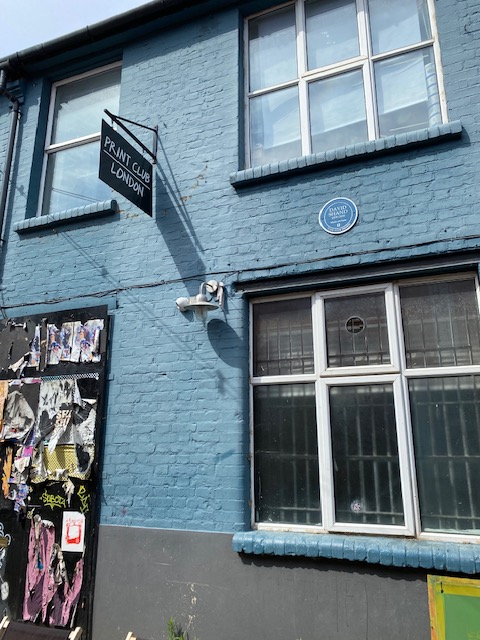
Next port of call is The Film Shed in Miller’s Avenue, a small, quirky street. The Film Shed building was badly bomb damaged during the 1940s London Blitz and was rebuilt in the early 1950s. It later became a textile factory, and later still a theatre rehearsals studio space. These days it’s used as a film location. There are a few interesting shops and galleries in the Avenue – the Print Club where they produce limited edition screen prints and Millers Junction, a creative desk space for illustrators and designers.


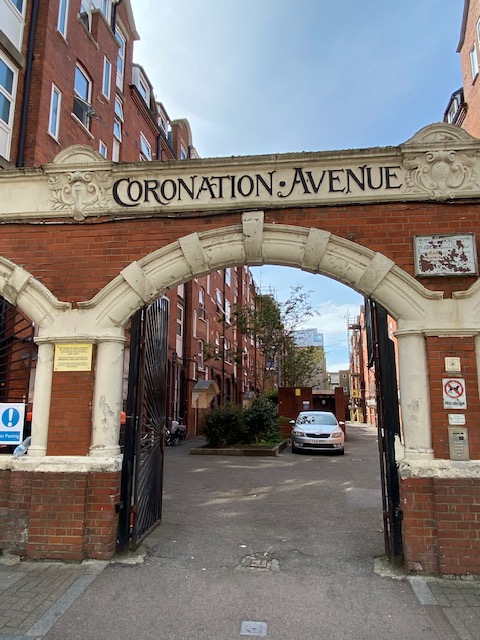
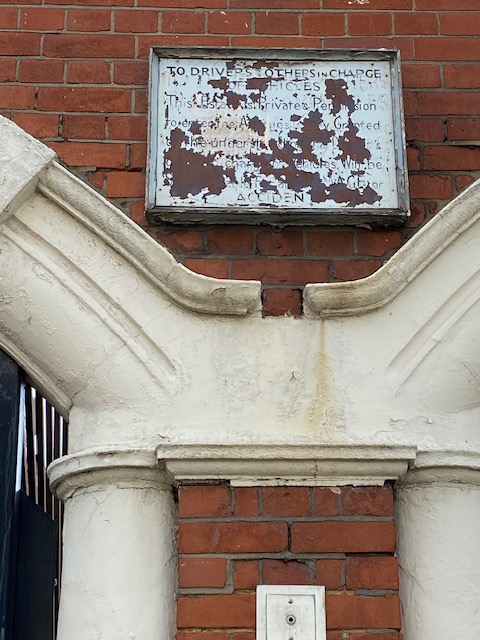
On the way to the the West Hackney Recreation Ground, you’ll pass Coronation Avenue. This entrance arch to a block of social housing is really quite evocative. Although it’s on Victorian Road, the coronation it marked is that of Edward VII, Queen Victoria’s son & successor. Coronation Avenue opened in 1903 and has around 300 flats, mostly one-bed and bedsits. It was the site of a major civilian tragedy that hit London during World War II. On 13 October 1940, during the Blitz of London, a high explosive bomb landed on Coronation Avenue. The bomb managed to penetrate a shelter beneath the building where many of the residents had sought refuge during the night-time air raid, causing an exceptionally high number of casualties. Many of those who died that night are remembered in nearby Abney Park cemetery.


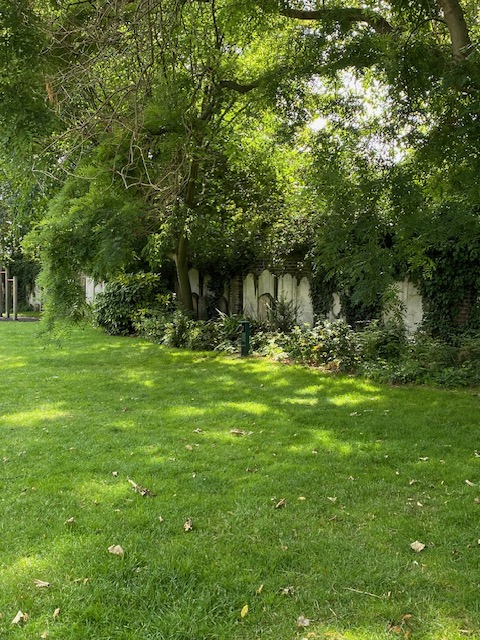
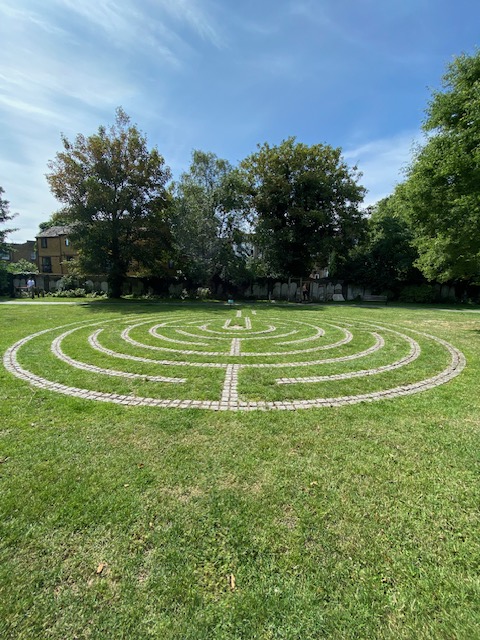
Walk to West Hackney Recreation Ground which began life as the burial ground of the original West Hackney church, consecrated in 1824. From this time until 1872, the burial ground was surrounded by market gardens, supplying fresh fruit and vegetables to the city. With the advent of the railway, there was an increased demand for housing so much of the land was given to property development. In the 1880s, plans were drawn up and approved for the land to be converted to a green space, with the park opening in October 1885. There are still many graves here but the park is very pretty and the focal point is the labyrinth which has been placed in the middle – not to be missed!

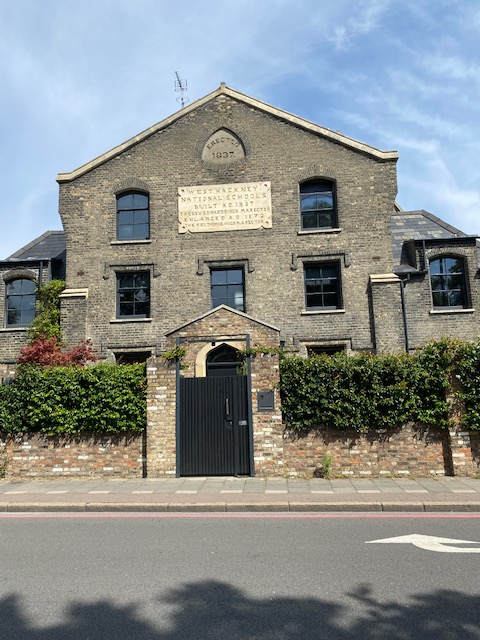
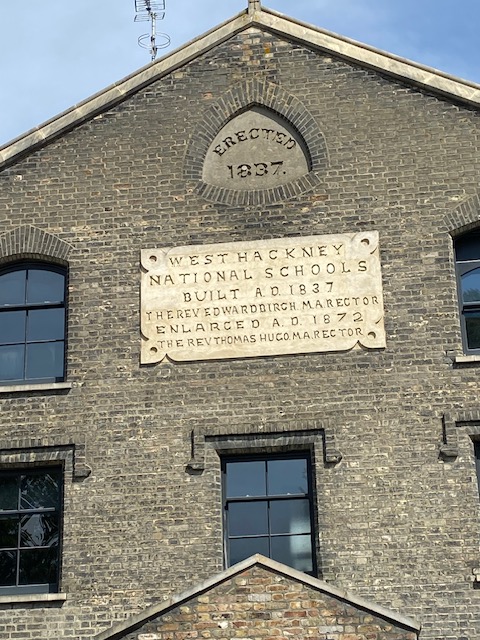
Head back to the bus stop and you’ll pass an old building, now called Grange Hall but at one time was West Hackney National Schools. It was erected in 1837, the year Queen Victoria acceded to the throne. On the front is a plaque which reads “West Hackney National Schools. Built A.D 1837 The Rev. Edward Birch Rector. Enlarged A.D.1872 The Rev. Thomas Hugo M.A. Rector.” The latter of whom was rector of West Hackney in 1871.
It was a school until the 1960s, then occupied by an engineering merchant until 2013, when it was purchased by developers. They have restored the building using as many of the original features as possible and it’s now converted to residential homes.
3. Stoke Newington Church Street
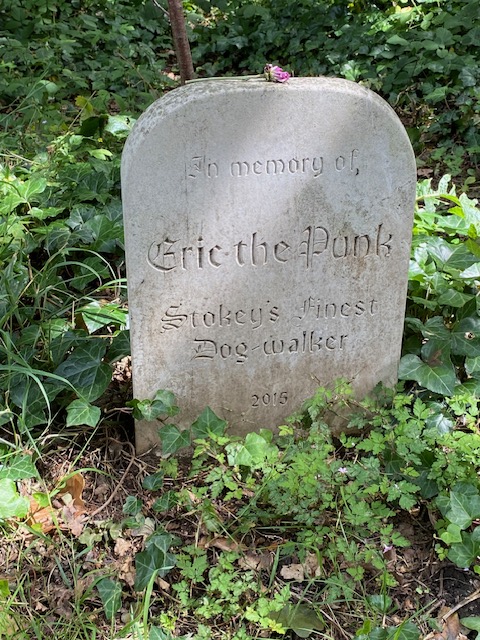
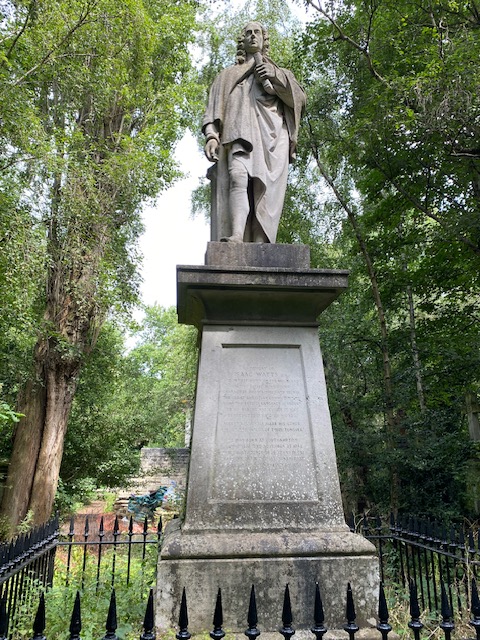
Here you’ll find Abney Park and Cemetery, one of the “Magnificent Seven” burial grounds established in the 1840s (with Highgate Cemetery being another of the seven). The burial ground is quite vast and there are plenty of paths to venture down and view the numerous graves, tombs and mausoleums. So many people are buried here – including Eric the Punk – “Stokey’s finest dog walker”, Isaac Watts, hymn writer and theologian, and Dr Rogers with his Family Tomb. Dr Rogers is notable for his philanthropy in particular donating stained glass windows to churches and chapels. Other famous residents are William and Catherine Booth – founders of the Salvation Army.


4. Stamford Hill Broadway
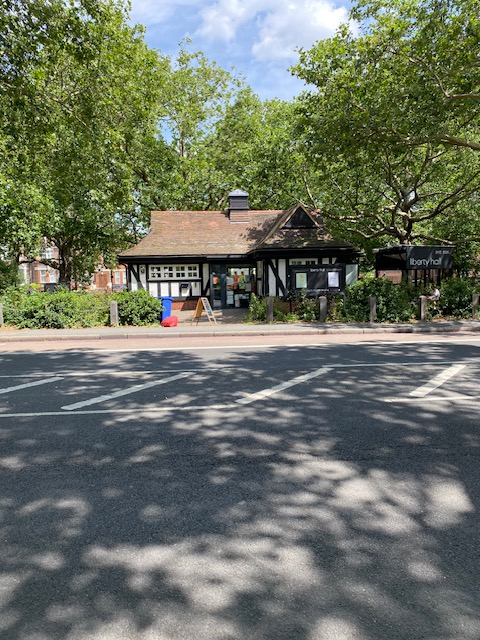
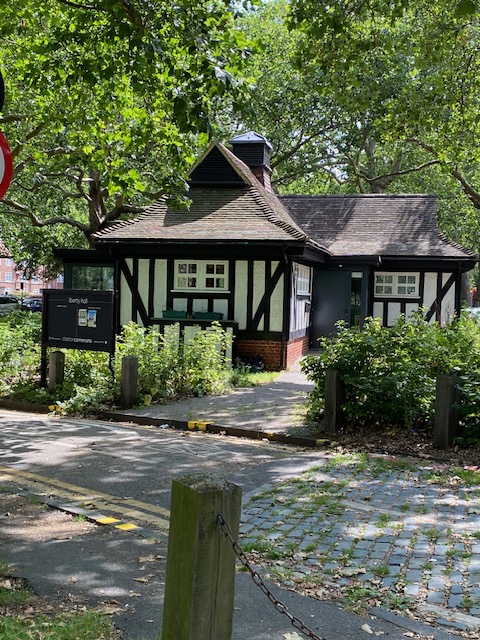
From this stop, walk via Clapton Pond (seen on bus route 38) to see Clapton Common Liberty Hall. Interestingly, it started out as a disused 1931 toilet block on the common! It was transformed into Liberty Hall in 2020, following a grassroots campaign. It’s now a flexible space, offering a range of activities and services in and around Clapton Common.
5. Cornwall Road
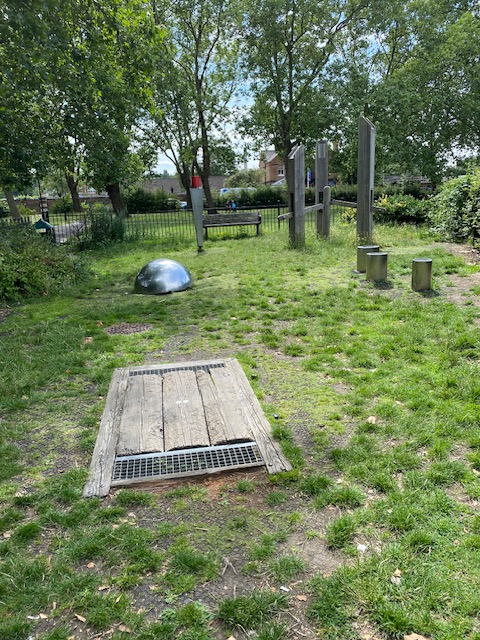
Next place to see is Chestnuts Park, which used to be a watercress farm. The stream that runs through the land is contained in an underground tunnel. The park was intended as a commemoration of Queen Victoria’s Diamond Jubilee and opened to the public in November 1900. Originally, there used to be a large house called Chestnuts House, built around 1850 in the middle of the park. The house was demolished in the 1980s and has been replaced by a community centre.


6. Turnpike Lane
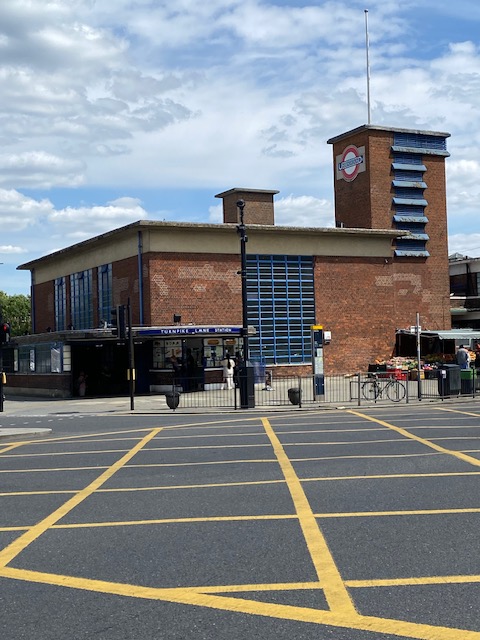
The bus stops right by Turnpike Lane tube station and it’s worth taking a moment to look at the station building. It is regarded as a well-preserved example of the modernist house style of London Transport in the 1930s and is Grade II listed.
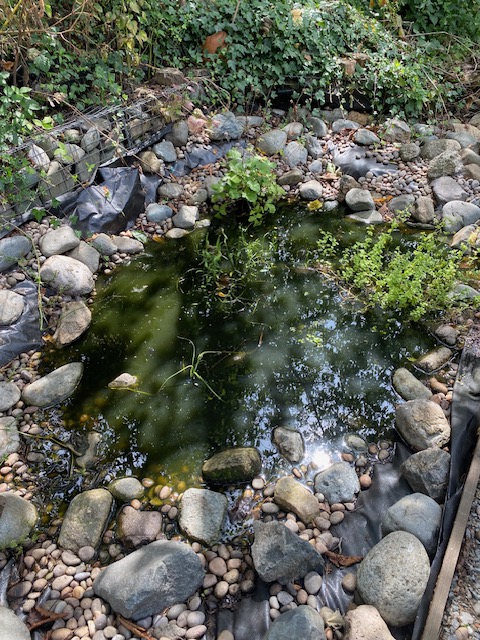
From here, make your way to Westbury Avenue Herb Garden and Westbury Banks Nature Reserve which are more or less side by side. The latter is a Nature Reserve in the urban centre of Wood Green. It’s 150 metres long and comprises four different banks boasting a variety of plants, a walkway, a rockery, a pond, bug hotels and much more. It’s currently undergoing a complete overhaul as it’s been pretty overgrown, so it will be well worth a visit to see how it’s been transformed by the volunteers.


7. Brampton Park Road
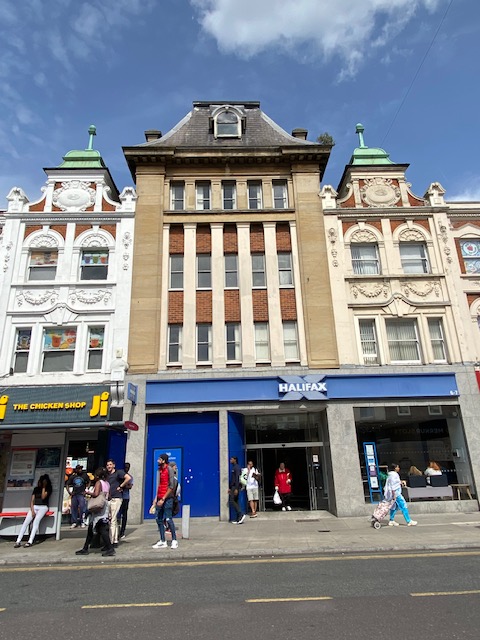
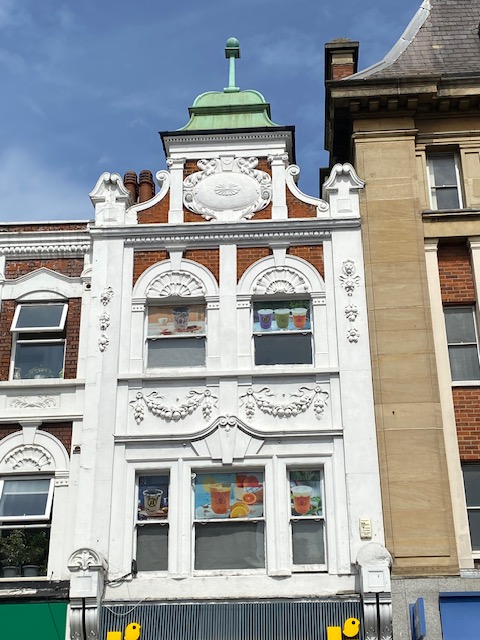
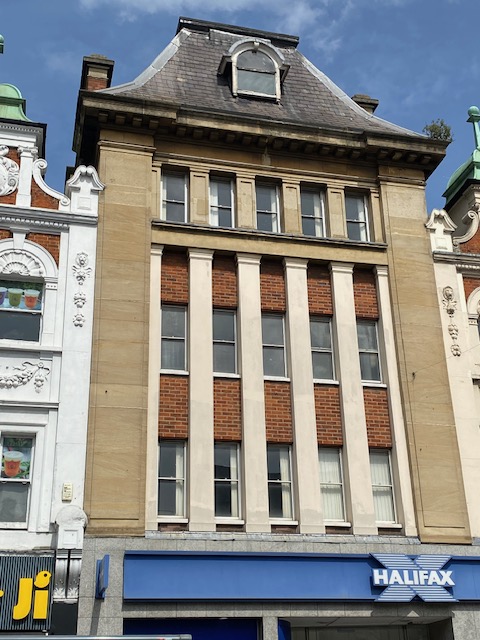
You’re now in Wood Green and alight at this stop to visit the site of the old Empire Theatre. The Theatre opened in September 1912 with a large capacity of nearly 2,000 people on three levels and would go on to entertain the local people with over 40 years of music hall and variety productions. One (unpleasant) claim to fame for the Empire Theatre was the death of American illusionist Chung Ling Soo in March 1918, when his act featuring catching a bullet on a plate went horribly wrong and he was shot dead in the chest in front of a packed audience. Ouch! These days the building has been taken over by a building society but it’s possible to see its former glory if you stand on the opposite side of the road.
8. Wood Green station
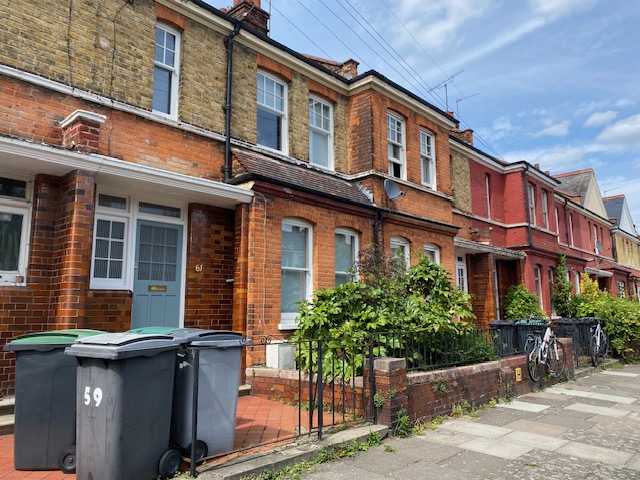
Some minutes’ walk from the bus stop is the Noel Park Estate. It is a planned community built in late 19th/early 20th centuries consisting of 2,200 model dwellings. It’s one of the earliest garden suburbs in the world, and was designed to provide affordable housing for working-class families wishing to leave the inner city; every property had both a front and back garden. The estate was designed with five classes of houses. Although the houses were built to the same five basic designs, each street was given a distinct style of design and ornamentation.


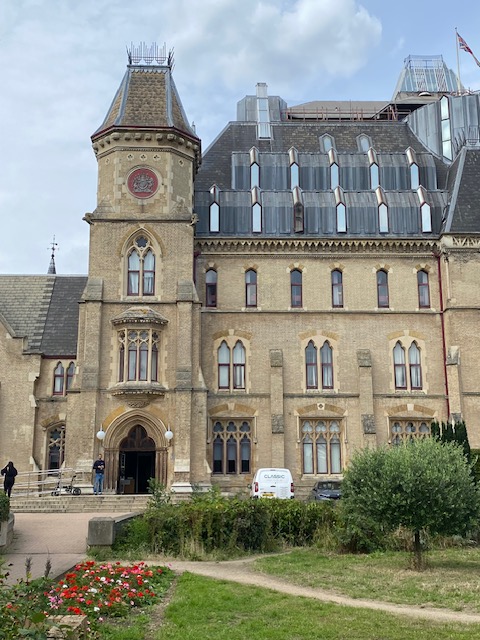
Back to the bus stop and you’ll pass Wood Green Crown Court. The original building on the site was Lordship Lodge, a private mansion built in early 19th century. It was bought by the Royal Masonic school for Boys in the 1850s, and has since had many different uses, including a training college for schoolmistresses, the Tottenham District gas company and in 1989, it was converted into the Crown Court as it is today. It mainly deals with criminal cases.

This was a relatively easy journey with the distances between stops not too great. Almost all of the places to visit were outdoors so it was good that it was a warm summer’s day.
Toilets that are free and available to the public:
- The Clarence Tavern, Stoke Newington
- Sainsbury’s Stamford Hill
 london routemistress