
Leytonstone station to Romford station
Highlights:
- Alfred Hitchcock mosaics at Leytonstone station
- Eagle Pond – full of swans
- Valentine’s Mansion, Park and Pond
1.Leytonstone station
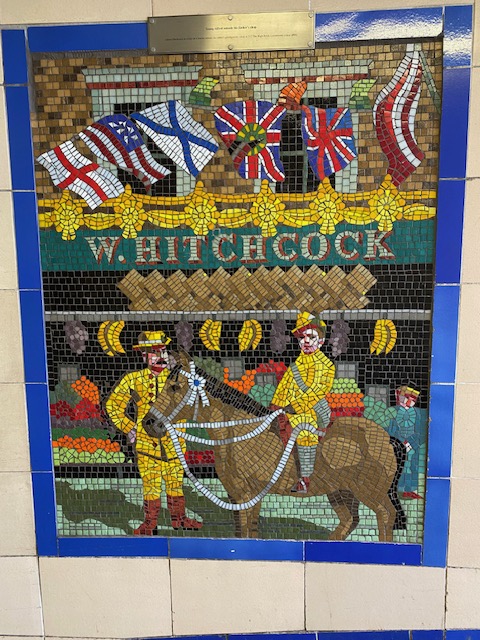
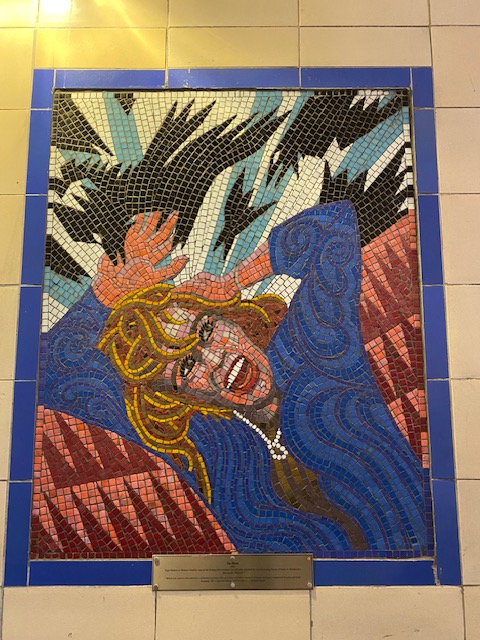
The number 66 starts at Leytonstone station and before getting on the bus, it’s imperative to go into the station to see the many mosaics of Alfred Hitchcock’s films and early life. He was born in Leytonstone in 1899 and these mosaics were commissioned to celebrate the centenary of his birth.


2. Green Man Roundabout
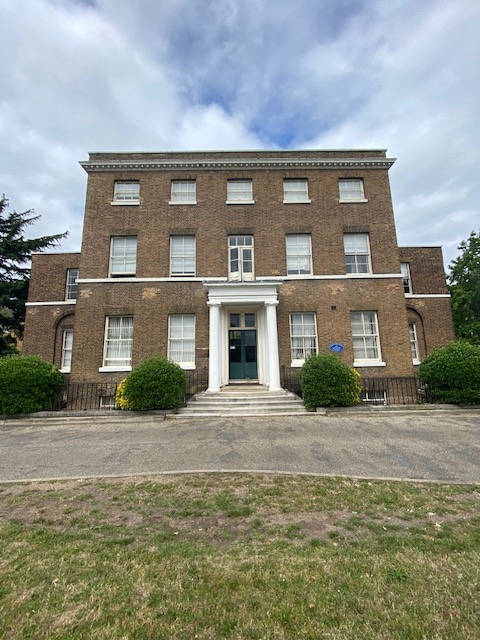
Hop on the 66 at the station and travel 2 stops. A short walk from the stop is Leytonstone House, a grade II listed building. It’s an 18th century house which was originally the home of Edward North Buxton and subsequently was Bethnal Green School (for the juvenile poor) 1868 – 1936.


Near the bus stop is a mosaic mural of the Green Man – he of the roundabout. It’s on the corner of a terrace of houses and is named after a pub of this name that was close by.
3. Gordon Road
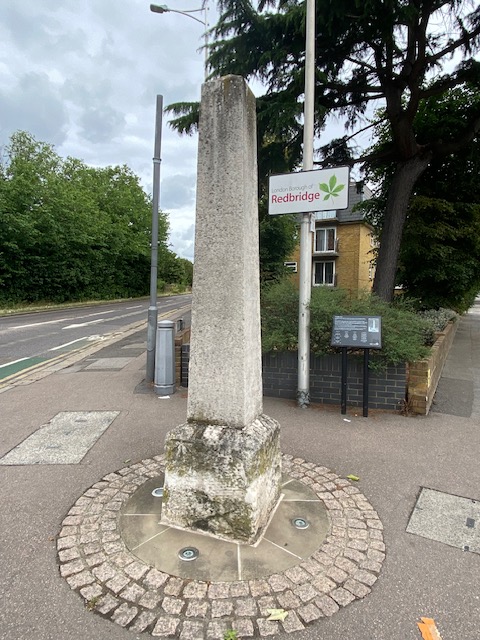
Next stop is to see the High Stone of Snaresbrook. A stone has been in this location since the early 18th century and was originally a mile marker showing the distances to Epping, Ongar, Whitechapel and Hyde Park Corner. The original stone was damaged in the 1930s and was replaced by the current stone, though the base is thought to be part of the original. Legend insists that it dates back to Roman times.


4. High Street/Hermon Hill
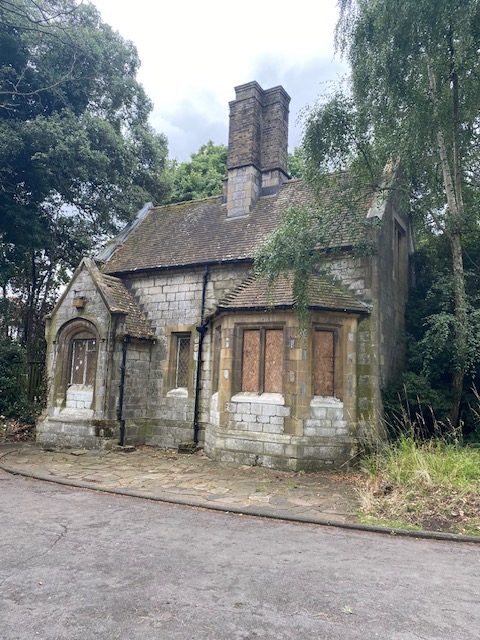
There’s lots to see around here so … first off you’ll come to the Victorian Drinking Fountain in Hollybush Hill. It was erected in 1872 and is an open four-sided canopy. It was donated to the people of Snaresbrook by merchant Samuel Ellis who lived at Snaresbrook House. From here, walk to Snaresbrook Crown Court where the first building you see is an old Gatekeepers Lodge. It was built in 1841, and was purpose built for the orphanage’s bailiff and his wife, the latter of whom was the site’s gatekeeper. Around the 1970s, the lodge became a private dwelling but has remained empty for many years. The lodge is a Grade II listed building in acknowledgement of its group value with the court.


And so to the Crown Court building itself. This is grade II listed, is one of 12 crown courts in the UK – and is the busiest of them all, managing 7,000 cases a year. It was built in the 1840s in the Jacobean gothic style and was originally built as an orphanage. The foundation stone was laid by Albert, Prince Consort in 1841. It remained an orphanage until 1938 when it became the Royal Wanstead School and. continued as a school until 1971 when it passed into the ownership of British government who converted the building into a crown court at a cost of £1.6m in 1973.


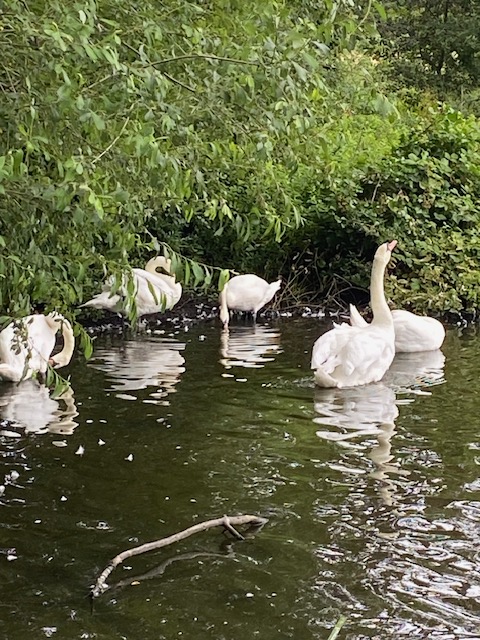
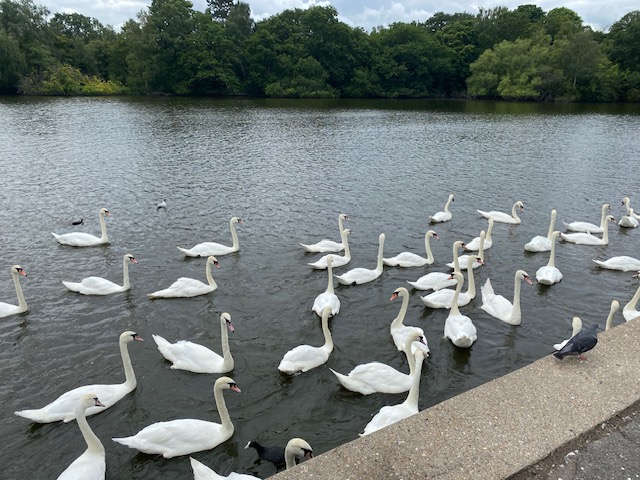
Within the grounds of the crown court is its own lake, known as Eagle Pond. There are many species of wildfowl and an unusual number of swans here – this seems to be because the Swan Rescue organisation in Egham, have released some of the swans into the lake, that have been cared for after injury. Round the corner from the lake is Epping Forest and set within the forest is The Birch Well. Many of the large houses in Wanstead would have had their own well to provide water. Those without their own well would have drawn water at the Birch Well. When it was in use, it was a large square gravel pit with wooden steps and stagings with a bucket and barrel. People outside the boundary were charged a penny for three buckets.


5. Wanstead Place
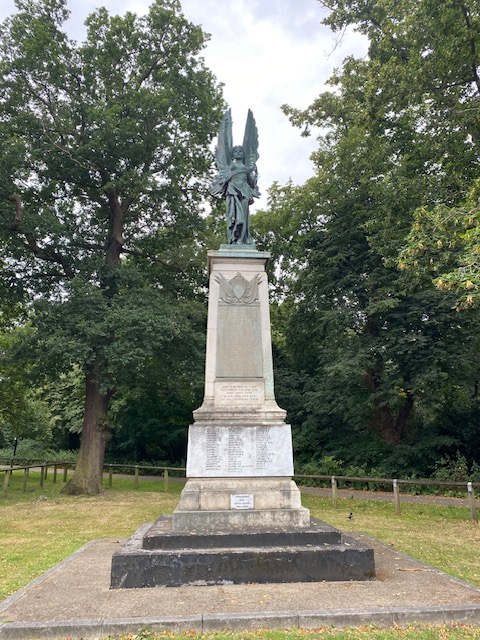
Just near the stop is a signpost for Wanstead Village, containing various symbols – Wanstead and Woodford’s coat of arms, birds and lions, trees (symbolising Epping Forest), herons and an inscription in Latin translating to “By wisdom and courage”. Opposite the bus stop is Wanstead Memorial. This has a bronze figure set on a stone base. The figure is of Winged Victory, half draped, as she carries 4 palm leaves and wears laurel wreath on her head. There is an inscribed plaque to commemorate the men and women who died in both world wars. The sculptor was Newbury Trent who also created the soldier on the Ilford War Memorial (see later in the blog).


Final place to visit at this stop is the Images in Frames art shop and gallery. They display contemporary artwork from local and UK artists and the most recent one is Ben Jeffery, whose portraits of celebrities and royals are worth a visit to this lovely gallery.


6. Gants Hill station
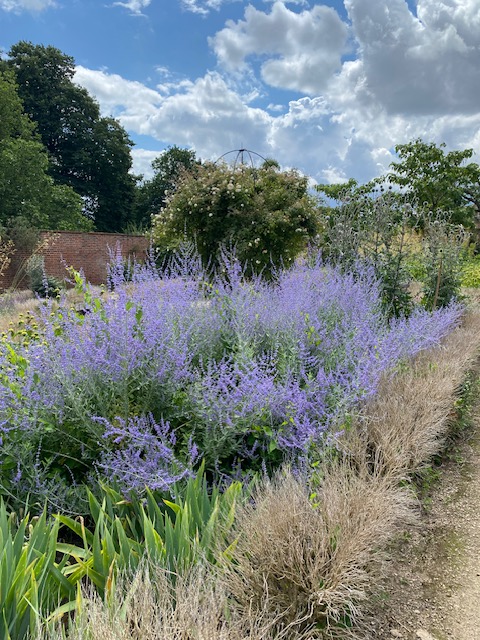
Near the station is a sculpture called The Beacon, created in 2004 by school pupils in collaboration with the community artists Cookson and McNally. From here it’s an easy stroll to Valentine’s Park and Pond. As you enter the park, you first come across Horse Pond. This is the head of the drainage system and connects with the river Roding and ultimately the Thames at Barking. While making your way to see the Mansion, you’ll pass the Diamond Jubilee Dry Garden. The garden has been designed to need very little water, with clipped evergreens such as box and myrtle, free growing herbaceous perennials and grasses flowering at different times of the year.

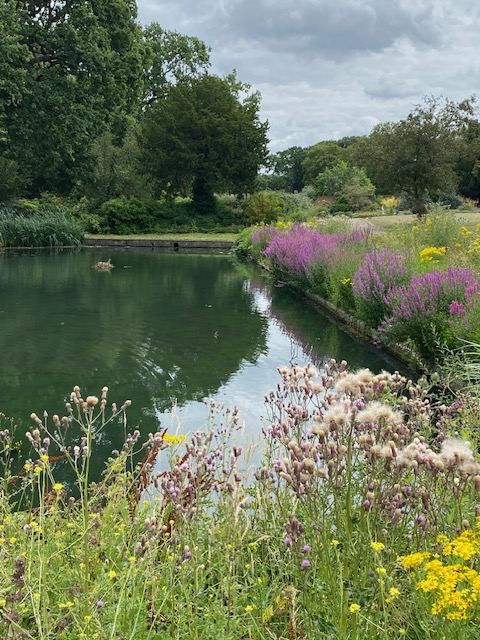

There’s a lot to see in the park so it’s worth giving yourself time to soak in all the delightful sights. The house is pretty impressive though it’s not possible to go inside. It’s grade II* listed and was built in the 1690s. The exterior was extensively altered in the mid C18, and the House was further altered and enlarged in 1811, to its present appearance. There’s the Dovecote and Kitchen Garden which has a café for when you need refreshments. Built in the 18th century, the Dovecote is an octagonal brick building which would have originally housed domesticated doves and pigeons.


Keep walking around the park and you won’t be disappointed with the lovely gardens, the haha and the grottoes with their alcove seat. There are several information boards around the park with descriptions of the various features and it’s certainly a good idea to spend time reading them. For example, we’re told that the Ha Ha was built sometime after 1870. It was built to keep livestock out of the formal grounds of the estate. The grottoes and the alcove seat date back to 1740-60. They are examples of rococo style rockwork and are so rare, they are considered of national importance.
The alcove seat is angled to look across the Long Water (canal) and is decorated with flint and slag deposits similar to the grottoes.



7. Newbury Park station
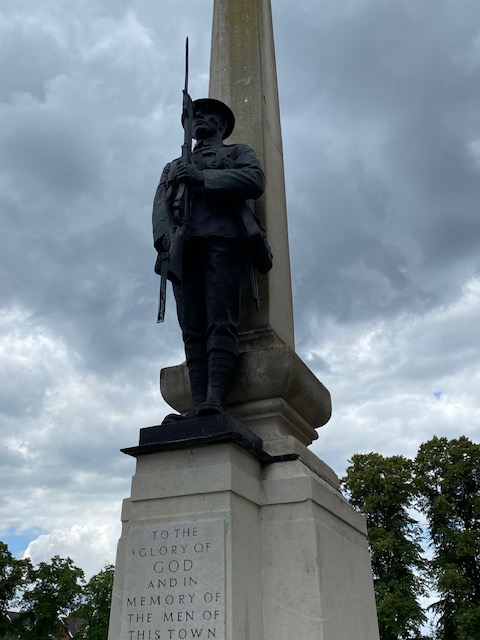
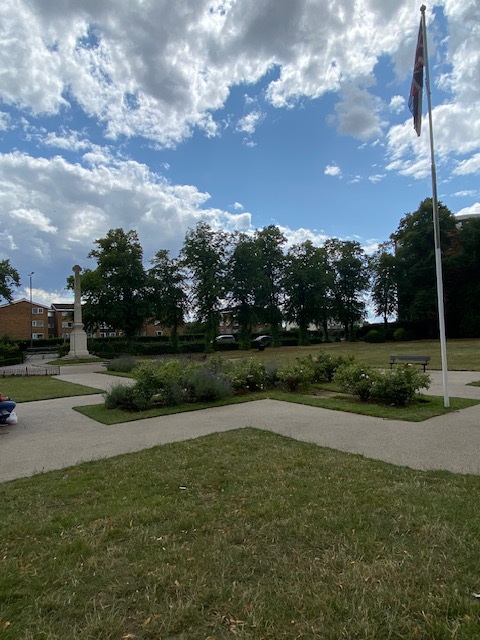
After a wonderful walk in Valentine’s Park, get back on the bus and alight at Newbury Park. Here you will find the Ilford War Memorial Gardens which house both the memorial and a hall which was the children’s wing, created as part of the King George V Hospital and serving as the borough’s other major memorial to those who lost their lives during World War I. The war memorial was paid for by public subscription and opened on 11th November 1922 with an unveiling ceremony carried out by HRH Princess Louise, Duchess of Argyll and Lt General Sir Francis Lloyd. It features a uniformed World War I solider presenting arms and standing guard beneath a Celtic cross. It was made by the same sculptor as the Wanstead Memorial (see above).


8. Romford Market
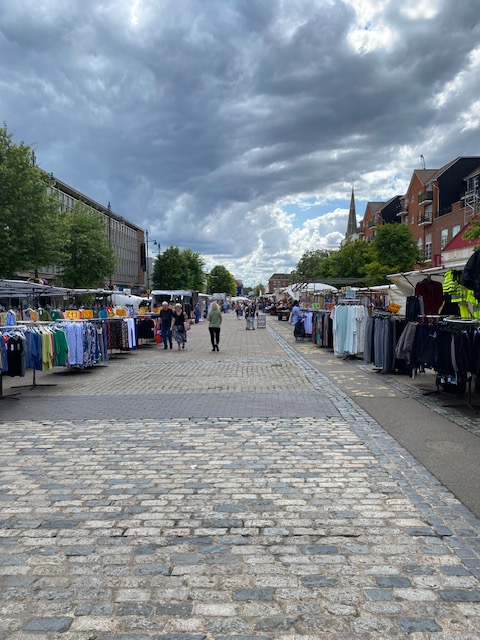
The penultimate stop is to see both Romford Market and Havering Town Hall. The market is a large outdoor one, with very many stalls selling an array of goods from food to clothing, bric-a-brac and plants. A charter was granted by King Henry III, to start it nearly 800 years ago in 1247. Originally established as a sheep market, it still operates three days a week. The Town Hall was purpose-built in the 1930s and was designed in the International Moderne style. There’s a tall window on the first floor flanked by flagpoles with a further flagpole on the roof. It’s not possible to go far inside the building but what you are able to see are some delightful art deco style doors.


9. Western Road
Final visit of the route is to see Havering Museum. It’s worth checking beforehand for opening times. Despite the fact that this was a Wednesday, the museum was closed. However, there were many exhibits displayed in the windows which give a flavour of what’s surely inside. For example, there’s a manual typewriter from around 1920, some dioramas (3-D models) which were created in the 1970s and 80s, some sample jugs from the Romford Brewery Company and even a model of an old London bus.
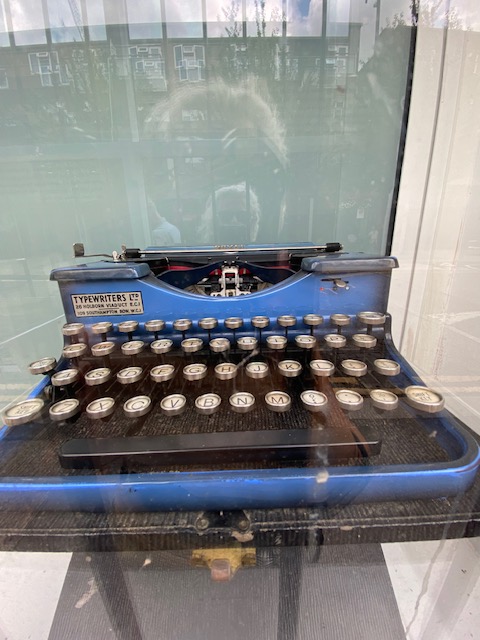


I’m sure there are plenty more artefacts and local information inside the museum, but at least it’s possible to get a glimpse of Romford’s past from the street.
This bus route was certainly full of variety – from the Hitchcock mosaics at Leytonstone station, to the swans at Eagle Pond and the splendid house and gardens at Valentine’s Park. There’s plenty for everyone.
Toilets that are free and available to the public:
- The Eagle Pub – aka Toby Carvery Snaresbrook
- Gardeners’ Kitchen Café at Valentine’s Park
 london routemistress

