
Barking Gascoigne Estate to Marks Gate, Dagenham
Highlights:
- Barking Abbey ruins
- Folly Wall
- Eastbury Manor House
- Valence House Museum
1.Broadway Theatre
Broadway Theatre isn’t open every day so it’s worth checking before getting there. The Broadway was originally the Barking Assembly Hall, designed in the 1930s as part of the Town Hall and completed in 1962. It was used sporadically for a variety of events from ballet to boxing. Outside the theatre is a statue of Job Henry Charles Drain, who gained the VC as a result of extreme bravery in France during World War 1. As a resident of Barking, it was fitting to place a statue in his honour there. Round the corner from the theatre is Barking Town Hall. It’s not possible to take a tour around the building but the main reception area is worth a peek inside.


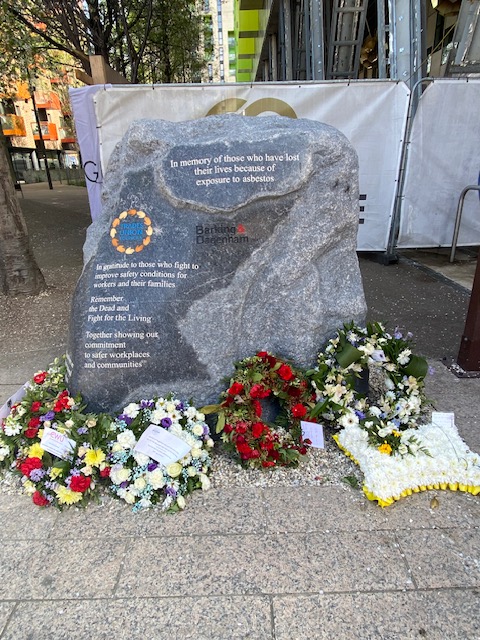
Outside the town hall is a memorial for those who died due to exposure to asbestos within the London Borough of Barking and Dagenham. In particular, it was the worst borough in the country for the number of women dying from mesothelioma, a form of cancer caused by very low levels of asbestos exposure.


Head towards the town centre and you come face to face with the Folly Wall – “a faux ruin” – which on first glance looks authentically ancient. However, it was created between 2007 and 2010 as part of a regeneration project of Barking Town centre. Local bricklaying students helped in the building of the sculpture.


2. Barking Abbey
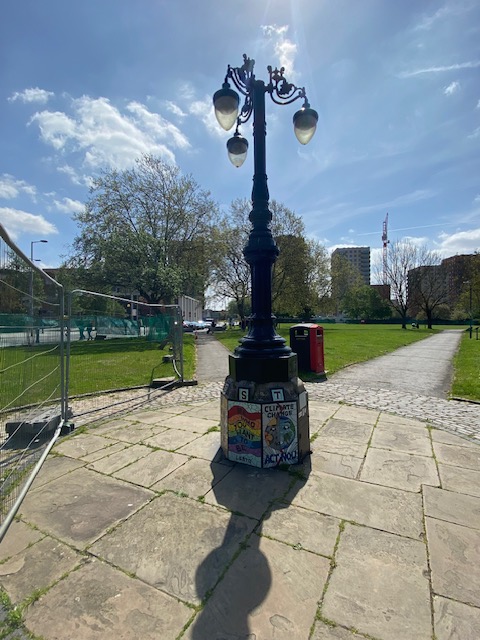
Crossing the road to get to the abbey ruins, you will first see The Three Lamps. These lamps on Abbey Green have stood close to Barking Broadway for over a century and were originally known as a place where people gathered to demand their rights, from trade unionists to female workers and suffragettes. Trade unions were among the earliest protestors to have gathered by the lamps. Most likely they were Gas Workers from the Barking Gas Works.
The lamps are situated just in front of Curfew Tower, the only remaining gateway to Barking’s Saxon Abbey (the ruins are now a protected monument). The tower is Grade II* listed, as The Fire Bell Gate. The original medieval belfry was built in 1370, and the current tower dates from around 1460.
The names Curfew Tower and Fire Bell Gate arose from the tolling of the bell from the tower, reminding people to extinguish all fires and lights, before the nightly curfew, which continued to ring until 1900.


Step through the tower and you will come across an explanatory board about the medieval Barking Abbey. The abbey was founded in AD 666 and was a double house for both monks and nuns. Destroyed by Vikings in AD 871, it was restored about a century later to house Benedictine nuns and by 1066, it was large enough to accommodate the new King William the Conqueror and his entourage.
The abbey was surrendered to the crown in 1539 during the Dissolution of the Monasteries and was demolished the following year. In early 20th century, the site of the abbey was excavated, and many objects were found, such as a bronze stylus, combs and a chatelaine. The discovery of writing implements such as the stylus, show that the inhabitants were educated people.


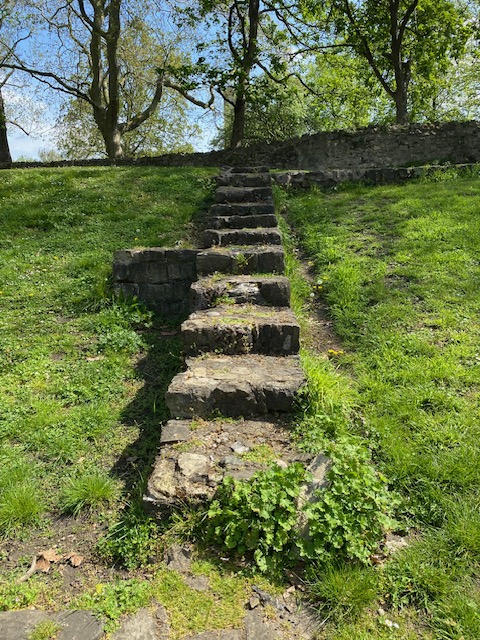
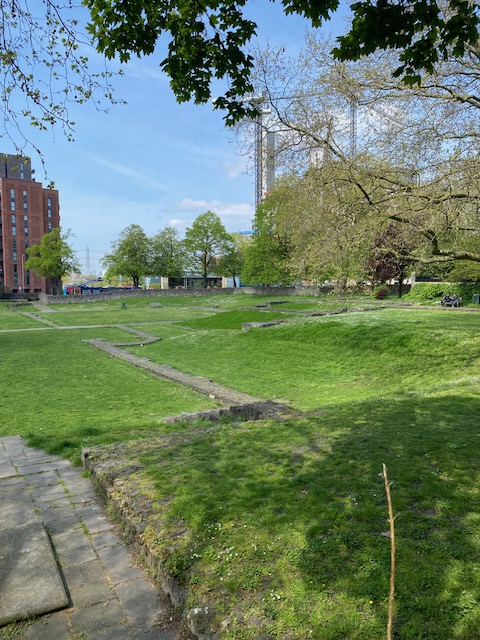
To be honest, these photos don’t do justice to the Abbey ruins – it really is quite remarkable to walk among what was a medieval nunnery and monastery and where once William the Conqueror stayed.
3. Park Avenue
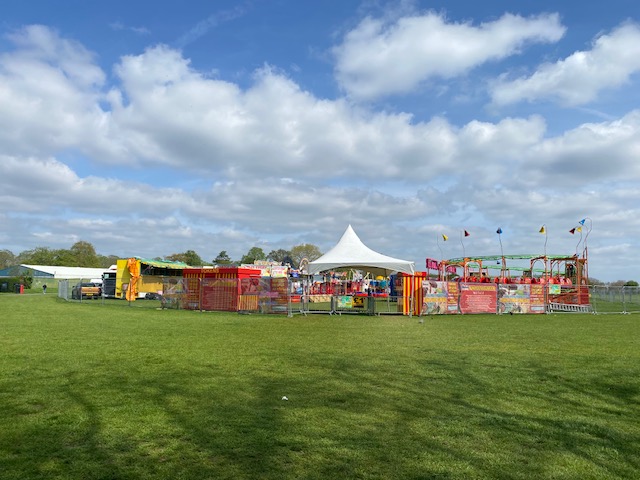
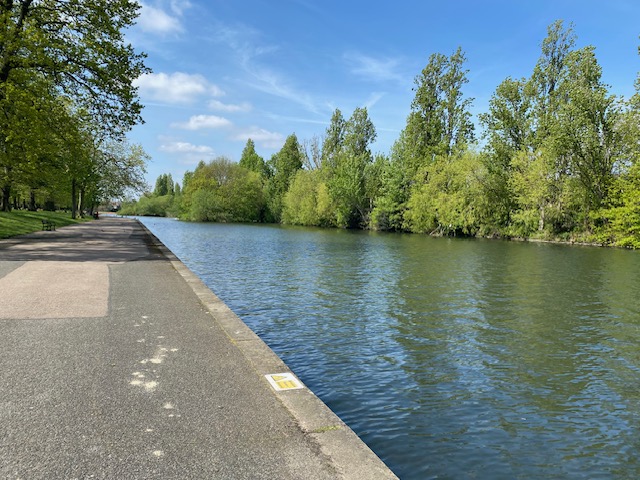
This is the stop for Barking Park, which is also on bus route 5. The classic Victorian park was established from land acquired in 1896 and was officially opened on 9 April 1898. The park’s most significant feature is a 910 metre long boating lake on the north side of the park, where rowing boats and motor boats are in use. During spring and summer, there is also a fairground within the park.

4. Rippleside Cemetery
Rippleside Cemetery was opened in 1886, the first burial taking place in October of that year. The original C19th Lodge, gates and some original railings remain, together with the chapel, a pretty traditional stone-built building which seats up to 60 people. A strange set of graves can be found within the cemetery – a cluster of several gravestones that are tightly packed in one space. It seems they are remains taken from Barking Abbey by St. Margaret’s church and relocated here. One of the workers at the cemetery had wished to line up the stones along an outer wall so the words could be read but he was advised they could not be moved from the relocated remains.


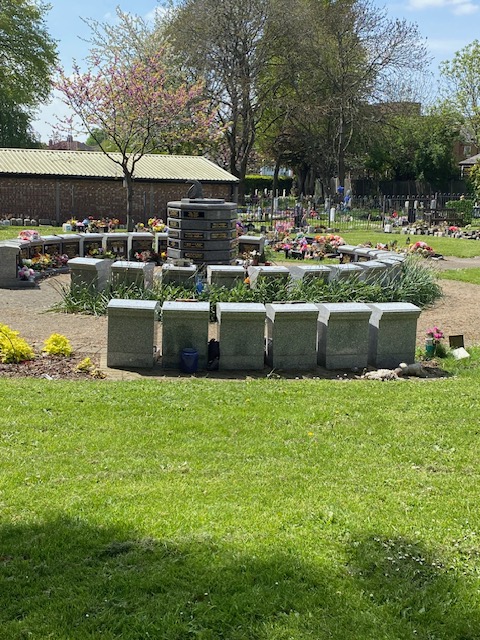
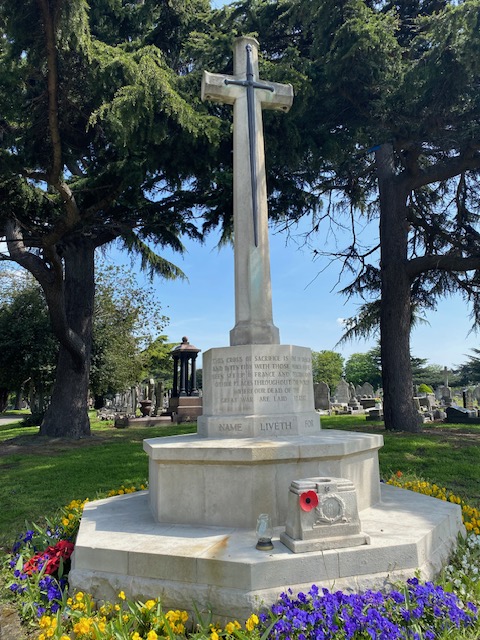
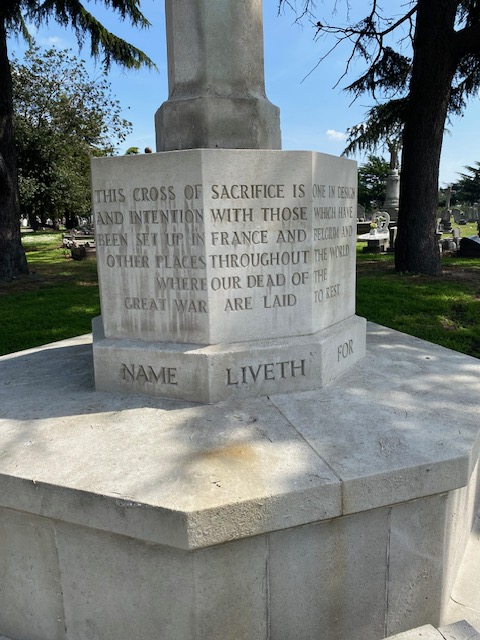
Also within the grounds is a Garden of Rest and various war memorials
Once you leave the cemetery, about a five minute walk away is Eastbury Manor House, a National Trust property. Although there is a small entry fee, it’s possible to get a feel for the house by a visit to the café and the loo, which they are happy for you to do. That said, it’s certainly worth paying for a guided tour of this lovely manor house where there is so much to see and discover.
Eastbury Manor House is a Grade I listed building which was built in the 1570s by Clement Sisley, a wealthy merchant, who purchased the land after the dissolution of Barking Abbey. It was probably the first brick built building in the area at that time; it had glass windows and very high chimneys, indicating the wealth of the owner.
The house became gradually more dilapidated from the late 18th century. The Great Tower Staircase was demolished by 1814. Wooden flooring and original fireplaces were removed in the 1830s. By the late 19th century only the west wing of the house was habitable. In 1918 the house was bought by the National Trust and was restored. These days, it’s managed by the LB of Barking and Dagenham.




5. Becontree Avenue
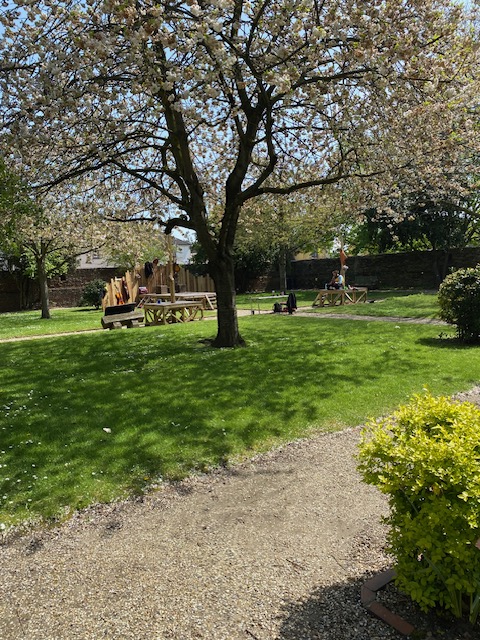
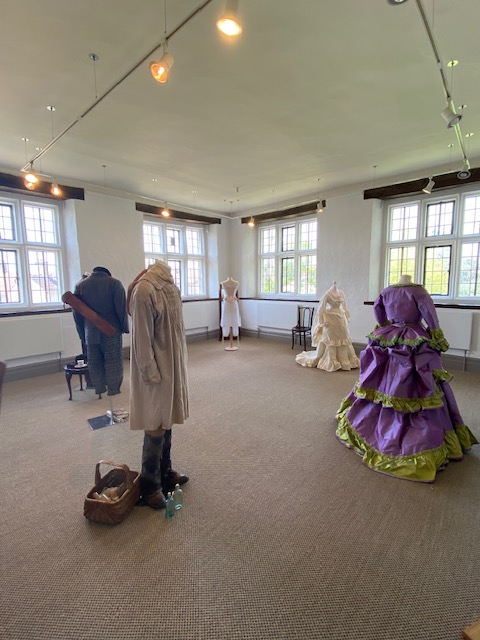
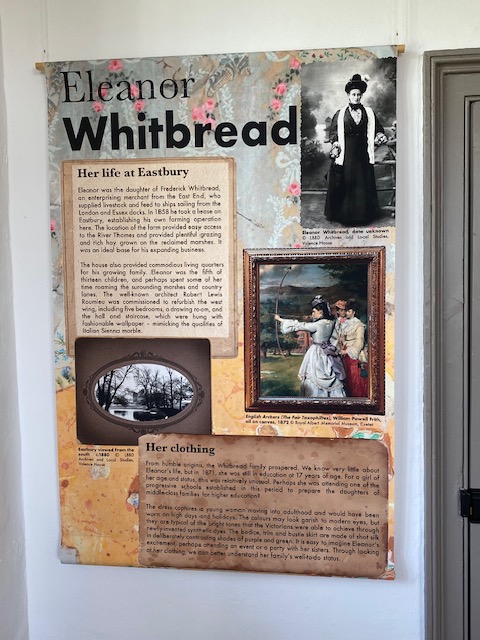
This is the stop for Valence House Museum, the only surviving manor house in Dagenham which dates back to medieval times and is still partially surrounded by a moat. There is no entry fee to this museum, despite the fact that it’s a really interesting place to visit. There are various exhibitions that display a wide range of artefacts which reflect the history and continuing development of the local community.
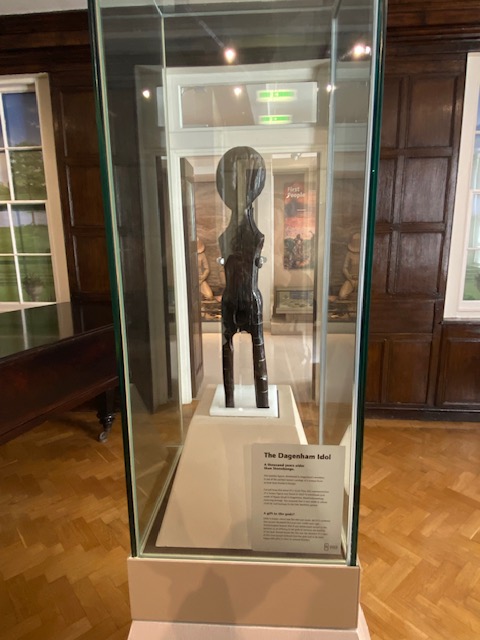
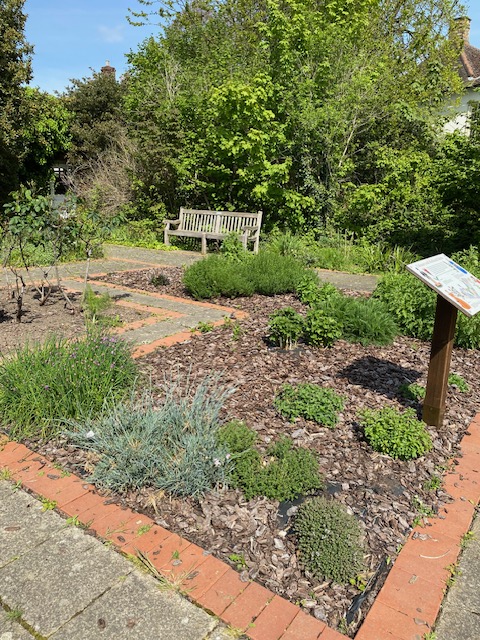
Highlights are the Dagenham Idol, a wooden statue that has been carbon dated to around 2250 BC (so around 1,000 years older than Stonehenge) and some whalebones believed to be from the lower jaw of a Common Greenland Whale. Walking round the house, you’ll come across an old wall that dates from the 15th century and a pantry wall from the 18th century. Not to be missed is the herb garden outside the house, which is divided into two – one part is dedicated to Dyeing and Strewing herbs, the other is for Culinary and Medicinal herbs.



6. Furze Farm Close
Final stop on this route is to see the World War II gun emplacements in Chadwell Heath. During the Blitz of 1940-41, night-time bombing over England became the norm. As a result, Anti-aircraft batteries were built across the country to fire at enemy aircraft. These batteries were fitted with searchlights to track enemy targets at night.
Heavy anti-aircraft batteries were permanent constructions and some have survived to this day. In this field in Chadwell Heath, there exists an HAA battery still displaying numerous structures. It housed eight rather than the usual four gun emplacements.
Today it lies in a field recently reclaimed from a deep quarry. Its remains are impressive but it has sadly been subjected to vandalism.
The battery was located on high ground to enable a 360 degree view. During the Blitz, it was allegedly in action for 76 consecutive nights and protected both civilians and local industries. It is a Grade II listed structure.
This bus route was among the best so far. There was so much of interest to see, from public art to abbey ruins and an Elizabethan manor house.
Toilets that are available and free to the public:
- Barking Park near the boat lake
- Rippleside Cemetery – but only if you’re desperate!
- Eastbury Manor House
- Valence House Museum visitor centre
 london routemistress