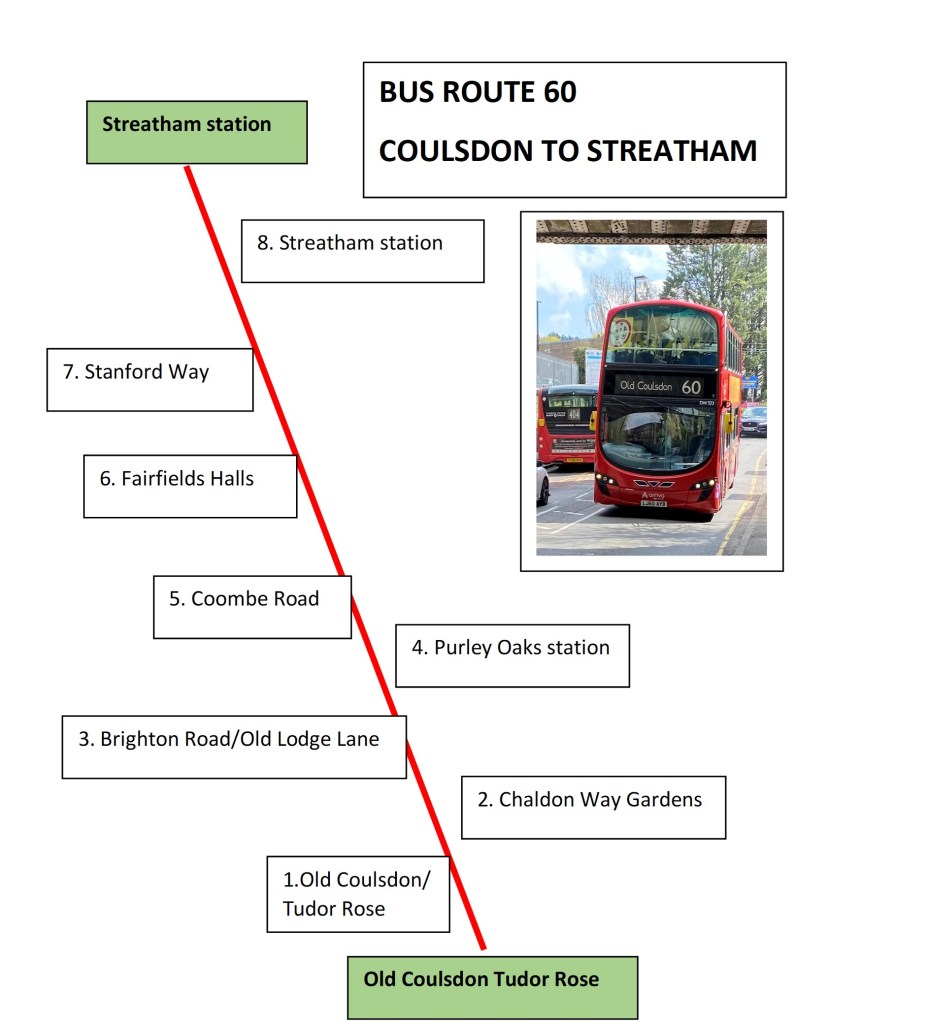
Old Coulsdon / Tudor Rose to Streatham station
Highlights:
- Bradmore Green, pond and farmhouse
- Street art in Croydon
- Ruskin House
1. Old Coulsdon/Tudor Rose
Another one of those bus routes that has something to see before getting on the bus. Just round the corner from the stop is Old Coulsdon War Memorial, commemorating the war dead of the first world war, with the names of 41 local men who had lost their lives. Next to this memorial are two plaques – one is to commemorate the centenaries of both the end of WW1 and the Women’s Institute in 2018. The second is in memory of Sir Winston Churchill.

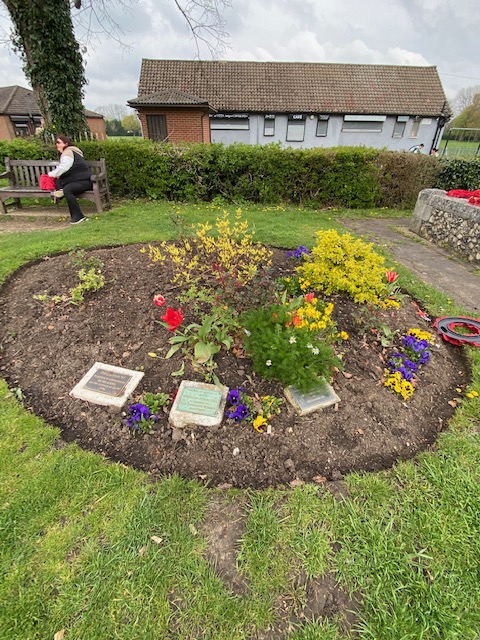

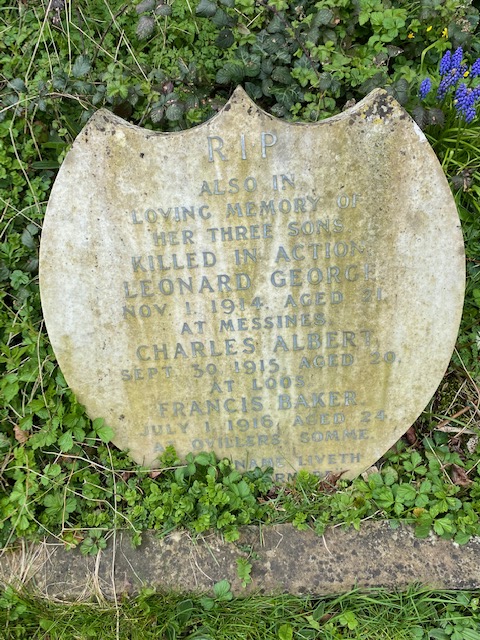
Over the road is Church Path, a small but pretty row of mews houses, leading to St John the Evangelist Church. Set within the churchyard are several war memorials, in particular from World War I. The earliest known rector of the church dates from 1261 and the church was rebuilt in 1269 to 1282 with the encouragement of Henry III. Parts of the building were extensively renovated in Victorian times, when the local Manor House was held by the family of the poet Byron.


Venture a few minutes from the church and you’ll find Bradmore Green, its pond and what remains of the old farmhouse. The pond has its origin as early at the 18th century and was commissioned by Thomas Byron Esq. The pond attracts an assortment of wildlife and plants such as mallards, heron, waterlilies and rushes. Overlooking the pond is a former farmhouse dating from the 18th Century and a cottage dating originally from the 17th Century. Both are grade II listed.


2. Chaldon Way Gardens
And so on to the bus and alight at this stop. Chaldon Way gardens is a small ornamental garden adjacent to Coulsdon Memorial Ground. It’s an excellent ornamental garden made up of lawns, shrub beds and annual bedding displays, with a small shelter at one end of the garden.


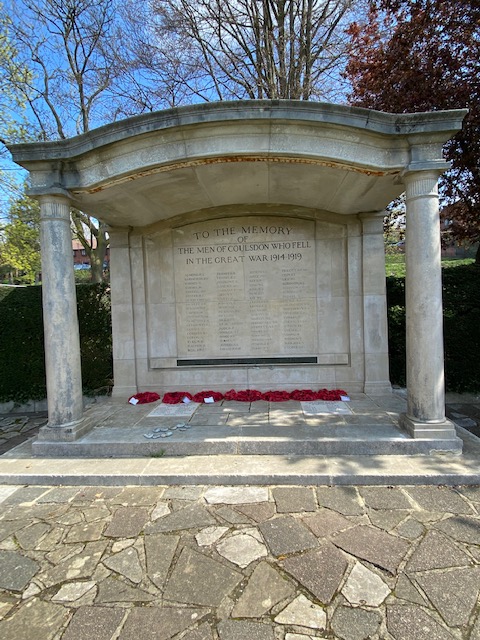
The Coulsdon Memorial Ground was opened in 1921 and was originally part of Edmund Byron’s Coulsdon Estate. Set within the Ground is a portico with a rear wall bearing the names of the fallen, with the inscription “To the memory of the men of Coulsdon who fell in the Great War 1914‐ 1919”. Behind the Ground are deep chalk quarries which in the past had spur lines from the local railway running right into the slopes to transport the extracted stone.


3. Brighton Road/Old Lodge Lane
Near the bus stop is the Reedham Trust building. Originally known as the Asylum for Fatherless Children, Reedham was founded by philanthropist Rev. Dr. Andrew Reed. In 1851, Queen Victoria gave to her son Edward, then Prince of Wales, a sum of money with which he could nominate an orphan child into the care of the orphanage, thus making the Queen the first royal patron. In 1858, the orphanage moved to its present site and was henceforward known as the Reedham Orphanage. Over the years, the orphanage became a school and by 1980, the school was closed owing to changes in social care and education. The money from the sale was used to create a new charity – the Reedham Trust – which to this day attends to the care, education and recreational needs of vulnerable and disadvantaged children and young people.


4. Purley Oaks station
The bus stop of the same name as the train station is a good few minutes’ walk away from the station. The station itself was opened by the London Brighton and South Coast Railway in 1899 as part of the improvements to the main line and the opening of the Quarry Line. Platform 1 was gutted by fire in 1989, destroying Croydon Model Railway Society’s clubrooms. On Saturday 4 March 1989, it was affected by the Purley station rail crash.

5. Coombe Road
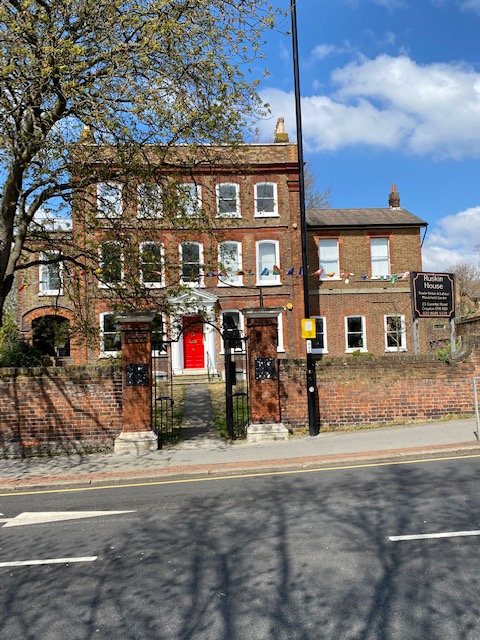
Walk up the hill to find Ruskin House. Although it’s only open in the evenings, nevertheless it is interesting to see this house where so many political decisions have been made and where illustrious people have met over the years. John Ruskin, after whom this house is named, was a Victorian polymath and most notably wrote about political economy, literature and education and even at one time taught William Morris. Ruskin House was a meeting place for the then formative Labour movement. The first House was a “dry” establishment as the temperance movement was quite strong. Gradually outgrowing the premises, the Labour movement took over another house which in turn was demolished and so in 1966, it moved to this location, being opened by the then Prime Minister Harold Wilson. Today it serves as the HQ for the Communist party of the UK as well as local offices for the Croydon Labour party. And is no longer a “dry” establishment, having its own bar!


6. Fairfield Halls
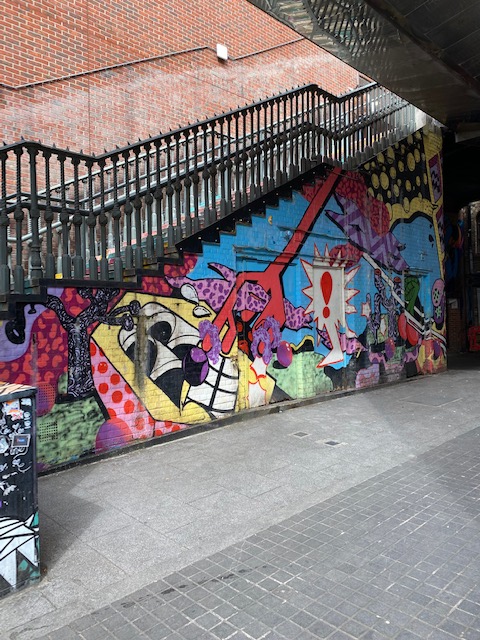
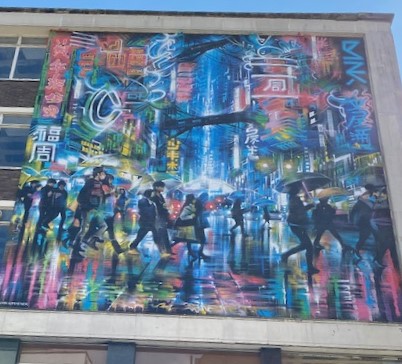
Bus route 50 also stops here so refer to the start of that blog for other things to see, including the Peggy Ashcroft theatre and Croydon Museum. This time, it’s worth taking a walk around the town to discover the wealth of street art that’s scattered throughout the streets. Head for Surrey Street and St George’s Walk to see some fine examples. Croydon has built up a reputation for its street art and it’s no disappointment.

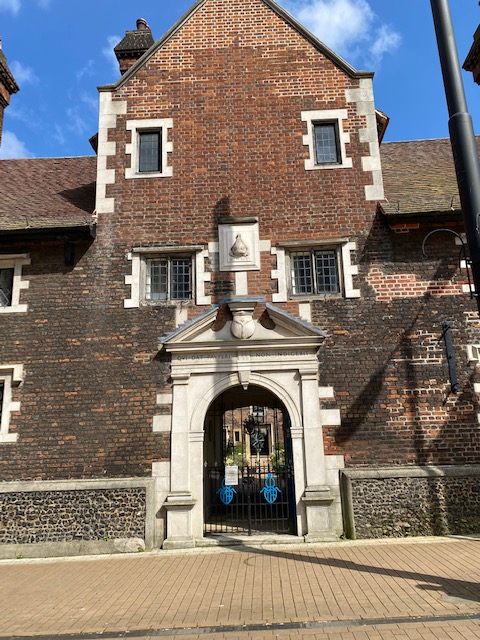
Nestled in the centre of Croydon is a lovely building which houses the Whitgift Almshouses. For several hundred years The Archbishops of Canterbury had a residence at Old Palace in Croydon, where they would spend the summer months. Whilst here, they would see the suffering and poverty caused by war and bad harvests. Archbishop John Whitgift (c.1530 – 1604) sought and received permission from Queen Elizabeth 1 to build a hospital and school in Croydon and, on March 22nd 1596, he laid the foundation stone for the Hospital Of The Holy Trinity, now known as the Almshouses. These still house the poor of the locality and residents even receive a tiny stipend every Friday morning.


7. Stanford Way
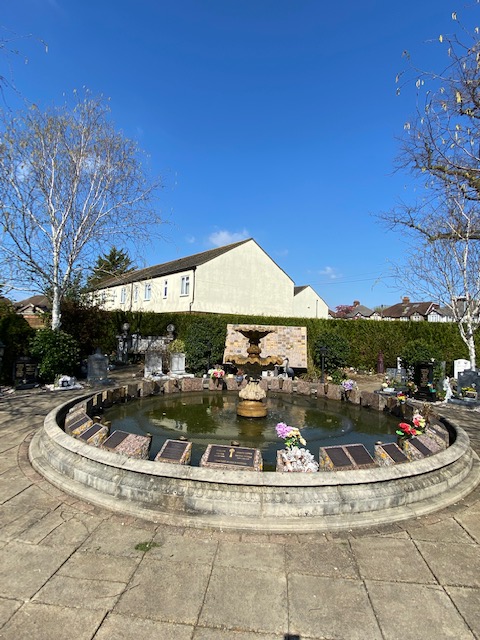
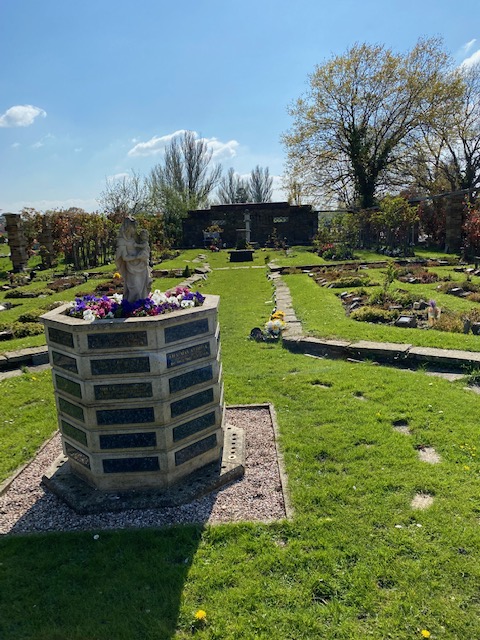
Round the corner to visit Streatham Park cemetery. In the early 1900s Streatham began its transformation from a quiet village into a bustling suburb. It became attractive to wealthy residents who wanted to be close to London and rows of Victorian villas sprang up. To serve the needs of this growing population Streatham Park Cemetery opened in Rowan Road in 1908. In the early part of the 20th century approx. 20% of South London’s burials took place at this cemetery and records show that by 1917 over 30,000 burials had taken place there. There are a few famous burials at the cemetery but it can be hard to locate some of them. One that was easier was the grave of Desmond Dekker, a 1960s/1970s pop/rock icon. His grave has been lovingly looked after, despite the fact that it’s a long time ago that he was in his heyday.

8. Streatham station
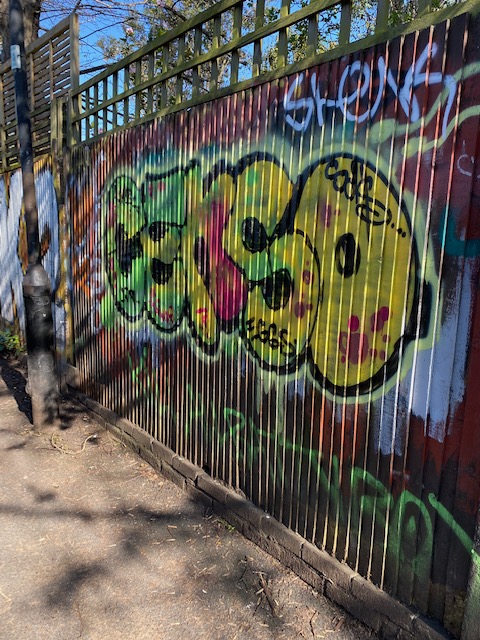
At the end of this route, near the station, is Russell’s Footpath. Until recently, the footpath was overgrown and somewhat daunting to use as a cut through to the High Road. The local community, with the support of Lambeth Council, arranged for a clear up of the overgrown trees and the litter. It’s now a more cheerful place to walk along, in particular as locals have spruced up the walls and fences with graffiti and street art.


This entirety of this route was in south London and along some of the same routes as previous buses. However, there were still places of interest to see and explore.
Toilets that are available and free to the public:
- Coulsdon Memorial Ground
- Croydon Museum
- Streatham Park cemetery
 london routemistress