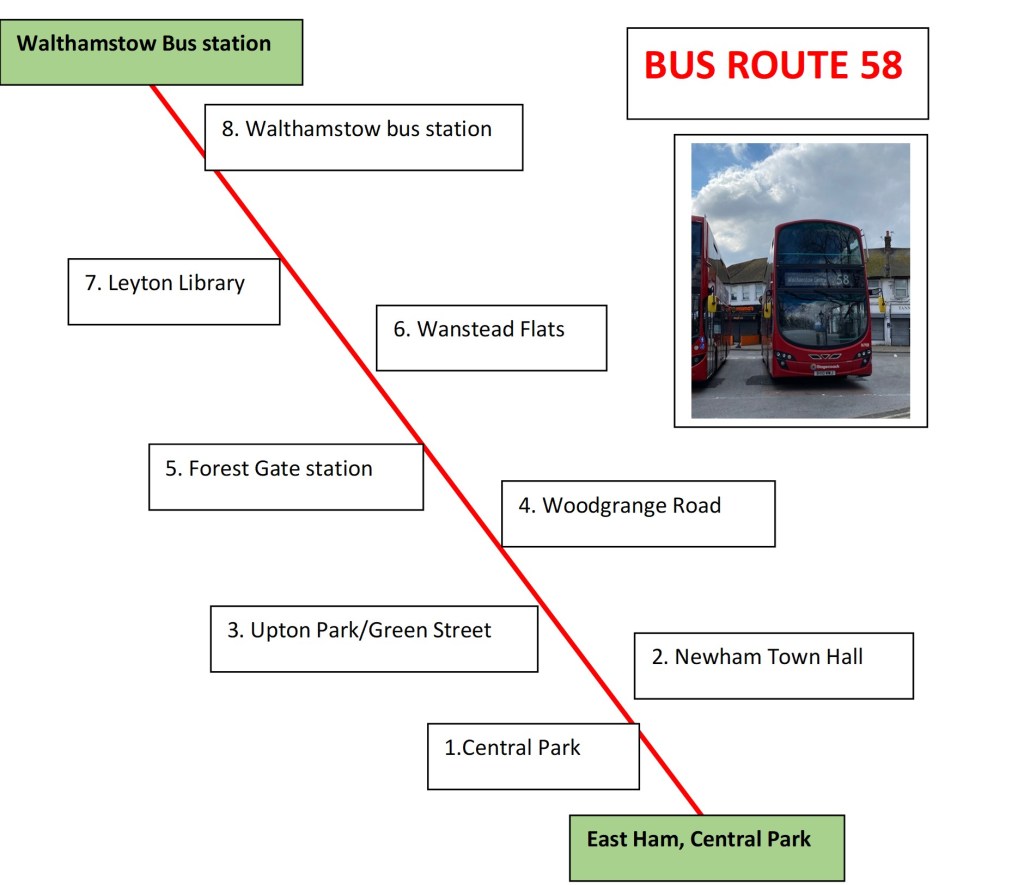
East Ham Central Park to Walthamstow bus station
Highlights:
- Central Park East Ham
- Newham Town Hall
- Coronation Gardens
- East Ham Central Park
As usual, it’s worth exploring the area around the start of the route, to catch some places that might otherwise go undiscovered. Right at the bus station is Central Park which has a few lovely things to see before starting the journey.
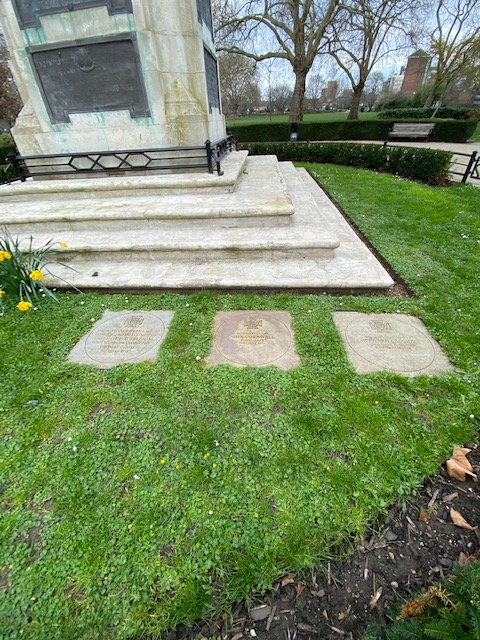
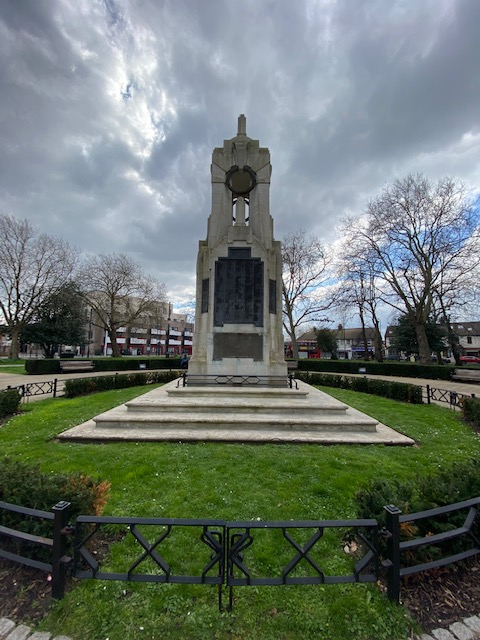
The war memorial in the centre is a grade II listed cenotaph and is particularly splendid both to look at and in its commemoration of the soldiers from East and West Ham who died whilst serving in the first World War. There are two ground plaques to remember John Cornwell RN and Lt Bernard Cassidy, both of whom had been awarded the Victoria Cross.
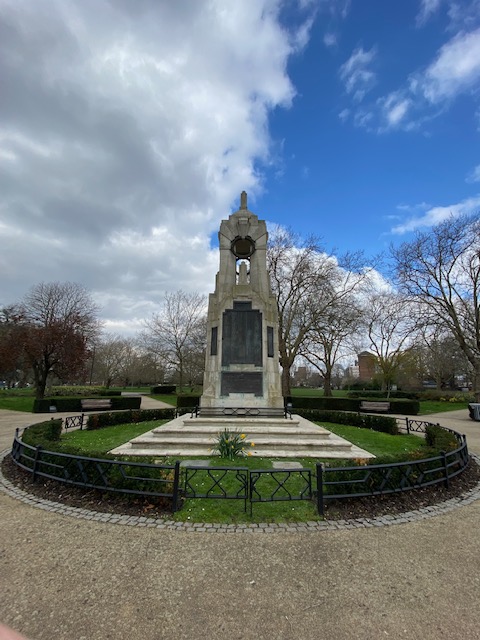
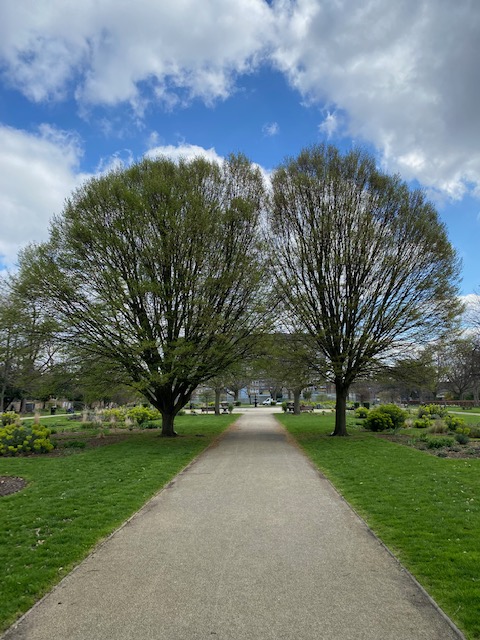
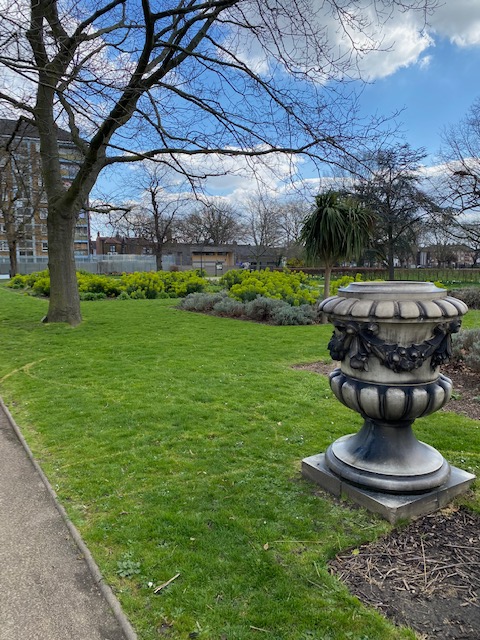
Within the park is the Discovery Garden, which in the spring looked particularly pretty. Around the garden are several large urns, which originated from the London Co-operative building in East Ham. They date back to 1929. Throughout the park are lots of beautiful mature trees, lining pathways.
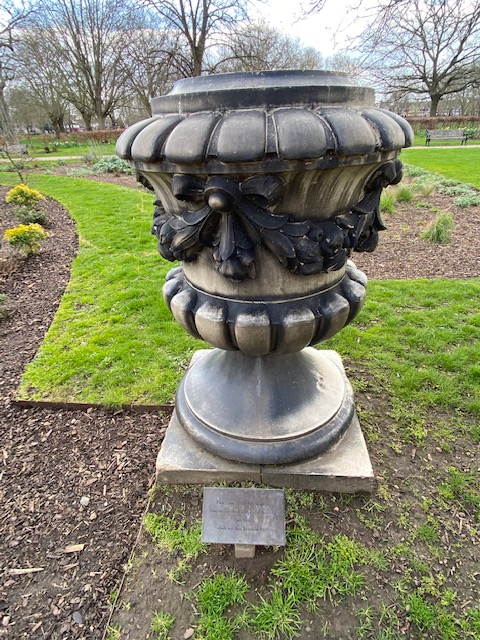
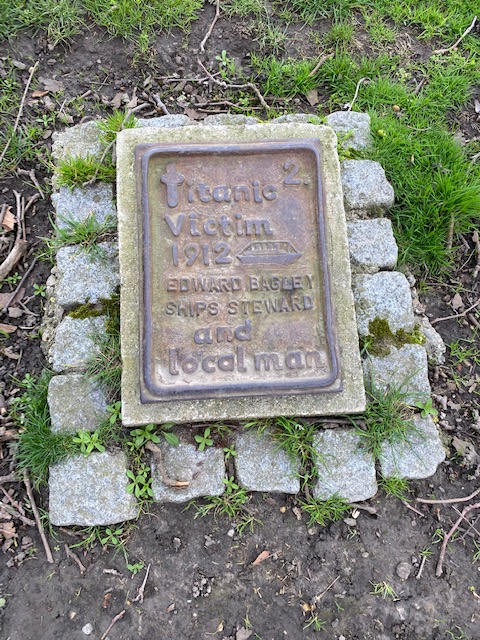
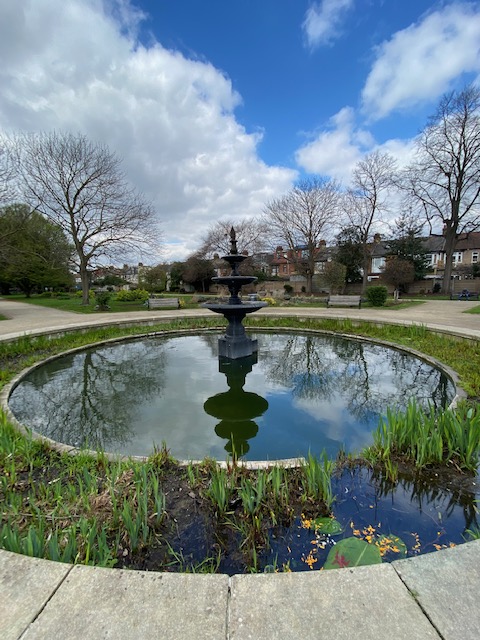
Wander a bit further in the park and you come across a bronze plaque to commemorate the life of Edward Bagley, one of the ship’s stewards on the Titanic who lost his life in 1912 when the ship went down. He was a local lad, having been born in, and subsequently married in West Ham. Finally it’s worth taking a look at the fountain in the middle of a pond set within the grounds of the park. Central Park is a good size and a peaceful place to stroll.
2. Newham Town Hall
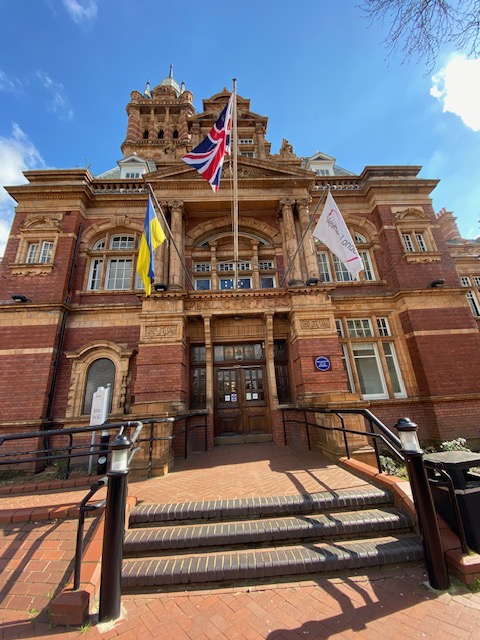
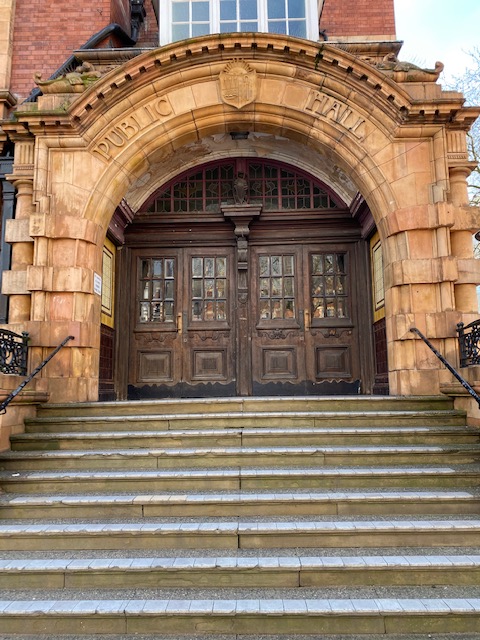
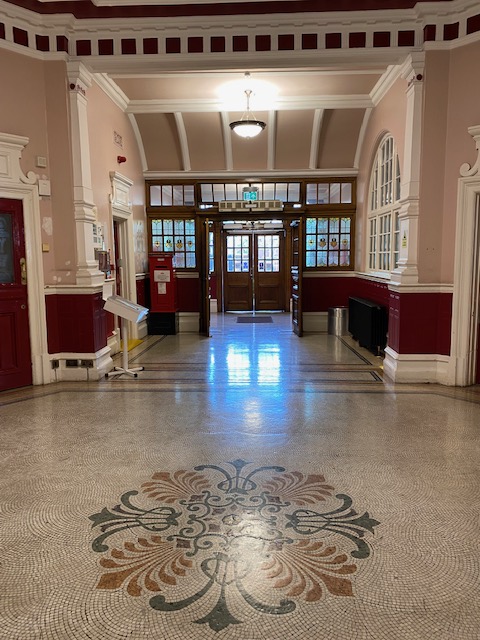
The bus stops just outside Newham town hall which is also a public library. It’s a grand building with grade II* listed status, built at the very beginning of the 20th century. It was designed in the Renaissance style including an asymmetrical main frontage with six bays facing onto Barking Road. The building continues to be the local seat of government after the formation of the London Borough of Newham in 1965, serving as its administrative headquarters.
3. Upton Park/Green Street
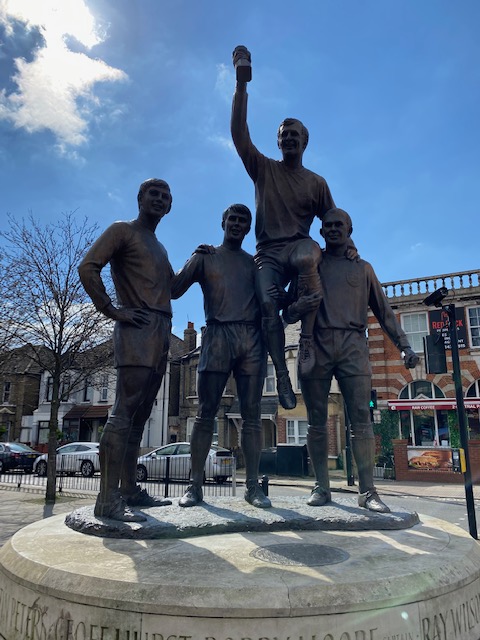
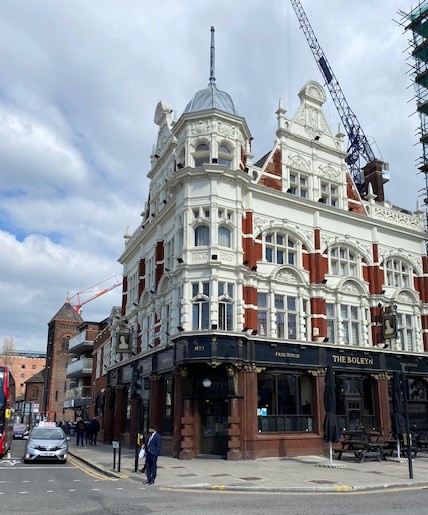
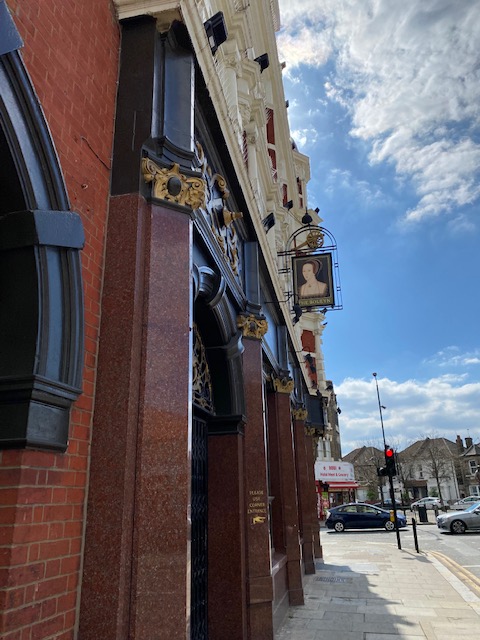
Alight here for the Champions Sculpture, being a bronze statue of some of the heroes of the 1966 World Cup Final, located near the site of West Ham United FC’s former Boleyn Ground stadium. Opposite the sculpture is the Boleyn Tavern, once frequented by West Ham supporters before their home was relocated to the Millennium Stadium. It’s said that Mahatma Gandhi drank cream soda here when he visited London and indeed he attended several games. Boleyn Ground takes its name from an old building that was allegedly the home of Anne Boleyn.
4. Woodgrange Road
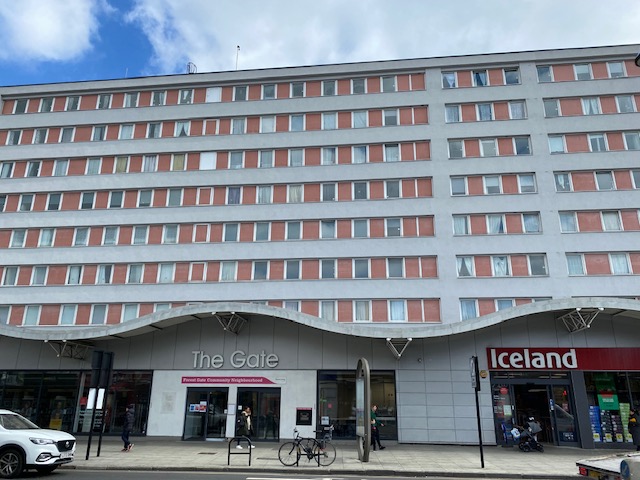
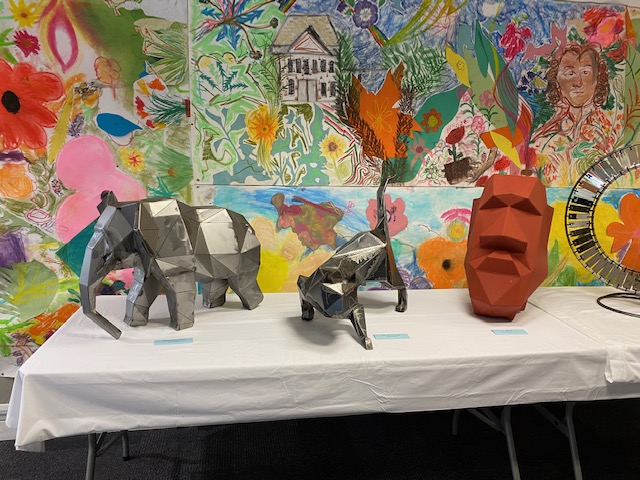
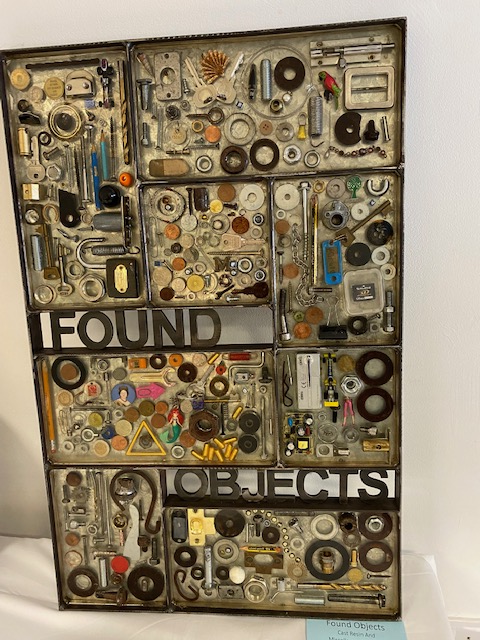
Round the corner from this stop is the Gate Library, so called as it’s in the area of Forest Gate. The exterior of the building is interesting with a curved roof and inside as well as being a library, it has regular exhibitions, displaying work from local artists and artisans. At present is one such exhibition entitled Sculptures in Metal by Dominic Dragonetti. He uses as much recycled metal as possible and most of the pieces on display are from reclaimed and reused metal.
5. Forest Gate station
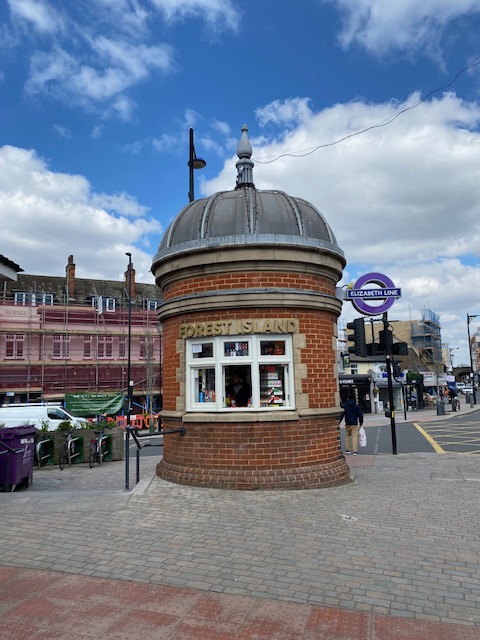
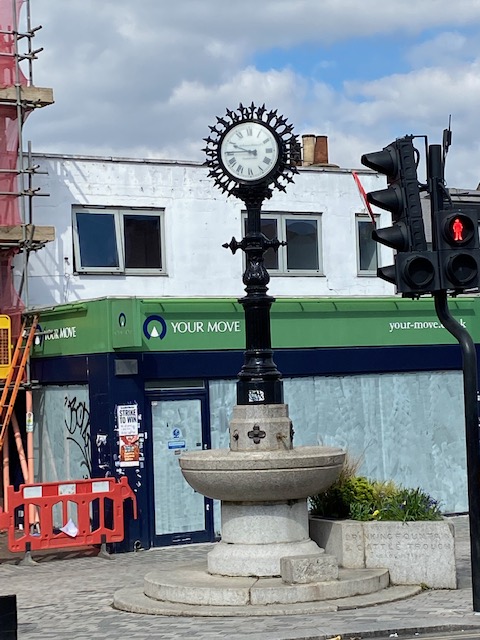
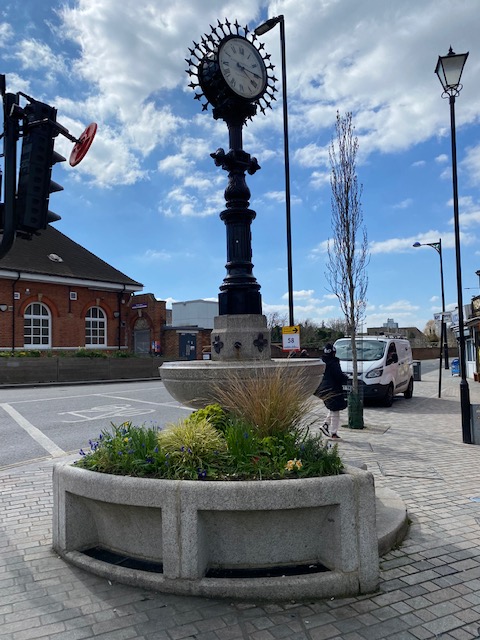
As soon as you get off the bus, you see a quirky small circular structure outside Forest Gate station, serving as a kiosk selling food and drink to locals and commuters. Across the road is an unusual clock tower set in a drinking fountain with a cattle trough next to it. It was erected following a donation by Archibald Corbett around the turn of the 19/20th century – he was a local businessman who developed the Woodgrange area.
6. Wanstead Flats
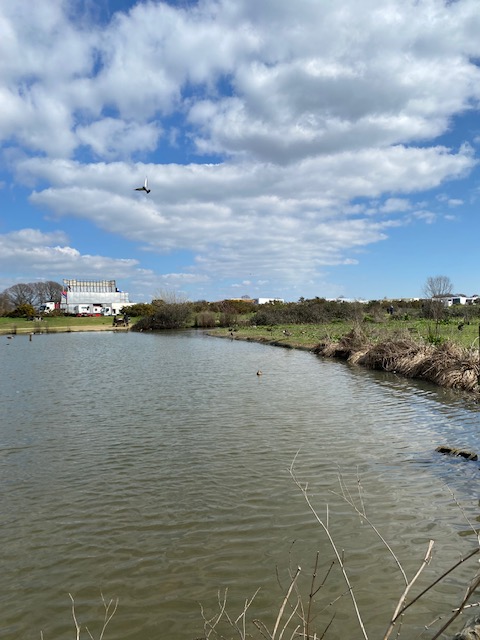
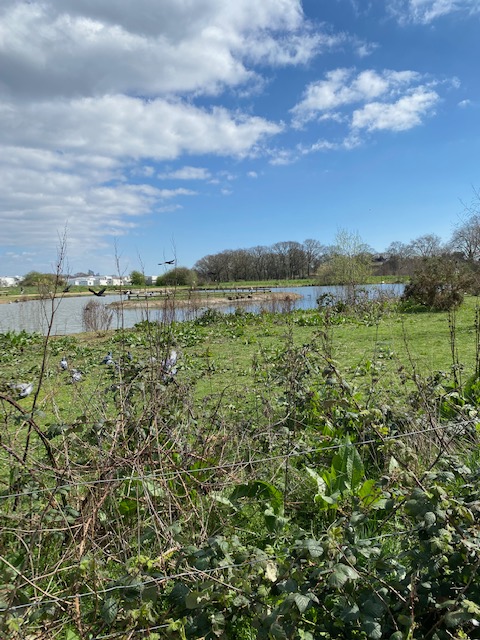
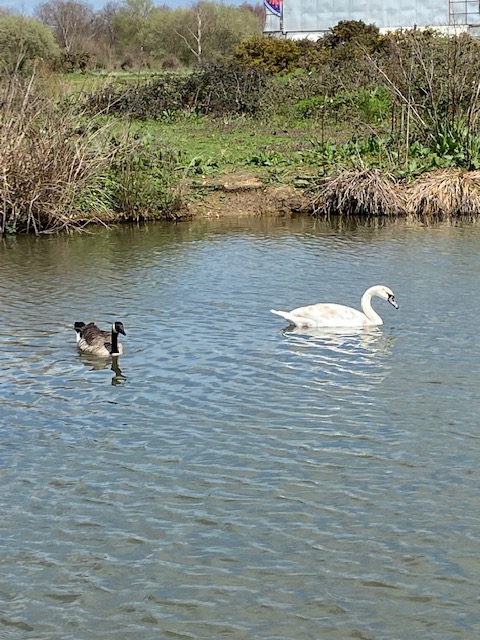
Wanstead flats are at the southernmost end of Epping Forest and were originally used for farmers to graze their cattle and other animals. Set within the Flats are three permanent open waters – Alexander Lake, Jubilee Pond and Angel Pond. Many birds and other wildlife are attracted to these stretches of water and the lake and ponds are surrounded by broom and gorse. It’s really a lovely area to take a stroll or in the summer months, to take out a boat on the lake.
7. Leyton Library
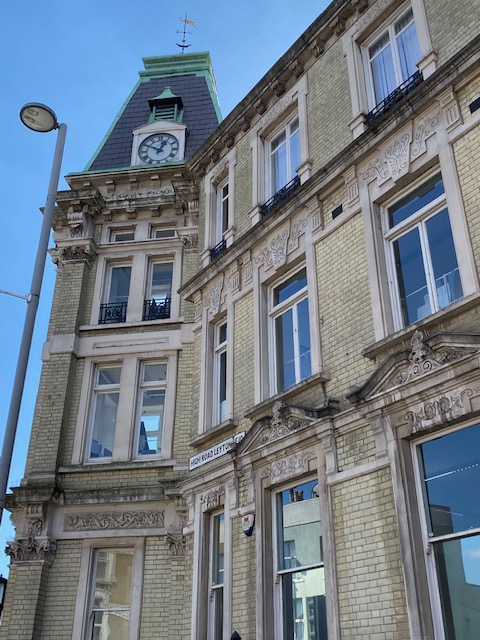
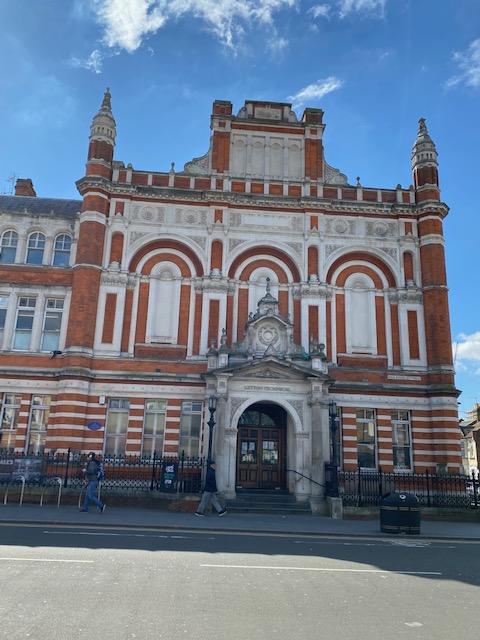
Although the bus stops outside Leyton library, it is temporarily (or maybe permanently) closed, owing to flooding. However, it’s worth taking a look at the building which is grade II listed. It was erected in 1894-96, replacing the original public offices.
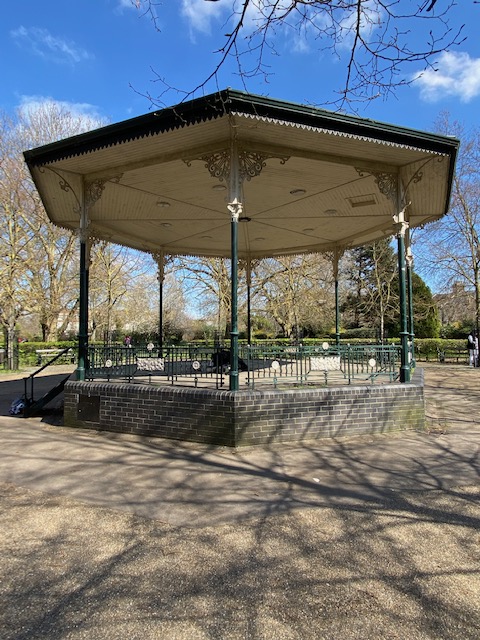
As it’s not possible to go inside, instead walk round to Coronation Gardens, which were formally opened on 23 May 1903 and which house the borough’s last surviving bandstand. The bandstand is still used for events and activities and the local council are always on the lookout for local music, theatre and dance groups to perform there.
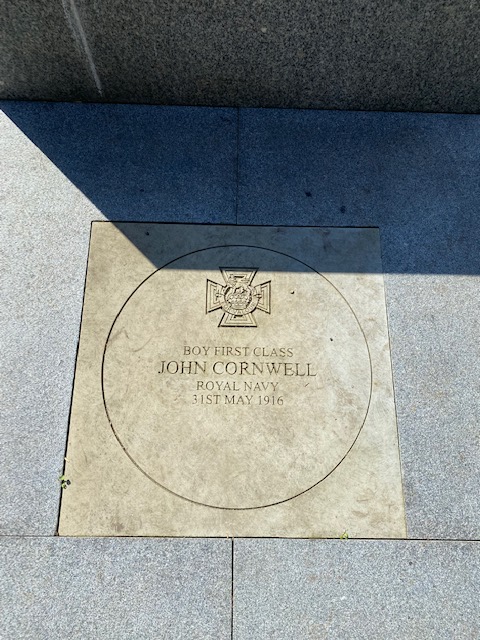
Also in the Gardens is a lovely war memorial for those local soldiers who died in both World Wars. In addition there is one specifically for John Cornwell who served in the Royal Navy, died on 31st May 1916 and had been awarded the Victoria Cross aged only 16, for bravery at the Battle of Jutland. This is the same person who had a plaque in Central Park.
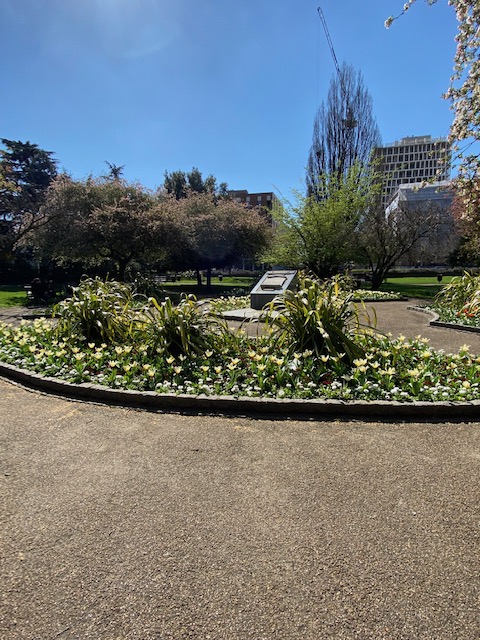
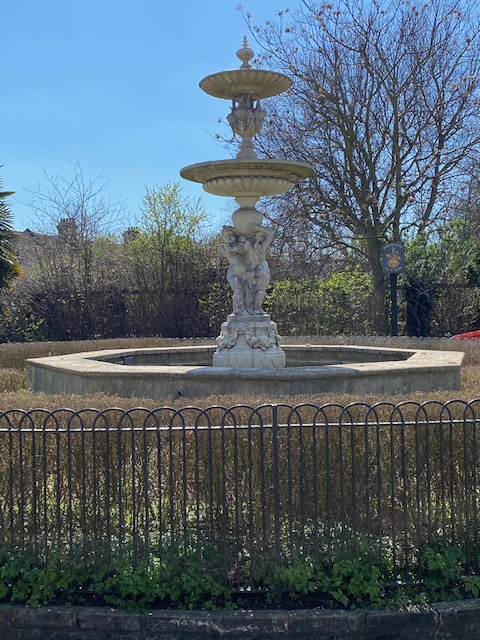
On the other side of the bandstand is a fountain and pond. The fountain is thought to have been proposed to commemorate the Queen’s Diamond Jubilee in 1897, with its installation taking place in 1901.
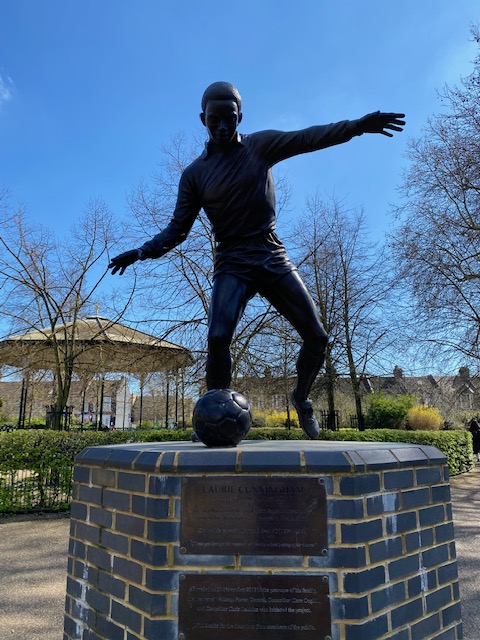
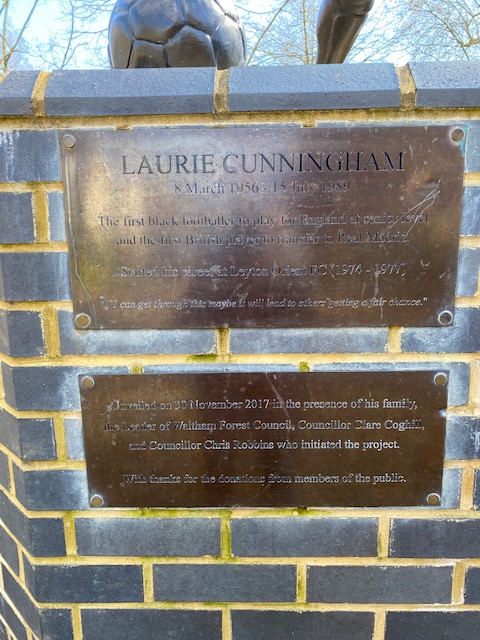
Just outside Coronation Gardens is a bronze statue of Laurie Cunningham, the first black footballer to play for England at senior level and the first British player to transfer to Real Madrid. Sadly he died at age only 33. His statue is here as he played for Leyton Orient in the 1970s.
8. Walthamstow bus station
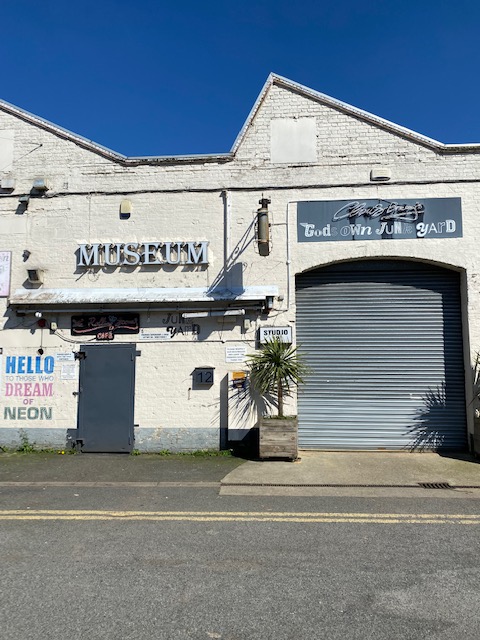
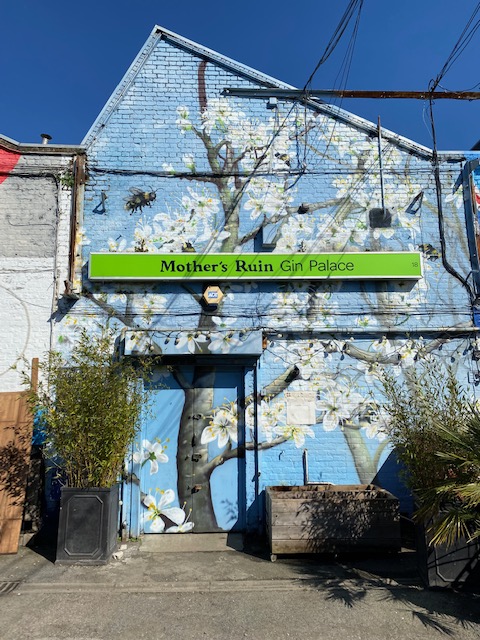
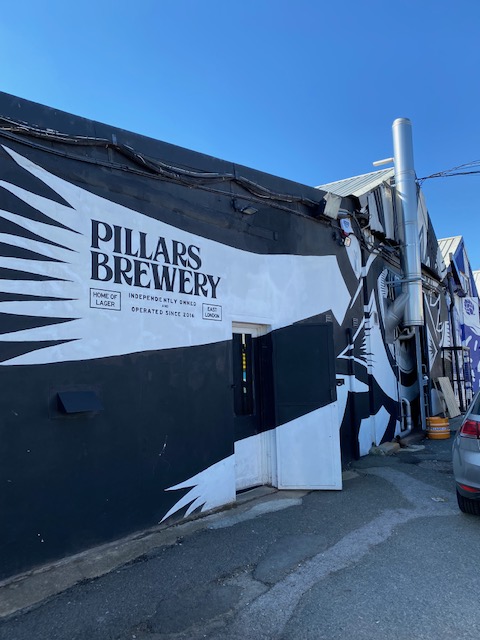
And so to the end of the route at the bus station. About a ten minute walk from here is God’s Own Junkyard. The story of how it came into being is an interesting one. The creator was Chris Bracey, who got his start in life by making signs for Soho’s strip clubs and brothels. Soon, his talents were spotted by Hollywood, and he began fashioning props for directors such as Stanley Kubrick, Tim Burton, and Christopher Nolan. As well as this shop, there is a museum, café and even a brewery (Pillars) and a gin distillery (Mother’s Ruin) on the site. But the Junkyard is only open on Fridays, Saturdays and Sundays so choose your time to visit well.
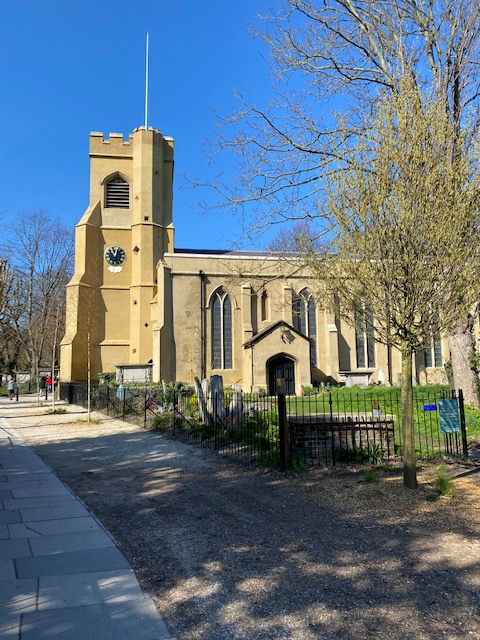
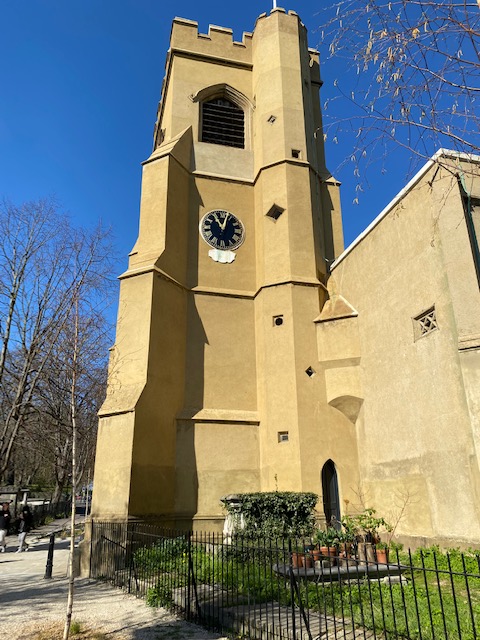
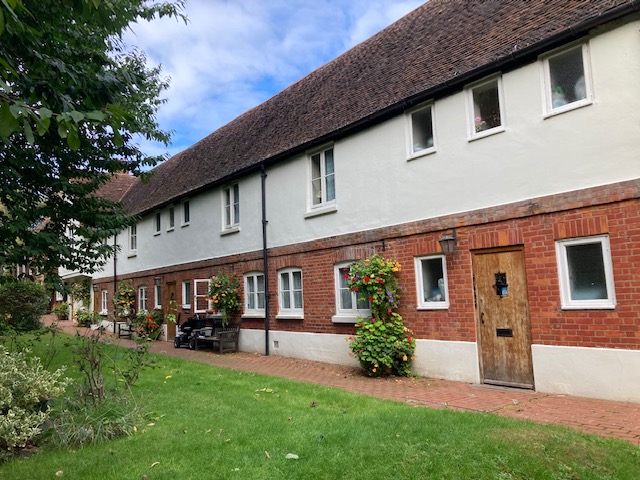
On the way back to the bus station, you’ll pass St Mary’s Church, which dates back to the 13th and 14th centuries. In 1535, Sir George Monoux, Alderman of London and Master of the Worshipful Company of Drapers, made repairs to the church and added a chapel. Monoux also built almshouses for the impoverished parishioners. These houses are still in existence today and are in fact Grade II listed buildings.
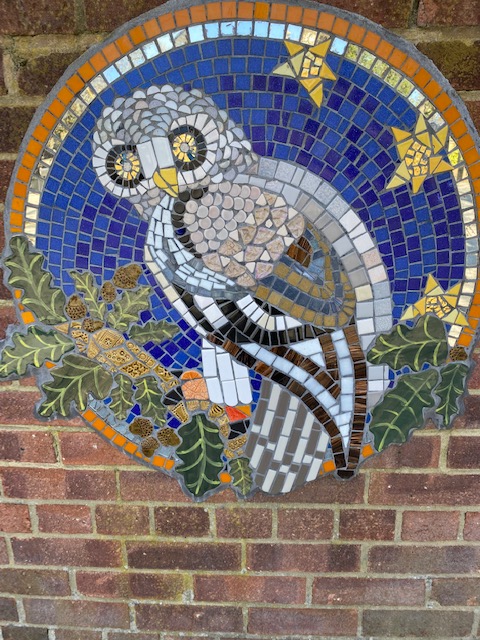
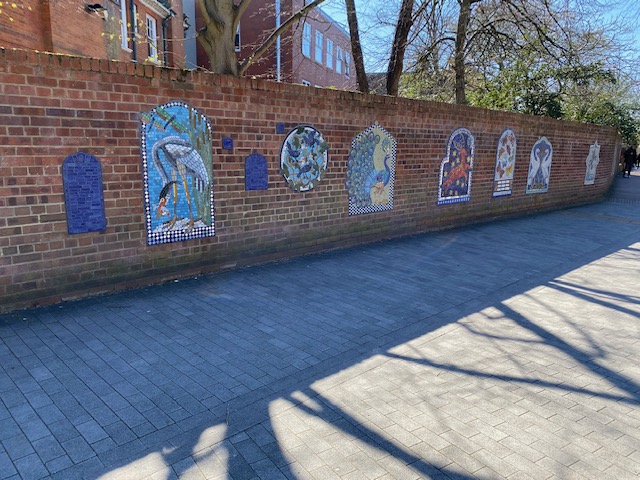
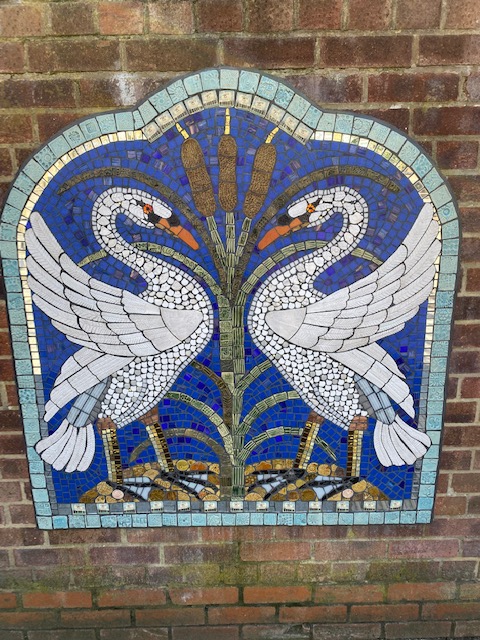
Before arriving back at the bus station, you’ll come across another Mosaic Project (see Route 56 for Hackney Downs Mosaic Project). The mosaics are on a wall outside Walthamstow Girls’ School and they were made with the community and pupils and staff of the school. They celebrate the work of William Morris and his daughter May as well as Morris’ friend William de Morgan. The panels depict animals from the Morris Forest tapestry, from the local forest, wetlands and also from the fabrics of May and William Morris, and the tiles by De Morgan.
This bus route on the face of it wasn’t the most exciting but in fact, there are plenty of places of interest to see. It would have been even better if God’s Own Junkyard and Walthamstow Pumphouse Museum had been open so it’s worth going back on another day.
Toilets that are available and free to the public:
- East Ham Leisure Centre (next to Newham Town Hall)
- The Gate Library
- MacDonald’s Romford Road
 london routemistress