
Whipps Cross bus stand to St Bart’s Hospital
Highlights:
- Hollow Pond
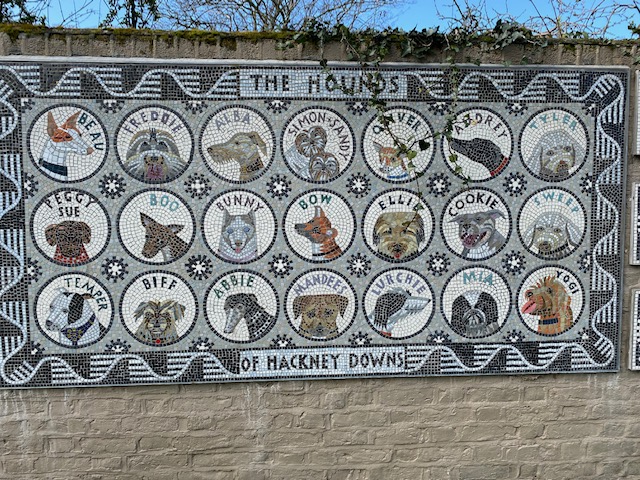
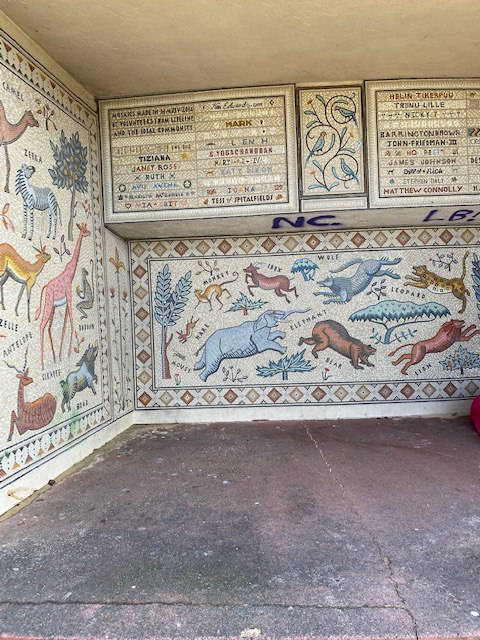
- The Hounds of Hackney Downs and the Mosaic project
- Arcola Theatre
- Charterhouse
1. Near the station at Whipps Cross
Before getting on bus 56, walk round to Hollow Pond which is in Leyton Flats. It’s a very pretty and quite large lake, certainly bigger than what is considered a pond. You’ll find a selection of birds – geese with their goslings, swans and a heron taking centre stage in the middle of the pond.


2. Pembury Road/Downs Park Road
The bus stops near Hackney Downs Park which is quite a large park with some very interesting places to see. First is the Hounds of Hackney Downs, made up of mosaics of dogs that have been created by volunteers under the tutelage of a local mosaicist. There are two walls of dogs as well as mosaics of some wild flower species to be found in the wild flower meadow within the park.


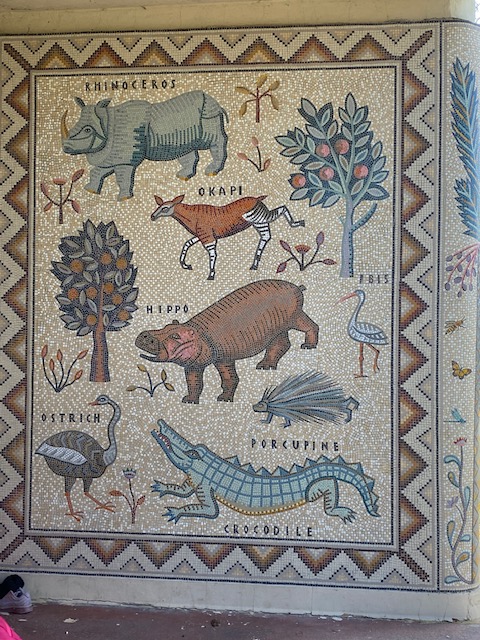
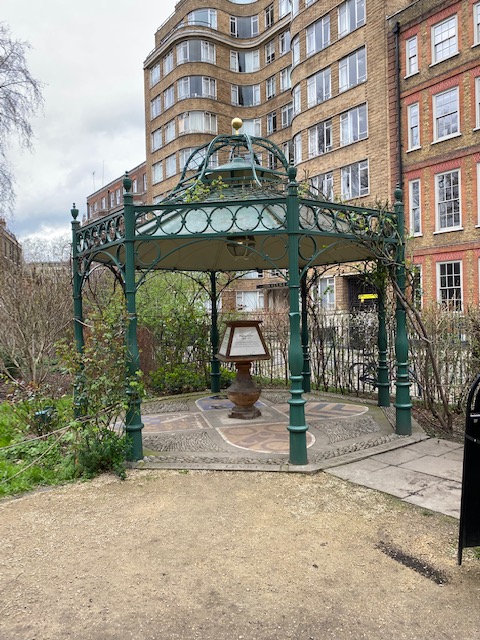
Further into the park is the Hackney Mosaic Project. This was set up inside a mosaic pavilion which is surrounded with some beautiful mosaics of a selection of animals, and created by the volunteers.

3. Graham Road
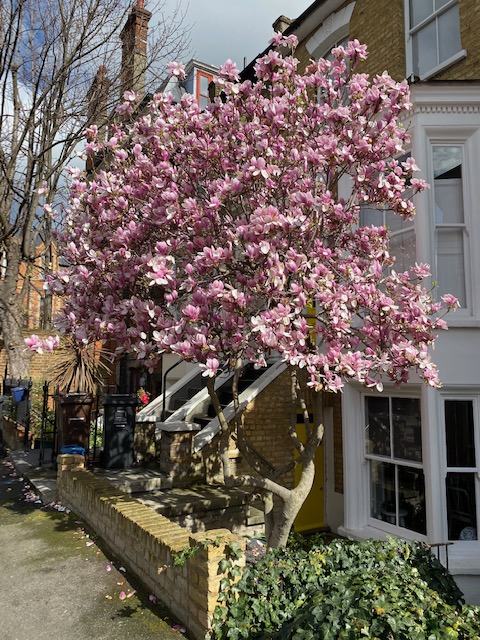
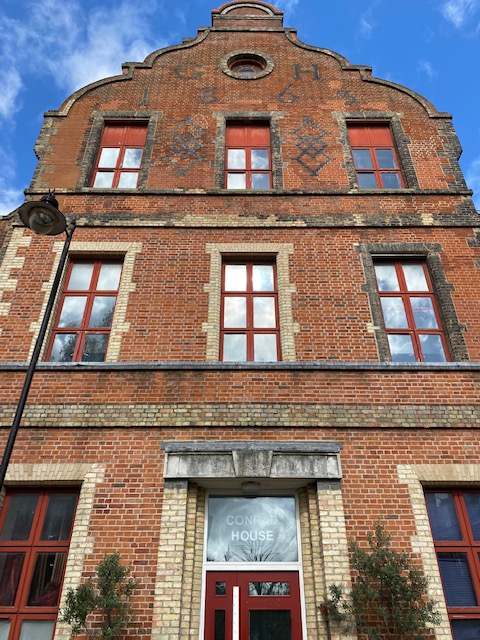
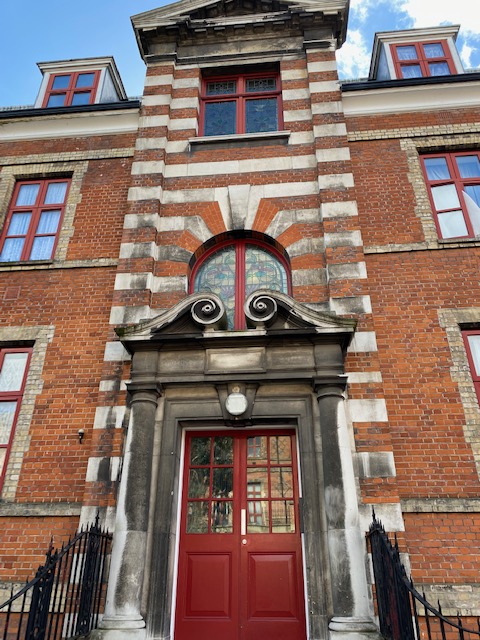
While walking towards Conrad House, there is a beautiful magnolia tree, particularly lovely in the spring. Conrad House was once the old German hospital (also seen on bus route 38). These days, it’s been converted into apartments but the fabric of the building remains as it was originally. Opposite the House are two grade II listed buildings which retain several original features, including the windows.
4. Dalston Junction station
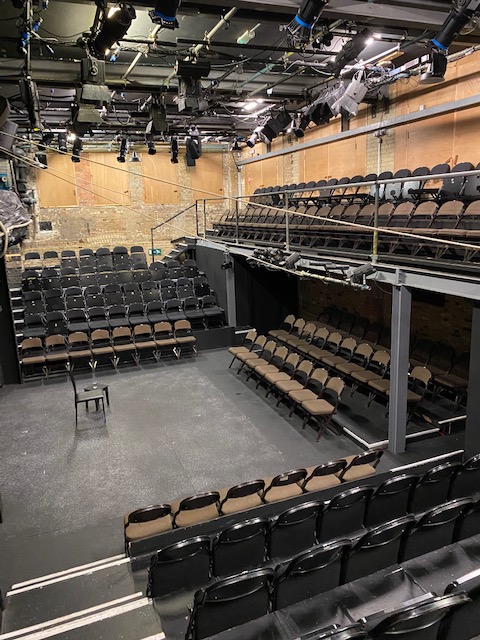
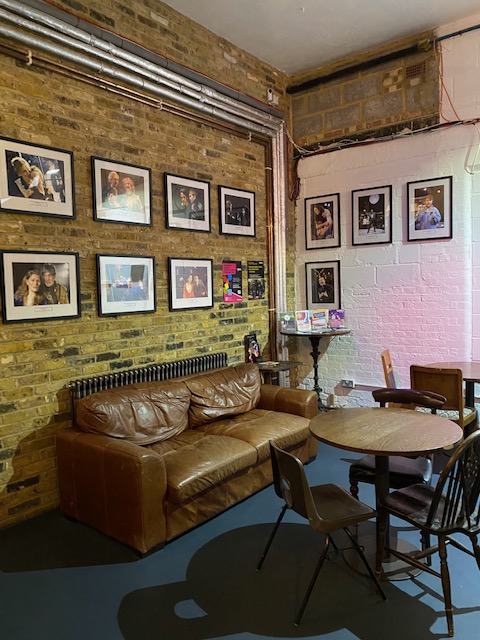
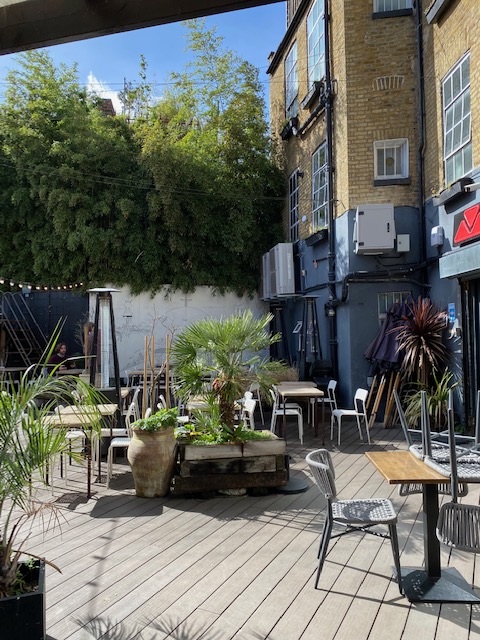
This area has a lot to see but make sure you go later in the day, as some of the places are closed till late afternoon. However, the Arcola Theatre in Ashwin Street is open – it’s a lovely place with two studios that present plays, operas and musicals and features both established and emerging artists. As well as this, the theatre is committed to achieving carbon neutral status, making it the first one in the world.

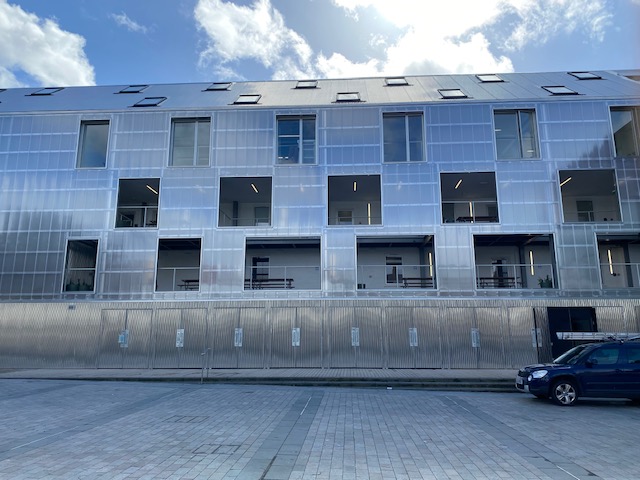
Walk round the corner and you come to Gillett Square, a unique public space in the heart of Dalston. This open space is flanked by the Vortex Jazz Club, cafes, food outlets and a host of other interesting entrepreneurs. The adjacent derelict factory premises have been tastefully redeveloped and the old Stamford Works premises have been similarly renovated to create a space that’s inviting to all who visit.

The two places that were closed at lunchtime were the Rio Cinema and EartH Evolutionary Arts so it would be worth visiting another time.
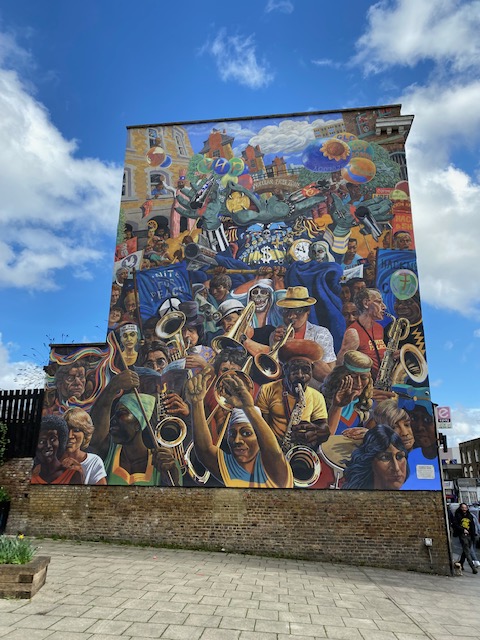
Walking back to the bus stop, you’ll come across the vibrant Ridley Road market, selling a plenitude of delicious fruit and vegetables and sumptuous lunch time goodies. And near the bus stop itself is the Hackney Peace Mural, completed in 1985 at the height of the Cold War. It depicts a group of people marching for peace against ‘the bomb’.

5. Essex Road station
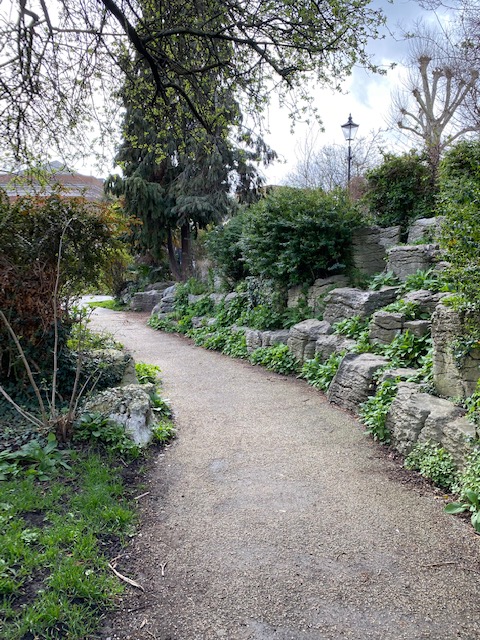
Near the stop is Canonbury Gardens, formal gardens including the manna edible forest garden. The Manna is a day centre that supports marginalised, vulnerable and homeless people in the local community and they have created this garden to imitate the ecosystem of a natural British woodland. Further along is Astey’s Row Rock Garden, a park that is mainly a path surrounded by planting, with large stones that have been dotted along the path.


6. Cross Street
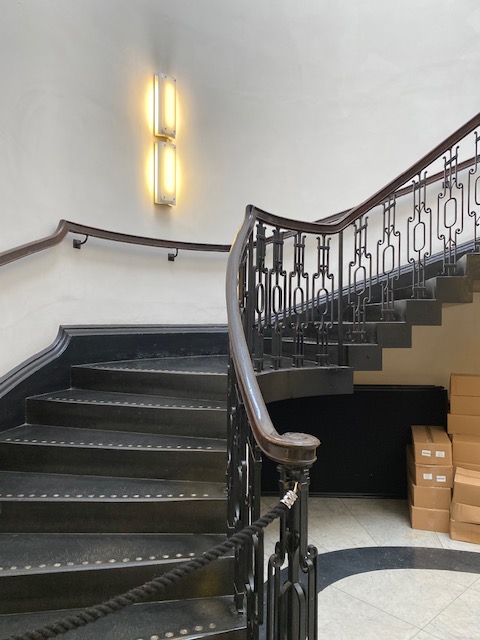
Islington South library is a grade II listed building and another library that had been endowed by Andrew Carnegie. Inside is an oval stairwell and a pretty iron balustrade with an oval skylight. It’s definitely worth a look inside if you’re on this bus route or just visiting the area.


7. Hall Street and
8. Barbican
Near this stop is Peregrine House, a 27 storey tower block which was completed in 1969. It is one of the tallest council blocks in the city at 80m tall and is part of the City Road estate.
Getting off the bus at Barbican, it’s worth walking round to see Florin Court, an art deco building in Charterhouse Square. Built in 1936, it features an impressive curved façade with projecting wings, a roof garden, setbacks on the eighth and ninth floor and a basement swimming pool. Needless to say, it’s been used as a location in several of Agatha Christie’s televised Poirot episodes.


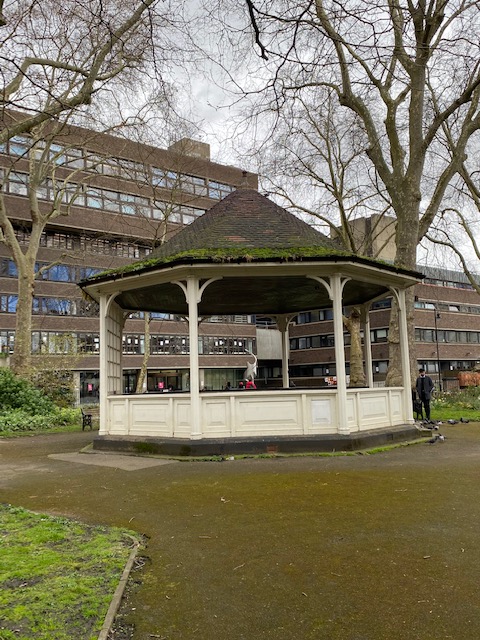
Near Peregrine House is Northampton Square, built as a residential square in 1832. It’s named after the local landowner, the Marquess of Northampton. The gardens were opened to the public in 1885, and included a drinking fountain and bandstand, both of which remain, as does a circle of London plane trees.
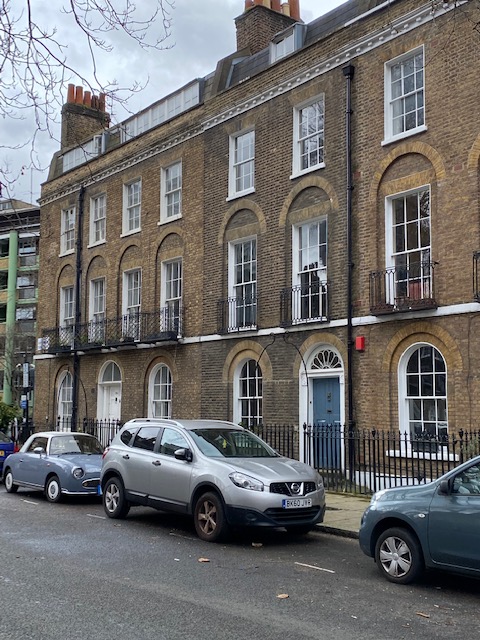

Continue round to Charterhouse Square. In 1371 a Carthusian monastery (or Charterhouse) was founded by Walter de Manny on what is now the north side of the square. It was established near a 1348 plague pit, which formed the largest mass grave in London during the Black Death, and tens of thousands of bodies were buried there.

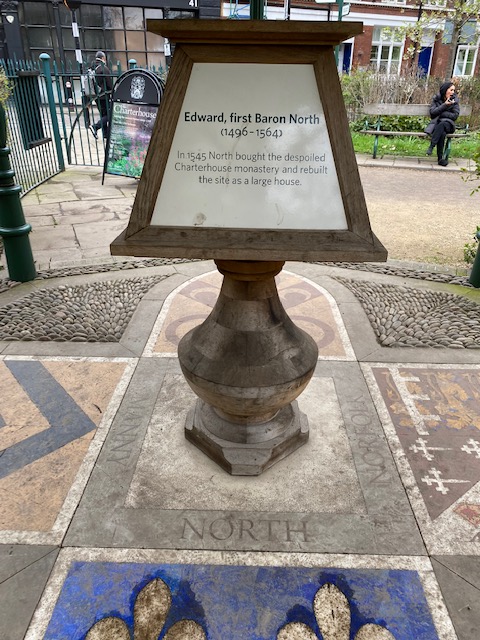
And so on to Charterhouse itself, a Carthusian priory, founded in 1371. Following the priory’s dissolution in 1537, it was rebuilt from 1545 onwards to become one of the great courtyard houses of Tudor London. In 1611, the property was bought by Thomas Sutton, a businessman and “the wealthiest commoner in England”, who established a school for the young and an almshouse for the old.
Today, the building houses a new museum, which tells the story of the Charterhouse from the Black Death to the present day. Charterhouse continues to serve as an alms house to over 40 older people, known as Brothers, who are in need of financial and companionship support. Since 2017 women have been accepted as Brothers. The chapel and museum with chapel services are open to the public.
There is so much to see here that it’s not possible to do it justice in this blog – I would heartily recommend a visit to see for yourself. And entry is free of charge.


9. St Paul’s
Final stop on this route is to see Paternoster Square and the bronze sculptures by Gillie and Marc of The Wild Table of Love. This is a banquet table full of delicious food and hosted by Rabbitwoman and Dogman. Their guests are ten of the most endangered animals in threat of extinction and we are invited to join in the feast at the two empty stools at the table. The artists want to raise awareness of the plight of these endangered species, as well as raise funds and support. It’s brilliantly done and a great place to finish exploring the number 56.


There is such an eclectic mix of places and things to see on this route, it’s a delight to take this bus and to explore at leisure.
Toilets that are available to the public and free to use:
- Hackney Downs Park
- Arcola Theatre
- Charterhouse
 london routemistress